

Fast Shipping
Carrier information

20k products
Payment methods

24/7 Support
Unlimited help desk

2-day Delivery
Track or off orders
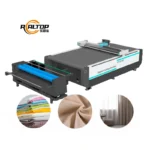
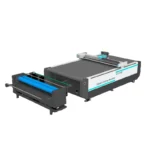
Tool head configuration matched to material — Every oscillating knife, drag knife and vacuum zone on the RT-D2516/RT-S2516 is specified against the buyer’s actual fabric, leather or foam sample before the machine leaves the factory.
Technical Specifications
| Parameter | Value |
|---|---|
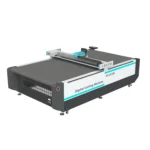
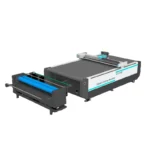
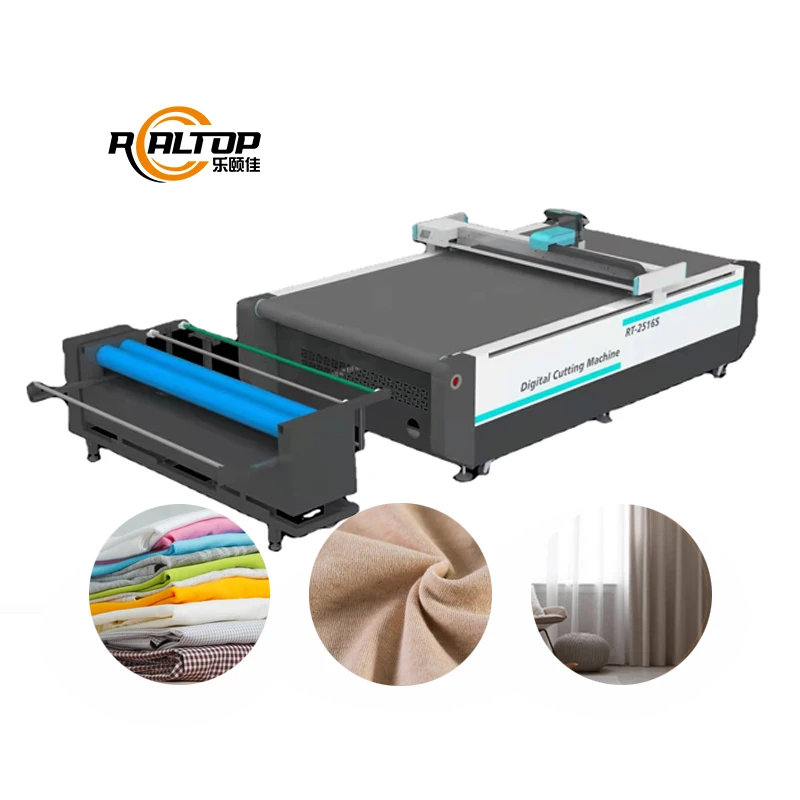
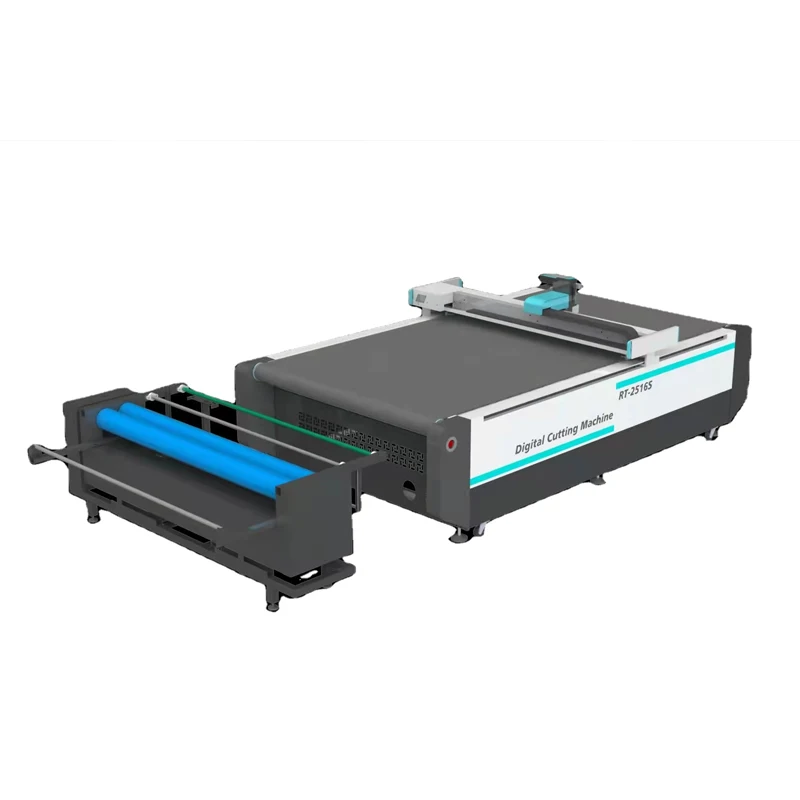
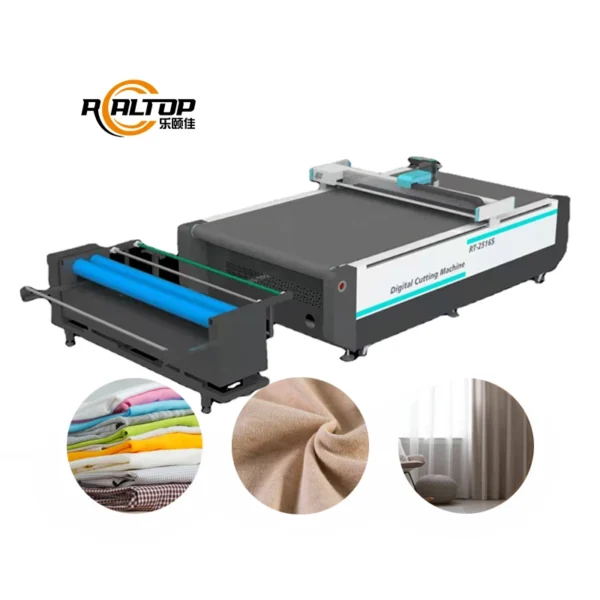
| Product Type | CNC Oscillating Knife Cutting Machine |
| Model | RT-D2516/RT-S2516 |
| Working Area | 1600 × 2500 mm |
| Machine Size | 3450 × 2300 × 1250 mm |
| Rated Power | 9 kW |
| Working Table | Flat vacuum table with high-density felt surface |
| Tool Head | Swiss imported oscillating knife — full cut, half cut, cursor location |
| Modular Tool Holder | Accepts round knife, marking pen, auto feeder |
| Drive Mechanism | Rack and pinion with Taiwan Hiwin linear guides |
| Transmission | Imported digital servo motor (Delta), synchronous belt, ball screw |
| Translational Velocity | 800 – 1200 mm/s |
| Cutting Thickness | ≤ 50 mm (varies by material density and layer count) |
| Repeated Accuracy | ≤ 0.1 mm |
| Vacuum Pump | 7.5 kW |
| Voltage | 380 V ±10 % |
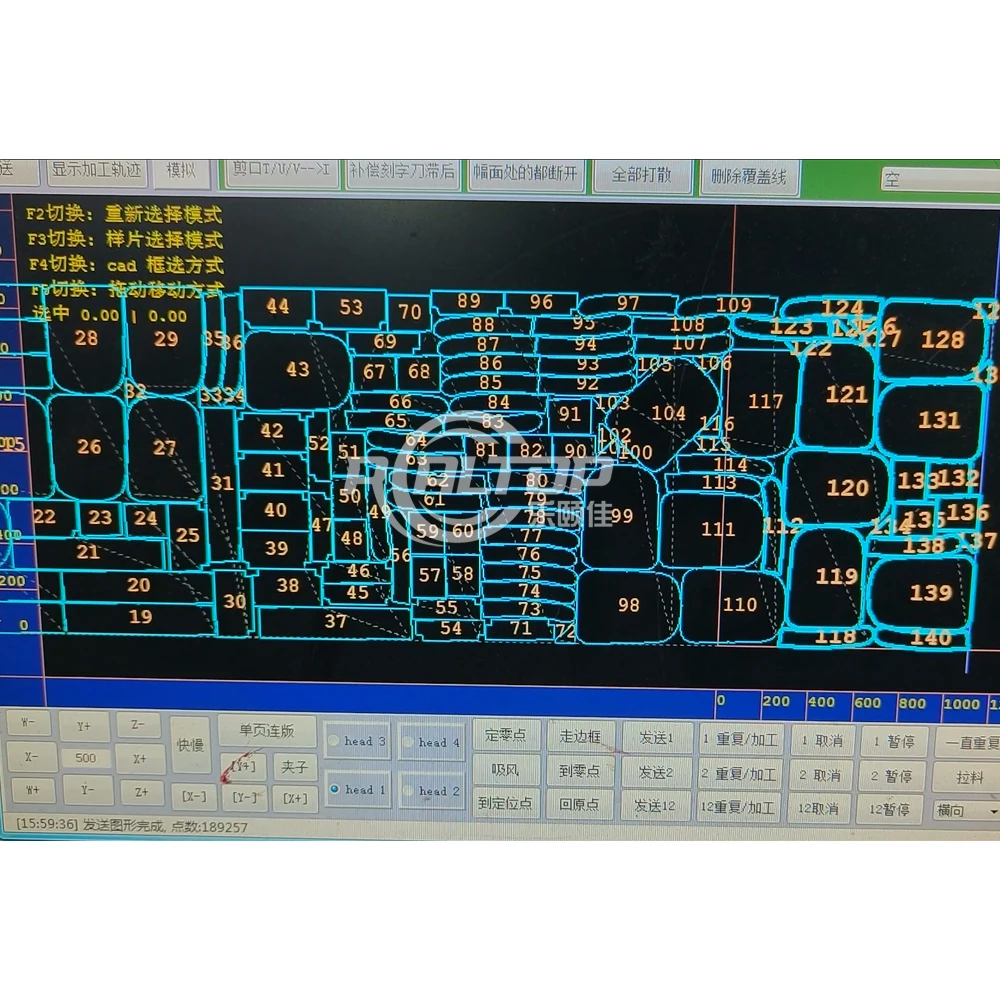
| Instruction Format | HP-GL compatible |
| Safety Device | Infrared sensors |
| Control Cabinet | Fixed on fuselage, high-flexibility cables |
| Machine Frame | Overall welding, imported milling machine processing |
| Conveyor | Germany imported belt with auto feeding |
| Standards | CE |
Application Suitability
| Application | Material or Output |
|---|---|
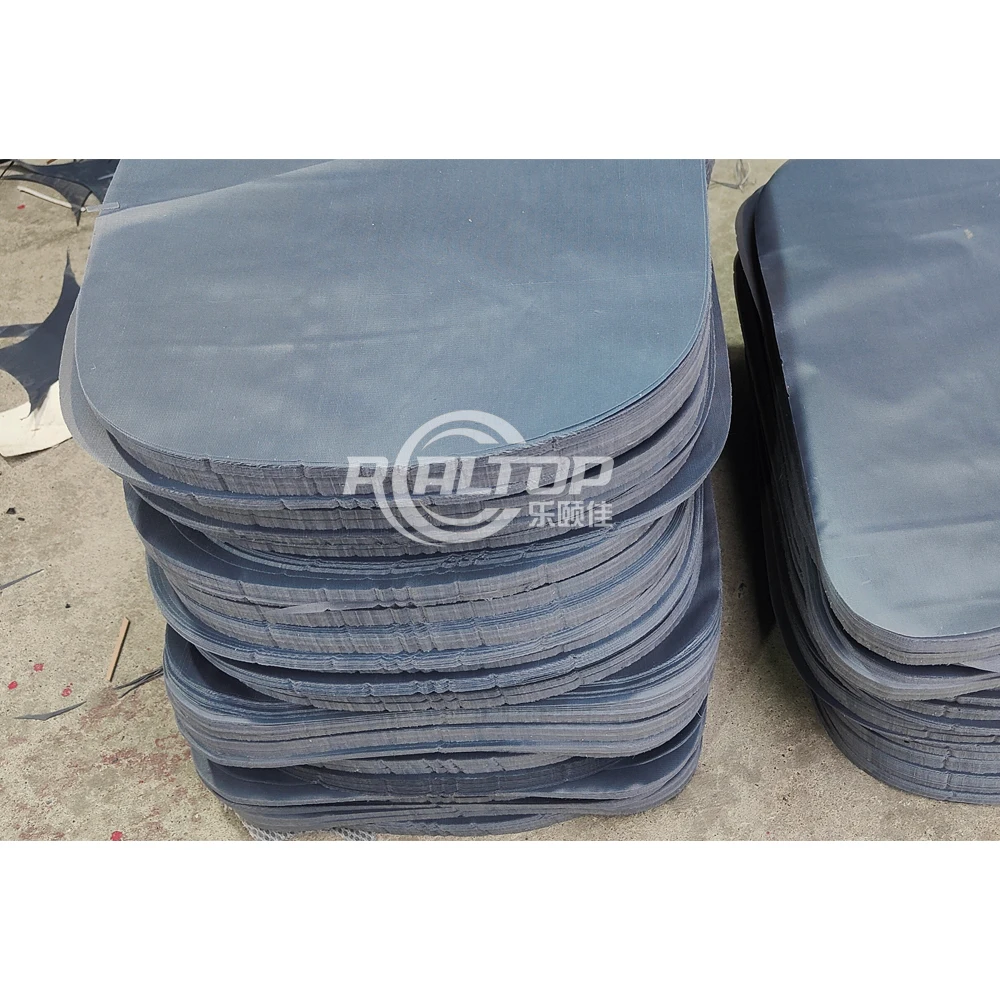
| Garment and footwear cutting | Single and multi-layer woven fabric, knit, denim, technical textile with pattern nesting |
| Leather goods production | Full-grain and corrected-grain hide, split leather, synthetic PU leather for bags and upholstery |
| Automotive interior trimming | Sponge composite leather, instrument panel soft skin, door panel fabric, headliner material |
| Gasket and seal fabrication | Soft glass, silicon sheet, rubber compound up to 50 mm thickness |
| Flexible material sample making | PVC sheet, advertising vinyl, carton and corrugated board for packaging prototypes |
Why Cutting Thickness Claims Fail on the Shop Floor
The ≤ 50 mm rating only holds when the oscillating knife stroke, vacuum hold-down and material density are verified together — not quoted from a catalogue.
I have seen fabric producers take delivery of a CNC oscillating knife cutting machine and discover the blade cannot pierce a five-layer stack of coated composite, even though the spec sheet reads 50 mm. The reason is almost always a mismatch between the knife frequency, the vacuum zoning under the felt, and the actual compressibility of the material [NEED_CITE: vacuum hold-down requirements for multi-layer technical textiles]. Thickness capacity is a system outcome, not a single number, and the RT-D2516/RT-S2516 data sheet ties every variable to the material sample the buyer sends before order confirmation.
Oscillating Knife Mechanics for Textile Stacks
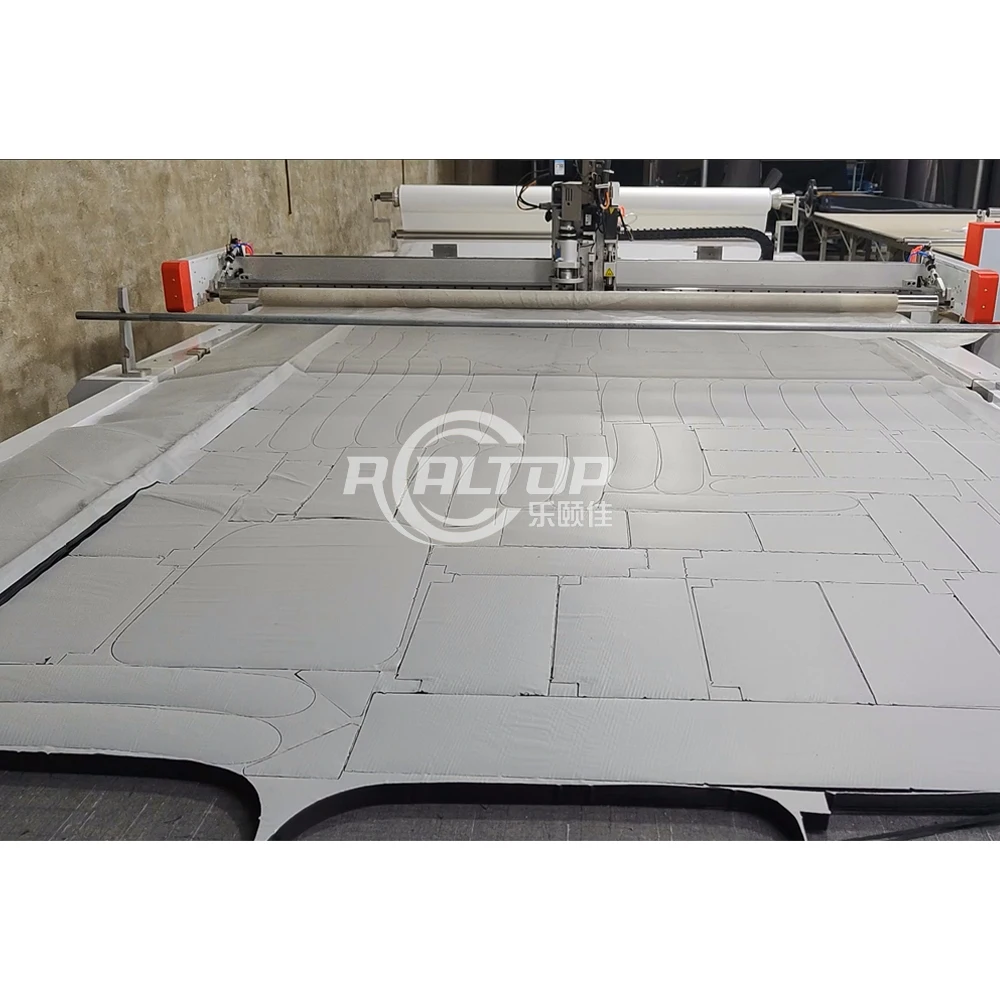
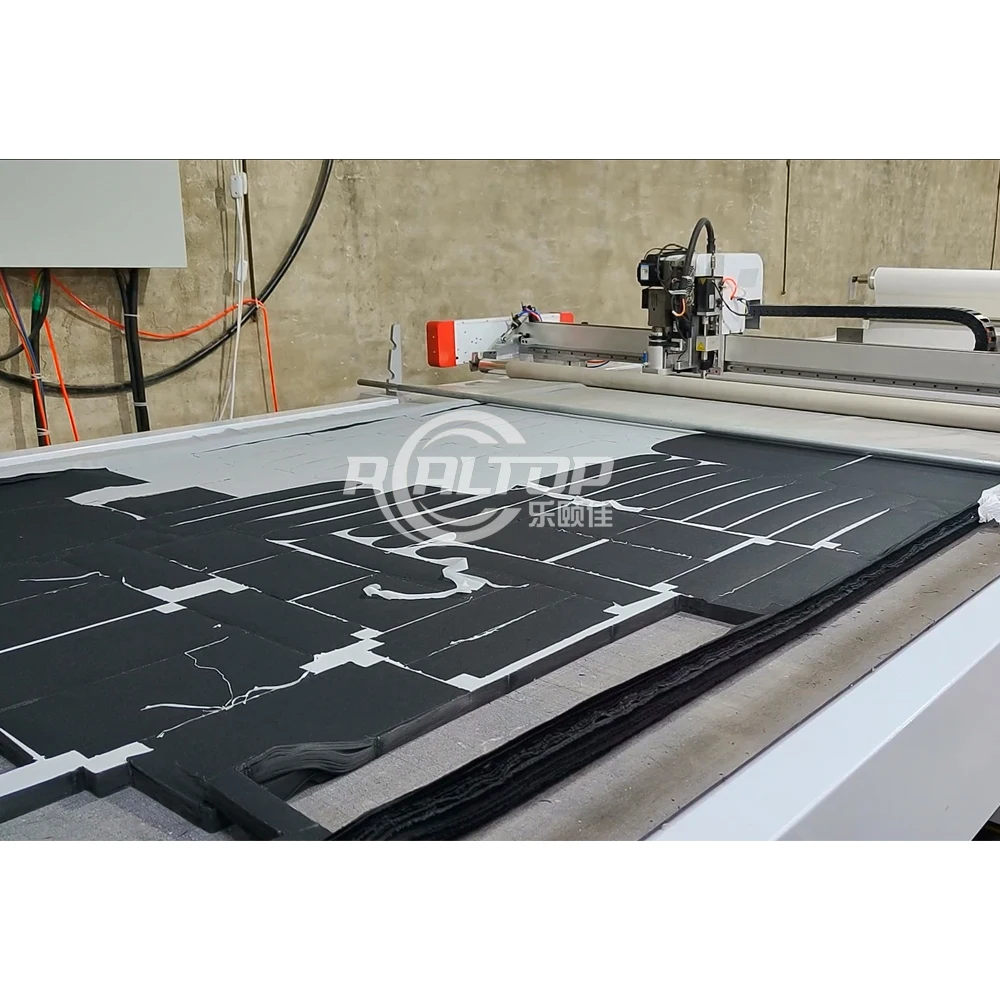
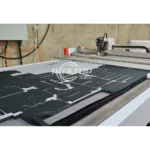
The Swiss imported oscillating head on this CNC oscillating knife cutting machine delivers full-cut, half-cut and cursor-location functions within a single tool holder. The high-frequency vibration lets the blade slide through woven and knit layers without dragging the top ply, which is the usual cause of pattern shift in multi-layer garment cutting. When the job switches to kiss-cutting a laminated foam, the same head retracts to half-cut mode so the backing stays intact.
Vacuum Zoning and Small-Part Hold-Down
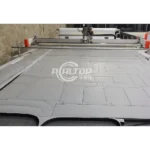
A 7.5 kW pump feeds an aviation-aluminum countertop with internal wind channels that segment the 1600 × 2500 mm bed into independently valved zones. Small pattern pieces — collar stays, gasket rings, leather patches — lose suction on an open plenum and lift during the final pass. Zoned vacuum lets the operator open only the cells under the active cut area, keeping air velocity high where it matters [NEED_CITE: vacuum table zoning standards for flatbed digital cutters]. The high-density felt surface seals around irregular shapes without leaving impression marks on delicate textiles.
Reading the Spec Sheet Against Your Material
The rack-and-pinion drive and Hiwin linear guides hold ≤ 0.1 mm repeatability across the full bed, but that tolerance is only meaningful if the material does not shift. The 800 – 1200 mm/s translational velocity range must be matched to fabric weight: heavy denim runs at the lower end to prevent ply displacement, while light lining fabric can use the upper range. Cutting thickness is governed by knife stroke length and material compressibility — a 50 mm sponge compresses to a fraction of its resting height, whereas a 5 mm PTFE gasket sheet demands full blade penetration with minimal oscillation. Confirming these relationships on a sample cut eliminates guesswork at installation.
What Happens When the Tool Head Is Wrong for the Job
Choose a drag knife on a woven fabric and the edge frays; choose an oscillating knife on thin vinyl and the material puckers around the blade. I have watched a footwear factory lose an entire shift to ragged edges because the supplier shipped a round knife where the material demanded a high-frequency oscillating blade [NEED_CITE: tool head selection criteria for flexible composite materials]. The RT-D2516/RT-S2516 modular holder accepts round knife, marking pen and auto feeder, but the initial head must match the buyer’s dominant material — switching later means re-cutting samples and re-nesting patterns.
Why Procurement Teams Specify at This Level
In-house design covers both the knife carriage and the vacuum table, so the oscillating stroke and the hold-down pressure are balanced before the machine ships. Tool head and table configuration are locked against the buyer’s sample cutting report, not a generic catalogue line. Software licence and HP-GL file compatibility are verified against the buyer’s existing nesting workflow so there are no surprises at first power-on. Voltage, plug type and control language are confirmed in the electrical schematic before the crate is closed. The machine frame is welded and stress-relieved, then finished on an imported milling centre to keep the guide rail seats within tolerance over years of vibration.
Documentation & Verification
- Machine specification sheet listing every tool head and vacuum zone valve
- Electrical schematic with 380 V ±10 % confirmation and plug type noted
- Sample cutting report on buyer’s own fabric, leather or foam at target thickness
- Tool head and table configuration list signed off before production release
- Software licence and HP-GL file format compatibility note included in delivery
- Packing photographs showing felt surface protection and control cabinet securing
Installation, Commissioning & Support
- Floor must support 3450 × 2300 mm footprint plus operator clearance on three sides
- Dedicated 380 V circuit sized for 9 kW continuous draw with earth leakage protection
- Machine arrives on flatbed; vacuum pump and control cabinet bolt to pre-drilled fuselage mounts
- First-run calibration sets rack-and-pinion backlash and verifies ≤ 0.1 mm repeatability across the bed
- Operator training covers zone valve switching, knife depth adjustment and auto-feeder threading
- Spare parts list includes oscillating knife blades, felt segments and Hiwin guide blocks
What to Include in Your First Inquiry
Send the material type, layer count and maximum sheet size so the correct oscillating knife stroke and vacuum zone layout can be specified. State your local voltage and frequency, plus the control language your operators need. If you already run nesting software, attach a sample HP-GL file so compatibility is confirmed before the quotation stage.
Frequently Asked Questions
Q: How do I verify the cutting thickness claim for my specific fabric and layer count?
A: Request a sample cutting report run on your own material at the exact ply height you plan to produce. The report records knife stroke, oscillation frequency, vacuum zone setting and edge quality photos, giving you a baseline that the machine will replicate on your shop floor.
Q: Which tool head — oscillating, round or drag — fits my leather and foam mix?
A: Oscillating knife handles both leather and sponge composite cleanly because the vibration prevents material drag. Round knife suits long straight cuts on single-ply hide, while drag knife is reserved for thin vinyl scoring. The modular holder lets you add heads later without replacing the carriage.
Q: Will the vacuum table hold small gasket pieces without lift?
A: The 7.5 kW pump feeds internally channeled zones that can be valved independently. By closing cells outside the active cut area, air velocity concentrates under small parts, preventing lift even at the 1200 mm/s upper translational speed.
Q: What electrical and software details are confirmed before shipment?
A: The electrical schematic locks in 380 V ±10 %, plug type and control language. A separate compatibility note confirms that your existing HP-GL nesting files import without conversion, and the software licence is transferred before the machine leaves the factory.


商品评价
Clear filtersThere are no reviews yet.