
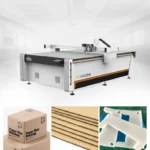

![[result]CNC Oscillating Knife Cutter for Cardboard Foam – Technical Guide[/result] - Image 1](https://rtcnccut.com/wp-content/uploads/2026/03/H68fa13d81b544230a3b78f2b28bb35b7H.webp "H68fa13d81b544230a3b78f2b28bb35b7H.webp")
![[result]CNC Oscillating Knife Cutter for Cardboard Foam – Technical Guide[/result] - Image 2](https://rtcnccut.com/wp-content/uploads/2026/03/He02eb80198ee4a06a8a2f87754acd846J.webp "He02eb80198ee4a06a8a2f87754acd846J.webp")
![[result]CNC Oscillating Knife Cutter for Cardboard Foam – Technical Guide[/result] - Image 3](https://rtcnccut.com/wp-content/uploads/2026/03/H6a3747353a614706a5670a07ddc1d01aX.webp "H6a3747353a614706a5670a07ddc1d01aX.webp")
![[result]CNC Oscillating Knife Cutter for Cardboard Foam – Technical Guide[/result] - Image 4](https://rtcnccut.com/wp-content/uploads/2026/03/Hb6af434e57ee424e946867167453266fy.webp "Hb6af434e57ee424e946867167453266fy.webp")
![[result]CNC Oscillating Knife Cutter for Cardboard Foam – Technical Guide[/result] - Image 5](https://rtcnccut.com/wp-content/uploads/2026/03/H96d4393211294c04bb3158b30d4b631aN.webp "H96d4393211294c04bb3158b30d4b631aN.webp")
![[result]CNC Oscillating Knife Cutter for Cardboard Foam – Technical Guide[/result] - Image 6](https://rtcnccut.com/wp-content/uploads/2026/03/Hcfe97f4e7f9341489748276f4cf9e0a2T.webp "Hcfe97f4e7f9341489748276f4cf9e0a2T.webp")
![[result]CNC Oscillating Knife Cutter for Cardboard Foam – Technical Guide[/result]](https://rtcnccut.com/wp-content/uploads/2026/03/H68fa13d81b544230a3b78f2b28bb35b7H-150x150.webp)
![[result]CNC Oscillating Knife Cutter for Cardboard Foam – Technical Guide[/result] - Image 2](https://rtcnccut.com/wp-content/uploads/2026/03/He02eb80198ee4a06a8a2f87754acd846J-150x142.webp)
![[result]CNC Oscillating Knife Cutter for Cardboard Foam – Technical Guide[/result] - Image 3](https://rtcnccut.com/wp-content/uploads/2026/03/H6a3747353a614706a5670a07ddc1d01aX-150x150.webp)
![[result]CNC Oscillating Knife Cutter for Cardboard Foam – Technical Guide[/result] - Image 4](https://rtcnccut.com/wp-content/uploads/2026/03/Hb6af434e57ee424e946867167453266fy-150x150.webp)
![[result]CNC Oscillating Knife Cutter for Cardboard Foam – Technical Guide[/result] - Image 5](https://rtcnccut.com/wp-content/uploads/2026/03/H96d4393211294c04bb3158b30d4b631aN-150x150.webp)
![[result]CNC Oscillating Knife Cutter for Cardboard Foam – Technical Guide[/result] - Image 6](https://rtcnccut.com/wp-content/uploads/2026/03/Hcfe97f4e7f9341489748276f4cf9e0a2T-150x150.webp)

Fast Shipping
Carrier information

20k products
Payment methods

24/7 Support
Unlimited help desk

2-day Delivery
Track or off orders
Voltage & Plug Confirmation — every RT-D2516/RT-S2516 unit undergoes a final electrical audit against your local grid before dispatch, preventing the three-week delay I once saw when a packaging line in South America waited for a transformer.
Technical Specifications
| Parameter | Value |
|---|---|
| Model | RT-D2516 / RT-S2516 |
| Product Type | CNC Oscillating Knife Cutting Machine |
| Working Area | 1600 × 2500 mm |
| Overall Dimensions | 3450 × 2300 × 1250 mm |
| Rated Power | 9 kW |
| Voltage | 380V ±10% (frequency configurable per destination market) |
| Transmission System | Digital servo motor with Taiwan Hiwin linear guide, synchronous belt and ball screw |
| Servo Motor Options | Delta or Panasonic |
| Vacuum Pump | 7.5 kW, aviation aluminum shell with integrated silencer |
| Table Surface | Magnesium-aluminum alloy with PVDF fluorocarbon coating and hard oxidation |
| Table Configuration | Flat working table or auto feeding table |
| Tool Head Options | Oscillating knife, pneumatic knife, high-power vibrating knife, circular knife, V-cutting knife, drag knife, creasing wheel, dotted line knife, punching, brush |
| Visual Positioning | Small CCD camera mark-point, panoramic camera recognition, or projection positioning |
| Translational Velocity | 800 – 2000 mm/s |
| Cutting Speed | 200 – 800 mm/s depending on material type and thickness |
| Repeated Accuracy | ≤0.1 mm |
| Maximum Cutting Thickness | Up to 100 mm depending on material density |
| Safety Devices | Infrared induction blocking, beam anti-collision sensors, emergency stop |
| Control Language | English, Russian, Italian, Chinese; additional languages available on request |
| File Format Support | PLT, DXF, AI via HP-GL compatible instruction system |
Application Suitability
| Application | Material or Output |
|---|---|
| Carton sample making and slotting | Corrugated board, honeycomb cardboard, grey board up to several millimeters |
| Packaging die-board prototyping | Folding carton stock with crease and perforation lines |
| Gasket and seal fabrication | Rubber sheet, PTFE, silicone, non-asbestos fiber composites |
| Automotive interior trimming | PU foam, EVA, XPE, synthetic leather, non-woven fabric |
| Textile and leather cutting | Multi-layer woven fabric, genuine leather, PU synthetic |
| Signage and display production | PVC foam board, acrylic sheet, sticker film, magnetic sheet |
| Composite panel shaping | Carbon fiber prepreg, fiberglass mat, sandwich core materials |
Why Voltage Must Be Locked Before the Cutting Test
A CNC oscillating knife cutting machine specified only by working area will fail the moment it arrives on a shop floor with a different grid standard.
Early in my field career I spent weeks waiting outside a carton plant because the 380V unit we shipped could not connect to their 440V three-phase supply. The cutting capability was never in question — the machine simply could not power on. Electrical mismatches remain one of the most common commissioning delays across Latin American and Southeast Asian installations [NEED_CITE: voltage and frequency standards by export market]. Confirming voltage, plug type and phase sequence before production starts eliminates this risk entirely.
Matching the Knife to the Board
Selecting the correct tool head is the first decision a packaging sample maker faces. An oscillating knife handles corrugated flute cleanly, while a creasing wheel scores fold lines without crushing the flutes, and a V-cutting knife removes material for slot-and-fold joints. The RT-D2516 / RT-S2516 carries a Swiss-imported blade assembly that supports vibration full-cut, half-cut and cursor location modes, letting you switch between these operations within a single job file. Choosing the wrong knife profile on thick honeycomb board leaves ragged fibers that require manual trimming.
CCD Contour Tracking on Printed Cartons
When the artwork is already printed, registration marks guide the cut path. The small CCD camera option reads discrete mark points, while the panoramic camera captures the entire sheet for high-contrast contour recognition. During my technical support calls I have found that buyers sometimes assume any CCD will track low-contrast ink at full production speed — a panoramic camera handles faded prints more reliably than a single-point sensor. Confirming mark size, contrast ratio and sheet positioning tolerance before order ensures the visual system meets your actual print quality [NEED_CITE: CCD registration accuracy standards in digital finishing].
How Frame Rigidity and Vacuum Zoning Shape Edge Quality
The thick-walled seamless steel frame undergoes high-temperature tempering followed by CNC machining center finishing. This sequence relieves welding stress so the gantry maintains perpendicularity across the full 1600 × 2500 mm travel. On the table, the magnesium-aluminum alloy surface with PVDF coating reduces static friction and resists adhesive residue from sticker films. The 7.5 kW vacuum pump with built-in silencer sponge delivers uniform suction — the fan suction is rated approximately 30 percent higher than a baseline centrifugal design at equivalent power. Uniform hold-down prevents thin gasket sheets from lifting under knife drag, preserving the ≤0.1 mm repeated accuracy across long nesting runs.
The Cost of Skipping the Material Trial
I once reviewed a support ticket where foam board edges were crushed because the buyer selected a drag knife instead of a high-frequency oscillating knife. The machine ran, but the output was unsellable and two weeks of sample stock were wasted. Similar issues arise when vacuum zoning is too coarse for small nested parts — pieces shift mid-cut, producing scrap that nesting software cannot predict. Running a cutting trial on your exact material, thickness and daily volume before the purchase order removes these variables [NEED_CITE: material-specific knife cutting parameters].
Why Procurement Teams Specify Here
In-house design covers both knife and laser cutting processes, so you are never forced into a single technology. The tool head and table configuration are written into the quotation based on the material data sheet you provide, not a generic default. Software compatibility is checked against your existing PLT, DXF or AI files before production starts. Every unit ships with a factory test record cut on your own material sample. Voltage, plug configuration and control panel language are finalized with your electrical team before the machine leaves the assembly floor.
Documentation & Verification
- Machine specification sheet listing every selected tool head and table option
- Electrical schematic confirming voltage, frequency, plug type and breaker rating
- Sample cutting report produced on your supplied material before shipment
- Factory test record with dimensional check against your drawing tolerances
- Software licence key and file format compatibility note for PLT, DXF and AI workflows
- Packing photographs documenting crate condition and accessory placement
Installation, Commissioning & Support
- Foundation must support 3450 × 2300 mm footprint plus operator clearance on three sides
- Dedicated three-phase circuit sized for 9 kW rated draw plus 7.5 kW vacuum pump startup surge
- Machine ships as a single skid; table leveling and gantry alignment verified on-site
- First-power sequence includes phase rotation check and servo tuning across the 1600 × 2500 mm travel
- Operator training covers tool head changeover, vacuum zone mapping and nesting software setup
- Spare blade and creasing wheel kit included; replenishment intervals depend on material abrasiveness
What to Share When Requesting a Quotation
To move past generic specifications, send us the material type, thickness range, maximum sheet size and the typical daily volume you need to process. Include your local voltage and frequency, preferred control language, and whether your workflow already uses DXF or AI nesting files. If your stock varies widely, a sample parcel lets us run cutting trials and return a configuration recommendation with real speed and edge-quality data.
Frequently Asked Questions
Q: How do I select the right tool head for my specific material?
A: Start with material type, thickness and edge-quality requirement. Corrugated board typically uses an oscillating knife for cuts and a creasing wheel for fold lines. Foam and sponge respond better to a high-power vibrating knife to avoid compression. We run a trial on your actual stock and document the recommended tool head and cutting parameters before final order.
Q: What cutting thickness can the RT-D2516 / RT-S2516 realistically handle?
A: Maximum cutting depth depends on material density. Soft foams and honeycomb cardboard can be cut up to 100 mm, while denser gasket rubber and rigid composites require shallower passes. The oscillating knife stroke and blade length are matched to your thickness range during configuration, and a sample cutting report confirms achievable depth.
Q: Will the CCD camera track printed marks reliably at full speed?
A: Mark-point CCD works well with high-contrast registration dots on clean print runs. For sheets with faded or low-contrast marks, the panoramic camera option captures the full artwork and calculates the contour path from multiple reference points. We verify tracking accuracy on your printed sample before shipment to ensure registration holds at your target cutting speed.
Q: Is vacuum suction strong enough for small nested parts?
A: The magnesium-aluminum table is divided into zones that can be activated independently. For small gasket or sticker pieces, activating only the zones under active cutting concentrates suction where it is needed. We map the zone layout to your typical nesting pattern during the factory test so parts remain flat without manual weighting.
Q: Can the software import my existing DXF and AI design files?
A: The control system accepts PLT, DXF and AI formats via an HP-GL compatible instruction set. Auto typesetting software is included for nesting. Before production we run your sample files through the software to confirm layer recognition, cut-order sequencing and kerf compensation, eliminating format surprises during operator training.


![[result]CNC Oscillating Knife Cutter for Cardboard Foam – Technical Guide[/result]](https://rtcnccut.com/wp-content/uploads/2026/03/H68fa13d81b544230a3b78f2b28bb35b7H-600x600.webp)
商品评价
Clear filtersThere are no reviews yet.