






Fast Shipping
Carrier information

20k products
Payment methods

24/7 Support
Unlimited help desk

2-day Delivery
Track or off orders
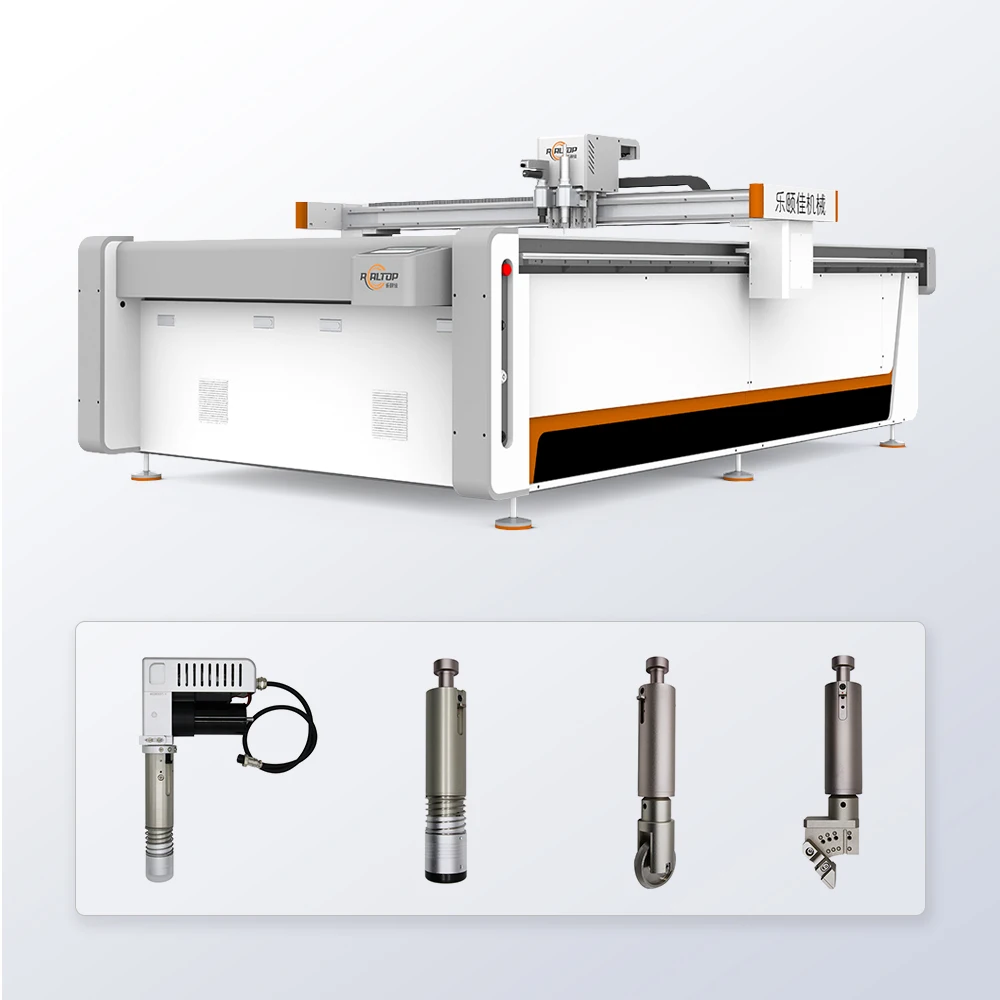
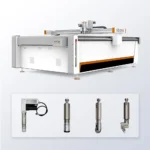
Tool-Head Versatility — The 1625 flatbed accommodates seven interchangeable cutting and creasing tools, letting packaging producers match the edge finish to the board flute rather than forcing a single blade across every substrate.
Technical Specifications
| Parameter | Value |
|---|---|
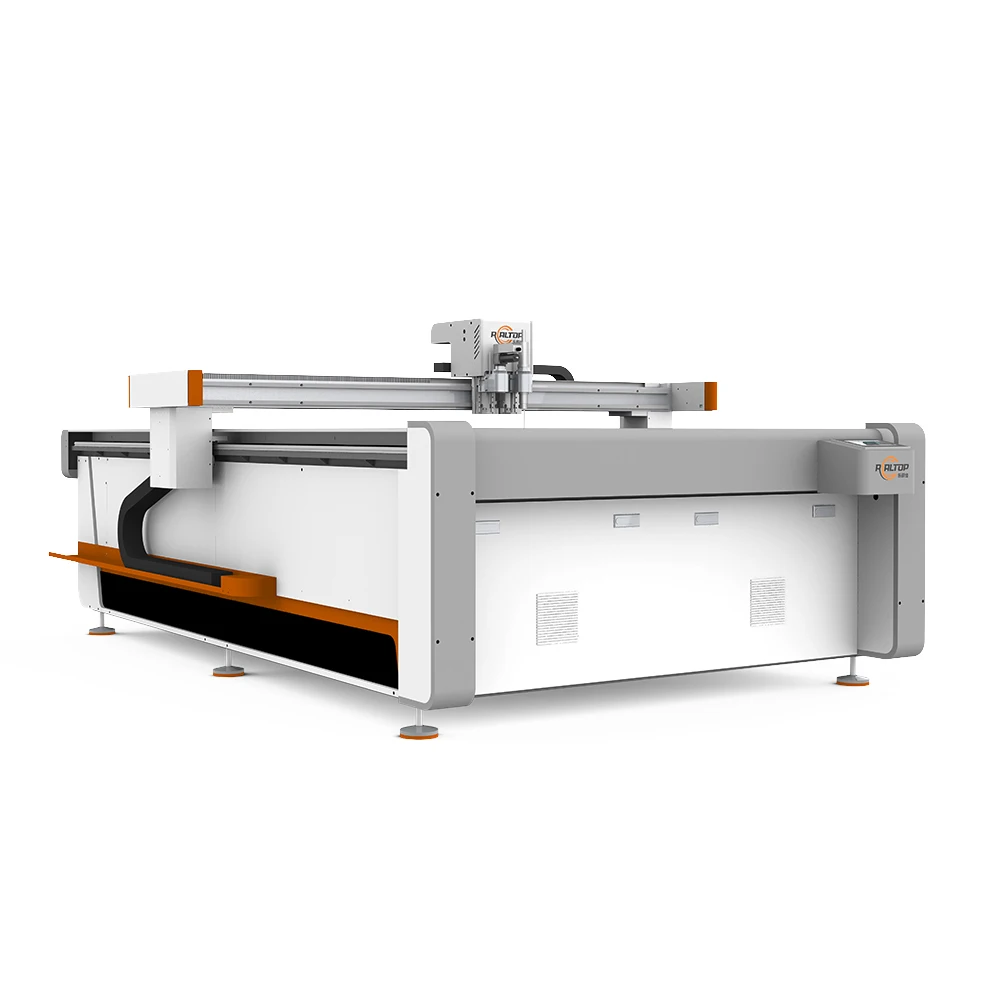
| Product Type | CNC Oscillating Knife Cutting Machine with CCD Positioning |
| Working Area | 1600×2500 mm |
| Cutting Speed | 0–1500 mm/s |
| Cutting Thickness | ≤ 40 mm |
| Cutting Accuracy | ±0.1 mm |
| Tool Head Options | Oscillating knife, Driven rotary knife, Creasing wheel, Kiss cutting tool, Pneumatic knife, Milling tool, V-groove knife |
| Vacuum Table | Aluminum bellows vacuum table with full-surface adsorption |
| Vacuum Pump Power | 9 kW |
| Control System | PLC control panel with dedicated packaging box structure design software |
| File Format Compatibility | PLT, DXF, AI, PDF |
| Servo Motor Options | Panasonic, Delta, Dorna (basis to be confirmed) |
| Voltage Options | 110V, 220V, 380V |
| Language Options | English, Russian, Italian, Chinese; special languages customizable |
| Safety Devices | Infrared sensor device and emergency stop device |
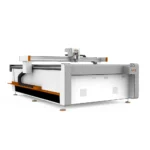
| Overall Dimensions (L×W×H) | 3300×2100×1350 mm |
Application Suitability
| Application | Material or Output |
|---|---|
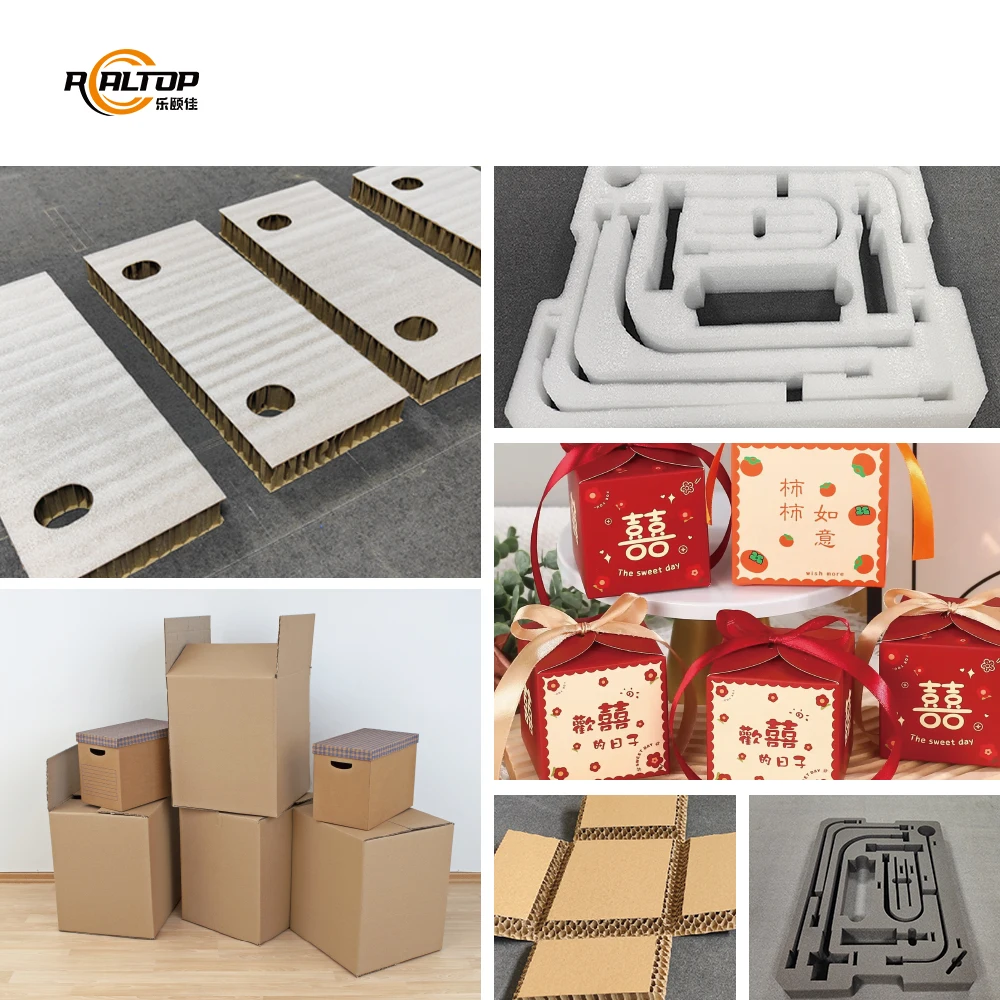
| Packaging sample making and carton prototyping | Corrugated board (E-flute, B-flute, BC-flute), greyboard, cardstock, art paper |
| Foam and composite packaging insert fabrication | EVA, EPE, PU foam, adhesive-backed composite sheets up to 40 mm thick |
| Soft material die-less cutting for small-batch production | Leather, synthetic leather, velvet, fleece, non-woven fabric, rubber mats |
| Thin plastic and gasket contour cutting | PVC, PET, PTFE, thin rubber sheets |
When "One Blade Fits All" Destroys Your Cut Quality
Specifying a CNC oscillating knife cutting machine by working area alone is the fastest way to discover your material needs a different tool entirely.
I spent years commissioning packaging lines across the Middle East, and the most expensive mistakes I have witnessed were not machine failures — they were configuration failures. A carton producer ordered a flatbed cutter based on bed size, then wondered why their three-layer BC-flute corrugated board came out with crushed edges and ragged contours. The oscillating knife they were running was set for greyboard parameters; the vibration frequency and downforce were completely wrong for the material density [NEED_CITE: CNC knife cutting parameter matching by material type and flute profile]. The machine was not at fault. The specification process was.
Matching the Oscillating Blade to the Board Flute Profile
The 1625 platform supports seven tool heads on a single gantry, and the selection matters far more than the cutting speed on the spec sheet. An oscillating knife handles standard corrugated and greyboard cleanly when the vibration frequency is tuned to the material density, while a driven rotary knife suits continuous contour work on fabric and non-woven materials without fraying the edges. For packaging producers running both sample cartons and foam inserts, the V-groove knife and creasing wheel mount on the same tool bar, so a single pass can cut, crease and slot a box blank without a tool change interruption.
CCD Contour Recognition on Printed Packaging Substrates
The CCD camera positioning system reads printed registration marks on corrugated and cardstock substrates, enabling contour-accurate cutting of pre-printed packaging sheets. This matters when the print has already been applied before the cutting stage — the camera locates the mark, compensates for sheet distortion from printing or humidity, and adjusts the cut path in real time. For short-run packaging jobs where digital print and digital cutting replace traditional die tooling, the CNC oscillating knife cutting machine specifications around CCD tracking speed and mark recognition tolerance determine whether the workflow actually holds registration at production pace.
Reading the Specifications That Actually Affect Your Daily Output
The 1600×2500 mm working area accommodates full-size corrugated sheets and multiple nested packaging blanks per cycle, which directly influences material yield on nested layouts. The 9 kW vacuum pump paired with the aluminum bellows table provides full-surface adsorption — this is critical when cutting small-format carton inserts or thin art paper, because insufficient vacuum zoning causes material lift at the blade exit point [NEED_CITE: vacuum table adsorption requirements for small-format packaging substrates]. The ±0.1 mm cutting accuracy is meaningful for interlocking carton structures and tongue-and-slot packaging assemblies where cumulative tolerance drift across multiple crease lines causes fit problems in the finished box. The PLC control panel with dedicated packaging box structure design software means the file-to-cut workflow stays inside one software environment, accepting PLT, DXF, AI and PDF imports without requiring a third-party nesting license.
The Hidden Cost of an Unverified Tool and Vacuum Configuration
When the tool head selection is made from a catalog page instead of a sample cut on the buyer’s actual material, the consequences surface on the first production day. Wrong vibration frequency on corrugated board produces compressed flute edges that fail burst strength tests. Insufficient vacuum on thin cardstock causes sheet creep mid-cut, shifting the entire nested layout by enough to scrap the batch. A creasing wheel specified at the wrong pressure leaves score lines that crack on fold instead of bending cleanly. These are not warranty issues — they are configuration gaps that could have been caught before the machine left the factory [NEED_CITE: pre-shipment sample cutting verification for CNC knife equipment].
What Distinguishes This Build from a Generic Flatbed Order
The in-house design team covers both the mechanical tool head configuration and the software workflow, so the oscillating knife parameters and the nesting software talk to each other without third-party middleware. The aluminum bellows vacuum table is engineered for full-surface hold rather than zoned segments, which matters when your production mix includes both large carton blanks and small gasket pieces on the same table. Voltage, plug type and control panel language are confirmed before the machine enters production, not discovered at the dock when the crate is already sealed. Every configuration ships with a sample cutting report run on the buyer’s own material, documenting the tool head, frequency and downforce settings that produced acceptable edges.
Documentation & Verification
- Factory test record cut from your corrugated flute grade and board thickness before dispatch
- Tool head and vacuum table configuration list matched to your documented material range
- Electrical schematic and voltage confirmation for your facility supply standard
- Software license and PLT/DXF/AI/PDF file format compatibility note included at shipment
- Operation and maintenance manual in your selected control panel language
Installation, Commissioning & Support
- Requires level floor pad sized to 3300×2100 mm overall footprint plus operator clearance
- Dedicated circuit matching confirmed voltage option (110V/220V/380V) before electrical rough-in
- Arrives partially assembled; gantry and vacuum table aligned and tested at factory
- First-run parameter tuning on your material with documented oscillating knife frequency and downforce settings
- Operator training covers tool change procedure, CCD mark registration and nesting software workflow
- Spare parts list provided with recommended consumable blade and creasing wheel replenishment intervals
What to Include in Your Inquiry
Provide the material types, flute grades and thickness range you intend to cut, along with your typical sheet size and daily volume. Confirm your facility voltage, frequency and the control panel language your operators need. If you are replacing an existing die-cut workflow, share your current file formats so software compatibility can be verified before quotation.
Frequently Asked Questions
Q: How is cutting thickness confirmed for corrugated board versus foam materials?
A: The machine handles materials up to 40 mm thick, but the effective cutting depth depends on material density and the tool head selected. A sample cut on your actual corrugated flute grade or foam type confirms the achievable thickness before order. The cutting report documents the blade type, vibration frequency and downforce that produced clean edges on your substrate.
Q: Which tool head is recommended for corrugated board versus fabric?
A: The oscillating knife is standard for corrugated board and greyboard, while the driven rotary knife suits continuous contour cutting on fabric and non-woven materials. The creasing wheel and V-groove knife handle scoring and slotting on carton blanks. Tool selection is finalized after sample testing on your specific material.
Q: How does CCD contour recognition perform on printed corrugated substrates?
A: The CCD camera reads printed registration marks on corrugated and cardstock sheets, compensating for print distortion caused by humidity or feed variation. Tracking accuracy depends on mark contrast and print quality. Verification on your actual printed substrate is included in the pre-order sample cutting process.
Q: What voltage and control language options are available?
A: Voltage is configurable at 110V, 220V or 380V, and the PLC control panel supports English, Russian, Italian and Chinese with special languages available on request. Voltage, plug type and language are confirmed before production begins, not at shipment.
Q: What does the included packaging design software support?
A: The dedicated packaging box structure design software runs on the PLC control system and accepts PLT, DXF, AI and PDF file imports. It covers standard carton structure generation and nesting layout. File format compatibility with your existing design workflow is verified and documented before the order is finalized.


商品评价
Clear filtersThere are no reviews yet.