






Fast Shipping
Carrier information

20k products
Payment methods

24/7 Support
Unlimited help desk

2-day Delivery
Track or off orders
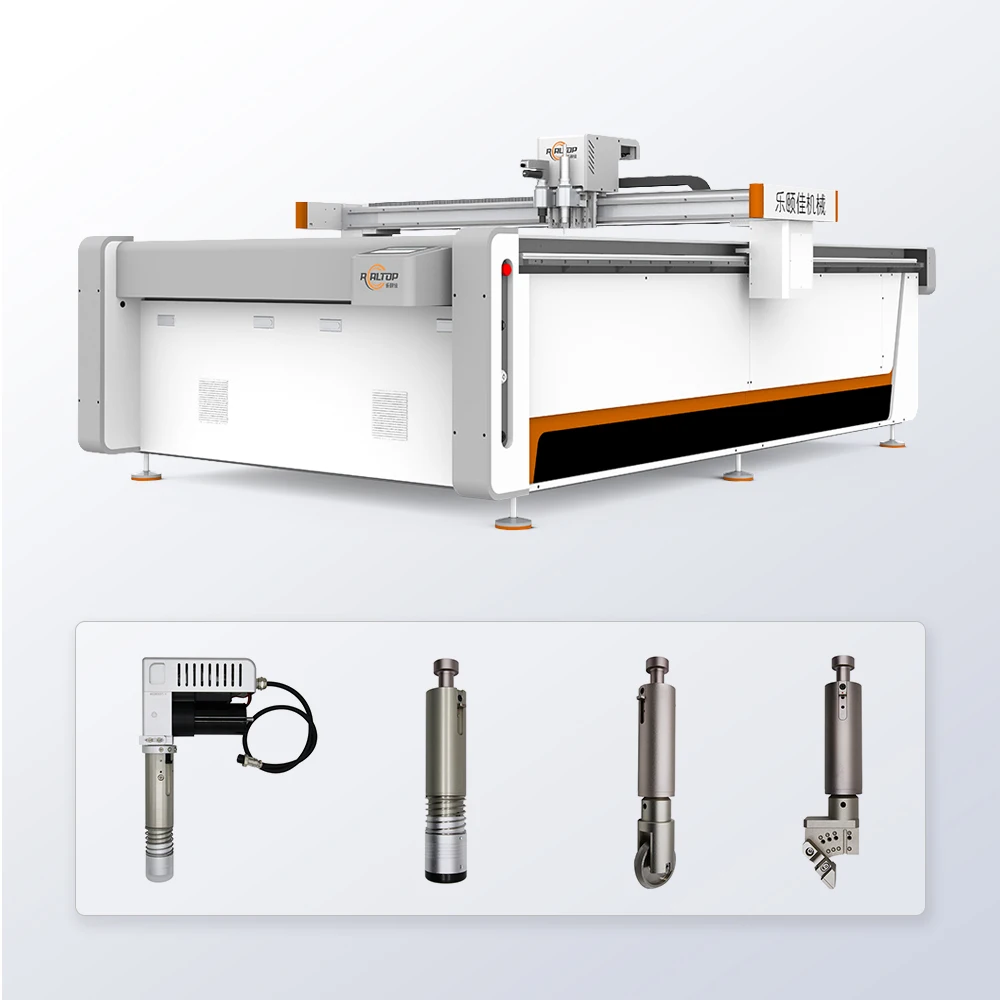
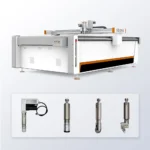
Tool head flexibility across packaging substrates — Seven interchangeable cutting tools configured per flute profile and board density, from E-flute corrugated to PP coroplast.
Technical Specifications
| Parameter | Value |
|---|---|
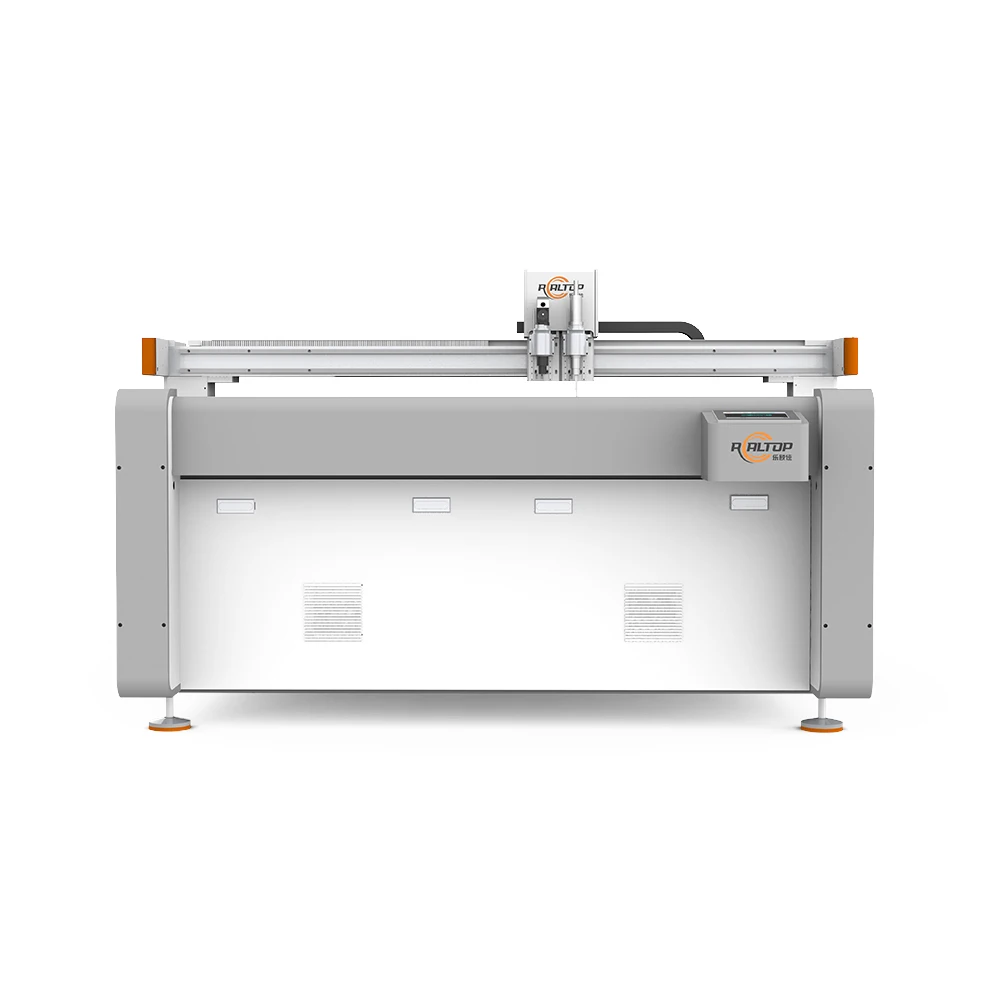
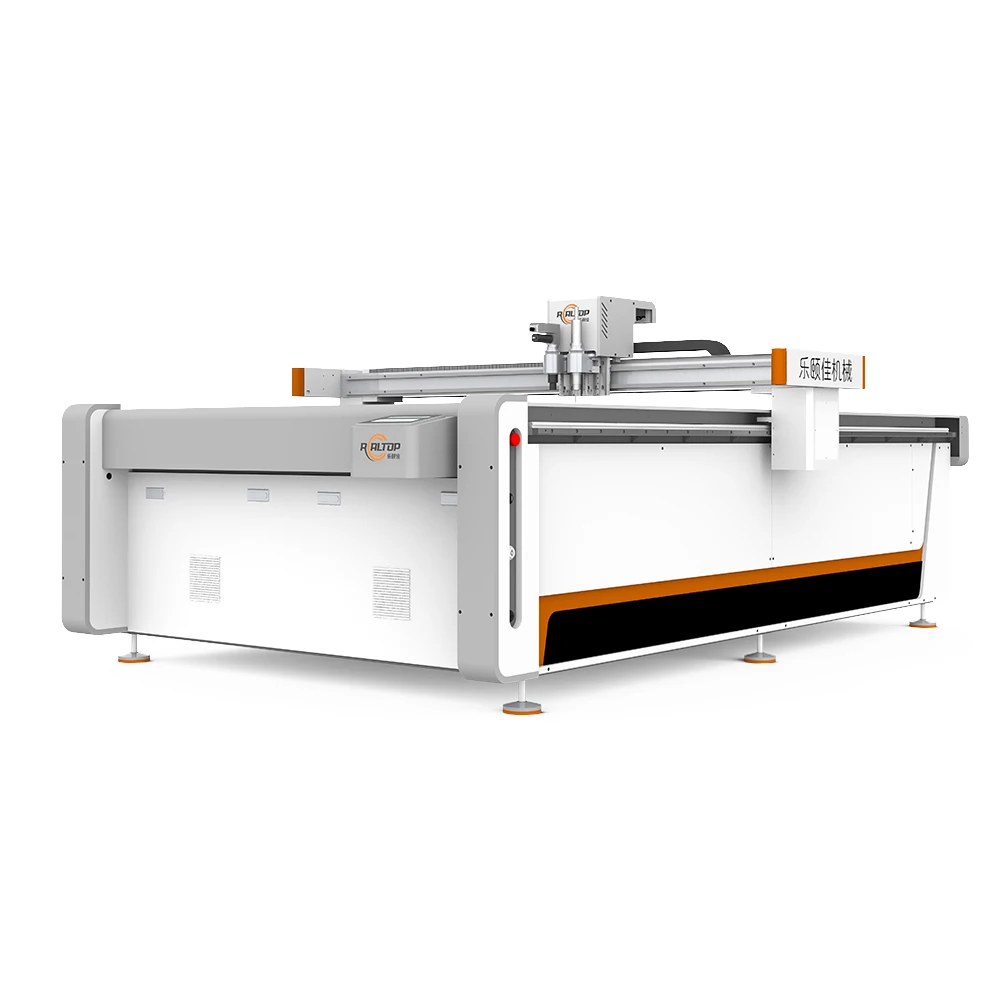
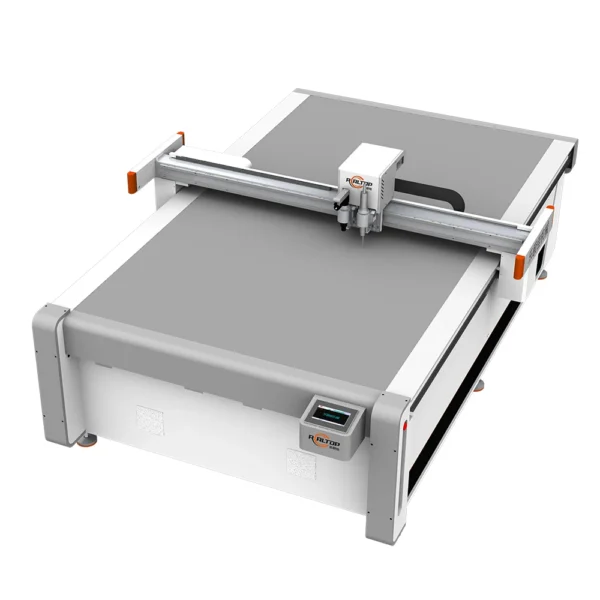
| Product Type | CNC Oscillating Knife Packaging Cutting Machine |
| Working Area | 1600×2500 mm |
| Tool Head Options | Oscillating knife, Driven rotary knife, Creasing wheel, Kiss cutting tool, Pneumatic knife, Milling tool, V groove knife |
| Cutting Speed | 0–1500 mm/s |
| Cutting Thickness | ≤ 40mm (basis not stated in source — confirm block format / material / thickness) |
| Cutting Accuracy | ±0.1 mm |
| Vacuum Table | Aluminum bellows vacuum table |
| Vacuum Pump | 9 kW |
| Servo Motor Options | Panasonic, Delta, Dorna (selectable) |
| Control System | PLC control panel with intuitive interface |
| Supported File Formats | PLT, DXF, AI, PDF |
| Voltage Options | 110V, 220V, 380V (configurable) |
| Safety Devices | Infrared sensor device, emergency stop device |
| Machine Dimensions | 3300×2100×1350 mm |
| Language Options | English, Russian, Italian, Chinese (custom languages available) |
| Certification | CE |
Application Suitability
| Application | Material or Output |
|---|---|
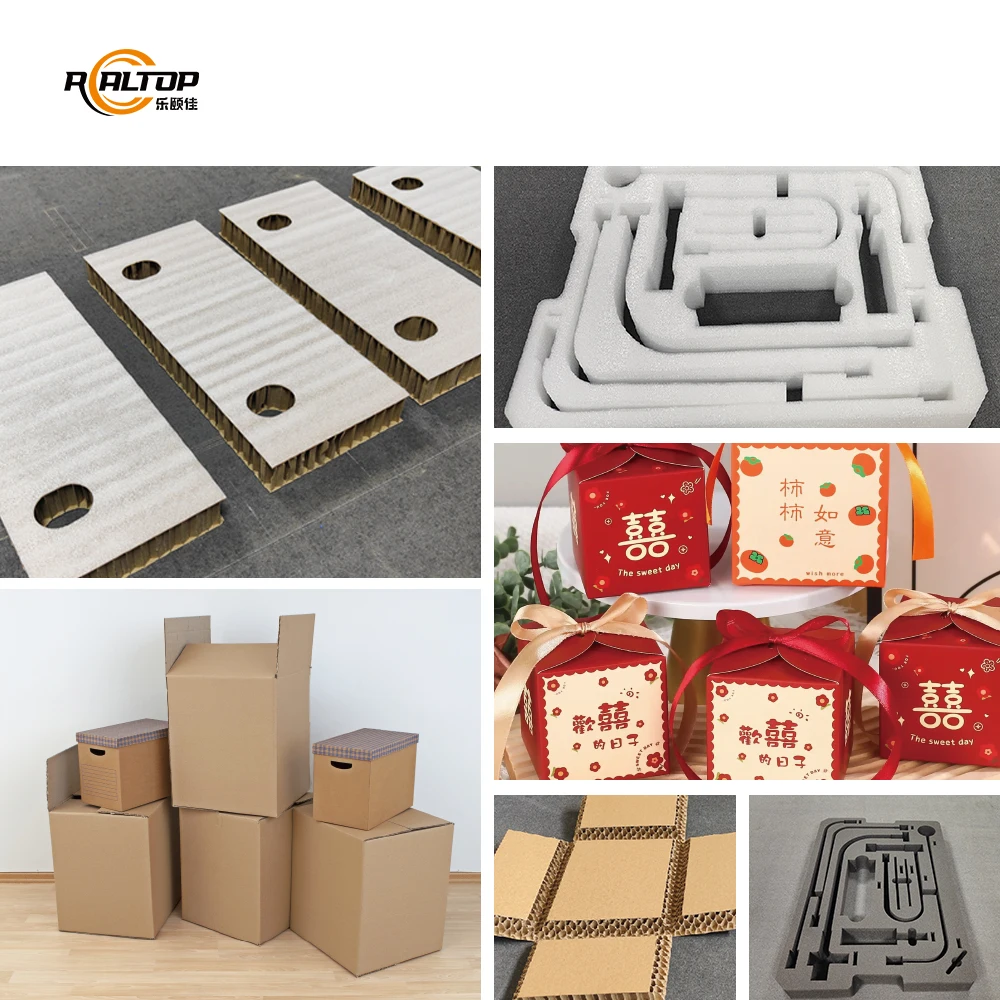
| Corrugated cake box production | E-flute, B-flute, BC-flute corrugated cardboard |
| PP coroplast packaging | Coroplast PP corrugated sheets for reusable boxes |
| Carton sample making | Greyboard, cardstock, art paper, specialty paper |
| Protective insert cutting | EVA foam, EPE foam, PU foam, rubber mats |
| Inner lining and dividers | Velvet/fleece fabric, non-woven fabric |
| Blister and window patches | Thin PVC and PET plastic sheets |
| Leatherette premium boxes | Leather, synthetic leather, composite materials |
| Adhesive-backed gaskets | Self-adhesive packaging seals and foam tapes |
What Happens When the Wrong Blade Meets Coroplast
Oscillating knife frequency and blade geometry must match the substrate’s cell structure, not just its thickness.
Last year I specified a standard oscillating blade for a Middle Eastern customer cutting PP coroplast cake boxes. The standard corrugated board samples ran clean at the factory. When the customer received the machine and loaded their actual PP coroplast sheets, the material’s hardness was entirely different. The blade dragged instead of slicing, leaving ragged edges and crushed flutes across every sample box. The entire batch was scrapped. After that, every configuration goes through a physical sample cut on the buyer’s actual material before we finalize the tool head list [NEED_CITE: material hardness variation in PP coroplast versus standard corrugated].
Matching Blade Type to Flute Profile
The 1625 platform carries seven tool head positions, but selecting the right one for your packaging substrate determines edge quality and die-line accuracy. For standard E-flute and B-flute corrugated cardboard, the oscillating knife handles full-depth cuts while the creasing wheel scores fold lines without penetrating the liner. When the material shifts to BC-flute or double-wall board, the pneumatic knife provides the downward force needed to compress through thicker flute geometry. The V groove knife addresses angled channel cuts required for rigid box corner joints.
Vacuum Holding for Small Packaging Components
The aluminum bellows vacuum table distributes suction across the full working area, which matters when cutting multiple small box components from a single sheet. Standard vacuum zones often lose grip on narrow gusset panels or divider strips once the surrounding material is removed. This table’s bellows structure maintains adsorption on individual parts until the operator clears the bed. Combined with the 9 kW vacuum pump, the system holds thin PP coroplast and lightweight cardstock flat against the bed surface even at maximum cutting speed [NEED_CITE: vacuum adsorption requirements for thin packaging substrates].
Reading the Numbers That Affect Your Die-Lines
Cutting accuracy of ±0.1 mm across the 1600×2500 mm working area determines whether box tabs slot into their receiving channels on the first assembly attempt. In packaging production, a 0.3 mm drift accumulated over a long die-line perimeter causes misaligned glue flaps and loose-fitting lids. The servo motor selection — available from Panasonic, Delta, or Dorna — directly influences how consistently the machine tracks complex curves and tight corner radii in box templates. Higher-resolution encoders on the servo reduce following error during direction changes. The PLC control panel manages acceleration and deceleration profiles, preventing blade deflection when the tool enters and exits dense corrugated layers. File format compatibility with PLT, DXF, AI, and PDF means packaging designers can export directly from structural design software without manual conversion steps that introduce geometry errors.
The Cost of Skipping the Sample Cut
When a machine ships with a generic tool head list instead of a configuration matched to your specific board grade, the problems surface during production, not during acceptance testing. Ragged edges on PP coroplast require secondary trimming. Crushed flute cores on BC-flute corrugated reduce box compression strength and fail drop tests. Creasing wheels set to the wrong depth crack the printed surface on coated art paper [NEED_CITE: packaging quality failure modes from incorrect tooling]. These defects compound across short-run production where each box design changes daily and there is no time for manual parameter adjustment.
Why Source This Configuration Here
The tool head and table setup gets specified against your material sample, not against a catalog default. Every 1625 packaging cutter ships with a sample cutting report documenting blade type, cutting speed, and edge quality on your actual corrugated or PP coroplast sheet. The oscillating knife technology is designed and produced in-house, meaning configuration changes happen at the engineering level rather than through third-party retrofitting. Voltage confirmation happens before production — 110V, 220V, or 380V matched to your facility’s supply — so the machine arrives wired correctly. Software licenses and file format compatibility are verified during the specification stage, eliminating format conversion problems after delivery.
Documentation & Verification
- Machine specification sheet listing confirmed tool head positions and blade types
- Electrical schematic with voltage and frequency locked to your facility standard
- Tool head and table configuration list matched to your flute profile and board grade
- Sample cutting report on your supplied corrugated or PP coroplast material
- Software license documentation with PLT, DXF, AI, PDF format compatibility confirmed
- Packing photographs showing machine condition and crate securing before dispatch
Installation, Commissioning & Support
- Floor space allocation of approximately 3300×2100 mm plus operator clearance on all sides
- Dedicated electrical circuit matching confirmed voltage (110V/220V/380V) and frequency
- Machine arrives assembled; leveling and vacuum table calibration performed on-site
- First-run parameter tuning on your packaging material with tool head pressure and speed adjustment
- Operator training covering PLC interface navigation and file import from design software
- Spare blade and creasing wheel inventory supplied based on your daily cutting volume
What We Need to Quote Accurately
Send us a sample of the actual board or sheet material you intend to cut, including the flute type and measured thickness. Confirm your local voltage and frequency, along with the preferred control panel language. Let us know the range of box dimensions you produce and whether you run short custom orders or repeated standard designs.
Frequently Asked Questions
Q: How do I specify the correct tool head for different corrugated flute types?
A: Send a sample of your board — E-flute, B-flute, BC-flute, or PP coroplast — and we run a physical test cut. The oscillating knife handles standard flutes, the pneumatic knife addresses thicker double-wall profiles, and the creasing wheel scores fold lines at a depth matched to your liner thickness. The resulting tool head list is locked into your machine configuration before production.
Q: What file formats does the software accept for packaging designs?
A: The PLC control system imports PLT, DXF, AI, and PDF files directly from packaging structural design software. We verify your specific design software’s export format during the specification stage to confirm compatibility before shipment. File nesting is handled within the software to maximize sheet yield across your working area.
Q: How is vacuum table zoning configured for small packaging parts?
A: The aluminum bellows vacuum table maintains full-surface adsorption across the 1600×2500 mm bed. When cutting narrow gusset panels or small divider strips, the bellows structure continues to hold individual components flat after surrounding waste material is removed, preventing lift at cutting speed.
Q: Can I send my own corrugated material for sample cutting before ordering?
A: Yes. Send your actual board or PP coroplast sheet to the factory. We run a full test cut covering your box die-line, document blade type, speed settings, and edge quality, then provide a sample cutting report with the physical cut pieces shipped back for your inspection before you commit.
Q: What voltage and control language options are confirmed before shipment?
A: Voltage is configurable across 110V, 220V, and 380V and confirmed against your facility supply during the specification stage. Control panel language options include English, Russian, Italian, and Chinese, with custom languages available on request. Electrical schematics reflect the confirmed configuration.


商品评价
Clear filtersThere are no reviews yet.