






Fast Shipping
Carrier information

20k products
Payment methods

24/7 Support
Unlimited help desk

2-day Delivery
Track or off orders
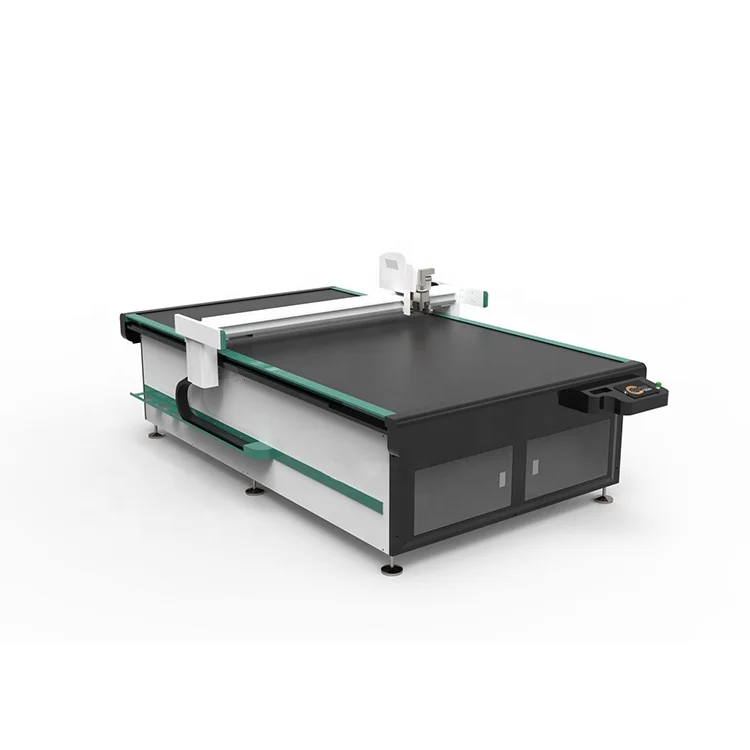
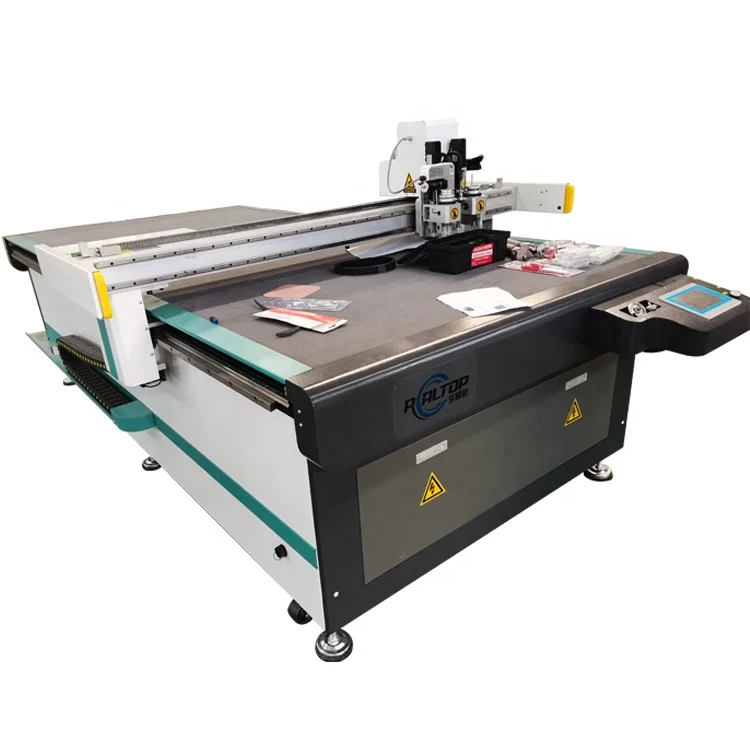
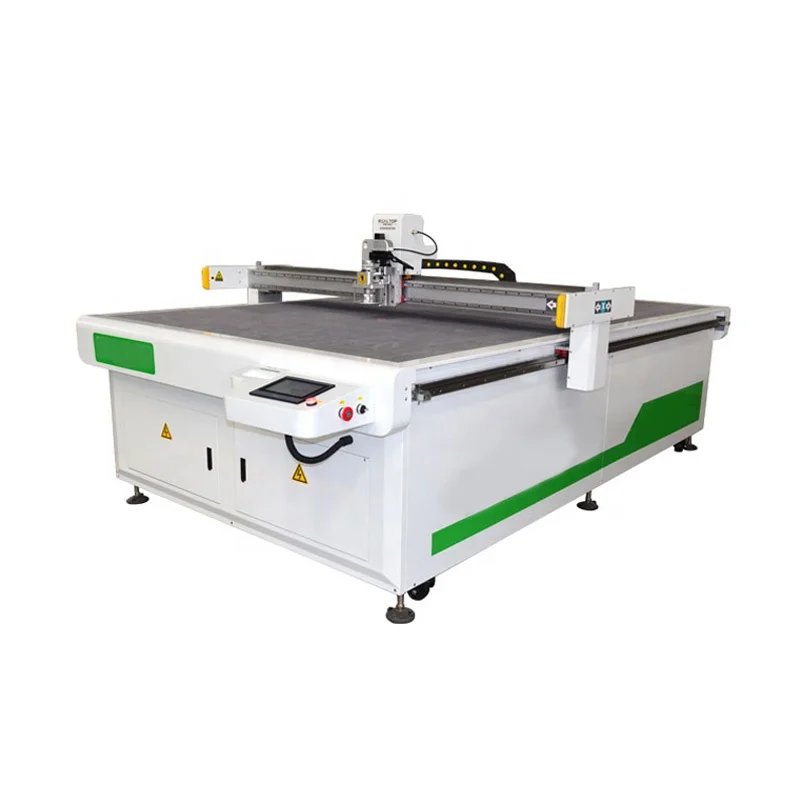
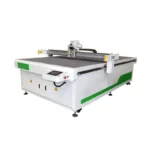
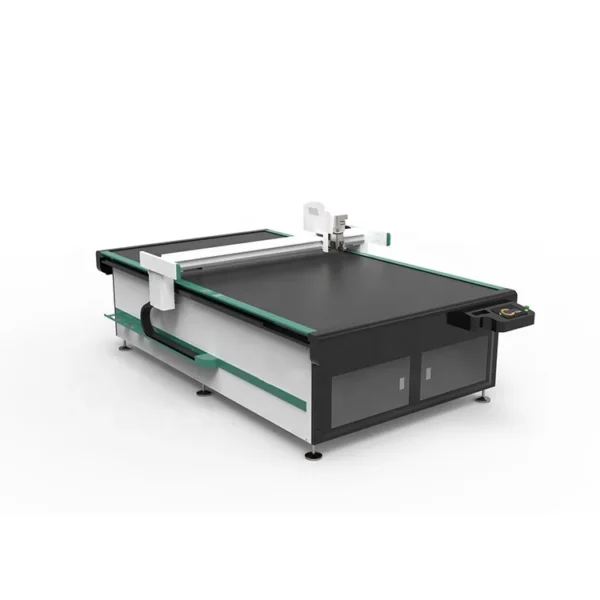
Configurable tool head and vacuum layout — every RT-D2516/RT-S2516 ships with knife type, hold-down zoning and conveyor choice locked to your stock before production starts, not after.
Technical Specifications
| Parameter | Value |
|---|---|
| Model | RT-D2516/RT-S2516 |
| Product Type | CNC Oscillating Knife Cutting Table |
| Working Area | 1600×2500 mm |
| Overall Dimensions (L×W×H) | 3450×2300×1250 mm |
| Rated Power | 9 kW |
| Voltage | 380V±10% (50/60 Hz to be confirmed) |
| Tool Head Type | Swiss imported oscillating knife (vibration full cutting, vibration half cutting, cursor location) |
| Translational Velocity | 800–1200 mm/s |
| Cutting Speed | 200–800 mm/s (according to different cutting materials) |
| Repeatability | ≤0.1 mm |
| Transmission System | Digital servo motor, linear guide, synchronous belt, ball screw |
| Servo Motor | Japanese Yaskawa |
| Linear Guide | Taiwan Hiwin rail |
| Conveyor Belt | Germany imported |
| Vacuum Pump | 7.5 kW |
| Working Table | Flat working table with vacuum and auto feeding |
| Safety Device | Infrared sensors |
| Instruction System | HP-GL compatible format |
| Cutting Materials | Leather, clothing flexible materials, sponge composite leather, PVC, soft glass, silicon, rubber |
Application Suitability
| Application | Material or Output |
|---|---|
| Packaging sample making | Corrugated board, grey board, folding carton stock |
| Sticker and label production | Adhesive-backed vinyl, printed label sheets, kiss-cut and through-cut stock |
| Garment and footwear cutting | Leather hides, fabric panels, sponge composite materials, synthetic uppers |
| Gasket and industrial parts | Soft glass, silicon, rubber, PVC sheets, flexible composite materials |
Why "Cutting Speed" on a Spec Sheet Means Nothing Without Your Material
A cutting speed figure only becomes real when tested against the exact stock, thickness and part geometry you will run on the shop floor.
Buyers often see a headline number and assume it applies to their production. A corrugated board sample and a 3 mm adhesive label sheet demand fundamentally different tool head pressures, oscillation frequencies and vacuum hold-down levels. I once watched a packaging sample shop run high-density corrugated on a machine tuned for standard grey board — the knife pressure was insufficient, edges came out crushed and the entire batch had to be scrapped. The CNC oscillating knife cutting table specifications listed on a brochure cannot capture this mismatch. Only a sample cutting report on your own material reveals whether the configuration actually works. [NEED_CITE: material-specific cutting test protocols for digital flatbed equipment]
Oscillating Knife Mechanics and Material Matching
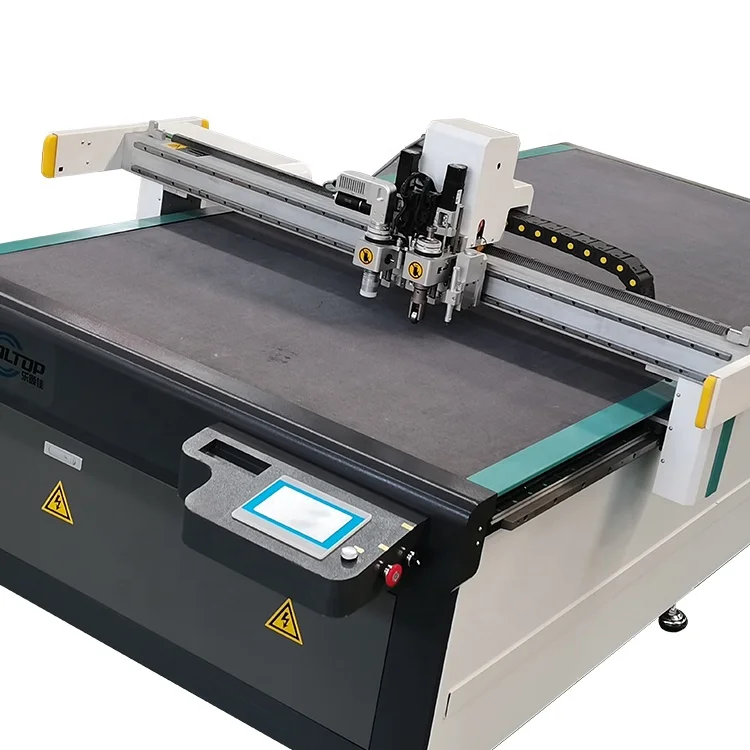
The Swiss imported oscillating knife head on the RT-D2516/RT-S2516 supports both full-cutting and half-cutting vibration modes, plus a cursor location function for registration marks. Full-cutting handles through-cuts on dense corrugated and multi-layer composites, while half-cutting scores fold lines on carton stock without penetrating the back liner. Selecting the wrong mode for the material produces either incomplete cuts or damaged substrate, and this choice must be confirmed during sample testing before the tool head configuration is finalised.
Vacuum Zoning for Small Parts and Continuous Feeding
The 7.5 kW vacuum pump paired with the flat working table and auto-feeding conveyor holds sheets firmly during high-speed oscillating knife travel. Small parts such as sticker contours or gasket profiles tend to lift if the vacuum zones are not segmented to match part size. The Germany-imported conveyor belt feeds fresh sheets while cut parts are cleared, maintaining continuous throughput without manual sheet changes between cycles. [NEED_CITE: vacuum table zoning strategies for small-part retention on flatbed cutters]
Servo and Guide Precision Across the Full Bed
The Yaskawa digital servo motor and Taiwan Hiwin linear guide rail deliver ≤0.1 mm repeatability across the entire 1600×2500 mm working area. For packaging sample makers running nesting layouts with dozens of carton profiles per sheet, this precision keeps cut lines within tolerance from the first part to the last. The synchronous belt and ball screw transmission system maintains this accuracy over extended production runs, preventing the drift that causes misalignment on printed contour work.
The Hidden Cost of Skipping Material-Specific Configuration
When a machine is ordered on working area alone without confirming the tool head, vacuum zoning and cutting parameters against actual production stock, the consequences surface quickly on the shop floor. Ragged edges on corrugated force manual trimming that slows downstream folding. Insufficient vacuum hold-down on small label parts causes re-cuts and material waste. Incorrect voltage or frequency specification leads to motor overheating and premature servo failure. These issues compound across every shift, turning what should be a straightforward cutting operation into a constant source of rework and scrap. [NEED_CITE: common causes of edge quality failure in digital flatbed cutting]
Why Buyers Specify This Table With Us
In-house design and production means the knife cutting configuration is matched to your material, not forced into a single-method approach. Tool head type, vacuum zone layout and conveyor or static table options are specified per production volume and part geometry. Software compatibility with your existing HP-GL workflow is verified before the order is placed. Voltage, frequency and control language are confirmed against your plant supply to prevent commissioning delays. Sample cutting on your own stock provides a documented cutting report showing edge quality, depth and throughput before any commitment is made.
Documentation & Verification
- Machine specification sheet listing confirmed tool head, vacuum layout and conveyor type
- Electrical schematic with voltage and frequency matched to your plant supply
- Sample cutting report on your own material showing edge quality and throughput
- Software licence and HP-GL file format compatibility note for your nesting workflow
- Factory test record documenting repeatability and safety device function before dispatch
Installation, Commissioning & Support
- 3450×2300×1250 mm footprint requires level floor with clearance for conveyor infeed and outfeed
- 9 kW rated power plus 7.5 kW vacuum pump demand dedicated 380V circuit with confirmed frequency
- Table arrives assembled with gantry and tool head pre-mounted for reduced on-site setup time
- First-run parameter tuning on your stock to set oscillation frequency, knife depth and vacuum zones
- Operator training covers tool head changeover, nesting file import and safety sensor testing
- Spare parts list includes oscillating knife blades, conveyor belt segments and vacuum seals
Preparing Your Enquiry
To recommend the correct oscillating knife configuration, we need your material type, maximum thickness, sheet size and the daily volume you plan to cut. Please also confirm your workshop voltage and frequency, your preferred control language and whether your existing file preparation software outputs HP-GL. If you are cutting printed contours, let us know the registration mark format so we can verify compatibility before quotation.
Frequently Asked Questions
Q: How is cutting speed verified for my specific material and thickness?
A: We run your actual stock through a sample cutting test, documenting the oscillation frequency, knife depth and feed rate that produce clean edges. The resulting report records the verified cutting speed for your material, not a generic range. This ensures the CNC oscillating knife cutting table specifications you receive match your production reality.
Q: Which tool head configuration suits corrugated board versus adhesive-backed labels?
A: Corrugated board typically requires full-cutting oscillation with higher downward pressure to slice through fluted layers cleanly. Adhesive-backed label stock uses half-cutting mode to score the face material without penetrating the release liner. Both modes are available on the same Swiss imported tool head, configured during sample testing.
Q: How does vacuum table zoning prevent small parts from lifting?
A: The 7.5 kW vacuum system divides the flat working table into independent zones that can be activated selectively. When cutting small gasket profiles or sticker contours, only the zones under active cutting are engaged, concentrating hold-down force and preventing part lift at high translational velocities.
Q: What voltage and control language options are confirmed before shipment?
A: The RT-D2516/RT-S2516 ships at 380V±10%, but the exact frequency (50 or 60 Hz) and control panel language must be matched to your plant. We confirm these details during the specification stage and document them in the electrical schematic before production begins.
Q: How does the HP-GL instruction system integrate with my nesting workflow?
A: The instruction system accepts HP-GL compatible format, which covers most standard nesting and file preparation software. We verify file import, nesting layout and cut path output on your actual design files during the pre-order confirmation stage to prevent workflow incompatibility after delivery.


商品评价
Clear filtersThere are no reviews yet.