



Fast Shipping
Carrier information

20k products
Payment methods

24/7 Support
Unlimited help desk

2-day Delivery
Track or off orders
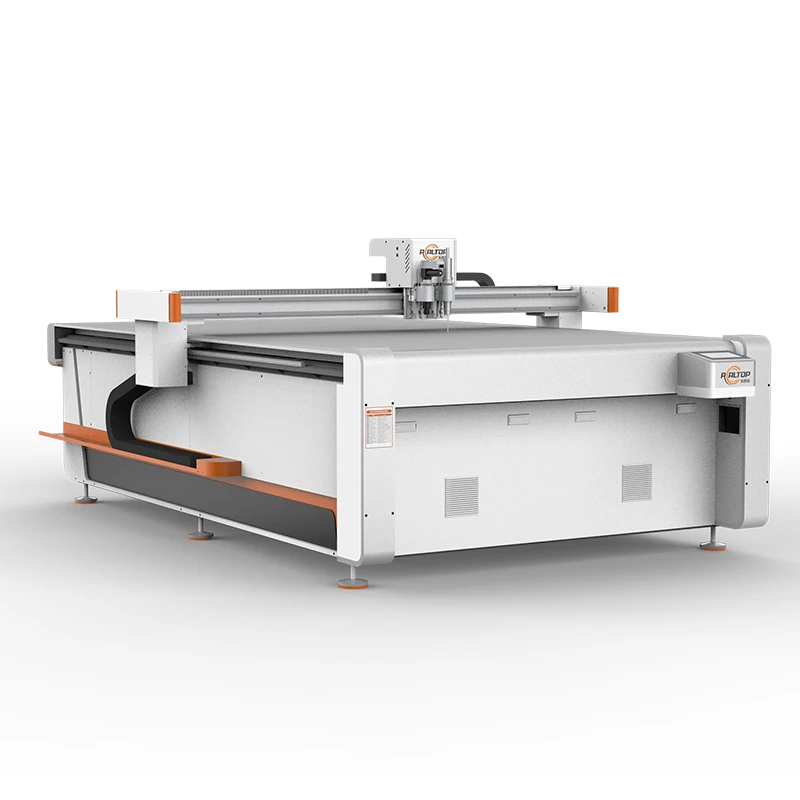
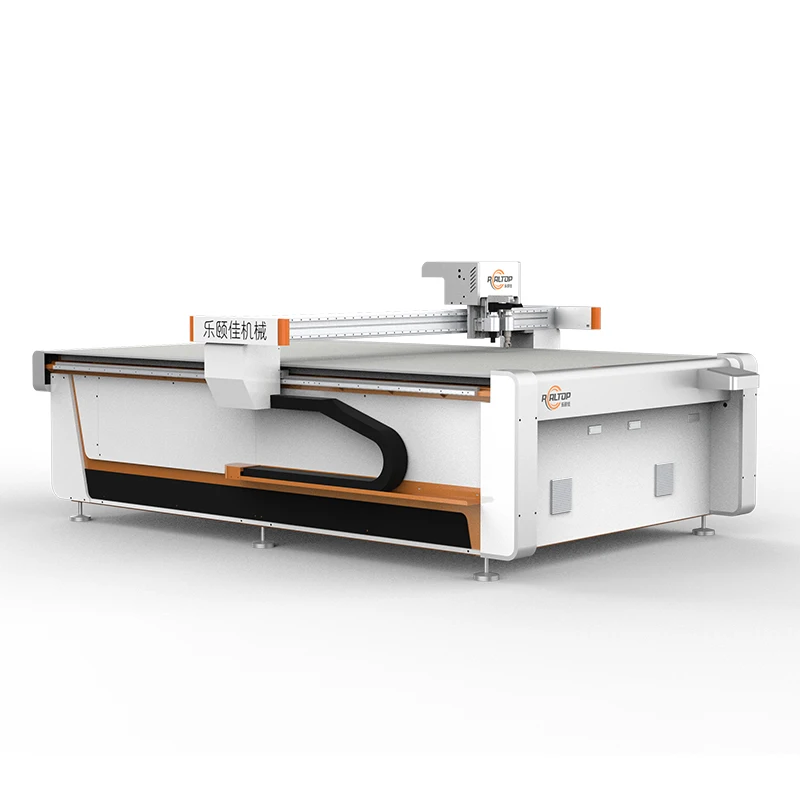
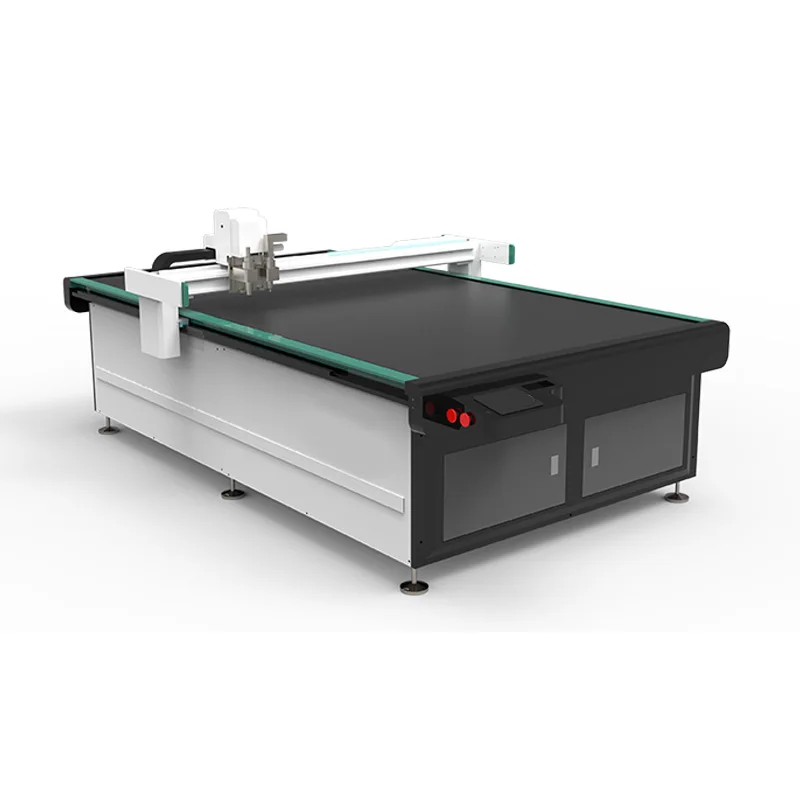
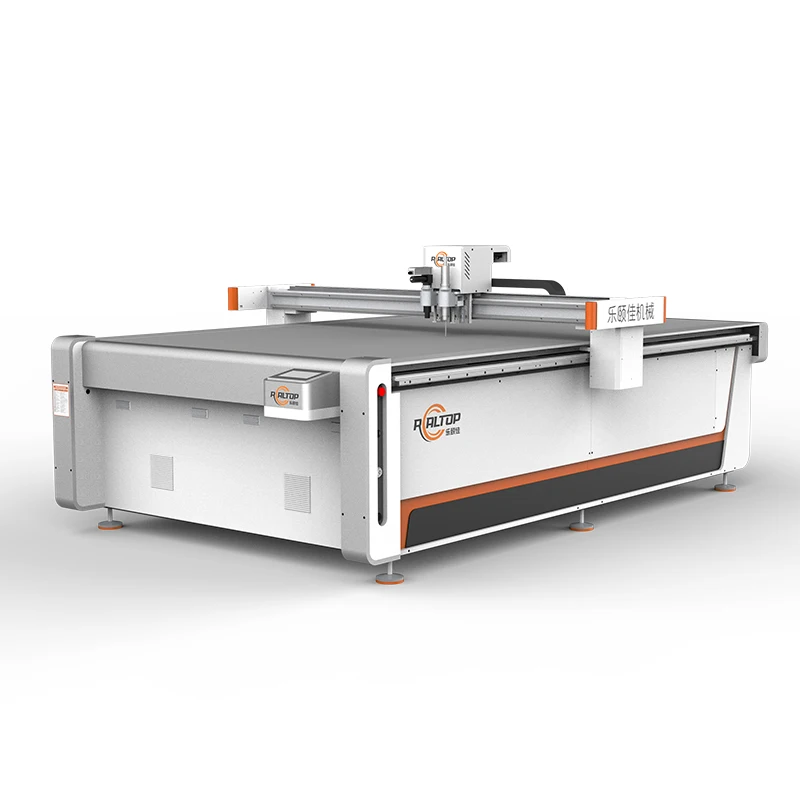
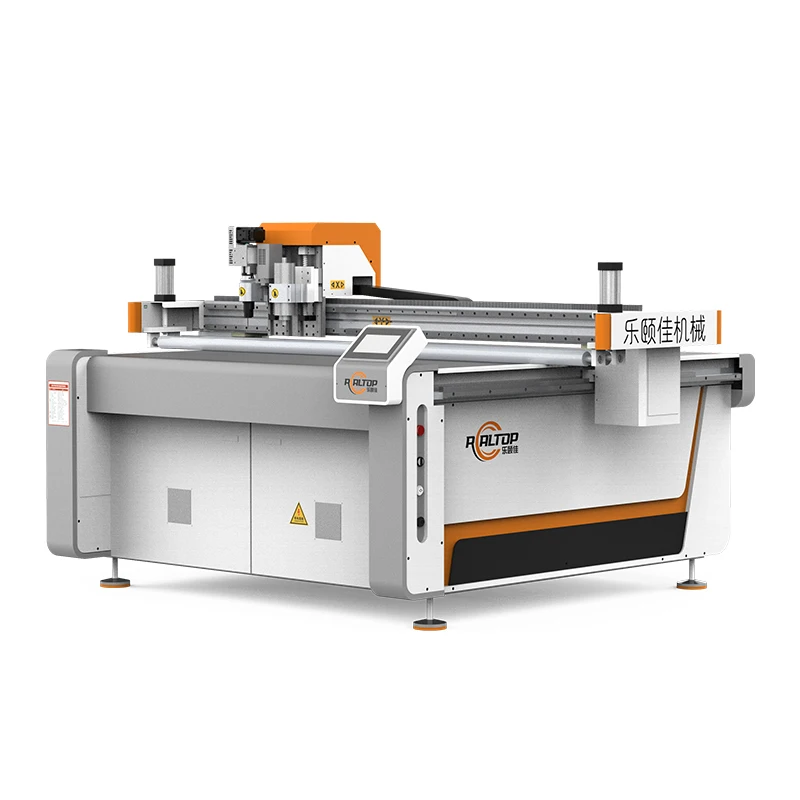
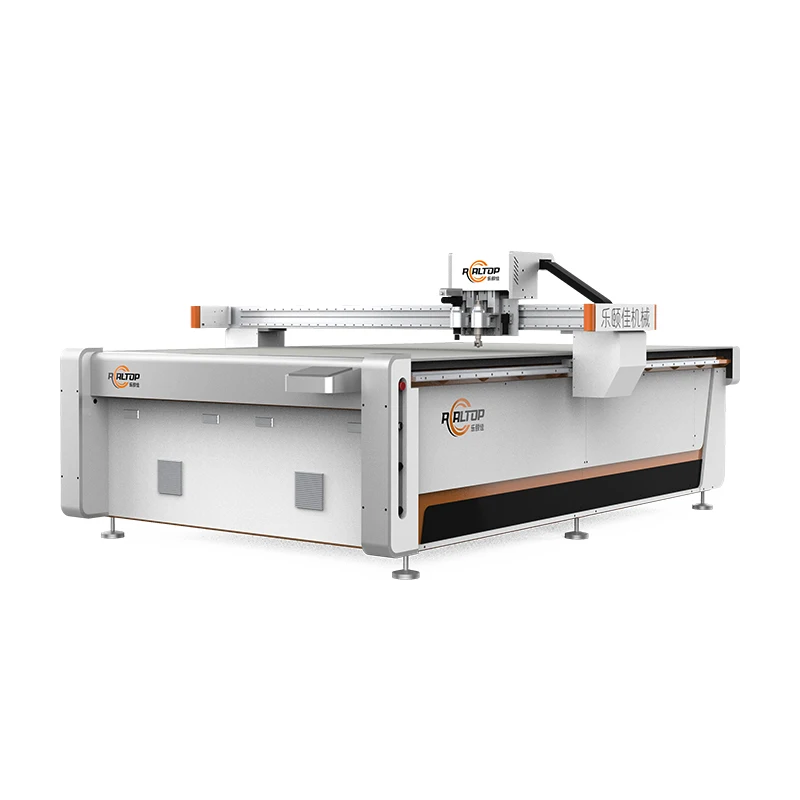
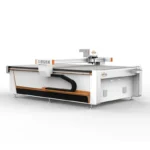
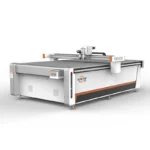
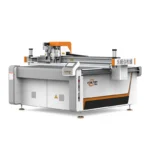
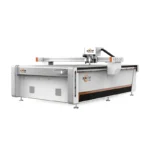
Configurable tool head and vacuum zoning — RT-D2516/RT-S2516 table configurations are matched to buyer material samples before order confirmation, not sold as a fixed package.
Technical Specifications
| Parameter | Value |
|---|---|
| Model | RT-D2516 / RT-S2516 |
| Product Type | CNC Oscillating Knife Cutting Machine |
| Working Area | 1600 × 2500 mm |
| Machine Dimensions | 3450 × 2300 × 1250 mm |
| Rated Power | 9 kW |
| Vacuum Pump Power | 7.5 kW |
| Table Type | Flat vacuum table with auto feeding system |
| Multifunctional Head | Swiss imported knife with vibration full cutting, half cutting and cursor location |
| Translational Velocity | 800 – 1200 mm/s |
| Cutting Speed | 200 – 800 mm/s (varies by material type and thickness) |
| Pneumatic Cutting Tool Capacity | Up to 70 mm thickness (basis to be confirmed) |
| Repeated Accuracy | ≤ 0.1 mm |
| Transmission System | Digital servo motor, linear guide, synchronous belt, imported ball screw |
| Servo Motor | Japanese Yaskawa |
| Linear Rail | Taiwan Hiwin |
| Conveyor Belt | Germany imported |
| Instruction System | HP-GL compatible format |
| Voltage | 380V ± 10% |
| Safety Device | Infrared sensors |
| Functions | Cutting, creasing, marking |
| Warranty | 12 months for machine, 3 months for consumables |
Application Suitability
| Application | Material or Output |
|---|---|
| Packaging sample making | Grey board, corrugated board, card stock with creasing |
| Carton and box prototyping | Single and multi-layer cardboard, coated stock |
| Gasket and seal cutting | Rubber, silicone, composite gasket sheets |
| Foam and sponge fabrication | Sponge composite leather, soft foam, EVA foam |
| Leather and flexible material | Natural and synthetic leather, PVC, soft glass |
| Sticker and label contouring | Adhesive vinyl, sticker sheets with printed marks |
Why Material Thickness Changes Everything About CNC Knife Cutting Machine Specifications
Cutting speed ratings mean nothing without knowing the exact material, thickness and layer count you run every day.
When I was still working the assembly floor, a carton sample client told us they ran standard grey board. We set up the oscillating knife head for that material and sent the machine out. Two weeks later we learned their real daily job was multi-layer corrugated with a laminated film top — the tool head could not push through cleanly, and every edge came out crushed. That gap between what a buyer says and what the shop floor actually cuts is where most CNC oscillating knife cutting machine specifications fail. The numbers on a spec sheet are starting points, not promises [NEED_CITE: common misconfiguration causes in flatbed digital cutting].
Matching the Knife Head to What Actually Runs on the Table
The RT-D2516 and RT-S2516 carry a Swiss imported oscillating knife head that handles full cutting, half cutting and cursor location in one setup. For packaging work, that means the same head scores a crease line and cuts the outer contour without a tool change. When the material shifts to something like 5 mm EVA foam or composite gasket rubber, the oscillation frequency and blade angle need to be dialed in against a physical sample, not a data sheet guess.
Vacuum Zoning and the Small Part Problem
A 7.5 kW vacuum pump sounds adequate until you cut small gasket pieces or narrow packaging inserts. If the table surface is not divided into controllable zones, the vacuum spreads across the full 1600 × 2500 mm area and loses grip on individual small parts. They lift at the edges during high-speed passes, producing ragged cuts and forcing the operator to slow the machine down. Zoning the vacuum surface keeps hold-down pressure concentrated where the material actually sits [NEED_CITE: vacuum hold-down principles for flatbed CNC cutting tables].
Reading the Numbers That Matter on the Spec Sheet
The ≤ 0.1 mm repeated accuracy is driven by the Yaskawa digital servo motors paired with Hiwin linear rails and an imported ball screw. In packaging sample work, that repeatability means a crease line lands in the same spot every time across a long production run, so box folds stay consistent. The 800 – 1200 mm/s translational speed covers non-cutting moves between contours, while the 200 – 800 mm/s cutting speed range depends entirely on the material being fed — a thin PVC sheet runs at the upper end, while dense rubber gasket material demands the lower range. HP-GL compatibility lets the control system pull files from standard packaging CAD and nesting software without a separate conversion step. The 9 kW total rated power and 380V ± 10% supply requirement mean the electrical panel needs a dedicated circuit with the correct breaker sizing at the buyer’s facility before the machine arrives.
What Happens When Configuration Is Skipped
I have seen CNC cutting tables of this class arrive at a buyer’s facility with the wrong tool head for the job because the material conversation stopped at "flexible sheet." The oscillating knife scored the surface of a dense composite instead of cutting through it, and the operator spent weeks trying to adjust blade depth by hand. In another case, a machine was shipped with a fixed vacuum zone layout to a buyer cutting small sticker contours; parts lifted off the table during runs, and the shop had to add their own fixturing on top. These are not machine failures — they are specification failures that surface only after the crate is opened [NEED_CITE: flatbed cutting machine installation misalignment cases].
Why This Configuration Approach Works
The design and production team covers both knife cutting and table construction in-house, so the tool head and vacuum configuration are selected together rather than sourced separately. Every RT-D2516 or RT-S2516 order starts with a sample cutting report on the buyer’s own material, confirming edge quality and achievable speed before the build goes forward. CCD camera positioning is available for printed contour work, and the camera tracking capability is tested against the buyer’s actual print marks at production speed. Voltage, plug type and control language are confirmed against the destination market before the electrical panel is wired. Software and file format compatibility is checked against the buyer’s existing CAD workflow, not assumed from a generic driver list.
Documentation & Verification
- Machine specification sheet confirming tool head and vacuum zone layout for your material
- Electrical schematic with 380V ± 10% or custom voltage and breaker requirements
- Sample cutting report on your own material showing edge quality and speed achieved
- Factory test record documenting repeated accuracy and servo calibration before dispatch
- Software licence and HP-GL file format compatibility note for your CAD workflow
- Spare parts list covering blades, creasing wheels and wear items for the first year
Installation, Commissioning & Support
- Dedicated 380V ± 10% circuit with correct breaker sizing for the 9 kW rated load
- Level floor space of at least 3450 × 2300 mm plus clearance for auto feeding conveyor
- Vacuum pump commissioning and zone pressure test against your typical part size
- First-run parameter setup for cutting speed and oscillation depth on your material
- Operator training covering HP-GL file import, tool change and nesting workflow
- Consumable blade and creasing wheel stock list for the first production cycle
What We Need From Your Side to Build the Right Setup
Send us the actual material you cut most often — not just the name, but a physical sample with the thickness and layer structure you run daily. Tell us your typical sheet size, daily volume and whether your files come from a specific CAD or nesting platform. If your facility runs on a voltage standard different from 380V, or your operators need the control interface in a specific language, confirm that early so the electrical and software configuration matches your shop from day one.
Frequently Asked Questions
Q: How is cutting speed determined for my specific material and thickness?
A: Cutting speed on the RT-D2516/RT-S2516 ranges from 200 to 800 mm/s depending on the material. We determine the right speed by running your actual material sample on the machine, adjusting oscillation frequency and blade depth until the edge quality meets your standard, then recording those parameters in the setup sheet.
Q: Which tool head is right for my material — oscillating knife, drag knife or creasing wheel?
A: Oscillating knife handles thicker foam, gasket and corrugated board cleanly. Drag knife suits thin PVC, vinyl and sticker sheets. Creasing wheel scores fold lines on card stock and grey board. For packaging sample work, we often configure two or all three on the same multifunctional head so you switch tools without stopping the job.
Q: Can the vacuum table hold small parts flat during high-speed cutting?
A: The 7.5 kW vacuum pump feeds a zoned flat table on the RT-D2516/RT-S2516. Zoning allows vacuum to concentrate under the area where your parts actually sit, preventing small gasket pieces or narrow packaging inserts from lifting at the edges during fast contour passes.
Q: What file formats and nesting software does the control system accept?
A: The instruction system is HP-GL compatible, which covers most standard packaging CAD and nesting platforms. We confirm file format compatibility with your specific software before the order and include a compatibility note in the documentation so there are no surprises at first boot.
Q: Is sample cutting on my own material available before placing the order?
A: Yes. We run your material on the machine, document edge quality, cutting depth and achievable speed, and send you the sample cutting report. You review the physical cut pieces and the report before committing to the build, so the configuration is proven on your actual job.


商品评价
Clear filtersThere are no reviews yet.