




Fast Shipping
Carrier information

20k products
Payment methods

24/7 Support
Unlimited help desk

2-day Delivery
Track or off orders
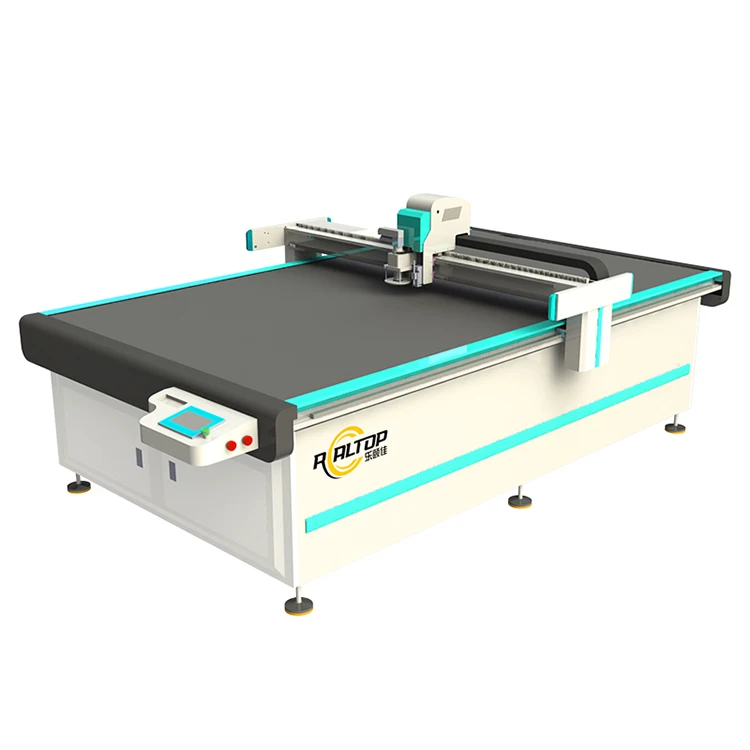
Specified Cutting Depth — Tool head selection matched to corrugated flute, kraft ply and grey board density so the oscillating knife penetrates cleanly without crushing the core.
Technical Specifications
| Parameter | Value |
|---|---|
| Model | RT-D2516/RT-S2516 |
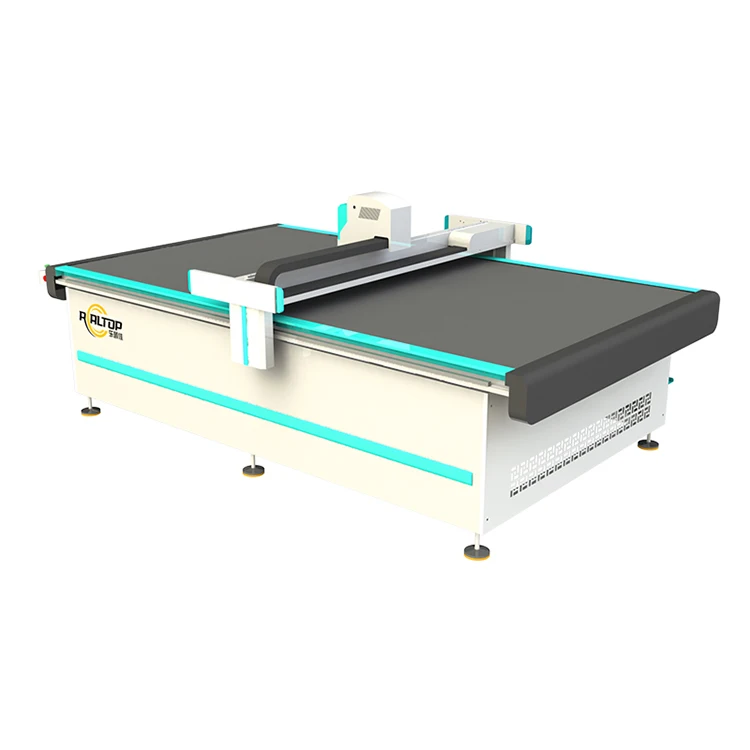
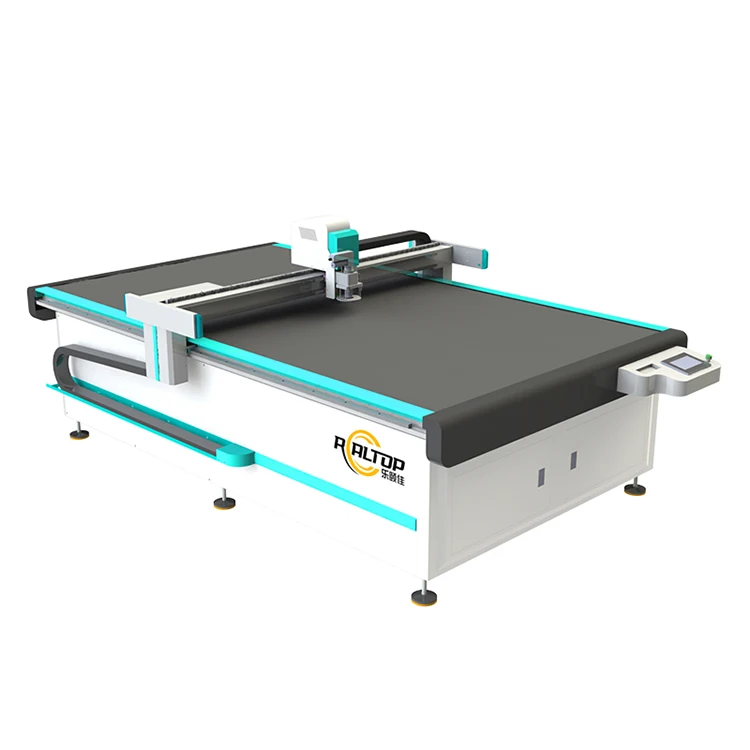
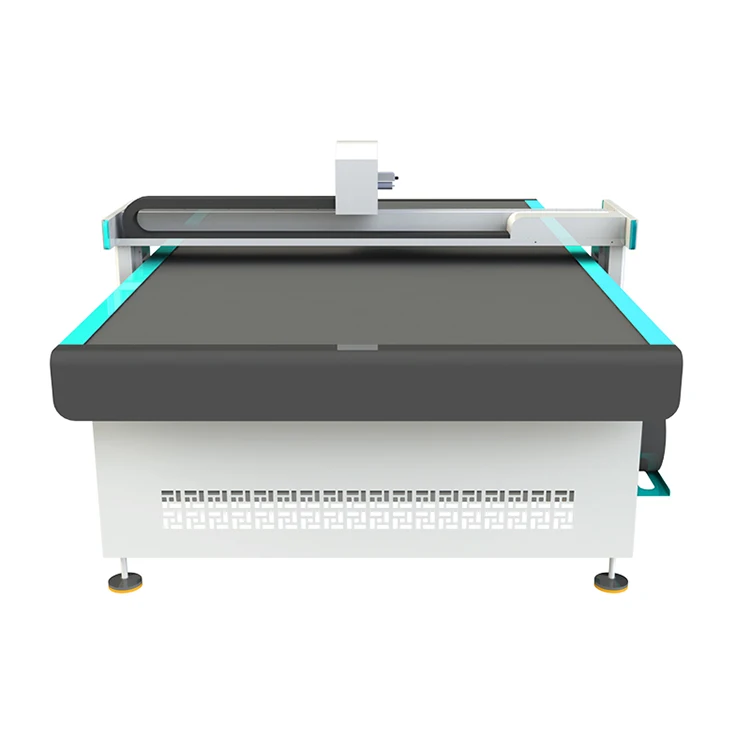
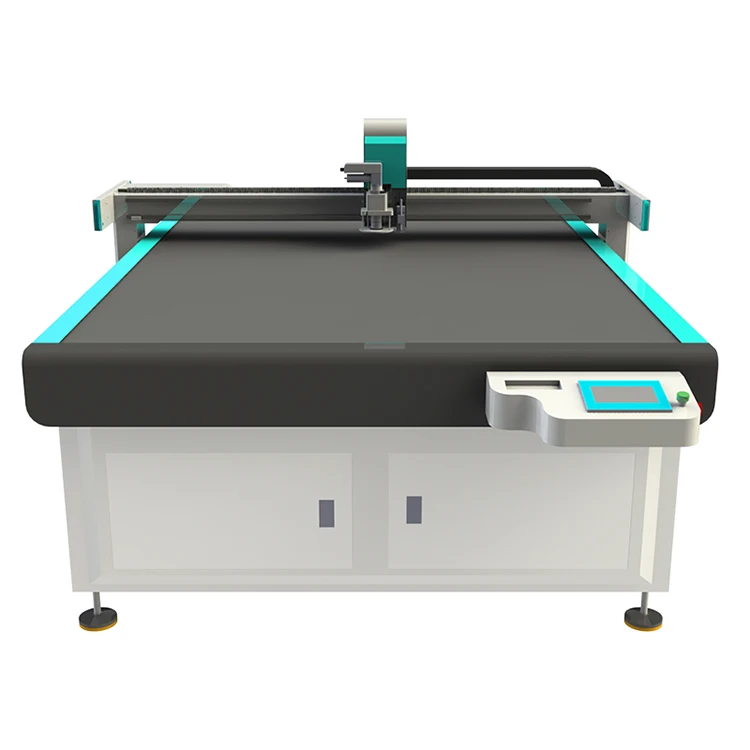
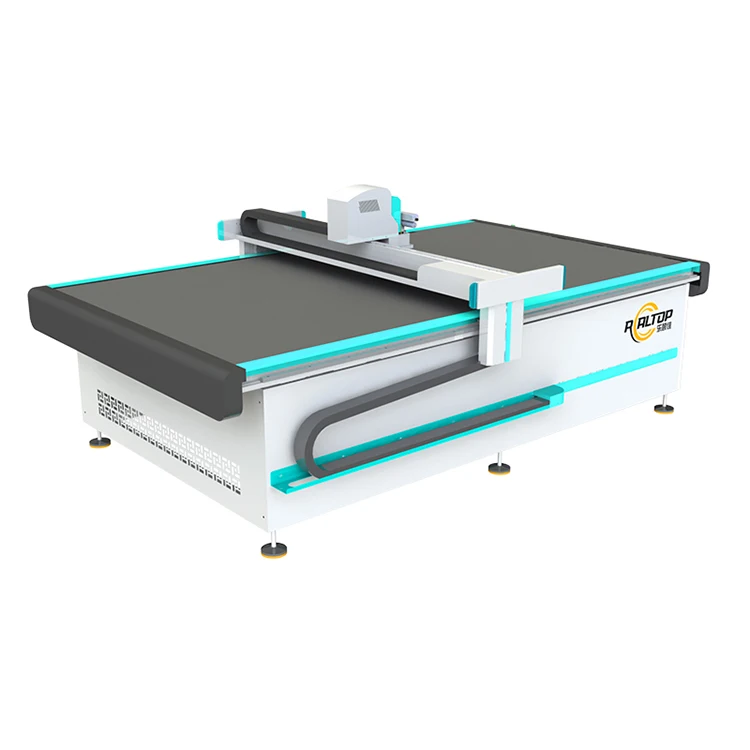
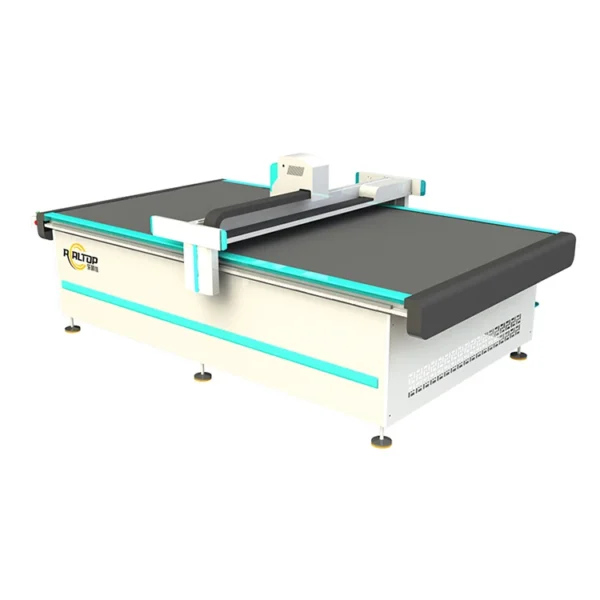
| Product Type | CNC Oscillating Knife Cutting Machine |
| Working Area | 1600 × 2500 mm |
| Machine Size | 3450 × 2300 × 1250 mm |
| Rated Power | 9 kW |
| Voltage | 380V ±10% |
| Vacuum Pump | 7.5 kW |
| Multifunctional Head | Swiss imported knife; oscillating full cut, oscillating half cut, cursor location |
| Translational Speed | 800–1200 mm/s |
| Cutting Speed | 200–800 mm/s (basis to be confirmed) |
| Repeatability | ≤0.1 mm |
| Transmission System | Digital servo motor, linear guide, synchronous belt, ball screw (imported) |
| Table Type | Flat working table with vacuum suction |
| Instruction System | HP-GL compatible format |
| Safety Device | Infrared sensors |
Application Suitability
| Application | Material or Output |
|---|---|
| Packaging and carton sample making | Grey board, kraft, corrugated board, folding carton stock |
| Garment and footwear production | Fabric layers, genuine and synthetic leather, sponge composite |
| Gasket and sealing fabrication | PVC sheet, silicone, rubber, soft glass, composite board |
What a "Fast Cutting Speed" Claim Hides When Choosing a CNC Oscillating Knife Cutting Machine
Stated speed means nothing without the material type, ply count and flute profile written next to it.
When a supplier quotes 800 mm/s, the first question must be: on which material, at what thickness, and how many plies stacked? I have watched packaging sample rooms accept a machine on speed alone, then find the oscillating knife chatters through double-wall corrugated while dragging through dense grey board. The RT-D2516/RT-S2516 lists a 200–800 mm/s cutting speed range, but that range shifts the moment you change from E-flute to B-flute or from single-ply kraft to laminated board. Confirm the speed against your actual daily material stack before the order is signed. [NEED_CITE: correlation between oscillating frequency and corrugated flute type]
Swiss Knife Configuration for Layered Packaging Stock
The multifunctional head on this platform combines oscillating full cutting, oscillating half cutting and cursor location in one tool station. For packaging sample makers, that means creasing lines and through-cuts can run from the same file without a manual tool change. The Swiss imported blade holder maintains oscillation frequency under load, which matters when the knife enters dense grey board at an angle. A consistent oscillation keeps the edge clean on both top liner and bottom liner of corrugated stock.
Vacuum Table Zoning and Small Part Hold-Down
A 7.5 kW vacuum pump sits under the flat working table. On a 1600 × 2500 mm surface, zoning becomes critical when the nesting software places small gasket blanks or carton corner pieces near the table edge. Without independent zone valves, suction bleeds across the entire bed and small parts lift during high-speed traversal. The RT-D2516/RT-S2516 flat table must be checked for zone count against the smallest piece in your typical nesting layout. [NEED_CITE: vacuum zone requirements for small-format die-less cutting]
Drive Train Tolerance and Repeatable Registration
Repeatability of ≤0.1 mm comes from the combination of imported ball screw, Taiwan Hiwin linear rail and Japanese Yaskawa servo motor. In carton sample production, this tolerance determines whether a crease line lands exactly on the printed fold mark across a fifty-piece batch. Digital servo control also governs acceleration into corners, preventing the knife from over-traveling on tight radius curves common in locking tab designs. Synchronous belt sections on the translational axis absorb vibration that would otherwise transfer into the knife holder during rapid moves.
How the 380V Three-Phase Supply Affects Your Workshop Planning
A 9 kW rated power draw plus a separate 7.5 kW vacuum pump means the machine needs a dedicated three-phase circuit with headroom for start-up inrush. Buyers in regions running 220V three-phase or 415V 60Hz must confirm transformer compatibility before the machine leaves the factory. Voltage mismatch on the servo drives is one of the most common causes of control board failure in the first month of operation overseas. [NEED_CITE: industrial voltage and frequency standards by export market]
The Hidden Cost of Skipping a Material Trial
Skipping a trial cut on your own material is where most packaging sample room budgets go wrong. A machine that handles 2 mm grey board cleanly may compress 5 mm double-wall corrugated, leaving crushed flutes at the cut edge. Without a sample cutting report run on your exact board grade, you inherit the risk of ragged edges, delaminated liners and rejected customer samples. The cost of re-cutting a short-run carton order outweighs the time spent shipping your material to the factory for a test.
Why Source This Platform from Realtop
In-house design covers both the knife head geometry and the vacuum table plumbing, so configuration changes are handled at the engineering level rather than through third-party add-ons. Tool head and table setup is specified per material before the build, not left as a generic default. Software file format and HP-GL compatibility are confirmed during the pre-order stage, preventing the common scenario where the nesting output will not load on arrival. Voltage, plug type and control panel language are locked in on the electrical schematic before production starts. Sample cutting on your actual board stock runs before shipment, giving you a physical reference of edge quality.
Documentation & Verification
- Machine specification sheet listing every axis travel limit and servo rating
- Electrical schematic confirming 380V ±10% wiring and breaker sizing
- Tool head and vacuum table configuration list matched to your board grade
- Sample cutting report produced on your supplied corrugated and grey board
- Software licence and HP-GL file format compatibility note before dispatch
- Factory test record documenting repeatability measurement at ≤0.1 mm
Installation, Commissioning & Support
- Dedicated 380V three-phase circuit sized for combined 16.5 kW draw including vacuum pump
- Floor leveling pads under the 3450 × 2300 mm footprint to prevent rail twist
- First-run parameter tuning on your specific board thickness and flute profile
- Operator training covering oscillating knife blade change and cursor location calibration
- Spare blade stock and vacuum filter replacement schedule documented at handover
- Preventive maintenance intervals for Hiwin rail lubrication and belt tension check
Start Your Specification Conversation
Send your most demanding carton file along with the thickest corrugated board and the smallest locking tab you run weekly. Include your workshop voltage and frequency so the servo drives and vacuum pump are wired correctly from day one. If your nesting software outputs a proprietary format, share a sample file so HP-GL compatibility is verified before the build begins.
Frequently Asked Questions
Q: How do I verify what the 200–800 mm/s cutting speed actually applies to?
A: Request a sample cutting report run on your own material. The report should list board type, flute profile, ply count, knife oscillation frequency and the speed at which a clean edge was achieved. Without that material-specific data, the published speed range remains a general reference, not a production guarantee.
Q: Which tool head handles creasing versus through-cutting on carton stock?
A: The multifunctional head on this machine performs oscillating full cut, oscillating half cut and cursor location. Half-cut mode acts as a creasing function on folding carton, while full cut handles the outline. Confirm with the supplier that the half-cut depth setting matches your specific board ply before committing to a production run.
Q: Will the vacuum table hold small carton blanks without lifting?
A: Hold-down depends on vacuum zone layout, not just pump power. A 7.5 kW pump on a 1600 × 2500 mm table needs independent zone valves so suction concentrates under small parts. Ask for the zone map and test with your smallest nesting piece to confirm it stays flat at full translational speed.
Q: How are voltage and control language confirmed before the machine ships?
A: The electrical schematic and voltage confirmation document should be signed off during the pre-order stage. This locks in the three-phase supply spec, plug type and control panel language. Any mismatch caught after production starts risks servo drive damage or an unusable interface on arrival.


商品评价
Clear filtersThere are no reviews yet.