






Fast Shipping
Carrier information

20k products
Payment methods

24/7 Support
Unlimited help desk

2-day Delivery
Track or off orders
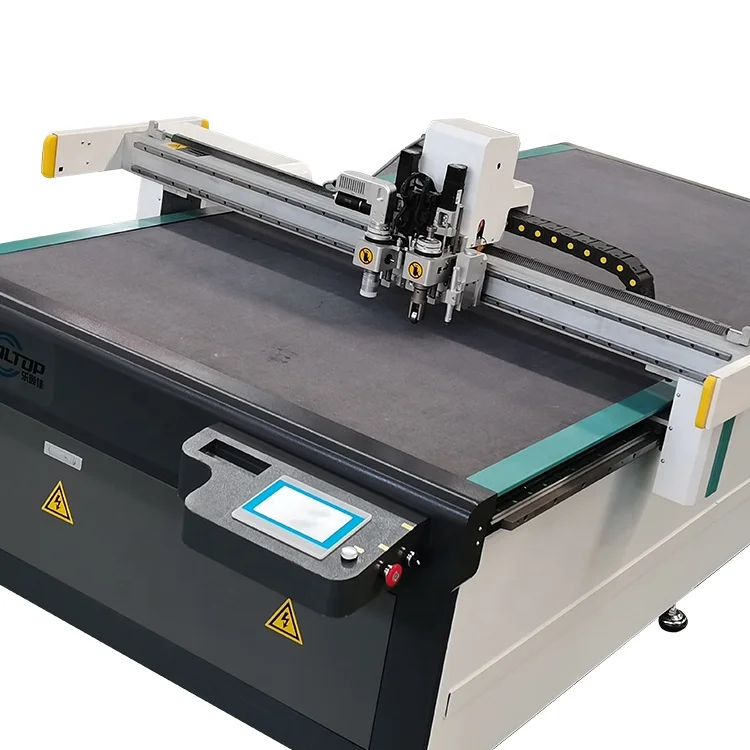
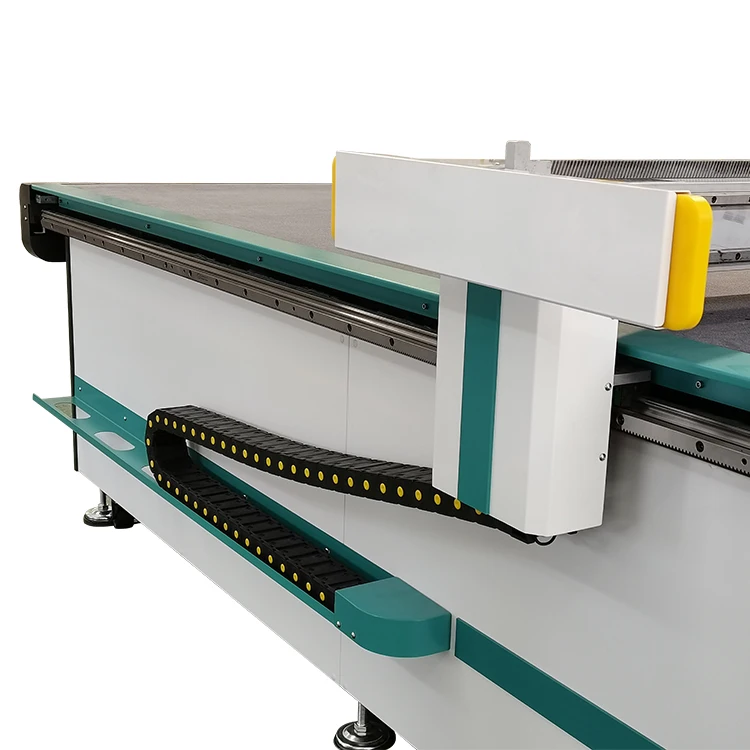
Tool head and table configuration specified per material and production volume — The RT-D2516/RT-S2516 oscillating knife cutting table is configured around your actual substrate, with tool head selection, vacuum zoning and cutting parameters validated on your own material sample before any commitment is made.
Technical Specifications
| Parameter | Value |
|---|---|
| Model | RT-D2516/RT-S2516 |
| Product Type | CNC Oscillating Knife Cutting Machine for Packaging and Carton Sample Making |
| Working Area | 1600×2500 mm |
| Machine Size (L×W×H) | 3450×2300×1250 mm |
| Rated Power | 9 kW |
| Table Type | Flat working table with vacuum and auto feeding (Germany imported conveyor belt) |
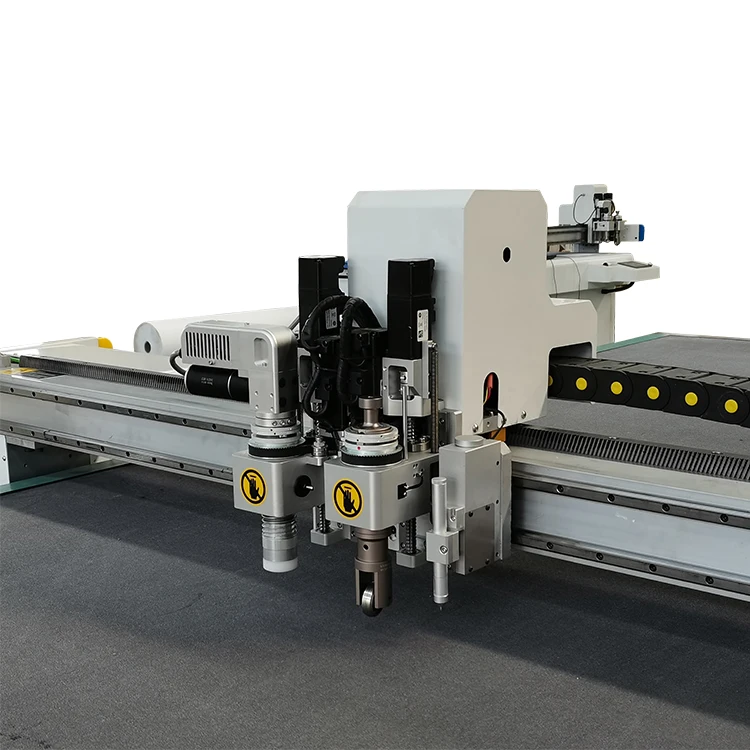
| Tool Head | Multifunctional head — Swiss imported knife with vibration full cutting, vibration half cutting and cursor location |
| Translational Velocity | 800–1200 mm/s |
| Cutting Speed | 200–800 mm/s (varies by material) |
| Repeatability | ≤0.1 mm |
| Transmission System | Japanese Yaskawa digital servo motor, Taiwan Hiwin linear guide, synchronous belt, ball screw |
| Instruction System | HP-GL compatible format |
| Voltage | 380V ±10% |
| Vacuum Pump | 7.5 kW |
| Safety Device | Infrared sensors |
| Warranty | 12 months for whole machine |
| Certification | CE |
Application Suitability
| Application | Material or Output |
|---|---|
| Carton and packaging sample making | Corrugated board, paper honeycomb, folding carton stock, grey board |
| Garment and footwear sample cutting | Fabric, leather, non-woven textiles, composite uppers |
| Gasket and foam fabrication | Rubber sheets, PU, EVA, XPE, sponge composite leather |
| Signage and display prototyping | Foam board, PVC, soft glass, acrylic board |
| Industrial composite cutting | Glass fiber, carbon fiber, PTFE, ETFE, PP, PE films and stickers |
Why "200–800 mm/s Cutting Speed" Means Nothing Without Your Material
Actual cutting speed is set only after your substrate runs on the machine under test conditions.
I have watched packaging sample shops buy a CNC oscillating knife cutting machine based on a headline speed figure, then discover their double-wall corrugated requires a blade oscillation frequency and downward pressure that forces the carriage to slow considerably [NEED_CITE: cutting speed variation by material density and thickness]. The RT-D2516/RT-S2516 publishes a 200–800 mm/s range precisely because a thin sticker film and a 15 mm foam gasket sit at opposite ends of that band. What matters for your purchase decision is where your specific material lands within that range and whether the resulting throughput meets your daily sample or short-run volume.
Oscillating Knife Mechanics for Packaging Substrates
The Swiss imported oscillating knife on the RT-D2516/RT-S2516 handles full cutting, half cutting and cursor location from a single multifunctional head. For carton sample makers, half-cut creasing on corrugated or honeycomb board demands precise depth control so the fold line compresses cleanly without fracturing the outer liner. The vibration mechanism drives the blade at high frequency to slice through fibrous material rather than tearing it, which is the failure mode you see when a drag knife is forced into thick board it was never designed for.
Vacuum Hold-Down and Continuous Sheet Feeding
The 7.5 kW vacuum pump paired with a Germany imported conveyor belt auto-feeding system addresses a problem that surfaces repeatedly in short-run packaging shops: small cut pieces lifting off the table mid-cycle [NEED_CITE: vacuum table zoning requirements for small nested parts]. A flat vacuum table without zoning struggles when the cutting path isolates a small flap or tab, because the surrounding air bleed destroys suction on that zone. The conveyor feed also means operators are not manually repositioning large corrugated sheets between cuts, which matters when you are running multiple carton samples in a single session.
Reading the Drivetrain Against Cutting Accuracy
The repeatability specification of ≤0.1 mm rests on a drivetrain combining Japanese Yaskawa servo motors with Taiwan Hiwin linear guides, a synchronous belt and ball screw arrangement. In packaging sample making, that level of positional accuracy determines whether a folding carton closes squarely or arrives at the client with misaligned glue flaps. Translational velocity of 800–1200 mm/s describes how fast the head moves between cut paths, not through the material — a distinction that affects total job time far more than cutting speed alone when a complex carton design contains dozens of separate cut and crease segments. The 9 kW rated power covers the full system including servo drives and vacuum assist during sustained operation.
The Hidden Cost of Skipping Material-Specific Validation
A buyer who specifies a CNC oscillating knife cutting machine on working area and price alone often discovers problems after the machine arrives on the shop floor. A creasing wheel that performs acceptably on standard grey board may fail to compress high-density corrugated, leaving fold lines that crack and splinter [NEED_CITE: creasing pressure requirements by board grade]. A vacuum table without adequate zoning lets small gasket pieces drift during the final passes, producing scrap rather than finished parts. These are not defects in the machine — they are mismatches between configuration and application that a pre-order sample cut on your own material would have revealed before any money changed hands.
Why Production Managers Source This Machine Here
The RT-D2516/RT-S2516 sits within a factory that builds both knife and laser cutting systems, so the cutting method is chosen to match your substrate rather than forced into whichever technology happens to be on the showroom floor. Tool head and table configuration are specified per material and production volume, documented in a configuration list you review before production begins. Sample cutting on your own material is standard practice, producing a test report that confirms edge quality, cutting depth and achievable speed before you commit. Voltage, plug type and control language are confirmed against your site supply and operator requirements. Software file format compatibility is verified so that your existing HP-GL workflow imports without translation errors.
Documentation & Verification
- Machine specification sheet listing all confirmed parameters and tool head configuration
- Electrical schematic with 380V ±10% supply requirement and circuit layout
- Sample cutting report produced on your exact packaging board or gasket material
- Tool head and vacuum table configuration list matched to your material type and thickness
- Software licence documentation with HP-GL format compatibility confirmation
- Factory test record documenting cutting accuracy and repeatability before dispatch
Installation, Commissioning & Support
- Floor space allocation for 3450×2300 mm footprint plus operator access clearance
- Dedicated 380V ±10% circuit with capacity for 9 kW rated power plus 7.5 kW vacuum pump
- Machine arrives fully assembled; leveling and anchor bolt installation on-site
- First-run calibration of oscillating knife depth and creasing pressure on your material stock
- Operator training covering HP-GL file import, tool head changeover and vacuum zone setup
- Spare parts list covering Swiss knife blades, conveyor belt segments and infrared sensor units
- Scheduled maintenance plan for Hiwin rail lubrication and Yaskawa servo drive inspection
What to Include in Your Enquiry
Provide the specific material types, thicknesses and sheet dimensions you intend to cut so the correct tool head and vacuum table configuration can be determined before quotation. Confirm your facility voltage supply and frequency, preferred control panel language, and any existing CAD or nesting software whose file formats must import directly. If your production involves printed contour cutting, state whether CCD camera positioning is required for your workflow.
Frequently Asked Questions
Q: How is cutting quality verified on my packaging material before I place an order?
A: Your actual material — corrugated board, honeycomb, grey board or gasket stock — is test-cut on the RT-D2516/RT-S2516 before any order is finalized. The sample cutting report documents edge quality, crease line integrity, achievable cutting speed and any tool head adjustments made during the trial, so you evaluate real results rather than generic specifications.
Q: Which tool head configuration suits my material — oscillating knife, drag knife or creasing wheel?
A: Tool head selection depends on your substrate type, thickness and the cut or crease profile required. The multifunctional head on this CNC oscillating knife cutting machine combines Swiss imported oscillating knife with vibration full and half cutting. Additional tool options are confirmed against your specific material sample during the pre-order trial phase.
Q: Will small packaging components lift off the table during cutting?
A: The 7.5 kW vacuum system on the flat working table provides hold-down across the cutting surface. For jobs producing many small nested parts, vacuum zoning adequacy is evaluated during your material sample test to confirm that isolated pieces remain stable through the final cutting passes.
Q: What software formats does this machine accept for packaging design files?
A: The instruction system accepts HP-GL compatible format out of the box. If your design workflow uses additional file formats or nesting software, compatibility is verified during the pre-order consultation so your existing files import correctly without manual conversion.
Q: How are electrical supply and operator language requirements confirmed before delivery?
A: Voltage is specified at 380V ±10%, and an electrical schematic is provided for your electrician to verify site supply adequacy. Control panel language options are confirmed before production so the interface matches your operator requirements when the machine is commissioned on your floor.


商品评价
Clear filtersThere are no reviews yet.