








Fast Shipping
Carrier information

20k products
Payment methods

24/7 Support
Unlimited help desk

2-day Delivery
Track or off orders
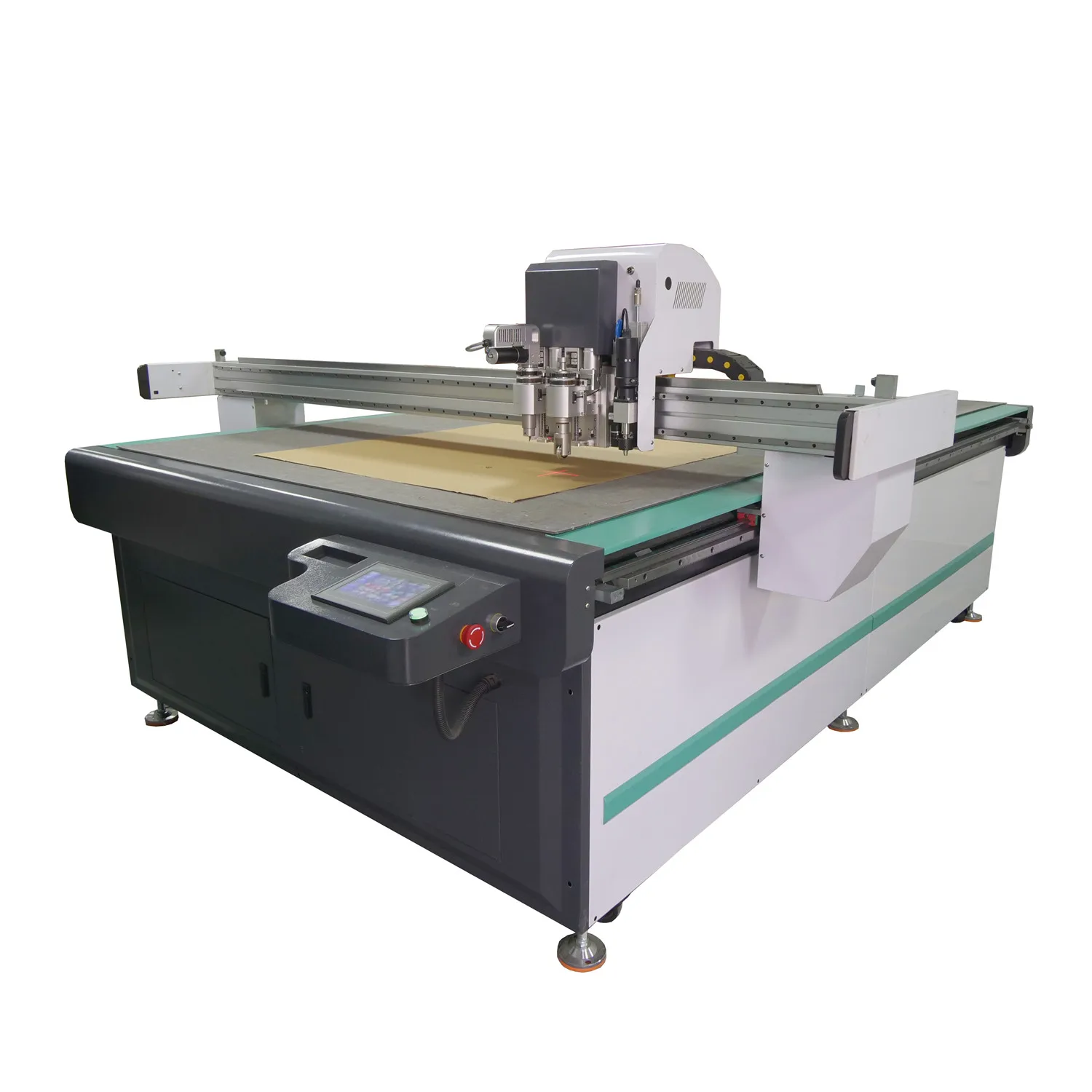
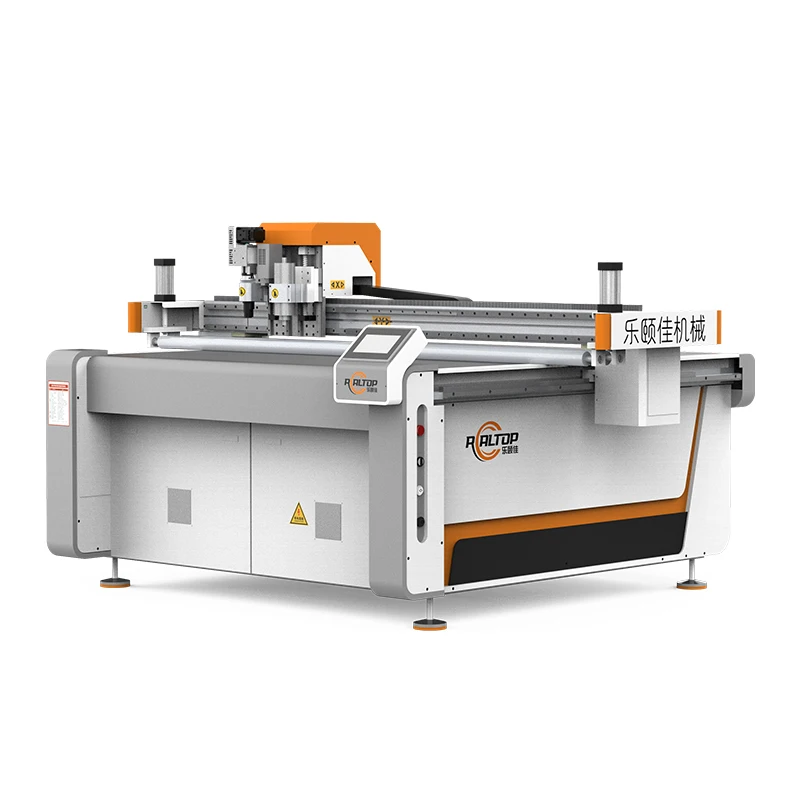
Precision Tool Head Mapping — Every oscillating knife, creasing wheel, and V-cutter is matched to your corrugated flute grade before the machine ships, ensuring clean folds and full cuts on your exact board stock.
Technical Specifications
| Parameter | Value |
|---|---|
| Product Type | CNC Oscillating Knife Cutting Machine |
| Model | RT-D2516/RT-S2516 |
| Working Area | 1600 × 2500 mm |
| Machine Size | 3450 × 2300 × 1250 mm |
| Rated Power | 9 kW |
| Vacuum Pump | 7.5 kW |
| Table Type | Flatbed working table or auto-feeding table |
| Multifunctional Head | Swiss imported knife with full-cut, half-cut, and cursor location |
| Tool Head Options | Oscillating knife, pneumatic knife, high-power vibrating knife, circular knife, V-cutting knife, drag knife, creasing wheel, dotted-line knife, punching, brush |
| Servo Motor | Delta or Panasonic (IP67 waterproof) |
| Translational Velocity | 800–2000 mm/s |
| Cutting Speed | 200–800 mm/s (varies with material and thickness) |
| Cutting Thickness | Up to 100 mm (material dependent) |
| Repeated Accuracy | ≤ 0.1 mm |
| Transmission System | Digital servo motor, linear guide, synchronous belt, ball screw |
| Vacuum Table | Magnesium-aluminum alloy with fluorocarbon PVDF coating and hard oxidation |
| Vision Positioning | Small CCD mark-point, panoramic camera, or projection positioning |
| Instruction System | HP-GL compatible format |
| Software Formats | PLT, DXF, AI |
| Voltage | 380V ± 10% |
| Control Panel | Touch screen with multiple language support |
| Safety Devices | Infrared sensors, anti-collision, emergency stop |
| Frame | Thick-walled seamless steel, high-temperature tempering, CNC machined |
| Standards | CE |
Application Suitability
| Application | Material or Output |
|---|---|
| Carton and packaging sample making | Single, double, and triple-wall corrugated cardboard with creasing and slotting |
| Corrugated board converting | Honeycomb board, multi-wall flute profiles up to the rated thickness limit |
| Display and signage production | Foam board, PVC board, and composite sheets with printed contour recognition |
| Gasket and industrial sheet cutting | Rubber, PTFE, fiberglass, and non-woven fabric for sealing applications |
| Graphic arts and print finishing | Sticker films, PP, PE, and PVC sheets with CCD mark-point alignment |
Why the Right Tool Head Matters More Than the Work Area
A cutting table specified purely on working area often fails the moment the first corrugated sheet hits the vacuum bed, leaving crushed flutes or incomplete kiss cuts.
I have watched buyers invest in large-format machines only to discover the oscillating knife was tuned for thin card rather than their actual double-wall or honeycomb stock. The blade deflects, the crease wheel skips the flute peak, and the sample carton collapses at the fold line. Matching the CNC oscillating knife cutting machine specifications to your heaviest board grade eliminates this failure mode before the purchase order is signed. [NEED_CITE: corrugated flute crush mechanics during die and knife cutting]
Tool Head Assignment by Flute and Cut Type
Configuring the right head combination is the backbone of any CNC oscillating knife cutting machine setup for corrugated work. The oscillating knife handles full-profile cuts through single and double-wall profiles, while the creasing wheel follows the same tool path to press a clean fold line without severing the liner. V-cutting knives remove material for slotting joints, and the drag knife scores thinner stock for tear-strip features. Switching between these heads on the multifunctional carriage takes only moments during a single job run.
Vacuum Zoning Across the Full 1600 × 2500 mm Bed
Holding a corrugated sheet perfectly flat is harder than it looks, especially once the knife breaks through the top liner and air rushes under the board. The magnesium-aluminum alloy vacuum table uses a PVDF-coated, hard-oxidized surface divided into independent zones. Operators close off unused zones so suction concentrates directly beneath the part being cut. This prevents the trailing edge of the board from lifting at the 800 mm/s translational speed and keeps the repeated accuracy within the 0.1 mm tolerance. [NEED_CITE: vacuum table zoning principles for flatbed CNC cutters]
Reading the Specs That Actually Govern Cut Quality
The 9 kW rated power covers the servo drives, vacuum pump demand, and the oscillating motor simultaneously, meaning the spindle does not rob amperes from the suction circuit during heavy cuts. A Delta or Panasonic IP67 servo pushes the carriage along hardened linear guides, translating digital paths into physical motion without the backlash common to open-loop stepper setups. The HP-GL instruction format allows the nesting software to feed PLT, DXF, and AI files directly to the controller, removing a file-conversion step that often introduces curve distortion on tight carton corners. Meanwhile, the thick-walled seamless steel frame, finished on a CNC machining center after high-temperature tempering, absorbs the high-frequency vibration that the oscillating knife generates at each stroke, keeping the edge quality consistent from the first sample to the last sheet of the shift.
The Cost of Skipping the Sample Cut
Sending a standard test board through the machine tells you almost nothing about how it will handle your proprietary five-ply honeycomb or coated corrugated stock. The coating adds friction, the honeycomb core resists the downward blade stroke, and a generic knife angle produces frayed edges that reject at the folding stage downstream. Buyers who skip a trial on their own material frequently reorder blades at triple the expected rate and blame the tooling supplier rather than the configuration mismatch. [NEED_CITE: tooling wear rates on abrasive coated packaging boards]
Why Sourcing from This Build Platform Works
An in-house design team covers both knife and laser technologies, so corrugated buyers are never pushed toward a process that does not fit their board. The tool head and table configuration is written line-by-line against your material list, not pulled from a default package. Sample cutting on your actual corrugated stock happens before the quotation is finalized, and the cutting report travels with the order file. Voltage, plug type, and control-panel language are confirmed on the electrical schematic, so the machine powers up in your local language on day one. Software licence and file-format compatibility are documented, ensuring your existing PLT or DXF nesting workflow imports without an extra post-processor licence.
Documentation & Verification
- Machine specification sheet listing every tool head and vacuum zone assigned to your board profile
- Electrical schematic confirming 380V ± 10% supply, plug type, and control language before shipping
- Sample cutting report on your corrugated stock documenting edge quality and crease depth
- Tool head and table configuration list mapping each knife, wheel, and zone to your material mix
- Software licence note confirming PLT, DXF, and AI file import and nesting workflow compatibility
- Factory test record with photographs of your samples before crating
Installation, Commissioning & Support
- Floor plan check confirming the 3450 × 2300 × 1250 mm footprint and operator clearance
- Dedicated 380V circuit sized for the 9 kW machine load plus 7.5 kW vacuum pump start-up surge
- Leveling procedure on the magnesium-aluminum table to preserve 0.1 mm repeated accuracy
- First-run calibration using your corrugated stock to set knife depth, oscillation frequency, and vacuum zone pressure
- Touch-screen training in the confirmed language covering nesting import, CCD mark-point setup, and tool offset entry
- Spare blade and creasing-wheel inventory matched to your daily cutting volume and flute profile
Preparing Your Inquiry
Share your corrugated flute type, board thickness range, and whether you run single-face or double-wall sheets. Confirm your daily sample volume, the CAD formats you currently nest, and the local voltage and frequency at your facility. Let us know if you need CCD contour recognition on pre-printed board so we can specify the correct vision option.
Frequently Asked Questions
Q: How is cutting speed verified for my specific corrugated board thickness?
A: We run your exact board on the RT-D2516/RT-S2516 and record the translational and cutting speeds that produce a clean edge without flute crush. The sample report lists these settings, and they are loaded into the controller as your default profile before shipment.
Q: Which tool heads handle full cut, kiss cut, creasing, and V-slotting?
A: The multifunctional carriage accepts the oscillating knife for full cuts, a creasing wheel for fold lines, and a V-cutting knife for slots. The controller switches tools automatically within the same job file, so a single carton sample is completed in one uninterrupted run.
Q: Does the vacuum table hold small carton samples flat at production speed?
A: The magnesium-aluminum bed is divided into independent zones. Operators close zones that are not covered by the sheet, concentrating the 7.5 kW pump suction beneath the active cutting area and preventing part lift even on small off-cuts.
Q: Can the CCD camera track printed marks on corrugated board?
A: Both the small CCD mark-point and panoramic camera options are available. We test recognition on your printed sheet at full translational speed and record the offset compensation values in the sample report before finalizing the vision package.
Q: What voltage and control language are confirmed before shipment?
A: We supply an electrical schematic showing the 380V ± 10% wiring, plug type, and the touch-screen language you selected. The control panel and all on-screen prompts are set to that language before the machine leaves the assembly floor.


商品评价
Clear filtersThere are no reviews yet.