






Fast Shipping
Carrier information

20k products
Payment methods

24/7 Support
Unlimited help desk

2-day Delivery
Track or off orders
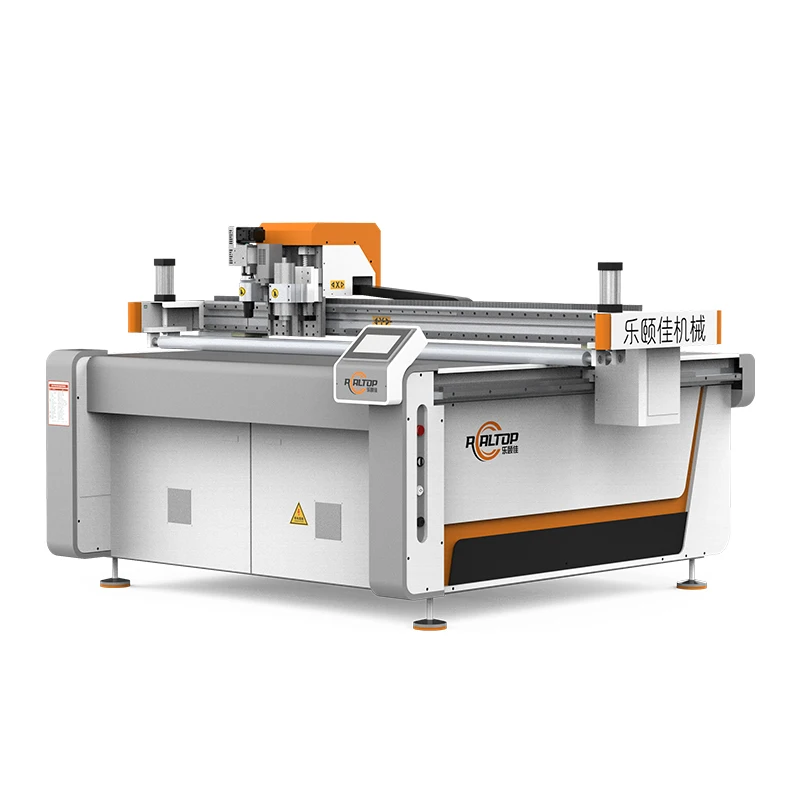
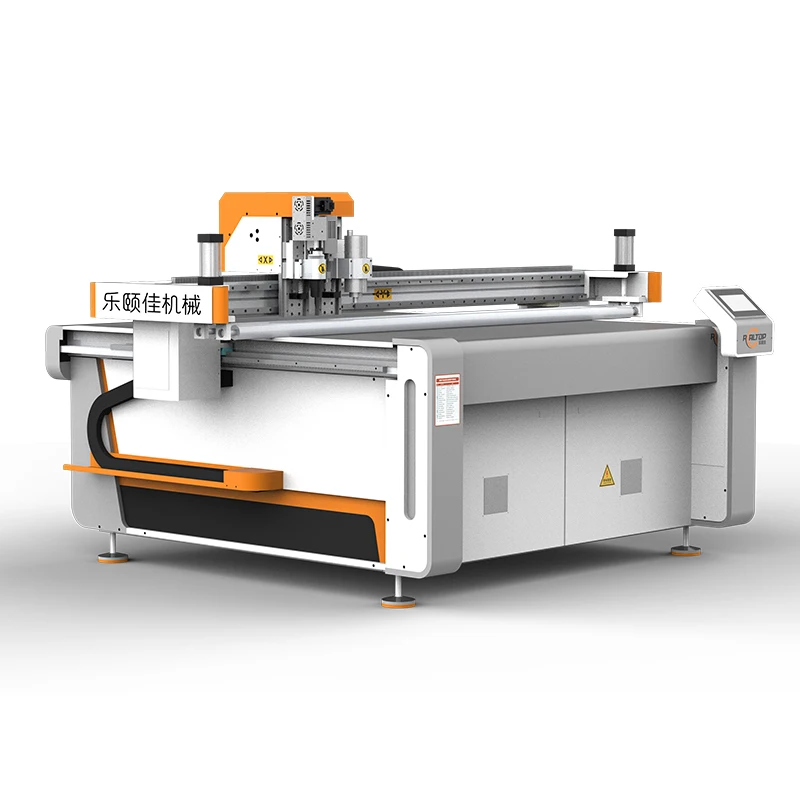
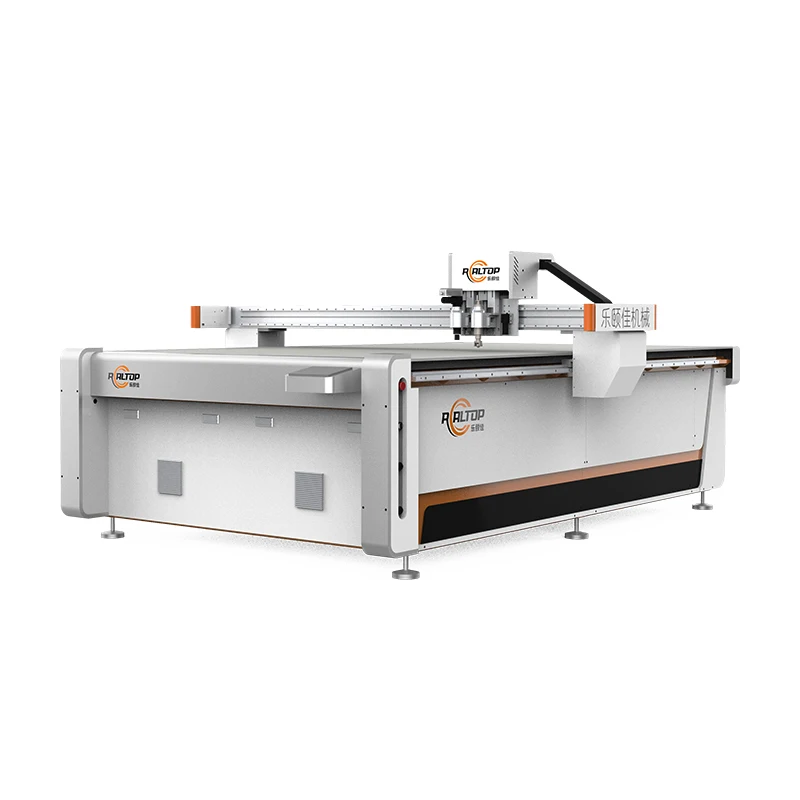
Tool Head Configured Per Material — oscillating knife, V-cut, creasing wheel and drag knife mounted on a single platform, matched to corrugated grade and flute profile rather than forced through one blade.
Technical Specifications
| Parameter | Value |
|---|---|
| Model | RT-D2516/RT-S2516 |
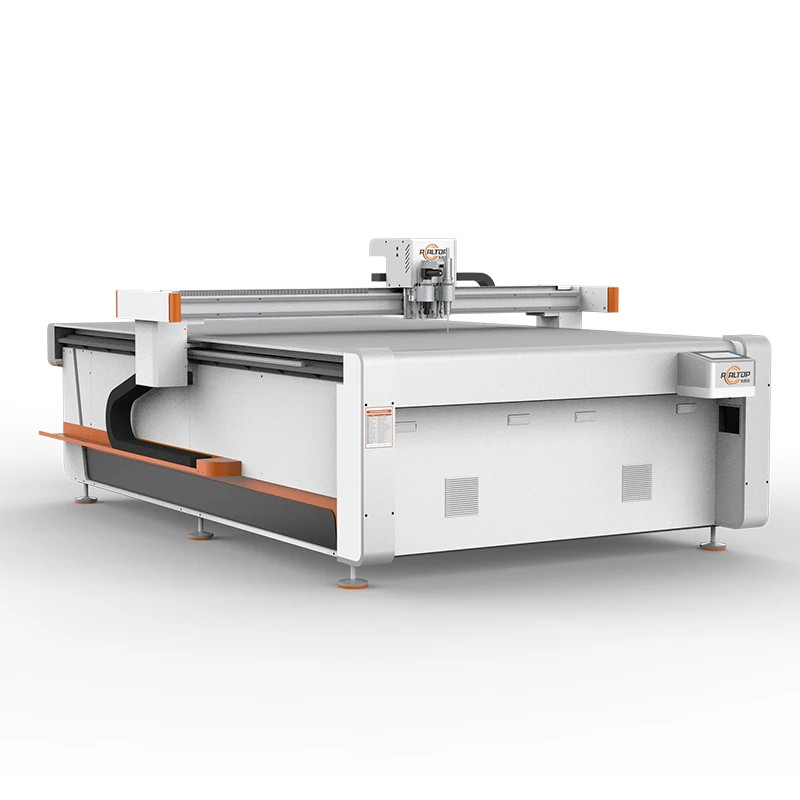
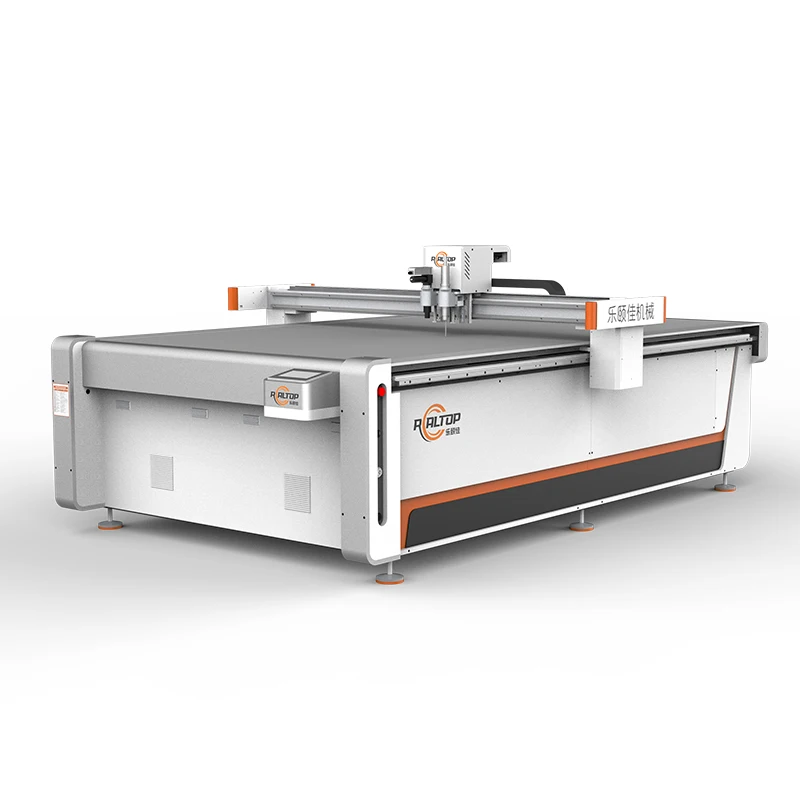
| Product Type | CNC Flatbed Digital Cutting Machine |
| Working Area | 1600×2500 mm |
| Overall Dimensions (L×W×H) | 3450×2300×1250 mm |
| Rated Power | 9 kW |
| Voltage | 380V±10% (frequency not stated in source) |
| Transmission System | Digital servo motor, linear guide, synchronous belt, ball screw (imported components) |
| Servo Motor Option | Delta or Panasonic (IP67 protection) |
| Cutting Speed | 200-800 mm/s (basis to be confirmed by material and thickness) |
| Translational Velocity | 800-2000 mm/s |
| Repeatability | ≤0.1 mm |
| Cutting Thickness | ≤100 mm (varies with material) |
| Tool Head Options | Oscillating knife, pneumatic knife, high-power vibrating knife, circular knife, V-cutting knife, drag knife, creasing wheel, dotted line knife, punching tool, brush |
| Multifunctional Head | Swiss imported knife with vibration full cutting, vibration half cutting and cursor location function |
| Visual Positioning Options | Small CCD camera mark point positioning, panoramic camera recognition positioning, projection positioning |
| Vacuum Table | Magnesium-aluminum alloy, fluorocarbon PVDF powder sprayed, anodic oxidation, hard oxidation; integrated aviation aluminum shell pump with built-in silencer sponge |
| Vacuum Pump | 7.5 kW |
| Table Option | Flat working table or auto feeding table (conveyor) |
| Safety Device | Infrared induction blocking, anti-collision sensors on beam, emergency stop |
| Control Panel | Touch screen, multiple languages supported |
| Software | Auto typesetting/nesting; supports PLT, DXF, AI, HP-GL compatible formats |
| Language Options | English, Russian, Italian, Chinese (special languages customizable) |
| Assembly State | Fully assembled (split box supported for transport) |
Application Suitability
| Application | Material or Output |
|---|---|
| Carton and packaging sample making | Corrugated cardboard, honeycomb cardboard, plastic box stock |
| Gasket and sealing pad production | Rubber, PTFE, ETFE and composite sheets |
| Automotive interior trimming | Leather, fabric and foam laminates |
| Advertising and signage | Sticker, film, vinyl |
| Composite and foam fabrication | PU, EVA, XPE, sponge |
| Carpet and floor mat cutting | Textile and rubber-backed flooring |
| Leather and fabric cutting | Garment, footwear, luggage materials |
What "Cutting Speed 200-800 mm/s" Actually Means on the Shop Floor
The number on the spec sheet only matters once your material thickness and flute profile are locked in.
A packaging sample shop running E-flute corrugated at 1.5 mm will see the upper end of that speed range, while the same machine cutting 12 mm honeycomb board for structural packaging will work at the lower end. I have seen buyers compare two machines on cutting speed alone, ignoring that one was quoted on thin vinyl and the other on double-wall corrugated — which makes the comparison meaningless. Before signing anything, run your actual stock through a sample cut and record the throughput on your specific job [NEED_CITE: material density and cutting speed relationship in digital flatbed cutting].
Matching the Tool Head to Your Corrugated Grade and Box Structure
The RT-D2516/RT-S2516 carries up to ten tool head options on one gantry, but the value lies in selecting the right combination for your board. A creasing wheel paired with a drag knife handles standard single-face carton sample making cleanly. When you move to double-wall or triple-wall honeycomb, the oscillating knife takes over for through-cuts while the V-cutting knife scores fold lines without crushing the flute structure. This CNC oscillating knife cutting machine specifications guide starts with your heaviest board, not your lightest.
CCD Positioning for Printed Contour Work at Production Speed
If your packaging samples include printed graphics that need contour cutting — window patches, display stands, or retail-ready packaging — the small CCD camera mark point positioning reads registration marks on each sheet. For roll-to-roll or conveyor-fed jobs with repeat patterns, the panoramic camera recognition positioning tracks a broader field. The gap between promised contour accuracy and actual output often comes down to print mark contrast and lighting, not the camera itself [NEED_CITE: CCD vision system requirements for printed contour recognition].
Reading the Numbers That Matter for Packaging Work
The 7.5 kW vacuum pump paired with the magnesium-aluminum alloy table is sized for holding small carton blanks flat during high-frequency oscillation — a weak vacuum zone lets lightweight corrugated lift at the edges, producing a ragged cut or a missed crease. The ≤0.1 mm repeatability across the full 1600×2500 mm bed means a nesting layout cut at 8 AM will match the same layout cut at 4 PM, which matters when you are building multi-piece display structures that slot together. The IP67-rated Delta or Panasonic servo motors keep dust from corrugated fluting out of the drive system, which is where most premature failures start in packaging shops [NEED_CITE: IP67 servo protection standards for dusty cutting environments].
The Cost of Picking the Wrong Tool Head
A buyer who specifies an oscillating knife for thin sticker stock will get chatter marks on the release liner. Another who runs 15 mm EVA foam with a drag knife will compress the material before the blade penetrates, leaving a deformed edge that won’t mate in assembly. These are not machine defects — they are configuration errors that surface weeks after installation, when the first difficult job arrives. The fix is always a sample cut on your actual material before the configuration is locked [NEED_CITE: tool head selection errors in flexible material cutting].
Why Buyers Source This Configuration From the Factory
In-house design covers both the knife cutting platform and the vacuum table zoning, so the hold-down pattern is matched to your typical blank size rather than a generic grid. Tool head and table configuration is specified per material and production volume at the quotation stage, not swapped after delivery. CCD camera positioning is tested on your printed stock before the machine ships. Software compatibility with your existing nesting workflow — whether DXF, PLT, AI or HP-GL — is confirmed in writing before the order goes to production. Sample cutting on your own material is standard, not an optional extra.
Documentation & Verification
- Machine specification sheet listing confirmed tool heads and vacuum zone layout for your sheet size
- Electrical schematic and 380V±10% voltage confirmation matched to your facility supply
- Sample cutting report on your corrugated grade with edge quality and crease depth recorded
- Software licence and file format compatibility note for PLT, DXF, AI and HP-GL workflows
- Factory test record with repeatability measurement across the 1600×2500 mm bed
- Spare parts list covering oscillating knife blades, creasing wheels and vacuum table seals
Installation, Commissioning & Support
- Floor space of 3450×2300 mm minimum with level concrete substrate for the 9 kW rated unit
- Dedicated 380V±10% circuit with confirmed frequency before the RT-D2516/RT-S2516 is energized
- Split box transport option for container loading; full reassembly and alignment on site
- First-run parameter setting on your material thickness using the touch screen control panel
- Operator training on tool head changeover between oscillating knife, creasing wheel and V-cut
- Scheduled vacuum pump silencer and PVDF-coated table surface inspection intervals
What to Prepare Before Requesting a Quotation
Send the thickest and thinnest board grades you run, along with a typical nesting file in your native format. Specify your local voltage and frequency, the control language your operators read, and whether your workflow needs the flat table or the conveyor-fed auto feeding option. If you cut printed contour work, include a sample sheet so the CCD positioning can be tuned to your mark contrast before the configuration is finalized.
Frequently Asked Questions
Q: How do I choose the right tool head for my corrugated grade?
A: Start with your heaviest board — double-wall or honeycomb — and work downward. The oscillating knife handles through-cuts on thick stock, the creasing wheel scores fold lines without crushing flutes, and the V-cutting knife handles fold channels on rigid packaging. We confirm the combination on your actual material before the order is locked.
Q: What does CCD contour recognition need from my print file?
A: The camera reads registration marks printed on each sheet, so mark contrast against the background and mark size matter more than print resolution. The panoramic camera option covers larger repeat patterns on conveyor-fed stock. We test positioning on your printed sample at production speed before shipment.
Q: How is vacuum table zoning handled for small carton blanks?
A: The magnesium-aluminum alloy table is divided into zones that can be activated independently. Small parts need a tight zone around the blank perimeter to prevent lift during oscillation. The 7.5 kW pump is sized for this — we confirm zone layout against your typical blank dimensions at the quotation stage.
Q: Will my existing nesting software files run on this machine?
A: The control software supports PLT, DXF, AI and HP-GL compatible formats with auto typesetting and nesting. We confirm file format compatibility and test a nesting layout from your workflow before the order enters production, so there are no surprises at installation.
Q: What voltage and language options are confirmed before shipment?
A: The standard supply is 380V±10% with Delta or Panasonic servo motors. Control panel language options include English, Russian, Italian and Chinese, with special languages customizable. We provide an electrical schematic and voltage confirmation document matched to your facility before the machine ships.


商品评价
Clear filtersThere are no reviews yet.