


Fast Shipping
Carrier information

20k products
Payment methods

24/7 Support
Unlimited help desk

2-day Delivery
Track or off orders
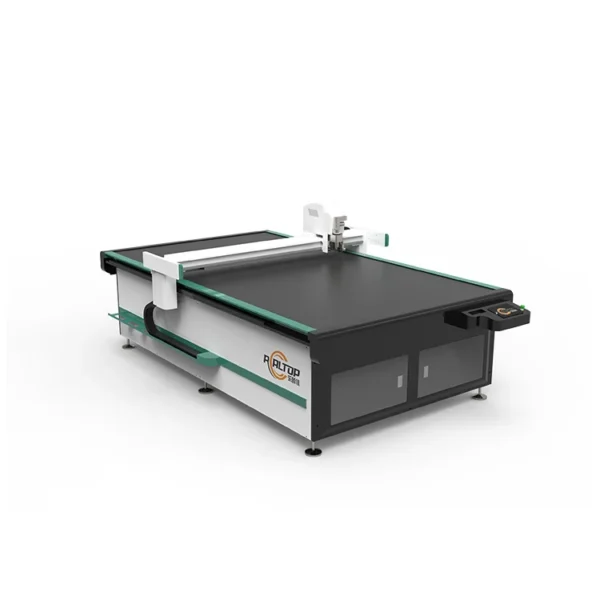
Swiss Knife Configuration — The RT-D2516/RT-S2516 oscillating knife head is selected based on flute profile and board ply before the machine leaves the factory.
Technical Specifications
| Parameter | Value |
|---|---|
| Model | RT-D2516/RT-S2516 |
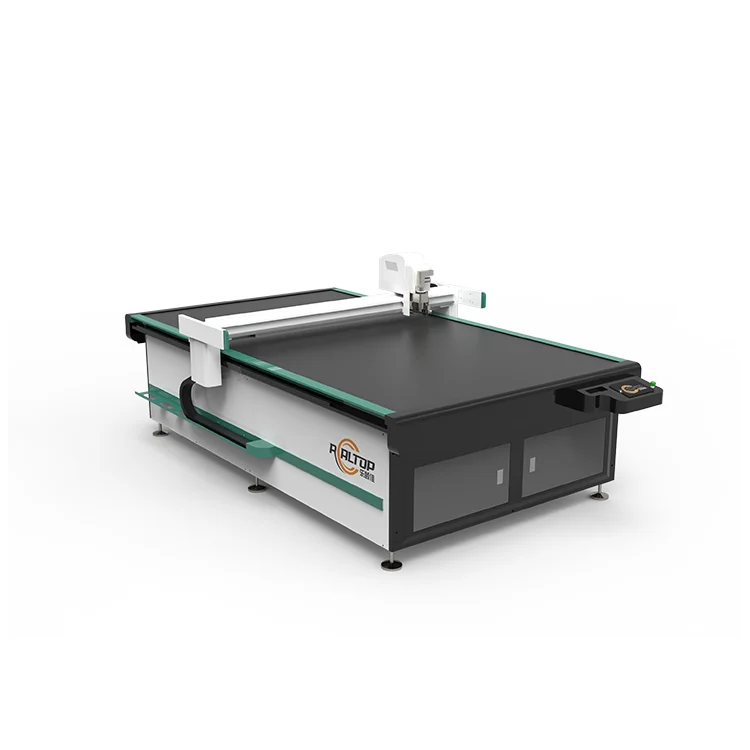
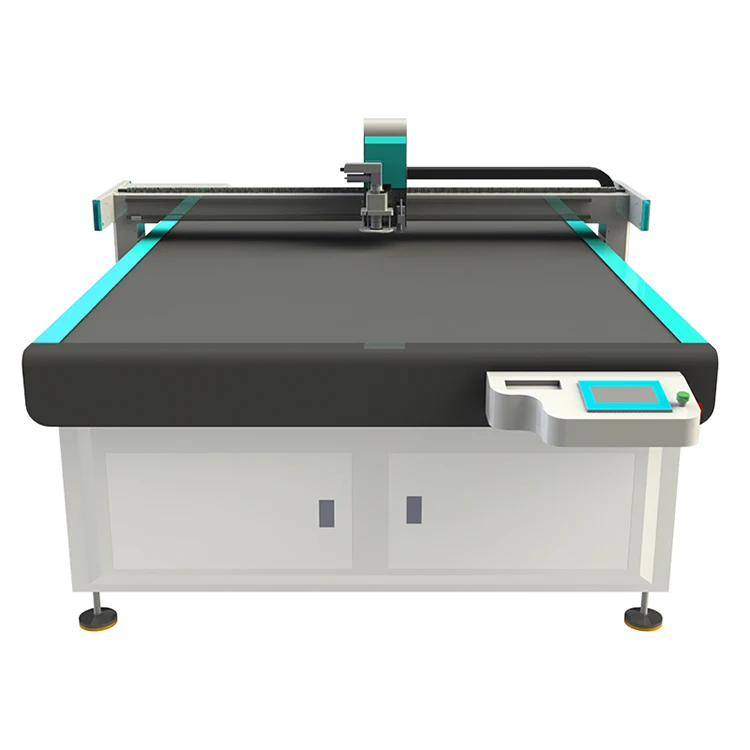
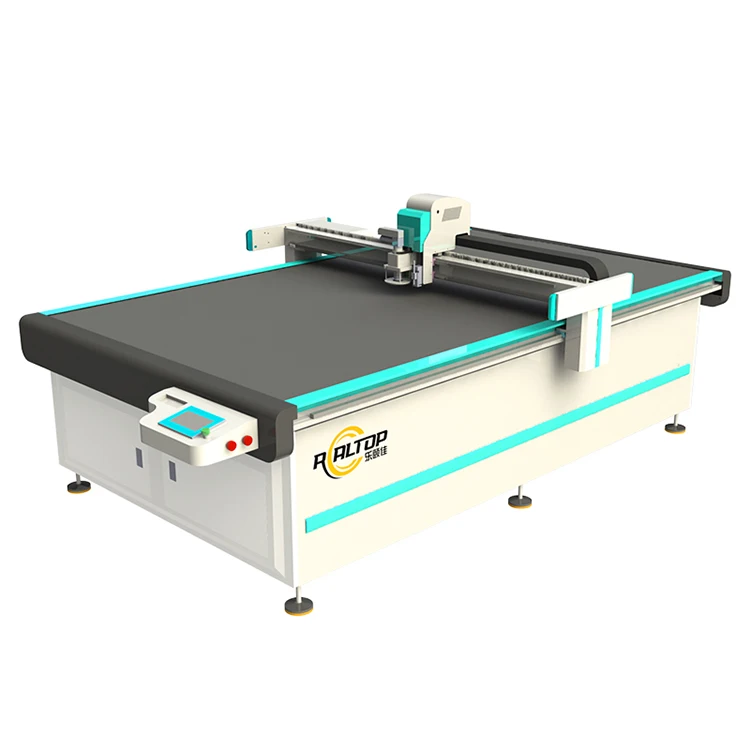
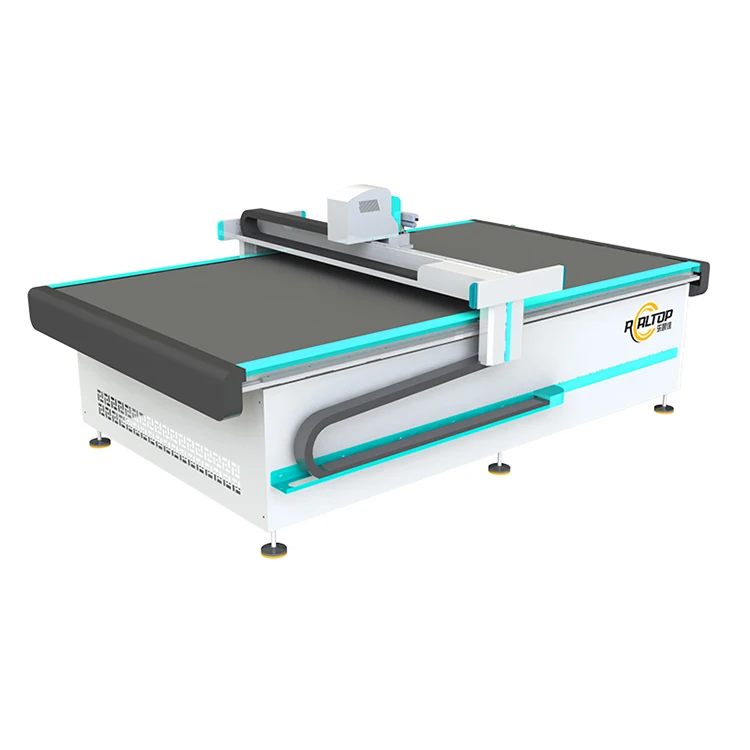
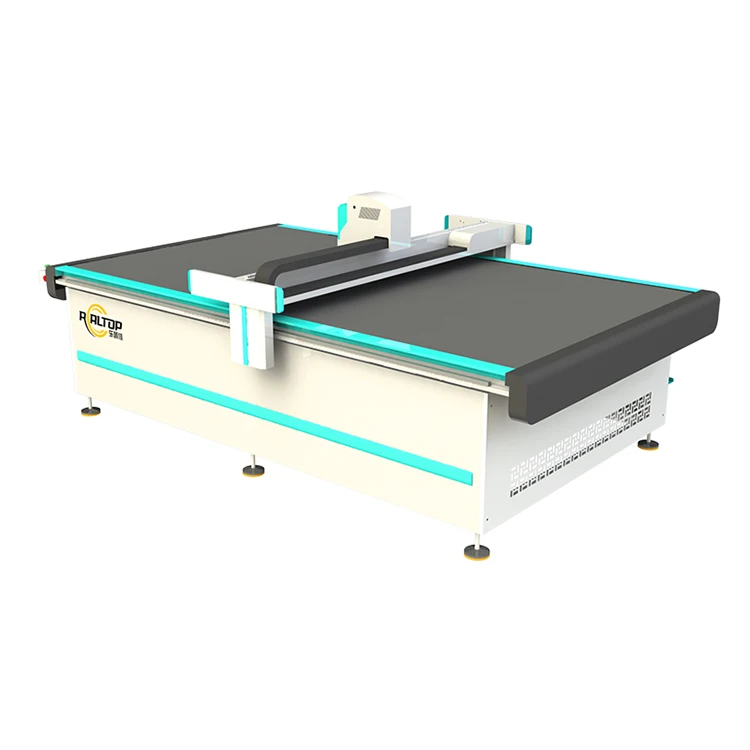
| Product Type | CNC Digital Die Cutting Machine for Corrugated Cardboard |
| Working Area | 1600×2500 mm |
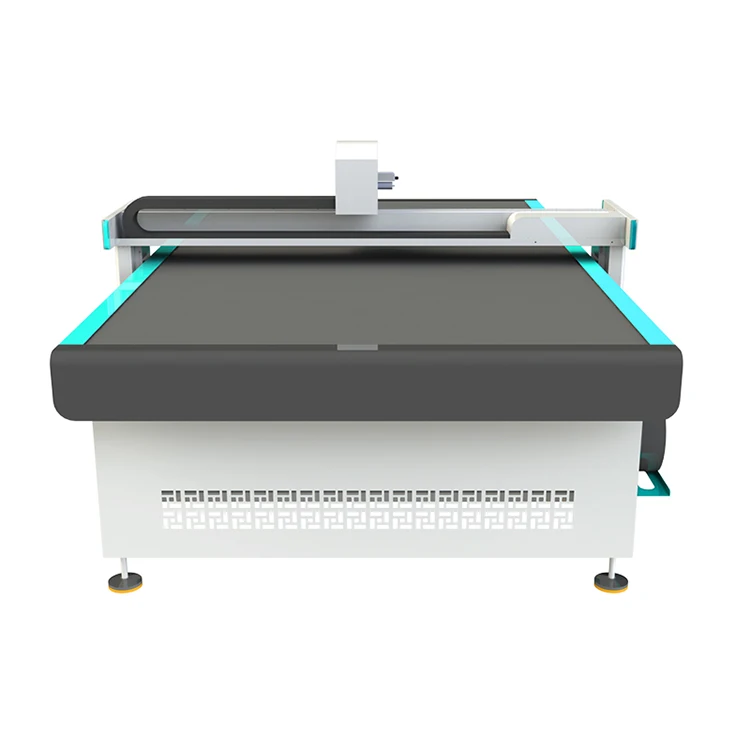
| Machine Size | 3450×2300×1250 mm |
| Rated Power | 9 kW |
| Vacuum Pump | 7.5 kW |
| Table Type | Flat working table with vacuum and conveyor belt |
| Multifunctional Tool Head | Swiss imported knife with vibration full cutting, vibration half cutting and cursor location |
| Translational Velocity | 800–1200 mm/s |
| Cutting Speed | 200–800 mm/s (according to different cutting materials) |
| Pneumatic Cutting Tool Capacity | Up to 70 mm (basis not stated in source — confirm material density and flute profile) |
| Repeated Accuracy | ≤0.1 mm |
| Transmission System | Digital servo motor, linear guide, synchronous belt, ball screw (imported) |
| Servo Motor | Japanese Yaskawa |
| Linear Rail | Taiwan Hiwin |
| Conveyor Belt | Germany imported |
| Instruction System | HP-GL compatible format |
| Voltage | 380V ±10% |
| Safety Device | Infrared sensors |
Application Suitability
| Application | Material or Output |
|---|---|
| Corrugated Box Sample Making | Single, double and triple-wall corrugated board |
| Packaging Prototype Production | Grey board and folding carton stock |
| Display and POS Packaging | Mixed flute profiles and composite boards |
| Sticker and Label Prototyping | Self-adhesive vinyl and paper stocks |
| Gift Box and Short-Run Carton | Laminated board and corrugated E-flute |
Why the Flute Profile Must Be Confirmed Before the Knife Is Chosen
The tool head is not a universal fit — it must match the specific corrugated flute and board ply to cut cleanly.
A machine quoted only on working area often arrives on the floor unable to handle the buyer’s actual board stock. I once specified a knife and vacuum setting for a packaging plant based on their sample board weight, only to find the production run used a heavier double-wall profile that crushed under the blade and left ragged edges across every cut [NEED_CITE: material thickness verification before tooling selection]. That line stopped until we swapped the knife and recalibrated the vacuum zoning. The cutting speed of 200–800 mm/s on this CNC oscillating knife cutting table for packaging only holds when the knife amplitude, vacuum pressure and board flute are correctly paired from the start.
Knife Amplitude and Flute Compression
The Swiss imported oscillating knife on this flatbed table operates in both full-cut and half-cut vibration modes. Full-cut vibration drives the blade through double and triple-wall corrugated without collapsing the flute structure, which matters when the cut edge must remain clean for folding and gluing downstream. Half-cut mode scores the top liner for creasing without penetrating the bottom ply, a function that depends on accurate depth control tied to the board’s caliper measurement [NEED_CITE: creasing depth standards for corrugated converting].
Vacuum Zoning and Small-Part Hold-Down
The 7.5 kW vacuum pump feeds a zoned flat table, meaning the surface is divided into independently controlled sections. When cutting small carton components or intricate display packaging shapes, only the zones directly under the material are activated, so suction concentrates where it is needed. Without this zoning, small corrugated parts lift off the table mid-cut, producing shifted edges and wasted board.
What Repeatability Means at 0.1 mm
The ≤0.1 mm repeated accuracy is driven by the Yaskawa digital servo motors and Taiwan Hiwin linear rails. In corrugated sample making, this tolerance keeps crease lines aligned with cut edges across dozens of prototype iterations. When the same file is run a second time after a material change, the cut path lands on the same coordinates, which is essential when comparing prototypes made from different flute profiles side by side [NEED_CITE: tolerance requirements in packaging prototyping workflows].
The Cost of Skipping the Material Test
Ordering a cutting table without running the buyer’s own board through a sample test leads to discoverable problems only after installation. Wrong knife amplitude causes delamination between the liner and the medium. Insufficient vacuum on a porous flute structure lets the board drift during high-speed traverses at up to 1200 mm/s. These issues shut down production and require on-site visits to diagnose, costing time far beyond the initial lead period [NEED_CITE: downtime costs from incorrect tooling configuration].
What This Machine Is Built Around
The tool head selection is finalized per material before production begins, not treated as a standard package. Voltage and control language are confirmed against the buyer’s facility specifications on the electrical schematic before the machine is wired. The HP-GL compatible instruction system is checked against the buyer’s existing CAD software and nesting workflow so file import works from day one. Sample cutting on the buyer’s actual corrugated board is completed and a report issued before commitment to order. The flat table and conveyor configuration is sized to the buyer’s typical sheet dimensions and daily volume.
Documentation & Verification
- Factory test record on buyer’s corrugated flute profile and board thickness before dispatch
- Tool head configuration list confirming knife type, creasing wheel and vacuum zone layout
- Electrical schematic and 380V ±10% confirmation sheet matched to target market frequency
- Software licence and HP-GL file format compatibility note for buyer’s CAD nesting workflow
- CE declaration documentation for applicable import markets
Installation, Commissioning & Support
- Floor space must accommodate 3450×2300 mm footprint with clearance for conveyor belt loading
- Dedicated 380V circuit required for combined 9 kW machine and 7.5 kW vacuum pump draw
- Machine arrives assembled; vacuum table leveling and belt tension checked on site
- First-run parameter setting includes knife depth calibration against buyer’s board caliper
- Operator training covers creasing wheel changeover and vacuum zone activation for small parts
- Spare parts list includes replacement Swiss knife blades and conveyor belt wear strips
What to Send with Your Inquiry
The most useful starting information is the actual corrugated flute profile, board caliper and typical sheet dimensions your shop runs daily. We also need your facility voltage and frequency, plus the CAD or nesting software you currently use for file generation. If you can send physical board samples, we run them on the table and issue a cutting report before any order decision.
Frequently Asked Questions
Q: What flute profiles can the oscillating knife handle, and how is cutting depth set?
A: The Swiss knife handles single, double and triple-wall corrugated. Cutting depth is calibrated against the actual board caliper during sample testing, with full-cut vibration for through-cuts and half-cut for creasing. The tool head configuration is finalized after running the buyer’s own material, not assumed from a generic chart.
Q: Is CCD camera contour recognition available for printed corrugated board?
A: CCD camera positioning is available as an option for printed contour cutting. The system reads registration marks on pre-printed corrugated sheets and adjusts the cut path accordingly. Camera performance at production speed depends on print contrast and mark placement, which we verify during sample testing on your printed stock.
Q: How does vacuum zoning prevent small carton parts from lifting during cutting?
A: The table is divided into zones controlled independently by the 7.5 kW vacuum pump. Only zones under the active cutting area are opened, concentrating suction on the material footprint. This prevents small pieces from shifting when the knife traverses at high speed, which is critical for intricate display packaging shapes.
Q: Which software and file formats does the system support?
A: The instruction system accepts HP-GL compatible format. Before order, we confirm file format compatibility with the buyer’s existing CAD or nesting software. The software licence and compatibility note are included in the documentation package so the workflow is operational from first use.
Q: What does the sample cutting process cover before committing to order?
A: We cut the buyer’s own corrugated board at the specified flute and thickness, testing full-cut, half-cut and creasing functions. A sample cutting report documents edge quality, dimensional accuracy and recommended tool head settings, so the buyer reviews actual results before making a purchasing decision.


商品评价
Clear filtersThere are no reviews yet.