

Fast Shipping
Carrier information

20k products
Payment methods

24/7 Support
Unlimited help desk

2-day Delivery
Track or off orders
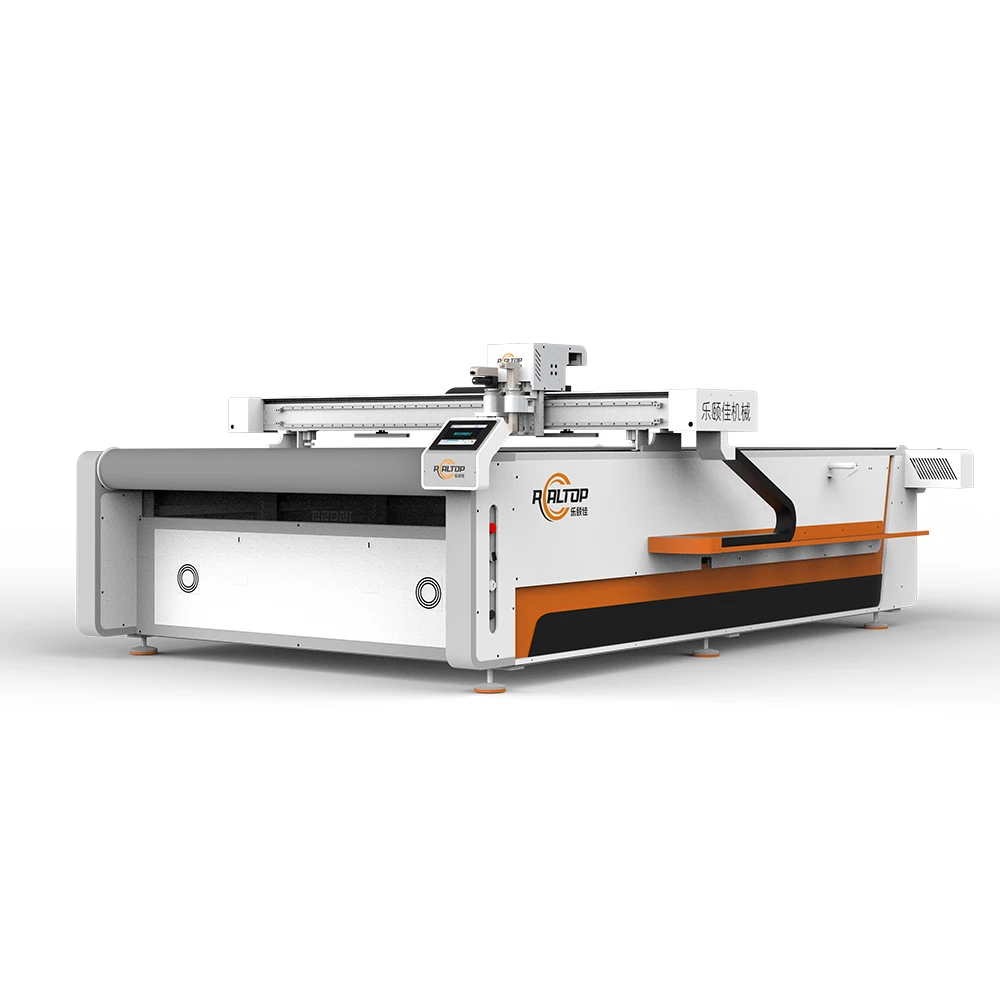
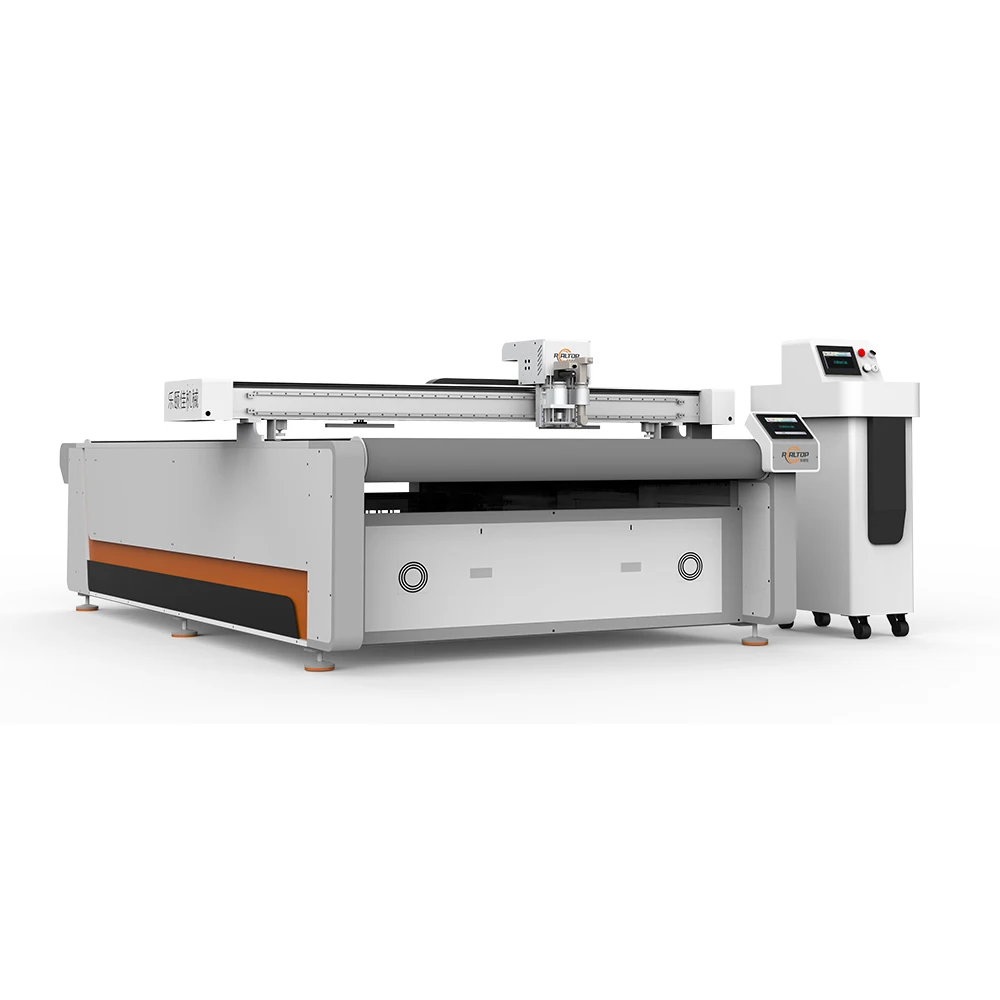
Configurable tool head platform — oscillating, driven rotary and kiss cutting heads matched to your fabric, foam or gasket stock rather than forcing one blade through every job.
Technical Specifications
| Parameter | Value |
|---|---|
| Model | 1625 |
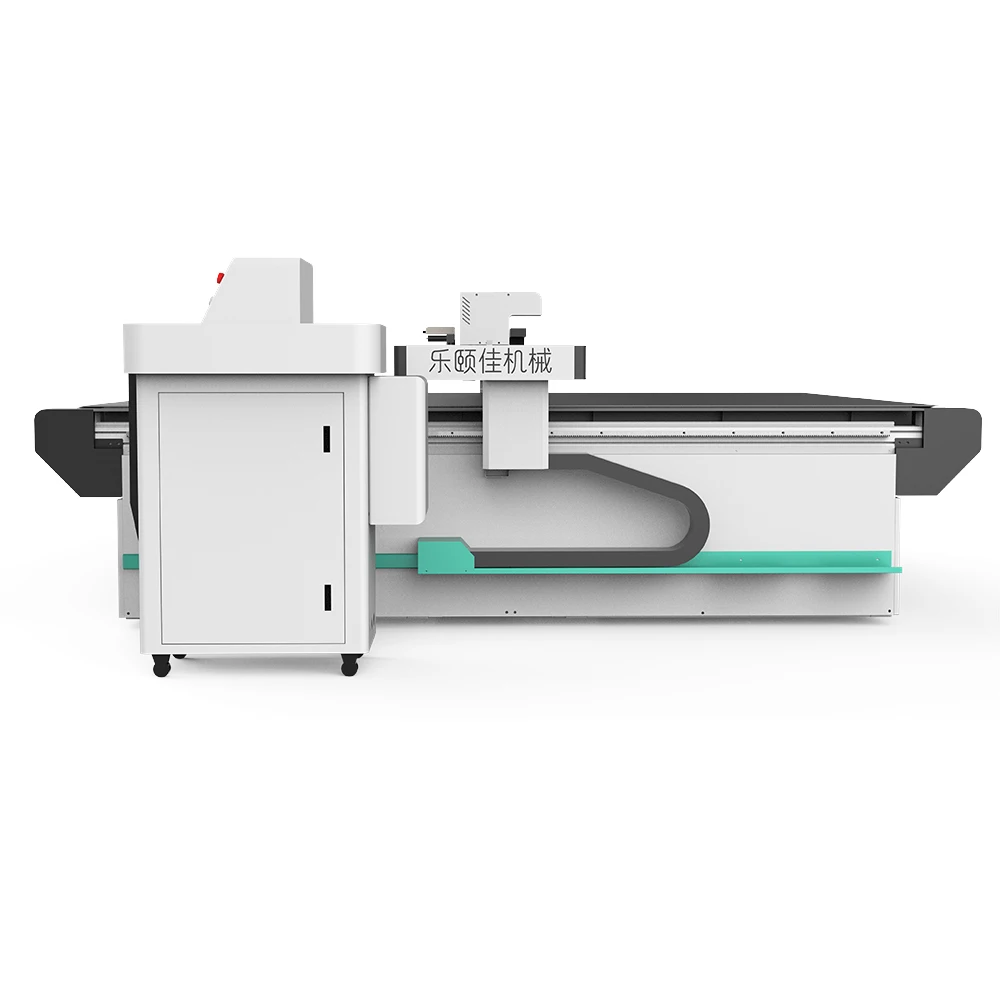
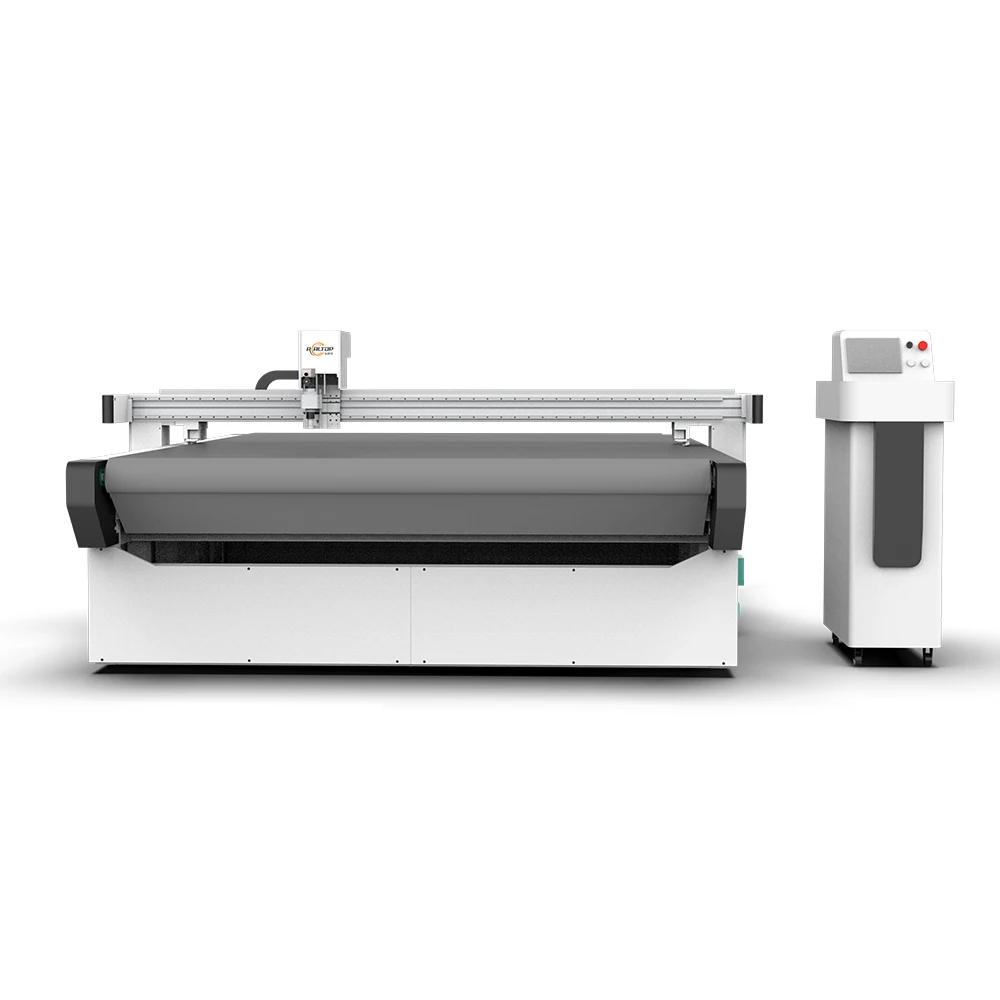
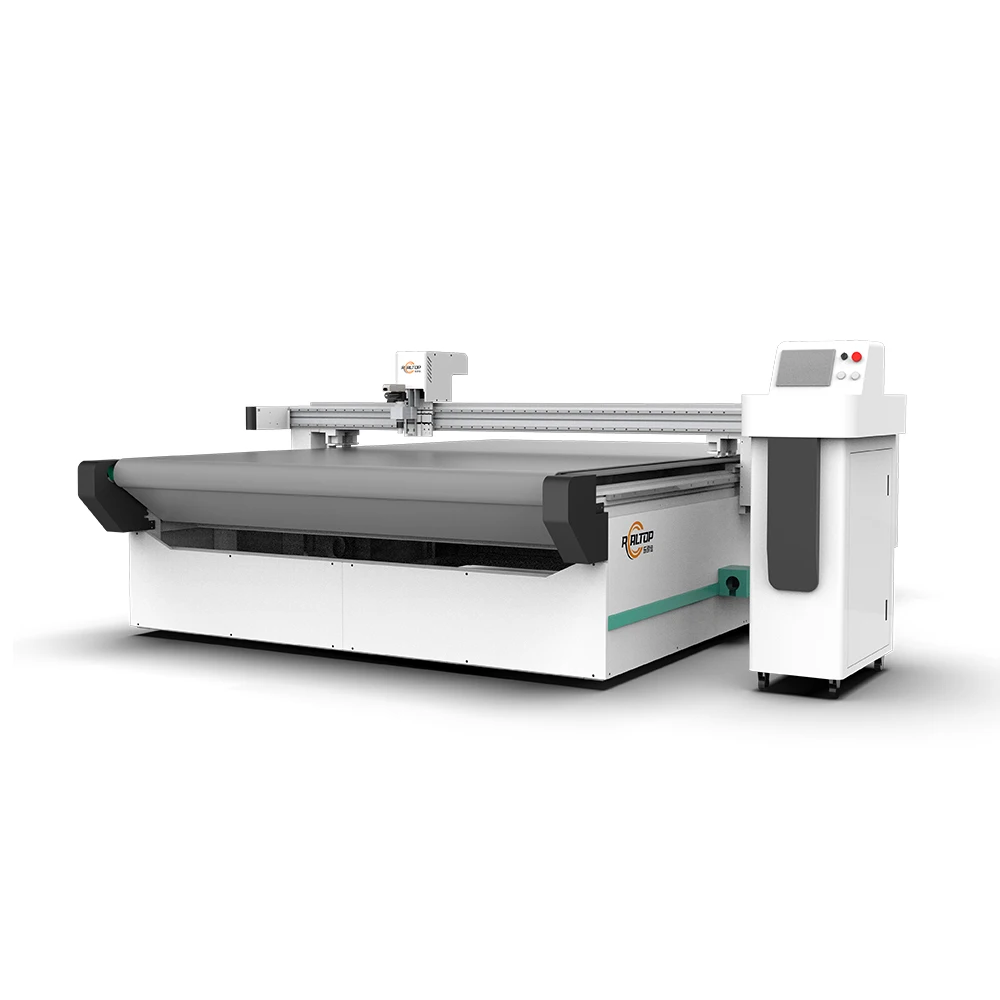
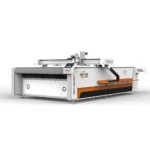
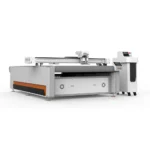
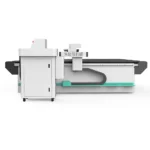
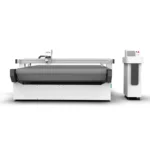
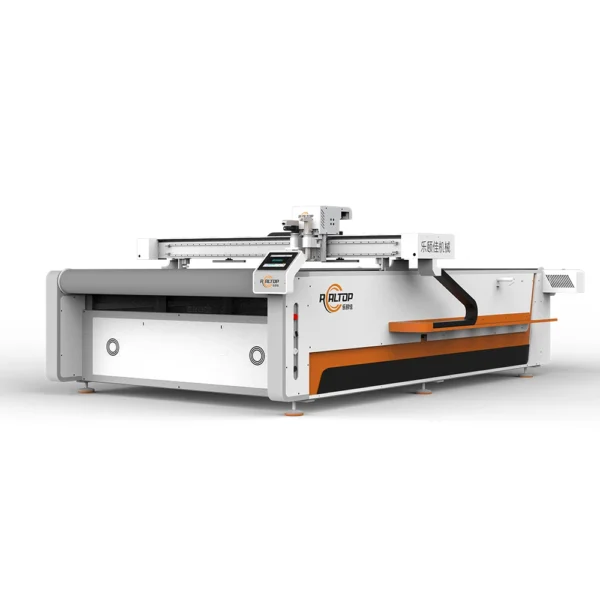
| Product Type | CNC Oscillating Knife Cutting Machine |
| Working Area | 1600 × 2500 mm |
| Cutting Speed | 0 – 2000 mm/s |
| Cutting Thickness | ≤ 30 mm (basis not stated in source — confirm material type and layer configuration) |
| Cutting Accuracy | ±0.1 mm |
| Tool Heads Available | Oscillating knife, Driven rotary knife, Creasing wheel, Kiss cutting tool, Pneumatic knife, Milling tool, V-groove knife |
| Vacuum Table | Aluminum bellows type, full-surface adsorption |
| Vacuum Pump | 9 kW |
| Servo Motor Options | Panasonic, Delta, Dorna |
| Control System | PLC control panel with optional display languages |
| Voltage Options | 110V / 220V / 380V |
| Profile Format Compatibility | PLT, DXF, AI, PDF |
| Safety Device | Infrared sensor and emergency stop |
| Machine Dimensions (L × W × H) | 3300 × 2100 × 1350 mm |
| Language Options | English, Russian, Italian, Chinese; custom languages available |
| Nesting Software | Intelligent nesting with defect avoidance; dedicated packaging box structure design software included |
| Certification | CE |
Application Suitability
| Application | Material or Output |
|---|---|
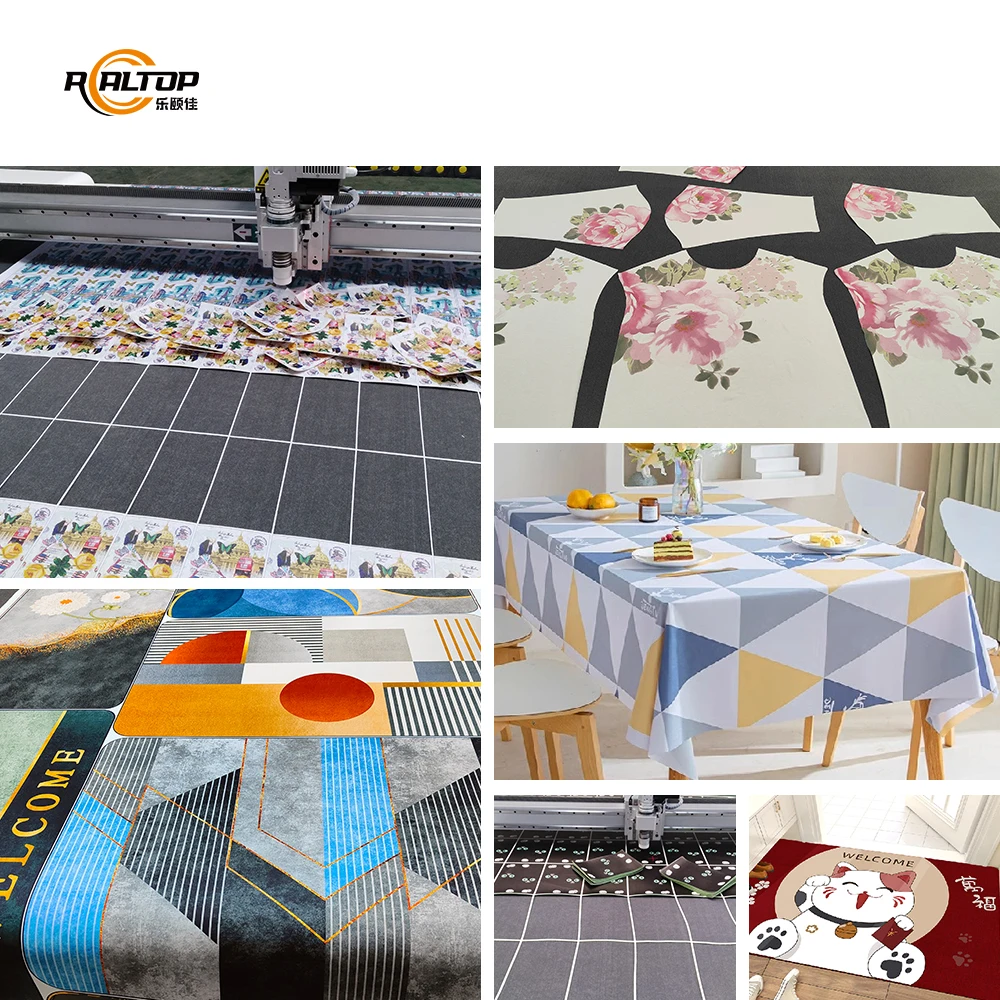
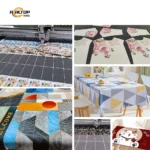
| Apparel manufacturing | Suits, knitwear, lace, pattern-matching multi-layer fabric layouts |
| Automotive interiors | Seat fabrics, carpets, PVC mats requiring burr-free edges |
| Home textiles | Sofa fabrics, curtains, rugs with multi-layer cutting |
| Composite material processing | Carbon fiber prepreg, aramid, specialty materials without delamination |
Why "30 mm Cutting Depth" Means Nothing Without the Material Name
A thickness figure is only honest when tied to a specific fabric, layer count and tool head.
I have watched buyers sign off on a CNC oscillating knife cutting machine based on a sample cut through standardized polyester, then discover on the production floor that their actual stock — rubber-backed car mats, multi-layer technical textiles, or dense acoustic foam — behaves completely differently under the blade. The oscillating head that glides through woven fabric can stall or leave ragged edges on coated or laminated composites. Thickness alone never tells the full story; material density, coating and layer bonding all change the cutting forces involved [NEED_CITE: material-specific cutting force data for oscillating knife systems]. That mismatch is the single most common reason machines of this class are sent back to the factory for reconfiguration within the first quarter.
Matching the Tool Head to the Stock You Actually Run
An oscillating knife works well on most woven and non-woven fabrics up to the stated thickness range, but it is not a universal solution. Driven rotary knives handle continuous-ply textile lays where clean ply separation matters, while kiss cutting tools score adhesive-backed materials without penetrating the liner. Selecting the correct CNC oscillating knife cutting machine configuration starts with identifying which tool head your primary material demands, then building the rest of the specification around that choice.
Vacuum Zoning and Small-Part Stability
The aluminum bellows vacuum table on the 1625 provides full-surface adsorption, yet holding power depends on how the table is zoned relative to your smallest part. When a cut piece is smaller than a single zone, air leaks through the surrounding kerf and the part can shift before the final pass. Specifying zone layout during the ordering stage — rather than discovering the problem during nesting — prevents lift and rework on intricate pattern pieces [NEED_CITE: vacuum table zoning best practices for CNC flatbed cutters].
Reading the Specs That Actually Matter
The 9 kW vacuum pump delivers enough suction for dense, multi-layer fabric lays, but the effective hold also depends on the bellows seal condition and table flatness over the 1600 × 2500 mm surface. Cutting accuracy of ±0.1 mm is achievable when the servo drives — available in Panasonic, Delta or Dorna options — are matched to the mass of the tool carriage and the resistance of the material. A high cutting speed of 2000 mm/s is useful on single-ply technical textiles, yet multi-layer apparel stacks typically require slower passes to maintain edge quality across the full lay height. Intelligent nesting with defect avoidance further affects real throughput by routing around fabric flaws instead of cutting through them and generating second-quality panels.
What a Wrong Tool Head Costs You on the Floor
Choosing a general-purpose oscillating blade for a coated composite may produce acceptable edges on the first few sheets, then progressively load the blade with coating residue, leading to fraying that forces unscheduled stops for cleaning or replacement. On foam, an incorrect oscillation frequency can crush the cell structure instead of slicing it, leaving a visible compression line that ruins the part. These are not warranty issues; they are configuration errors that surface only after the machine is running your real production schedule [NEED_CITE: tool head wear patterns by material type in oscillating knife cutting].
Why Sourcing This Machine From the Build Floor Matters
The design team and core factory are housed together, meaning a tool head change requested after sample testing can be engineered into the production order rather than retrofitted in the field. The oscillating, driven rotary and kiss cutting heads are developed in-house, so compatibility with the 1625 carriage is verified before the machine leaves Jinan. Every unit ships with a factory test record run on the buyer’s own material, not a generic certificate. Voltage, plug type and control language are confirmed in writing against the destination market’s standards before assembly begins, eliminating on-site rewiring or interface confusion during commissioning. Software compatibility — PLT, DXF, AI, PDF import into the buyer’s existing nesting workflow — is validated at the quotation stage so that file translation does not become a bottleneck after delivery.
Documentation & Verification
- Factory test record cut on your specific fabric, foam or composite before dispatch
- Tool head and vacuum zone configuration list matched to your material spec
- Electrical schematic with confirmed voltage, plug type and circuit requirements
- Software licence with verified DXF/AI/PLT/PDF import compatibility note
- Operation and maintenance manual in your selected control language
- Spare parts list covering blades, bellows seals and wear components
Installation, Commissioning & Support
- Floor space of at least 3300 × 2100 mm plus clearance for material loading on the 1625
- Dedicated circuit matching confirmed 110V / 220V / 380V option with correct plug
- Table leveling and vacuum seal check on the aluminum bellows surface before first cut
- Tool head calibration for your chosen knife type and material thickness range
- PLC language set to operator preference from English, Russian, Italian, Chinese or custom option
- Spare blade and bellows seal kit staged on-site before production ramp-up
What We Need to Quote the Right Configuration
Send us the actual material you will be running — type, thickness, coating or lamination details and whether you cut single-ply or multi-layer. Include your daily volume target and the smallest part dimension in your nesting files so we can confirm vacuum zone sizing. Let us know your workshop voltage and frequency along with the control language your operators need.
Frequently Asked Questions
Q: How do I verify the real cutting thickness on my material?
A: Request a sample cutting report run on your own fabric or composite, documenting the tool head used, layer count and edge condition. A single thickness number without material context is not comparable across suppliers. We cut your stock on the 1625 before you commit.
Q: Which tool head should I use — oscillating knife or driven rotary?
A: Oscillating knives suit most woven and non-woven fabrics, while driven rotary knives excel on continuous-ply lays where clean separation between plies is critical. The correct choice depends on your specific material construction and edge quality requirement.
Q: Will the vacuum table hold my smallest pattern pieces?
A: Hold depends on zone size relative to your part. The 1625 aluminum bellows table can be zoned to match your nesting layout so that small pieces remain stable during the final cut pass without lifting or shifting.
Q: Can the CCD camera track my printed registration marks?
A: CCD contour recognition is available as an option for printed fabric workflows. Tracking reliability depends on mark contrast, size and print consistency, all of which we verify during the sample cutting stage at production speed.
Q: Does the software accept my existing DXF and AI files?
A: The nesting platform imports PLT, DXF, AI and PDF formats. We confirm file compatibility and nesting behavior with your actual design files before order, so your workflow continues without format conversion delays.


商品评价
Clear filtersThere are no reviews yet.