

Fast Shipping
Carrier information

20k products
Payment methods

24/7 Support
Unlimited help desk

2-day Delivery
Track or off orders
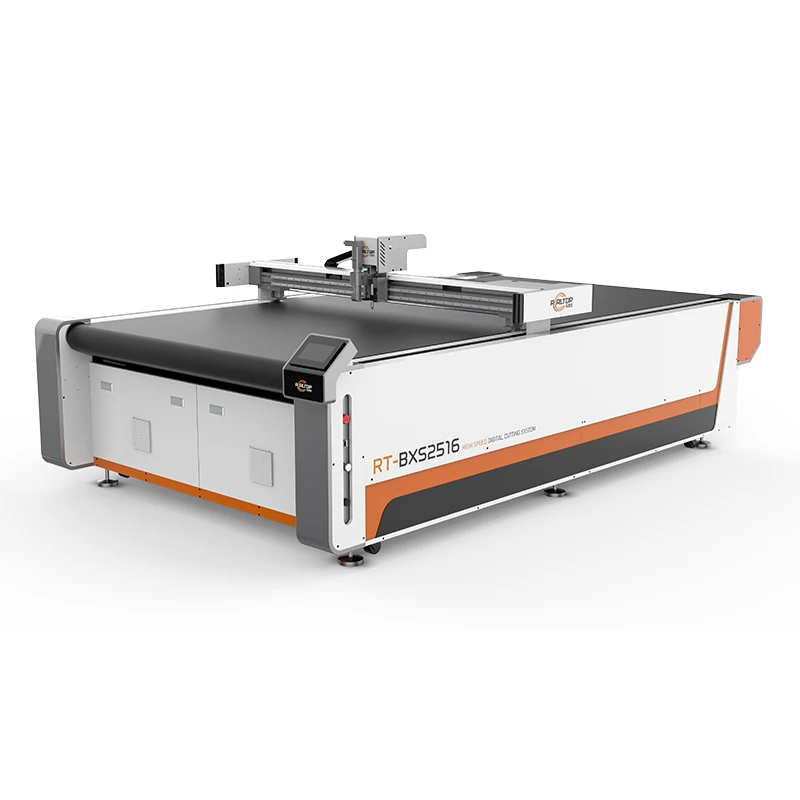
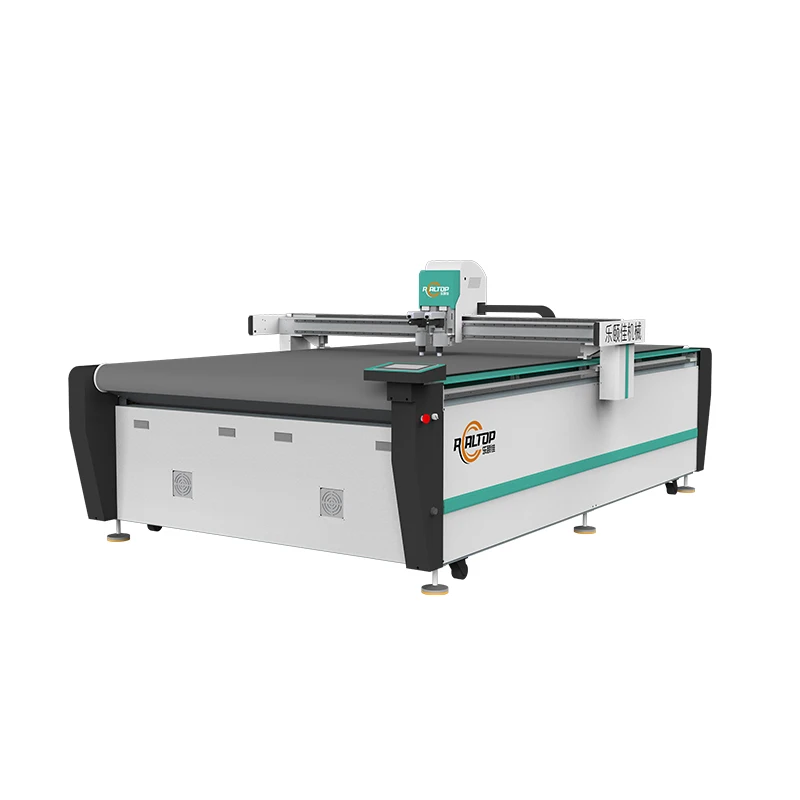
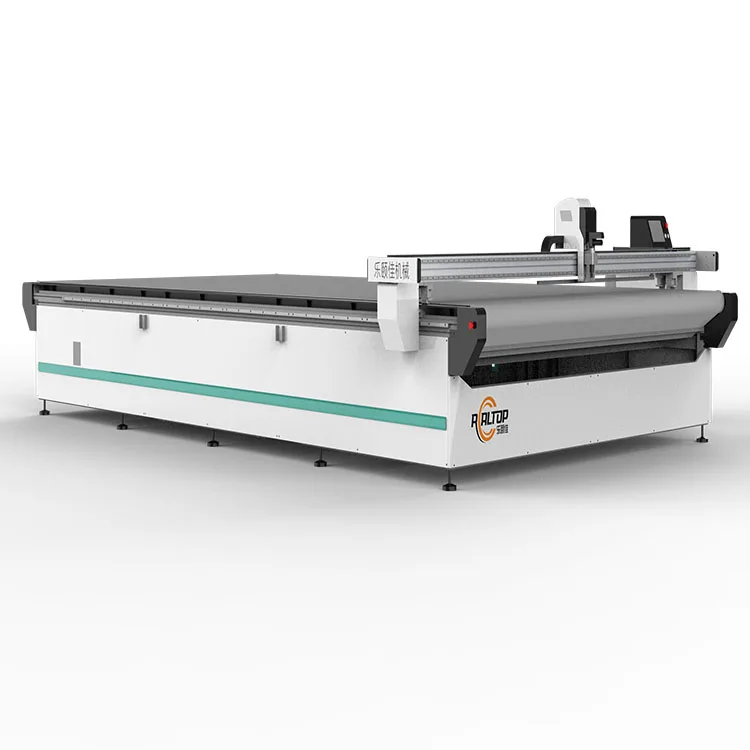
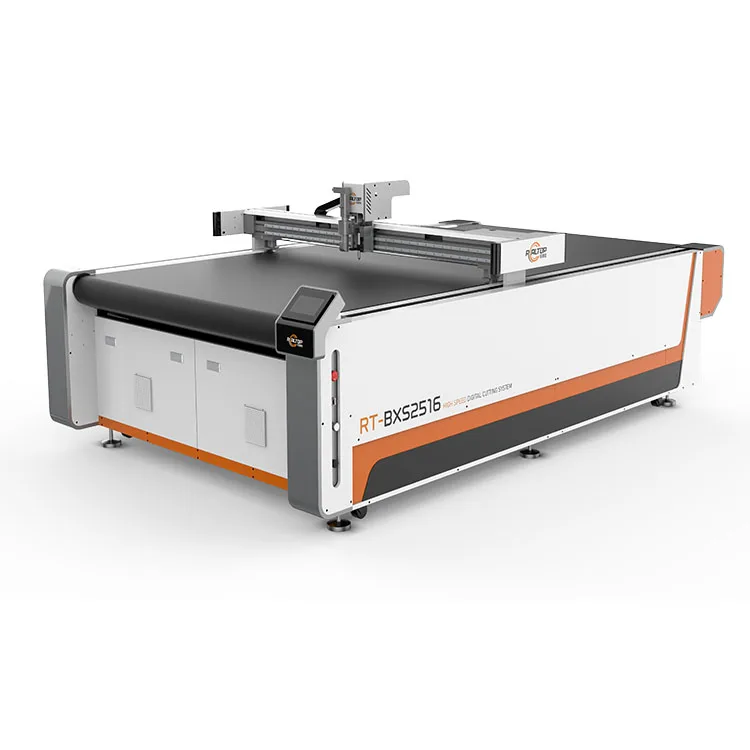
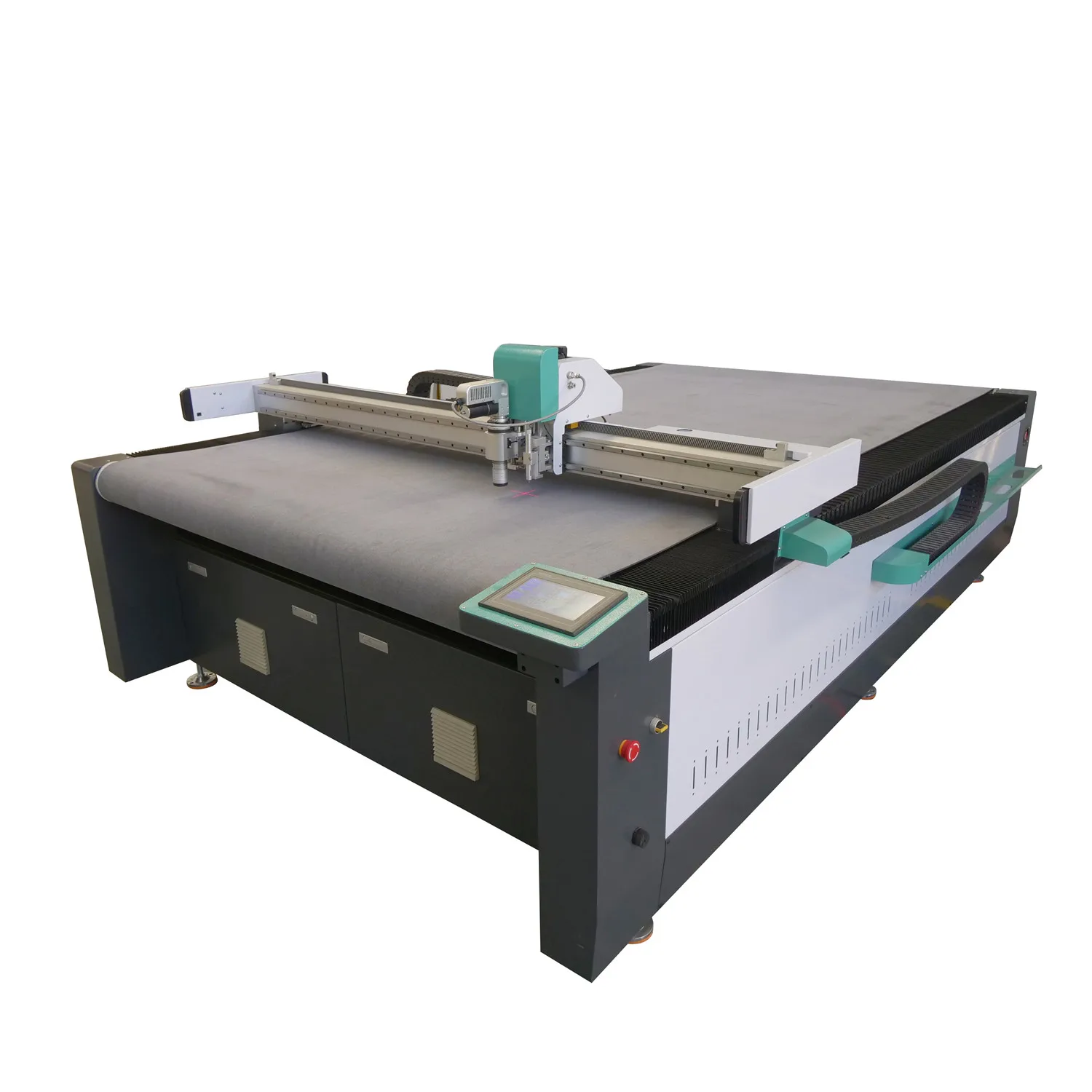
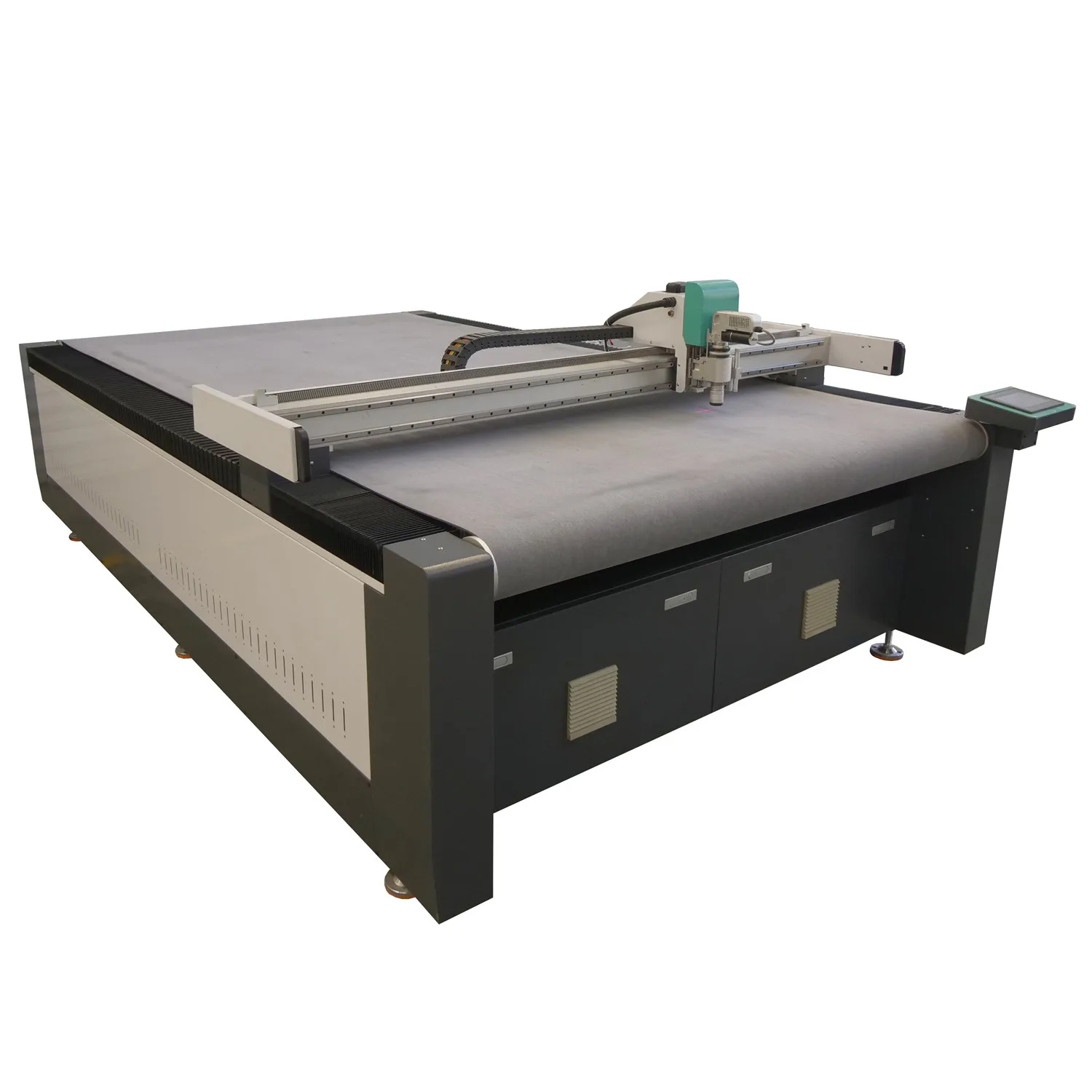
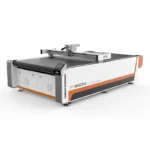
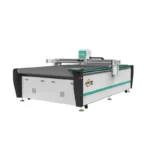
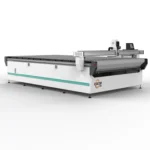
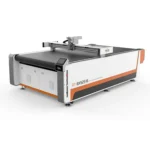
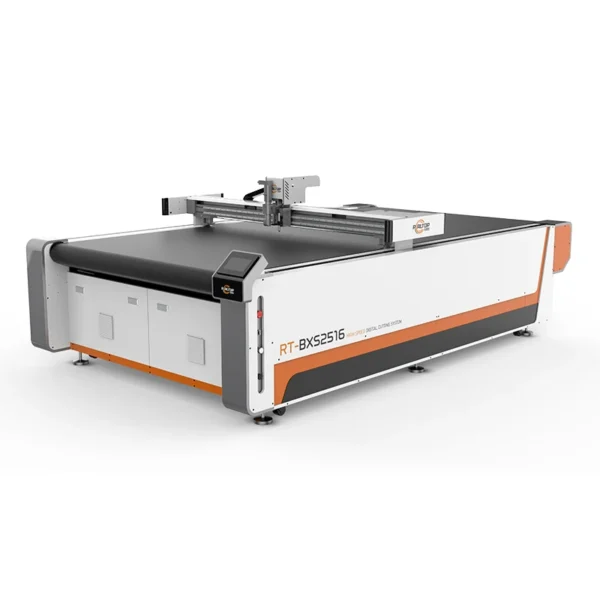
Oscillating knife and vacuum table matched to material — tool head, suction zoning and CCD options are selected after sample cutting on your fabric or composite, not pre-set on a generic build.
Technical Specifications
| Parameter | Value |
|---|---|
| Product Type | CNC Oscillating Knife Cutting Machine |
| Model | RT-D2516/RT-S2516 |
| Working Area | 1600 × 2500 mm |
| Overall Dimensions (L×W×H) | 3450 × 2300 × 1250 mm |
| Rated Power | 9 kW |
| Voltage | 380V ±10% |
| Control System | CNC with touch screen, HP-GL compatible |
| Table Type | Magnesium-aluminum alloy vacuum adsorption (PVDF sprayed, anodic and hard oxidation); flat or auto feeding table optional |
| Vacuum Pump | 7.5 kW, aviation aluminum shell with built-in silencer |
| Servo Motor | High-precision servo (Delta or Panasonic optional), IP67 rated |
| Transmission | Linear guide (Taiwan Hiwin), synchronous belt, ball screw |
| Tool Head Options | Swiss imported oscillating knife, pneumatic knife, high-power vibrating knife, circular knife, V-cutting knife, drag knife, creasing wheel, dotted line knife, punching, brush |
| Visual Positioning | Small CCD mark point, panoramic camera recognition, projection positioning |
| Translational Velocity | 800–2000 mm/s |
| Cutting Speed | 200–800 mm/s depending on material (basis to be confirmed) |
| Cutting Thickness | Up to 100 mm depending on material |
| Repeated Accuracy | ≤0.1 mm |
| Safety Devices | Infrared induction blocking, beam anti-collision, emergency stop |
| Supported Formats | PLT, DXF, AI |
| Conveyor Belt | Germany imported |
| Language Options | English, Russian, Italian, Chinese; custom languages available |
Application Suitability
| Application | Material or Output |
|---|---|
| Garment and footwear cutting | Single and multi-layer fabric, synthetic leather, shoe material, luggage textile |
| Automotive interior and gasket fabrication | Composite panels, foam, rubber, PU, EVA, XPE without thermal damage |
| Carpet and floor mat production | Wide-format rolls on auto feeding table with conveyor belt |
| Packaging and sample making | Corrugated cardboard, sticker, film, foam board with creasing and drag knife |
| Composite and sealing material processing | PTFE, ETFE, fiberglass, carbon fiber, silicone, soft glass |
Why Working Area Alone Fails Cloth CNC Cutting Machine Buyers
A 1600 × 2500 mm table means nothing if the vacuum zoning cannot hold your smallest nested piece flat.
I have watched operators in South Asian garment workshops load a full roll of coated waterproof fabric onto a machine that cut standard cotton perfectly in the factory test. The blade dragged, the edges frayed, and three days of parameter tuning followed before stable production resumed. The vacuum zones were too coarse for the nesting layout, the oscillating frequency did not match the coating stiffness, and nobody had tested the actual material beforehand. When sourcing a CNC oscillating knife cutting machine specifications sheet, buyers often stop at working area and assume the rest will follow [NEED_CITE: common CNC cutting machine specification oversights in fabric and composite industries]. It does not.
Tool Head Selection Across Fabric and Composite Layers
The RT-D2516/RT-S2516 platform supports a Swiss imported oscillating knife with full cut, half cut and cursor location, alongside drag knife, creasing wheel, circular knife and punching tools. The choice between oscillating and drag knife depends on material density and ply count — a single-layer silk demands a different stroke than a 30-layer stack of non-woven fabric. Pneumatic and high-power vibrating knife options extend the range into stiffer composites like XPE and fiberglass.
Vacuum Table Flatness and Zoning for Small Parts
The magnesium-aluminum alloy table receives PVDF powder spray, anodic oxidation and hard oxidation treatment to maintain flatness across the 1600 × 2500 mm surface. The 7.5 kW vacuum pump with aviation aluminum shell and integrated silencer delivers consistent suction, but zoning configuration determines whether small gasket pieces or shoe uppers stay in place during high-speed cuts. Zone layout should reflect your typical nesting pattern, not a default grid [NEED_CITE: vacuum table zoning principles for CNC flatbed cutting].
Reading the Specs That Matter on the Floor
Cutting speed of 200–800 mm/s varies with material type, thickness and ply count — a value only meaningful when tied to your specific fabric or foam. The IP67-rated servo motors from Delta or Panasonic and Taiwan Hiwin linear rails deliver repeated accuracy of ≤0.1 mm, which matters when contour-cutting printed leather for automotive seats where a half-millimeter drift wastes the entire hide. The CCD positioning options — small mark point, panoramic recognition and projection — address different print registration needs, and selecting the right one prevents the camera from losing track at production speed. Translational velocity of 800–2000 mm/s governs head movement between cuts, influencing overall throughput on complex nesting layouts more than cutting speed alone.
The Cost of Skipping Material-Specific Configuration
A wrong tool head on coated fabric produces ragged edges that fail quality checks downstream. Insufficient vacuum zoning on small gasket parts causes material lift mid-cut, turning a full nesting sheet into scrap. A CCD system that cannot track printed marks at actual production speed forces operators to slow the machine, negating the throughput the specification sheet promised. These failures do not show up in a factory demo running standard test material — they appear on day one with your own roll stock [NEED_CITE: material-specific cutting failures in garment and gasket production].
Why This Platform Fits Production Floors
In-house design covers both knife and laser cutting, so the method matches the material rather than forcing one technology onto every job. Tool head and table configuration are specified per your material type, thickness and daily volume after a sample cutting test. CCD camera positioning is selected based on your print mark style and production speed requirement. Software compatibility with PLT, DXF and AI formats is confirmed against your existing nesting workflow before the order is placed. Voltage, control language and plug type are locked in to match your facility supply, avoiding on-site rewiring after delivery.
Documentation & Verification
- Machine specification sheet listing confirmed tool head and vacuum zone configuration
- Electrical schematic with voltage and frequency matching your facility supply
- Sample cutting report on your fabric or composite material before order commitment
- Tool head and table configuration list showing included and optional tools
- Software licence and file format compatibility note for PLT, DXF, AI workflows
- Operation and maintenance manual in your selected control language
Installation, Commissioning & Support
- Floor space planning for 3450 × 2300 × 1250 mm footprint plus material handling clearance
- Dedicated 380V ±10% circuit with capacity for 9 kW rated power draw
- Assembly state confirmation — flat or auto feeding table setup on arrival
- First-run parameter tuning on your material thickness and ply count by technician
- Operator training on touch screen CNC panel and tool head changeover procedures
- Spare parts list covering Swiss knife blades, conveyor belt segments and vacuum seals
What to Share Before Quoting
Send your material type, typical thickness range, maximum sheet or roll width and daily cutting volume. Specify your facility voltage and frequency, preferred control language and whether your nesting workflow uses PLT, DXF or AI files. If your material has a coating, lamination or unusual stiffness, request a sample cutting test on your actual roll stock before confirming configuration.
Frequently Asked Questions
Q: How do I choose between oscillating knife and drag knife for my fabric?
A: Oscillating knives suit thicker, denser materials and multi-layer stacks where a vibrating stroke slices cleanly through the full depth. Drag knives work better on thin, single-layer films and stickers where a continuous pull produces a smooth edge. The RT-D2516/RT-S2516 supports both, and the choice is confirmed during sample cutting on your material.
Q: Does vacuum table zoning affect small gasket parts?
A: Yes. If your nesting layout contains many small pieces, coarse vacuum zones leave gaps where suction cannot hold the material flat. The 1600 × 2500 mm table on this machine can be zoned to match your typical part size distribution, keeping even small gasket profiles in place during cutting.
Q: Can the CCD camera track printed marks at full production speed?
A: Tracking reliability depends on mark contrast, size and the camera type selected. The platform offers small CCD mark point, panoramic recognition and projection positioning. The right option is chosen based on your print quality and confirmed during sample cutting before the machine ships.
Q: What file formats does the software accept for nesting?
A: The control system supports PLT, DXF and AI file imports with auto typesetting. Before order confirmation, your existing nesting files are tested for compatibility so that workflow integration is verified rather than assumed after delivery.
Q: How is cutting speed verified for my specific material?
A: The 200–800 mm/s range depends on material type, thickness and ply count. A sample cutting test on your actual fabric, foam or composite establishes the achievable speed with acceptable edge quality, and this result is documented in the sample report before you commit to the order.


商品评价
Clear filtersThere are no reviews yet.