

Fast Shipping
Carrier information

20k products
Payment methods

24/7 Support
Unlimited help desk

2-day Delivery
Track or off orders
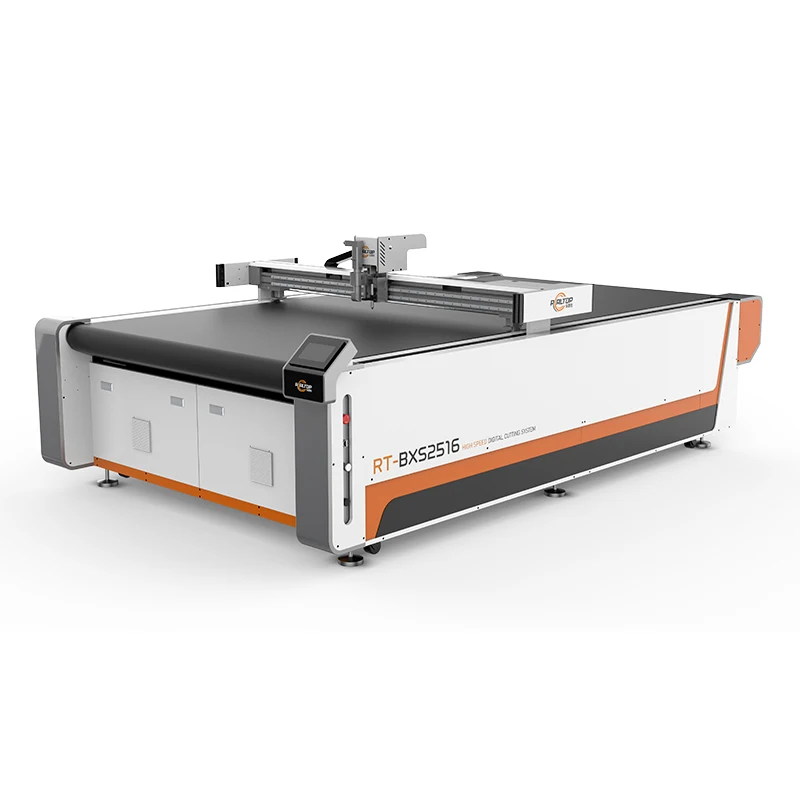
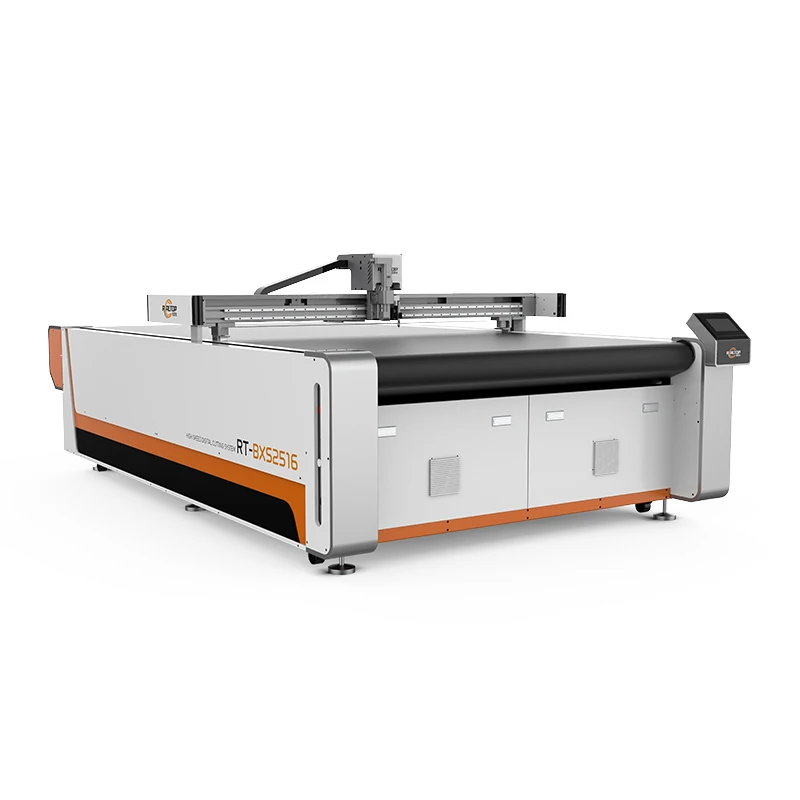
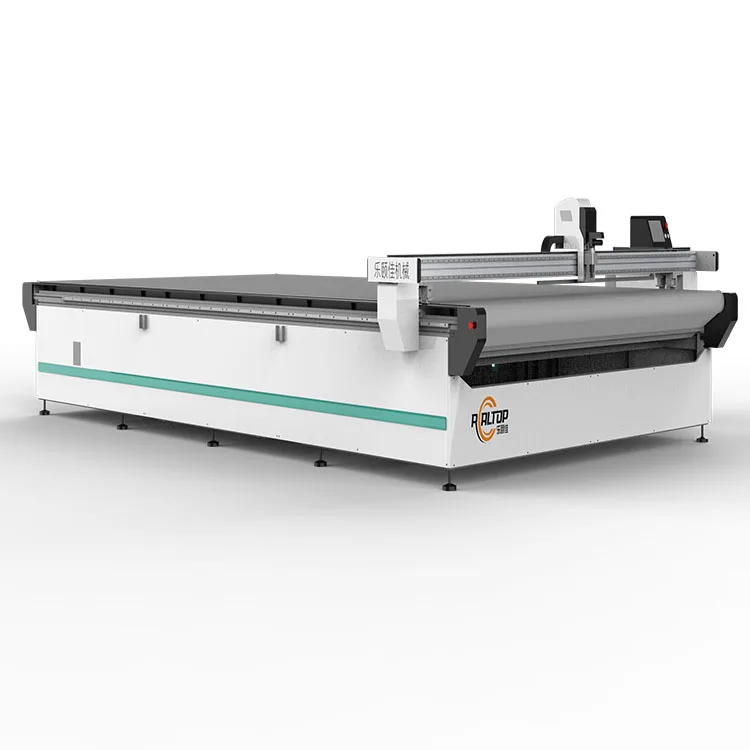
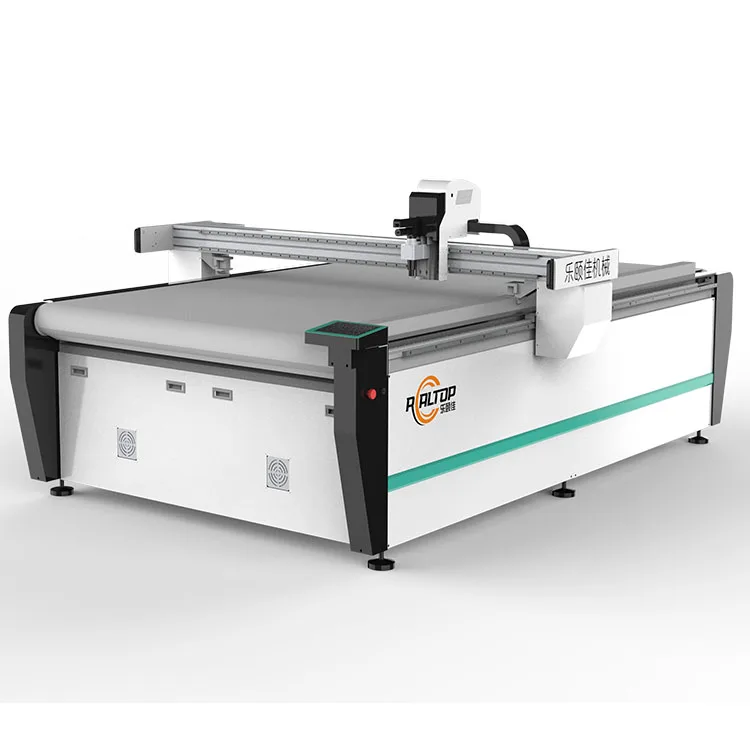
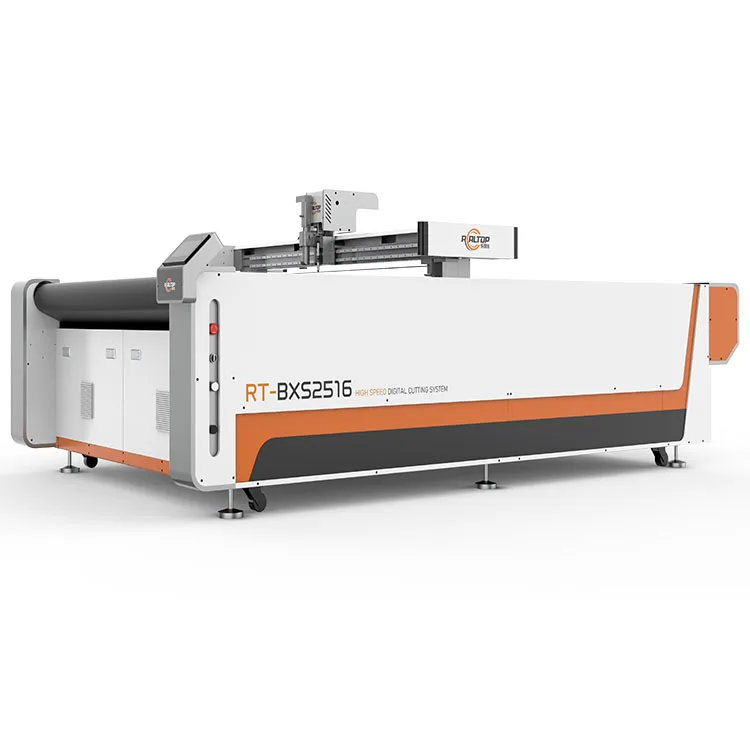
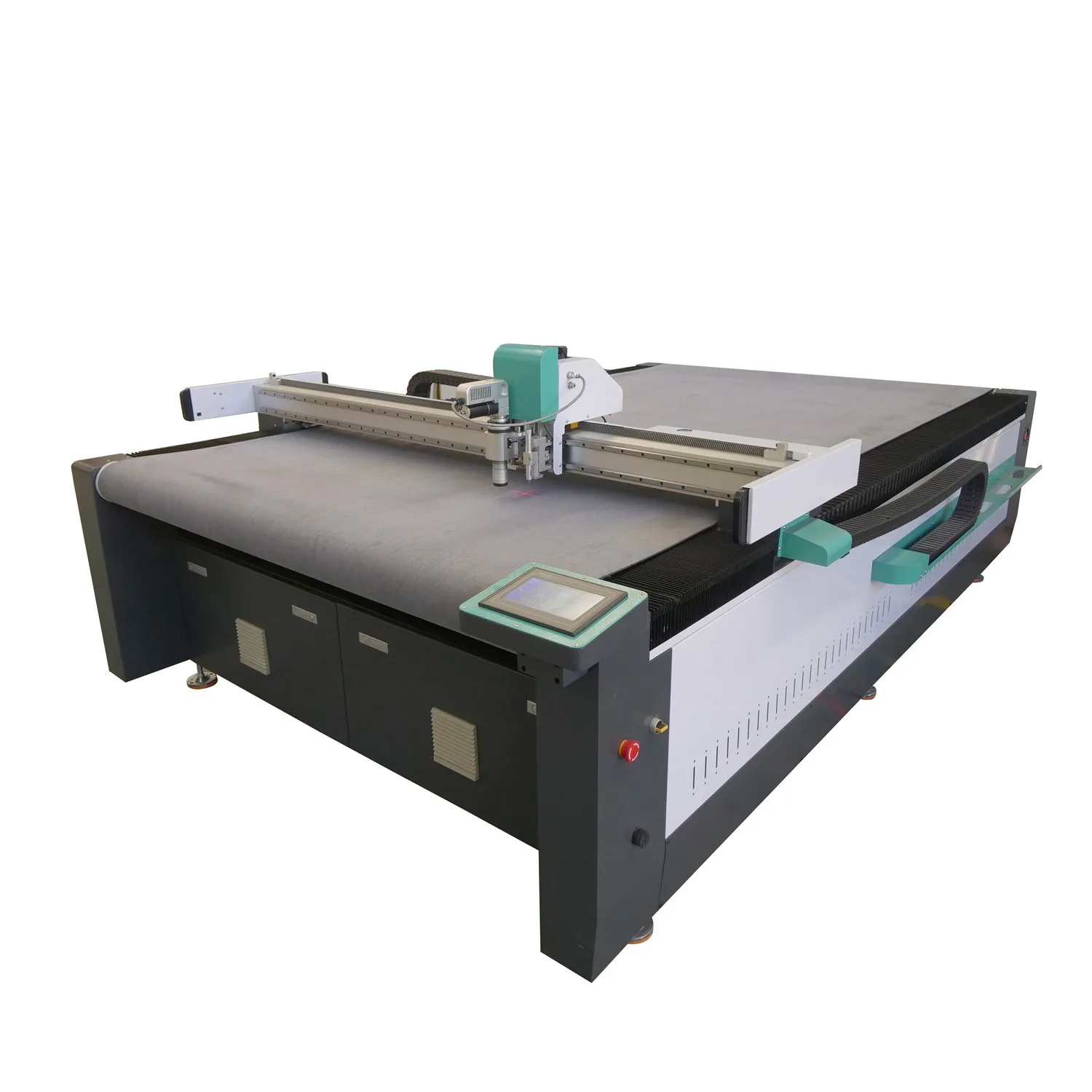
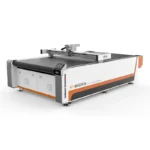
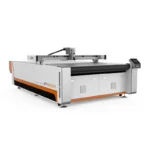
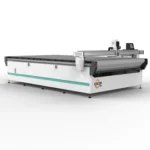
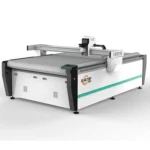
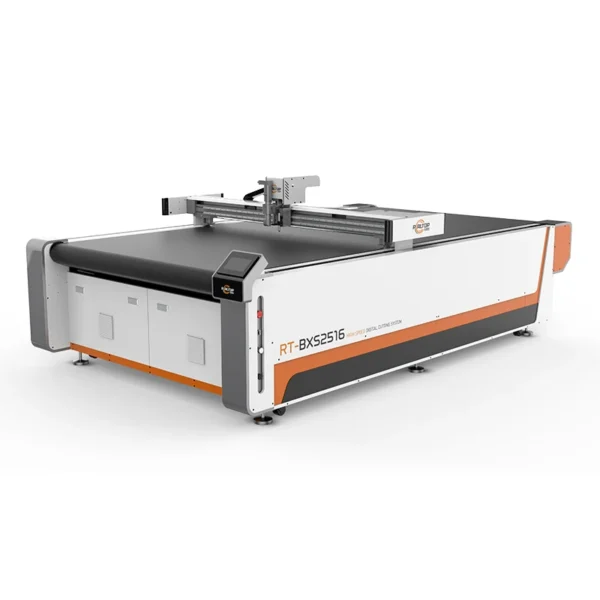
Tool head and table configuration specified per material — the RT-D2516/RT-S2516 matches oscillating knife, vacuum zoning and CCD recognition to your exact fabric, foam or composite before the order is placed.
Technical Specifications
| Parameter | Value |
|---|---|
| Model | RT-D2516/RT-S2516 |
| Product Type | CNC Oscillating Knife Cutting Machine |
| Working Area | 1600 × 2500 mm |
| Machine Size | 3450 × 2300 × 1250 mm |
| Rated Power | 9 kW |
| Voltage | 380V ±10% |
| Translational Velocity | 800–2000 mm/s |
| Cutting Speed | 200–800 mm/s (basis not stated in source — confirm material / thickness) |
| Cutting Thickness | Up to 100 mm (varies with material density and tool head selection) |
| Repeated Accuracy | ≤0.1 mm |
| Transmission System | Digital servo motor, linear guide, synchronous belt, imported ball screw |
| Servo Motor Options | Delta (China) or Panasonic (Japan) |
| Vacuum Pump | 7.5 kW |
| Table Type | Flat working table or auto-feeding conveyor table (Germany-imported belt) |
| Vacuum Platform | Magnesium-aluminum alloy, PVDF powder spraying, anodic and hard oxidation |
| Multifunctional Tool Head Options | Oscillating knife, pneumatic knife, high-power vibrating knife, circular knife, V-cutting knife, drag knife, creasing wheel, dotted line knife, punching, brush |
| Visual Positioning Options | Small CCD mark point, panoramic camera recognition, projection positioning |
| Software File Formats | PLT, DXF, AI (HP-GL compatible) |
| Control Panel | Touch screen, multi-language (English, Russian, Italian, Chinese; custom available) |
| Safety Devices | Infrared induction blocking, beam anti-collision sensors, emergency stop |
| Frame Construction | Thick-walled seamless steel, high-temperature tempering, CNC machining center finished |
| Certification | CE (scope to be confirmed with manufacturer) |
Application Suitability
| Application | Material or Output |
|---|---|
| Garment and footwear cutting | Woven cloth, knitted fabric, leather, synthetic leather, shoe lining, sponge composite |
| Automotive interior trimming | PVC sheet, PU foam, EVA, carbon fiber prepreg, rubber gasket stock |
| Soft furnishing and carpet | Non-woven fabric, carpet, floor mat material, upholstery textile |
| Packaging and sample making | Corrugated cardboard, sticker film, foam board, folding carton stock |
| Industrial gasket fabrication | PTFE, ETFE, silicone rubber, compressed fiber sheet |
| Composite panel processing | Fiberglass, XPE, PP, PE foam layers, multi-layer laminate |
Why Material Thickness Alone Does Not Define the Right CNC Oscillating Knife Cutting Machine
The cutting result depends on matching tool head, blade frequency and vacuum hold-down to the actual material stack — not just the thickness number on a spec sheet.
I once watched a garment factory in Johor run a vibrating knife through TPU-coated polyester at the same oscillation setting they used for plain cotton. The blade dragged, the coating delaminated and four days of production vanished. Cutting speed and depth figures mean very little without the material context behind them. A 50 mm block of open-cell foam reacts completely differently from a 50 mm stack of woven denim, yet both are often quoted under the same "max thickness" line [NEED_CITE: material-specific cutting behaviour in oscillating knife systems].
Oscillating Knife Tool Head Selection by Material Type
The RT-D2516/RT-S2516 offers ten tool head functions including oscillating knife, pneumatic knife, high-power vibrating knife, drag knife and creasing wheel. Each option addresses a different material behaviour: oscillating action slices through compressible foam without crushing the cell structure, while a drag knife follows tight contours on thin vinyl without lifting the sheet. When you review CNC oscillating knife cutting machine specifications, the tool head list tells you whether the machine can adapt to the materials your line actually runs rather than forcing a single cutting method across the board.
Vacuum Adsorption and Small-Part Stability
The magnesium-aluminum vacuum platform on this machine uses PVDF powder coating and hard oxidation to maintain flatness across the 1600 × 2500 mm surface. A 7.5 kW vacuum pump generates hold-down force through zoned channels. Small gasket pieces or narrow fabric strips tend to lift at the trailing edge once the blade exits the cut; zoning lets you concentrate suction only where the cutting head is working, keeping offcuts flat without starving the active zone.
Reading the Specs That Matter on the Shop Floor
The ≤0.1 mm repeated accuracy figure comes from the combination of imported ball screws, linear guides and digital servo drives — Delta or Panasonic depending on your preference. In garment nesting, that tolerance governs how closely pattern pieces can sit together without overlapping, directly affecting fabric yield. Translational velocity reaches 800–2000 mm/s while actual cutting speed sits at 200–800 mm/s; the gap between the two numbers reflects the acceleration and deceleration overhead at each contour start and stop, which becomes significant on intricate shoe-upper patterns with hundreds of small curves [NEED_CITE: servo-driven motion accuracy in flatbed cutting tables]. The HP-GL instruction system accepts PLT, DXF and AI files, so your existing CAD output feeds in without an intermediate conversion step.
The Hidden Cost of Skipping the Sample Cut
When a buyer specifies a machine by working area alone and skips running their own material through it, the problems surface after installation. The wrong oscillation frequency leaves ragged edges on woven cloth, the vacuum zones prove too wide for small sticker parts and the CCD camera cannot lock onto low-contrast registration marks at full traverse speed. Rectifying these issues on-site costs far more in downtime than a pre-order sample test would have taken [NEED_CITE: cost of post-installation reconfiguration versus factory sample cutting]. Every configuration variable — blade type, stroke length, vacuum zone map, camera lens — should be locked in writing before the machine leaves the factory.
Why Source This Machine Through REALTOP’s CNC Knife Cutting Line
In-house design covers both the knife cutting head and the vacuum platform, so the two are engineered as one system rather than bolted together from separate suppliers. Tool head and table configuration are documented per material before the order, meaning the oscillating knife stroke and blade angle arrive matched to your fabric or foam, not set to a generic default. CCD camera positioning is tested against your actual printed marks at target production speed, not demonstrated on a high-contrast test chart. Voltage, plug type and control language are confirmed in writing before shipment, avoiding the common situation where a 380V machine arrives at a facility wired for a different supply. Sample cutting on your own material is part of the standard sales process, giving you an edge-quality report before commitment.
Documentation & Verification
- Machine specification sheet listing every selected tool head and vacuum zone map
- Electrical schematic with confirmed voltage, frequency and plug type for your facility
- Sample cutting report produced on your fabric, foam or composite before order
- Factory test record showing repeated accuracy measurement on your target pattern
- Software licence and file format compatibility note for PLT, DXF and AI workflows
- Spare parts list covering blades, knife holders and vacuum seals
Installation, Commissioning & Support
- Floor space planning around the 3450 × 2300 mm footprint plus operator clearance
- Dedicated 380V circuit sized for the 9 kW machine load plus 7.5 kW vacuum pump
- Machine arrives as a single-frame unit; beam and tool head gantry require on-site alignment
- First-run parameter setting for your specific material thickness and cutting contour
- Touch screen language configured to your operator preference before training begins
- Blade replacement schedule and vacuum filter cleaning intervals reviewed during commissioning
What to Prepare Before Requesting a Quote
Send your material type, nominal thickness and whether the stock arrives in rolls or sheets. Include the daily cutting volume you need to sustain and any printed registration marks the CCD system must track. If your facility runs on a voltage or frequency outside the 380V ±10% range, state the local supply so the transformer and motor can be matched before build.
Frequently Asked Questions
Q: How do I choose between oscillating knife, drag knife and creasing wheel for my material?
A: Oscillating knife suits compressible materials like foam, sponge and multi-layer fabric where a dragging blade would crush the stack. Drag knife works on thin, rigid sheets such as vinyl and sticker film. Creasing wheel scores corrugated cardboard without cutting through. We confirm the right tool head by running your actual material before order.
Q: What cutting thickness can this machine handle across different materials?
A: The maximum cutting depth varies with material density and tool head selection. Soft open-cell foam may be cut thicker than dense rubber or carbon fiber composite at the same blade stroke. We verify achievable thickness on your specific material during the sample cutting stage and document the result before you commit.
Q: How is CCD camera positioning verified before shipment?
A: We run your printed material with the registration marks you actually use, at the production speed you require. The small CCD mark-point and panoramic camera options are each tested for tracking accuracy under your lighting conditions, and the result is recorded in the sample cutting report.
Q: What voltage and control language options are available?
A: The standard supply is 380V ±10%, but the motor, transformer and control cabinet can be configured for your local voltage and frequency. The touch screen supports English, Russian, Italian and Chinese by default, with additional languages configurable before shipment once you confirm your operator requirements.
Q: How do I arrange sample cutting on my own material before ordering?
A: Send a roll or sheet of the material you plan to cut, along with a DXF or PLT file of a representative pattern. We run it on the RT-D2516/RT-S2516 with the tool head and vacuum settings matched to your stock, then share the edge-quality photos, cutting time and configuration recommendation before you place the order.


商品评价
Clear filtersThere are no reviews yet.