




Fast Shipping
Carrier information

20k products
Payment methods

24/7 Support
Unlimited help desk

2-day Delivery
Track or off orders
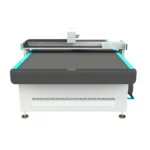
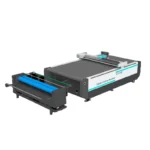
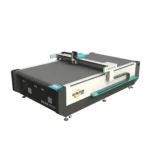
Modular Tool Head Matching — the RT-D2516/RT-S2516 lets fabric, leather and foam producers select oscillating, drag or round knife tooling per material, rather than forcing one cutting method across every job.
Technical Specifications
| Parameter | Value |
|---|---|
| Model | RT-D2516/RT-S2516 |
| Product Type | CNC Oscillating Knife Cutting Machine |
| Working Area | 1600×2500mm |
| Overall Dimensions | 3450×2300×1250mm |
| Rated Power | 9kW |
| Voltage | 380V±10% |
| Translational Velocity | 800-1200mm/s |
| Cutting Thickness | ≤50mm (varies by material — basis to be confirmed) |
| Repeated Accuracy | ≤0.1mm |
| Drive Mechanism | Pinion and rack transmission |
| Transmission System | Digital servo motor, linear guide, synchronous belt, ball screw (imported) |
| Servo Motor | Panasonic / Delta |
| Table Surface | High-density felt with vacuum hold-down |
| Vacuum Pump | 7.5kW |
| Multifunctional Head | Swiss imported knife — vibration full cutting, vibration half cutting, cursor location |
| Safety Device | Infrared sensors |
| Bed Structure | Overall welding, imported milling machine processing |
| Instruction System | HP-GL compatible format |
| Control Language Options | English, Russian, Italian, Chinese (custom languages available) |
| Standards | CE |
Application Suitability
| Application | Material or Output |
|---|---|
| Garment and footwear production | Multi-layer woven fabric, denim, technical textile |
| Automotive interior trimming | Sponge composite leather, PVC, PU foam |
| Leather goods manufacturing | Genuine leather, synthetic leather, suede |
| Gasket and seal fabrication | Silicon sheet, rubber, soft glass |
| Home furnishings and upholstery | Felt, curtain fabric, composite textile |
Why Tool Head Choice Decides Your Edge Quality
Specifying a cutting table by working area alone leaves the most critical variable unaddressed — what actually touches your material. A machine sized for 1600×2500mm sheets can still produce crushed foam edges or frayed fabric if the oscillating knife frequency and stroke are mismatched to material density. The RT-D2516/RT-S2516 CNC oscillating knife cutting machine tool head selection vacuum zoning CCD contour system approaches this differently: the modular holder lets you run a Swiss oscillating knife for woven textile, swap in a drag knife for rubber gaskets, or fit a round knife for continuous single-ply cuts. Right tooling matched to real stock is the single largest factor in edge quality.
I once saw a fabric producer run multi-layer coating composite on an oscillating head set for standard polyester — the blade chattered through the top layer and dragged the backing, producing visible delamination along every curve [NEED_CITE: oscillating knife frequency matching to composite material density]. The fix was not a faster machine. It was a slower feed rate with a different blade geometry, validated on sample stock before the production run started.
Oscillating Knife, Drag Knife and Round Knife — What Each Actually Does
The Swiss imported oscillating head on the RT-D2516/RT-S2516 delivers vibration full cutting and half cutting with cursor location, which matters when you cut garment panels from stacked fabric. The oscillation severs fibres cleanly rather than dragging them, producing a sealed edge on synthetics and a square edge on woven cloth. For silicon gaskets or rubber seals, the drag knife follows vector paths without vibration, leaving a smooth profile that holds dimensional tolerance.
Round knife fits a different production pattern — long continuous cuts through single or double ply where the material is spread on the table and the cut runs unbroken for metres. The modular holder lets a buyer start with oscillating and add round knife or marking pen later as the product catalogue expands, without replacing the entire machine.
Vacuum Table Zoning and Small-Part Hold-Down
The 7.5kW vacuum pump pulls through a high-density felt surface across the 1600×2500mm bed, and the zoning divides the table into independently controlled sections [NEED_CITE: vacuum table zone configuration for nested small parts]. When cutting small gasket pieces or shoe upper components, activating only the zone under the work prevents air bleed from unused areas and maintains suction where the knife is actually running.
This matters more as part size shrinks. A large automotive seat panel sits flat under its own area, but a nest of 40mm-diameter seals will lift and shift if surrounding zones pull air past the cut line. Confirming zone count and switching logic before order prevents discovering the limitation on the first production day.
Pinion-and-Rack Drive and the ≤0.1mm Repeatability Claim
The RT-D2516/RT-S2516 uses pinion and rack transmission instead of belt drive across the 2500mm stroke, paired with Taiwan Hiwin linear guides and Panasonic or Delta servo motors. Belt systems stretch over time and introduce backlash on direction reversal, which shows up as a mismatch where a cut path crosses itself.
Rack drive carries higher bearing load and maintains positioning accuracy across long travel. The ≤0.1mm repeated accuracy specification means a panel cut on Monday morning matches one cut Friday afternoon, which is what matters in garment grading where pattern pieces from different cutting sessions must sew together without visible offset.
What Happens When Configuration Is Skipped
A buyer who confirms only working area and voltage, without specifying tool head and vacuum zoning for their actual part mix, arrives at installation to find the machine physically fits the workshop but cannot hold their smallest parts flat during cutting. The felt surface and vacuum zones were specified generically rather than mapped to the buyer’s nesting layout.
I have watched producers lose entire shifts re-cutting panels that shifted mid-path, with the material cost already sunk and the delivery window narrowing [NEED_CITE: material waste from inadequate vacuum hold-down in nested cutting]. The machine is not defective — it was simply configured for a different production profile than the one running on the floor.
Why Source This Configuration Here
In-house design covers both knife and laser cutting across the REALTOP range, so the recommendation starts from your material rather than from whichever technology the factory prefers to sell. The RT-D2516/RT-S2516 configuration — tool head, vacuum zoning, feeder option, control language — is specified per buyer workflow before production begins.
Tool head and table layout are confirmed against your actual stock, not a generic sample. Voltage, plug type and control interface language are locked before the electrical box is wired. Sample cutting on the buyer’s own material runs before the order is finalised, producing a report with feed rate, blade type and edge quality documented. The high-density felt surface, pinion-and-rack drive and 7.5kW vacuum system are standard build, not optional upgrades added after the quote [NEED_CITE: factory pre-delivery sample cutting protocol].
Documentation & Verification
- Machine specification sheet with RT-D2516/RT-S2516 electrical schematic and 380V voltage confirmation
- Tool head and vacuum zone configuration list matched to buyer material type and thickness
- Sample cutting report on buyer’s own fabric, leather or composite stock before dispatch
- Software licence with HP-GL file format compatibility note and nesting workflow record
- Factory test record documenting repeated accuracy and servo response before crating
- Packing photographs showing table surface, electrical box and cable routing pre-shipment
Installation, Commissioning & Support
- 3450×2300×1250mm footprint requires level concrete floor with clearance for 1600×2500mm sheet loading on both long sides
- 9kW rated power plus 7.5kW vacuum pump requires dedicated 380V circuit with verified frequency at site
- Bed arrives as overall-welded structure; Hiwin rails and rack pre-aligned at factory, field assembly limited to gantry and cable chain
- First-day commissioning sets servo tuning, vacuum zone thresholds and blade oscillation frequency on buyer stock
- Operator training covers tool head changeover, nesting file import and HP-GL path verification
- Spare parts list includes Swiss knife blades, felt replacement sheets and high-flexibility cable segments
What to Include with Your Inquiry
Send the material type, number of plies or layers you run in a single pass, and the thickest stock in your current product mix. Confirm your local voltage and frequency, the control language your operators read, and whether your existing nesting software outputs HP-GL or another vector format. If your production includes printed contour work, specify the mark type and minimum contrast so we can confirm recognition capability before quoting.
Frequently Asked Questions
Q: How do I choose between oscillating knife, drag knife and round knife for my material?
A: Oscillating knife suits multi-layer woven fabric and foam, severing fibres cleanly without dragging. Drag knife fits solid rubber, silicon and gasket stock where a smooth vector profile matters more than speed. Round knife handles long continuous single-ply cuts. The RT-D2516/RT-S2516 modular holder accepts all three, so the choice follows your material mix rather than locking you into one method.
Q: Will the vacuum table hold small gasket parts flat during cutting?
A: The 7.5kW pump serves independently zoned sections under the high-density felt surface. For small nested parts, activating only the active zone prevents air bleed and maintains suction directly under the cut path. Zone count and switching logic should be confirmed against your typical nesting layout before the table is built.
Q: Can the machine track printed marks for contour cutting at production speed?
A: CCD contour recognition is available as a configuration option on the RT-D2516/RT-S2516. Tracking reliability depends on mark contrast, print registration tolerance and cutting speed — all of which should be validated on your actual printed stock during the sample cutting stage, not assumed from a general specification.
Q: Does my existing nesting software work with this machine?
A: The control system accepts HP-GL compatible format. Before order, send a sample nesting file from your software so we can confirm import, path interpretation and kerf compensation match your workflow. File format compatibility is documented in the software licence note shipped with the machine.
Q: How do I arrange sample cutting on my own material before committing?
A: Ship a representative roll or sheet of your actual production stock — including the thickest variant and any coated or composite layer you run. We run test cuts across tool head options, document blade type, feed rate and edge result, and send the sample cutting report with the quotation so you can compare configuration choices on real data.


商品评价
Clear filtersThere are no reviews yet.