






Fast Shipping
Carrier information

20k products
Payment methods

24/7 Support
Unlimited help desk

2-day Delivery
Track or off orders
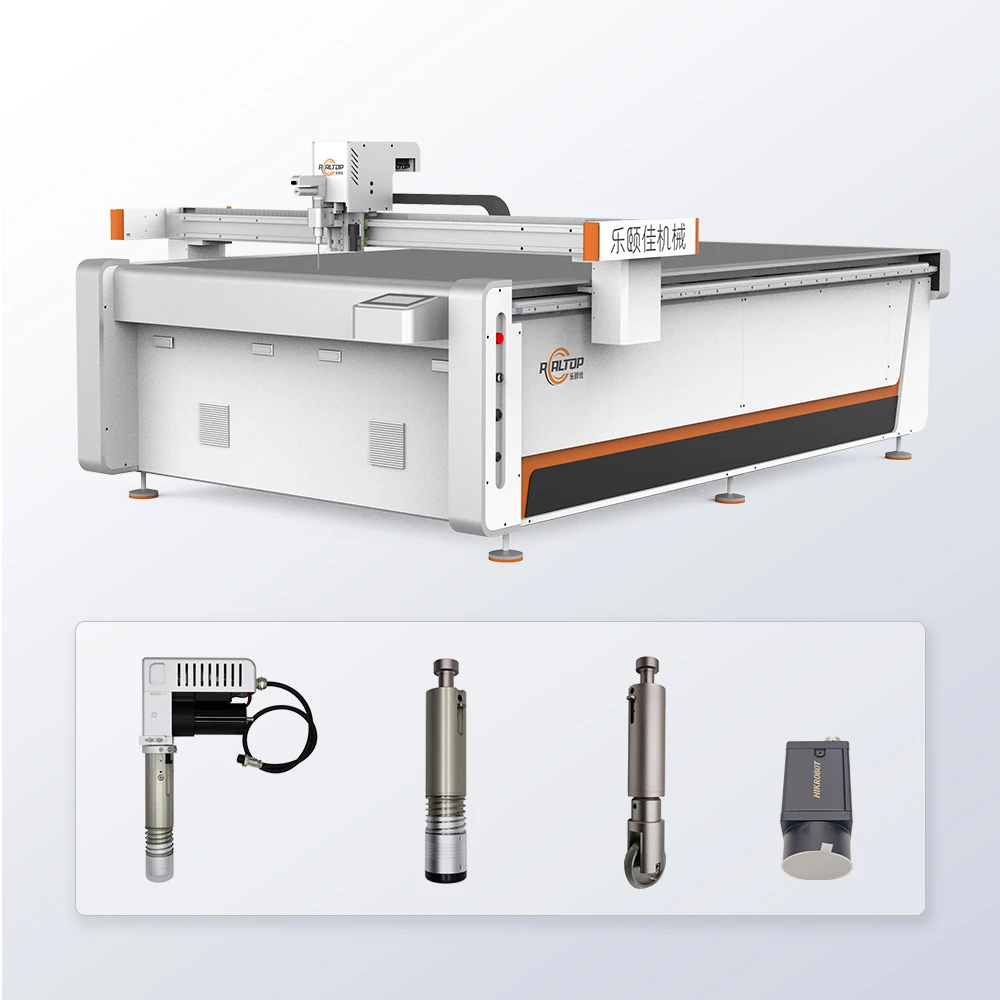
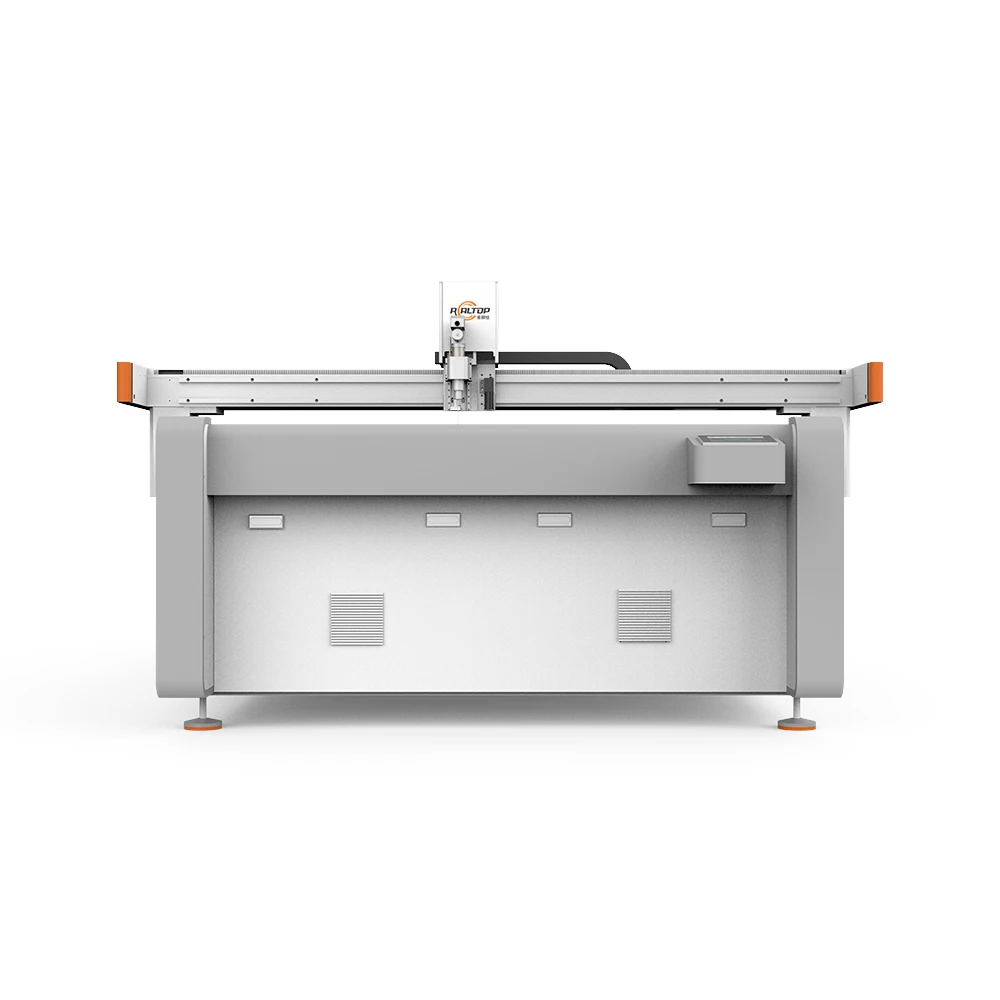
Tool Head Matched to Material — seven interchangeable cutting tools configured after sample runs on the buyer’s actual stock, so edge quality is verified before the machine ships.
Technical Specifications
| Parameter | Value |
|---|---|
| Model | 1625 |
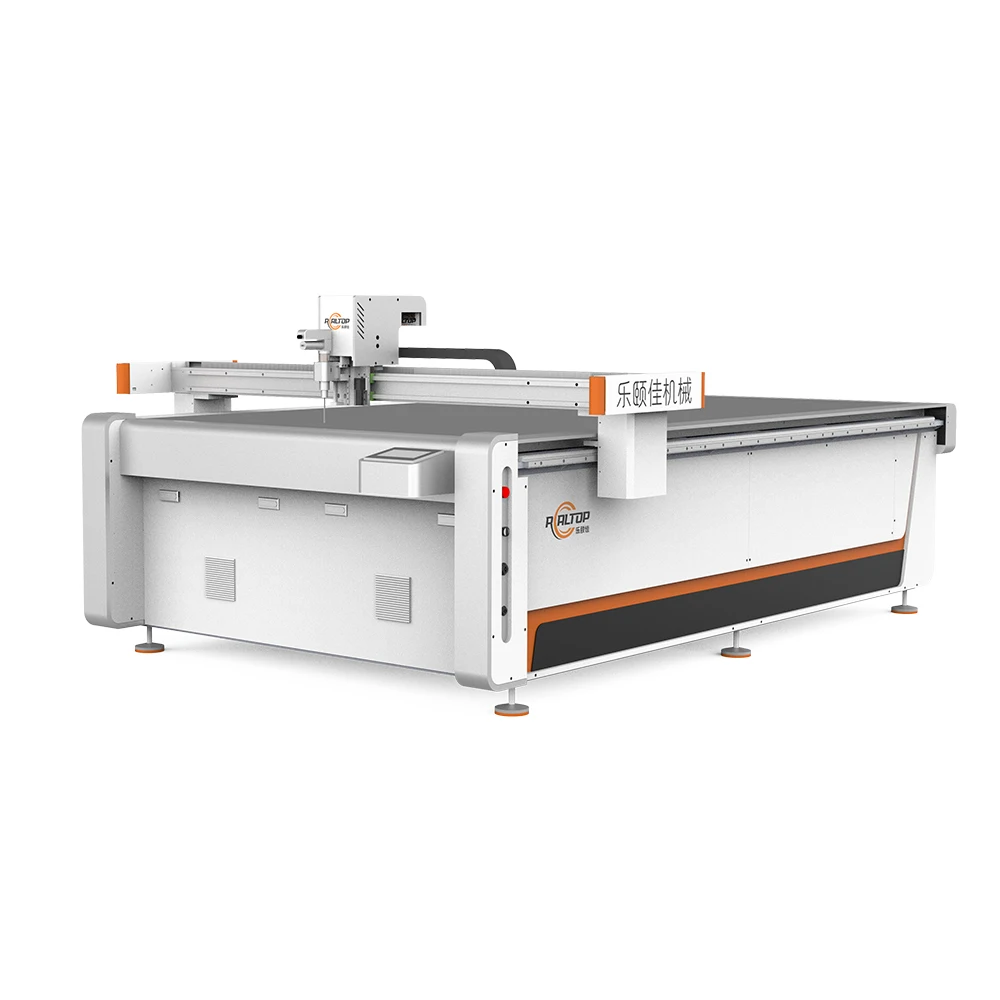
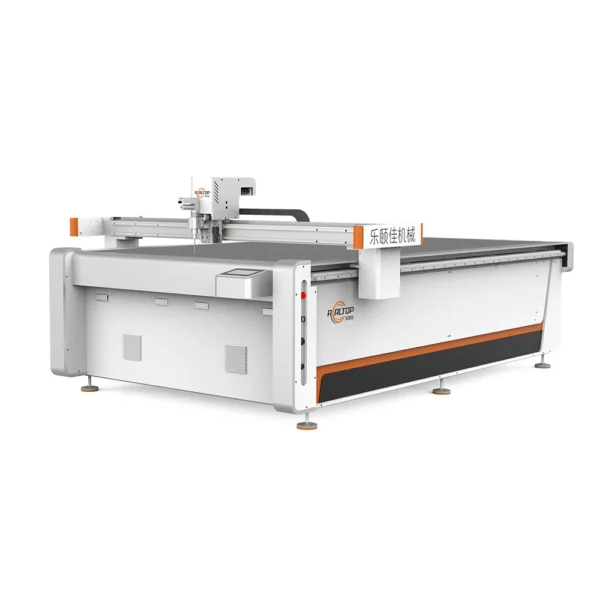
| Product Type | CNC Oscillating Knife Cutting Machine |
| Working Area | 1600×2500 mm |
| Cutting Speed | 0–2000 mm/s |
| Cutting Thickness | ≤ 30mm (material basis not stated in source — confirm material type and density) |
| Positioning Accuracy | ±0.1 mm |
| Tool Head Options | Oscillating knife, Driven rotary knife, Creasing wheel, Kiss cutting tool, Pneumatic knife, Milling tool, V groove knife |
| Vacuum Table Type | Aluminum bellows vacuum table |
| Vacuum Pump Power | 9 kW |
| Control System | PLC control panel |
| Software File Formats | PLT, DXF, AI, PDF |
| Packaging Software | Dedicated packaging box structure design software included |
| Servo Motor Brands | Panasonic, Delta, Dorna (rated or peak not specified in source) |
| Voltage Options | 110V / 220V / 380V (frequency not specified in source) |
| Language Options | English, Russian, Italian, Chinese (custom languages available) |
| Safety Device | Infrared sensor device and emergency stop device |
| Overall Dimensions | 3300×2100×1350 mm |
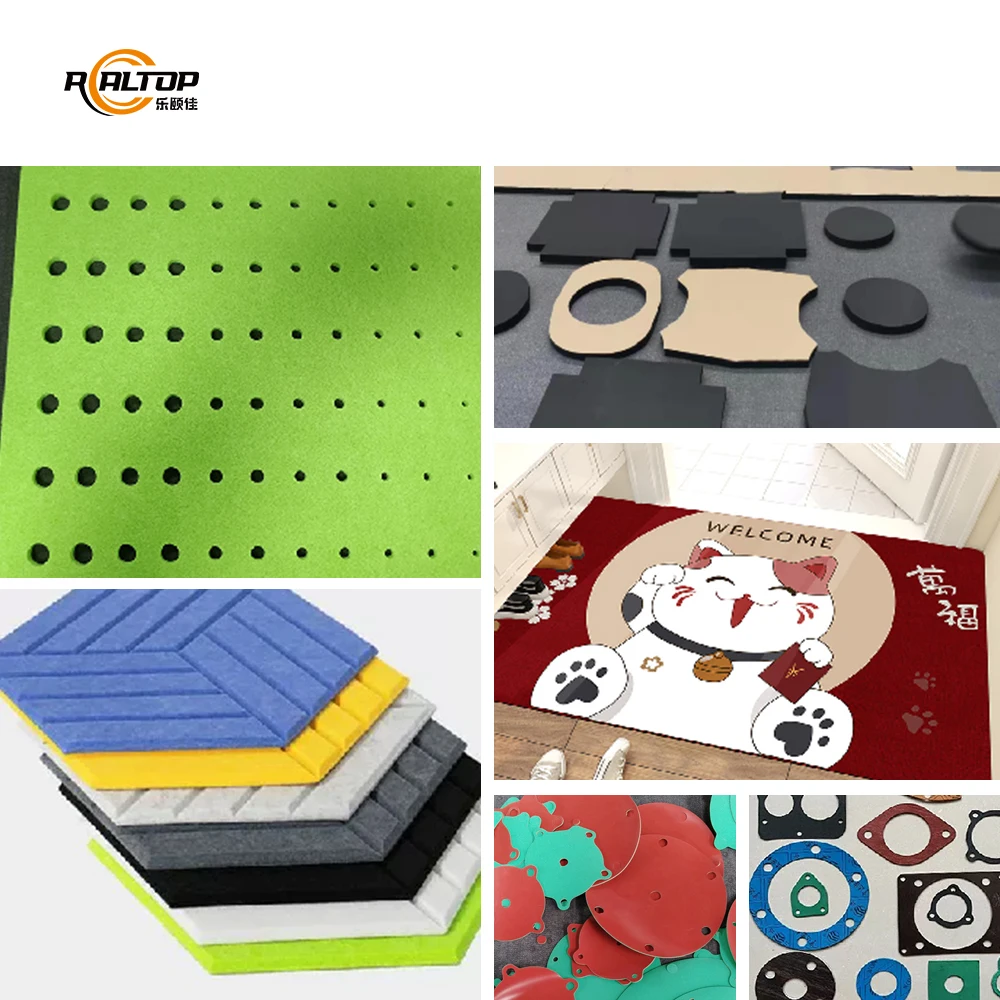
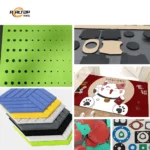
| Applicable Materials | Fabric, Cardboard, Carton, Mats, PVC, EVA, Leather, Acrylic, Foam, PTFE, Rubber |
| Standards | CE |
Application Suitability
| Application | Material or Output |
|---|---|
| Packaging and carton sample making | Corrugated board, grey board, foam inserts, honeycomb paper |
| Composite material cutting | Carbon fiber prepreg, aramid honeycomb, fiberglass cloth |
| Automotive interior and acoustic insulation | Multi-layer felt, acoustic foam, sound deadening mats |
| Aerospace gaskets and insulation pads | Thermal insulation board, acoustic insulation composites |
| Wind power blade core materials | Infusion mesh, PVC and PET foam core |
| Sporting goods components | Prepreg carbon sheets, high-density foam padding |
| Signage and gasket production | PVC foamboard, rubber sheet, PTFE gasket stock |
Why Cutting Thickness Ratings Mislead Buyers Without a Material Baseline
A 30 mm rating means nothing until you test the exact density and cell structure of your foam or composite.
Buyers routinely compare CNC oscillating knife cutting machine specifications by the maximum thickness number on the brochure. I learned this the hard way on the shop floor. We once set up a machine using standard PVC board for the trial, but the customer’s actual stock was high-density EVA acoustic panel. The knife couldn’t hold an edge through the denser cell structure, and every cut came out with torn fibers and burrs. Two weeks of parameter re-tuning followed before the machine was ready. That is why I now insist on running sample cuts on the buyer’s own material before any specification gets locked in. [NEED_CITE: material density variation in EVA and PVC foam products]
How Tool Head Selection Determines Edge Quality on Foam and Composites
A CNC oscillating knife cutting machine with the wrong tool head will crush low-density foam or leave ragged edges on woven composites. The 1625 offers seven interchangeable heads — oscillating, rotary, creasing, kiss-cut, pneumatic, milling, and V-groove — each suited to a different material behavior. Oscillating knives slice cleanly through multi-layer fabric and acoustic felt without fraying. Pneumatic knives handle thicker, denser boards like high-density EVA where mechanical stroke alone struggles. Creasing wheels score fold lines on carton stock without cutting through. The correct pairing comes from running your actual material, not from reading a chart.
Vacuum Hold-Down and Why Small Parts Lift at Production Speed
The aluminum bellows vacuum table paired with a 9 kW pump provides full-surface suction across the 1600×2500 mm bed. That matters when you cut small gaskets or packaging inserts, because insufficient hold-down lets parts shift mid-cut and ruins nesting yield. The vacuum zoning must match your typical part size; a table designed only for full-sheet hold-down will leave small pieces floating near the edges. When I set up a job for automotive acoustic felt inserts, we verified that the suction remained stable even on pieces smaller than a hand, confirming the zoning was adequate before committing to production runs. [NEED_CITE: vacuum table zoning requirements for small part cutting]
Reading the Specs That Actually Matter for Your Production
Positioning accuracy of ±0.1 mm determines whether complex contour cuts on gaskets and packaging samples meet tolerance requirements for downstream assembly. Cutting speed up to 2000 mm/s defines your throughput ceiling, but real speed depends on material thickness and the tool head engaged — cutting 20 mm EVA foam will run slower than scoring thin carton. The PLC control panel manages tool changes and path execution, and the dedicated packaging box structure design software handles box template generation alongside standard PLT, DXF, AI, and PDF imports. Servo motors from Panasonic, Delta, or Dorna drive the motion system, with selection depending on the buyer’s preference and regional service availability. Voltage options span 110V, 220V, and 380V, but frequency must be confirmed for your market before the electrical cabinet is wired.
The Hidden Cost of Skipping Material-Specific Configuration
When a machine is specified by working area alone and the tool head is chosen generically, the problems show up after delivery. Ragged edges on foam mean secondary trimming. Crushed composite layers mean scrapped material. Insufficient vacuum on small parts means re-running nests and losing throughput. Voltage mismatches discovered at installation mean weeks of downtime while transformers are sourced locally. These are not theoretical risks — they are the most common service calls I see on machines that were quoted without a sample cut on the buyer’s stock. [NEED_CITE: common causes of cutting quality issues on oscillating knife machines]
Why Buyers Verify Before They Commit
In-house design and production covering both knife and laser technologies means the cutting method is matched to the material, not forced into one approach. Tool head and table configuration are specified per material and production volume, documented in a written configuration list before order. Software compatibility is confirmed against the buyer’s existing file formats and nesting workflow. Voltage, plug type, and control language are locked in writing before the electrical cabinet is assembled. Sample cutting on the buyer’s own material and thickness is completed before any deposit is requested, with a written report covering edge quality, cutting speed, and hold-down performance.
Documentation & Verification
- Machine specification sheet listing configured tool heads and table zoning for your material
- Electrical schematic showing confirmed voltage, frequency, and plug type for your market
- Sample cutting report on your material with edge quality photos and speed data
- Tool head and vacuum table configuration list matched to your specified stock
- Software license with confirmed file format compatibility for your nesting workflow
- CE declaration and factory test record before shipment
Installation, Commissioning & Support
- Floor space of 3300×2100 mm required with clearance for material loading on all sides
- Dedicated circuit matching confirmed voltage rating with stable supply and proper grounding
- Machine ships assembled; vacuum pump and tool heads require on-site connection and calibration
- First-run parameter tuning on your material to set cutting speed, oscillation frequency, and vacuum level
- Operator training on PLC panel, tool head changes, and software file import procedures
- Spare oscillating blades, vacuum seals, and creasing wheels included for initial production period
What to Share for an Accurate Configuration
Send your material type, exact thickness, and sheet dimensions along with your typical daily cutting volume. Specify the voltage and frequency at your facility, plus the control language your operators need. If you have existing DXF or AI design files, share a sample so we can verify software compatibility. A small batch of your actual material shipped to our workshop allows us to run sample cuts and return a written report before you commit.
Frequently Asked Questions
Q: How is cutting thickness capability verified for my specific material and density?
A: We run sample cuts on your actual material at your stated thickness. The result is documented in a report showing edge quality, cutting speed achieved, and whether the vacuum hold-down was sufficient. This report is delivered before you confirm the order, so the thickness rating is based on your stock, not a generic test piece.
Q: Which tool head is recommended for my material?
A: The recommendation depends on your material’s density, fiber structure, and thickness. Oscillating knives suit fabric and acoustic felt. Pneumatic knives handle dense EVA and foam. Creasing wheels score carton without through-cutting. We determine the right head by running your material, not by guessing from a spec sheet.
Q: Can the vacuum table hold small parts without lift at production speed?
A: The aluminum bellows table with a 9 kW pump provides zoned suction across the bed. We verify hold-down on your typical part size during the sample cut, checking that small pieces remain stable at the configured cutting speed before the table configuration is finalized.
Q: Will the software import my existing DXF and AI files?
A: The system accepts PLT, DXF, AI, and PDF formats, and includes dedicated packaging box structure design software. Before order confirmation, we import your actual design files and verify compatibility with your nesting workflow to avoid format issues after delivery.
Q: What voltage and control language will be configured for my facility?
A: Voltage is selectable across 110V, 220V, and 380V, with frequency confirmed for your local grid. Control language options include English, Russian, Italian, Chinese, and custom languages. Both are confirmed in writing before the electrical cabinet is wired and shipped.


商品评价
Clear filtersThere are no reviews yet.