



Fast Shipping
Carrier information

20k products
Payment methods

24/7 Support
Unlimited help desk

2-day Delivery
Track or off orders
Custom Tool Head Specification — Oscillating knife, driven rotary knife, creasing wheel, and V-groove tools matched to each flute type and foam density rather than a single default setup.
Technical Specifications
| Parameter | Value |
|---|---|
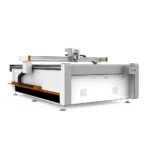
| Product Type | CNC Oscillating Knife Cutting Machine |
| Working Area | 1600 × 2500 mm |
| Tool Head Options | Oscillating knife, Driven rotary knife, Creasing wheel, Kiss cutting tool, Pneumatic knife, Milling tool, V-groove knife |
| Cutting Thickness | ≤ 40 mm (basis not stated in source — confirm material type and density) |
| Cutting Accuracy | ± 0.1 mm |
| Cutting Speed | 0 – 1500 mm/s |
| Vacuum Pump | 9 kW |
| Vacuum Table | Aluminum bellows vacuum table |
| Control System | PLC control panel |
| Servo Motors | Panasonic, Delta, or Dorna options |
| Voltage Options | 110 V, 220 V, 380 V (frequency to be confirmed) |
| File Formats | PLT, DXF, AI, PDF |
| Software | Dedicated packaging box structure design software |
| Safety Devices | Infrared sensor and emergency stop |
| Machine Frame | Heavy-duty frame with precision-ground surface |
| Machine Dimensions | 3300 × 2100 × 1350 mm |
| Language Options | English, Russian, Italian, Chinese (special languages customizable) |
Application Suitability
| Application | Material or Output |
|---|---|
| Packaging sample making | Corrugated cardboard (E-flute, B-flute, BC-flute), greyboard, art paper, specialty cardstock |
| Short-run carton production | Single and double-wall corrugated, kraft liner, recycled board |
| Foam insert fabrication | EVA foam, EPE foam, PU foam for protective packaging and gaskets |
| Gasket and seal cutting | Rubber mats, PTFE sheets, composite adhesive-backed materials |
| Textile and leather trimming | Velvet, fleece, non-woven fabric, synthetic leather |
| Thin plastic sheet processing | PVC, PET sheets for blisters and window patches |
Why the Wrong Tool Head Ruins More Packaging Jobs Than Machine Speed
Cutting crushed foam or frayed corrugated edges is almost always a tool head mismatch, not a machine fault.
I watched a packaging shop try to cut three-layer B-flute with a standard oscillating knife because that was the only head on the machine. The knife compressed the flute instead of slicing it, leaving crushed edges that failed the drop test. The operator blamed the vacuum table, the software, and the servo motors before we finally swapped in a driven rotary knife and the cuts came out clean. Matching the tool to the material is where CNC oscillating knife cutting machine specifications should always start [NEED_CITE: tool head selection by material density and edge requirement].
Tool Head Matching by Flute and Foam Type
A 1625 flatbed CNC knife cutter configured for packaging work typically needs more than one tool head on the gantry. E-flute cardboard up to roughly 1.5 mm cuts cleanly with an oscillating knife at standard frequency, but once you move to B-flute or BC-flute, the flute structure crushes under vertical oscillation. A driven rotary knife slices through without compression, preserving the corrugated arch that gives the board its stacking strength.
Creasing wheels score fold lines in the same pass, which means a sample box comes off the table folded and ready for a fit check without a separate creasing station. For EVA and PU foam inserts, a pneumatic knife handles thicker sections without the drag marks that a mechanical blade can leave on soft material.
Vacuum Zoning and the Small-Part Problem
The aluminum bellows vacuum table on this system pairs with a 9 kW pump, which provides the suction density needed for full-sheet corrugated boards. The real test comes when the nesting software packs dozens of small die-cut shapes onto a single sheet. Once the knife cuts through, those small parts lose their surrounding vacuum seal and can lift during the final passes. Zoned vacuum channels isolate the suction area so that uncut regions continue to hold the sheet down even after perimeter cuts are complete. This is the difference between a clean nest and a table full of loose parts that the knife catches and tears on the next stroke [NEED_CITE: vacuum zoning principles for flatbed CNC cutting tables].
Reading the Specs That Actually Matter
The ± 0.1 mm positioning accuracy depends on the servo drive selection and the precision-ground frame surface. Panasonic servos tend to hold tighter repeatability over long production runs, while Delta and Dorna options serve well for lighter daily volumes. The PLC control panel runs dedicated packaging box structure design software that imports PLT, DXF, AI, and PDF files, which covers the formats most packaging designers already use in ArtiosCAD or Illustrator workflows.
The 1600 × 2500 mm working area fits a standard full-size corrugated sheet with margin for clamping, and the 1500 mm/s maximum cutting speed applies to simple outlines in thin stock. Complex crease-and-cut jobs in BC-flute run at a fraction of that speed because the tool must slow to transition between knife and wheel.
What Happens When Configuration Is Skipped
A buyer who orders a flatbed CNC knife cutter on working area alone and skips the material test often discovers the problem on day one of production. Small packaging parts lift off the table because the vacuum zones are not divided finely enough. The oscillating knife tears through foam instead of slicing it because the frequency was set for cardboard. The design software cannot open the nesting files the buyer already spent weeks building. Every one of these issues is fixable before the machine ships, but expensive to correct after it is bolted to the floor [NEED_CITE: common flatbed cutter configuration mismatches reported by end users].
Why Source the 1625 From This Build Line
The design team and core factory are in-house, which means a buyer can request a creasing wheel and kiss cutting tool on the same gantry instead of accepting a catalog-standard configuration. Tool head and vacuum table zoning are specified against the buyer’s actual material samples, not a generic recommendation sheet. CCD camera contour recognition is available for printed packaging work where the knife path must follow registration marks on pre-printed board. Voltage, plug type, and control language are confirmed in writing before the machine enters production. A sample cutting report on the buyer’s own corrugated or foam stock is provided before the order is finalized, so edge quality and cycle time are documented rather than promised.
Documentation & Verification
- Machine specification sheet listing each tool head and its matched material range
- Electrical schematic with confirmed voltage, plug type, and frequency for the destination market
- Sample cutting report on your corrugated flute or foam thickness before order commitment
- Tool head and vacuum table zoning configuration list per your daily production mix
- Software licence and file format compatibility note for your existing nesting workflow
- Factory test record with positioning accuracy and cutting depth measurements before dispatch
Installation, Commissioning & Support
- Floor space allocation for the 3300 × 2100 mm footprint plus operator clearance on three sides
- Dedicated circuit matching the confirmed 110 V, 220 V, or 380 V supply with correct breaker rating for the 9 kW vacuum pump
- Machine arrives partially assembled; frame leveling and gantry calibration completed on site
- First-run parameter setting for your specific flute type, foam density, or gasket material
- Operator training on the PLC panel and packaging structure design software in your chosen language
- Spare parts list covering oscillating knife blades, creasing wheels, and vacuum table seals
What to Share With Your Inquiry
Send the exact corrugated flute designation or foam type, sheet dimensions, and the daily volume you plan to run. Confirm the voltage and frequency at your facility along with the plug standard and the control panel language your operators need. If you already use nesting software, share a sample file so we can verify import compatibility before the quotation is finalized.
Frequently Asked Questions
Q: How do I choose the right tool head for my corrugated and foam materials?
A: E-flute and thin cardstock cut cleanly with the standard oscillating knife, while B-flute and BC-flute require a driven rotary knife to avoid crushing the flute structure. EVA and PU foam inserts typically use the pneumatic knife for thicker sections. A creasing wheel handles fold lines in the same pass. We recommend testing your specific material before finalizing the tool head configuration.
Q: How is voltage, plug type, and control language confirmed before shipment?
A: We document the required voltage (110 V, 220 V, or 380 V), the destination plug standard, and the control panel language in the specification sheet before production starts. The electrical schematic is shared for your electrician’s review. Any special language for the PLC interface is confirmed at the order stage so the firmware is loaded before the machine leaves the factory.
Q: Can the CCD camera track printed registration marks at full production speed?
A: CCD contour recognition is available as a configuration option for printed packaging work. The camera reads registration marks and adjusts the cutting path to compensate for print-to-sheet offset. Tracking accuracy depends on mark contrast and print quality. We run a test on your printed sheets during the sample cutting stage to confirm the system reads correctly at your intended cutting speed.
Q: How does vacuum table zoning prevent small parts from lifting?
A: The aluminum bellows vacuum table is divided into zones so that suction is maintained in areas where the sheet is still intact. When the knife cuts small packaging shapes free from the surrounding material, those zones stay active and hold neighboring pieces down. This prevents the loose parts from catching on the tool head during subsequent passes and tearing the cut edge.
Q: Will my existing packaging design files import without conversion?
A: The dedicated packaging box structure design software imports PLT, DXF, AI, and PDF formats directly. If you work in ArtiosCAD, Illustrator, or similar tools, we verify file compatibility using your sample files before the order is placed. Any nesting parameters or layer naming conventions your workflow requires are confirmed so the machine is ready to run your files on arrival.


商品评价
Clear filtersThere are no reviews yet.