





Fast Shipping
Carrier information

20k products
Payment methods

24/7 Support
Unlimited help desk

2-day Delivery
Track or off orders
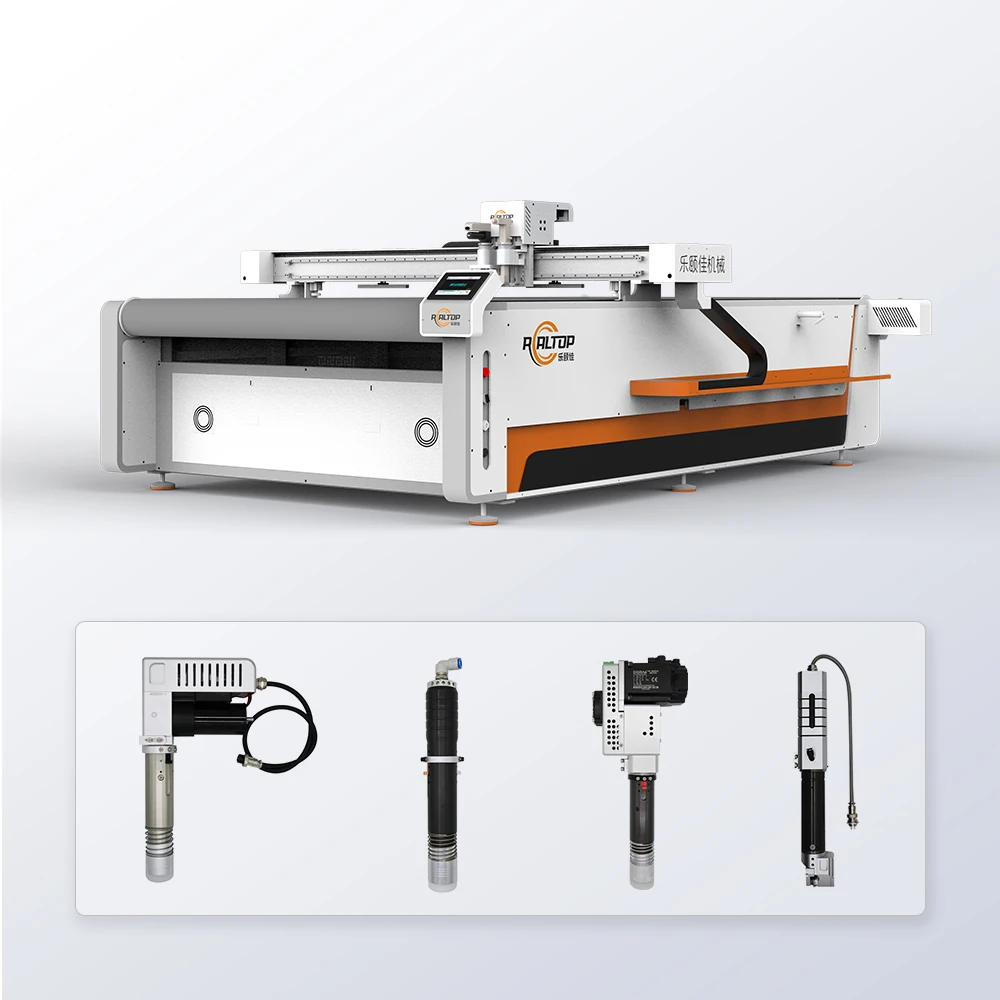
Tool Head Matched to Material — Every oscillating, drag or circular knife configuration on the RT-D2516/RT-S2516 is specified against your actual fabric, foam or gasket sample before the order is finalized.
Technical Specifications
| Parameter | Value |
|---|---|
| Model | RT-D2516/RT-S2516 |
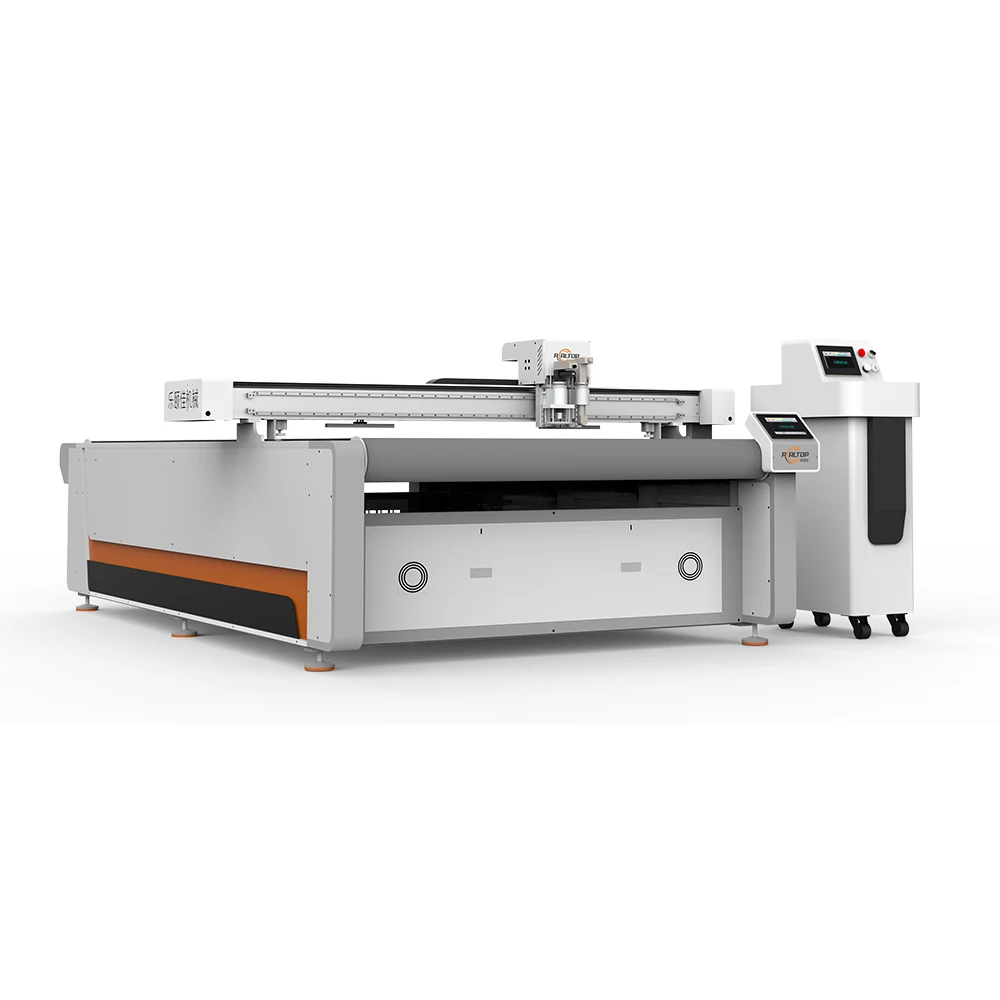
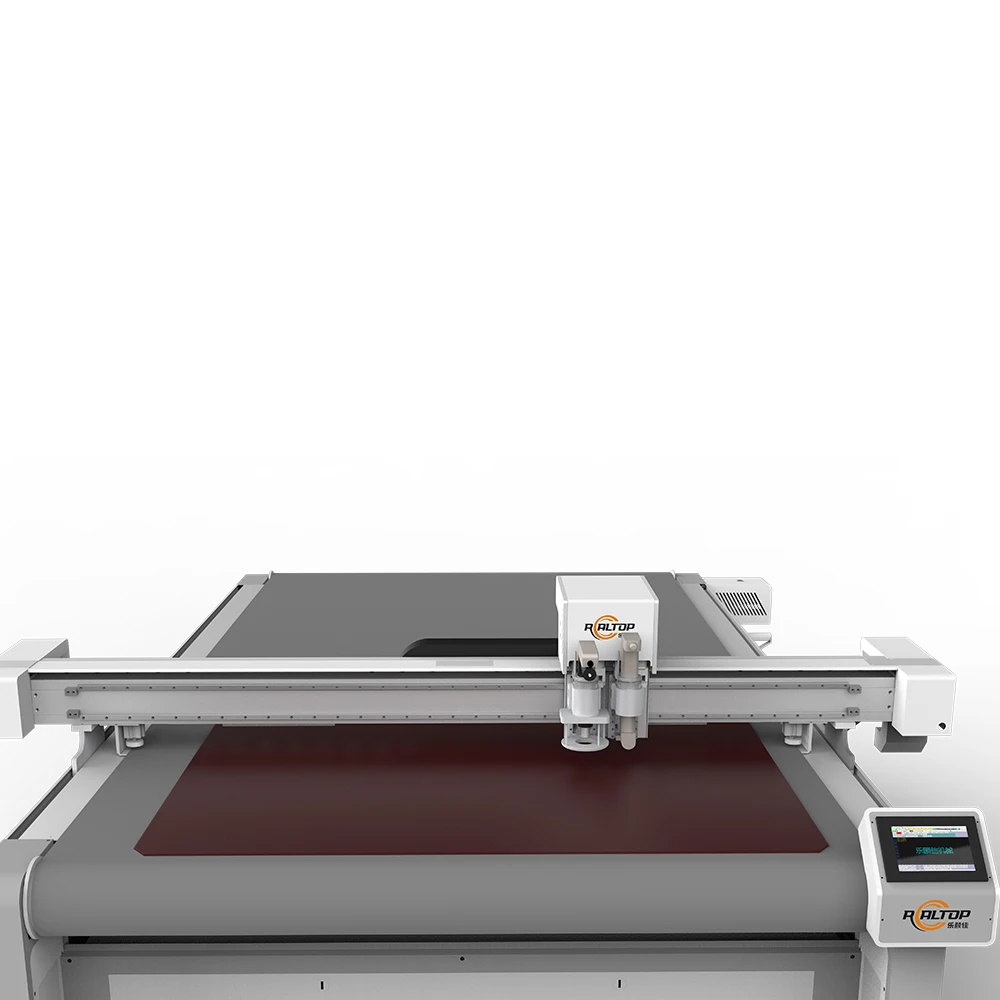
| Product Type | CNC Automatic Multilayer Fabric Cutting Machine |
| Working Area | 1600 × 2500 mm |
| Machine Size (Overall Dimensions) | 3450 × 2300 × 1250 mm |
| Rated Power | 9 kW |
| Vacuum Pump | 7.5 kW |
| Table Type Options | Flat working table or auto-feeding table |
| Multifunctional Tool Head | Swiss imported knife (vibration full cutting, vibration half cutting, cursor location); optional oscillating, pneumatic, high-power vibrating, circular, V-cutting, drag knife, creasing wheel, dotted line, punching and brush heads |
| Cutting Thickness | Up to 100 mm depending on material density and tool head selected |
| Cutting Speed | 200–800 mm/s depending on material (basis to be confirmed) |
| Translational Velocity | 800–2000 mm/s |
| Repeated Accuracy | ≤ 0.1 mm |
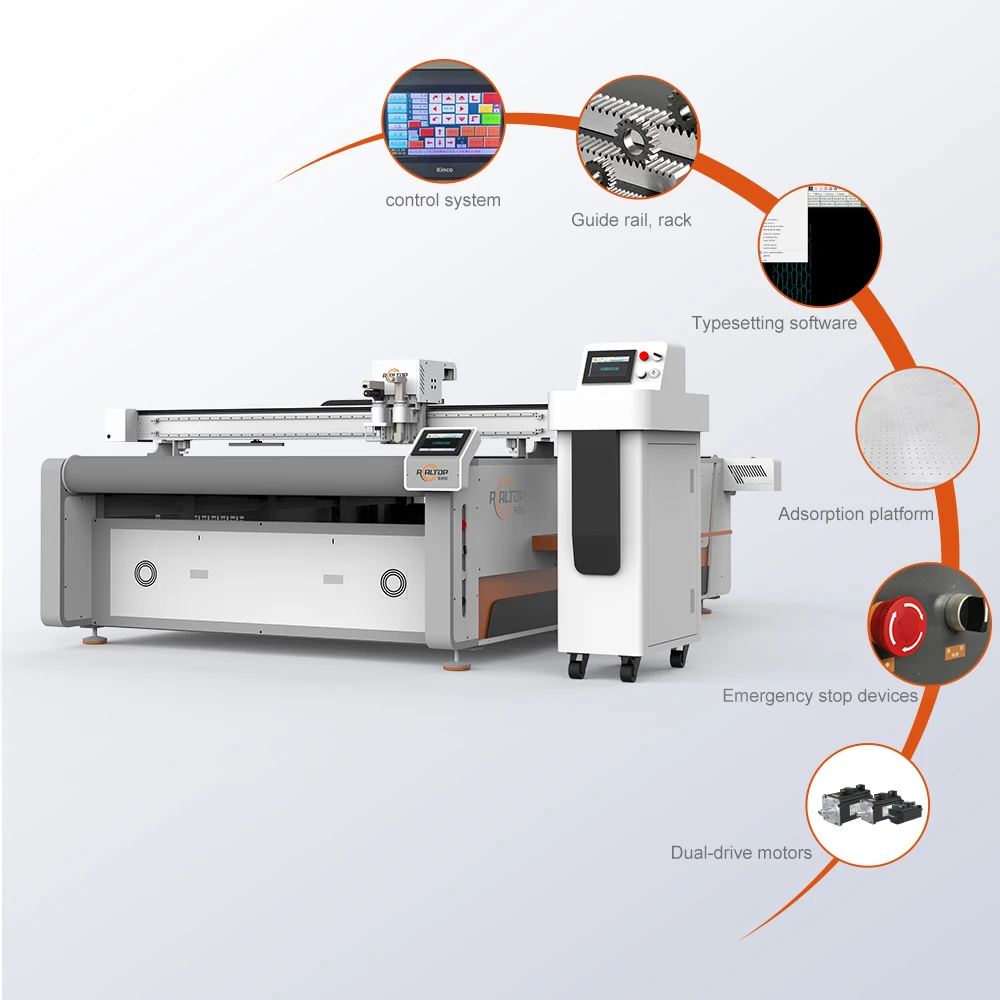
| Transmission System | Digital servo motor, linear guide, synchronous belt, ball screw (imported) |
| Servo Motor Options | Delta (Taiwan) or Panasonic (Japan) |
| Linear Guide | Taiwan Hiwin rail |
| Conveyor Belt | Germany imported |
| Vacuum Table | Magnesium-aluminum alloy, fluorocarbon PVDF powder spraying, anodic oxidation, hard oxidation |
| Control / Instruction System | HP-GL compatible format |
| Software File Formats | PLT, DXF, AI |
| Visual Positioning Options | Small CCD camera mark-point positioning, panoramic camera recognition positioning, projection positioning |
| Safety Device | Infrared sensors, anti-collision, emergency stop |
| Voltage | 380V ± 10% |
| Language Options | English, Russian, Italian, Chinese (special languages customizable) |
| Assembly State | Fully assembled |
| Certification | CE declaration where applicable |
Application Suitability
| Application | Material or Output |
|---|---|
| Garment and footwear production | Single-layer sample and multi-layer cutting of woven fabric, textile, leather, sponge composite leather, fur |
| Automotive interior components | Foam, PU, EVA, XPE, rubber, composite panels cut with creasing and punching in the same cycle |
| Luggage and soft furnishings | Sofa fabric, non-woven fabric, carpet, shoe material, luggage material |
| Gasket and sealing pad fabrication | PTFE, ETFE, rubber, silicone, soft glass, carbon fiber, fiberglass |
| Packaging and carton sample making | Corrugated cardboard, cardboard, plastic box, sticker, film, foam board |
Why the Right CNC Oscillating Knife Cutting Machine Specifications Matter More Than Working Area Alone
A 1600 × 2500 mm bed means nothing if the knife head cannot penetrate your coated technical textile at production speed.
I spent years on the assembly floor in Jinan before moving to technical sales, and the most expensive mistake I watched a buyer make was choosing a multilayer cutter based purely on table size. The machine arrived, the operator loaded a stack of coated outdoor jacket fabric, and the standard oscillating knife crushed the top layers instead of shearing cleanly through them. Two weeks of parameter tuning followed. That failure was preventable — a sample cutting test on the buyer’s actual material before shipment would have flagged the tool head mismatch immediately [NEED_CITE: importance of pre-shipment material sample testing for CNC cutting equipment].
Knife Selection Dictates Edge Quality Across Material Types
The RT-D2516/RT-S2516 supports a Swiss imported knife for vibration full and half cutting as standard, but the real capability lies in the optional heads. An oscillating knife shears through multi-layer fabric stacks up to 100 mm thick without melting synthetic edges. A drag knife scores corrugated cardboard for folding. A circular knife handles single-layer textile at high translational velocity. Choosing the wrong head for a CNC oscillating knife cutting machine specifications sheet is the most common reason buyers see ragged edges or delaminated composites on the first production run.
Vacuum Zoning Holds Small Parts Without Sacrificing Large Panels
The magnesium-aluminum alloy vacuum table uses PVDF fluorocarbon coating with anodic and hard oxidation for flatness. More importantly, the 7.5 kW vacuum pump feeds zoning that can be configured so suction concentrates where the cutting head is working. Small gasket pieces or pattern fragments stay flat without requiring full-table vacuum, which would waste energy and reduce holding force on tiny parts [NEED_CITE: vacuum table zoning principles for CNC flatbed cutting tables].
Reading the Specs That Actually Affect Your Daily Output
Repeated accuracy of ≤ 0.1 mm is maintained by the combination of imported ball screws, Taiwan Hiwin linear guides and Delta or Panasonic digital servo motors. This tolerance matters when you are nesting garment patterns where a 0.3 mm drift across a 2.5-meter cut path wastes fabric. The HP-GL compatible control system and PLT, DXF, AI file support mean the machine integrates with nesting software already in use at most garment and packaging shops. Visual positioning — small CCD mark-point, panoramic camera, or projection — is specified based on whether your material carries printed registration marks and at what production speed the camera must track them. Cutting speed ranges from 200 to 800 mm/s depending on material density, so a thick sponge composite will run at the lower end while single-layer woven textile runs at the upper end.
What Happens When Configuration Is Guessed Instead of Specified
A buyer cutting automotive headliner foam with a standard drag knife will get crushed edges and rejected parts. A garment producer who skips CCD positioning on printed contour work will spend hours manually aligning nested patterns to printed fabric. Software that cannot import the buyer’s existing DXF nesting files turns a CNC oscillating knife cutting machine specifications purchase into a workflow bottleneck. These are not machine defects — they are specification gaps that surface only after the machine is installed and the first production order is late [NEED_CITE: common CNC cutting configuration mismatches in fabric and foam processing].
Why Buyers Specify This Machine With Us
Our in-house design team covers both knife and laser cutting technologies, so a buyer working with mixed materials can match the cutting method to each material rather than forcing one technology across everything. Tool head and table configuration are documented per material type, thickness and daily volume before the order is placed. CCD camera positioning is tested on your printed substrate at target production speed. Software file format compatibility is confirmed against your existing nesting workflow. Voltage, plug type and control panel language are locked in before production begins. Sample cutting on your own material is performed and a cutting report is shared before you commit.
Documentation & Verification
- Factory test record running your fabric thickness and layer count before dispatch
- Electrical schematic confirming 380V ± 10% or your site-specific voltage requirement
- Tool head and vacuum table configuration list matched to your material spec sheet
- Software licence with PLT, DXF, AI file format compatibility verified against your nesting workflow
- Sample cutting report on your actual material documenting edge quality and cycle time
- CE declaration documentation where applicable to your import market
Installation, Commissioning & Support
- Fully assembled delivery of the 3450 × 2300 × 1250 mm frame, requiring only power connection and leveling
- Dedicated 380V ± 10% circuit with capacity for the 9 kW rated power plus 7.5 kW vacuum pump
- First-run parameter tuning on your specific material stack height and cutting speed
- Operator training covering tool head changeover, vacuum zoning adjustment and CCD calibration
- Spare parts list including Swiss knife blades, vacuum seals and conveyor belt segments
- Maintenance schedule for Hiwin linear guide lubrication and ball screw inspection intervals
Before You Request a Quote
Tell us the exact material type, thickness per layer and number of layers you plan to cut in a typical production run. Confirm your daily volume target and whether you need single-layer sample cutting alongside multi-layer production. Specify your facility voltage, frequency and preferred control panel language so the electrical and software configuration is correct before the RT-D2516/RT-S2516 leaves the factory.
Frequently Asked Questions
Q: How do I choose between oscillating knife, drag knife and circular knife for my material?
A: Oscillating knife suits multi-layer fabric and foam stacks where clean sheared edges are required. Drag knife scores corrugated board and sticker film for creasing and kiss-cutting. Circular knife handles single-layer textile at high speed. We run a sample cutting test on your actual material to confirm the right head before the order is placed.
Q: Will small parts lift off the table during high-speed cutting?
A: The 7.5 kW vacuum pump feeds a zoned magnesium-aluminum alloy table with PVDF coating. Suction concentrates in the active cutting zone so small gasket or pattern pieces remain flat without requiring full-table vacuum. Zoning layout is configured based on your smallest part dimension.
Q: Can the CCD camera track printed marks at my production speed?
A: Small CCD mark-point and panoramic camera options are available. Tracking capability depends on mark contrast, substrate reflectivity and cutting speed. We test on your printed material at your target speed and document the result in the sample cutting report before shipment.
Q: Will this machine accept my existing nesting files?
A: The control system supports PLT, DXF, AI and HP-GL compatible formats. We verify compatibility with your specific nesting software and file export settings during the pre-order specification stage so there are no workflow surprises at installation.
Q: How is voltage and language confirmed before the machine ships?
A: The standard voltage is 380V ± 10%, but site-specific requirements are confirmed during the specification stage. Control panel language options include English, Russian, Italian and Chinese, with special languages customizable. Both are documented in the electrical schematic before production begins.


商品评价
Clear filtersThere are no reviews yet.