



Fast Shipping
Carrier information

20k products
Payment methods

24/7 Support
Unlimited help desk

2-day Delivery
Track or off orders
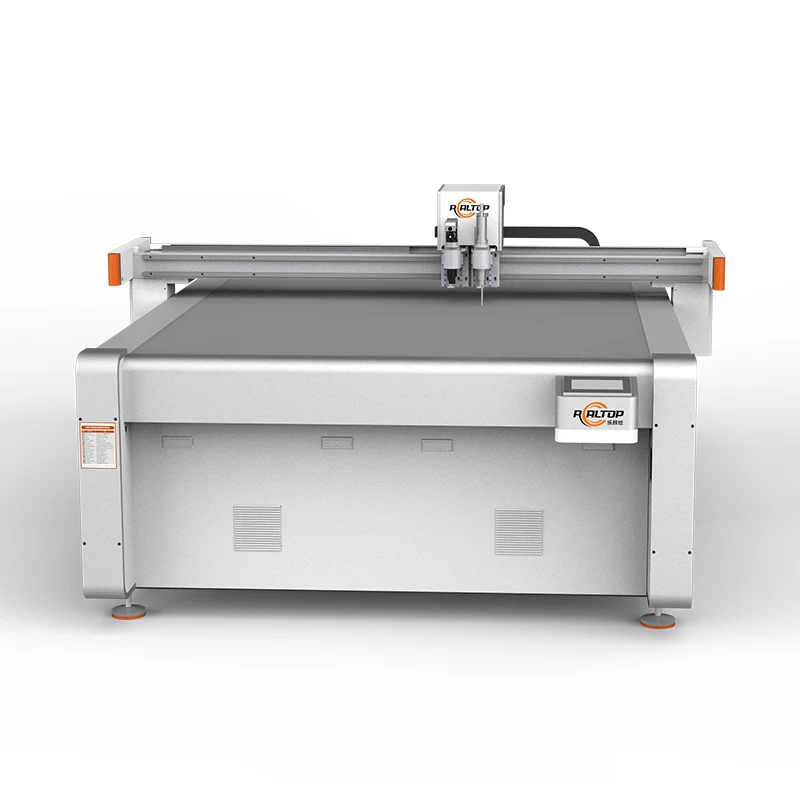
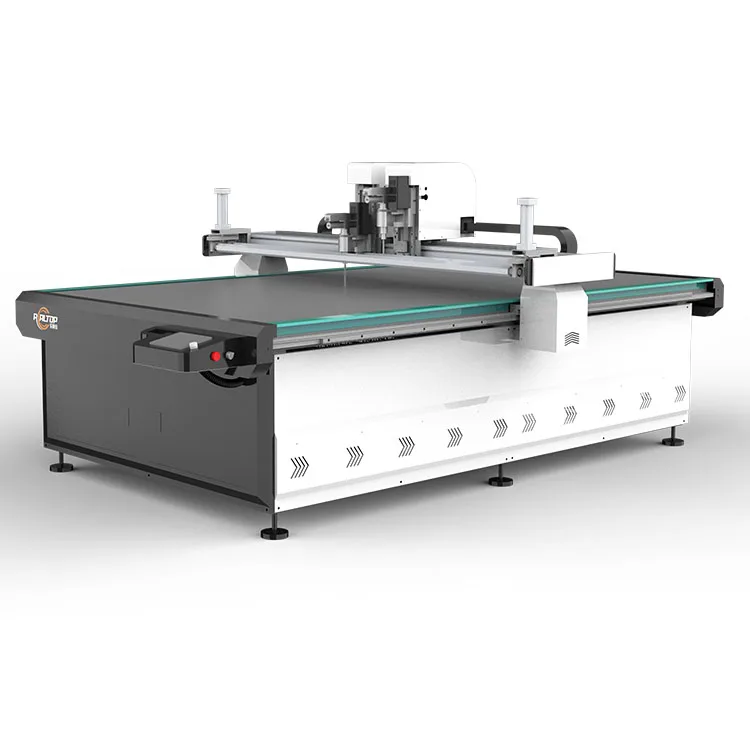
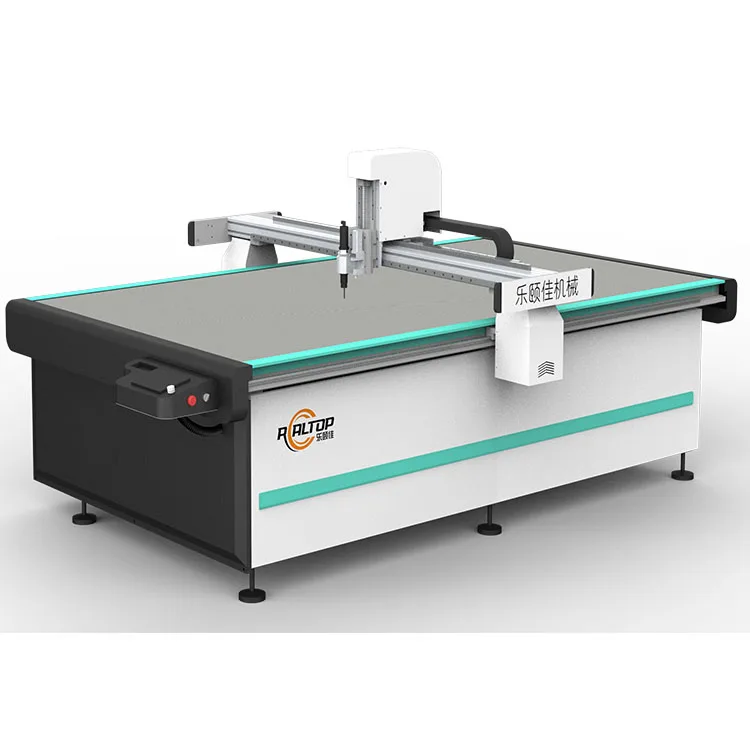
Material-matched tooling and vacuum zoning — every RT-D2516/RT-S2516 build pairs oscillating knife, drag knife or pneumatic tool heads with vacuum table zones sized to the buyer’s specific gasket stock before the order is confirmed.
Technical Specifications
| Parameter | Value |
|---|---|
| Model | RT-D2516 / RT-S2516 |
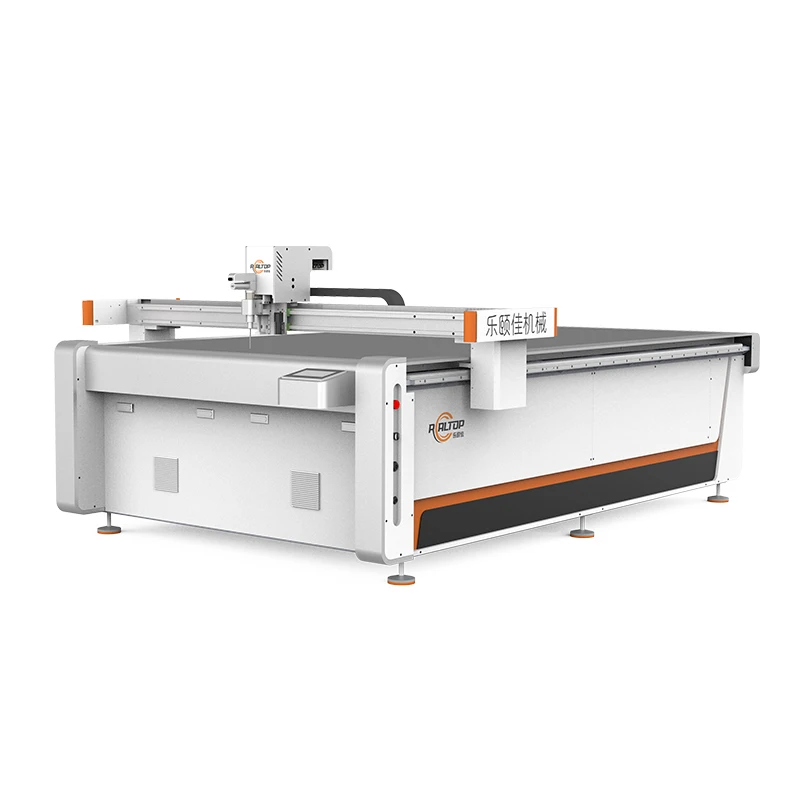
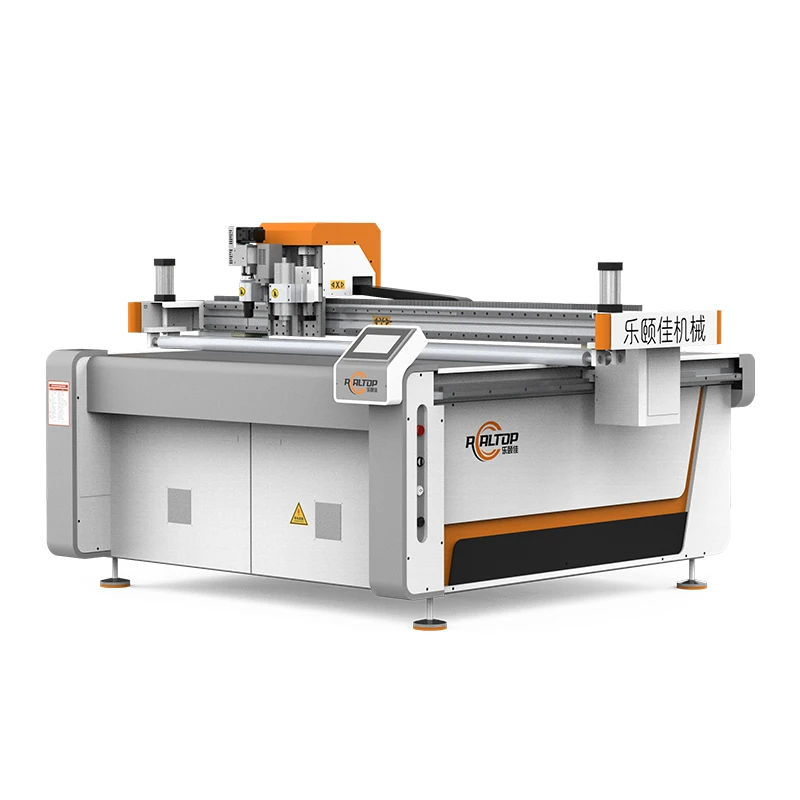
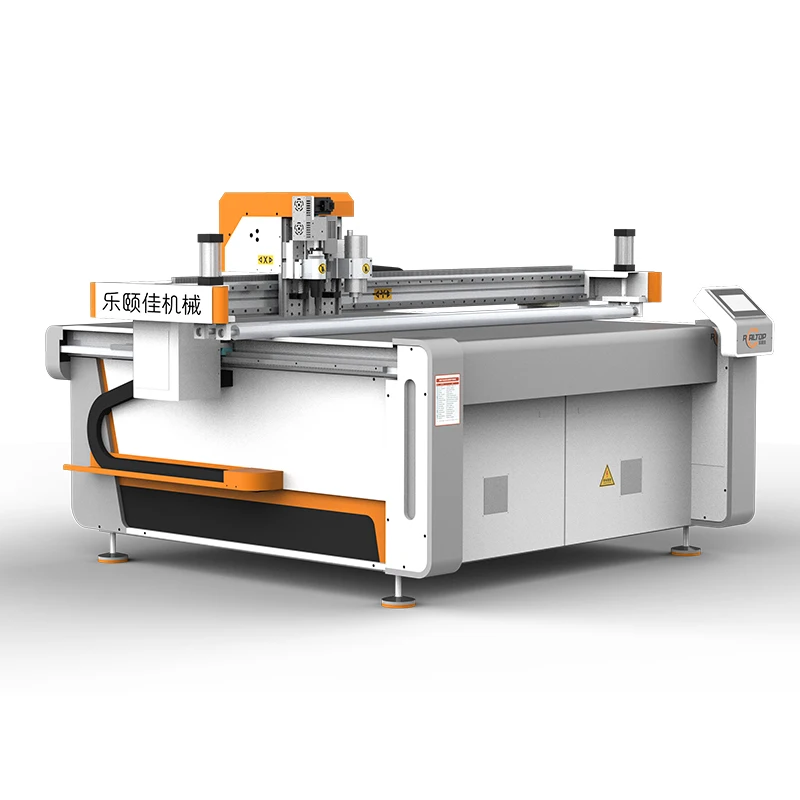
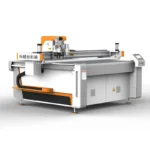
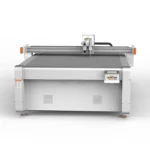
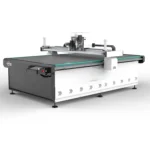
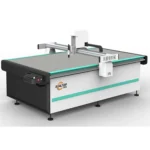
| Product Type | CNC Oscillating Knife Cutting Machine with Auto Feed |
| Working Area | 1600 × 2500 mm |
| Machine Size | 3450 × 2300 × 1250 mm |
| Rated Power | 9 kW |
| Voltage | 380V ±10% (50/60 Hz to be confirmed per destination) |
| Control System | CNC (HP-GL compatible) |
| Servo Motor | Delta (Panasonic optional), IP67 rated |
| Translational Velocity | 800–1200 mm/s |
| Cutting Thickness | 20–80 mm (varies by gasket material density — confirm per stock) |
| Repeated Accuracy | ≤0.1 mm |
| Tool Head Options | Swiss oscillating knife (full/half cut), pneumatic knife, high-power vibrating knife, circular knife, V-cutting knife, drag knife, creasing wheel, punching, brush |
| Visual Positioning | Small CCD mark point, panoramic camera recognition, projection positioning |
| Working Table | Magnesium-aluminum alloy with PVDF coating, anodic and hard oxidation |
| Vacuum Pump | 7.5 kW, aviation aluminum shell with built-in silencer |
| Auto Feed Belt | Germany imported conveyor |
| Guide Rail | Taiwan Hiwin linear rail |
| Safety Devices | Infrared blocking, beam anti-collision sensors, emergency stop with in-situ resume |
| Language Options | English, Russian, Italian, Chinese (special languages customizable) |
| Assembly State | Fully assembled |
| Certification | CE declaration (verify per unit) |
Application Suitability
| Application | Material or Output |
|---|---|
| Industrial gasket fabrication | PTFE, compressed non-asbestos fiber, graphite-filled composite sheets |
| Automotive sealing components | Rubber, silicone, cork-rubber blends up to specified thickness |
| Flange and valve sealing pads | Aramid fiber, Kevlar-reinforced composite, PTFE with glass filler |
| HVAC and plumbing gaskets | Closed-cell foam, EPDM, neoprene, NBR sheets |
| Flexible material processing beyond gaskets | PU, EVA, XPE, fiberglass cloth, non-woven fabric for automotive interiors and soft furnishings |
What "20–80 mm Cutting Depth" Actually Means for Gasket Stock
Cutting depth is always material-dependent, and the stated range assumes specific gasket densities that must be verified on your own stock.
I have watched buyers compare two machines purely on the "80 mm" headline number, only to discover that compressed fiber gasket material at 6 mm thickness produces ragged edges because the oscillating knife frequency was not matched to the filler content. When a valve manufacturer sent us PTFE blended with graphite, the standard Swiss knife setup left micro-fractures along the cut line. The CNC oscillating knife cutting machine specifications only become meaningful once your exact material, filler ratio and sheet density are tested under production-speed conditions [NEED_CITE: material density and filler composition effects on oscillating knife cut quality].
Tool Head Selection by Gasket Composition
Different gasket materials demand different cutting mechanics. Pure PTFE responds well to a high-frequency oscillating knife with full-cut mode, producing a clean edge without crushing the material. Compressed fiber sheets with aramid or glass filler require a stiffer blade geometry and adjusted vibration amplitude to prevent delamination between layers. The RT-D2516/RT-S2516 platform supports tool changes across oscillating, pneumatic, drag and circular knife heads so the cutting action matches what the material actually needs rather than forcing a single blade type across every job.
Vacuum Zoning and Small Part Hold-Down
A gasket nesting layout often contains dozens of small flange seals surrounded by larger cutouts. Without adequate vacuum zoning, the smaller pieces lift during the final cut passes, shifting position and ruining dimensional accuracy. The magnesium-aluminum alloy table on this CNC oscillating knife cutting machine specifications range uses PVDF-coated zones that can be isolated to match part geometry. The 7.5 kW vacuum pump with integrated silencer maintains suction across active zones while the conveyor belt auto-feed system keeps fresh material advancing without breaking the vacuum seal on the cutting area [NEED_CITE: vacuum hold-down requirements for nested small-part gasket cutting].
Reading the Specification Sheet Beyond Working Area
The 1600 × 2500 mm working area determines maximum sheet size, but production output depends on how the machine handles the material after the cut. Delta servo motors with IP67 protection maintain ≤0.1 mm repeated accuracy across long production runs where dust and coolant residue accumulate on linear guides. The Taiwan Hiwin rails and synchronous belt drive sustain translational velocity between 800 and 1200 mm/s depending on cut complexity — intricate gasket profiles with tight radii require slower traversal, while simple flange outlines run at the upper end. The HP-GL compatible control system accepts nesting files directly from most CAD packages used in gasket manufacturing, reducing file conversion errors that shift cut lines by fractions of a millimeter.
The Cost of Skipping Material-Specific Configuration
Choosing a tool head based on catalog descriptions rather than actual sample cuts leads to production losses that compound daily. A gasket producer cutting 3 mm compressed fiber experienced edge delamination because the drag knife was specified instead of the oscillating knife — every rejected part consumed material and machine time. Inadequate vacuum zoning on small sealing rings caused lift and dimensional drift, pushing scrap rates higher. These failures trace back to configuration decisions made before the machine arrived, not operator error [NEED_CITE: gasket cutting reject causes linked to pre-delivery tool head and vacuum specification].
Why This Platform Addresses Gasket-Specific Risks
In-house design covering both knife and laser technologies means the cutting method is matched to the material rather than forcing one approach. Tool head and table configuration are specified per material type and production volume before the order is placed. CCD camera positioning handles printed contour work on pre-printed gasket sheets where registration marks must be tracked at production speed. Software compatibility is confirmed against the buyer’s existing HP-GL nesting workflow before shipment. Sample cutting on the buyer’s own gasket material at full production thickness is completed before commitment, so the CNC oscillating knife cutting machine specifications are validated against real stock, not generic test pieces.
Documentation & Verification
- Machine specification sheet listing confirmed tool head and vacuum zone layout for your gasket material
- Electrical schematic with voltage and frequency matched to destination market before dispatch
- Sample cutting report on your own PTFE, fiber or rubber stock at production thickness
- Software licence and HP-GL file format compatibility note for your nesting workflow
- Spare parts list covering blades, vacuum seals and conveyor belt sections
- Packing photographs documenting fully assembled state before crate closure
Installation, Commissioning & Support
- 9 kW rated power requires dedicated 380V circuit with confirmed 50 or 60 Hz frequency matching local supply
- Machine size 3450 × 2300 mm requires floor space clearance plus conveyor belt feed entry length
- Fully assembled delivery means no on-site frame alignment — commissioning covers servo calibration and vacuum zone mapping
- First-run parameter setting on your gasket material including knife frequency, vacuum pressure and feed rate
- Operator training covering tool head changeover, CCD mark point calibration and emergency stop resume procedure
- Wear parts inventory covering Swiss oscillating knife blades and PVDF table surface maintenance schedule
Preparing Your Configuration Inquiry
To configure the RT-D2516/RT-S2516 for your gasket production, provide the material type, filler composition, sheet thickness and daily volume you plan to cut. Specify your local voltage and frequency, control language preference, and whether your current nesting software outputs HP-GL or requires conversion. If you work with pre-printed gasket sheets, send a sample with registration marks so CCD camera tracking can be verified before the build is finalized.
Frequently Asked Questions
Q: How is cutting thickness verified for different gasket materials?
A: The stated 20–80 mm range depends on material density, filler content and compression. We run sample cuts on your exact stock — whether pure PTFE, graphite-filled composite or compressed fiber — measuring edge quality and dimensional accuracy at production speed before confirming the cutting depth specification for your order.
Q: Which tool head suits PTFE versus compressed fiber gasket stock?
A: Pure PTFE typically cuts cleanly with a high-frequency oscillating knife in full-cut mode. Compressed fiber with aramid or glass filler often requires a stiffer blade and adjusted amplitude to prevent delamination. The specific recommendation comes from testing your material, not from generic catalog descriptions.
Q: How does vacuum table zoning affect small gasket part hold-down?
A: Small flange seals and ring gaskets need localized vacuum zones to prevent lifting during final cut passes. The PVDF-coated magnesium-aluminum table allows zone isolation matched to your nesting layout, and the 7.5 kW pump maintains consistent suction across active areas throughout the production run.
Q: Can sample cutting be performed on my own material before ordering?
A: Yes. Send your gasket stock at the thickness and filler composition you run in production. We cut sample parts using the proposed tool head and vacuum configuration, then provide a report documenting edge quality, dimensional accuracy and achievable cutting speed before you confirm the order.


商品评价
Clear filtersThere are no reviews yet.