




Fast Shipping
Carrier information

20k products
Payment methods

24/7 Support
Unlimited help desk

2-day Delivery
Track or off orders
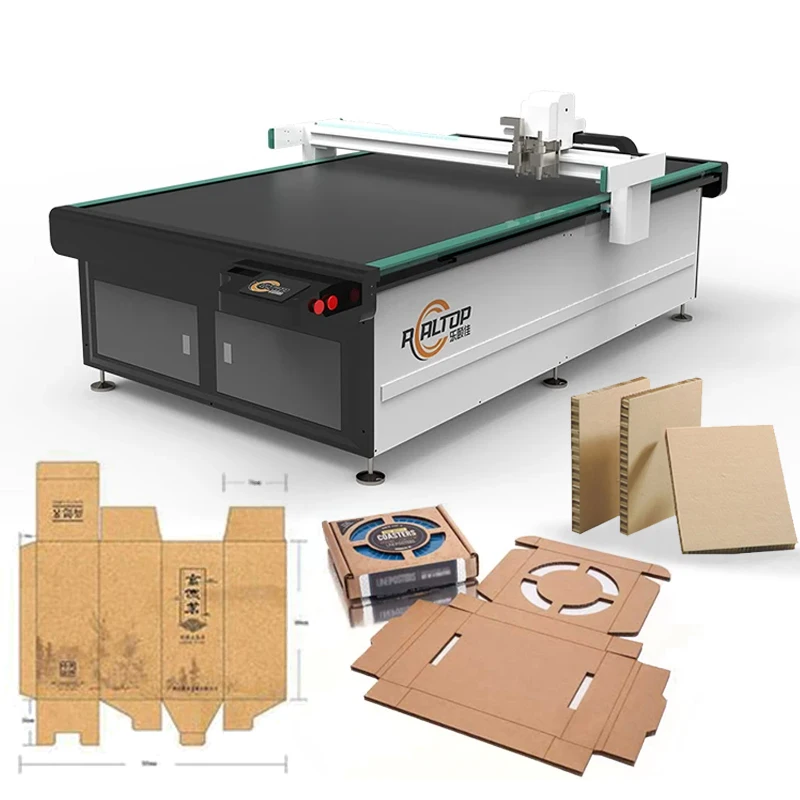
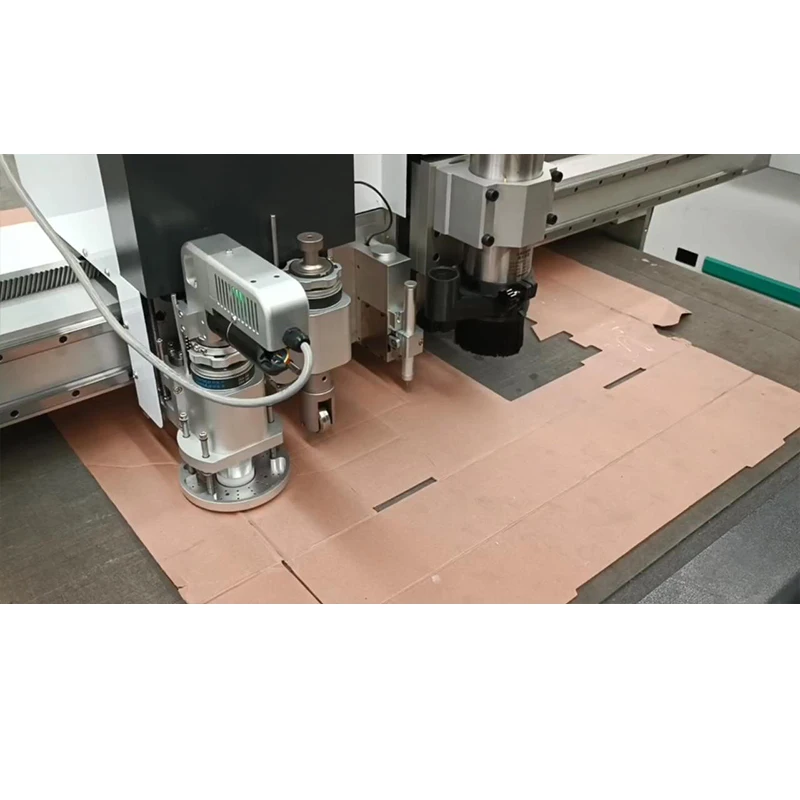
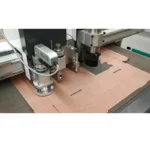
Matched Tooling for Board Grade — The RT-D2516/RT-S2516 is configured per material thickness and production volume, so corrugated, grey board and sticker stock each get the correct oscillating knife, drag knife or creasing wheel setup before the machine ships.
Technical Specifications
| Parameter | Value |
|---|---|
| Product Type | CNC Oscillating Knife Cutting Machine |
| Model | RT-D2516 / RT-S2516 |
| Working Area | 1600 × 2500 mm |
| Machine Dimensions | 3450 × 2300 × 1250 mm |
| Rated Power | 9 kW |
| Vacuum Pump | 7.5 kW |
| Table Construction | Aluminum alloy honeycomb vacuum platform |
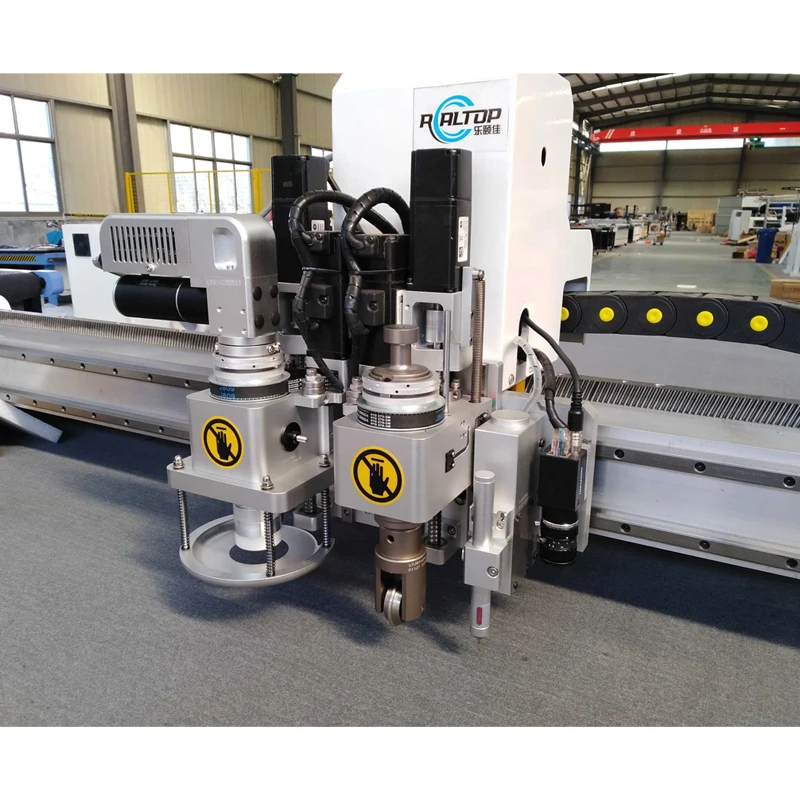
| Tool Head | Swiss imported oscillating knife (full-cut, half-cut, cursor location) |
| Repeated Accuracy | ≤ 0.1 mm |
| Translational Velocity | 800–1200 mm/s |
| Cutting Speed | 200–800 mm/s (dependent on material type and thickness) |
| Transmission | Digital servo motor, linear guide, synchronous belt, ball screw |
| Servo Motor | Delta |
| Linear Rail | Taiwan Hiwin |
| Instruction System | HP-GL compatible format |
| Conveyor Belt | Germany imported felt belt (wear-resistant anti-pull composite fiber) |
| Auto Feeding | Equipped |
| Safety Device | Infrared sensors |
| Voltage | 380 V ± 10 % |
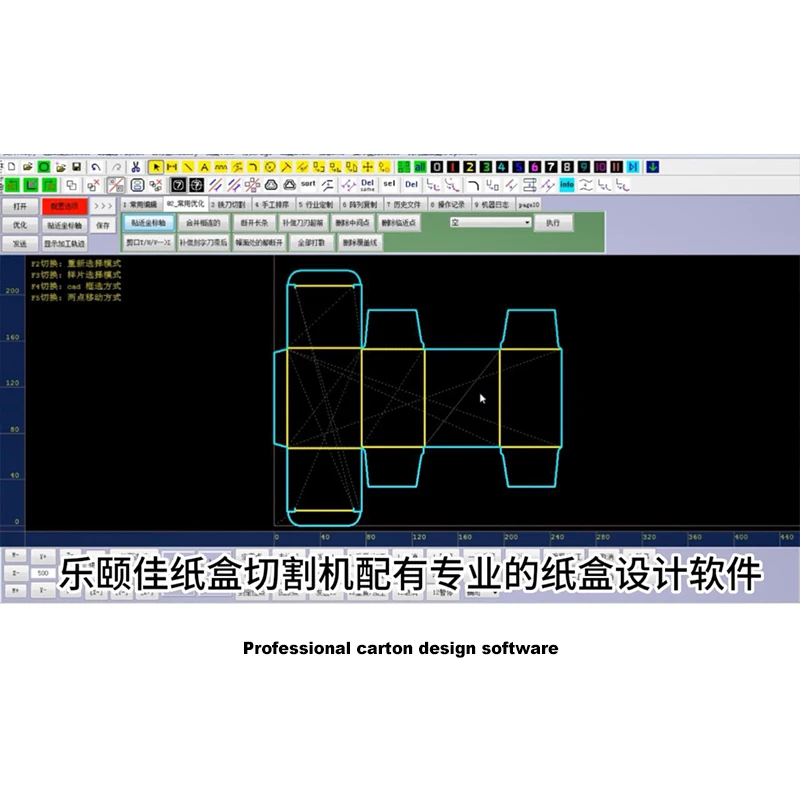
| Software | Professional carton nested software, customized language support |
| Frame | Welded thick square seamless steel structure with high temperature treatment |
| Certification | CE |
Application Suitability
| Application | Material or Output |
|---|---|
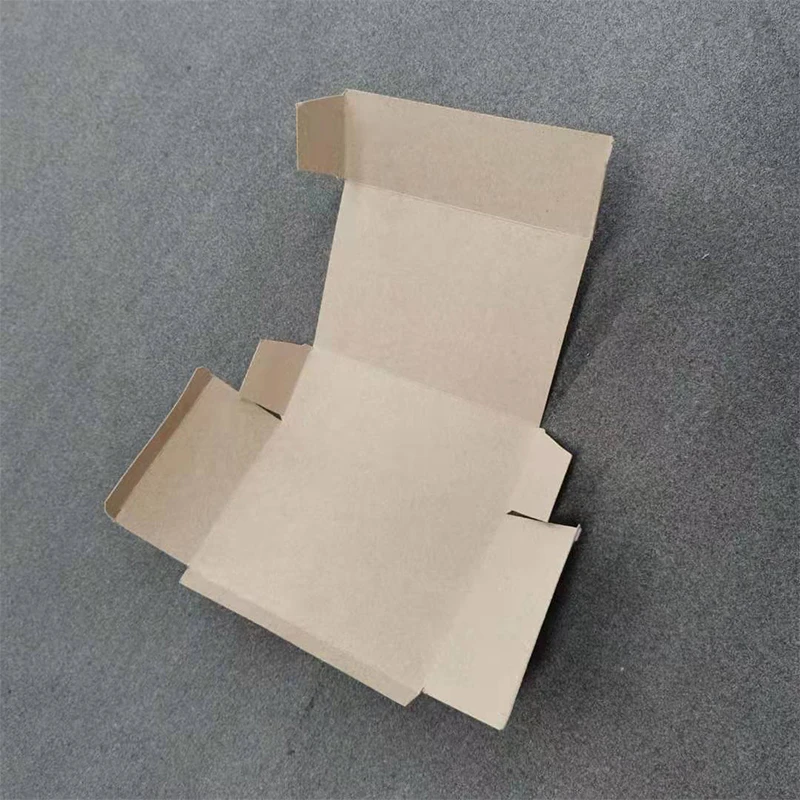
| Packaging carton sample making | Corrugated board, grey board, folding carton stock |
| Large electrical carton packaging | Heavy-duty single and double-wall corrugated sheets |
| Express paper box packaging | Lightweight kraft and e-flute board |
| Snack food and gift box packaging | Coated card stock and laminated carton board |
| Sticker and label contour cutting | Self-adhesive vinyl, sticker sheets on release liner |
| Billboard and business card cutting | PVC foam board, card stock, synthetic paper |
| Flexible material processing | Leather, sponge composite leather, PVC, soft glass, silicon, rubber |
Why Vacuum Zoning Decides Whether Small Carton Parts Stay Flat
A flatbed digital cutting table without proper vacuum zoning will lose small packaging parts at production speed.
When a buyer specifies a CNC oscillating knife cutting machine based only on working area, the vacuum table is often treated as a checkbox. I have stood on a carton plant floor watching a 60 × 40 mm carton flap lift off the table mid-cut because the entire bed was pulling from one undivided zone. The operator had to tape the sheet down every pass, which defeated the purpose of buying a digital cutter. On the RT-D2516/RT-S2516, the aluminum alloy honeycomb platform can be divided into follow-cut zones that activate only beneath the cutting head, keeping small sticker pieces and carton off-cuts pinned to the bed without manual taping. [NEED_CITE: vacuum table zoning practices for flatbed digital cutting systems]
Oscillating Knife Versus Drag Knife for Board Grade
Choosing the wrong tool head is the most common reason a packaging cutter produces ragged edges or crushed flutes. The Swiss imported oscillating knife on the RT-D2516/RT-S2516 runs full-cut and half-cut modes, which lets the head score a crease line and cut through the board in a single pass. For thinner sticker sheets and self-adhesive vinyl, a drag knife option can be configured to kiss-cut without damaging the release liner. Specifying the head at inquiry stage — rather than after the machine arrives — avoids the situation where a factory buys a cutter rated for thick corrugated but then struggles with delicate label stock.
CCD Contour Recognition for Printed Packaging
Printed carton work adds a second layer of complexity: the cutting path must track the printed graphics, not just the CAD file. When a buyer requires contour cutting on pre-printed packaging sheets, CCD camera positioning can be integrated so the machine reads registration marks and adjusts the cut path on the fly. This matters most on jobs where print-to-cut registration is tight and manual alignment would slow throughput. The HP-GL compatible instruction system and professional carton nesting software accept standard packaging file formats, so the workflow from design to table stays within the buyer’s existing CAD environment. [NEED_CITE: CCD contour recognition accuracy at production speed on flatbed cutters]
Reading the Specifications Against Real Production Needs
The 1600 × 2500 mm working area covers most standard carton sheet sizes, but buyers should check their largest dieline before confirming the order. The Delta servo motor paired with Taiwan Hiwin linear rail delivers ≤ 0.1 mm repeatability, which is critical when scoring and cutting must register to the same crease line across a full bed of nested carton blanks. Cutting speed is listed at 200–800 mm/s, and this range depends on material: single-face corrugated runs near the upper end while thick grey board and composite leather sit lower. The 7.5 kW vacuum pump supports the honeycomb platform across the full bed, and the 9 kW rated power accounts for the servo drives, spindle oscillation and vacuum draw combined. The welded steel frame with high temperature treatment resists deflection during high-speed contour work, which directly affects edge consistency on long production runs.
The Hidden Cost of Skipping Sample Cutting
I once watched a buyer commit to a machine after seeing it cut 3 mm foam board at a trade show, only to find it could not handle the 5 mm double-wall corrugated their actual orders required. The edges crushed, the flute profile collapsed, and the first month’s output went straight to recycling. A sample cutting report on the buyer’s own material and thickness — run before the order is confirmed — removes this risk entirely. When the tool head, vacuum zoning and cutting speed are all tested against the real stock, the configuration list becomes a binding document rather than a guess. [NEED_CITE: material sample testing protocol for CNC cutting equipment procurement]
Why Source This Cutter From Realtop
The RT-D2516/RT-S2516 is designed and built in-house, covering both knife and laser cutting technologies under one roof, so a buyer can match the cutting method to the material rather than force one method. Tool head and table configuration are specified per material and production volume before the order enters production. Voltage, plug type and control language are confirmed against the buyer’s target market electrical standards. Software compatibility is verified with the buyer’s existing CAD file formats before shipment. Sample cutting on the buyer’s own material is completed before commitment, so the configuration is proven rather than assumed.
Documentation & Verification
- Machine specification sheet confirming RT-D2516/RT-S2516 tool head and table configuration
- Electrical schematic with voltage and frequency matched to your facility supply
- Sample cutting report run on your board grade and thickness before dispatch
- Factory test record documenting repeatability and vacuum hold across the full bed
- Operation and maintenance manual with customized control language
- Software licence and file format compatibility note for your CAD workflow
Installation, Commissioning & Support
- Floor space planning based on 3450 × 2300 mm machine footprint plus material feed clearance
- Dedicated 380 V ± 10 % circuit with capacity for 9 kW rated draw and 7.5 kW vacuum pump
- Assembly of honeycomb vacuum platform and conveyor belt on-site after transport
- First-run parameter tuning for your specific board grade, thickness and cutting speed
- Operator training covering tool head changes between oscillating knife and creasing wheel
- Spare parts list covering blades, felt belt segments and vacuum seals for routine replacement
What to Share With Your Inquiry
To match the RT-D2516/RT-S2516 to your production line, provide the material type, maximum sheet size and typical board thickness you run daily. Confirm your facility voltage, frequency and preferred control language so the electrical package is built correctly from the start. If your workflow involves pre-printed sheets, note the registration mark style and print-to-cut tolerance so CCD configuration can be scoped before quotation.
Frequently Asked Questions
Q: How do I select the right oscillating knife head for my board thickness?
A: The tool head is matched to your material during the inquiry stage. Thicker corrugated and grey board require the oscillating knife in full-cut mode, while thinner sticker sheets may need a drag knife or half-cut setup. A sample cut on your actual stock confirms the choice before the order is finalized.
Q: What vacuum zoning do I need for small packaging parts?
A: Small carton flaps and sticker pieces tend to lift during high-speed cutting if the vacuum zone is too broad. The aluminum honeycomb table on the RT-D2516/RT-S2516 supports follow-cut zoning, where suction activates only under the cutting head to hold small parts flat without taping.
Q: Which file formats does the carton nesting software support?
A: The professional carton nested software is HP-GL compatible and accepts common packaging CAD formats. File compatibility is verified against your existing design workflow before shipment, and a software licence note is included in the documentation package.
Q: How is CCD contour recognition set up for printed packaging?
A: When contour cutting pre-printed sheets, the CCD camera reads registration marks and adjusts the cut path automatically. Configuration depends on your mark style and print-to-cut tolerance, which should be confirmed during the sample cutting stage before the machine ships.
Q: What voltage and language options are confirmed before shipment?
A: Voltage is confirmed at 380 V ± 10 % as standard, with adjustments available for different markets. Control language and plug type are specified at order stage and documented in the electrical schematic so your facility team can install the machine without on-site rewiring.


商品评价
Clear filtersThere are no reviews yet.