






Fast Shipping
Carrier information

20k products
Payment methods

24/7 Support
Unlimited help desk

2-day Delivery
Track or off orders
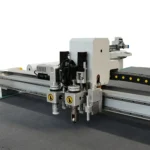
Material-Matched Tooling — Every RT-D2516/RT-S2516 leaves the factory with an oscillating knife and vacuum zoning profile tested on your specific gasket or packaging stock, not a generic demo material.
Technical Specifications
| Parameter | Value |
|---|---|
| Model | RT-D2516 / RT-S2516 |
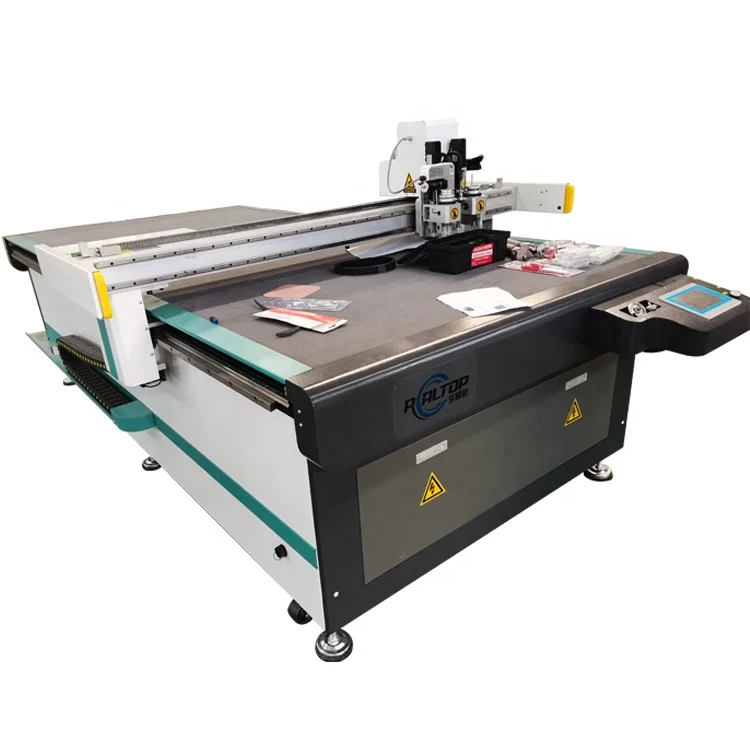
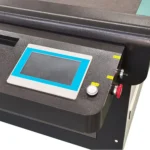
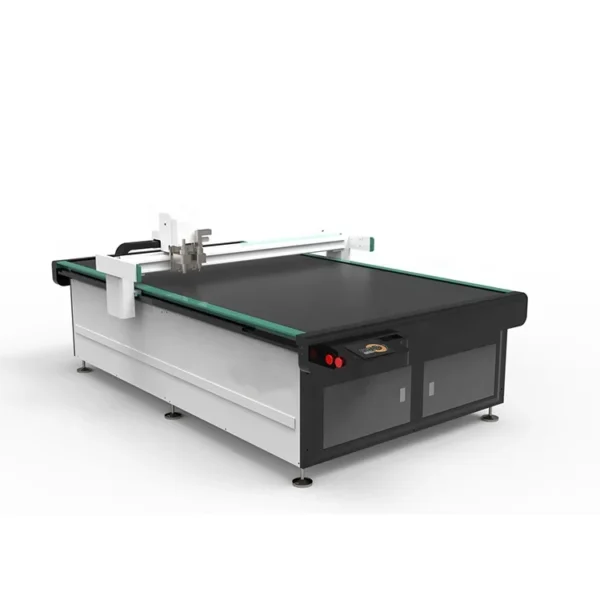
| Product Type | CNC Oscillating Knife Flatbed Cutting Machine |
| Working Area | 1600 × 2500 mm |
| Overall Dimensions | 3450 × 2300 × 1250 mm |
| Rated Power | 9 kW |
| Voltage | 380V ± 10% (frequency to be confirmed) |
| Tool Head | Swiss imported oscillating knife (vibration full cutting, half cutting, cursor location) |
| Translational Velocity | 800–1200 mm/s |
| Repeatability | ≤ 0.1 mm |
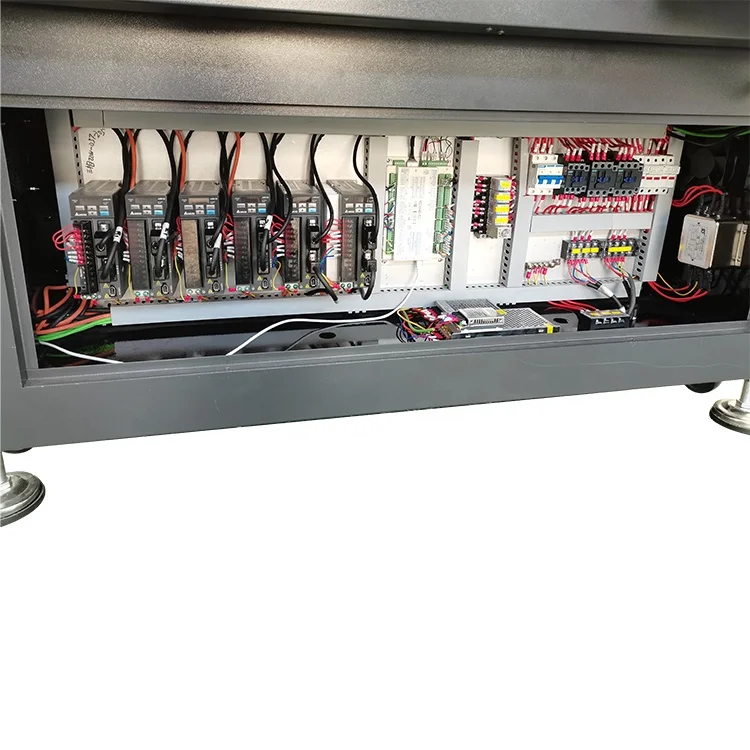
| Transmission System | Digital servo motor, linear guide, synchronous belt, ball screw (imported) |
| Servo Motor | Japanese Yaskawa |
| Linear Rail | Taiwan Hiwin |
| Vacuum Pump | 7.5 kW |
| Table Type | Flat working table with vacuum and auto-feeding conveyor belt (Germany imported) |
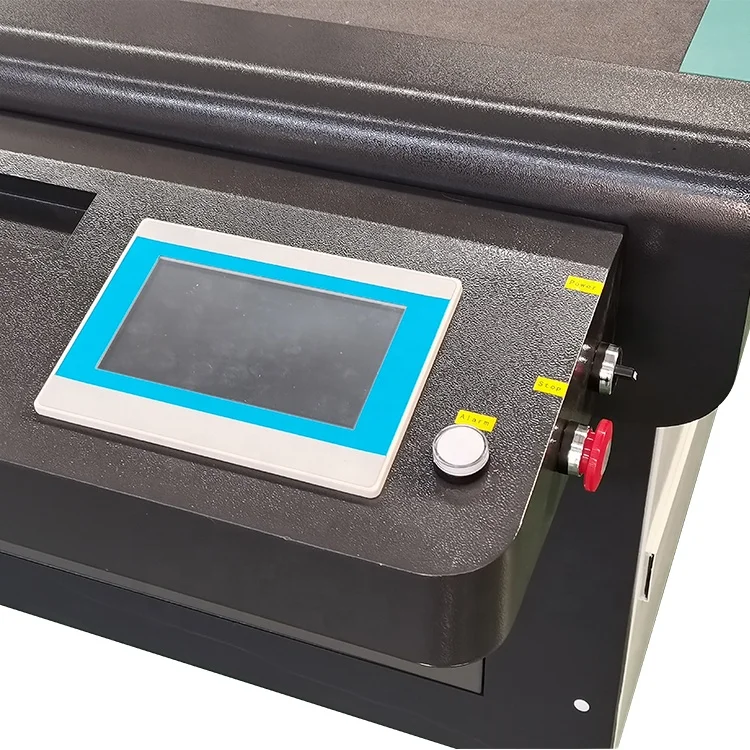
| Safety Device | Infrared sensors |
| Instruction System | HP-GL compatible format |
| Pneumatic Cutting Tool Option | Up to 70 mm thickness (basis to be confirmed) |
| Functions | Cutting, creasing, marking |
| Standard | CE |
Application Suitability
| Application | Material or Output |
|---|---|
| Gasket and seal fabrication | Rubber, silicone, sponge composite leather, soft glass |
| Packaging and carton sample making | Cardboard, grey board, corrugated stock |
| Sticker and label production | Vinyl, adhesive films, flexible PVC |
| Automotive interior trimming | Car floor mats, fabric, leather |
| Flexible apparel materials | Textile, composite fabrics, sponge |
Why "Working Area" Is the Wrong Starting Point for CNC Oscillating Knife Cutting Table Specifications
A machine bought on bed size alone often fails the moment real production material hits the table.
Buyers frequently specify a 1600 × 2500 mm working area and assume the cutting head will handle whatever thickness they throw at it. When a standard oscillating knife meets steel-reinforced composite gasket material, the blade shatters and the edge tears. If the vacuum zoning was configured for large carton blanks rather than small, intricate seals, parts lift off the table mid-cut and the entire sheet is ruined [NEED_CITE: vacuum hold-down requirements for small die-cut parts]. These mismatches happen when the CNC oscillating knife cutting table specifications are reviewed without referencing the actual material composition and daily part geometry.
Matching Blade Frequency to Composite Density
Selecting the correct oscillating knife frequency is not a matter of choosing the highest setting. For dense rubber or silicone gaskets, a lower frequency with a wider blade angle prevents heat buildup and edge melting. When cutting corrugated cardboard or grey board for packaging samples, a higher frequency delivers a clean crease without crushing the flutes. The RT-D2516/RT-S2516 supports adjustable oscillation parameters, but the baseline configuration must be set during factory testing using a sample of your actual stock.
Vacuum Zoning and Small Part Stability
The 7.5 kW vacuum pump provides substantial hold-down force, but raw suction is only half the equation. If the table zones are not mapped to the typical nest layout of your production, small gasket seals or intricate sticker designs will vibrate loose during high-speed contouring. Proper zone configuration ensures that suction is concentrated exactly where the cutting head is active, keeping thin flexible materials flat against the Germany-imported conveyor belt surface.
Reading the Drive System for Long-Term Accuracy
The combination of Japanese Yaskawa servo motors and Taiwan Hiwin linear rails delivers a repeatability of ≤ 0.1 mm across the full 1600 × 2500 mm bed. In gasket production, a deviation beyond this tolerance means a seal will not seat correctly in its flange assembly. For packaging sample making, cumulative drift across a long creasing line results in folded cartons that refuse to close squarely. These mechanical components are selected to maintain tight geometric fidelity over continuous multi-shift operation [NEED_CITE: linear guide wear and positional accuracy degradation].
The Cost of Ignoring Material-Specific Configuration
When a cutter arrives with a generic tool head setup, the buyer is forced into a cycle of trial-and-error blade changes and vacuum adjustments on the production floor. This burns through consumables, generates scrap material, and delays shipment deadlines. In some cases, the wrong oscillation amplitude causes micro-fractures in the cutting head carriage itself, leading to premature mechanical failure that falls outside standard warranty coverage [NEED_CITE: improper tooling setup and mechanical wear on oscillating carriages].
Why Procurement Should Center on Material Testing
The in-house design team configures both the knife tooling and the vacuum table zoning based on the specific material profile provided before order confirmation. Buyers receive a sample cutting report executed on their own stock, proving that the chosen blade type and hold-down strategy actually work. Electrical schematics confirm the 380V ± 10% power requirement and plug type match the destination facility, while the HP-GL instruction system compatibility is verified against the buyer’s existing nesting software to prevent workflow bottlenecks upon installation.
Documentation & Verification
- Factory sample cutting report executed on buyer-provided gasket or packaging material
- Tool head configuration list matching blade type to specific material thickness and density
- Vacuum table zone map aligned with buyer’s typical nesting layout and part geometry
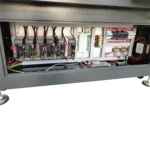
- Electrical schematic confirming voltage, frequency, and plug type for destination market
- Software license and HP-GL file format compatibility confirmation for existing workflows
- Operation and maintenance manual with oscillating knife adjustment procedures
Installation, Commissioning & Support
- Foundation must accommodate 3450 × 2300 × 1250 mm overall dimensions with clearance for conveyor feed
- Dedicated 380V ± 10% circuit required to support 9 kW rated power plus 7.5 kW vacuum pump
- Machine ships fully assembled; table leveling and servo calibration performed on-site during commissioning
- First-run parameter setting includes oscillation frequency tuning and vacuum zone mapping for specific material
- Operator training covers blade replacement, creasing wheel adjustment, and HP-GL file import procedures
- Spare parts list includes oscillating knife blades, creasing wheels, and conveyor belt wear strips
What to Prepare Before Requesting a Quotation
Provide the exact material composition, maximum thickness, and typical sheet size you will be processing. Share a sample DXF or HP-GL file representing your most intricate part geometry so the nesting and vacuum zoning can be evaluated. Confirm the local voltage, frequency, and required control language to ensure the electrical and software configuration is finalized before production begins.
Frequently Asked Questions
Q: How do you determine the correct oscillating knife blade for our gasket material?
A: We require a physical sample of your material to conduct factory cutting tests. The oscillation frequency, blade angle, and cutting speed are adjusted until the edge quality meets sealing requirements without delaminating composite layers. This baseline configuration is documented and shipped with the machine.
Q: Will small gasket parts stay flat during high-speed contour cutting?
A: The 7.5 kW vacuum table is divided into multiple zones. We map these zones based on your typical nesting layout to ensure concentrated suction under the cutting head. This prevents small or intricate seals from lifting off the conveyor belt surface during directional changes.
Q: Can we use our existing nesting software with the HP-GL instruction system?
A: Compatibility is verified before order confirmation. You provide a sample output file from your nesting software, and we test the import and execution on the machine controller. Any required format adjustments are resolved before the machine leaves the factory.
Q: What electrical preparations are needed at our facility before delivery?
A: The RT-D2516/RT-S2516 requires a dedicated 380V ± 10% circuit capable of supporting the 9 kW machine load plus the vacuum pump. We provide an electrical schematic and confirm the plug type and frequency for your region before final assembly.


商品评价
Clear filtersThere are no reviews yet.