









Fast Shipping
Carrier information

20k products
Payment methods

24/7 Support
Unlimited help desk

2-day Delivery
Track or off orders
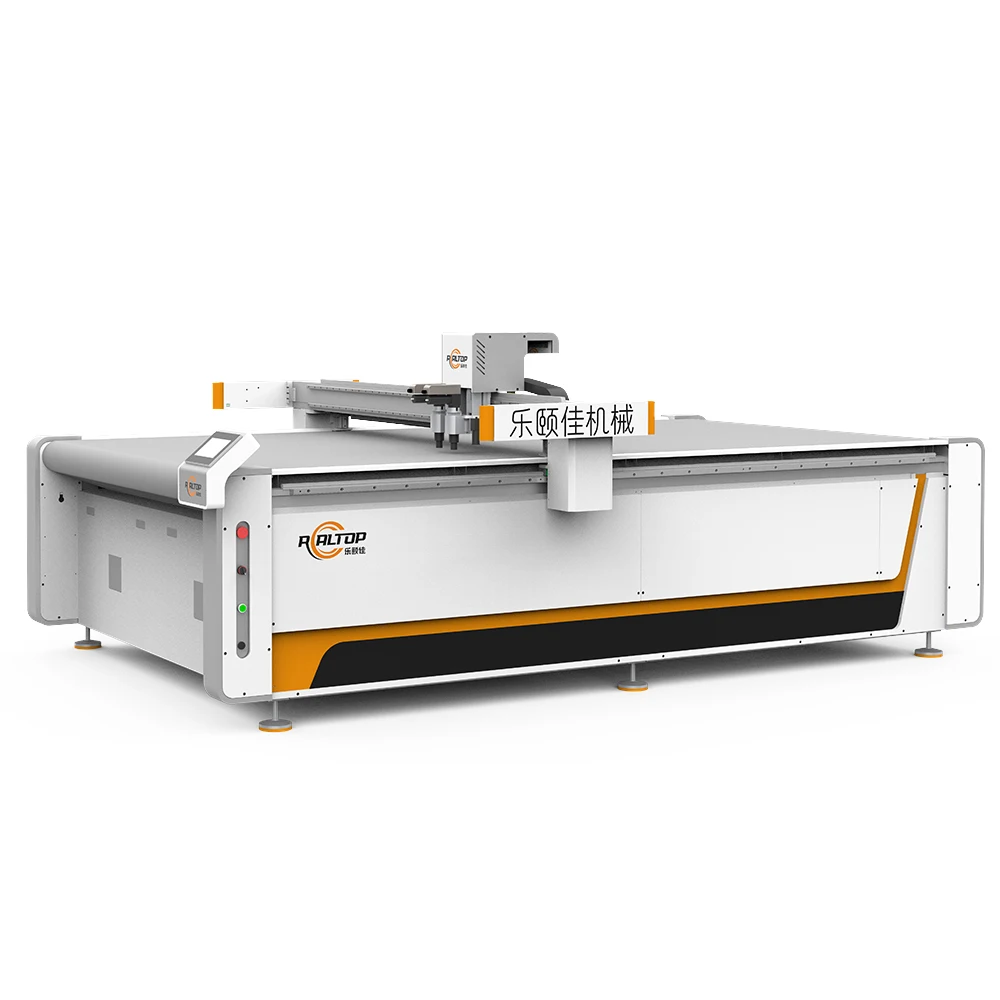
Tool Head Matched to Material — Swiss imported oscillating knife configured for foam, gasket and flexible composites on a 1600×2500mm flatbed with zoned vacuum hold-down.
Technical Specifications
| Parameter | Value |
|---|---|
| Model | RT-D2516/RT-S2516 |
| Product Type | CNC Oscillating Knife Cutting Machine |
| Working Area | 1600×2500mm |
| Machine Size | 3450×2300×1250mm |
| Rated Power | 9kW |
| Voltage | 380V±10% (50Hz/60Hz to confirm) |
| Working Table | Aluminum alloy honeycomb vacuum adsorption platform |
| Tool Head | Swiss imported knife with vibration full cutting, half cutting and cursor location |
| Translational Velocity | 800-2000mm/s |
| Cutting Speed | 200-800mm/s (basis to be confirmed by material type and thickness) |
| Cutting Thickness | ≤100mm (varies with material) |
| Repeated Accuracy | ≤0.1mm |
| Transmission System | Digital servo motor, linear guide, synchronous belt, ball screw |
| Linear Rail | Taiwan Hiwin |
| Servo Motors and Drivers | Taiwan Delta |
| Instruction System | HP-GL compatible format |
| Vacuum Pump | 7.5kW |
| Conveyor Belt | Germany imported |
| Auto Feeding | Yes |
| Safety Device | Infrared sensors, emergency stop |
| Software | Professional carton cutting software, automatic nesting, multi-format import |
| Language Options | English, Russian, Italian, Chinese (customizable) |
Application Suitability
| Application | Material or Output |
|---|---|
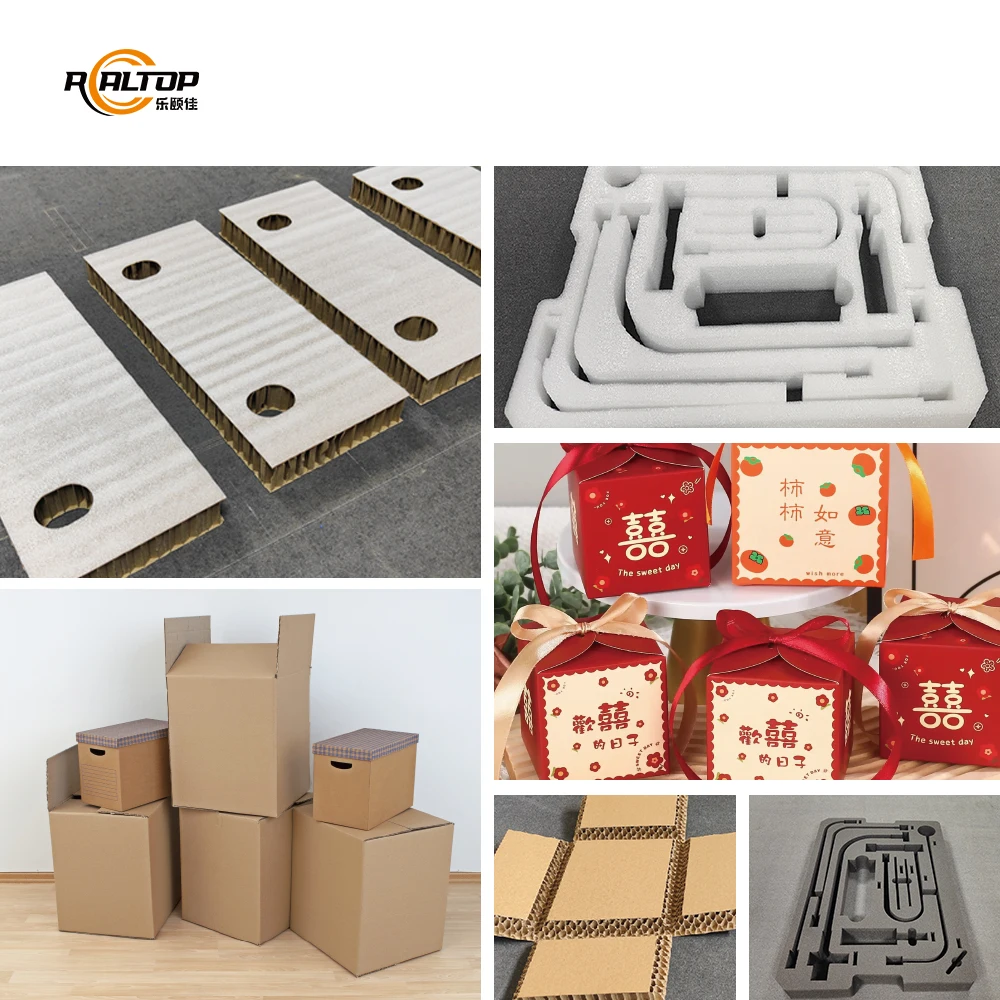
| Carton and packaging sample making | Corrugated board, card stock, foam inserts |
| Sticker and label contour cutting | Adhesive vinyl, printed paper, reflective film |
| Foam gasket production | EVA, EPE, sponge composite, rubber sheets |
| Leather and footwear cutting | Natural leather, synthetic PU, garment fabrics |
| Signage and billboard fabrication | PVC foam board, soft glass, flexible composites |
Why the Wrong Knife Type Ruins Your Foam Edge
Oscillating versus drag knife selection determines whether you get a clean vertical cut or a crushed, ragged profile.
When a foam or gasket producer specifies a CNC oscillating knife cutting machine based only on working area, the tool head decision often gets left to the supplier’s default configuration. High-density EPE and closed-cell EVA respond differently to blade frequency and stroke length. A drag knife that works perfectly on corrugated cardboard will compress and tear through 20mm EPE foam, leaving crushed edges that fail dimensional checks. The vibration full-cut and half-cut modes on the Swiss imported knife head allow the blade to slice through compressible materials without dragging the substrate, which matters when edge quality is the acceptance criterion on your packaging inserts [NEED_CITE: oscillating knife versus drag knife cutting mechanics for foam materials].
Knife Frequency and Stroke for Compressible Materials
The oscillating action vibrates the blade at high frequency while the servo drives it downward, reducing lateral drag on foam and composite layers. On materials like EVA and sponge composite leather, this means the blade parts the material rather than pushing it ahead of the cut path. The cursor location function lets the operator set reference points for multi-pass jobs where partial-depth scoring precedes full cut-through, a sequence common in gasket production where the same sheet yields multiple part geometries.
Vacuum Zoning and Small-Part Stability
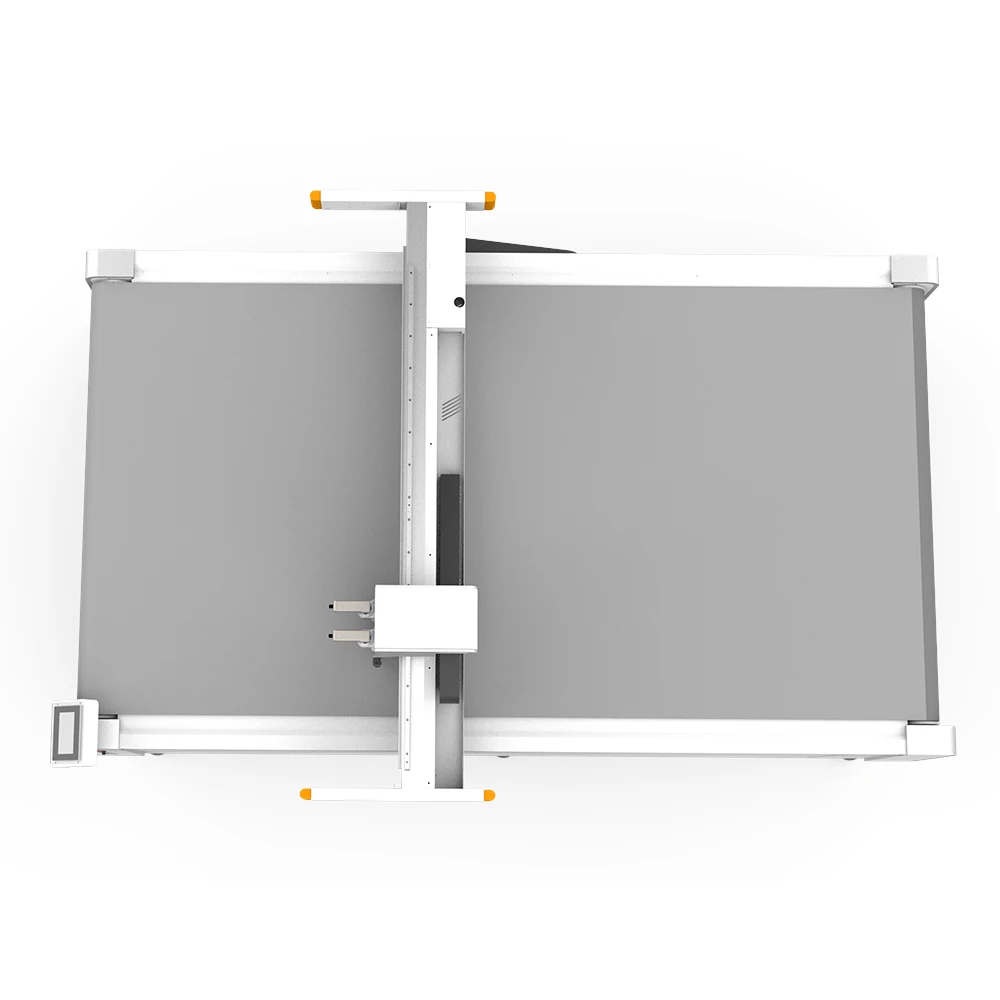
The 7.5kW vacuum pump feeds an aluminum alloy honeycomb platform that divides the 1600×2500mm surface into independent zones. When cutting small gaskets or carton sample pieces, activating only the zones under active material reduces air leakage and holds thin sheets flat without requiring full-table suction. This zoned adsorption follows the cutting head across the bed, which matters when nesting software packs dissimilar part sizes onto a single sheet and the offcut areas would otherwise lift during high-speed passes [NEED_CITE: vacuum table zoning effect on thin material lift during CNC knife cutting].
Drive Train and Repeatability on Long Bed Formats
On a 2500mm travel length, accumulated positioning error becomes visible as mismatched crease lines on carton samples or stepped edges on multi-pass foam cuts. The Taiwan Delta servo motors paired with Hiwin linear rails and ball screw transmission hold repeated accuracy within ≤0.1mm across the full working envelope. At translational velocities up to 2000mm/s, the synchronous belt and digital servo coordination must maintain path fidelity without the lag that produces rounded corners on tight-radius sticker contours.
What Happens When Zoning Is Underspecified
Buyers who confirm vacuum table presence but skip zone configuration often discover that small parts under 100mm lift off the honeycomb surface during oscillating knife passes. The blade catches the lifted edge, pulls the part across the bed and damages both the workpiece and the knife tip. On corrugated carton samples with intricate window cutouts, insufficient hold-down produces frayed fluting at interior corners that requires manual trimming. Specifying the zone count and activation logic before order avoids rework that compounds across daily production volume [NEED_CITE: vacuum hold-down requirements for small-part CNC knife cutting on corrugated board].
Why This Configuration Fits Packaging and Foam Shops
The tool head and table combination here was built around the material mix that carton sample makers and foam fabricators actually run. In-house design covers both knife configuration and vacuum zoning so the machine matches the substrate rather than forcing one setup across incompatible materials. CCD camera positioning is available for printed contour work where sticker and label producers need the system to track registration marks at production speed. Software compatibility gets confirmed before order, so your existing DXF or PLT nesting files import without conversion errors. The sample cutting process uses your own material stock, locking cutting speed and depth parameters before the machine ships [NEED_CITE: material sample testing protocol for CNC cutting equipment procurement].
Documentation & Verification
- Machine specification sheet listing tool head, vacuum zone count and servo configuration
- Electrical schematic confirming 380V±10% supply and 50Hz/60Hz frequency match
- Sample cutting report on buyer-supplied EVA, EPE or corrugated stock with edge photographs
- Software licence and file format compatibility note for DXF, PLT and HP-GL imports
- Factory test record with repeated accuracy measurement across full 1600×2500mm travel
- CE declaration documentation for applicable market entry requirements
Installation, Commissioning & Support
- Floor space allocation for 3450×2300mm machine footprint plus conveyor infeed clearance
- Dedicated 380V circuit rated for 9kW machine load plus 7.5kW vacuum pump draw
- Assembly and leveling of honeycomb vacuum table sections to maintain flatness tolerance
- Servo tuning and repeated accuracy verification across Hiwin rail travel at commissioning
- Operator training on carton nesting software, zone activation and tool head changeover
- Spare blade and conveyor belt wear parts list with reorder intervals
Before You Request a Quote
Send the specific material types you cut most often, including thickness range and whether surfaces are printed for contour recognition. Confirm your facility voltage and frequency, plus the control language your operators require. If you run existing nesting files, share a sample DXF or PLT so we verify import compatibility before quoting configuration.
Frequently Asked Questions
Q: How do I choose between oscillating knife and drag knife for my material?
A: Oscillating knife suits compressible materials like EVA foam, EPE and sponge composite where the vibrating blade slices without crushing. Drag knife works for thin, non-compressible sheets like vinyl and sticker film. We configure the tool head based on your sample material test, confirming edge quality before the CNC oscillating knife cutting machine specifications are finalized.
Q: How does vacuum table zoning affect small gasket cutting?
A: Zoned vacuum adsorption activates only the honeycomb sections beneath your active cutting area. This holds small gasket parts flat without requiring full-table suction, preventing material lift that causes ragged edges or blade damage. Zone count and activation logic are specified during configuration to match your typical part size distribution.
Q: What is the real cutting thickness on EVA and EPE foam?
A: The machine handles up to 100mm cutting thickness, but actual depth depends on foam density and knife stroke configuration. We run sample cuts on your specific EVA or EPE stock to verify clean cut-through at acceptable speed, and include the results in the sample cutting report before production begins.
Q: Will my existing DXF nesting files import correctly?
A: The professional carton cutting software supports HP-GL compatible formats and multiple file imports including DXF and PLT. We test your actual files during the pre-order verification stage and provide a compatibility note confirming nesting layout, tool path generation and automatic layout functions work with your workflow.
Q: When should I add CCD camera contour recognition?
A: CCD camera positioning is necessary when cutting printed stickers, labels or packaging where the knife must follow registration marks on pre-printed material. Without it, the machine cuts from fixed coordinates and any print-to-sheet misalignment produces off-register cuts. Specify this during inquiry if your work includes contour-traced printed graphics.


商品评价
Clear filtersThere are no reviews yet.