



Fast Shipping
Carrier information

20k products
Payment methods

24/7 Support
Unlimited help desk

2-day Delivery
Track or off orders
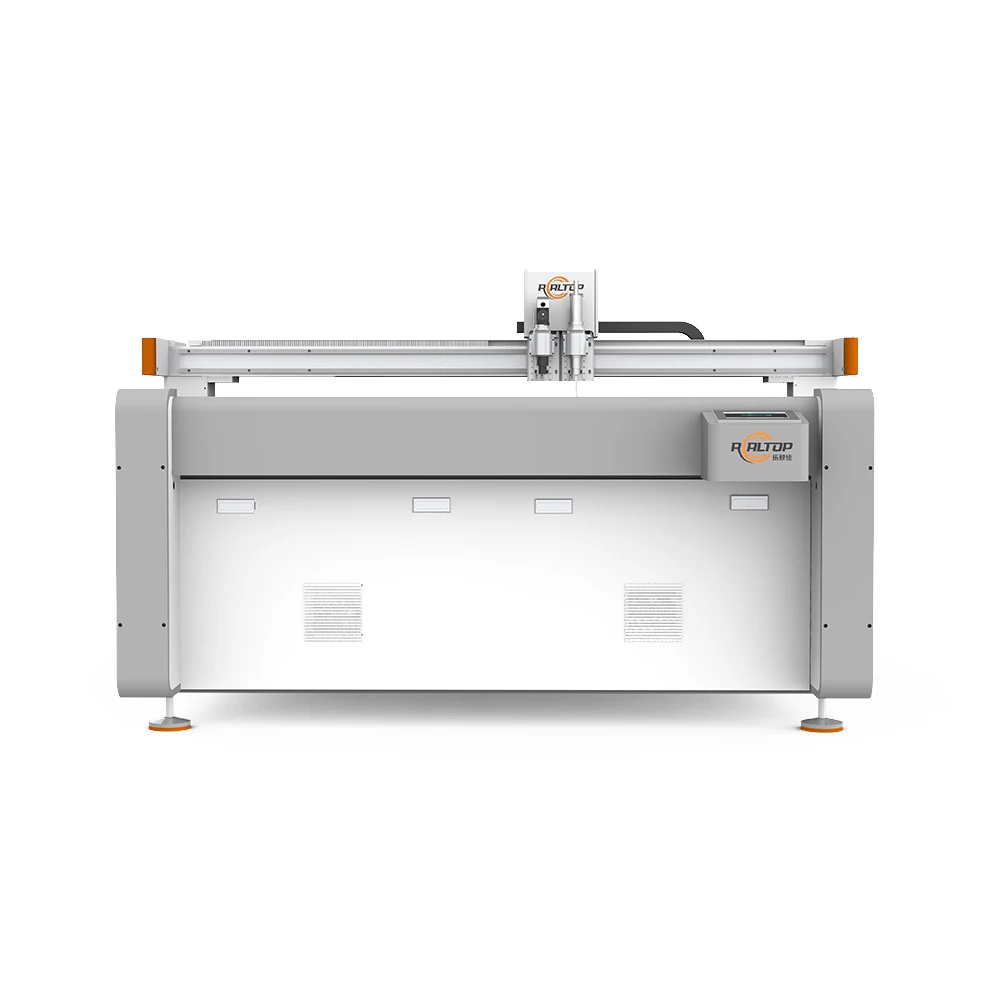
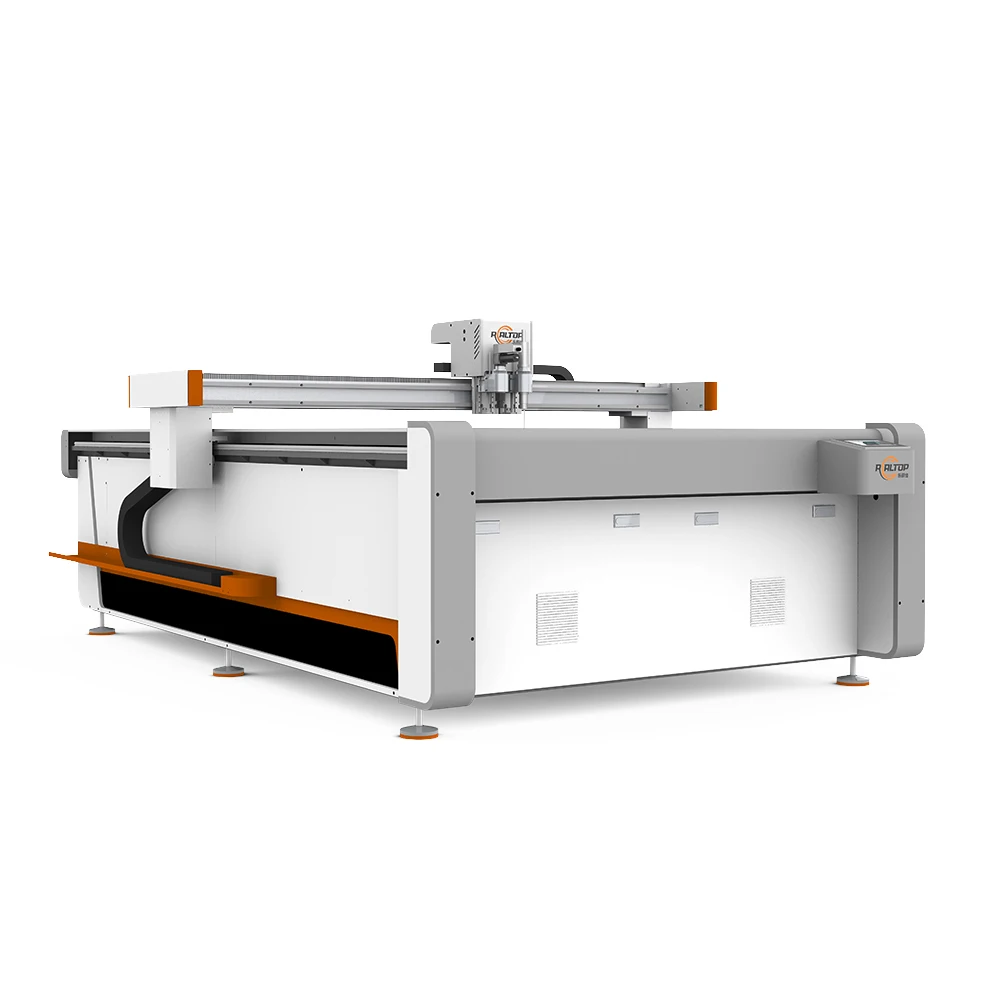
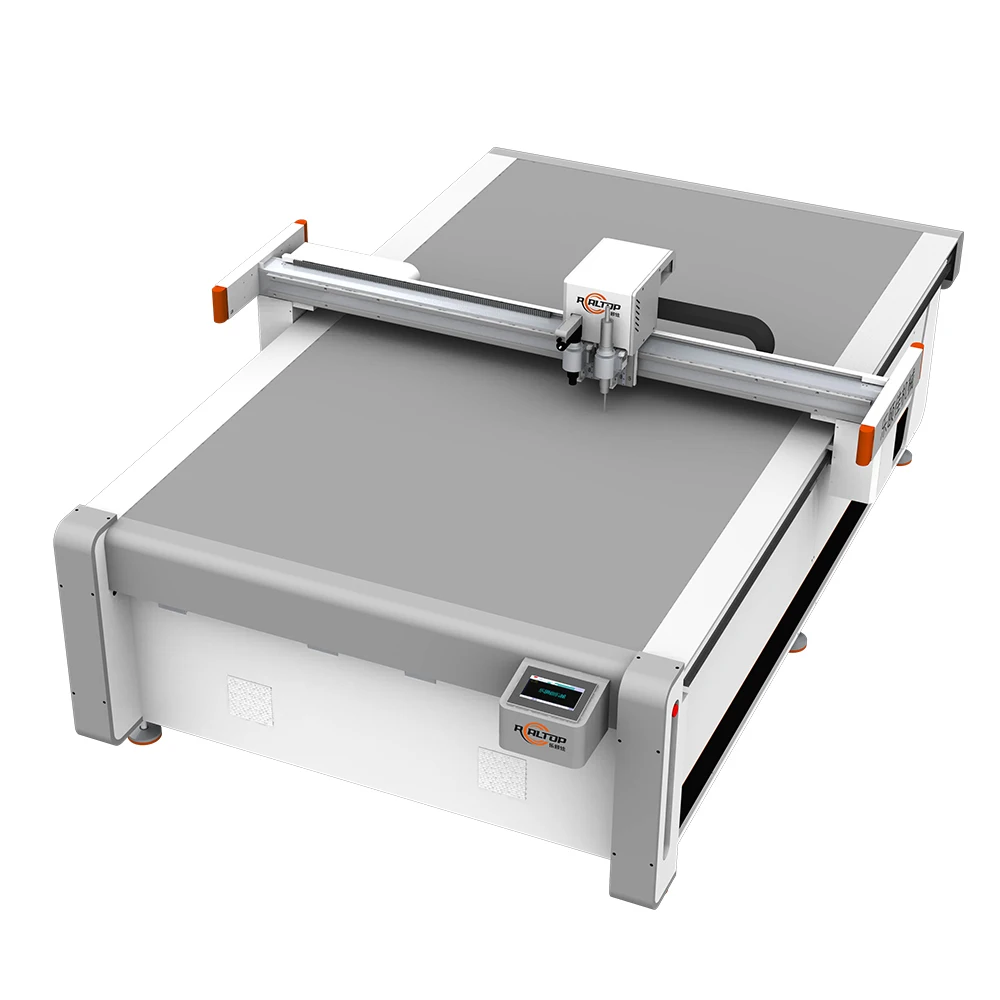
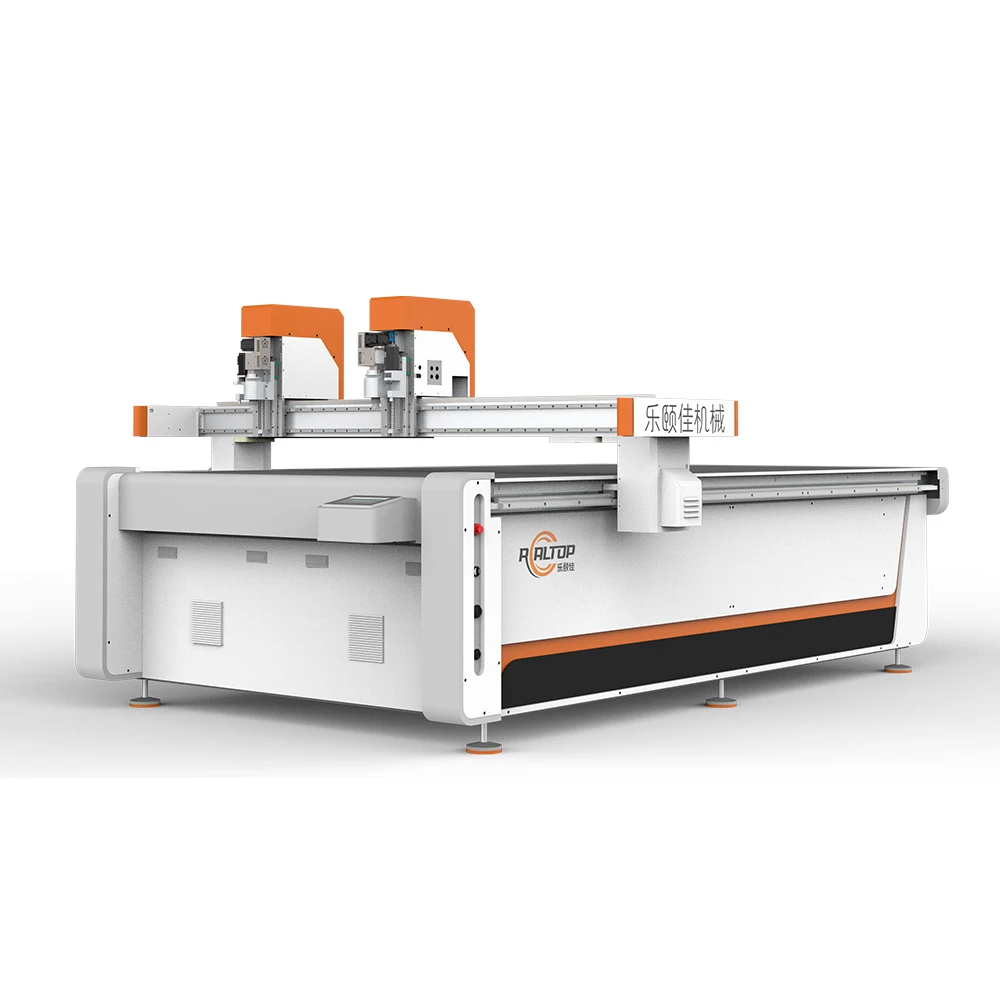
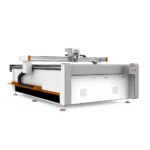
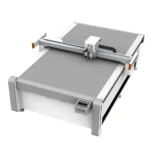
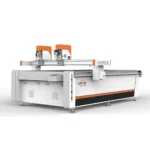
Tooling flexibility over fixed configuration — The RT-D2516/RT-S2516 platform supports oscillating knife, drag knife, and creasing wheel on a single flatbed, allowing packaging producers to match tool head selection to corrugated grade and part geometry rather than accept a single-purpose machine.
Technical Specifications
| Parameter | Value |
|---|---|
| Model | RT-D2516/RT-S2516 |
| Product Type | CNC Oscillating Knife Cutting Table |
| Working Area | 1600 × 2500 mm |
| Overall Dimensions (L×W×H) | 3450 × 2300 × 1250 mm |
| Rated Power | 9 kW |
| Voltage | 380V ±10% |
| Table Type | Flat working table / Aluminum alloy honeycomb vacuum adsorption platform |
| Vacuum Pump | 7.5 kW |
| Tool Head | Multifunctional head with Swiss imported knife — vibration full cutting, vibration half cutting, cursor location |
| Translational Velocity | 800–2000 mm/s |
| Cutting Speed | 200–800 mm/s (basis not stated in source — confirm material type / thickness / corrugated grade) |
| Repeatability | ≤0.1 mm |
| Transmission System | Digital servo motor (Taiwan Delta), linear guide (Taiwan Hiwin), synchronous belt, ball screw; rack transmission |
| Safety Device | Infrared sensors, emergency stop |
| Control / Instruction System | HP-GL compatible format |
| Software | Professional carton nesting / cutting design software, multi-format file import, automatic positioning for cutting / marking / creasing |
| Optional Configuration | Germany imported conveyor belt, auto feeding system |
| Cutting Thickness | ≤100 mm (varies by material — basis to be confirmed) |
| Key Features | Language customization supported (English, Russian, Italian, Chinese noted) |
Application Suitability
| Application | Material or Output |
|---|---|
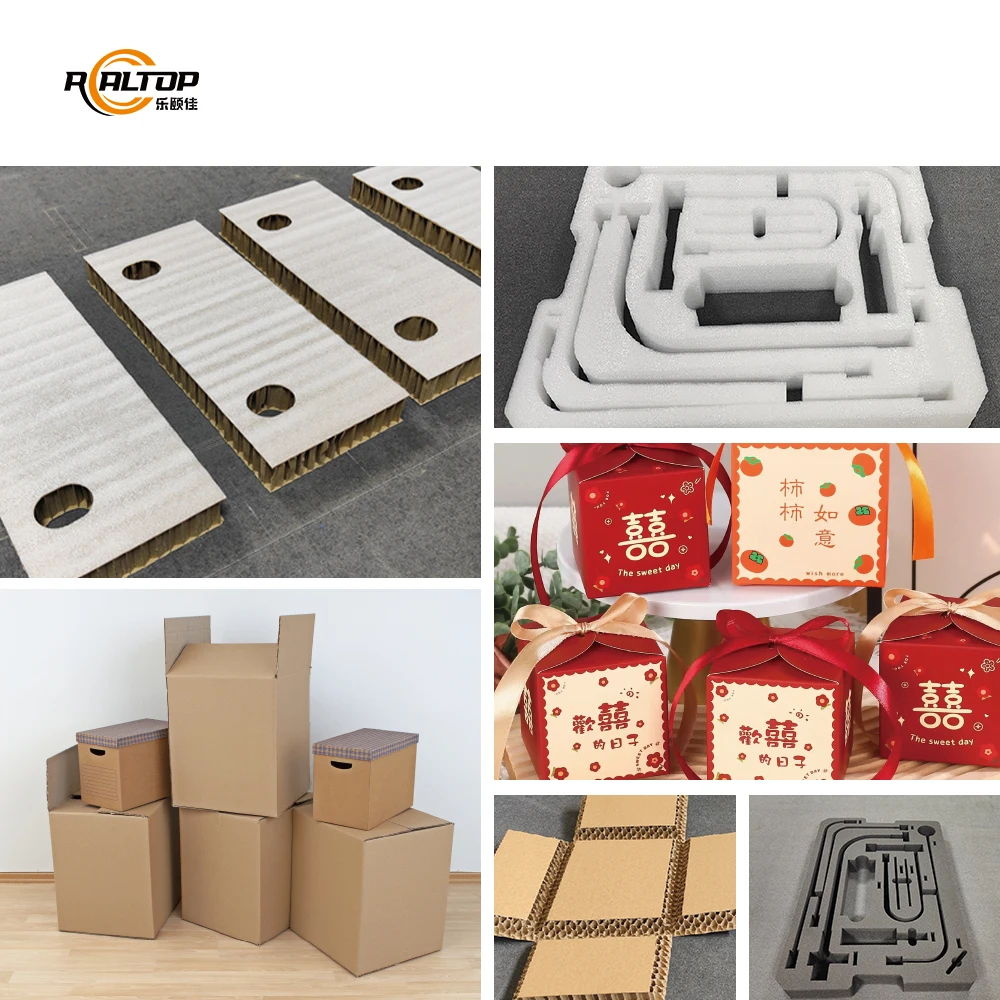
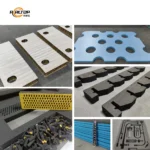
| Corrugated carton box making and packaging sample cutting | Single, double and triple-wall corrugated board, gray board, honeycomb paper board |
| Cardboard packaging for large appliances and express shipping | Heavy-duty double-wall and five-layer corrugated board |
| Snack food boxes and high-end gift boxes | Thin corrugated, kraft paper, coated cardstock |
| Sticker, billboard, business card and label contour cutting | Self-adhesive vinyl, PVC sticker, reflective sheet |
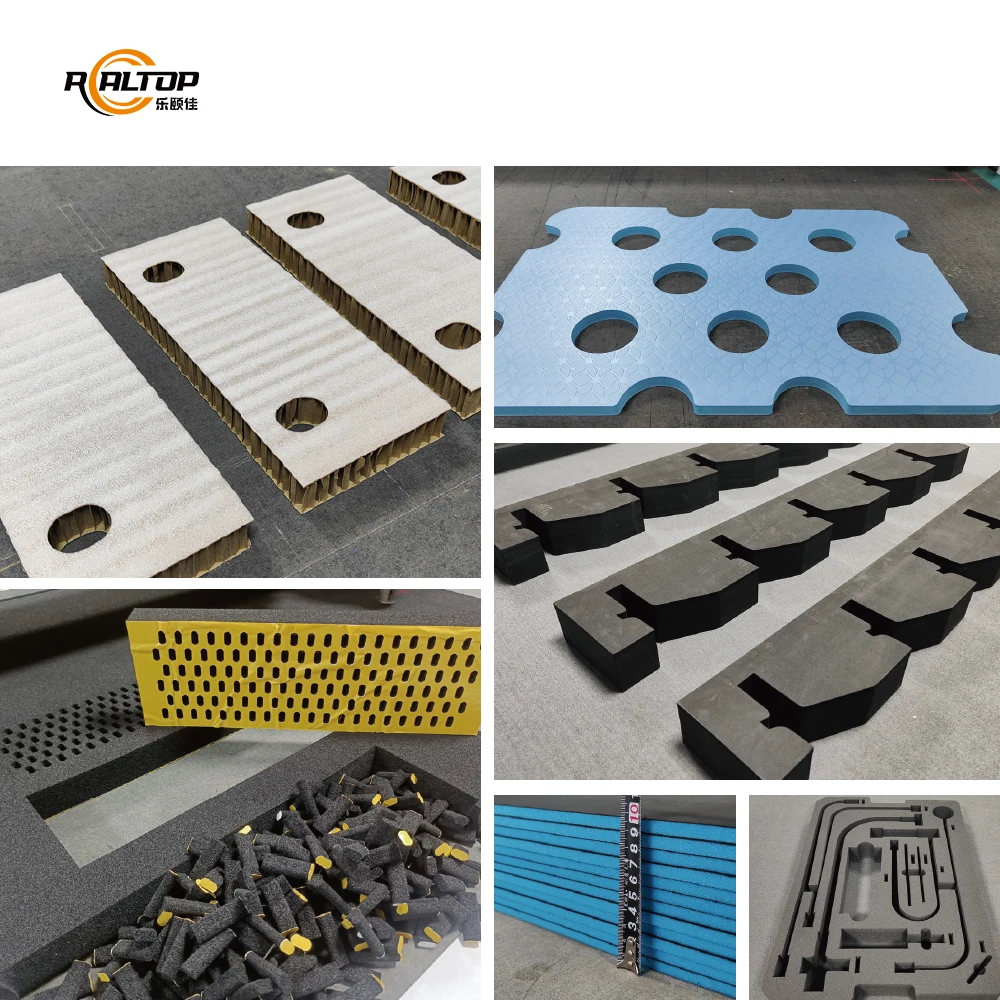
| Flexible non-metal material cutting | Leather, clothing fabric, sponge composite, PVC soft glass, silicon, rubber, foam |
Why "Cutting Speed 200–800 mm/s" Means Nothing Without the Material Grade
Speed claims are only meaningful when tied to the specific flute type, board weight, and cut geometry you actually run.
A packaging shop cutting B-flute single-wall board will see the head move at the upper end of that range on straight cuts, but the same machine on triple-wall board with tight inside corners will drop significantly. Tool deflection on thick stock, vacuum hold-down limits on small parts, and creasing wheel passes all reduce effective throughput. [NEED_CITE: corrugated flute grades and their effect on knife cutting resistance] I have seen buyers compare two machines on published speed alone, then discover on commissioning that their five-layer board required three passes where the spec assumed one. Always ask for a cutting speed figure tied to your exact board grade, thickness, and nesting pattern before treating any number as a production commitment.
Oscillating Knife Versus Drag Knife — Matching the Tool to the Board
The multifunctional head on this CNC oscillating knife cutting table carries a Swiss imported oscillating knife capable of full cutting, half cutting, and cursor location in a single tool station. For corrugated packaging work, the oscillating action separates the flutes cleanly without crushing the board — a drag knife dragged through double-wall stock will compress the top liner and leave a ragged exit edge. Half-cut capability allows kiss-cutting on self-adhesive labels and sticker materials without penetrating the backing paper. The cursor location function supports manual alignment when optical registration is not required, keeping setup time short on short-run sample jobs.
Vacuum Zoning and Small-Part Hold-Down
The aluminum alloy honeycomb vacuum platform is paired with a 7.5 kW vacuum pump to generate adsorption across the working surface. On packaging jobs where the nesting layout includes many small carton blanks or narrow offcuts, the effective hold-down depends on how many independent vacuum zones the table provides and whether those zones can be switched off outside the cutting area. [NEED_CITE: vacuum table zoning requirements for CNC flatbed cutting of small parts] If the table treats the entire surface as one zone, small parts near the edge will lift as the knife exits the cut. Buyers producing mixed-size carton nests should request the zone map and confirm it matches their typical layout before committing to the order.
Drive Train and Positioning Stability at Production Speed
The transmission system combines Taiwan Delta digital servo motors with Taiwan Hiwin linear guides, synchronous belts, ball screws and rack transmission. Repeatability is rated at ≤0.1 mm, which matters most when a creasing wheel must follow exactly the same path as the cutting knife on a previous pass. Rack transmission handles the long-axis travel across the 2500 mm bed without the stretch that a belt-only system would introduce over time. For packaging sample makers running crease-and-cut sequences on the same sheet, this positioning accuracy determines whether fold lines land precisely on the cut edges or drift by a fraction of a millimeter across a batch.
The Cost of Specifying Only by Working Area
Many buyers choose a CNC cutting table based on bed size and price, then discover on the shop floor that the vacuum zoning is too coarse for their typical part mix. Small carton blanks lift off the table mid-cut, creasing wheels skip over corrugations on loose stock, and the operator spends time manually taping material down between nests. [NEED_CITE: material lift causes in CNC flatbed cutting of corrugated board] The result is that actual daily output falls well below the quoted speed, edge quality varies across the sheet, and the machine sits idle while the operator re-fixtures material. The cost is not the machine price — it is the weeks of lost production and the rework that follows.
Why Sourcing This Machine Through a Builder That Understands Knife Cutting
In-house design and production of both oscillating knife and drag knife tooling means the tool head is selected to match your material rather than forced from a single option. Tool head and table configuration are specified per corrugated grade and production volume, not left to a default setting. CCD camera positioning is available for printed contour work on sticker and label jobs, with performance verified at production speed. Software compatibility — including your existing DXF, AI and PLT files — is confirmed before the order is placed. Voltage, plug type and control language are locked in before shipment so the machine arrives ready for your workshop. Sample cutting on your own corrugated board is completed before commitment, so you see edge quality and crease depth on the material you will actually run.
Documentation & Verification
- Machine specification sheet listing RT-D2516/RT-S2516 tool head and vacuum table configuration
- Electrical schematic with voltage and frequency confirmation for your local supply
- Sample cutting report on your corrugated board grade showing edge and crease quality
- Software licence and file format compatibility note for your existing DXF and PLT workflow
- Spare parts list identifying consumable blades and vacuum seals with part numbers
- CE declaration of conformity where applicable to the destination market
Installation, Commissioning & Support
- Floor space planning for the 3450 × 2300 mm footprint plus material handling clearance
- Dedicated 380V ±10% circuit with sufficient capacity for the combined 9 kW machine and 7.5 kW vacuum pump load
- Assembly of the flat working table sections and vacuum hose connections on arrival
- First-run parameter setting for oscillating knife depth and creasing wheel pressure on your board stock
- Operator training on nesting software import, zone switching and tool change procedures
- Consumable blade and vacuum seal inventory for initial production runs
What to Include in Your Inquiry
To receive a configuration recommendation that matches your production reality, provide your typical corrugated flute type and board weight, the range of carton blank sizes you nest most often, and your daily sheet volume. Include your workshop voltage and frequency, preferred control language, and any existing file formats your design team uses. If you cut printed sticker or label jobs, note whether CCD contour recognition is required so the system can be specified accordingly.
Frequently Asked Questions
Q: How should I verify cutting speed claims before placing an order?
A: Ask the builder for a speed figure tied to your exact corrugated flute grade, board thickness, and nesting pattern. Request a sample cutting report run on your own material at your typical daily volume. Speed published without material context is not a production guarantee — it is a starting point for negotiation.
Q: Which tool head suits my corrugated board and carton design?
A: Oscillating knife cuts through multi-layer corrugated board without crushing the flutes, while a drag knife works on thinner cardstock and sticker materials. Creasing wheels handle fold lines. The multifunctional head on this table supports all three, so the combination depends on your most frequent board grade and part geometry.
Q: Will the vacuum table hold small carton blanks without material lift?
A: Hold-down depends on how many independent vacuum zones the honeycomb platform provides and whether zones outside the cutting area can be switched off. Request the zone map and test it against your typical nesting layout with small parts positioned near the table edges before confirming the order.
Q: What electrical and software details must I confirm before shipment?
A: Lock in your local voltage and frequency, plug type, control language, and the file formats your design team exports — DXF, AI, PLT or others. Confirming these before production avoids delays and rewiring costs when the machine arrives at your workshop.


商品评价
Clear filtersThere are no reviews yet.