

Fast Shipping
Carrier information

20k products
Payment methods

24/7 Support
Unlimited help desk

2-day Delivery
Track or off orders
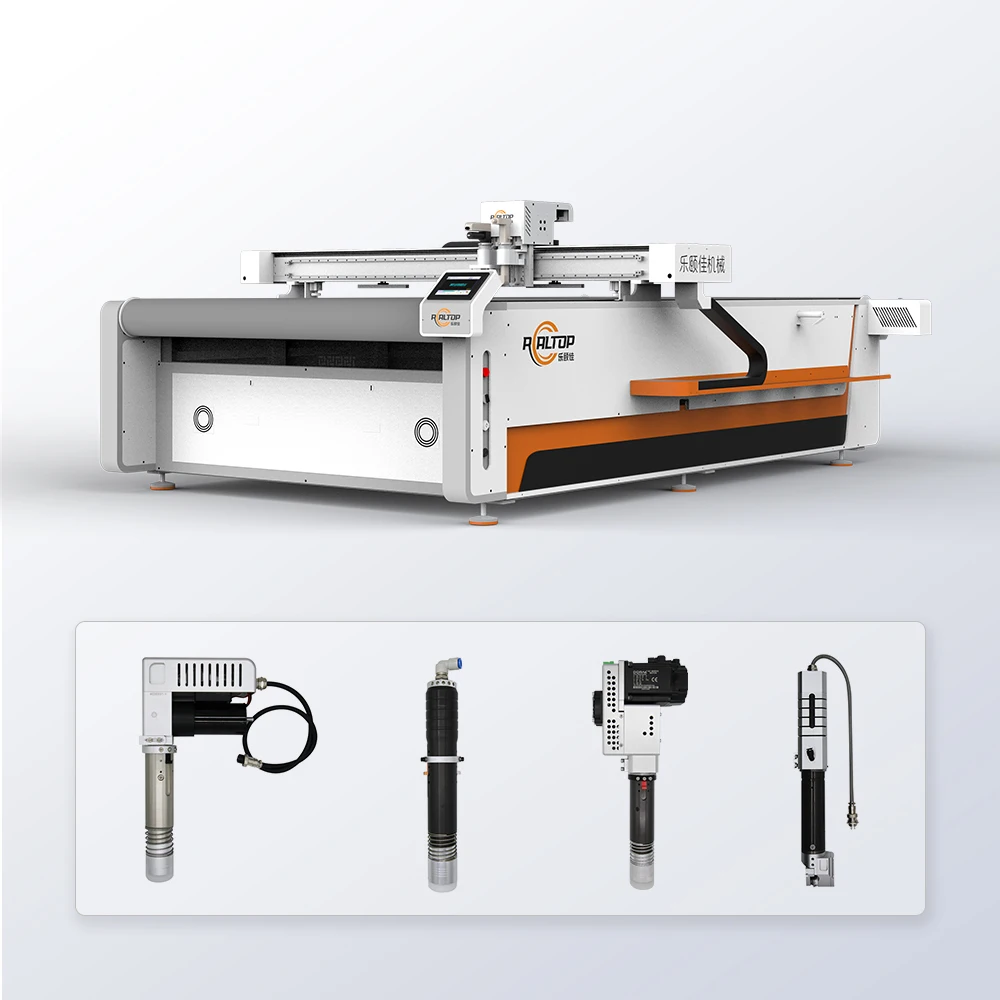
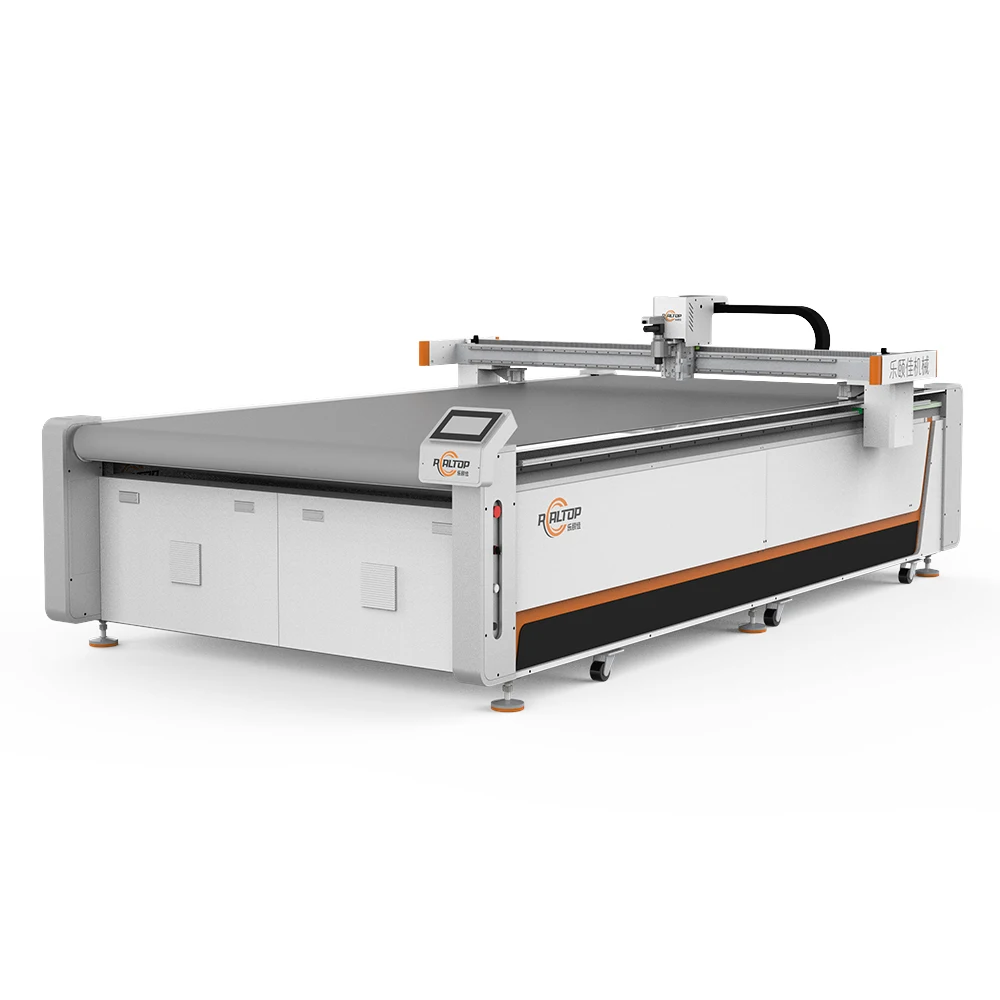
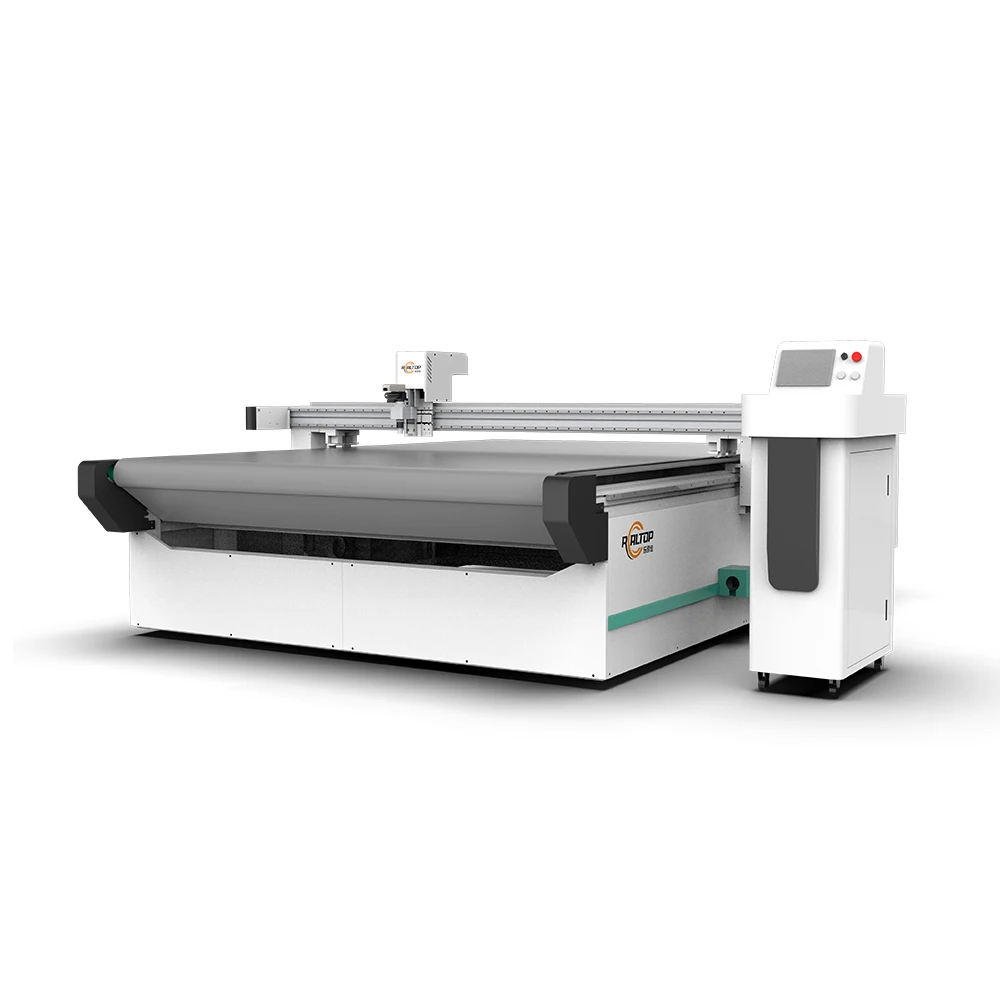
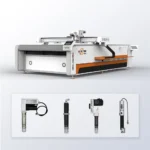
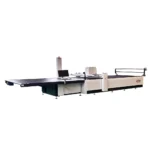
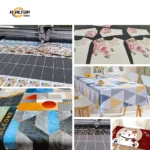
Tool Head Configuration per Material — each knife type and vacuum zoning layout matched to your fabric, foam or leather thickness before the RT-D2516/RT-S2516 leaves the Jinan assembly floor.
Technical Specifications
| Parameter | Value |
|---|---|
| Model | RT-D2516 / RT-S2516 |
| Working Area | 1600 × 2500 mm |
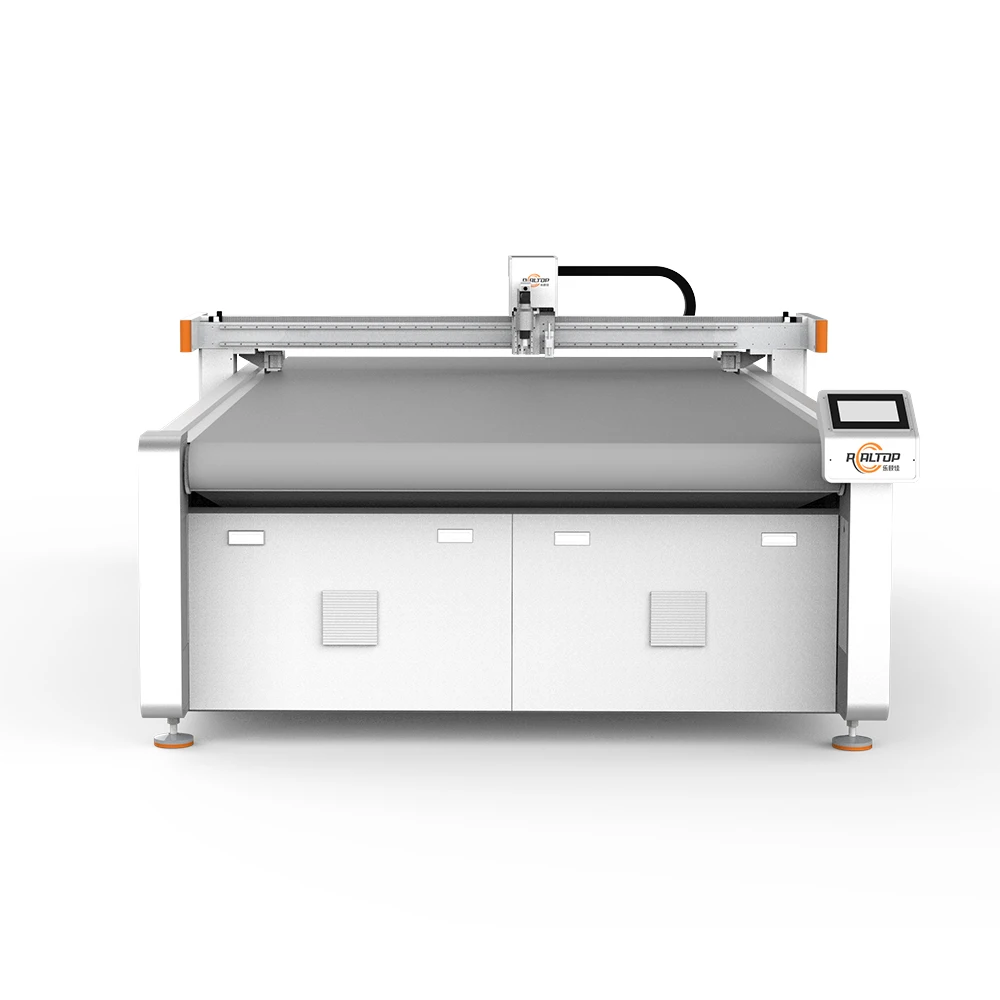
| Machine Size | 3450 × 2300 × 1250 mm |
| Rated Power | 9 kW |
| Vacuum Pump | 7.5 kW |
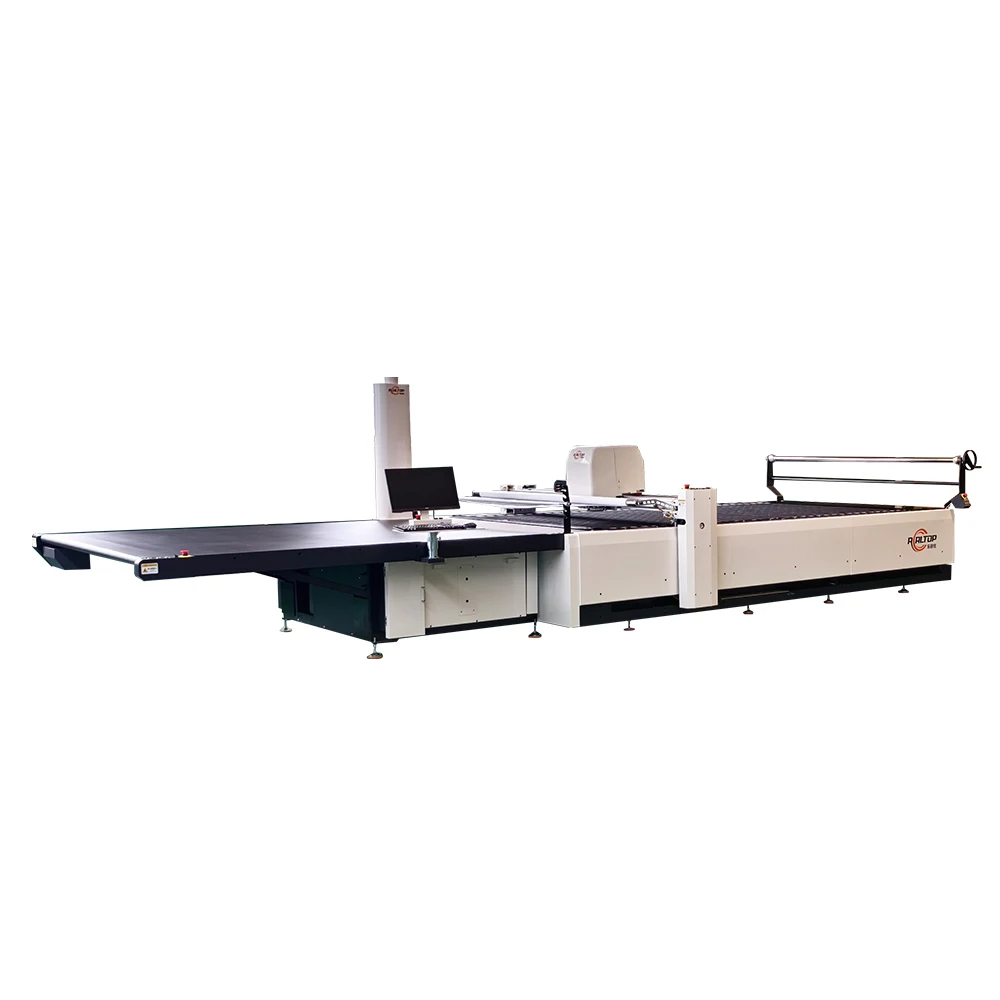
| Table Type | Flat working table / auto feeding table (configurable) |
| Multifunctional Head | Swiss imported knife (vibration full cutting, vibration half cutting, cursor location) |
| Translational Velocity | 800–2000 mm/s |
| Cutting Speed | 200–800 mm/s (varies with material type and thickness) |
| Cutting Thickness | Up to 100 mm (varies with material) (basis to be confirmed) |
| Repeated Accuracy | ≤0.1 mm |
| Transmission System | Digital servo motor, linear guide, synchronous belt, ball screw |
| Servo Motor Brand | Delta (optional Panasonic) |
| Guide Rail | Taiwan Hiwin |
| Conveyor Belt | Germany imported |
| Instruction System | HP-GL compatible format |
| Software | Auto typesetting; supports PLT, DXF, AI formats |
| Control Panel | Touch screen, multiple language supported |
| Safety Device | Infrared sensors |
| Voltage | 380V ± 10% |
| Standard | CE |
Application Suitability
| Application | Material or Output |
|---|---|
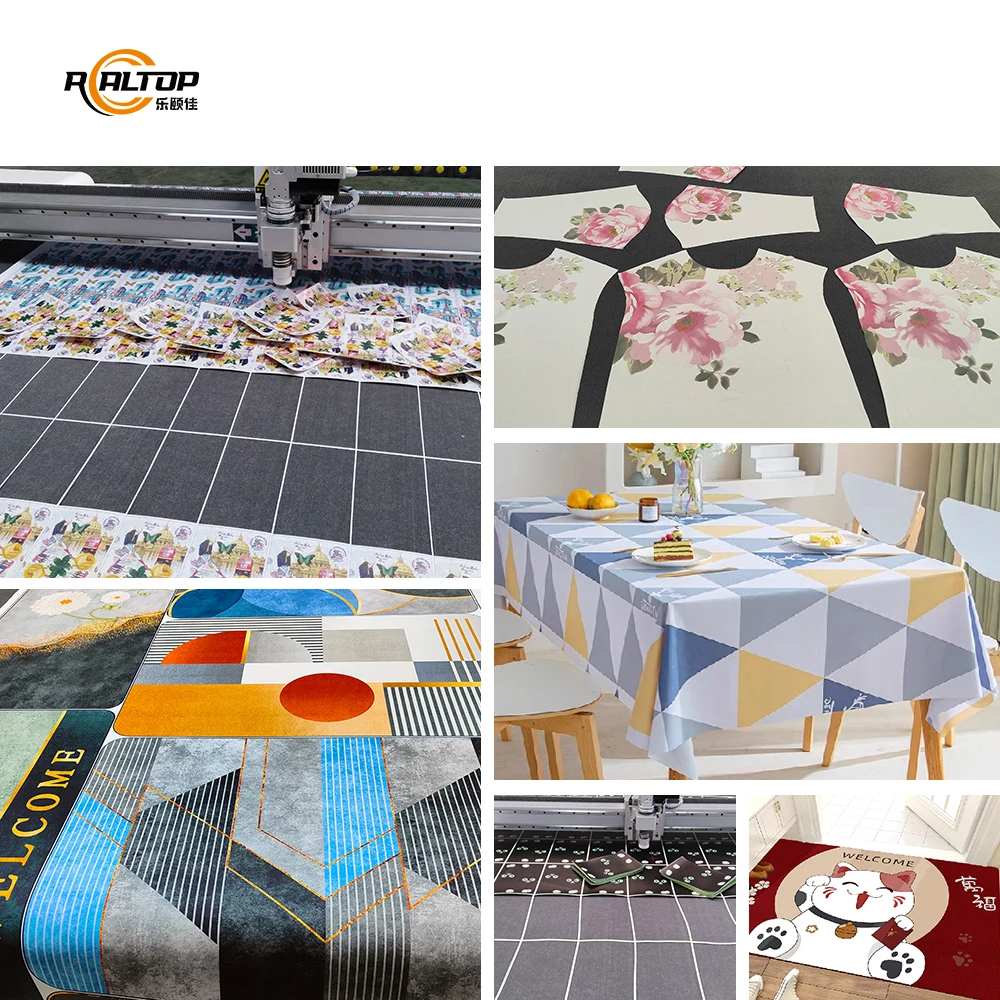
| Automotive interior and floor mats | PVC-backed carpet, sponge composite leather, EVA foam, multi-layer acoustic felt |
| Garment and footwear production | Woven and knit fabric, genuine leather, synthetic PU, non-woven textile |
| Soft home furnishings | Upholstery fabric, velvet, linen, layered cushion foam |
| Gasket and sealing pads | Rubber sheet, silicone, PTFE, ETFE, cork composite |
| Packaging sample making | Corrugated cardboard, fiberglass board, PP corrugated sheet |
| Sports and outdoor goods | Neoprene, XPE foam, carbon fiber prepreg, composite laminates |
What Happens When Oscillating Knife Specs Ignore Your Material
The cutting speed on the nameplate means nothing without knowing the material stack and thickness.
I remember an automotive floor mat buyer who ordered based on working area and a quoted cutting speed range. When the machine arrived and his operators loaded a PVC-and-aluminum-foil thermal insulation composite, the knife could not penetrate the foil layer. The line sat idle for two weeks while we swapped tool heads and re-tuned parameters. Since then, I have insisted on receiving a physical sample of the buyer’s actual material before confirming any oscillating knife cutting machine specifications. The gap between a catalog number and a real production environment is where most CNC knife cutting failures originate [NEED_CITE: common causes of cutting failure on composite flexible materials].
Knife Type and Material Density Matching
The Swiss imported oscillating knife on the RT-D2516/RT-S2516 handles vibration full cutting and half cutting, which matters when a single job involves both through-cutting leather and kiss-cutting a release liner. Denser materials like thick gasket rubber need a stiffer blade with a lower oscillation frequency to avoid delamination, while open-cell foam requires a higher frequency to prevent the blade from dragging fibers and leaving a ragged edge. Selecting the correct oscillating knife cutting machine specifications starts with identifying every material layer the blade will encounter.
Vacuum Zoning and Small-Part Stability
A 1600 × 2500 mm table with uniform suction sounds adequate until you are cutting small gasket pieces or shoe upper panels. Small parts lift at high translational velocity if the vacuum zones are not segmented. The RT-D2516/RT-S2516 platform supports zone-specific vacuum control, so operators can concentrate suction only where the cutting head is working. This reduces air leakage across unoccupied areas and keeps thin film or lightweight non-woven fabric pinned flat.
Magnesium-Aluminum Table Flatness and PVDF Coating
The working surface on this platform uses a magnesium-aluminum alloy construction with a PVDF coating. Flatness directly influences cutting depth consistency across the full 2500 mm length; even a slight dip can cause the knife to miss through-cuts at the far end of a nested sheet. PVDF resists the solvents and adhesives commonly found on sticker backings and composite prepregs, so the table surface does not degrade after repeated cleaning cycles [NEED_CITE: PVDF chemical resistance in industrial cutting environments].
Servo Drive and Repeatability Under Continuous Production
Delta servo motors paired with Taiwan Hiwin linear guides deliver a stated repeatability of ≤0.1 mm. In practice, this specification matters most during long nesting runs where the same contour is cut hundreds of times across a shift. Panasonic servos are available as an option for buyers whose production environment demands tighter dynamic response on intricate leather contours. The ball screw and synchronous belt transmission keeps positional accuracy stable even when the cutting head reverses direction at high speed.
When Configuration Choices Backfire on the Floor
A buyer once specified a flat table only, then realized half his daily volume was roll-fed automotive carpet that required continuous feeding. Retrofitting an auto feeding conveyor later cost more and took longer than configuring it at the factory. Another buyer assumed a single oscillating knife would cover everything from thin silk to 30 mm foam, ignoring the creasing wheel needed for his corrugated packaging samples. These mismatches are why we run sample cuts on the buyer’s actual material before finalizing the configuration list [NEED_CITE: cost impact of post-delivery CNC machine reconfiguration].
Why Sourcing This Machine Directly from the Build Floor Matters
The RT-D2516/RT-S2516 is designed and assembled in the same Jinan facility, which means the engineers who set the servo parameters are reachable when a buyer needs a custom vacuum zone map. The design team covers both knife and laser cutting technologies, so a buyer processing both fabric and acrylic can match each material to the correct cutting method rather than forcing one technology. Tool head combinations — oscillating knife, drag knife, creasing wheel — are specified per the buyer’s material stack. Software compatibility with PLT, DXF and AI file formats is confirmed against the buyer’s existing nesting workflow before the order is locked. The 380V electrical system and touch screen language are set to the destination market before shipment.
Documentation & Verification
- Machine specification sheet listing every configured tool head and vacuum zone
- Electrical schematic with voltage and phase confirmed for your local grid
- Sample cutting report produced on your submitted material before order confirmation
- Software licence key and file format compatibility note included at dispatch
- Factory test record with repeatability measurement across the full working area
- Operation and maintenance manual translated to your control language
Installation, Commissioning & Support
- Requires a level concrete floor to support the 3450 × 2300 mm footprint without vibration transfer
- Dedicated 380V ± 10% circuit with a minimum 9 kW supply for the main drive plus 7.5 kW for the vacuum pump
- Shipped partially disassembled; table frame, gantry and conveyor modules bolt together on site
- First-power commissioning includes vacuum zone calibration and servo tuning for your material type
- Operator training covers nesting software, blade change procedure and CCD contour setup
- Spare blade and belt kit provided for initial production run; wear parts list included
Preparing Your Inquiry for a Faster Quote
To get an accurate configuration recommendation, send us the material type, total thickness of each layer, maximum sheet or roll width and your typical daily cutting volume. Specify your local voltage and frequency so the electrical package matches your workshop supply. If you are running an existing nesting workflow, share a sample PLT or DXF file so we can verify software import before you commit.
Frequently Asked Questions
Q: How do I know which knife type fits my material?
A: Send a physical sample of your material stack — including every layer and backing — so we run a test cut. The oscillating knife handles dense foam and rubber, while a drag knife suits thin vinyl and sticker film. The correct tool head choice is confirmed in the sample cutting report before you place the order.
Q: Will small parts stay flat during high-speed cutting?
A: The vacuum table supports zone segmentation, concentrating suction only where the cutting head is active. For very light materials like non-woven fabric or thin film, we configure additional hold-down options and adjust translational velocity to prevent edge lift on small nested parts.
Q: Can the CCD camera track printed marks on my fabric?
A: CCD contour recognition is available as a configured option on this platform. It reads printed registration marks to align cuts with pre-printed patterns. We test mark detection on your actual printed material at production speed before confirming the capability in your specification sheet.
Q: Will the software accept my existing DXF and AI files?
A: The auto typesetting software supports PLT, DXF and AI formats natively. Before shipment, we run your sample files through the nesting engine to confirm import accuracy, layer recognition and kerf compensation. A compatibility note is included in the documentation package.
Q: What voltage options are available for export markets?
A: The standard configuration is 380V ± 10%, but the electrical package is configurable for your destination market. Confirm your local voltage, phase and frequency during the inquiry stage so the correct transformer, breakers and plug type are installed before the machine ships.


商品评价
Clear filtersThere are no reviews yet.