



Fast Shipping
Carrier information

20k products
Payment methods

24/7 Support
Unlimited help desk

2-day Delivery
Track or off orders
Tool Head Mapping — Each oscillating knife option is matched to fabric thickness and weave density before cutting begins, so a buyer cutting multi-layer shoe uppers does not end up with the same tool head specified for single-layer silk lining.
Technical Specifications
| Parameter | Value |
|---|---|
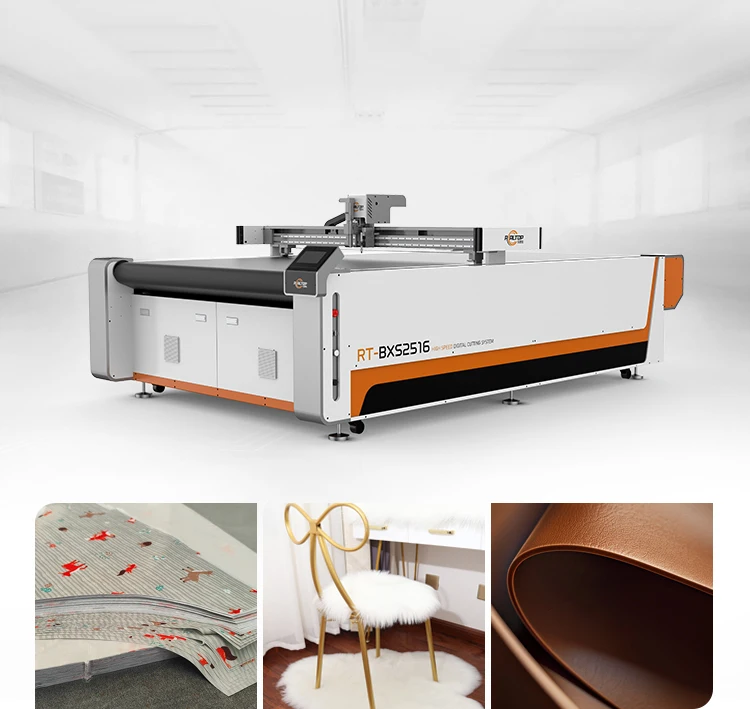
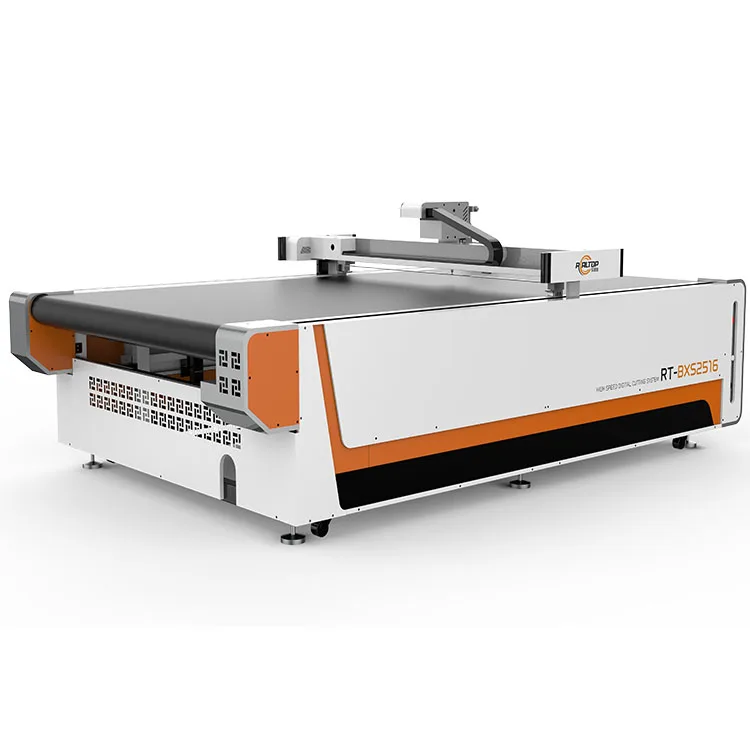
| Model | RT-D2516/RT-S2516 |
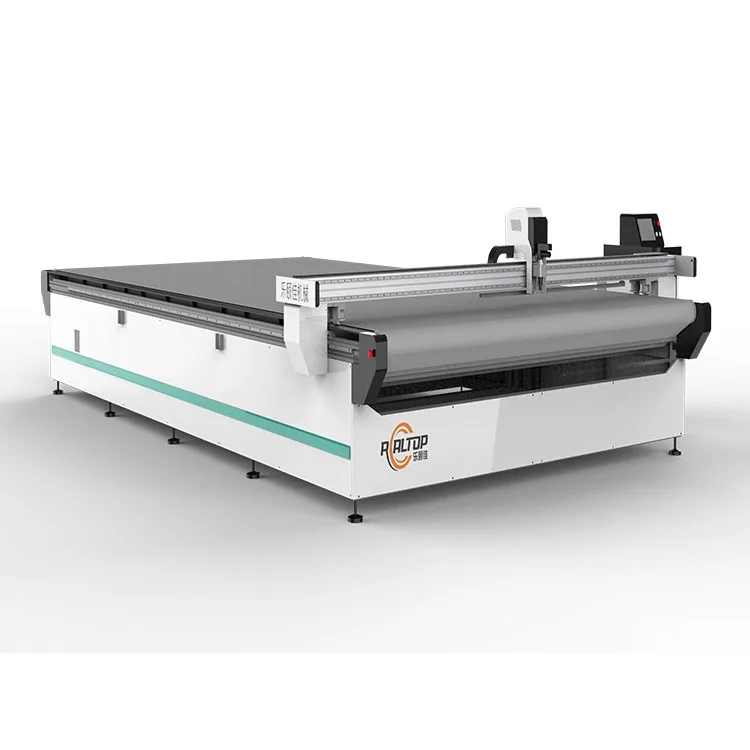
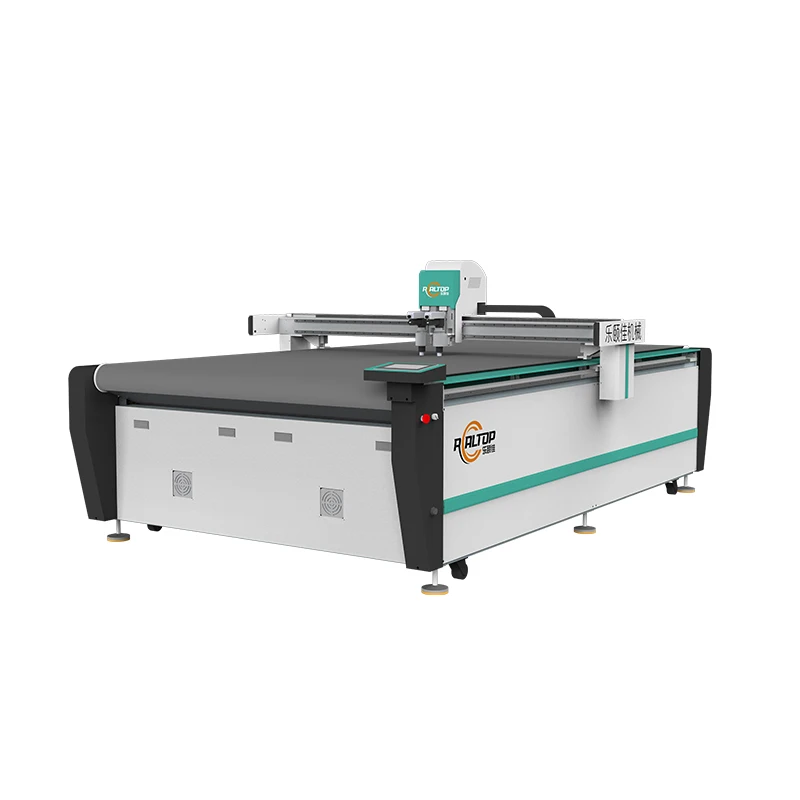
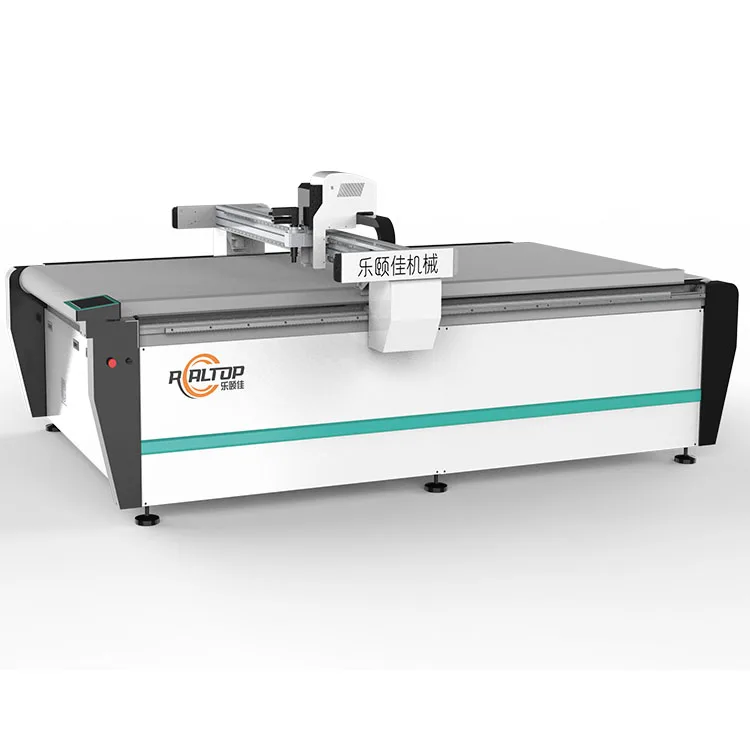
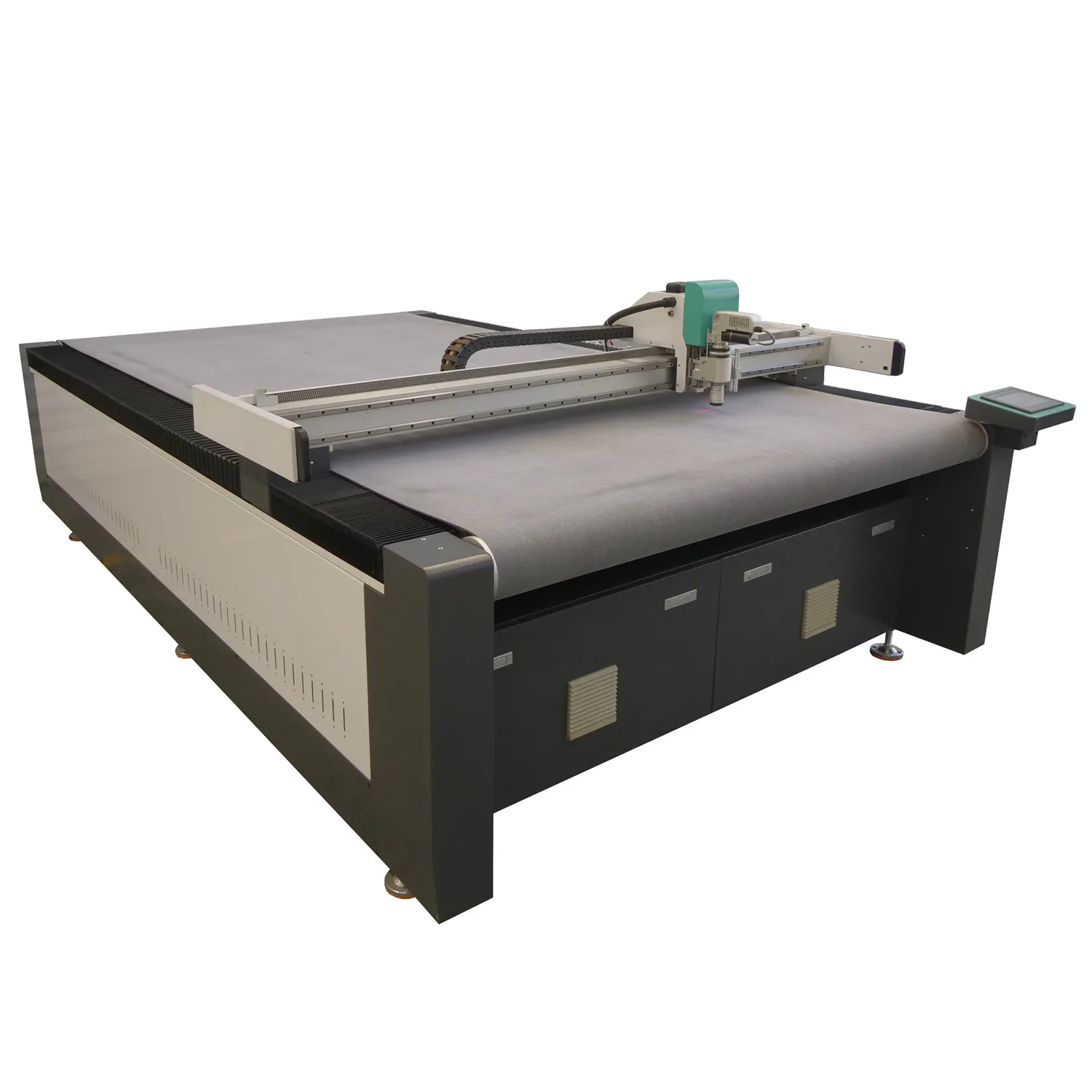
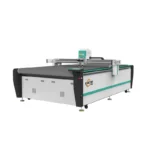
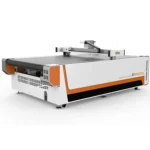
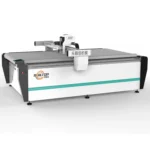
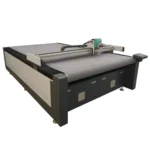
| Product Type | CNC Oscillating Knife Cutting Machine with Auto Feed |
| Working Area | 1600 × 2500 mm |
| Machine Size | 3450 × 2300 × 1250 mm |
| Rated Power | 9 kW |
| Voltage | 380V ± 10% |
| Fixed Model Option | Flat working table / Auto feeding table |
| Multifunctional Head | Swiss imported knife with vibration full cutting, half cutting and cursor location |
| Tool Head Options | Oscillating knife, pneumatic knife, high-power vibrating knife, circular knife, V cutting knife, drag knife, creasing wheel, dotted line knife, punching, brush |
| Visual Positioning | Small CCD camera mark point positioning, panoramic camera recognition, projection positioning |
| Translational Velocity | 800 – 2000 mm/s |
| Cutting Speed | 200 – 800 mm/s (varies by material type and thickness) |
| Cutting Thickness | ≤ 100 mm (varies by material density and lay-up; basis to be confirmed per fabric) |
| Repeated Accuracy | ≤ 0.1 mm |
| Transmission System | Digital servo motor, linear guide, synchronous belt, ball screw (imported) |
| Servo Motor Brand | Delta (optional Panasonic) |
| Instruction System | HP-GL compatible format |
| Vacuum Pump | 7.5 kW, aviation aluminum shell with built-in silencer sponge |
| Vacuum Table | Magnesium-aluminum alloy, fluorocarbon PVDF powder spraying, anodic oxidation, hard oxidation |
| Conveyor Belt | Germany imported |
| Linear Guide | Taiwan Hiwin rail |
| Safety Device | Infrared induction blocking, anti-collision, emergency stop |
| Control Panel | Touch screen; English, Russian, Italian, Chinese (special languages customizable) |
| Software | Auto typesetting; supports PLT, DXF, AI file formats |
Application Suitability
| Application | Material or Output |
|---|---|
| Garment and footwear cutting | Single-layer and multi-layer fabric, shoe material, leather, clothing cloth, luggage material |
| Automotive interior production | Foam, gasket material, composite sheets, PU, EVA, XPE, sponge |
| Packaging sample making | Corrugated cardboard, sticker, film, cardboard, PVC sheet |
| Soft furnishings and carpet | Non-woven fabric, carpet, soft glass, silicon, textile roll |
| Sports and outdoor gear | PTFE, ETFE, fiberglass, carbon fiber prepreg, composite materials |
| Industrial sealing fabrication | Rubber, PTFE gasket, PP, PE sheet |
Why "Cutting Thickness 100 mm" Is Not the Whole Story
A machine’s maximum thickness rating tells you almost nothing about what it will do with your specific fabric lay-up at production speed.
When I first started selling CNC oscillating knife cutting machines, a buyer in the garment district ordered based on the working area alone. Their actual material was a high-resin bonded fabric stack that behaved nothing like the clean cotton samples we tested. The blade dragged, edges frayed, and the vacuum table could not hold the bottom plies flat. That is the gap between a specification sheet and a production floor. Buyers who skip material-specific testing routinely discover that a CNC oscillating knife cutting machine specifications table does not account for adhesive content, weave tension, or layer slip [NEED_CITE: common material variables affecting oscillating knife cutting performance].
Matching Tool Heads to Fabric Behaviour
The RT-D2516/RT-S2516 supports ten interchangeable tool head options, and choosing correctly depends on what the knife tip actually encounters during the stroke. An oscillating knife handles woven textile stacks cleanly because the rapid vertical vibration prevents the blade from pulling fibres. A pneumatic knife suits thick sponge and foam where the blade needs down-force rather than frequency. Drag knives work on thin sticker and film where a full oscillating stroke would tear the substrate. The multifunctional head with Swiss imported blade provides vibration full cutting, half cutting and cursor location, so a single head can score a crease line and then cut the contour without a tool change.
CCD Positioning on Printed Fabric Contours
When cutting digitally printed fabric, the contour must track the print, not just the sheet edge. The system offers three visual positioning options — small CCD camera mark point positioning, panoramic camera recognition and projection positioning. The panoramic option captures the entire 1600 × 2500 mm field, which matters when printed panels shift during auto-feed advance. Mark point positioning relies on printed fiducial marks and is faster for repetitive single-panel layouts [NEED_CITE: CCD camera positioning accuracy on moving fabric web]. Projection positioning overlays the cut path visually before the blade touches the material, letting the operator verify alignment without a test cut.
Vacuum Table and Cutting Speed — Where the Numbers Meet the Material
The 7.5 kW vacuum pump paired with the magnesium-aluminum alloy table delivers suction through zones. The table surface receives PVDF powder spraying, anodic oxidation and hard oxidation treatment, which keeps it flat under repeated blade pressure and prevents coating flake from contaminating light-coloured fabric. Translational velocity reaches 800 – 2000 mm/s, but actual cutting speed is governed by material resistance: 200 mm/s on dense multi-layer rubber gasket versus 800 mm/s on single-layer non-woven. The imported synchronous belt and Taiwan Hiwin linear guide maintain the ≤ 0.1 mm repeated accuracy across the full travel, so nesting software yields are not eroded by positional drift at the table edges.
What Happens When the Configuration Is Wrong
A buyer cutting multi-layer shoe upper leather with a drag knife instead of a high-power vibrating knife will see the bottom layers shift, producing ragged edges and rejected pieces. If the vacuum table zoning is not set for small pattern pieces, those pieces lift during the return stroke and the CCD camera loses the registration mark on the next pass. I once saw a workshop running automotive headliner foam with the wrong oscillation frequency — the blade compressed the foam rather than slicing it, so every edge looked crushed under magnification [NEED_CITE: effects of incorrect oscillation frequency on foam edge quality]. These failures do not show up in a brochure.
Why the RT-D2516/RT-S2516 Is Built This Way
The cutting head and vacuum table configuration are specified per material and production volume rather than sold as a single fixed package. The in-house design team covers knife cutting technology directly, meaning the machine frame, motion system and tool head mount are engineered as one unit rather than assembled from generic sub-assemblies. CCD camera positioning is confirmed against the buyer’s actual print file format before the order is finalised. Voltage, plug type and control panel language are verified against the destination workshop — the touch screen supports English, Russian, Italian, Chinese with custom language available. The auto-feed option uses a Germany-imported conveyor belt matched to the machine’s 9 kW total rated power for continuous roll-to-roll operation.
Documentation & Verification
- Machine specification sheet listing every tool head option selected for your fabric type
- Electrical schematic and 380V ± 10% voltage confirmation matched to destination grid
- Tool head and vacuum table zone configuration list per your material thickness range
- Sample cutting report on your own fabric stack showing edge quality and achievable speed
- Software licence and file format compatibility note for PLT, DXF, AI integration
- Factory test record with repeated accuracy measurement before crating
Installation, Commissioning & Support
- Floor space of approximately 3450 × 2300 mm plus conveyor clearance required for the RT-D2516/RT-S2516 footprint
- Dedicated 380V ± 10% circuit with capacity for 9 kW machine load plus 7.5 kW vacuum pump
- Machine ships as a single frame; vacuum table and auto-feed conveyor bolt on at site
- First-run parameter setting includes oscillation frequency, vacuum zone map and CCD calibration
- Operator training covers tool head change procedure, nesting software and touch screen navigation
- Spare blade, vacuum filter and conveyor belt tensioning kit included in initial shipment
Before You Request a Quote
Tell us the fabric type, number of plies, individual ply thickness and daily cutting volume. Confirm your workshop voltage, frequency and preferred control language. If you use an existing nesting or CAD workflow, share a sample file so we can verify PLT, DXF or AI import before the machine is built.
Frequently Asked Questions
Q: How do I choose between oscillating knife and pneumatic knife for my fabric?
A: Oscillating knives suit woven and non-woven textile stacks where clean fibre separation matters. Pneumatic knives handle thicker sponge and foam where downward pressure is more important than vibration frequency. The choice depends on your material density and edge quality requirement — we confirm with a sample cut on your actual fabric before finalising the tool head.
Q: Will the CCD camera track printed marks on my fabric at full cutting speed?
A: The panoramic camera option captures the full 1600 × 2500 mm working area and is designed for printed contour work on fabric that shifts during auto-feed advance. Mark point positioning is faster for repetitive panels with clear fiducial marks. We test with your actual printed file and fabric to confirm tracking before shipment.
Q: Is vacuum suction strong enough to hold small fabric pieces flat during cutting?
A: The 7.5 kW vacuum pump feeds a zoned magnesium-aluminum alloy table. Zones can be activated selectively so small pattern pieces receive concentrated suction rather than losing hold across the full surface. Zone configuration is set based on your part size during the sample cutting stage.
Q: How do I confirm voltage, plug and control language before the machine ships?
A: The RT-D2516/RT-S2516 operates on 380V ± 10%. Plug type and control panel language are confirmed during the order specification stage — the touch screen supports English, Russian, Italian and Chinese standard, with special languages available on request. We provide an electrical schematic for your facility electrician to review before dispatch.
Q: Can I test the machine on my own material before placing the order?
A: Yes. We run a sample cutting test on the buyer’s own fabric stack and provide a report covering edge quality, achievable cutting speed and recommended tool head. This report forms part of the order documentation so the configuration is locked to your actual production material.


商品评价
Clear filtersThere are no reviews yet.