








Fast Shipping
Carrier information

20k products
Payment methods

24/7 Support
Unlimited help desk

2-day Delivery
Track or off orders
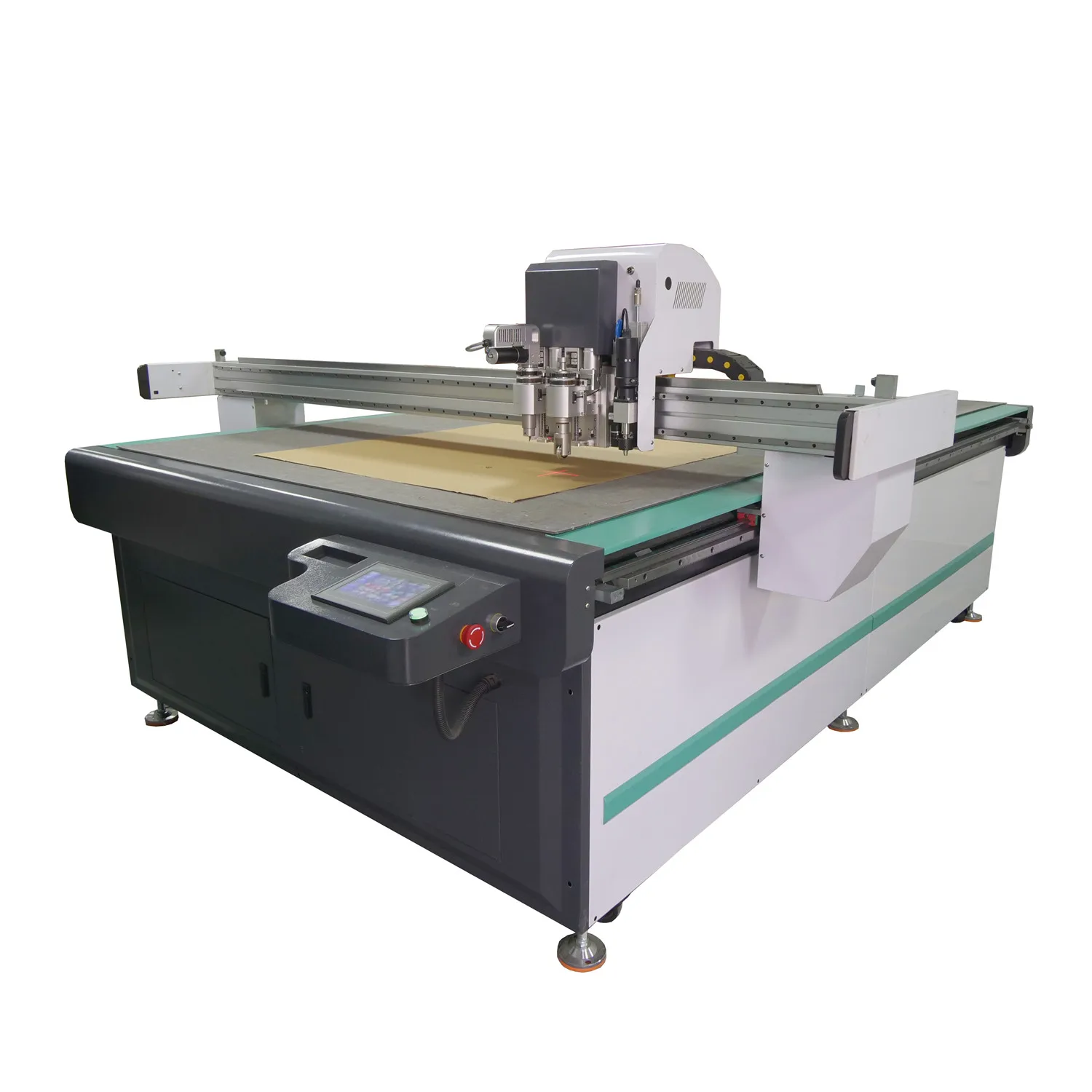
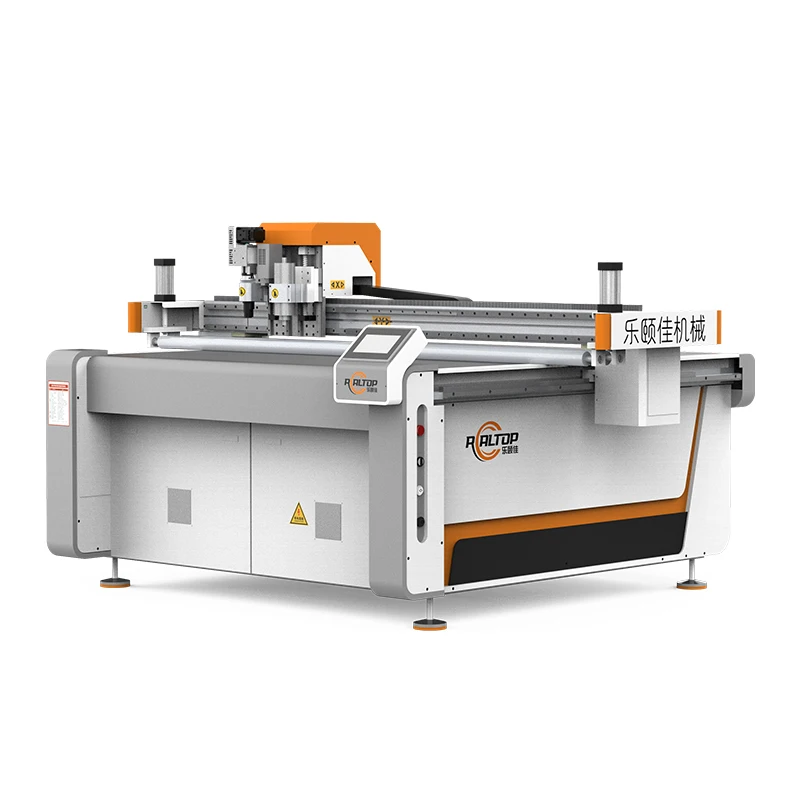
Tool head and vacuum table configuration matched to your material thickness and production volume — our RT-D2516/RT-S2516 oscillating knife platform pairs Swiss-imported cutting heads, creasing wheels and V-cutting tools with a magnesium-aluminum vacuum table zoned for corrugated and composite sheet work.
Technical Specifications
| Parameter | Value |
|---|---|
| Model | RT-D2516/RT-S2516 |
| Product Type | CNC Oscillating Knife Cutting Machine |
| Working Area | 1600 × 2500 mm |
| Machine Size (L × W × H) | 3450 × 2300 × 1250 mm |
| Rated Power | 9 kW |
| Voltage | 380V ±10% (frequency 50/60 Hz to confirm) |
| Table Type | Flat working table / Auto feeding table (configurable) |
| Tool Head Options | Swiss imported oscillating knife, pneumatic knife, high-power vibrating knife, circular knife, V-cutting knife, drag knife, creasing wheel, dotted line knife, punching tool, brush |
| Visual Positioning Options | Small CCD camera mark point positioning, panoramic camera recognition, projection positioning |
| Translational Velocity | 800–2000 mm/s |
| Cutting Speed | 200–800 mm/s (basis to be confirmed) |
| Cutting Thickness | ≤100 mm (varies with material) |
| Repeated Accuracy | ≤0.1 mm |
| Transmission System | Digital servo motor, linear guide, synchronous belt, ball screw |
| Servo Motor Options | Delta (China) / Panasonic (Japan) — optional |
| Instruction System | HP-GL compatible format |
| Software File Formats | PLT, DXF, AI and other formats |
| Vacuum Table | Magnesium-aluminum alloy, integrated aviation aluminum shell pump, built-in silencer sponge (noise reduction 35%) |
| Vacuum Pump | 7.5 kW |
| Safety Devices | Infrared induction blocking, anti-collision beam sensors, emergency stop |
| Control Panel | Touch screen, multiple language supported |
| Language Options | English, Russian, Italian, Chinese, others customizable |
| Warranty | 1 year (parts free, shipping paid by buyer) |
| Assembly State | Fully assembled (split box supported for transport) |
Application Suitability
| Application | Material or Output |
|---|---|
| Carton sample making and short-run corrugated production | Single-face and double-wall corrugated cardboard, honeycomb board with creasing and V-slotting |
| Flexible packaging and gasket cutting | PVC, PP, PE, PTFE, ETFE, rubber sheet and composite gasket stock |
| Textile and leather nesting | Fabric, non-woven fabric, PU, EVA, XPE, shoe material and luggage material |
| Automotive interior trimming | Foam board, sponge, carpet, sealing pads and composite interior panels |
| Advertising and signage finishing | Sticker, film, plastic box, fiberglass and foam board contour cutting |
Why the Wrong Tool Head Turns a Good Machine Into Scrap
Matching a CNC oscillating knife cutting machine to corrugated board requires more than checking the working area against your sheet size. The tool head, blade amplitude and vacuum hold-down must be specified together against the actual flute profile and caliper of the board you run. [NEED_CITE: corrugated flute profiles and corresponding cutting parameters]
I once watched a packaging sample shop burn through an entire batch of carton blanks because the machine they bought came with a drag knife as standard. The board was B-flute at nearly 3 mm over what the supplier assumed, and the drag knife crushed the top liner instead of slicing through. Ragged edges, delaminated flutes, and crease lines that cracked on folding. The shop blamed the machine, but the real failure happened on the quotation sheet — nobody confirmed the tool head against the actual material. That is why we require sample cutting on your own stock before the configuration is locked.
Oscillating Knife, Creasing Wheel and V-Cut in One Workflow
The RT-D2516/RT-S2516 supports a Swiss imported oscillating knife for full cutting and half cutting, a creasing wheel for fold lines, and a V-cutting knife for slotting — all mountable on the same gantry. This means a corrugated carton blank can be cut, creased and slotted in a single pass without moving the sheet to a second station. The oscillating stroke handles double-wall and honeycomb board up to the machine’s rated thickness without compressing the flute structure, preserving edge integrity and fold strength.
Vacuum Hold-Down and Material Stability on Small Parts
A magnesium-aluminum alloy table with fluorocarbon PVDF powder spraying provides a flat, corrosion-resistant cutting surface. The integrated aviation aluminum vacuum pump with a built-in silencer sponge keeps noise noticeably lower than open-port blower setups. For small carton blanks or intricate gasket shapes, vacuum zoning is critical — if the suction area extends far beyond the part footprint, the material lifts at the edges mid-cut. The 7.5 kW pump paired with configurable zoning addresses this, though we always verify adsorption performance on your specific sheet dimensions during the sample test. [NEED_CITE: vacuum table zoning principles for CNC flatbed cutting]
Reading the Spec Sheet Against Your Production Reality
The 1600 × 2500 mm working area accommodates most standard corrugated sheet sizes used in carton sample making and short-run packaging. Translational velocity reaches 800–2000 mm/s, while cutting speed is listed at 200–800 mm/s — the actual achievable rate depends on the tool head selected, material density and the number of direction changes in the cut path. Repeated accuracy at ≤0.1 mm matters most when your design includes registration marks or nested parts where a fraction of a millimeter accumulates across a full sheet. The digital servo motor, linear guide and ball screw transmission together maintain this tolerance through long production runs.
What Happens When Configuration Is Skipped
Choosing a machine on price and bed size alone, then discovering the vacuum table cannot hold small gasket pieces flat, means every cut produces a slightly shifted part that fails dimensional inspection. Or specifying a single oscillating head when your workflow demands both creasing and slotting forces operators to re-register sheets manually, introducing alignment errors. These failures do not show up on the spec sheet — they appear on the shop floor, weeks after delivery, when your production manager is already committed to a delivery schedule. [NEED_CITE: common CNC cutting configuration mismatches in packaging production]
Why Sourcing This Platform Through Us
In-house design and production covering both knife and laser cutting technologies means we match the cutting method to your material rather than forcing one approach. Tool head and table configuration is specified per your material type and daily volume, not offered as a generic package. CCD camera positioning for printed contour work is confirmed against your actual print registration marks before the machine ships. Software compatibility with PLT, DXF, AI and HP-GL formats is verified against your existing nesting workflow. Sample cutting on your own material before commitment is standard practice, not an optional extra. Voltage, plug type and control panel language are confirmed during the quotation stage so there are no surprises at the electrical panel on day one.
Documentation & Verification
- Machine specification sheet listing confirmed tool heads and vacuum table zoning for your material
- Electrical schematic and voltage confirmation matched to your facility supply and frequency
- Sample cutting report on your corrugated or flexible material with edge quality photographs
- Tool head and table configuration list detailing included and optional cutting heads
- Software licence and file format compatibility note for your nesting or CAD workflow
- Factory test record documenting repeated accuracy and cut path verification before dispatch
Installation, Commissioning & Support
- Machine ships fully assembled with split box option to fit standard container dimensions for the 3450 × 2300 × 1250 mm frame
- 380V ±10% supply requires a dedicated circuit rated for the 9 kW machine load plus the 7.5 kW vacuum pump
- Touch screen control panel configured in your chosen language before dispatch from the English, Russian, Italian or Chinese options
- Infrared induction blocking and anti-collision beam sensors tested at factory and re-verified on site during commissioning
- Servo motor selection between Delta and Panasonic confirmed at order stage to match your local service availability
- One-year warranty covers parts replacement with shipping cost responsibility clarified before order confirmation
Before You Request a Quotation
Send us the specific corrugated flute type, caliper thickness and maximum sheet dimensions you plan to run, along with your daily blank volume. Let us know which file format your design team works in and whether your workflow includes printed registration marks requiring CCD contour recognition. Confirm your facility voltage, frequency and preferred control panel language so we can build the configuration around your actual production environment rather than a generic baseline.
Frequently Asked Questions
Q: How do I choose between an oscillating knife, drag knife and creasing wheel for my materials?
A: Oscillating knives cut through thicker and layered materials like corrugated board and foam without crushing the structure. Drag knives suit thin vinyl, sticker and film where a continuous slice is sufficient. Creasing wheels score fold lines on carton stock without penetrating the liner. We recommend the tool head combination based on your specific material samples and production geometry.
Q: Can the CCD camera track printed marks on corrugated board at full production speed?
A: The small CCD camera handles mark point positioning, while the panoramic camera option covers full-sheet recognition for printed contours. Actual tracking performance depends on mark contrast, print quality and the cutting path complexity. We test recognition speed on your printed samples during the pre-order sample cutting stage to confirm reliable operation.
Q: What voltage and language details should I confirm before the machine ships?
A: The standard supply is 380V ±10%, and we need to confirm whether your facility runs 50 Hz or 60 Hz. Plug type varies by market and must be specified at order. Control panel language options include English, Russian, Italian and Chinese, with other languages customizable. All three items are locked in before production starts.
Q: Will the vacuum table hold small carton blanks securely during cutting?
A: The 7.5 kW vacuum pump with zoned magnesium-aluminum table is designed to handle small parts, but suction effectiveness depends on part size, material porosity and the number of active zones. We verify hold-down performance on your actual blank layout during sample cutting so you can see the result before committing to the order.


商品评价
Clear filtersThere are no reviews yet.