








Fast Shipping
Carrier information

20k products
Payment methods

24/7 Support
Unlimited help desk

2-day Delivery
Track or off orders
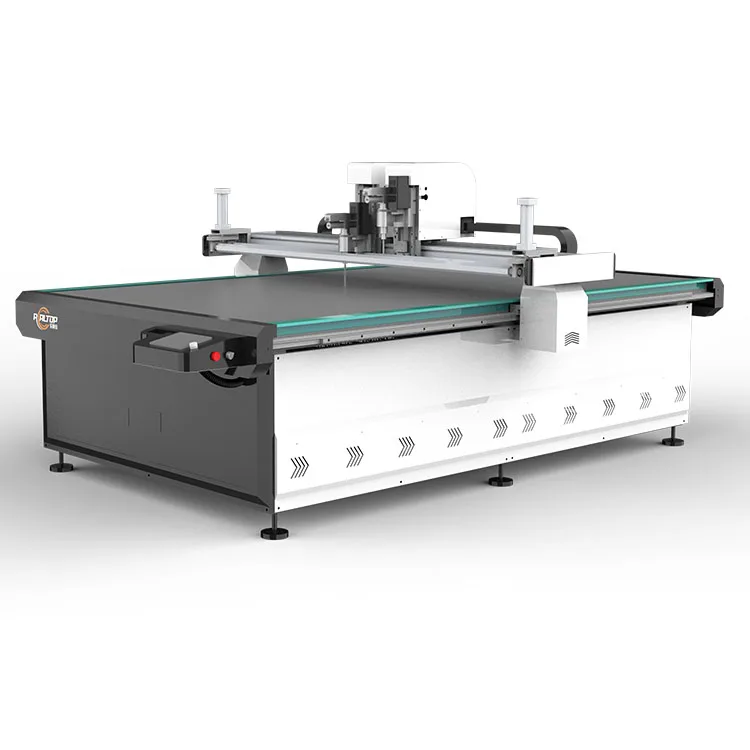
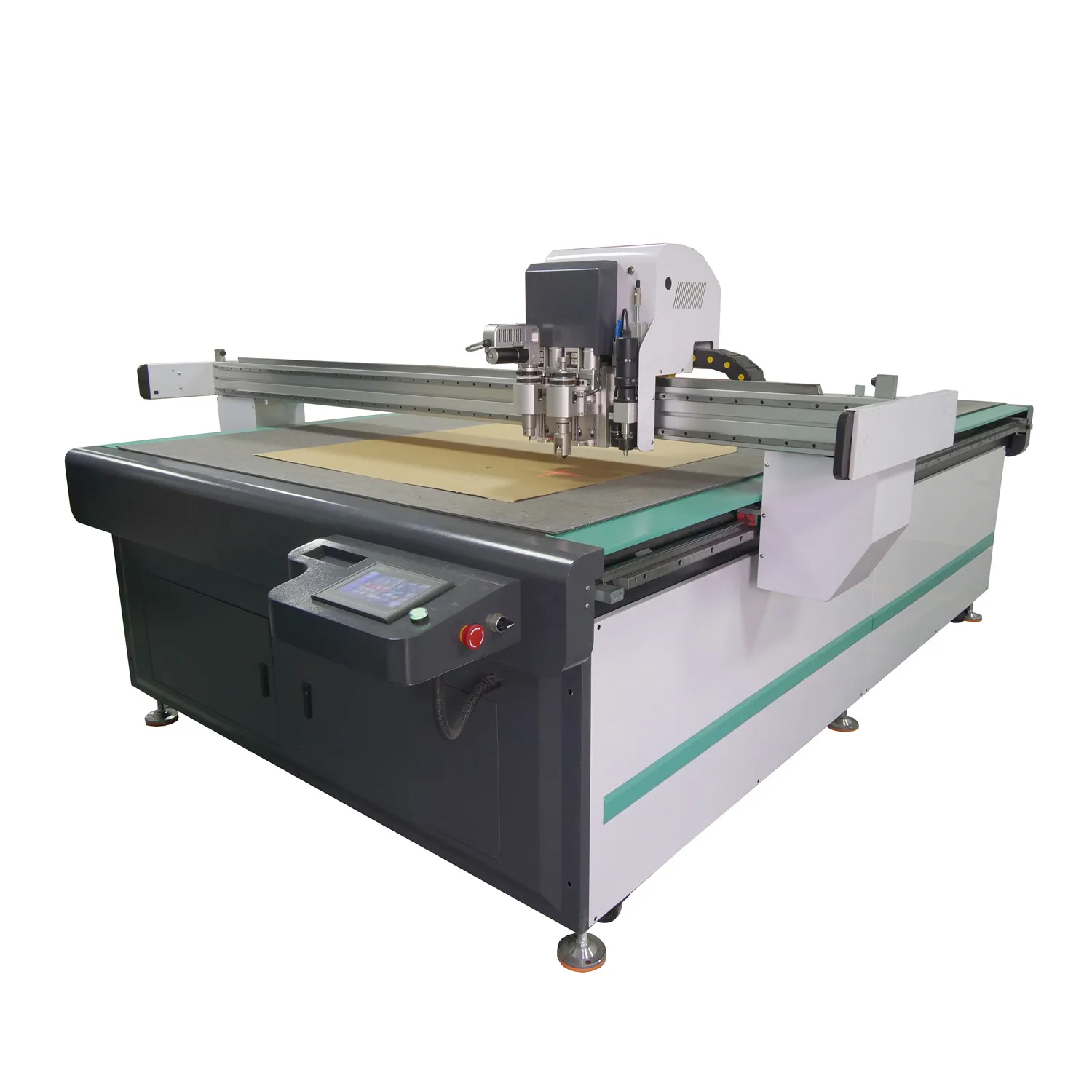
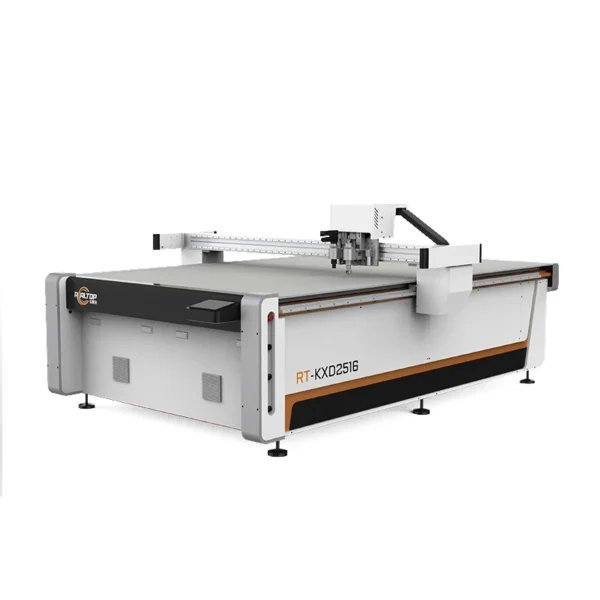
Precision Knife Configuration — Every CLD2516 tool head and vacuum zone is matched to the buyer’s actual corrugated grade and flute profile, not sold as a generic flatbed.
Technical Specifications
| Parameter | Value |
|---|---|
| Product Type | CNC Oscillating Knife Cutting Machine |
| Model | CLD2516 |
| Working Area | 1600mm × 2500mm |
| Overall Dimensions | 3450 × 2300 × 1250mm |
| Rated Power | 6.6kW |
| Voltage | 380V ±10% (50/60Hz to be confirmed for target market) |
| Vacuum Pump | 7.5kW |
| Tool Head | Multifunctional head with Swiss imported oscillating knife (full cut, half cut, cursor location) |
| Cutting Thickness | 20–80mm/s (basis to be confirmed by material type and density) |
| Translational Velocity | 800–1200mm/s |
| Repeated Accuracy | ≤0.1mm |
| Transmission System | Digital servo motor, linear guide, synchronous belt, ball screw (Taiwan Hiwin rail) |
| Servo Motor | Taiwan Delta |
| Conveyor Belt | Germany imported |
| Vacuum Table | Aluminum alloy honeycomb structure with partition adsorption |
| Safety Device | Infrared sensors, emergency stop |
| Support File Formats | PLT, DXF |
| Instruction System | HP-GL compatible format |
| Software | Professional carton nested software with customizable language support |
| Warranty | One year |
Application Suitability
| Application | Material or Output |
|---|---|
| Carton and packaging sample making | Single and double-wall corrugated board, greyboard, folding carton stock |
| Large electrical appliance packaging | Heavy-duty corrugated grades requiring full-depth oscillating knife cuts |
| Express shipping and e-commerce mailers | Standard flute profiles with crease and perforation lines |
| Snack food and gift box packaging | Multi-ply board with registered print contour cutting |
| Sticker and label finishing | Self-adhesive vinyl and paper on release liner |
| Flexible non-metal materials | Sponge composite leather, PVC, soft glass, silicone, rubber sheets |
Why Board Grade Matters More Than Working Area When Choosing a CNC Oscillating Knife Cutting Machine
A 1600×2500mm bed means nothing if the tool head cannot shear through your specific flute structure at production speed.
I once saw a packaging shop buy a flatbed purely on table size, then discover the standard drag knife crushed double-wall corrugated instead of shearing it cleanly. The crease lines were torn, the flap folds cracked, and the entire first batch of prototype boxes had to be scrapped before the buyer realized the knife type had never been matched to the board [NEED_CITE: material-specific tool head selection in digital flatbed cutting]. With the CLD2516, we start by asking what grade you actually run — E-flute, B-flute, BC double-wall — and then configure the oscillating knife stroke and frequency to that structure before anything else is discussed.
Tool Head Selection Dictates Edge Quality on Corrugated
The multifunctional head on the CLD2516 carries a Swiss imported oscillating knife designed for high-frequency vertical strokes that shear through fibrous corrugated cores without crushing the flutes. When cutting single-wall B-flute for e-commerce mailers, the knife amplitude is set lower to avoid over-penetration into the vacuum table surface. For double-wall board used in large appliance cartons, the stroke increases to clear the full thickness while the oscillation frequency maintains a clean shear edge. The same head also supports cursor location for registering cuts to pre-printed graphics, a function that becomes essential when producing retail-ready packaging where cut lines must align precisely with printed fold marks.
Vacuum Partition Adsorption Holds Small Blanks Flat at Speed
A frequent failure point in carton sample making is the vacuum table losing grip on narrow offcuts or small flap sections as the knife head passes at high translational velocity. The CLD2516 uses an aluminum alloy honeycomb table surface divided into independently controlled adsorption zones powered by a 7.5kW vacuum pump [NEED_CITE: vacuum zoning principles in CNC flatbed cutting tables]. Operators activate only the partitions directly beneath the workpiece, concentrating suction where the board actually sits rather than bleeding vacuum across the entire 1600×2500mm area. This zoning is what allows small gift box blanks to stay pinned flat while the oscillating knife runs at 800–1200mm/s without the trailing edge lifting and producing a ragged exit cut.
Drive System Stability and Repeated Positional Accuracy
The CLD2516 runs Taiwan Delta digital servo motors paired with Taiwan Hiwin linear rails across all axes. This combination delivers a repeated accuracy of ≤0.1mm, which in carton production means the crease lines and cut outlines register consistently from the first prototype to the five-hundredth production piece. On corrugated board with registered print, even a half-millimeter drift between the CCD cursor location pass and the knife cut pass will produce visible misalignment on the finished box. The synchronous belt and ball screw transmission path eliminates the backlash that cheaper rack-and-pinion drives introduce at direction changes, particularly when cutting tight radii on interlocking flap profiles.
Software Compatibility and File Format Verification
The CLD2516 ships with professional carton nesting software that accepts PLT and DXF imports through an HP-GL compatible instruction system. Before the machine is built, we confirm that the buyer’s existing CAD library imports without geometry loss — a step frequently skipped when a machine is quoted on working area alone [NEED_CITE: CAD file format interoperability in packaging digital cutting]. The nesting module arranges carton blanks to maximize yield from each sheet, and the language interface is configurable to English, Russian, Italian, Chinese, or other specified languages so that production floor operators can run the machine without translation bottlenecks.
The Cost of Skipping Material-Specific Configuration
When a buyer specifies a CNC oscillating knife cutting machine on table size and price without verifying the tool head against their board grade, the consequences show up within the first week of production. Crushed flutes on the cut edge mean the carton fails compression tests. Ragged crease lines cause flap folds to crack under folding. A vacuum table without adequate zoning forces operators to slow the machine down to keep small blanks from lifting, cutting throughput well below what the servo system can actually deliver. These are not warranty issues — they are specification failures that happen because the cutting configuration was never matched to the material [NEED_CITE: consequences of incorrect tool head and vacuum specification in carton cutting].
Why Packaging Producers Source the CLD2516 Here
The design team covers both knife and laser cutting technologies in-house, so a carton producer is not forced into a laser process when oscillating knife is the correct method for their board grade. Every tool head and table configuration is specified against the buyer’s declared material and daily volume rather than pulled from a standard catalog. CCD camera positioning is available for printed contour work on retail packaging. Software compatibility is confirmed against the buyer’s existing file library before the order is finalized. Voltage, plug type, and control language are documented and locked before shipment to the target market. Sample cutting runs on the buyer’s own board grade before commitment, so edge quality and crease depth are verified at actual production speed rather than assumed from a brochure specification.
Documentation & Verification
- Machine specification sheet listing the confirmed tool head, vacuum zoning layout, and servo motor configuration for your board grade
- Electrical schematic with voltage and frequency matched to your local supply standard before build
- Tool head and table configuration list detailing oscillating knife stroke settings for your specific flute profiles
- Sample cutting report produced on your actual corrugated board showing edge quality and crease depth at production speed
- Software licence with file format compatibility note confirming your PLT and DXF library imports without conversion loss
- Factory test record documenting repeated accuracy and translational velocity verification before dispatch
Installation, Commissioning & Support
- Floor space allocation of approximately 3450 × 2300mm with clearance for operator access and material staging on both long sides
- Dedicated 380V ±10% power circuit sized for 6.6kW machine load plus 7.5kW vacuum pump on a separate breaker
- Machine ships as a flat working table assembly with optional auto-feeding conveyor integrated on-site during commissioning
- First-run calibration covers vacuum partition zoning, oscillating knife stroke depth, and servo axis homing for ≤0.1mm repeated accuracy
- Operator training on the carton nesting software, HP-GL instruction import, and tool head changeover between full cut and half cut modes
- One-year warranty covering servo motors, linear rails, and vacuum pump with spare knife blades and belts included at delivery
Before You Request a Quotation
To configure the CLD2516 correctly for your packaging operation, we need the specific corrugated board grades and flute profiles you run, the maximum sheet size and thickness in your current product mix, and the daily volume of blanks you need to produce. Confirm your local voltage supply and frequency, your preferred control interface language, and whether your existing design files are in PLT or DXF format. If you are cutting printed carton with registered graphics, let us know the print mark size and contrast so we can verify the CCD cursor location system against your artwork before the machine is built.
Frequently Asked Questions
Q: How is cutting thickness capacity verified for my specific corrugated board grade?
A: We run sample cuts on your actual board — including single-wall, double-wall, and any specialty grades — at production translational velocity. The sample cutting report documents edge quality, crease depth, and flute compression for each grade, so the 20–80mm/s range is validated against your material before the machine is finalized.
Q: Which tool head option matches my carton structure?
A: Corrugated carton cutting typically uses the oscillating knife for full and half cuts, while a creasing wheel handles fold lines on folding carton stock. We match the tool head to your specific box structures during configuration, and the multifunctional head accepts multiple tool types without requiring a separate machine.
Q: How does vacuum table zoning prevent small carton blanks from lifting?
A: The aluminum honeycomb table is divided into partitions, each independently controlled by the 7.5kW vacuum pump. Operators activate only the zones beneath the workpiece, concentrating suction on the board area being cut and preventing narrow blanks and offcuts from lifting as the knife head passes at high speed.
Q: Will my existing PLT and DXF file library work with the CLD2516 software?
A: The carton nesting software accepts PLT and DXF through an HP-GL compatible instruction system. Before order confirmation, we test import your actual design files and verify that geometry, crease lines, and cut paths transfer without conversion loss or missing layers.
Q: What voltage and control language are confirmed before shipment?
A: The standard electrical supply is 380V ±10%, but the exact frequency and plug type are confirmed for your local market before the machine is built. The control interface language — English, Russian, Italian, Chinese, or a custom option — is locked in the software configuration so your operators can run the machine from day one.


商品评价
Clear filtersThere are no reviews yet.