

Fast Shipping
Carrier information

20k products
Payment methods

24/7 Support
Unlimited help desk

2-day Delivery
Track or off orders
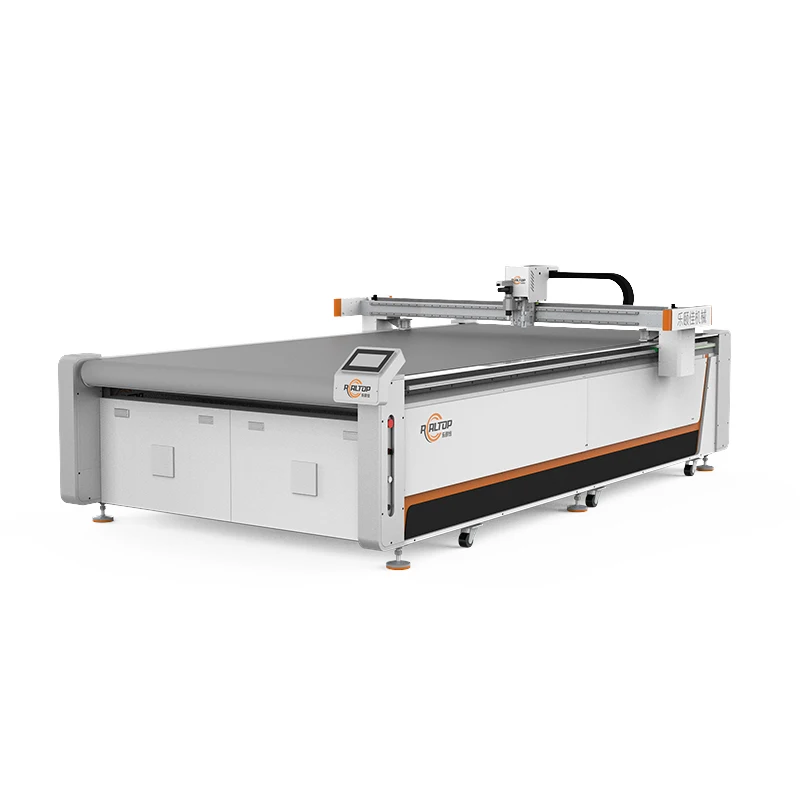
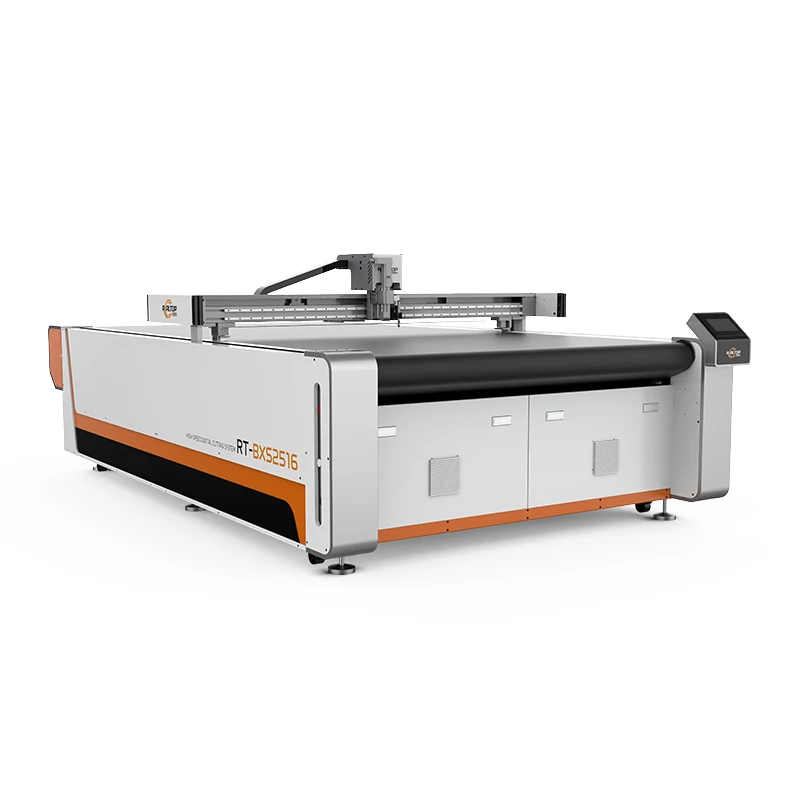
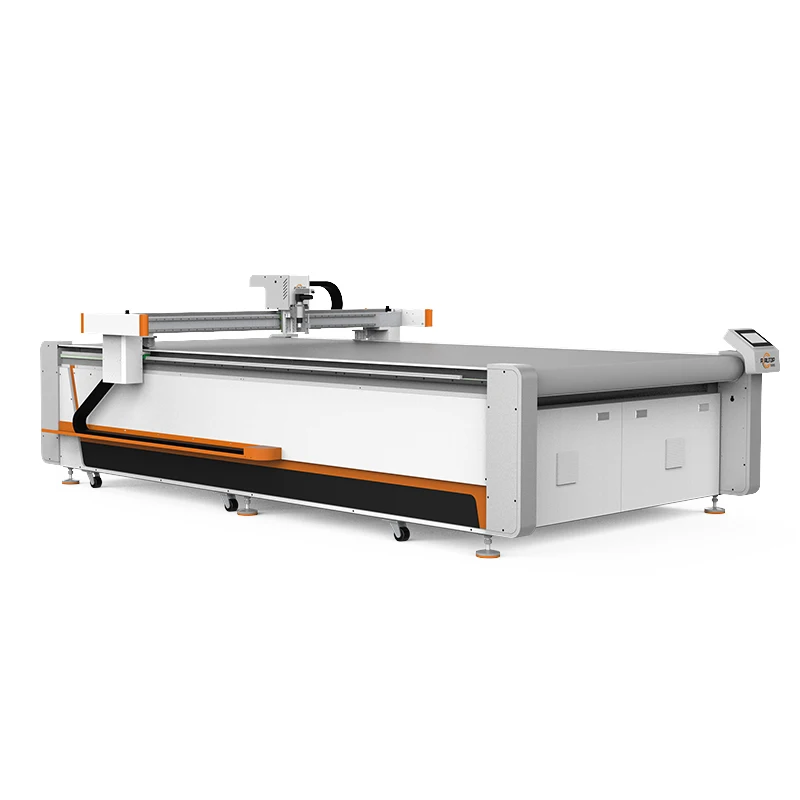
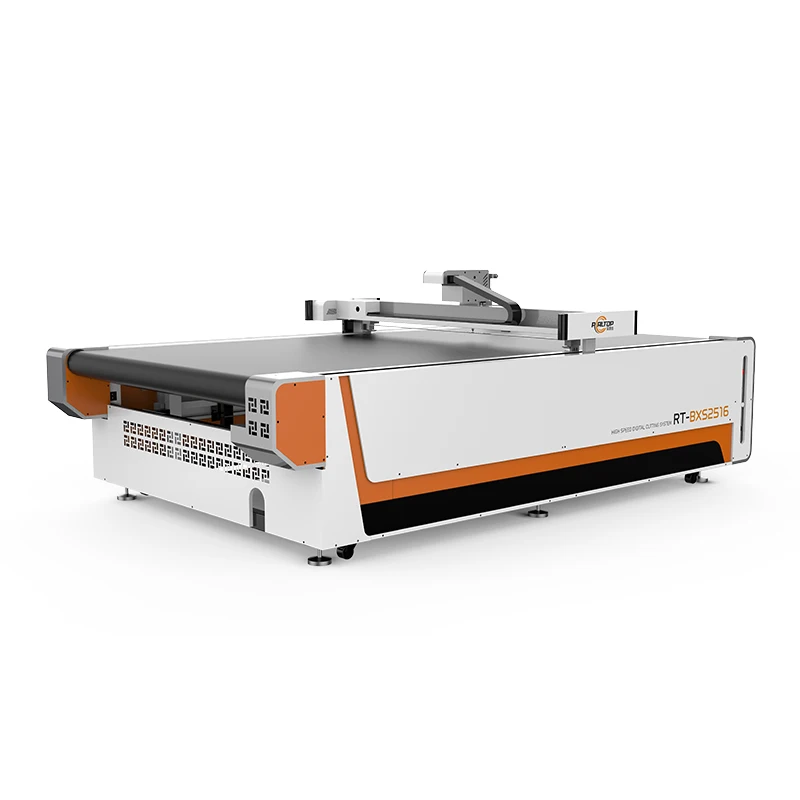
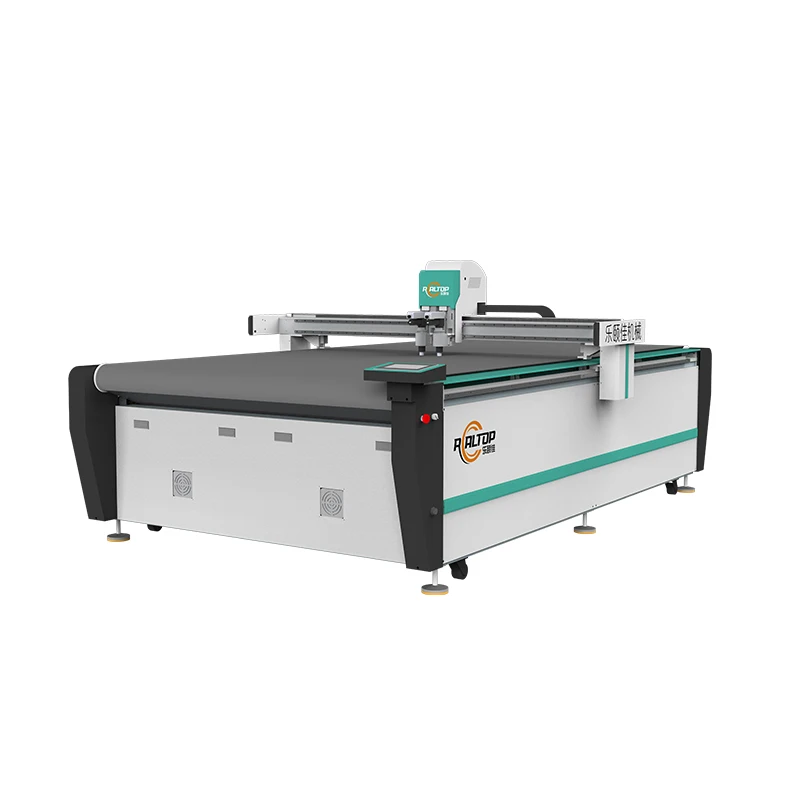
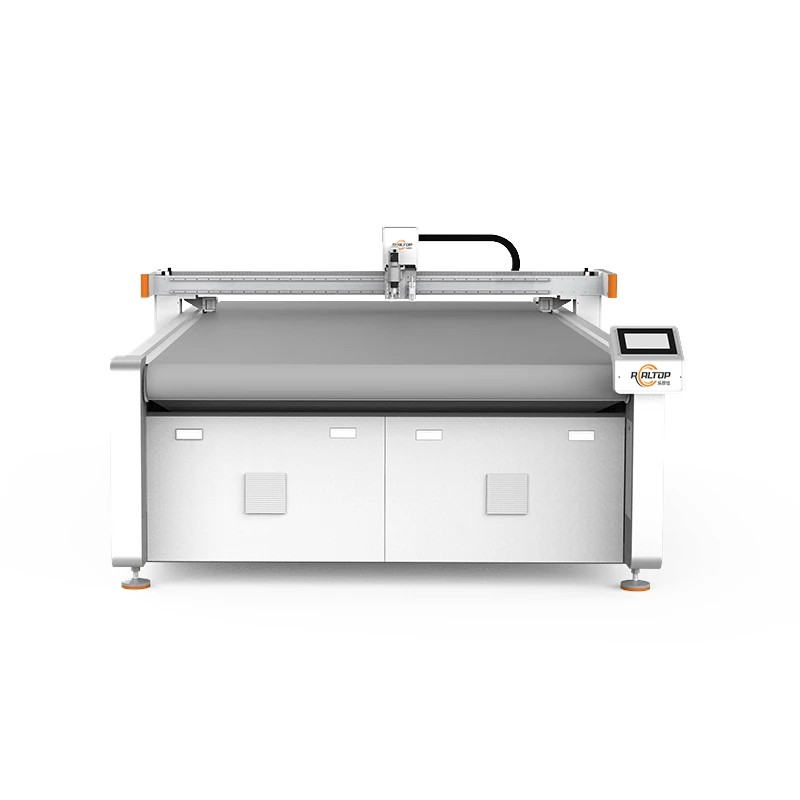
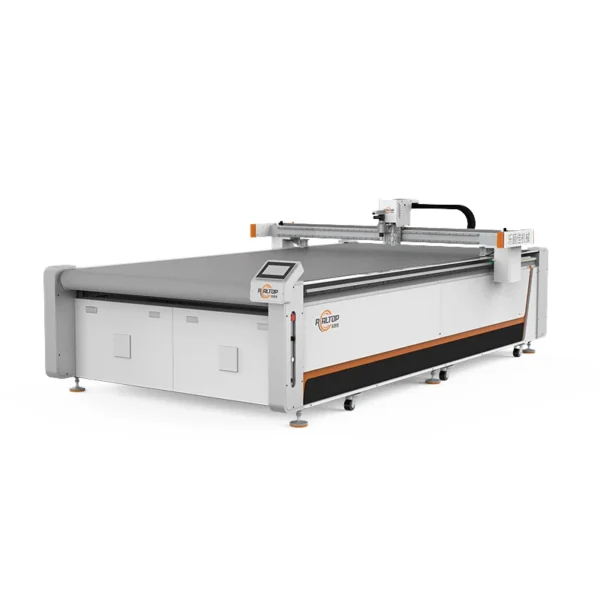
Tool Head Configuration Matched to Material Density — every RT-D2516/RT-S2516 is tested on the buyer’s actual fabric or leather stock before the configuration is locked, ensuring the oscillating frequency, stroke length and vacuum zoning align with the production material rather than a generic sample.
Technical Specifications
| Parameter | Value |
|---|---|
| Model | RT-D2516/RT-S2516 |
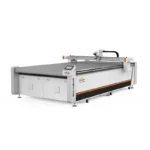
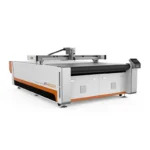
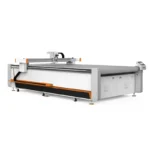
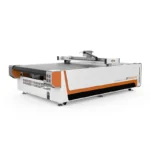
| Product Type | CNC Oscillating Knife Cutting Machine |
| Working Area | 1600×2500 mm |
| Machine Dimensions | 3450×2300×1250 mm |
| Rated Power | 9 kW |
| Vacuum Pump | 7.5 kW |
| Table Type | Flat working table or auto-feeding conveyor (Germany-imported belt) |
| Multifunctional Head | Swiss-imported knife; vibration full-cut, half-cut and cursor location |
| Servo Motor | Delta or Panasonic option (IP67, real-time auto gain adjustment) |
| Linear Guide | Taiwan Hiwin rail |
| Transmission | Digital servo motor, ball screw, synchronous belt |
| Repeated Accuracy | ≤0.1 mm |
| Translational Velocity | 800–2000 mm/s |
| Cutting Thickness Capability | Up to 100 mm (varies with material) |
| Vacuum Table Surface | Magnesium-aluminum alloy, PVDF powder spray, anodic and hard oxidation |
| Safety Devices | Infrared auto-pause sensors, beam anti-collision, emergency stop with in-situ resume |
| Control Panel | Touch screen, multi-language (EN, RU, IT, ZH, custom) |
| Software Formats | PLT, DXF, AI with auto typesetting |
| Visual Positioning | Small CCD mark point, panoramic camera recognition, projection positioning options |
| Voltage | 380 V ±10 % |
| Standards | CE (basis not stated in source) |
Application Suitability
| Application | Material or Output |
|---|---|
| Garment and footwear cutting | Woven fabric, non-woven, PU leather, shoe uppers, lining textiles |
| Automotive interior components | Sponge composite leather, EVA foam, carpet, XPE floor mat layers |
| Gasket and sealing production | Rubber sheet, PTFE, silicone, compressed fiber gasket stock |
| Packaging sample making | Corrugated cardboard, sticker film, folding carton board |
| Soft home furnishings | Upholstery fabric, curtain textile, cushion foam, carpet layers |
| Composite panel fabrication | Carbon fiber prepreg, fiberglass cloth, layered PVC and PE sheets |
Why the Cutting Thickness Figure on Paper Rarely Matches the Shop Floor
A CNC oscillating knife cutting machine specifications sheet can claim a maximum cutting thickness, but that number means very little until it is tied to a specific material density and tool head. The real cutting depth is determined by the interaction of knife stroke, oscillation frequency, vacuum hold-down and the compressibility of the stock. I once watched a batch of high-density EVA floor mats turn ragged after the material supplier changed — the machine was the same, but the foam resisted the blade differently. The buyer lost two full rolls before we re-tuned the oscillation and swapped to a high-power vibrating knife. That is why sample cutting on your actual production roll is not a courtesy step; it is the only way to confirm edge quality and usable depth. [NEED_CITE: oscillation frequency and stroke length interaction with foam density]
Matching the Knife Head to the Material You Actually Run
The tool head carousel on the RT-D2516/RT-S2516 carries options that look interchangeable on paper — oscillating knife, pneumatic knife, drag knife, circular knife, V-cutting knife, creasing wheel, punching tool and dotted-line knife. In practice, each one produces a different edge character. An oscillating knife handles woven fabric and mid-density foam cleanly because the high-frequency vibration slices through fibers without dragging them. A drag knife suits thin sticker film and single-ply vinyl where a full oscillating stroke would overcut the backing. Pneumatic knives come into play when the stock is thick and compressible, such as multi-layer sponge or gasket rubber, where downward air pressure keeps the blade seated through the full depth. Choosing the wrong head does not just slow you down; it crushes foam cells or leaves fabric edges frayed and unusable.
What Vacuum Zoning Actually Does for Small Pattern Pieces
A flat vacuum table that works well for nesting full hides of leather can fail badly once you switch to cutting dozens of small shoe upper pieces. The magnesium-aluminum alloy table on this machine is finished with PVDF powder spray and hard oxidation so the surface stays flat under repeated loading. More importantly, the integrated pump with built-in silencer sponge runs at 7.5 kW, which is enough to zone the suction across the 1600×2500 mm bed. Zoning matters because small parts lose hold-down force the moment they are cut free from the surrounding sheet. Without adequate local suction, a cut piece lifts into the blade path, shifts position and ruins the next pass. During a recent automotive carpet job, zoning the vacuum to the active cutting quadrant was the difference between clean edges and a scrap pile. [NEED_CITE: vacuum zoning effect on small-part hold-down during oscillating knife cutting]
Reading the Specs That Determine Daily Output
The repeated accuracy of ≤0.1 mm is achieved through the combination of Taiwan Hiwin linear guides, imported ball screws and a digital servo motor — either Delta or Panasonic with IP67 protection. This matters because fabric and leather cutting rarely involves a single pass; contour work on printed textiles requires the head to return to the same mark point thousands of times per shift. Translational velocity between 800 and 2000 mm/s covers the range from slow, precise contour tracing on shoe uppers to fast straight-line cuts on curtain panels. The Swiss-imported knife assembly handles both full-cut and half-cut modes, which lets an operator score a fold line on packaging board in one pass and cut through in the next without a tool change. Voltage at 380 V ±10 % is standard for most industrial markets, but the control language, plug type and software file format (PLT, DXF, AI) should all be confirmed before the machine leaves the factory.
The Cost of Skipping the Material-to-Tool Matching Step
When a buyer selects a machine based on working area alone and ignores the tool head recommendation, the consequences show up within the first production week. Ragged edges on sponge composite leather mean the parts fail visual inspection for automotive interior contracts. Crushed foam cells on EVA mats reduce the cushioning value and trigger buyer rejections downstream. A CCD camera that cannot keep up with the translational speed on printed contour work forces the operator to slow the machine to a fraction of its rated velocity. I have seen operators disable safety sensors out of frustration when a poorly specified machine keeps pausing mid-cut — that is a shop-floor problem created at the ordering stage. [NEED_CITE: edge quality rejection rates linked to incorrect tool head selection in textile cutting]
Why Source This Machine Through Our Process
The design team covers both knife cutting and laser cutting under one roof, so the recommendation starts from the material requirement rather than pushing whichever technology a salesperson prefers. Every RT-D2516/RT-S2516 is configured with the exact tool head and table layout matched to the buyer’s material and daily volume. Sample cutting runs on the buyer’s own stock — not our shelf samples — produce a report that documents edge quality, cutting speed and vacuum hold-down behavior. Software compatibility with the buyer’s existing nesting workflow is confirmed before the order is placed, avoiding the surprise of an unsupported file format on day one. Voltage, plug configuration and control panel language are locked in at the specification stage so the machine arrives ready to power on. The factory test record ships with the machine, and the in-house build covers frame welding, CNC-machined surface finishing and full motion assembly in Jinan.
Documentation & Verification
- Factory test record run on buyer’s fabric or leather stock before dispatch
- Tool head and table configuration list matched to specific material density and thickness
- Electrical schematic and voltage confirmation sheet signed off prior to shipment
- Software licence with PLT, DXF, AI file format compatibility note
- Sample cutting report documenting edge quality on buyer-supplied material
- Operation and maintenance manual in specified control language
Installation, Commissioning & Support
- 380 V ±10 % dedicated circuit with independent breaker for the 9 kW rated load plus 7.5 kW vacuum pump
- Floor leveling across the 3450×2300 mm footprint to maintain vacuum table flatness under full adsorption
- Taiwan Hiwin rail and ball screw re-inspection after transport, with servo gain re-calibration on site
- First-run parameter tuning on buyer’s actual material using the sample cutting report as baseline
- Touch screen language set to operator preference with on-site training covering tool head changeover
- Spare knife blades, vacuum pump filters and conveyor belt tensioning tools included in initial parts kit
What We Need to Specify Your Configuration
Send us the material type, thickness range and the roll or sheet dimensions you run daily, along with your target piece count per shift. If your workflow already uses a specific nesting software or file format, share a sample file so we can confirm import compatibility. Let us know the local voltage and frequency at your facility, plus the language your operators need on the touch screen. Where printed contour cutting is involved, send a sample printed sheet so we can test the CCD mark point tracking at production speed before you commit.
Frequently Asked Questions
Q: How is cutting thickness determined for different fabric, leather and foam materials?
A: The up-to-100 mm capability varies with material density, compressibility and fiber structure. We run your actual production stock on the RT-D2516/RT-S2516 before quoting, documenting the maximum clean-cut thickness alongside the specific tool head and oscillation setting that achieved it.
Q: Which tool head is correct for my material?
A: Oscillating knives suit woven fabric and mid-density foam, drag knives handle thin film and vinyl, and pneumatic knives manage thick compressible stock like gasket rubber. The correct head is confirmed during sample cutting on your material, not by generic material category.
Q: Does the CCD camera track printed marks reliably at production speed?
A: The small CCD mark-point and panoramic camera options are tested against your printed sheet at the translational velocity you will run in production. We document tracking accuracy in the sample cutting report so you know the speed limit before ordering.
Q: Is the vacuum table zoning sufficient for small fabric parts?
A: The 7.5 kW pump zones suction across the 1600×2500 mm magnesium-aluminum table. During sample cutting we verify hold-down on your smallest pattern piece to confirm the part does not lift after cut-through at your target speed.
Q: Can the software import my existing DXF and AI files?
A: The system supports PLT, DXF and AI formats with auto typesetting. We ask for a sample file from your current nesting workflow and test import before the order is finalized, noting any layer or font conversion needed in the compatibility document.


商品评价
Clear filtersThere are no reviews yet.