




Fast Shipping
Carrier information

20k products
Payment methods

24/7 Support
Unlimited help desk

2-day Delivery
Track or off orders
Tool Head and Table Configuration — matched to your corrugated flute profile, board thickness and sample volume before the order is placed, not guessed from a working area dimension alone.
Technical Specifications
| Parameter | Value |
|---|---|
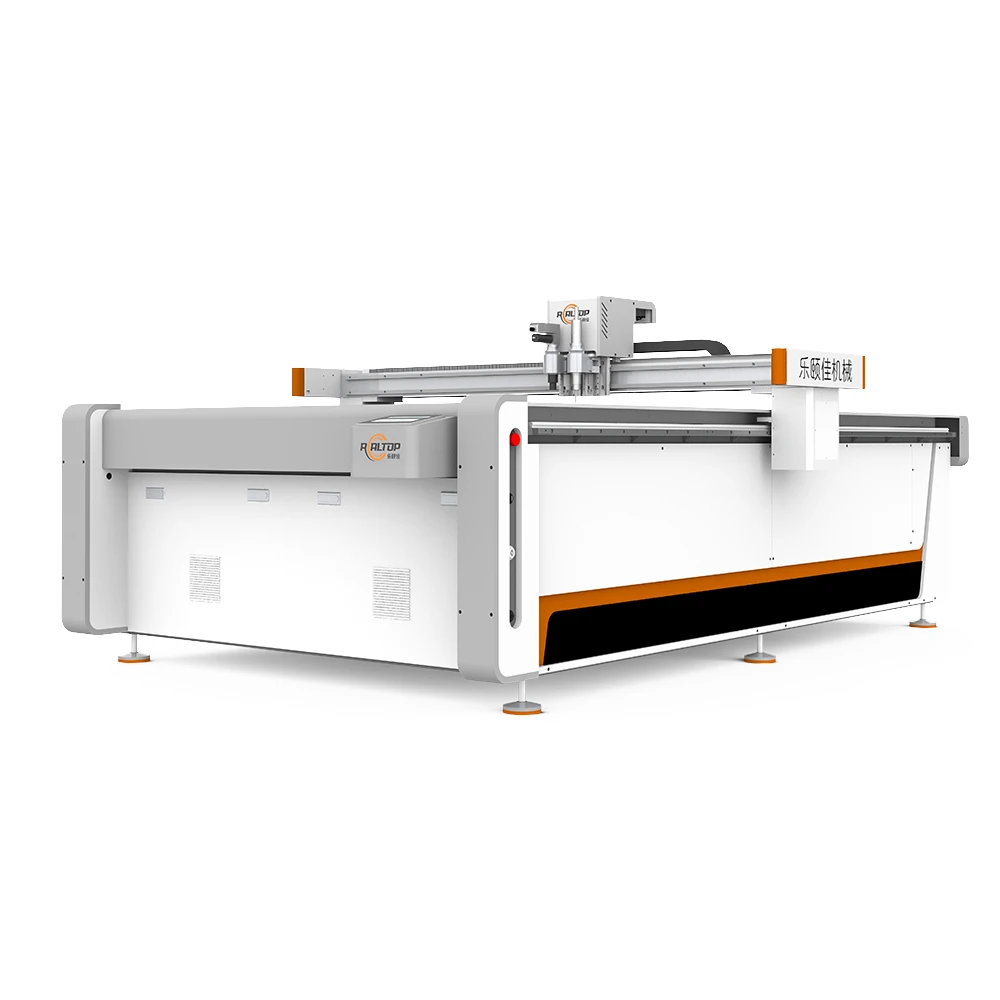
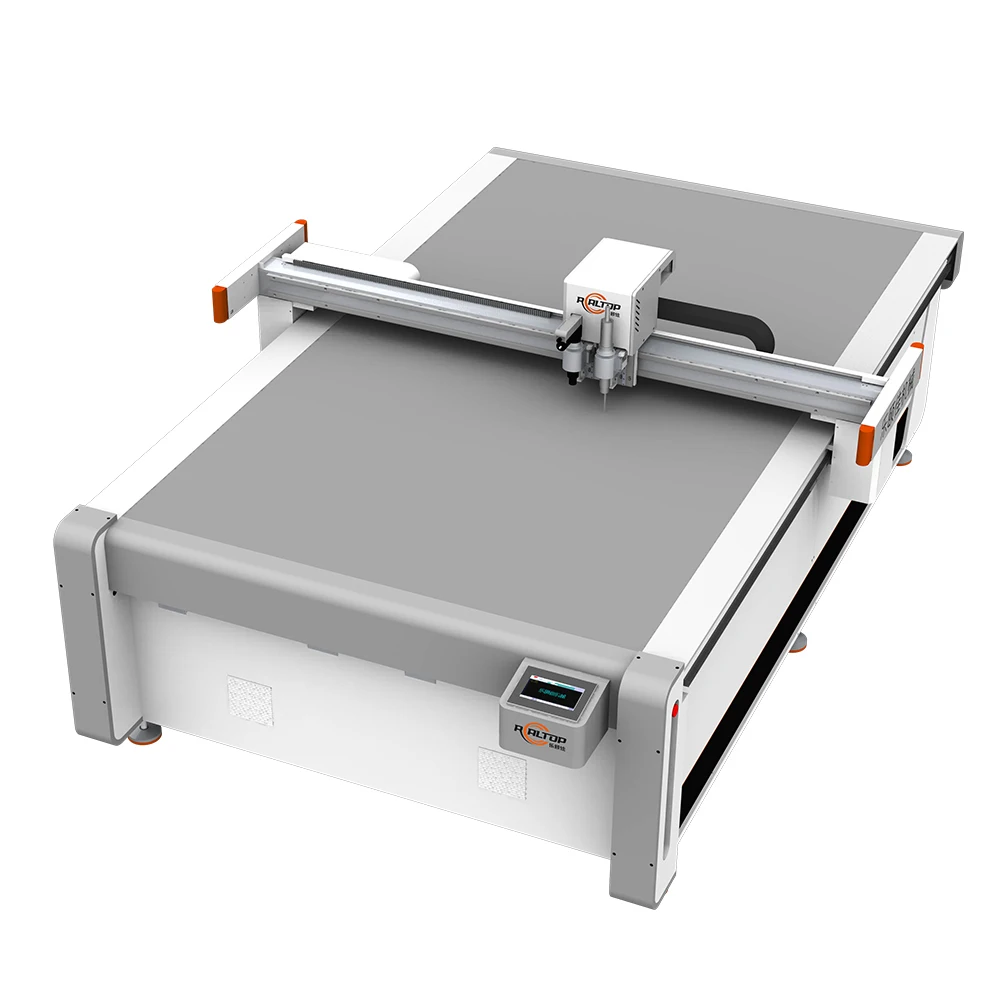
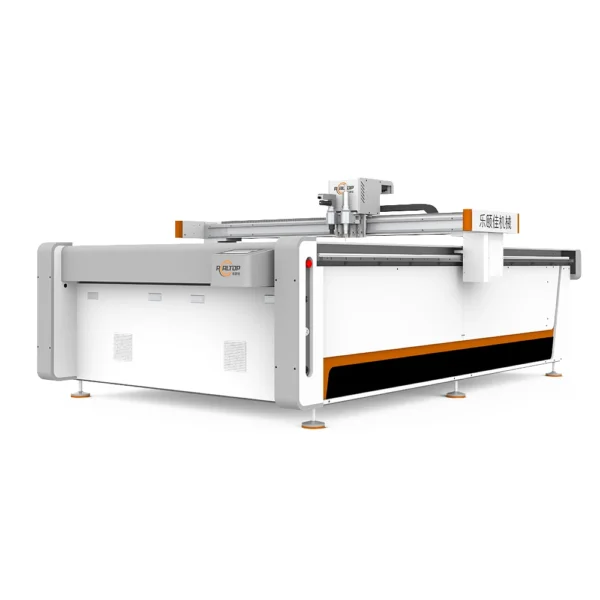
| Product Type | CNC Oscillating Knife Corrugated Box Cutting Machine |
| Model | RT–R2513 / RT-D2516 / RT-S2516 |
| Working Area | 2500×1300 mm (RT–R2513); 1600×2500 mm (RT-D2516 / RT-S2516) |
| Machine Size | 3550×1910×1400 mm (RT–R2513); 3450×2300×1250 mm (RT-D2516 / RT-S2516) |
| Cutting Tools | Oscillating knife, Creasing tool, Kiss-Cut Knife Tool, Round punch |
| Cutting Thickness | ≤18 mm |
| Repeated Accuracy | <0.05 mm |
| Fixing Method | Vacuum system with 7.5 kW pump |
| Rated Power | 9 kW |
| Voltage | 380 V |
| Servo Motor | Dongling servo (Delta servo motor available under other configuration) |
| Guide Rail | Taiwan Hiwin rail |
| Transmission Method | Ethernet port |
| Safety Device | Infrared sensors |
| Profile Format | DXF, OLT, PDF, AI |
| Software | Professional carton nested software with customized language support |
| Control System | CNC (verify controller brand and model against manufacturer catalog) |
| Delivery Time | <30 working days |
Application Suitability
| Application | Material or Output |
|---|---|
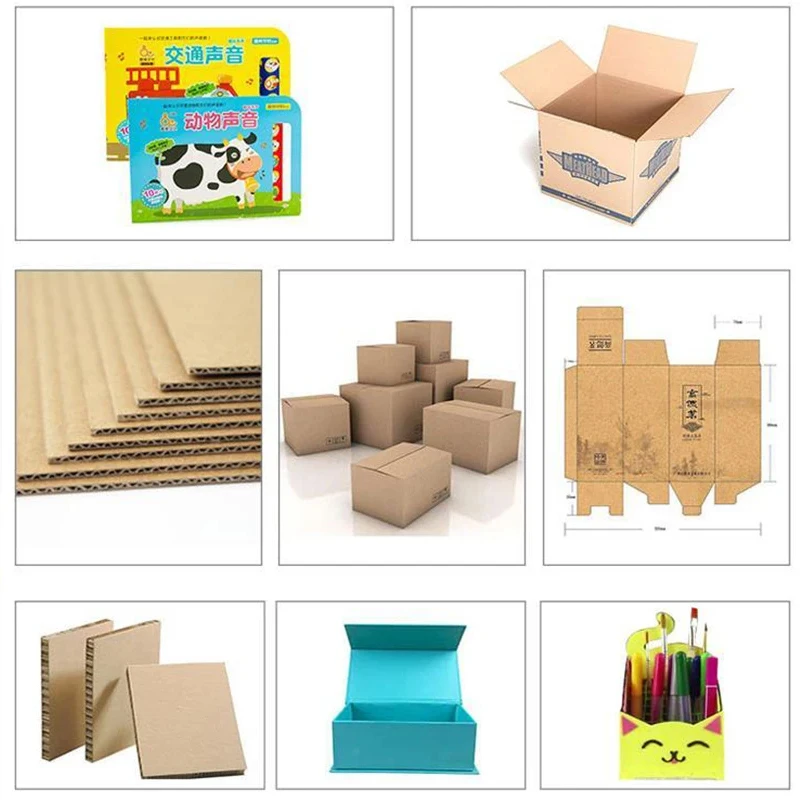
| Packaging carton and corrugated box sample making | Single, double and triple-wall corrugated board up to 18 mm |
| Sticker and label contour cutting | Printed adhesive sheets and PP paper for packaging decoration |
| Gift box and express paper box production | Cardboard, kraft paper and specialty packaging substrates |
| Large electrical carton packaging prototyping | Heavy-duty corrugated board for appliance and industrial shipping |
| Short-run corrugated box manufacturing | Limited-edition and custom retail packaging without die investment |
Why the Tool Head Decision Matters More Than the Working Area
A 2500×1300 mm bed means nothing if the creasing wheel crushes your B-flute instead of folding it cleanly.
When packaging sample makers evaluate a CNC oscillating knife cutting machine, specifications like working area and cutting speed dominate the conversation. Yet the wrong tool head chosen for corrugated board produces crushed flutes, ragged edges on kiss-cut labels, and creasing lines that crack instead of fold. I have seen buyers commit to a machine based on table size alone, only to discover that the oscillating knife cannot handle their triple-wall board or that the vacuum zoning leaves small carton flaps lifting mid-cut [NEED_CITE: oscillating knife tool head selection for corrugated flute profiles]. The tool head configuration must be specified per material and production volume before the quotation stage, not treated as a standard package.
Oscillating Knife, Creasing Wheel and Kiss-Cut on One Table
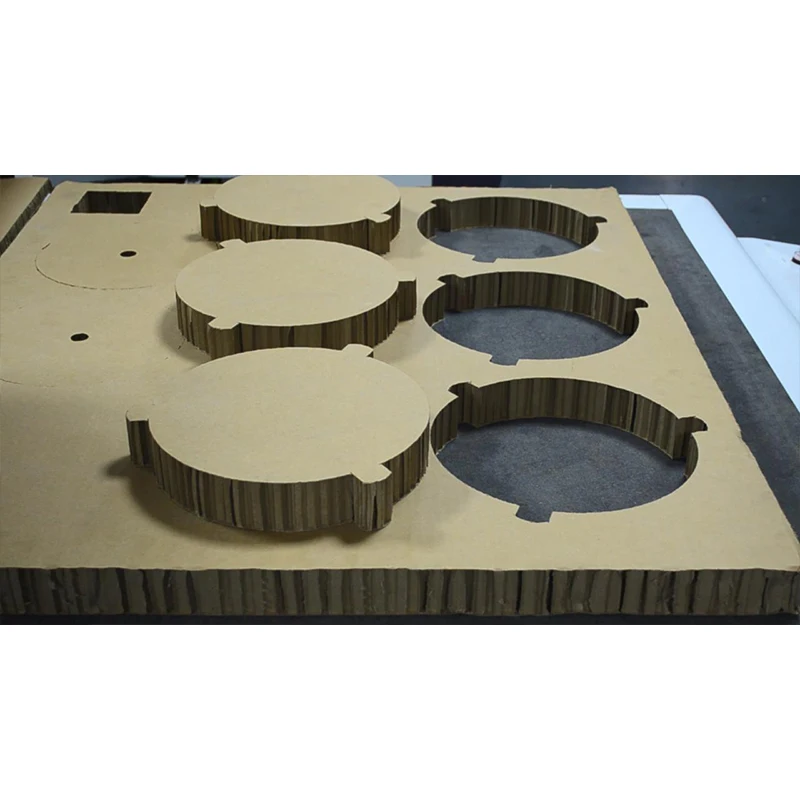
Carton sample making demands multiple operations on the same sheet: cutting the outer contour, scoring fold lines, and kiss-cutting window inserts or sticker overlays. The RT–R2513 and its larger-format variants support oscillating knife, creasing tool, kiss-cut knife and round punch on a single cutting head. This means a packaging prototype that requires a B-flute cut, a scored hinge and a perforated tear strip completes all operations without manual tool changes or secondary passes. The CNC oscillating knife cutting machine specifications here reflect a configuration built for the carton workflow, not a generic flatbed adapted after the fact.
Vacuum Holding for Warped and Lightweight Board
Corrugated board arrives warped from humidity, and lightweight card stock lifts the moment the knife engages. The aluminum alloy honeycomb vacuum table paired with a 7.5 kW pump addresses both conditions by pulling the sheet flat across the cutting zone. However, vacuum zoning configuration must be confirmed before order [NEED_CITE: vacuum table zoning for small packaging parts]. Small carton parts such as glue tabs and insert dividers sit on limited surface area, and a broadly zoned table may not generate enough localized suction to hold them. Specify the vacuum zone layout against your smallest part dimension to prevent lift and registration drift during cutting.
Reading the Specifications That Actually Affect Output
Cutting thickness rated at ≤18 mm covers single-wall through triple-wall corrugated, but the actual knife stroke and oscillation frequency determine whether the blade slices cleanly or tears the liner. Repeated accuracy below 0.05 mm matters when your printed carton design requires tight registration between the cut contour and the printed graphics — even a fraction of a millimeter drift shows as a visible white edge on dark ink coverage. The Taiwan Hiwin guide rails maintain this tolerance across the full 2500×1300 mm travel of the RT–R2513, while the Dongling servo system controls acceleration without losing position on direction changes. File format compatibility with DXF, OLT, PDF and AI means your existing design workflow transfers without an intermediate conversion step that could introduce geometry errors.
The Hidden Cost of Skipping Material Trials
Wrong tool head chosen for the material, producing ragged edges or crushed foam — this pain point applies directly to corrugated board. An oscillating knife set to the wrong stroke frequency tears the top liner instead of slicing it, leaving a fuzzy edge that fails visual quality checks on retail packaging. A creasing wheel with incorrect pressure cracks the outer ply on heavy double-wall board, making the fold weak and visible. A kiss-cut knife that goes too deep scores the release liner underneath, ruining the entire sticker sheet [NEED_CITE: corrugated board cutting edge quality and tool wear patterns]. These failures only appear when the machine runs your actual board grade, which is why a sample cutting report on the buyer’s own material should precede any commitment.
What the Factory Brings to This Machine Class
In-house design and production covering knife cutting technology means the tool head, vacuum table and software are engineered as a single system rather than assembled from sourced components. Tool head and table configuration specified per material and production volume ensures a carton sample maker running thin E-flute gets a different setup than a heavy-duty industrial packaging shop. CCD camera positioning for printed contour work is available as a configuration option, subject to confirmation before order. Software compatibility confirmed before order means your DXF or AI files open and nest correctly on the included professional carton nested software. Voltage, language and specification customization covers the 380 V power supply, control panel language and plug type for the destination market.
Documentation & Verification
- Machine specification sheet listing confirmed tool head and vacuum table configuration
- Electrical schematic with 380 V wiring diagram and servo motor specifications
- Sample cutting report on buyer’s own corrugated board grade and flute type
- Tool head and table configuration list matched to material thickness and daily volume
- Software licence and file format compatibility note for DXF, AI, PDF and OLT workflows
- Factory test record documenting repeatability and edge quality before dispatch
Installation, Commissioning & Support
- 9 kW rated power plus 7.5 kW vacuum pump require dedicated circuit and correct breaker sizing
- 3550×1910 mm footprint for the RT–R2513 needs clear floor space with level concrete substrate
- Ethernet port transmission requires stable network connection for file transfer from design workstation
- Infrared sensor safety device calibration verified during first power-on and operator training
- 10 pieces of oscillating blades included as initial consumable stock for cutting trials
- Professional carton nested software installed with control language confirmed before shipment
Before You Request a Quote
Tell us the corrugated board grade, flute profile and maximum sheet size you run most often. Share your typical daily sample volume and whether you need kiss-cut capability for printed labels or stickers. Confirm your local voltage, frequency and the control panel language your operators need [NEED_CITE: voltage and frequency standards by export market]. If you have an existing nesting workflow, send a sample file so we verify format compatibility before building the machine.
Frequently Asked Questions
Q: Which tool head do I need for my corrugated flute profile and board thickness?
A: The configuration depends on your specific board. Single-wall B or C flute typically runs well with the standard oscillating knife and creasing tool. Double and triple-wall boards up to 18 mm may require adjusted stroke settings and a heavier creasing wheel. We run a sample cut on your actual board grade before confirming the tool head list.
Q: Is CCD camera contour recognition available for printed carton cut-outs?
A: CCD camera positioning is available as a configuration option for contour recognition on printed sheets. The specific camera model and recognition speed must be confirmed against your print mark size and production speed requirement. Request a test on your printed material to verify tracking accuracy before committing.
Q: How is the vacuum table zoned for small carton parts that tend to lift?
A: The vacuum table uses a 7.5 kW pump with configurable zoning. Small parts like glue tabs and dividers need localized zones to maintain suction. The exact zone layout is configured based on your smallest part dimension and must be confirmed before order to prevent lift during cutting.
Q: What file formats does the software accept, and does it integrate with my nesting workflow?
A: The professional carton nested software accepts DXF, OLT, PDF and AI files directly. Language customization is included. If your current workflow uses a specific nesting output format, send a sample file before order so we verify import compatibility and nesting behavior on the software.
Q: What is the lead time and can I see a factory test on my material before shipment?
A: Delivery time is under 30 working days from order confirmation. Before shipment, we run a factory test on your supplied corrugated board and produce a sample cutting report showing edge quality, creasing accuracy and repeatability so you can approve the configuration.


商品评价
Clear filtersThere are no reviews yet.