


Fast Shipping
Carrier information

20k products
Payment methods

24/7 Support
Unlimited help desk

2-day Delivery
Track or off orders
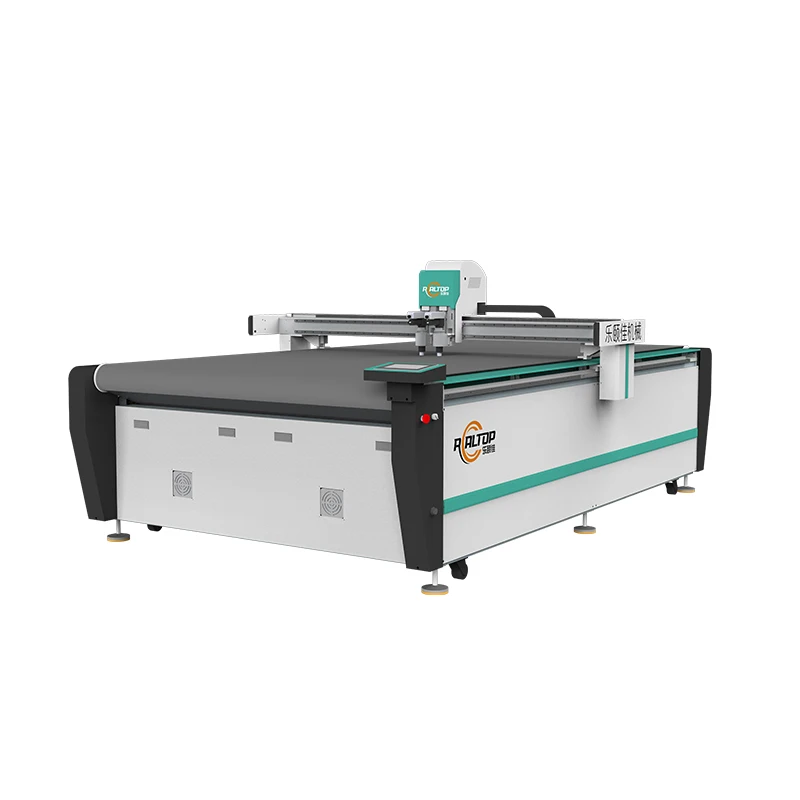
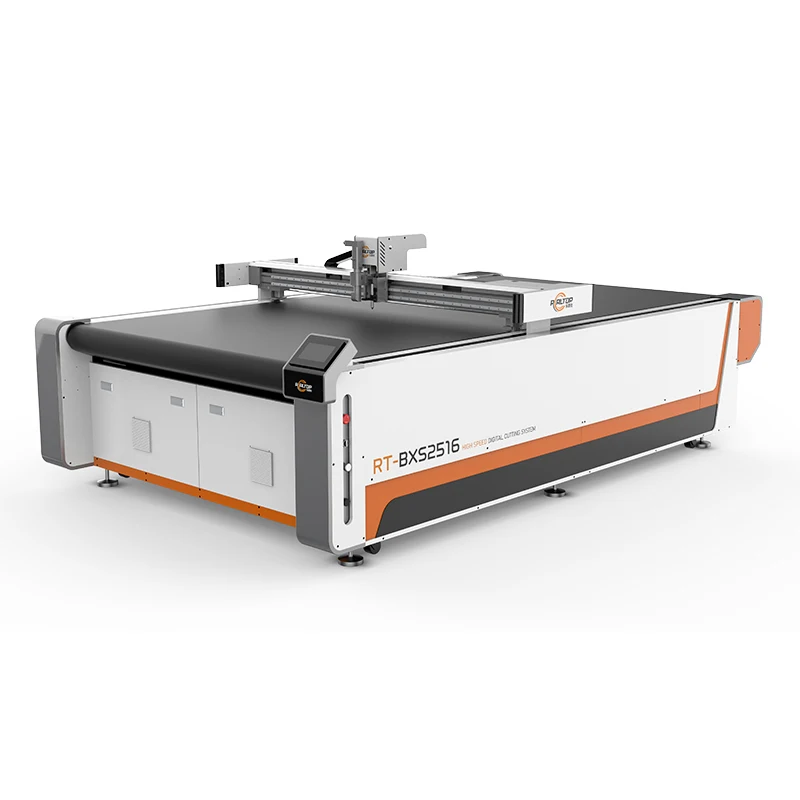
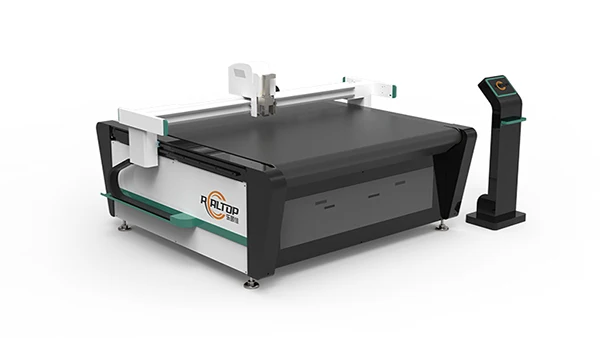
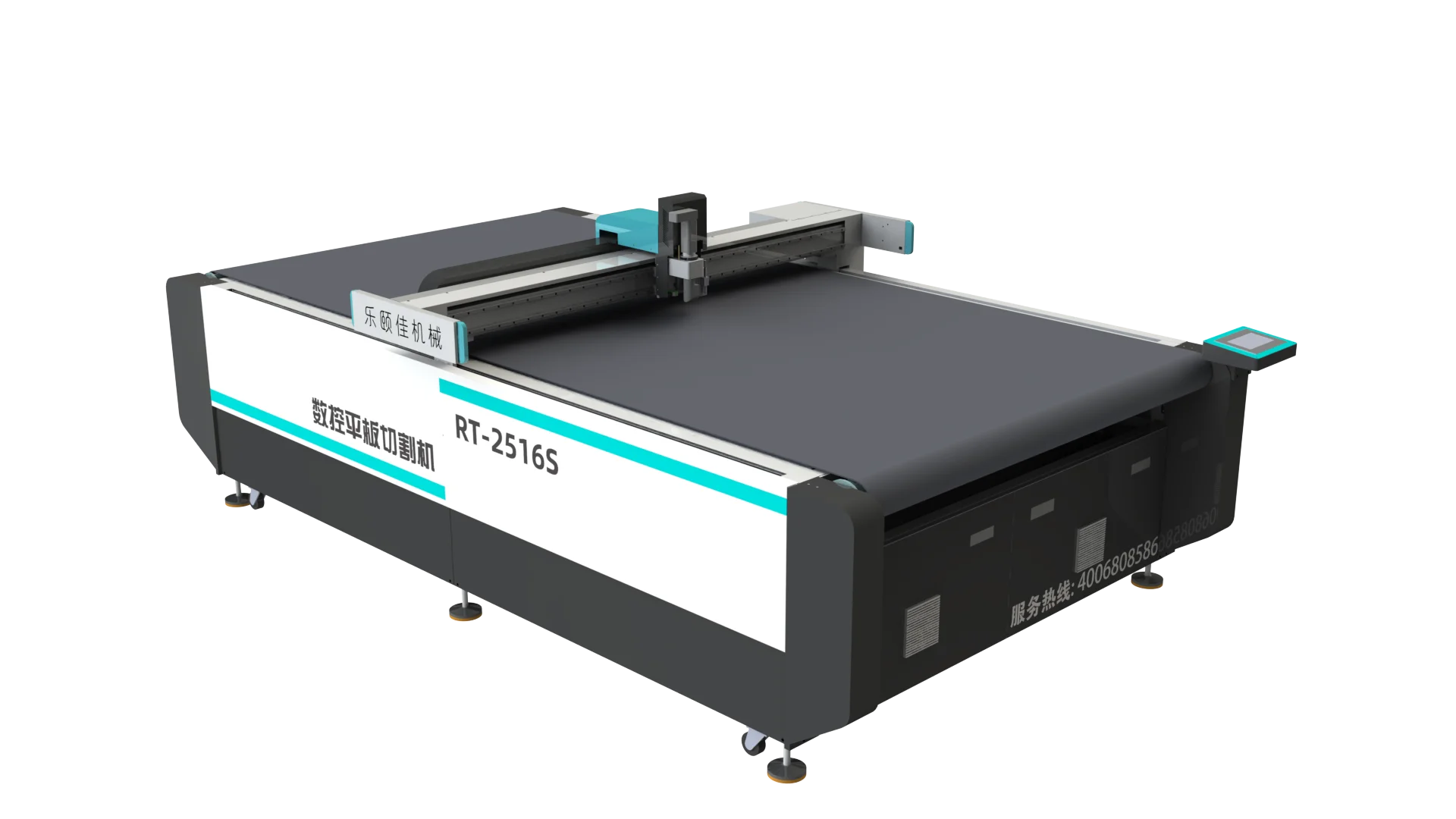
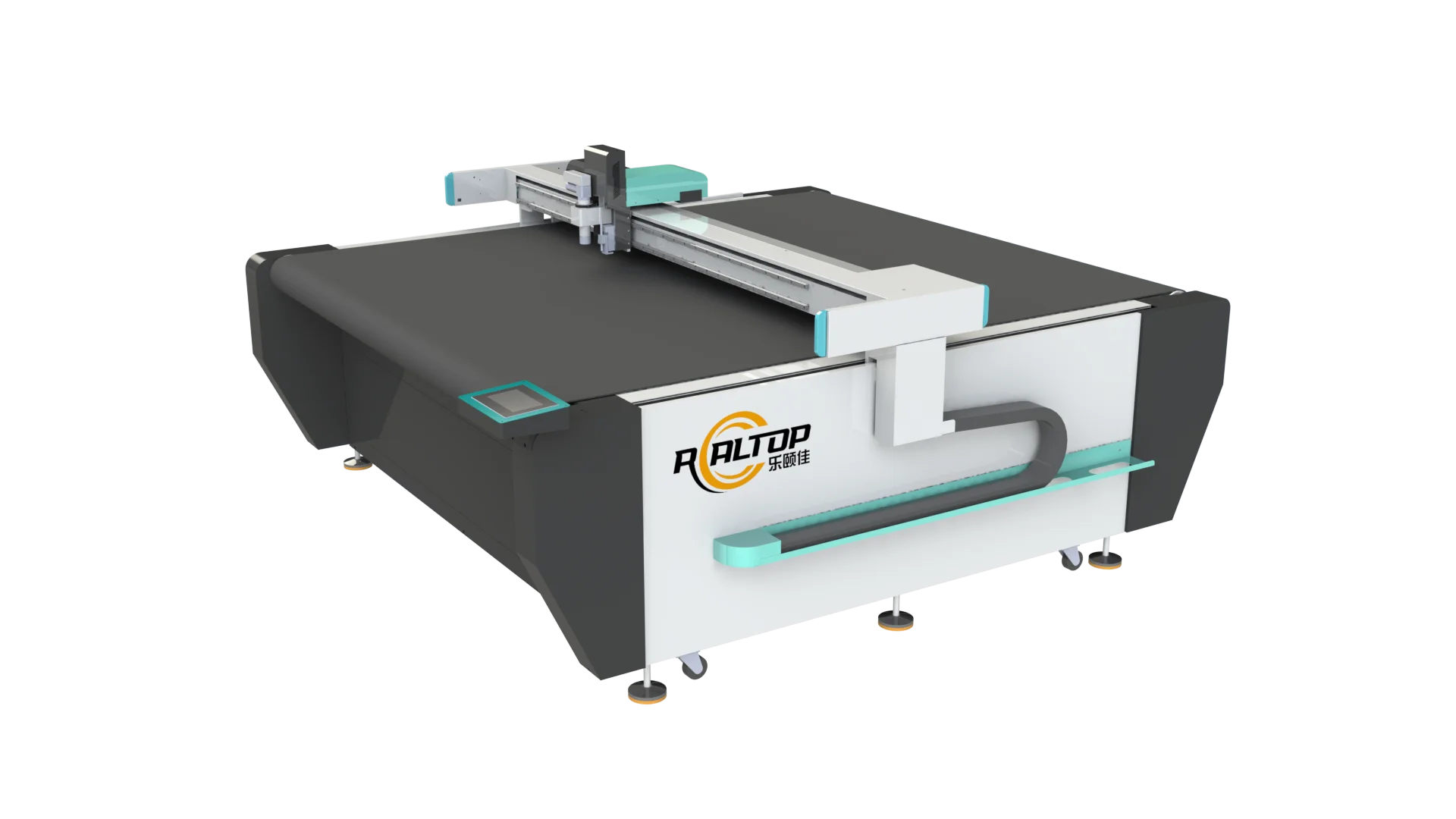
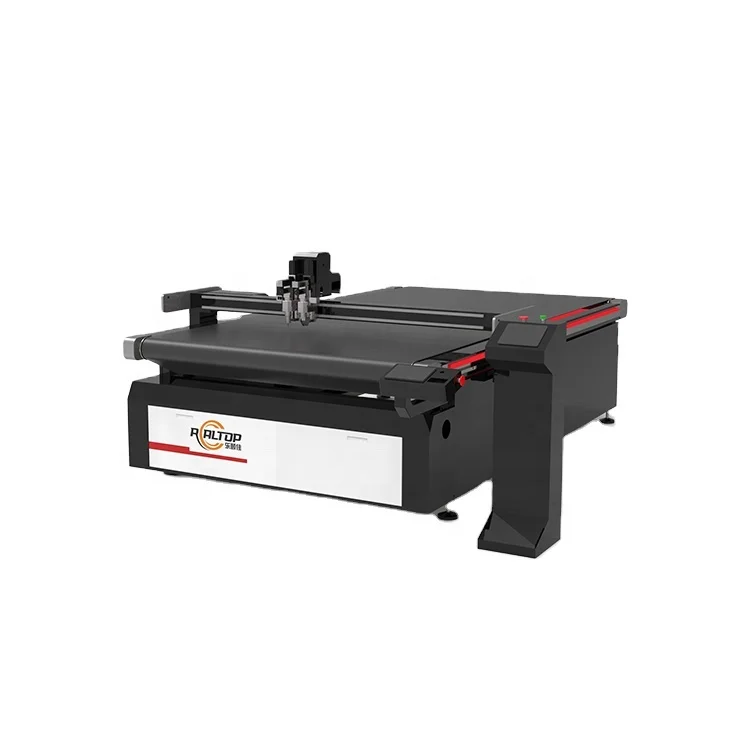
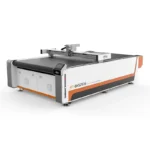
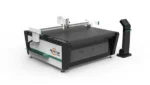
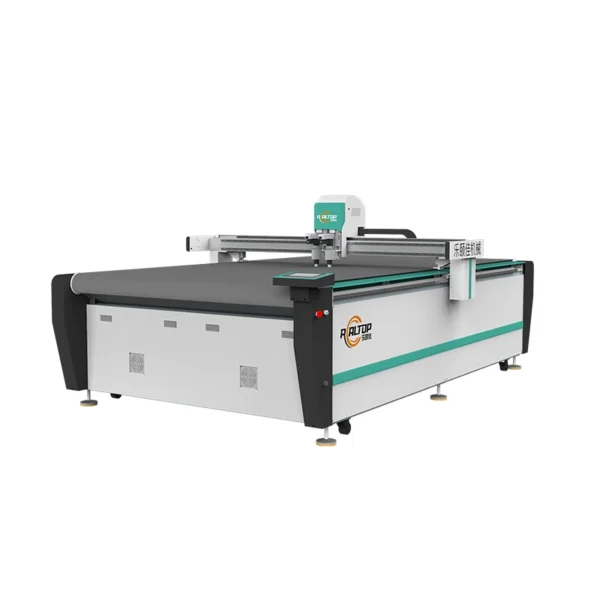
Custom Tool Head and Vacuum Zoning — The RT-D2516/RT-S2516 configuration is locked to your material thickness and part geometry after sample cutting, not guessed from a brochure.
Technical Specifications
| Parameter | Value |
|---|---|
| Model | RT-D2516 / RT-S2516 |
| Product Type | CNC Oscillating Knife Cutting Machine |
| Working Area | 1600 × 2500 mm |
| Overall Dimensions | 3450 × 2300 × 1250 mm |
| Rated Power | 9 kW |
| Voltage | 380V ± 10% |
| Table Type | Flat working table or auto-feeding conveyor table |
| Multifunctional Head | Swiss imported knife (vibration full cutting, half cutting, cursor location) |
| Tool Head Options | Oscillating knife, pneumatic knife, high-power vibrating knife, circular knife, V-cutting knife, drag knife, creasing wheel, dotted line knife, punching, brush |
| Translational Velocity | 800–2000 mm/s |
| Cutting Speed | 200–800 mm/s (material dependent) |
| Repeated Accuracy | ≤ 0.1 mm |
| Transmission System | Digital servo motor, linear guide, synchronous belt, ball screw |
| Servo Motor Options | Delta or Panasonic (IP67 waterproof) |
| Linear Guide | Taiwan Hiwin rail |
| Vacuum Table Surface | Magnesium-aluminum alloy with fluorocarbon PVDF coating, anodic and hard oxidation |
| Vacuum Pump | 7.5 kW, integrated aviation aluminum shell with built-in silencer |
| Conveyor Belt | Germany imported |
| Safety Devices | Infrared sensors, anti-collision, emergency stop |
| Visual Positioning Options | Small CCD camera mark point, panoramic camera recognition, projection positioning |
| Software | Auto typesetting, supports PLT, DXF, AI formats |
| Instruction System | HP-GL compatible format |
| Control Panel | Touch screen, multiple language supported |
| Language Options | English, Russian, Italian, Chinese (special languages customizable) |
| Cutting Thickness | Up to 100 mm (varies with material) |
Application Suitability
| Application | Material or Output |
|---|---|
| Garment and footwear cutting | Multi-layer fabric, clothing cloth, non-woven fabric, shoe material |
| Automotive interior trimming | Sponge composite leather, PU, EVA, XPE foam |
| Bag and luggage production | Leather, PU leather, PVC sheet, luggage material |
| Gasket and sealing pad fabrication | Rubber, PTFE, ETFE, silicon, gasket material |
| Packaging sample making | Corrugated cardboard, cardboard, plastic box |
| Carpet and floor mat cutting | Carpet, sponge, foam board, composite materials |
| Advertising and graphic printing | Sticker, film, soft glass, vinyl |
| Sports and outdoor gear | Carbon fiber sheets, composite fabrics |
Why the Wrong Tool Head Wastes More Material Than You Think
A specification sheet lists available tools, but matching the oscillating knife to your exact fabric weight and foam density is where cutting quality is actually decided.
The cutting edge you get on the sample is the cutting edge you will get in production — only if the tool head, vacuum zoning and speed are locked before the machine ships.
I have walked into workshops where fabric layers shifted mid-cut because the vacuum zones were too broad for small pattern pieces. The operator blamed the machine, but the real issue was a table layout never matched to the buyer’s actual nesting files. On the RT-D2516/RT-S2516, the magnesium-aluminum alloy table with PVDF coating provides the flat surface, but the zoning layout has to reflect whether you are cutting large automotive seat covers or small leather wallet panels. This CNC Oscillating Knife Cutting Machine specifications sheet gives you the hardware — the configuration conversation is what turns hardware into yield. [NEED_CITE: vacuum hold-down requirements for small nested parts on flatbed cutting tables]
Tool Head Selection Dictates Your Edge Quality
The RT-D2516/RT-S2516 supports up to ten tool head types, from a standard oscillating knife for woven textiles to a creasing wheel for corrugated cardboard sample making. A drag knife handles thin vinyl and sticker films cleanly, while a pneumatic knife pushes through thicker sponge composite leather without crushing the foam core. Choosing the wrong head means ragged edges on fabric or compressed foam that rebounds out of tolerance after cutting.
Vacuum Table Flatness and Zoning for Real Production Runs
The vacuum table surface on this CNC Oscillating Knife Cutting Machine is machined from magnesium-aluminum alloy, finished with fluorocarbon PVDF coating and hard oxidation. That matters because a warped or porous table surface leaks suction over time, especially when cutting abrasive materials like fiberglass or carbon fiber sheets. The 7.5 kW vacuum pump with its integrated silencer runs at a level that lets operators hear the knife head working, which is how experienced operators catch problems before a full sheet is wasted. [NEED_CITE: flatness tolerance standards for CNC vacuum cutting tables]
Reading the Numbers That Actually Matter
The repeated accuracy of ≤ 0.1 mm depends on the Taiwan Hiwin linear guide and digital servo transmission working together — if either component degrades, pattern alignment drifts across a long cutting run. The translational velocity of 800–2000 mm/s governs how fast the head moves between cuts, while the cutting speed of 200–800 mm/s is the actual knife engagement rate and drops with denser materials like thick rubber or layered carbon fiber. The 9 kW rated power covers the servo drive, vacuum pump and control system combined, so confirm your workshop circuit can sustain this draw continuously alongside other equipment on the same line.
The Hidden Cost of Skipping Configuration Verification
When voltage and plug type are assumed rather than confirmed, a 380V machine arrives at a workshop wired for a different standard and sits idle while transformers are sourced. When the control language defaults to a language your operators cannot read, every parameter adjustment becomes a guessing exercise. I have seen a cutting table sit for weeks because the software could not open the buyer’s existing DXF nesting files — the format was listed as supported, but the specific version was not. [NEED_CITE: electrical standard variations for industrial machinery import markets]
What Separates a Spec Sheet From a Working Solution
The RT-D2516/RT-S2516 is designed and built in-house, covering both knife and laser cutting technologies under one manufacturer, so the cutting method is matched to your material rather than forced into a single method. Tool head and table zoning are specified against your material type, thickness and daily volume, not picked from a default list. CCD camera positioning options — small mark point, panoramic or projection — are confirmed against your printed contour requirements before the order is locked. Sample cutting on your own material is completed and documented before commitment, so edge quality is verified at actual production speed. Software compatibility with your PLT, DXF or AI nesting files is confirmed in writing before the machine enters production.
Documentation & Verification
- Machine specification sheet listing confirmed tool head and table zoning for your material
- Electrical schematic with voltage, plug type and frequency matching your workshop supply
- Sample cutting report on your own material showing edge quality at production speed
- Software licence and file format compatibility note covering your nesting workflow
- Factory test record documenting repeated accuracy across a full cutting cycle
- Spare parts list matched to your selected tool heads and consumable knife blades
Installation, Commissioning & Support
- Floor space of at least 3450 × 2300 mm with level concrete base for the RT-D2516/RT-S2516 frame
- Dedicated 380V ± 10% circuit rated for the 9 kW total draw, isolated from welding equipment
- Machine ships in sections requiring on-site assembly of the vacuum table and gantry
- First-run parameter setting for your specific material thickness and cutting speed
- Operator training on touch screen control in your chosen language with live cutting trials
- Consumable knife blade and vacuum belt stock recommended for your production volume
What We Need From You to Quote Accurately
Send the material types you cut most often, including typical thickness and maximum sheet size. Confirm your workshop voltage, frequency and plug standard so the electrical schematic matches before build. Share a sample nesting file in your preferred format so software compatibility is verified before the RT-D2516/RT-S2516 enters production.
Frequently Asked Questions
Q: How do I choose the right tool head for my material?
A: The oscillating knife suits woven fabrics and thin foams, the pneumatic knife handles thicker sponge composites, and the drag knife works for vinyl and sticker films. On the RT-D2516/RT-S2516, we run a sample cut on your actual material with your shortlisted tool heads and document edge quality before you commit to a configuration.
Q: Can the CCD camera track my printed marks at production speed?
A: The system offers small mark point CCD, panoramic recognition or projection positioning. Tracking reliability depends on your print contrast and mark size. We test the visual positioning against your printed sheets at full cutting speed and confirm the result in the sample cutting report before order.
Q: Will small pattern pieces stay fixed on the vacuum table?
A: The magnesium-aluminum table on the RT-D2516/RT-S2516 provides uniform suction, but small parts require targeted zoning. We map the vacuum zones to your nesting layout so suction concentrates where your smallest pieces sit, preventing lift during the knife pass.
Q: Does the software work with my existing nesting files?
A: The system accepts PLT, DXF and AI formats with auto typesetting. Before order, we test your specific file versions and nesting workflow on the RT-D2516/RT-S2516 control software and provide a written compatibility confirmation.
Q: How are voltage and control language confirmed before shipment?
A: Your workshop voltage, frequency, plug type and preferred control language are recorded on the electrical schematic and order confirmation. The RT-D2516/RT-S2516 touch screen supports English, Russian, Italian and Chinese, with special languages configurable on request.


商品评价
Clear filtersThere are no reviews yet.