



Fast Shipping
Carrier information

20k products
Payment methods

24/7 Support
Unlimited help desk

2-day Delivery
Track or off orders
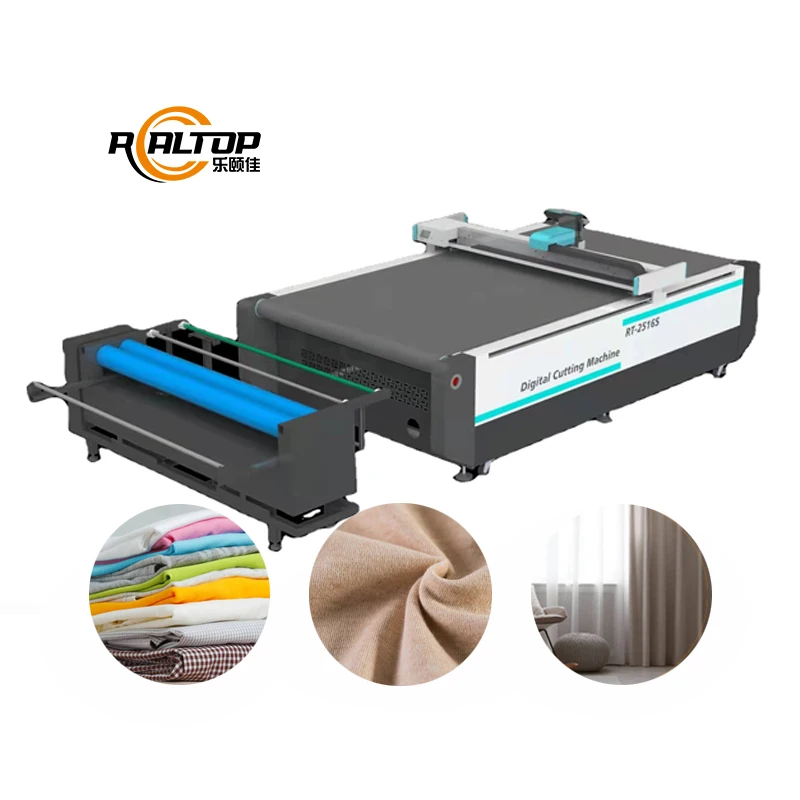
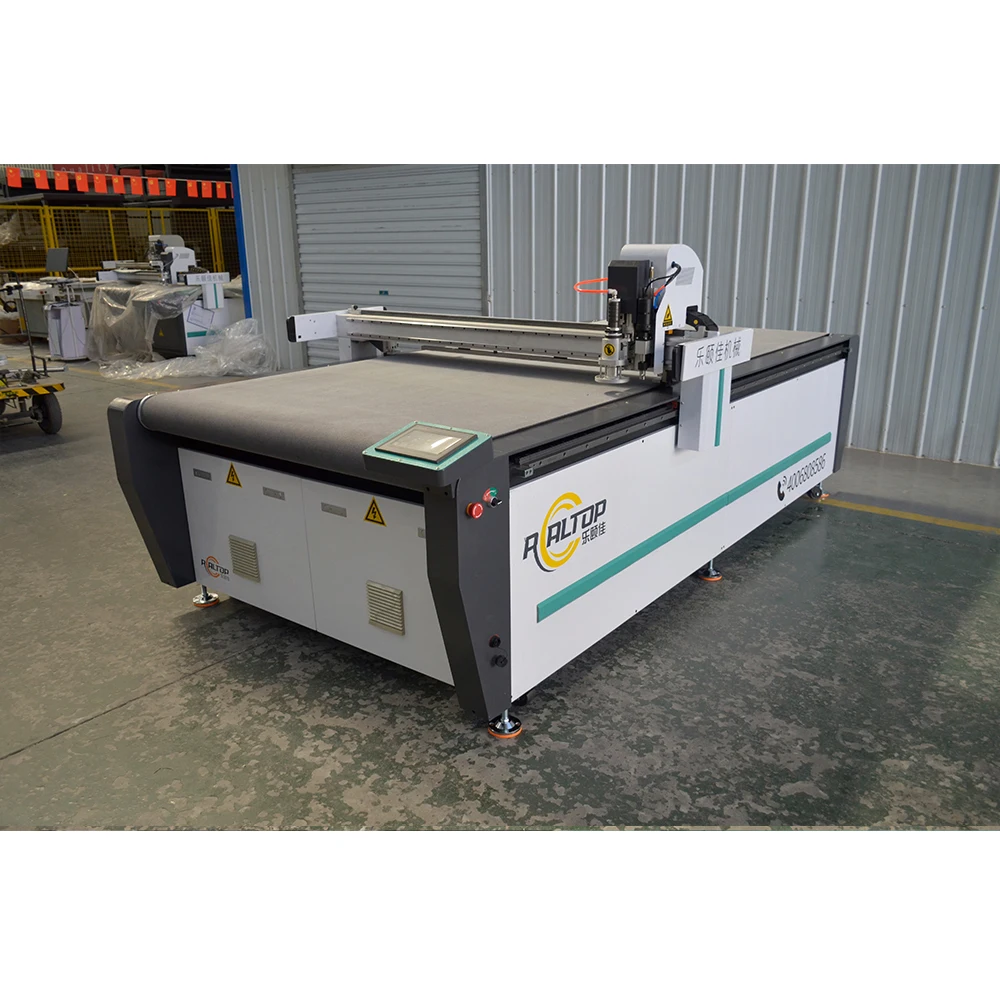
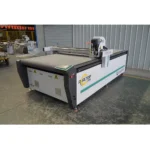
Multifunctional tool head versatility — the RT-D2516/RT-S2516 platform accepts vibration, round knife, drag knife and marking tool heads, so the cutting method follows the material rather than forcing one blade across every job.
Technical Specifications
| Parameter | Value |
|---|---|
| Product Type | CNC Oscillating Knife Cutting Machine |
| Model | RT-D2516/RT-S2516 |
| Working Area | 1600×2500 mm |
| Overall Dimensions (L×W×H) | 3450×2300×1250 mm |
| Rated Power | 9 kW |
| Voltage | 380V±10% |
| Tool Head | Multifunctional head with Swiss imported knife |
| Compatible Tools | Round knife, marking pen, auto feeder |
| Translational Velocity | 800–1200 mm/s |
| Cutting Thickness | ≤50 mm (varies by material and layer count) |
| Repeated Accuracy | ≤0.1 mm |
| Transmission System | Digital servo motor, linear guide, synchronous belt, ball screw |
| Servo Motor | Panasonic |
| Rail | Taiwan Hiwin |
| Vacuum Pump | 7.5 kW |
| Vacuum Table | Yes |
| Auto Feeding | Yes, with Germany imported conveyor belt |
| Table Surface | High-density felt |
| Bed Structure | Overall welding, imported milling machine processing |
| Safety Device | Infrared sensors |
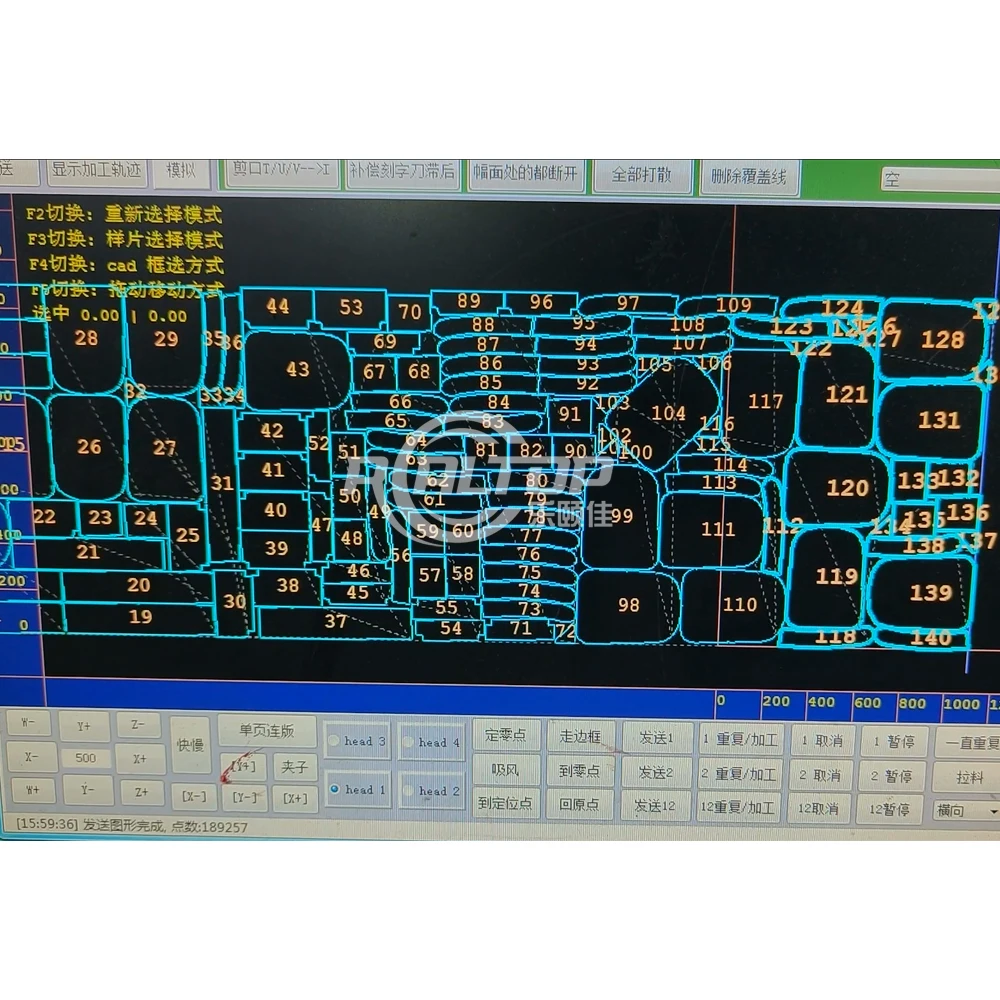
| Instruction System | HP-GL compatible format |
| Language Options | English, Russian, Italian, Chinese; special languages customizable |
Application Suitability
| Application | Material or Output |
|---|---|
| Garment and footwear fabric cutting | Multi-layer textile stacks, woven and knitted fabrics cut to nested patterns |
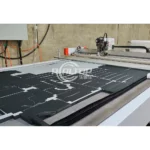
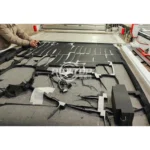
| Automotive interior trimming | Sponge composite leather, synthetic leather, soft trim panels |
| Gasket and seal fabrication | Rubber, silicon and PVC sheets cut to precise dimensional profiles |
| Leather goods production | Natural and synthetic leather for bags, belts and upholstery components |
| Soft signage and display | PVC and flexible banner materials cut to contour |
Why Cutting Thickness Alone Misleads Fabric Buyers
The real question is what happens to your specific material stack at production speed.
A specification sheet listing "≤50 mm" cutting thickness looks reassuring until the material turns out to be a coated composite rather than plain woven cloth. The surface coating changes how the blade engages the layers, and what cuts cleanly at slow speed can fray at the translational velocity a production schedule demands [NEED_CITE: material coating effect on oscillating knife edge quality]. Buyers who approve a machine on a sample swatch often face a different reality when full rolls of production material arrive on the floor.
Vibration Frequency and Blade Selection for Coated Composites
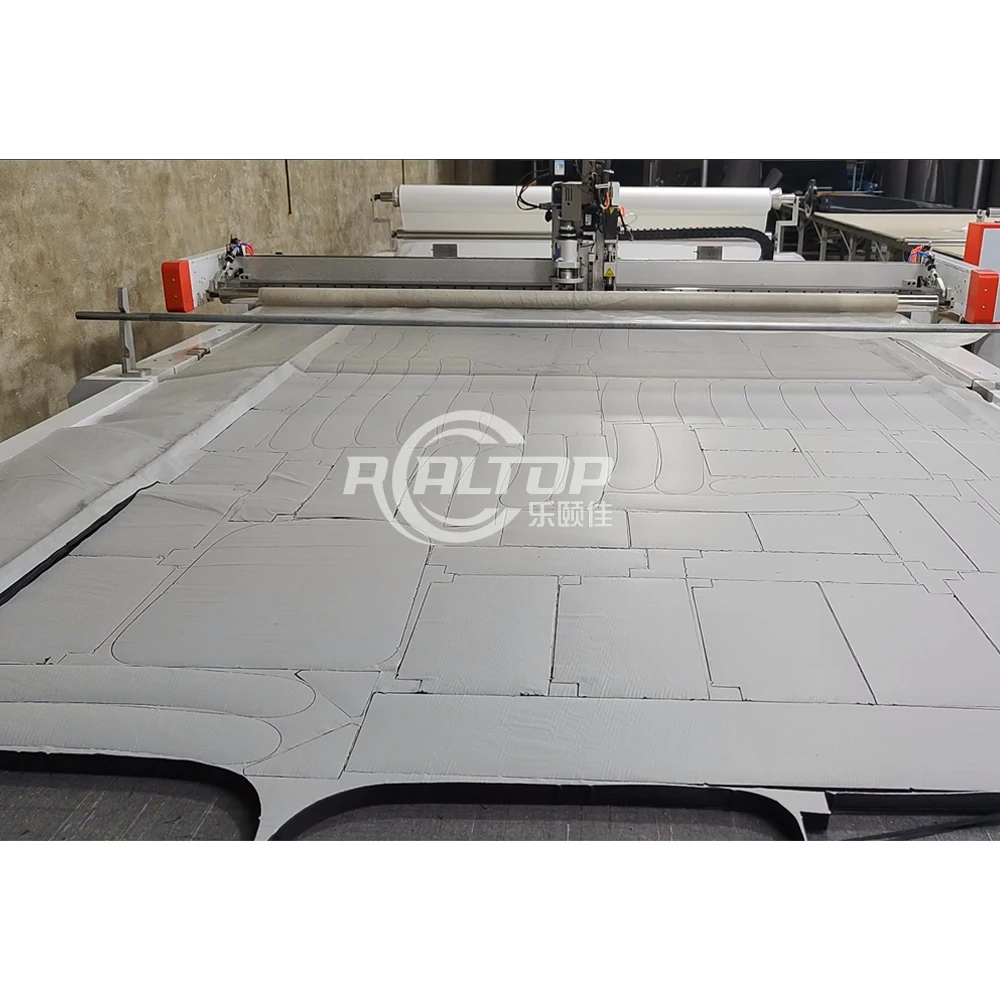
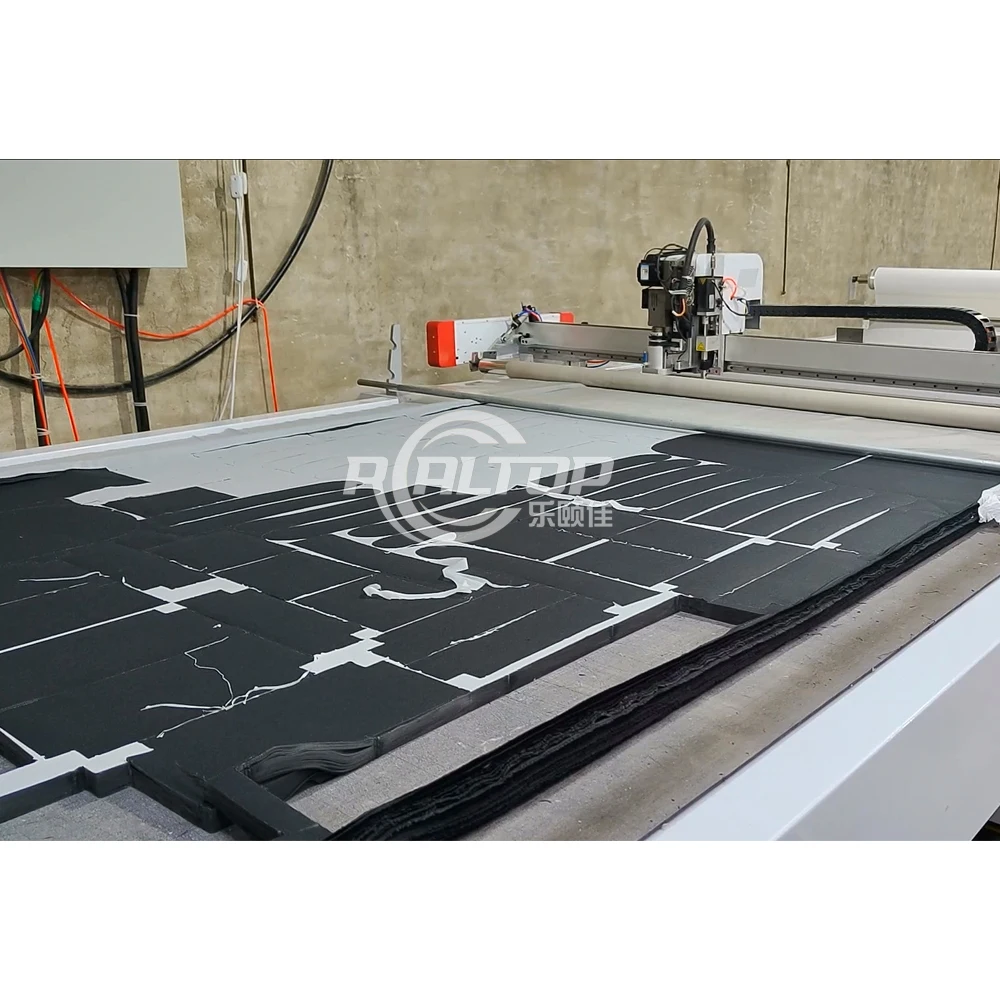
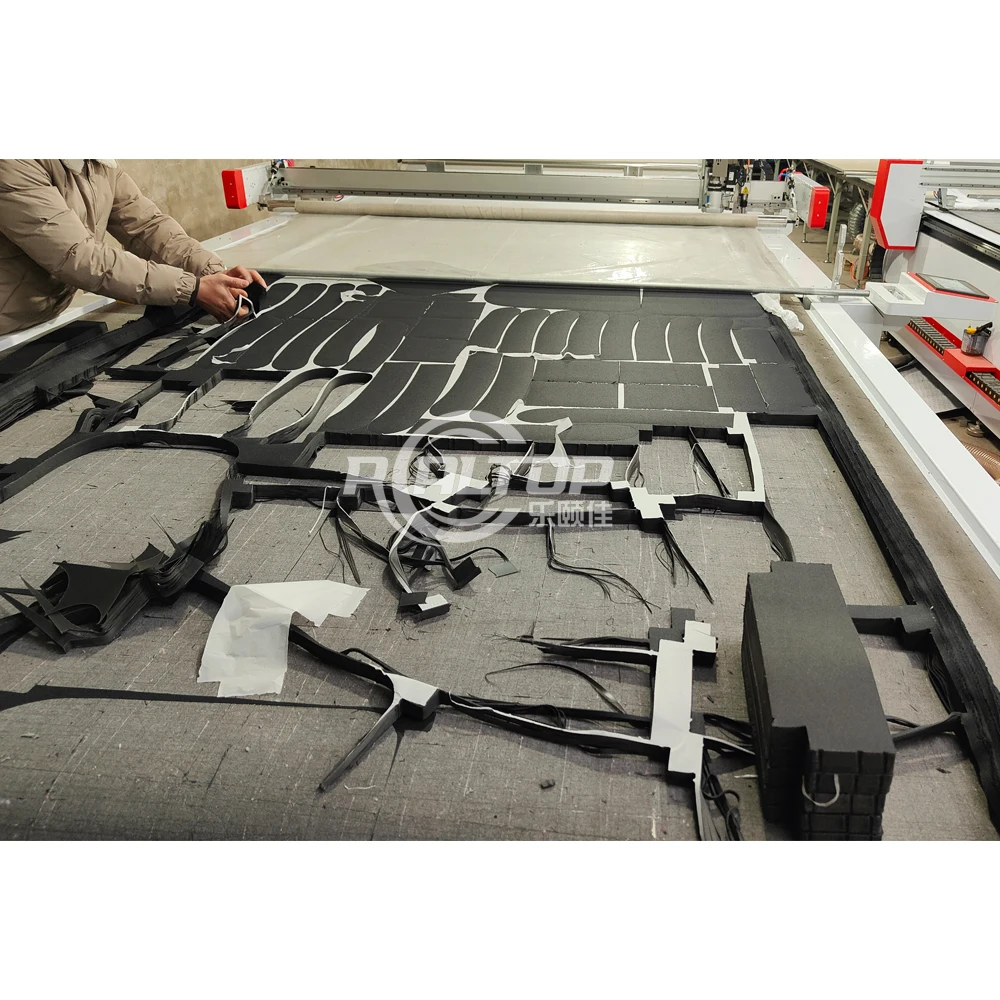
The multifunctional head on this cloth CNC cutting machine supports both vibration full cutting and vibration half cutting modes. Full cutting drives the blade completely through the stack in one pass, which suits dense sponge composite leather and multi-layer fabric. Half cutting scores the surface layer without penetrating the backing, useful for kiss-cut applications where the substrate must remain intact. The Swiss imported blade geometry pairs with these modes to maintain edge definition across extended runs.
Vacuum Hold-Down Across the Full 1600×2500 mm Bed
The 7.5 kW vacuum pump pulls air through the high-density felt table surface, holding material flat against the translational forces generated at speeds up to 1200 mm/s. When cutting small gasket profiles or intricate garment pattern pieces, the vacuum zoning configuration determines whether those pieces stay registered or lift under the blade. Confirming zoning against your smallest part geometry before order prevents rework after installation [NEED_CITE: vacuum zoning configuration for small-part CNC knife cutting].
What the Transmission Specs Mean for Repeat Orders
The Panasonic servo motors drive motion along Taiwan Hiwin linear guides, achieving ≤0.1 mm repeated accuracy across the entire working area. This repeatability matters most when a nesting layout is designed to yield a specific number of parts per sheet — positional drift beyond the tolerance band means pattern pieces no longer align with grain direction or registered print marks. The overall-welded bed, machined on imported milling equipment, keeps the guide rail mounting surface flat under continuous production vibration, preventing the accuracy degradation that bolted-frame designs can develop over months of operation.
The Cost of Specifying the Wrong Tool Head
A buyer cutting automotive sponge composite leather needs the oscillating knife to shear through the foam core cleanly, while the same buyer switching to PVC soft signage may find a drag knife produces a smoother edge. Specifying only one tool head for a mixed-material production schedule forces compromises on edge quality. Requesting a sample cutting report on your actual production material — including the coated or laminated variants that differ from the plain swatch — reveals which tool head and blade combination your operation requires [NEED_CITE: tool head selection criteria for composite material cutting].
What Misconfigured Voltage Costs After Shipment
A 380V±10% machine wired into a 440V supply without transformer adjustment risks servo drive failure within the first production week. Frequency mismatches between 50 Hz and 60 Hz markets alter motor RPM, shifting the actual translational velocity away from the specified 800–1200 mm/s range. Confirming the exact voltage, plug type and frequency at your facility before the machine enters final assembly prevents on-site electrical rework that delays production and voids component warranties [NEED_CITE: voltage and frequency standards by export market].
Why Source This Cloth CNC Cutting Machine Here
In-house design covers both knife cutting and laser cutting technologies, so a buyer working with coated fabric can test whether a blade or a beam produces the cleaner edge before committing to one platform. The tool head and table configuration are specified per material and production volume rather than offered as a fixed package. Sample cutting on the buyer’s own material runs before order confirmation, producing an edge quality benchmark that both parties agree on. Software compatibility — HP-GL import, nesting workflow and existing DXF or PLT file formats — is verified before production begins. Voltage, control language and plug type customization are confirmed in writing before the machine leaves the factory.
Documentation & Verification
- Machine specification sheet listing RT-D2516/RT-S2516 working area, power and tool head configuration
- Electrical schematic with voltage confirmation matching your facility supply
- Sample cutting report run on your fabric or composite material with edge photographs
- Tool head and table configuration list matching the agreed material scope
- HP-GL software licence and file format compatibility note for your existing design files
- Spare parts list identifying Swiss blades, felt sections and wear components
Installation, Commissioning & Support
- Foundation must support the 3450×2300 mm footprint plus auto feeder extension clearance
- Dedicated 380V circuit rated for the 9 kW machine load plus 7.5 kW vacuum pump draw
- Machine ships with bed and frame as a single welded unit requiring overhead crane positioning
- First commissioning includes vacuum zoning calibration against your smallest production part
- Operator training covers tool head changeover between oscillating, round knife and marking pen modes
- Swiss blade replacement schedule aligned with your daily cutting volume and material abrasiveness
Preparing Your Inquiry
Provide the material type, coating or lamination details, maximum stack thickness and the daily sheet volume your production schedule targets. Include your facility voltage and frequency so the electrical configuration is locked before assembly begins, and specify the control interface language your operators require.
Frequently Asked Questions
Q: How do I confirm cutting thickness capacity for my specific layered fabric stack?
A: The ≤50 mm rating varies by material density and coating type. Submit a sample of your actual production material — including any coated or laminated variants — for a test cut that documents edge quality, achievable layer count and cycle time against your requirement.
Q: Which tool head suits coated composite leather versus plain woven fabric?
A: Coated composites typically require the oscillating knife with vibration full cutting to shear through the foam core cleanly, while plain woven fabric may cut well with a round knife. A sample cutting report on both materials confirms the correct selection.
Q: Will small gasket parts stay flat during high-speed cutting on this table?
A: The 7.5 kW vacuum pump and high-density felt surface provide hold-down force, but zoning configuration must match your smallest part geometry. Request the vacuum zoning plan against your part drawings before order confirmation.
Q: Does the software import my existing DXF and PLT nesting files?
A: The instruction system is HP-GL compatible. Confirming your specific file formats and nesting software workflow before shipment ensures the controller processes your layouts without conversion delays.
Q: What voltage and language options are confirmed before the machine ships?
A: The standard configuration is 380V±10%, with other voltages available on request. Language options include English, Russian, Italian and Chinese, with special languages customizable. Voltage, plug type and language are confirmed in writing before final assembly.


商品评价
Clear filtersThere are no reviews yet.