


Fast Shipping
Carrier information

20k products
Payment methods

24/7 Support
Unlimited help desk

2-day Delivery
Track or off orders
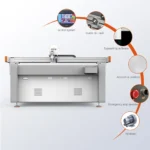
Cold-Cutting Configuration — oscillating knife tooling matched to your gasket density and composite layup rather than forcing a single blade across every material.
Technical Specifications
| Parameter | Value |
|---|---|
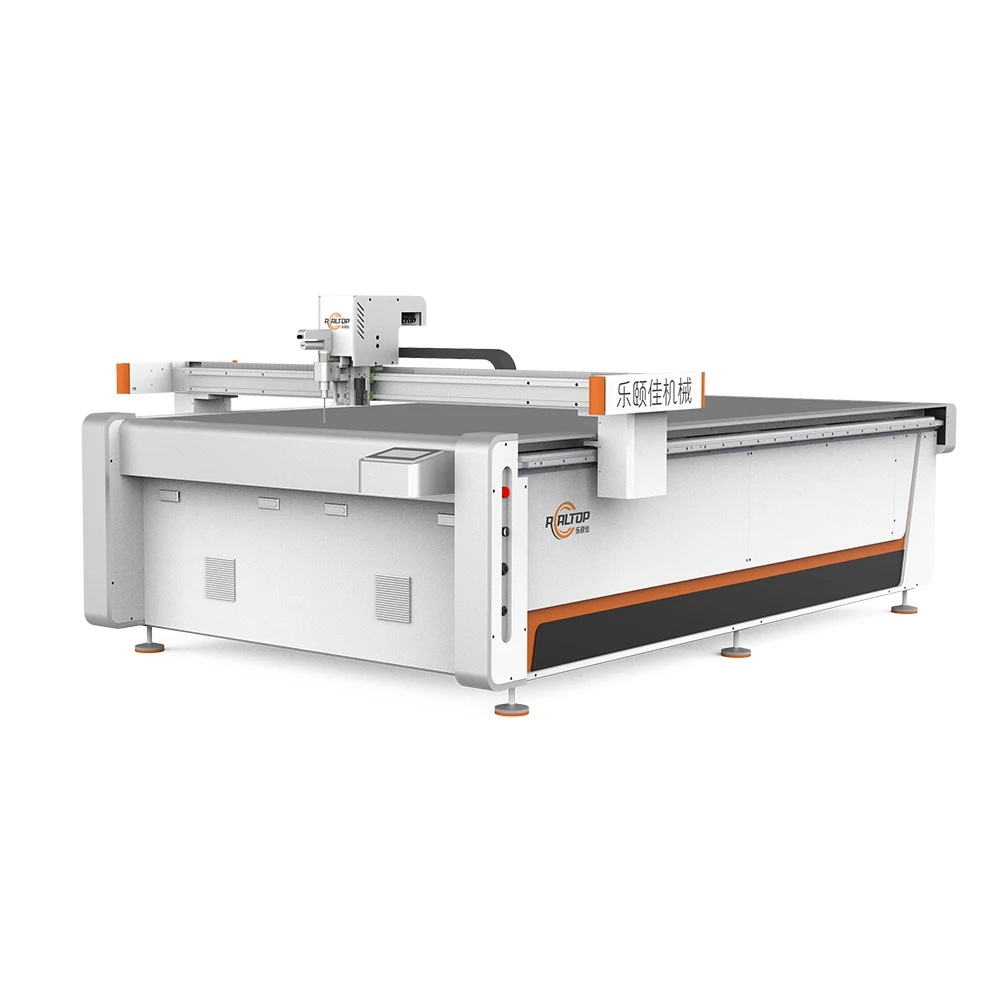
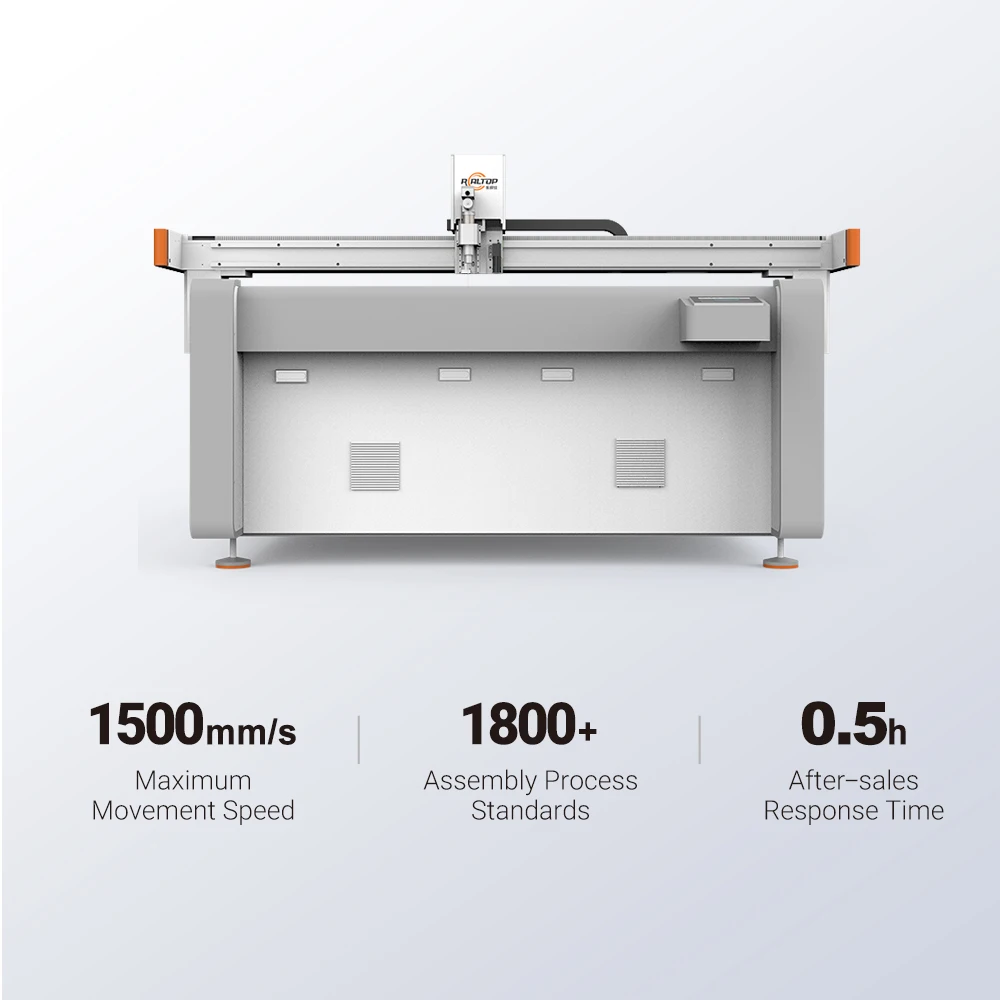
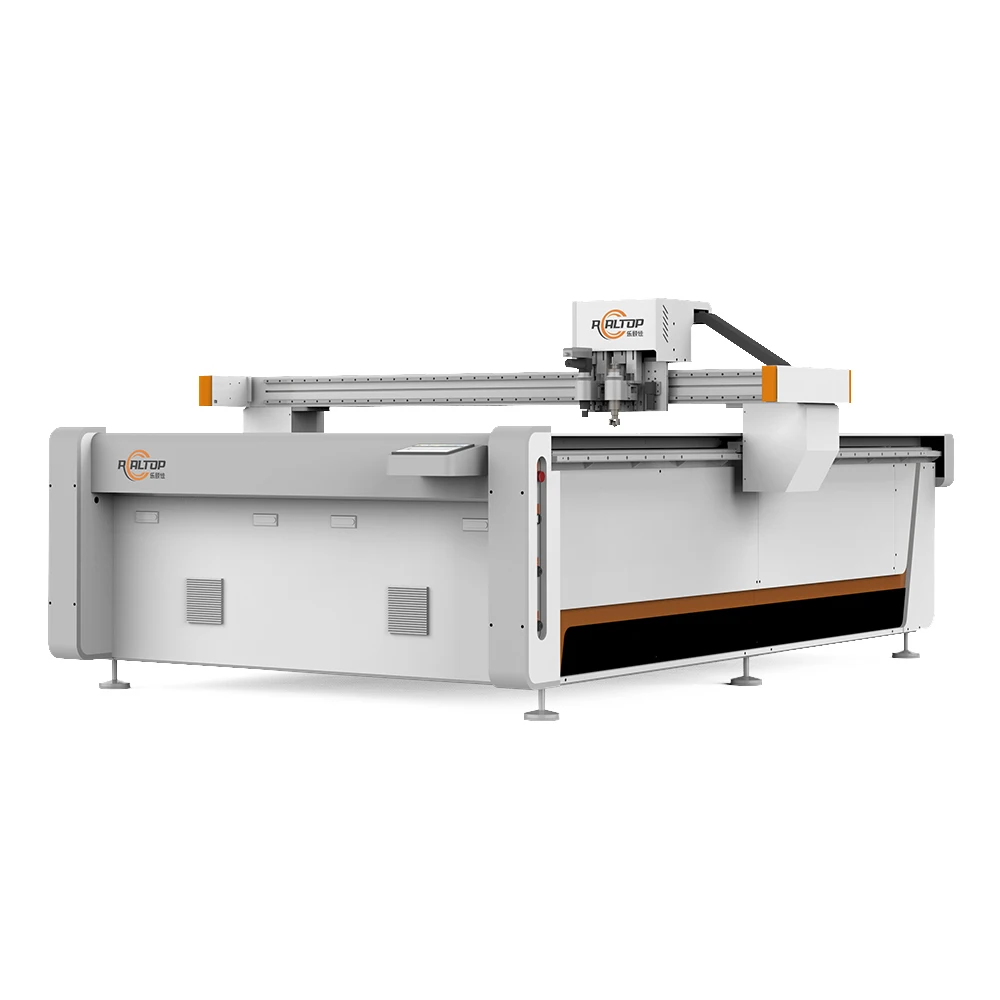
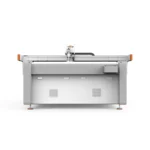
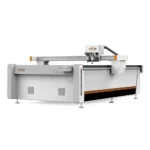
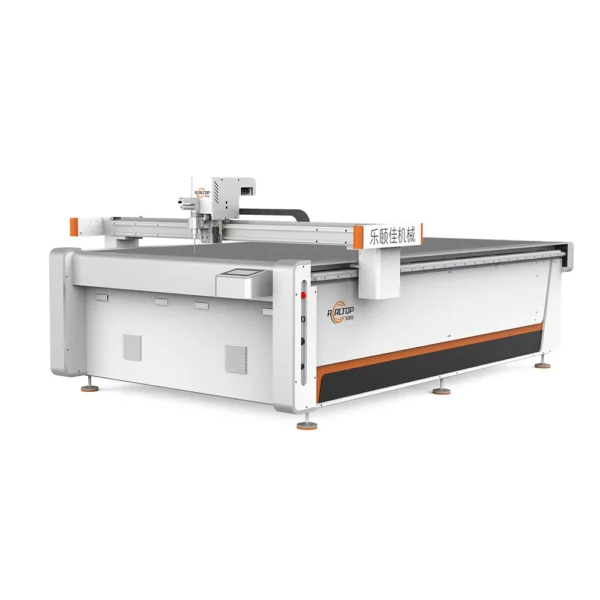
| Product Type | CNC Oscillating Knife Cutting Machine |
| Working Area | 1600 × 2500 mm |
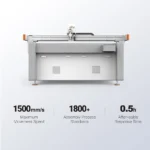
| Cutting Speed | 0–2000 mm/s |
| Cutting Thickness | ≤ 30 mm (basis not stated in source — confirm specific material type and density) |
| Cutting Accuracy | ±0.1 mm |
| Tool Head Options | Oscillating knife, Driven rotary knife, Creasing wheel, Kiss cutting tool, Pneumatic knife, Milling tool, V groove knife |
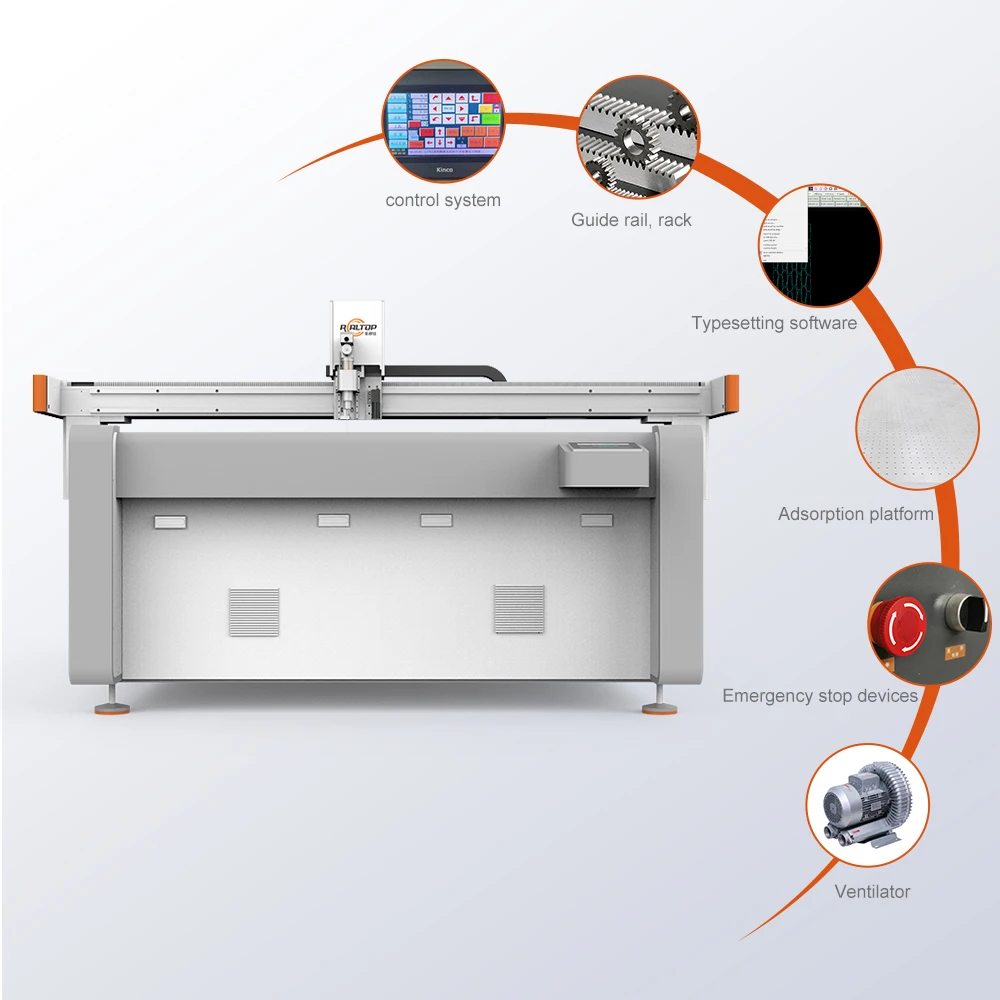
| Vacuum Table | Aluminum bellows vacuum table |
| Vacuum Pump Power | 9 kW |
| Drive System | Servo motors (Panasonic, Delta, Dorna options) |
| Control System | PLC control panel with optional display languages |
| Voltage Options | 110V, 220V, 380V |
| Supported File Formats | PLT, DXF, AI, PDF |
| Safety Devices | Infrared sensor, emergency stop |
| Machine Dimensions (L×W×H) | 3300 × 2100 × 1350 mm |
Application Suitability
| Application | Material or Output |
|---|---|
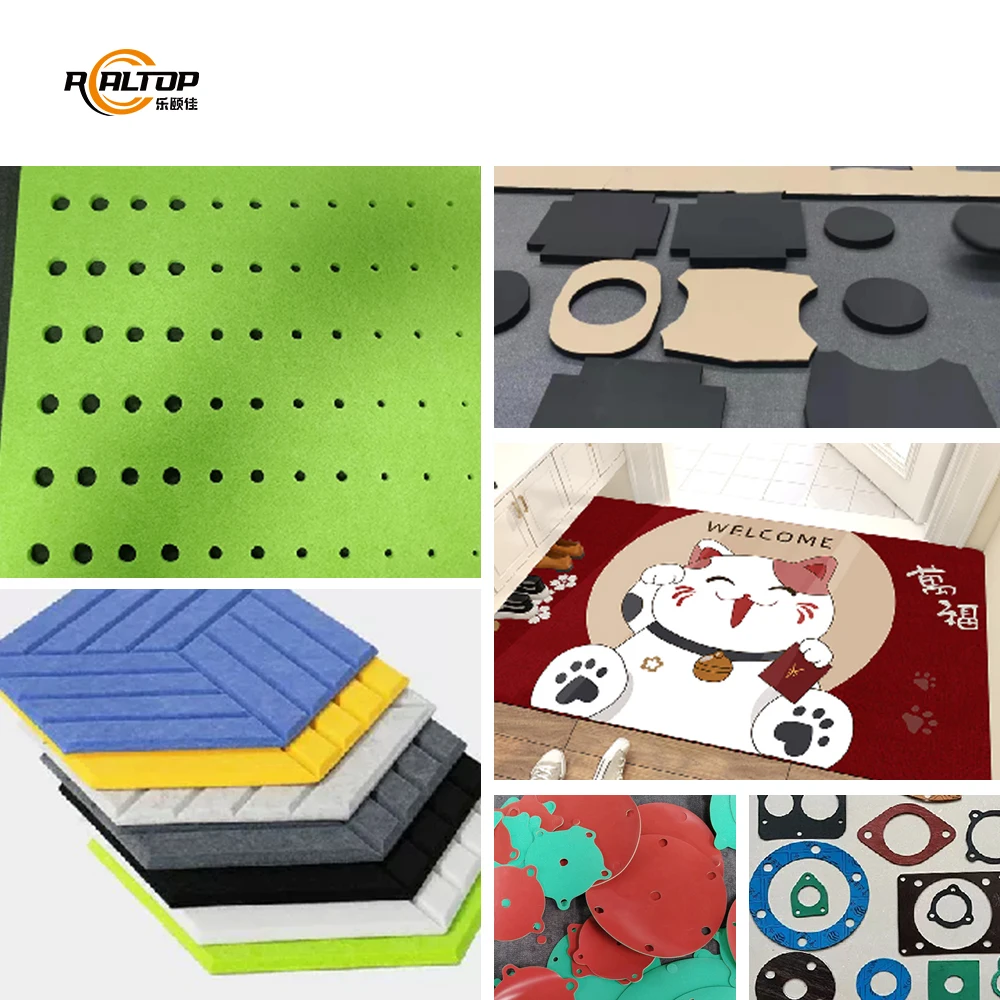
| Aerospace gasket and composite panel cutting | Carbon fiber prepreg, aramid honeycomb, ceramic fiber |
| Automotive interior and sealing components | Acoustic felt, damping pads, carpet, sealing strips |
| Wind power blade material processing | Fiberglass cloth, foam core, vacuum infusion mesh |
| Industrial gasket fabrication | PTFE, non-asbestos fiber, rubber sheet, graphite composite |
Why Material Thickness Alone Is the Wrong Starting Point
A CNC oscillating knife cutting machine for gasket and composite materials specified only by working area often fails once real production stock hits the table.
Blade selection and vacuum zoning must follow the material, not the bed size.
I have walked into gasket workshops where the machine ran fine on 2 mm non-asbestos sheet but stalled on 8 mm wire-reinforced graphite composite. The oscillating knife could not penetrate the steel mesh layer, and the vacuum zones were too large to hold small flange gaskets flat. Operators ended up taping every piece by hand, which destroyed any throughput advantage the automated table was supposed to deliver. That mismatch usually traces back to the inquiry stage, where thickness was quoted as a single number without density or reinforcement details [NEED_CITE: material reinforcement effects on knife cutting resistance].
Oscillating Knife Mechanics for Gasket Stock
The oscillating knife moves up and down at high frequency while the gantry travels along the cut path, slicing through fiber-reinforced and elastomeric sheets without generating heat. This cold-cutting action matters for resin-impregnated composites and PTFE, where thermal processes would melt edges or release fumes. A CNC oscillating knife cutting machine for gasket and composite materials configured this way leaves clean, burr-free edges that meet sealing surface requirements without secondary trimming.
Tool Head Interchangeability Across Material Families
Swapping from an oscillating knife to a driven rotary knife or a pneumatic knife takes minutes at the tool mount. The driven rotary tool handles thicker foam and rubber profiles that would deflect under a vibrating blade, while the V groove knife scores fold lines on packaging-grade gasket templates. Milling and creasing wheel attachments extend the same platform into composite panel trimming and creasing work, so one table covers multiple departments.
What the Specification Sheet Actually Means for Your Floor
The ±0.1 mm cutting accuracy holds when the vacuum table maintains full adsorption across the part footprint. The 9 kW vacuum pump feeds an aluminum bellows table that can be zoned to concentrate suction under smaller gasket shapes — critical when cutting flange gaskets under 100 mm wide that would otherwise lift during the knife pass. Servo drive options from Panasonic, Delta, or Dorna let buyers match the motion system to their existing maintenance inventory and local service network. Cutting speed reaches 2000 mm/s on straight paths, though actual contour speed depends on corner density in the DXF or PLT file [NEED_CITE: servo tuning effects on contour following accuracy].
The Hidden Cost of Skipping a Material Trial
When a buyer approves a tool head based on a data sheet rather than a sample cut, the first production run often reveals ragged edges on aramid honeycomb or incomplete cuts through multi-layer graphite laminate. Fixing that after the machine ships means ordering different blades, adjusting vacuum zones, and sometimes replacing the tool mount entirely — all while the line sits idle. A trial cut on the buyer’s actual stock, including the thickest and most reinforced variant in the product mix, catches these issues before the machine leaves the factory [NEED_CITE: gasket material variability across supplier batches].
Why Source This Platform Here
In-house design covers both knife and laser cutting technologies, so the cutting method is chosen to match the gasket material rather than forcing one process. Tool head and vacuum table zoning are specified per material type and part geometry. CCD camera positioning is available when printed contour following is required for composite layup templates. Software compatibility with PLT, DXF, AI, and PDF formats is verified before order confirmation. Voltage, plug type, and control panel language are locked in before shipment to avoid field rewiring. Sample cutting on the buyer’s own gasket stock runs before commitment, producing a report on edge quality, achievable thickness, and cycle behavior.
Documentation & Verification
- Machine specification sheet matching the confirmed tool head and vacuum zone layout
- Electrical schematic with voltage and frequency locked to the destination site
- Tool head and table configuration list per material type in your product mix
- Sample cutting report on your gasket stock showing edge quality and cut depth
- Factory test record documenting motion accuracy and vacuum holding performance
- Operation and maintenance manual in the confirmed control panel language
Installation, Commissioning & Support
- Floor space planning around the 3300 × 2100 mm machine footprint plus material staging clearance
- Dedicated circuit sized for the 9 kW vacuum pump plus servo drive peak draw at the selected voltage
- Table leveling and vacuum zone sealing verified during on-site commissioning
- First-run parameter tuning on your thickest gasket material to establish baseline feed rates
- Operator training covering tool change, file import, and nesting workflow in the confirmed language
- Spare blade and vacuum seal inventory matched to your daily cutting volume and material abrasiveness
Preparing Your Inquiry
Send the material data sheet for every gasket stock you plan to cut, including reinforcement type and maximum thickness. Note your target daily output and the smallest part dimension in your nesting layout. Specify the local voltage, frequency, and preferred control panel language so the electrical and software package ships ready for your floor.
Frequently Asked Questions
Q: How do I choose between oscillating knife and driven rotary knife for my gasket materials?
A: Oscillating knives handle fiber-reinforced and thin-to-medium elastomeric sheets cleanly, while driven rotary knives suit thicker foam and soft rubber profiles that deflect under vibration. We run both tools on your sample stock and compare edge quality and cut-through before recommending the primary configuration.
Q: What is the real cutting thickness on wire-reinforced graphite composite?
A: The published ≤ 30 mm figure depends entirely on material density and reinforcement. Wire mesh layers increase cutting resistance significantly. Send a sample of your thickest reinforced sheet so we can confirm achievable depth, blade life, and feed rate on the actual stock before quoting.
Q: Can the machine run on our local voltage without a transformer?
A: Voltage options include 110V, 220V, and 380V configurations. We confirm your site voltage, frequency, and plug type before production so the electrical cabinet and vacuum pump ship pre-wired. An electrical schematic is provided for your facility electrician to verify the dedicated circuit.
Q: Will my existing nesting software files import directly?
A: The control system accepts PLT, DXF, AI, and PDF formats. We test your actual production files during the sample stage to confirm contour recognition, kerf compensation, and nesting layout transfer without manual re-drawing. Any format gap is identified before order confirmation.
Q: How does the sample cutting process work before I commit?
A: Ship a representative range of your gasket materials, including the thickest and most reinforced variants. We run test cuts with multiple tool heads, document edge quality and cycle behavior, and send a full report with recommended configuration. You review and approve before the machine enters production.


商品评价
Clear filtersThere are no reviews yet.