





Fast Shipping
Carrier information

20k products
Payment methods

24/7 Support
Unlimited help desk

2-day Delivery
Track or off orders
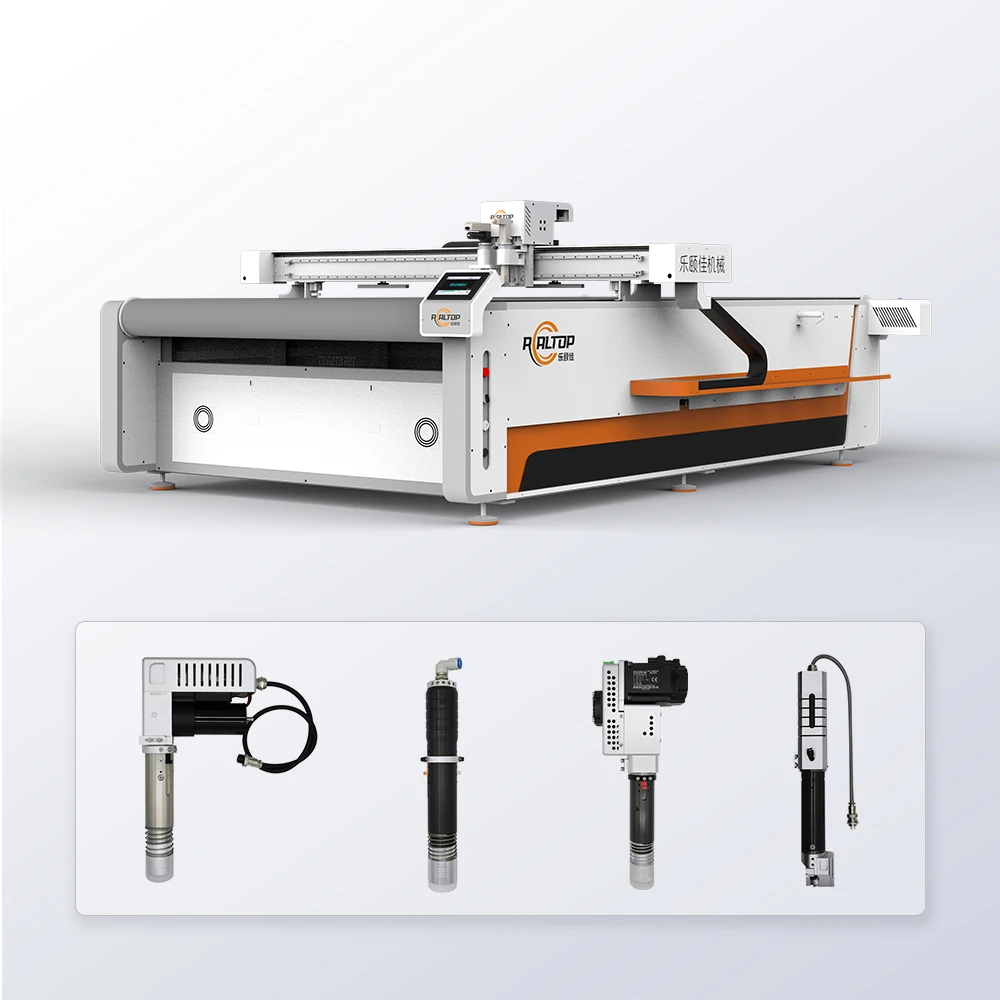
Tool Head Configuration Per Material — We match oscillating knife frequency, blade angle and vacuum zoning to your actual fabric, leather or composite stack before the machine ships, not after it arrives.
Technical Specifications
| Parameter | Value |
|---|---|
| Model | RT-D2516/RT-S2516 |
| Product Type | CNC Oscillating Knife Cutting Machine |
| Working Area | 1600 × 2500 mm |
| Machine Size | 3450 × 2300 × 1250 mm |
| Rated Power | 9 kW |
| Vacuum Pump | 7.5 kW |
| Table Type | Flat working table with auto feeding conveyor |
| Cutting Thickness | Up to 100 mm (varies with material density and layer count) |
| Translational Velocity | 800–2000 mm/s |
| Cutting Speed | 200–800 mm/s (according to different cutting materials) |
| Repeated Accuracy | ≤ 0.1 mm |
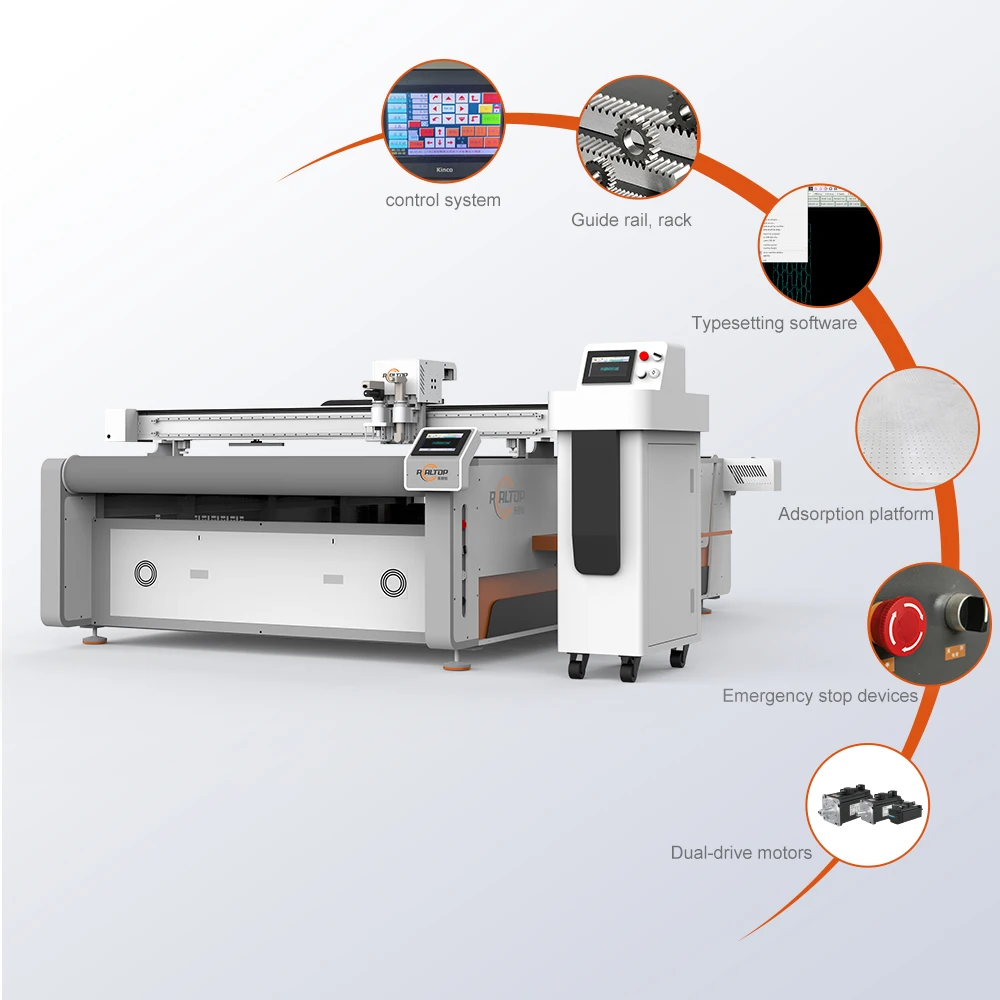
| Transmission System | Digital servo motor, linear guide, synchronous belt, ball screw |
| Servo Motor | Delta (Panasonic optional) |
| Guide Rail | Taiwan Hiwin |
| Conveyor Belt | Germany imported |
| Multifunctional Head | Swiss imported knife (vibration full/half cutting, cursor location); options include pneumatic knife, high-power vibrating knife, circular knife, V-cutting knife, drag knife, creasing wheel, dotted line knife, punching, brush |
| Safety Device | Infrared sensors, anti-collision, emergency stop |
| Visual Positioning | Small CCD camera mark point positioning, panoramic camera recognition, projection positioning (optional) |
| Instruction System | HP-GL compatible format |
| Software File Formats | PLT, DXF, AI |
| Control Panel | Touch screen, multiple language supported |
| Language Options | English, Russian, Italian, Chinese (custom languages available) |
| Voltage | 380V ± 10% |
| Frame | Welded thick-walled seamless steel, high-temperature tempering, CNC machining center finished |
| Vacuum Table Surface | Magnesium-aluminum alloy, fluorocarbon PVDF powder spraying, anodic oxidation, hard oxidation |
| Standards | CE |
Application Suitability
| Application | Material or Output |
|---|---|
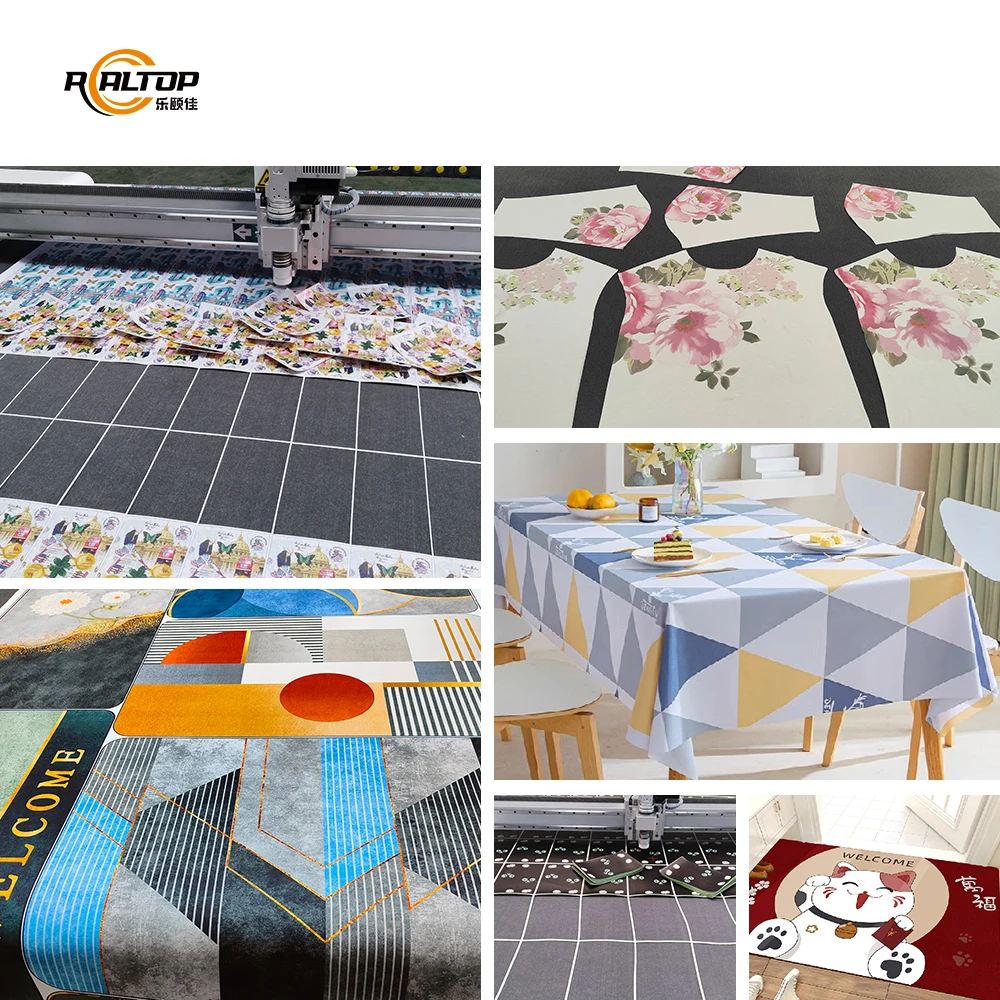
| Garment and footwear cutting | Multi-layer woven fabric, knit textile, leather, PU synthetic, shoe upper material |
| Automotive interior production | Sponge composite leather, PU, EVA, XPE foam, carpet and floor mat stock |
| Gasket and sealing fabrication | Rubber sheet, PTFE, ETFE, non-woven fabric, silicon and composite gasket material |
| Packaging and sample making | Corrugated cardboard, sticker film, foam board, PP and PE sheet |
| Sports and outdoor gear | Coated waterproof fabric, carbon fiber prepreg, PVC and soft glass |
| Soft home furnishings | Upholstery textile, curtain fabric, carpet backing, sponge and foam laminate |
Why Cutting Speed Claims Mean Nothing Without the Material Name
A quoted 800 mm/s cutting speed only applies to thin, single-layer stock — your actual throughput depends entirely on fabric weight, coating type and ply count.
When I was sourcing cutting lines for garment factories in Europe, I watched vendors promise fast cycle times based on plain cotton demos, only for the machine to stall on coated technical fabrics once it hit the production floor. The oscillating knife frequency that slices cleanly through a single layer of cotton will tear and fray the edges of a three-layer waterproof laminate. I now spend most of my commissioning time on-site retuning exactly these parameters [NEED_CITE: relationship between oscillating knife frequency and coated textile cutting quality]. A CNC oscillating knife cutting machine specification sheet that omits the material basis for its speed range is incomplete, and buyers should treat those numbers as starting points rather than guarantees.
Matching the Knife to the Fabric, Not the Brochure
Every material behaves differently under a vibrating blade. Woven cotton responds to a high-frequency oscillating knife with a standard blade angle, producing a clean shear cut. Coated waterproof fabric requires a lower frequency and a steeper blade angle so the knife penetrates the polymer layer without dragging. Leather demands a rigid drag knife or a high-power vibrating knife to push through dense fiber without edge burnishing. This RT-D2516/RT-S2516 platform carries Swiss imported knife assemblies and supports pneumatic knife, circular knife, V-cutting knife and punching tool heads on the same multifunctional carriage, allowing one work cycle to handle different cutting actions across a single nest layout.
Vacuum Zoning Decides Whether Small Parts Stay Flat
A 1600 × 2500 mm working area holds a large spread of material, but vacuum suction is not uniform by default. Small garment pattern pieces — collars, cuffs, pocket flaps — lift off the table when the vacuum zones underneath them are too large relative to the part footprint. The magnesium-aluminum alloy table on this platform uses a PVDF powder-sprayed and hard-oxidized surface with multiple independent vacuum zones, so the operator can activate only the zones covered by material. This matters especially on porous fabrics where air leaks through the weave reduce effective hold-down force [NEED_CITE: vacuum table zoning effect on small part stability during oscillating knife cutting].
What the Specs Actually Mean on the Shop Floor
The 9 kW rated power covers the servo drives, spindle oscillation motor and conveyor feed, leaving the 7.5 kW vacuum pump on a separate circuit — a detail that matters when sizing your workshop electrical panel for 380V ± 10% three-phase supply. The Taiwan Hiwin linear guides paired with Delta or Panasonic servo motors deliver the ≤ 0.1 mm repeatability that keeps pattern pieces within tolerance across long production runs, so nested layouts do not drift after hundreds of cuts. Translational velocity of 800–2000 mm/s governs how fast the head moves between cut paths, while the 200–800 mm/s cutting speed range applies only when the material allows it — thick sponge composite leather sits at the low end, single-layer polyester at the high end. CCD camera and panoramic vision positioning options let the system locate printed registration marks on pre-printed fabric rolls, closing the loop from print to cut without manual alignment.
The Cost of Choosing the Wrong Tool Head
I once spent two full days on-site retuning a machine because the sample cutting was done on plain cotton while the customer’s daily production was coated waterproof fabric. The oscillating knife frequency was too high, the blade angle too shallow, and every edge came out frayed and unusable. When the wrong tool head is selected for the material, the damage is not limited to edge quality — crushed foam layers, delaminated composites and shortened blade life all follow [NEED_CITE: tool head mismatch effects on foam and composite material cutting]. The consequence is not a parameter adjustment but a physical tool head swap, delayed shipment and lost production days that compound across a full order book.
Why Buyers Come Back After the First Machine
In-house design covers both knife and laser cutting technologies, so the cutting method is matched to the material rather than forced into one system. Tool head and table configurations are specified per material type and production volume before the order is placed, not standardized across all buyers. Sample cutting runs on the buyer’s own material are documented with cutting speed, edge quality photographs and tool head settings before commitment. Software compatibility with the buyer’s existing PLT, DXF or AI file workflow is confirmed during the quotation stage. Voltage, plug type and control panel language are locked in on the electrical schematic before the machine enters production, eliminating on-site rewiring or operator confusion.
Documentation & Verification
- Factory test record on your fabric type and layer count before dispatch
- Electrical schematic confirming 380V ± 10% and plug type for your market
- Tool head and vacuum table configuration list matched to your material stack
- Software licence with PLT, DXF, AI format compatibility note
- Sample cutting report on your own material with edge quality documentation
- Spare parts list covering blades, knife holders and vacuum seals
Installation, Commissioning & Support
- 3450 × 2300 × 1250 mm machine footprint requires a level concrete floor with clearance for conveyor feed
- 9 kW rated power plus 7.5 kW vacuum pump need separate three-phase circuits at 380V ± 10%
- Machine ships in knockdown condition with frame, table and gantry assembled on-site
- First-run commissioning includes knife frequency and blade angle tuning on your material
- Touch screen control panel set to your preferred language during training session
- Swiss imported knife assemblies and Hiwin guide rails covered in initial spare parts package
- Vacuum pump filter and conveyor belt tension checked at regular maintenance intervals
Before You Request a Quote
Send us your material data sheet or physical samples — fabric type, coating composition, single-ply weight and the number of layers you cut per spread. Tell us your daily cutting volume and the maximum sheet or roll width you feed. Confirm your workshop voltage and frequency, preferred control language and whether your existing nesting software exports PLT, DXF or AI files.
Frequently Asked Questions
Q: How do I choose between oscillating knife and drag knife for my material?
A: Oscillating knife suits woven fabric, knit textile and thin foam where a vibrating blade produces a clean shear cut without fraying. Drag knife works better on leather, dense gasket material and thick rubber where continuous blade pressure pushes through tough fiber. The multifunctional head on this platform accepts both, and the correct choice is confirmed during sample cutting on your actual material.
Q: Which CCD camera option fits printed contour cutting?
A: Small CCD camera mark point positioning handles jobs where each piece carries a registration mark. Panoramic camera recognition suits large-format printed fabric where the system must locate multiple marks across the full 1600 × 2500 mm working area. Projection positioning overlays the cut path visually onto the material for manual verification before the knife starts.
Q: How does vacuum table zoning prevent small parts from lifting?
A: The magnesium-aluminum alloy table divides into independent vacuum zones. The operator activates only the zones directly beneath the nested parts, concentrating suction on small pieces like collars or gaskets that would otherwise float on a single full-table vacuum. This is essential for porous fabrics and thin films where air leakage reduces hold-down force.
Q: What voltage and language options are confirmed before shipment?
A: The standard supply is 380V ± 10% three-phase, configurable for your local grid. Control panel languages include English, Russian, Italian and Chinese, with custom languages available. Voltage, plug type and language are confirmed on the electrical schematic before production begins so no on-site modifications are needed.
Q: Can I verify cutting speed on my material before placing an order?
A: Yes. We run sample cutting on your actual material and document the cutting speed, edge quality and tool head configuration in a written report. This report forms part of the quotation package, so the speed and throughput numbers you see are based on your fabric, not generic demo stock.


商品评价
Clear filtersThere are no reviews yet.