



Fast Shipping
Carrier information

20k products
Payment methods

24/7 Support
Unlimited help desk

2-day Delivery
Track or off orders
Tool Head Versatility — Oscillating knife, round knife, and marking pen options configured per gasket material, validated on your actual sample before order confirmation.
Technical Specifications
| Parameter | Value |
|---|---|
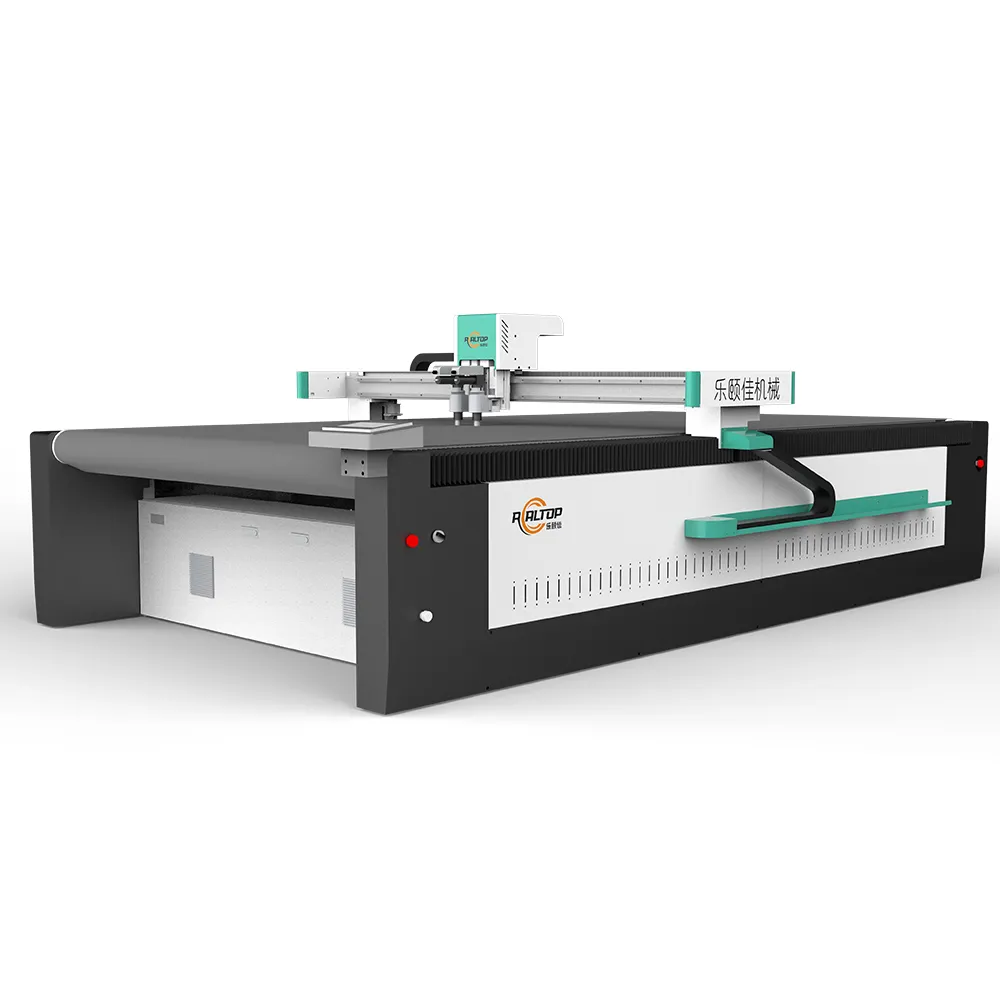
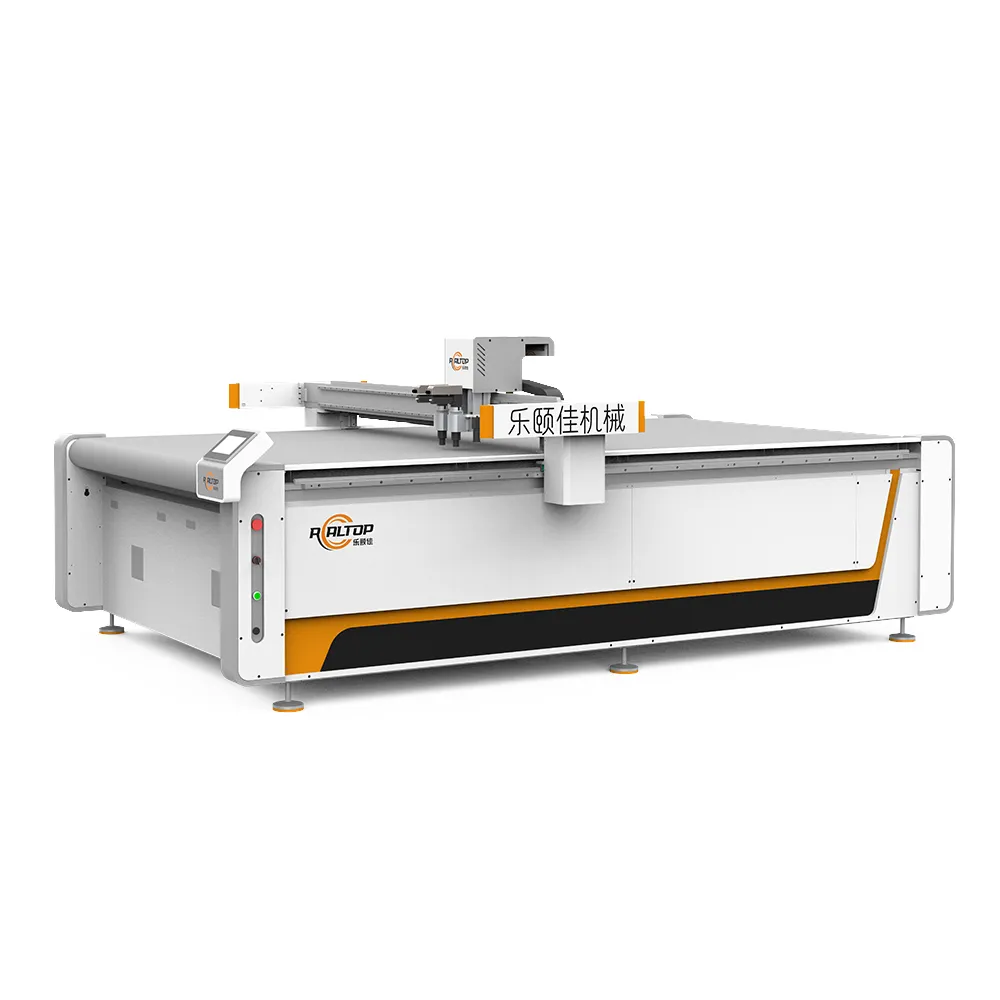
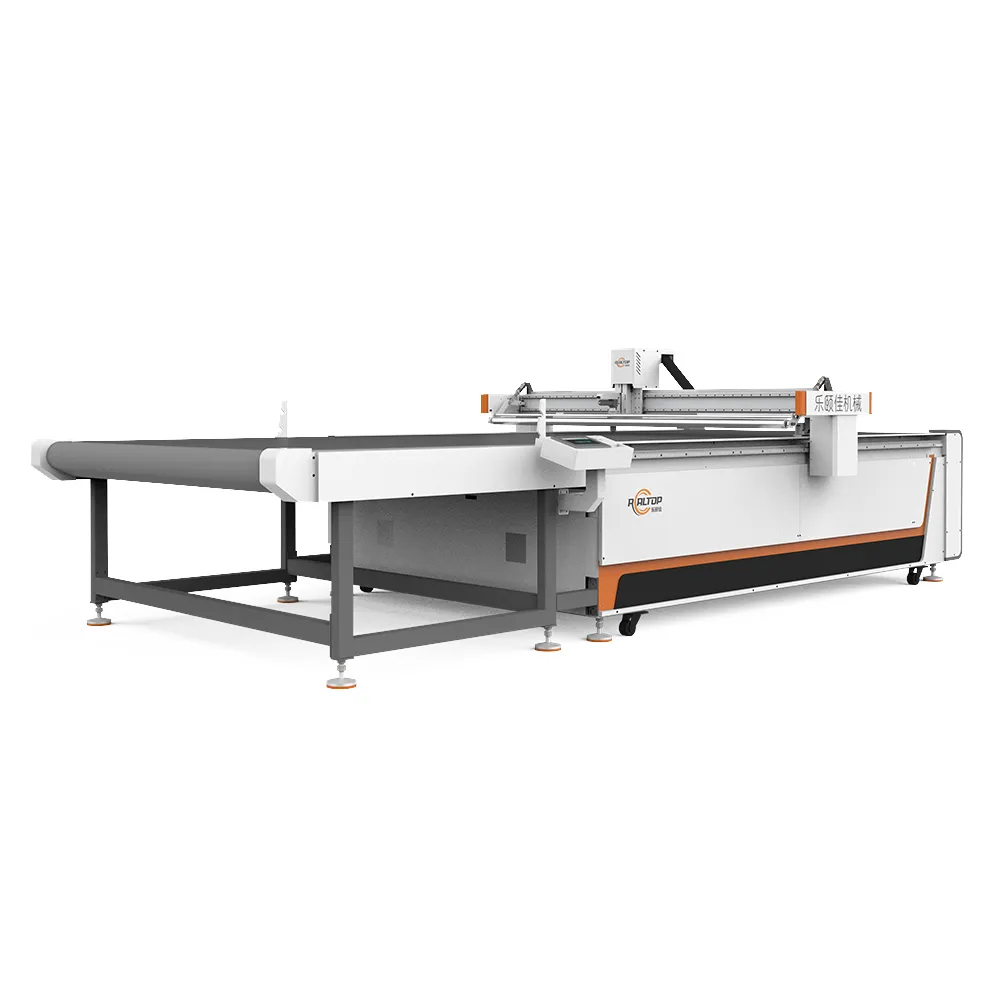
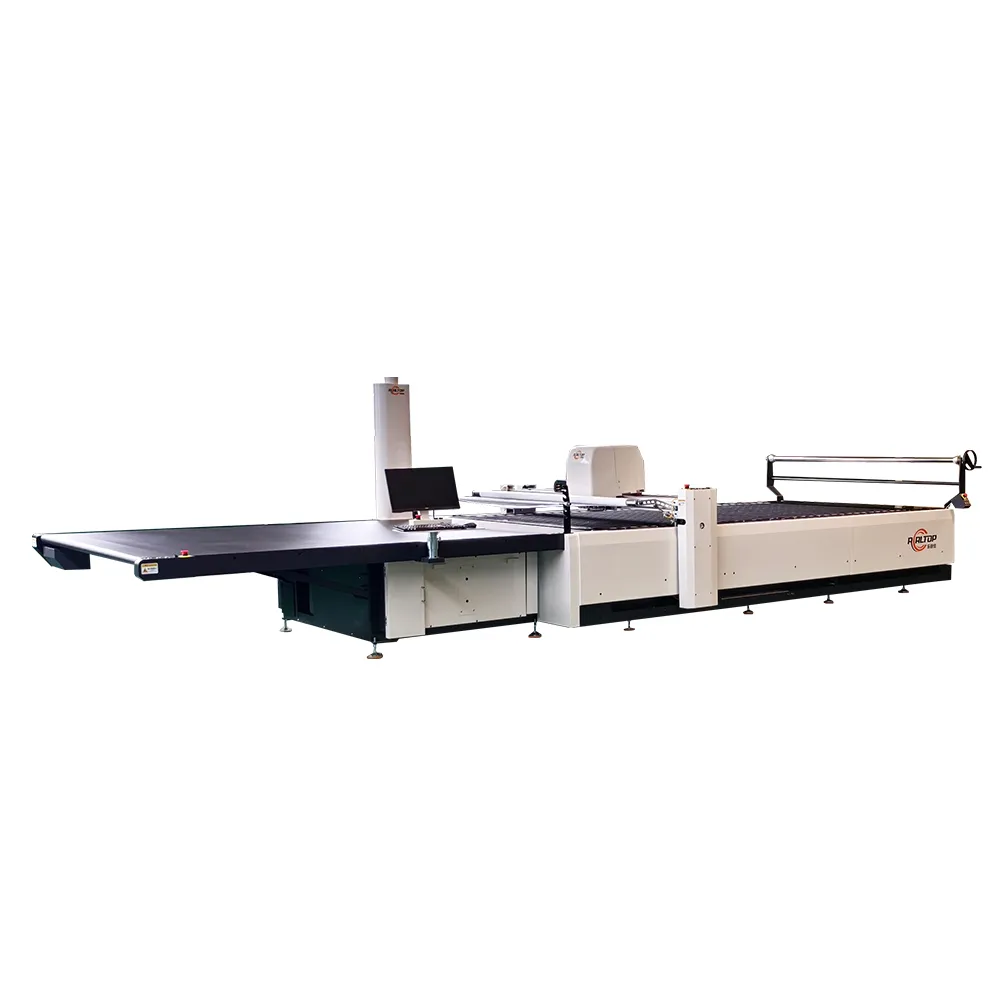
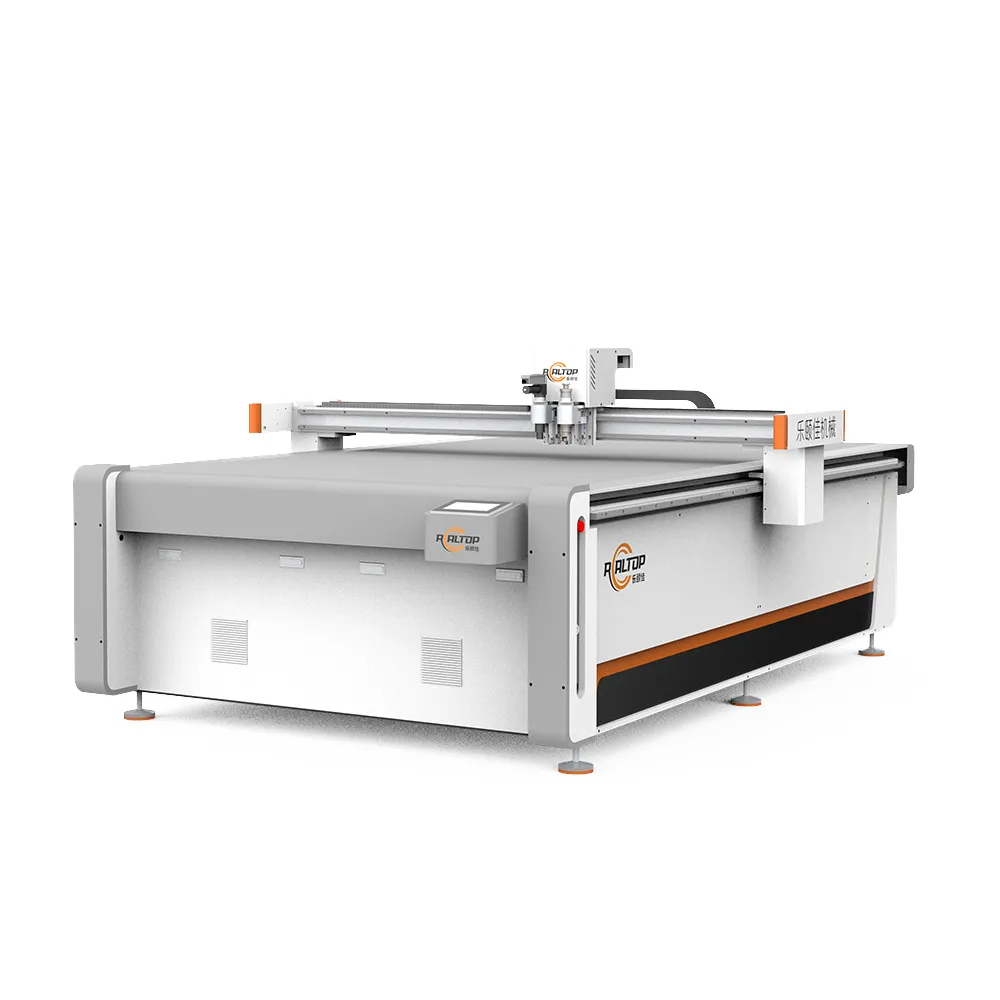
| Model | Advanced Flex Material Cutter 005 |
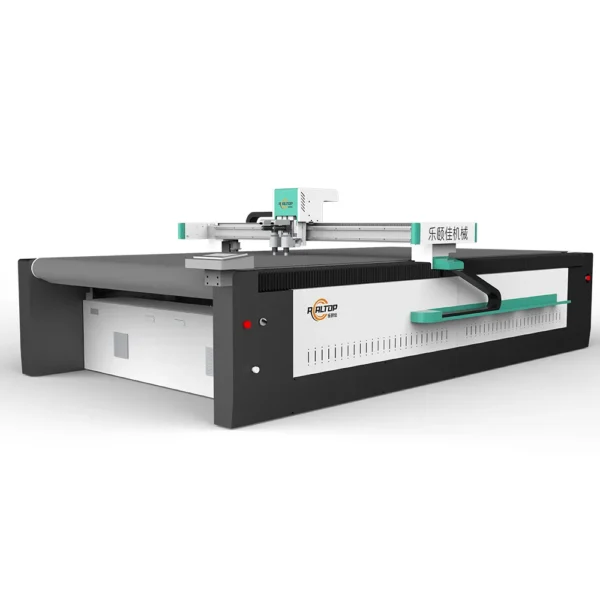
| Product Type | CNC Oscillating Knife Cutting Machine |
| Effective Cutting Area | 2500×1600mm / 2500×2200mm / 3000×2200mm |
| Maximum Traverse Speed | 2000mm/s |
| Reset Accuracy | ±0.1mm |
| Cutting Thickness | ≤40mm (basis not stated in source — confirm material type and density) |
| Table Type | Automatic feeding with industrial belt |
| Tool Head Options | Round knife, oscillating knife, marking pen |
| Positioning System | Panoramic visual positioning for edge and template cutting |
| Control System | REALTOP customized high-speed control system |
| Data Format Compatibility | dxf, plt, ai, pdf |
| Belt Material | Industrial belt with glass fiber tension cord |
| Wiring | Oxygen-free copper shielded wire |
| Bed Treatment | Quenched to eliminate internal stress |
| Safety Devices | Infrared blocking stop, anti-collision protection |
| Voltage | 380V / 220V configurable |
Application Suitability
| Application | Material or Output |
|---|---|
| Gasket manufacturing | Non-asbestos fiber, rubber composite, PTFE, and flexible graphite sheet |
| Automotive sealing | Cork-rubber blends, cork composites, and elastomeric gasket stock |
| Industrial insulation | Aramid fiber, ceramic fiber board, and compressed non-asbestos material |
| Flexible packaging sampling | Cardboard, corrugated fiberboard, and folding carton stock |
| Foam and sponge conversion | Closed-cell PE foam, EVA, and neoprene sheets for sealing profiles |
What "Cutting Thickness ≤40mm" Actually Depends On
The number on the spec sheet assumes a specific material density and hardness — verify it against your hardest production stock before committing to a configuration.
When a gasket supplier in Shandong sent us standard non-asbestos fiber sheets, the Advanced Flex Material Cutter 005 sliced through cleanly at production speed. Three weeks into actual output, they switched to a metal-reinforced composite gasket with embedded stainless steel tang, and the oscillating knife edge chipped within hours. The entire first batch was scrapped [NEED_CITE: tool wear rates on metal-filled gasket composites]. Thickness alone never tells the full story — material composition, filler hardness, and coating layers all determine which tool head survives past the first shift.
Matching Tool Head to Gasket Composition
The oscillating knife handles most non-asbestos fiber and rubber gasket stock cleanly, but denser composites containing metal or ceramic fillers demand a specific blade geometry and oscillation frequency. The round knife works better on softer single-layer materials like cork and closed-cell foam where a dragging cut avoids material distortion. Choosing the correct tool head for the Advanced Flex Material Cutter 005 is not optional — it is the single biggest variable determining edge quality and consumable cost per shift.
Vacuum Zoning and Small Gasket Stability
Small gasket profiles tend to lift off the table surface when vacuum suction is spread across the entire working area. The automatic feeding belt on this CNC Oscillating Knife Cutting Machine requires zone-specific vacuum configuration so that suction concentrates under the actual part footprint. Without proper zoning, thin gasket material shifts mid-cut, producing dimensional errors that only surface during assembly [NEED_CITE: vacuum hold-down requirements for thin flexible materials on conveyor-fed tables].
How the Specs Translate to the Workshop Floor
The ±0.1mm reset accuracy matters most when cutting nested gasket patterns with tight land areas between parts — any accumulated positional drift wastes material and produces out-of-tolerance seals. The quenched bed treatment reduces long-term frame deformation under continuous vibration loads, which directly affects whether the machine maintains its original accuracy after months of two-shift operation. Panoramic visual positioning supports both printed contour tracking and template-based cutting, meaning operators can follow registration marks on pre-printed gasket sheets or align cuts to physical fixtures. The REALTOP customized high-speed control system handles the dxf, plt, ai, and pdf file imports that most gasket design offices already produce, reducing the need for file format conversion before nesting.
The Real Cost of Skipping Sample Validation
Buyers who specify a CNC Oscillating Knife Cutting Machine based solely on working area and speed often discover after installation that their material requires a different blade profile or feed rate. Ragged edges on fiber gaskets mean re-cutting parts and losing yield from every sheet. Crushed foam edges on sealing profiles lead to rejected shipments and customer claims [NEED_CITE: common causes of edge quality failure in flexible material cutting]. A machine that cannot handle your actual stock is not a production asset — it is an expensive problem occupying floor space.
Why Source This Configuration From Jinan
In-house design covers both the knife tooling and the motion platform, so the tool head selection is integrated with the bed and vacuum system rather than sourced separately. Every Advanced Flex Material Cutter 005 ships with a sample cutting report run on the buyer’s own material, confirming edge quality and tool head compatibility before the crate leaves the factory. Voltage, control language, and plug type are locked in during the order stage, avoiding the common surprise of receiving a machine wired for a different electrical standard [NEED_CITE: voltage and frequency standards by export market]. The quenched bed and oxygen-free copper wiring are specified for industrial duty, not swapped for cheaper alternatives on the assembly line.
Documentation & Verification
- Sample cutting report on your specific gasket material with edge quality assessment
- Tool head and vacuum zone configuration list matched to your material type
- Software license and file format compatibility note for dxf, plt, ai, pdf workflows
- Factory test record confirming reset accuracy and cutting speed before dispatch
- Electrical schematic with confirmed voltage and plug specification
Installation, Commissioning & Support
- Foundation must support the full machine weight across the 3000×2200mm maximum footprint without flex
- Dedicated 380V or 220V circuit required with proper grounding for the shielded wiring system
- Machine arrives partially assembled — bed frame and gantry require on-site alignment and leveling
- First-run calibration includes vacuum zone mapping and panoramic camera registration setup
- Operator training covers tool head changeover procedures and blade replacement intervals
- Spare oscillating knife blades and round knife consumables included in initial shipment
What We Need to Quote Your Configuration
Send us your hardest and most abrasive gasket material with the thickness range you run daily. Specify your target sheet size and whether you need automatic roll-fed or manual sheet loading. Confirm your facility voltage, frequency, and preferred control panel language so the Advanced Flex Material Cutter 005 arrives ready to install.
Frequently Asked Questions
Q: Which tool head matches my gasket material thickness and edge quality requirement?
A: The oscillating knife suits most fiber and rubber gasket stock, while the round knife handles softer foams and cork composites. We run a sample cut on your actual material to confirm blade geometry, oscillation frequency, and feed rate before finalizing the tool head configuration for your Advanced Flex Material Cutter 005 order.
Q: How does the panoramic visual positioning handle printed marks at production speed?
A: The camera system reads registration marks on pre-printed gasket sheets and adjusts the cutting path in real time. It supports both automatic edge detection and template alignment, so operators do not need to manually position each sheet. We verify tracking performance on your specific print contrast during the factory test.
Q: What vacuum table zoning is available for small gasket parts to prevent lift?
A: The automatic feeding belt supports configurable vacuum zones that concentrate suction under the part footprint rather than across the full table area. Zone layout is determined by your typical gasket profile sizes and nesting pattern, confirmed during the configuration stage before production.
Q: Can the control system language and voltage be confirmed before shipment?
A: Yes. Voltage selection between 380V and 220V, plug type, and control panel language are specified during the order confirmation stage. The electrical schematic and wiring diagram are sent for buyer approval before the machine enters final assembly, eliminating on-site rewiring or transformer costs.
Q: What file formats does the software import, and is nesting compatible with my setup?
A: The REALTOP control system imports dxf, plt, ai, and pdf files directly. If your existing nesting software outputs in one of these formats, the workflow transfers without conversion. We confirm file compatibility during the sample cutting stage using your actual production files.


商品评价
Clear filtersThere are no reviews yet.