


Fast Shipping
Carrier information

20k products
Payment methods

24/7 Support
Unlimited help desk

2-day Delivery
Track or off orders
Cutting method matched to material — tool head, vacuum zoning and CCD contour specified per fabric type and ply count rather than forced into a single configuration.
Technical Specifications
| Parameter | Value |
|---|---|
| Model | 1625 |
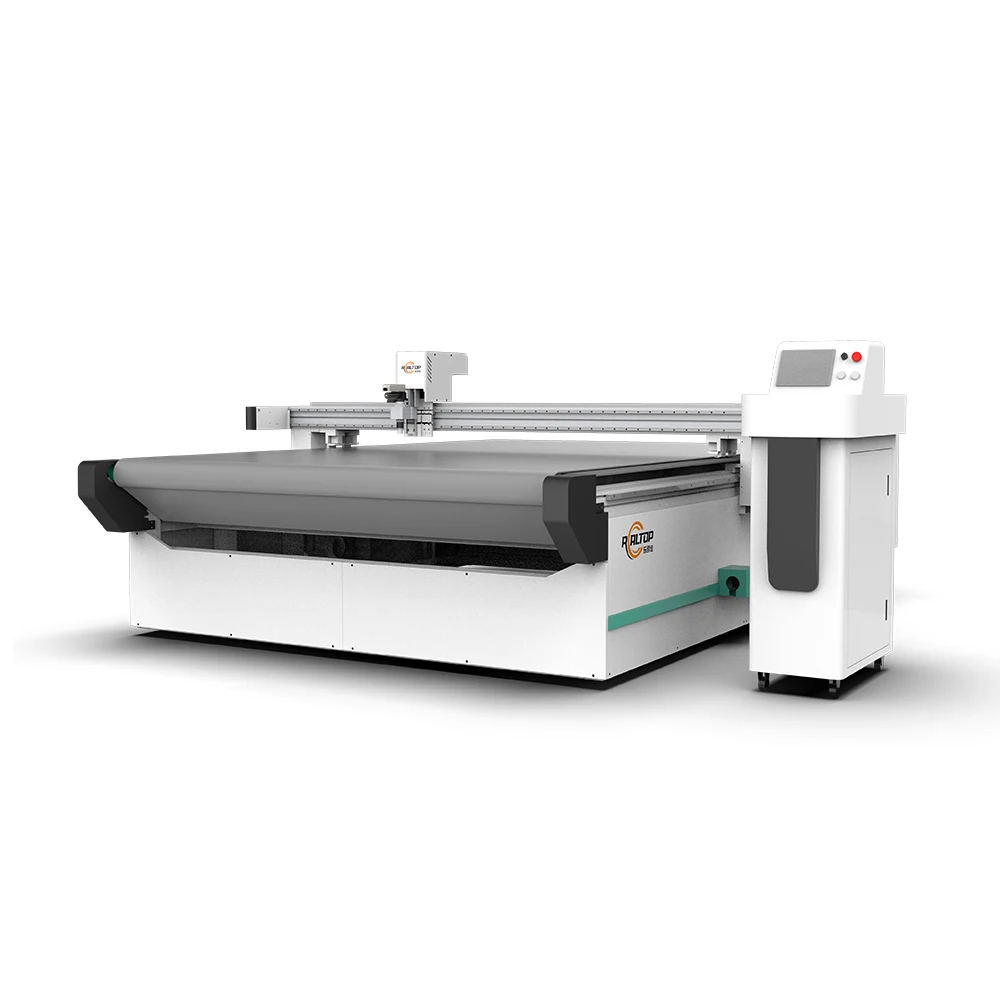
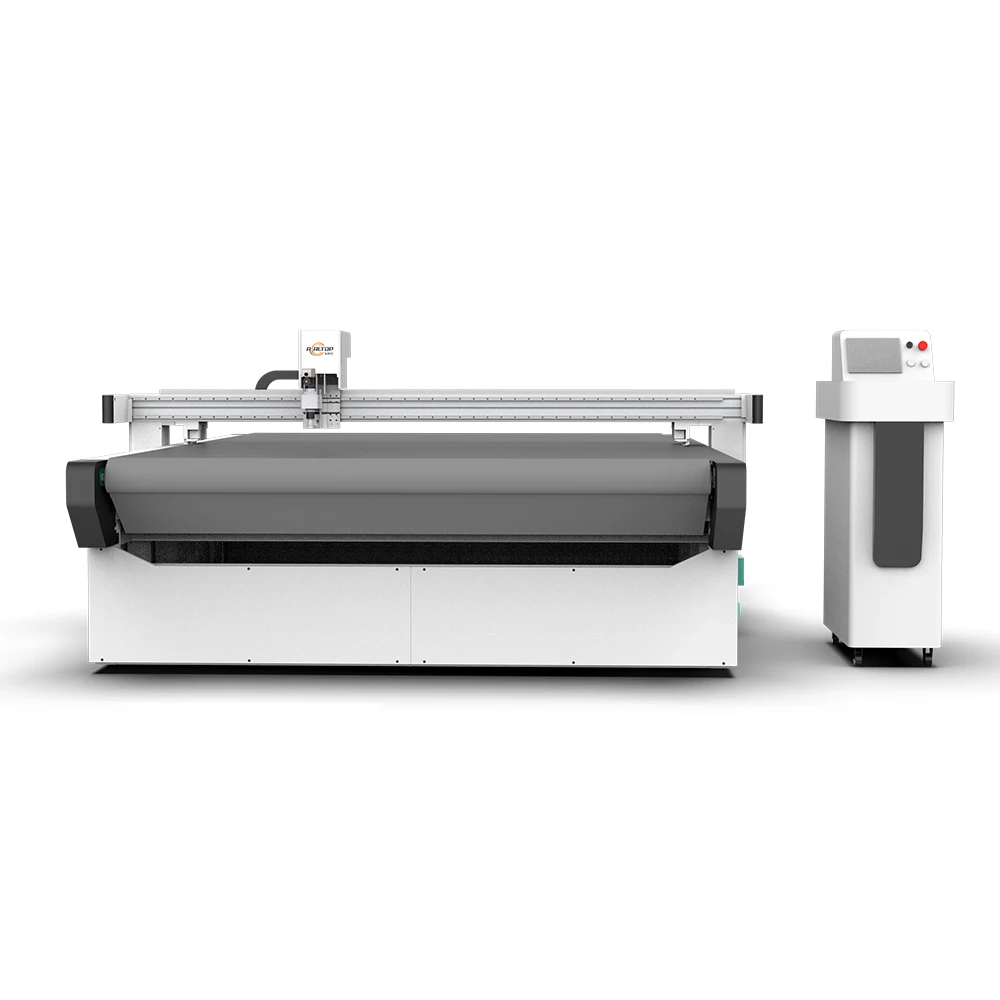
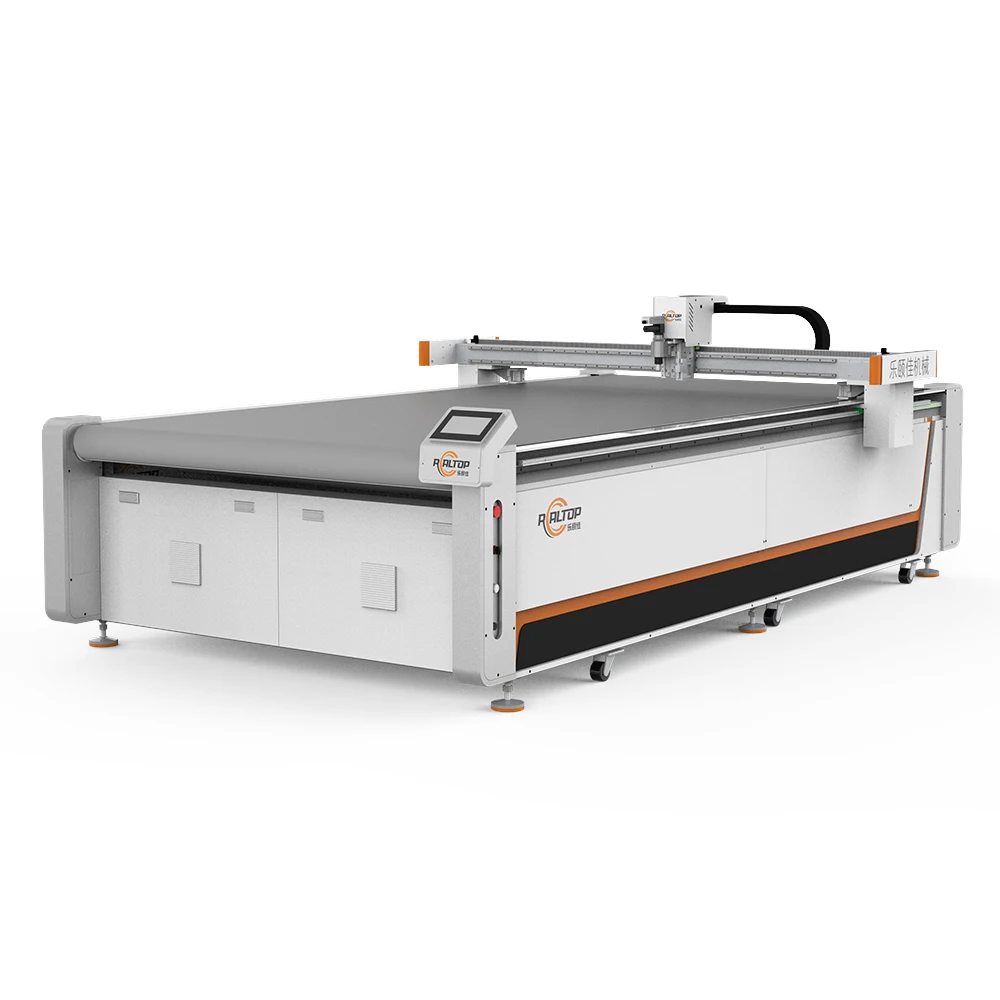
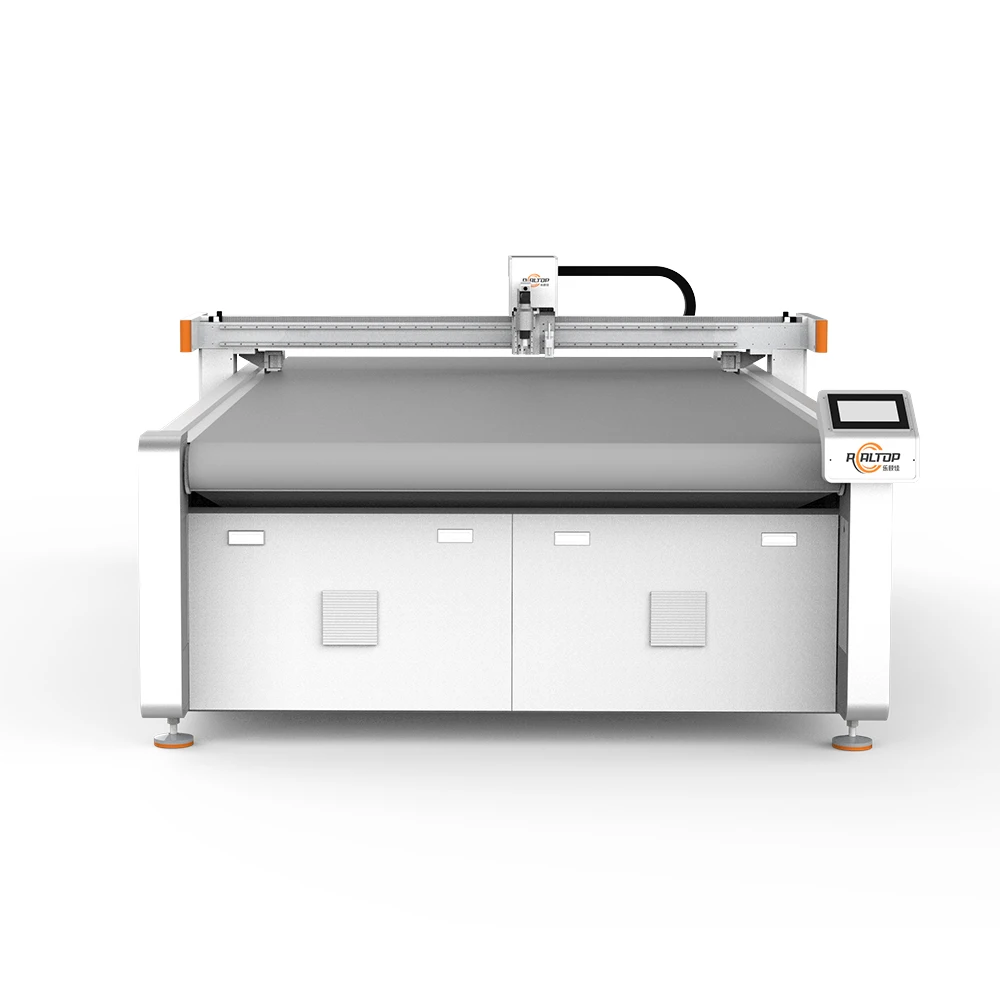
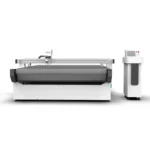
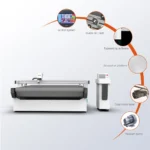
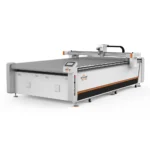
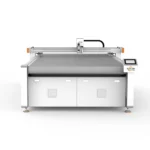
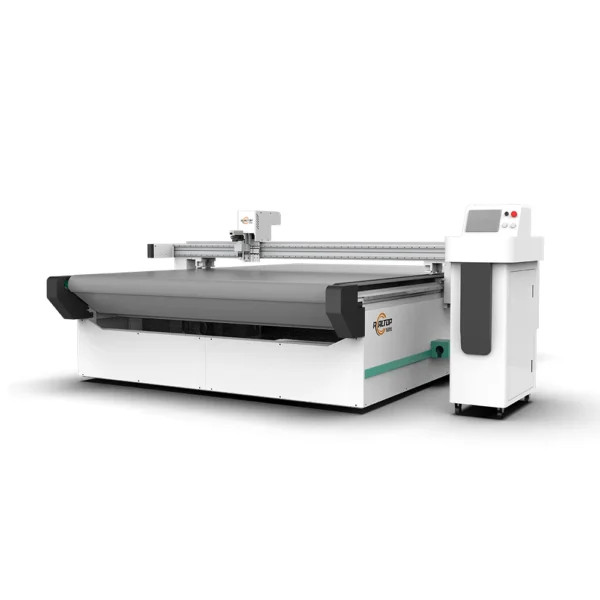
| Product Type | CNC Oscillating Knife Fabric Cutting Machine |
| Working Area | 1600 × 2500 mm |
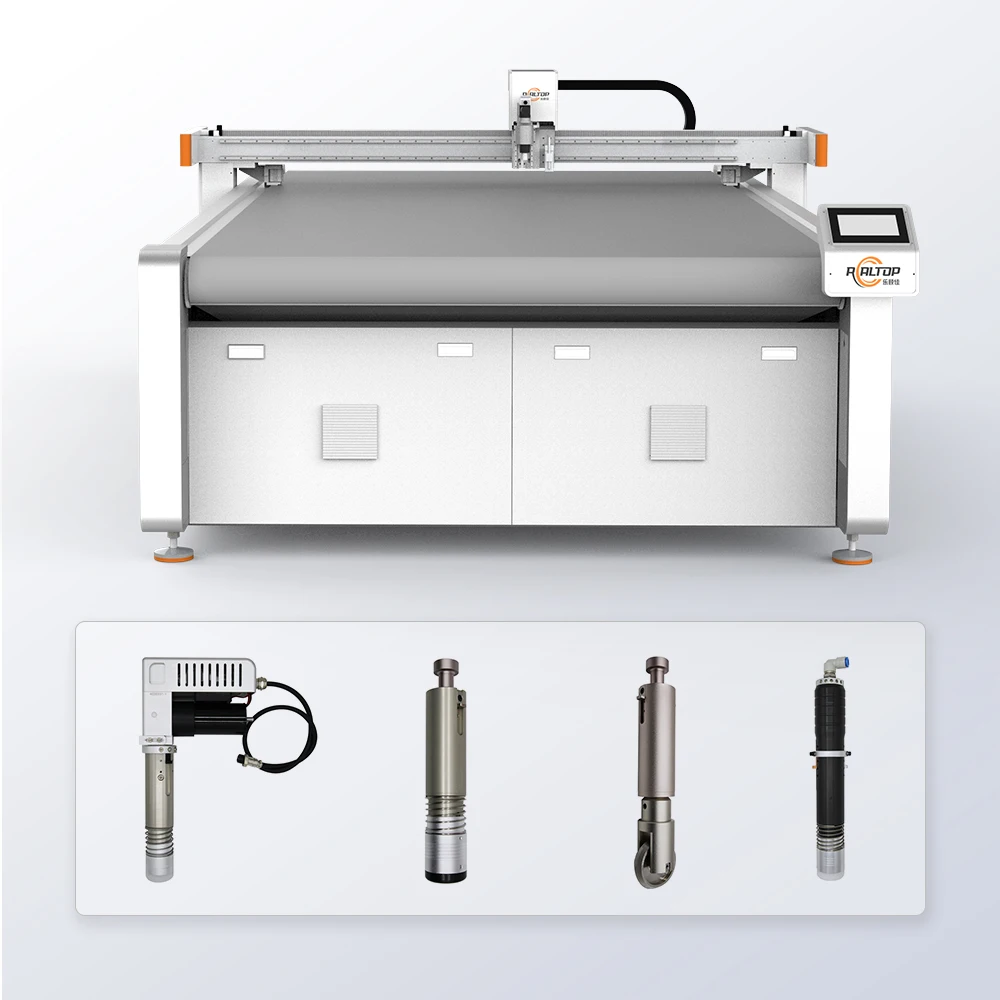
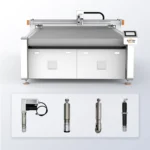
| Tool Head Options | Oscillating knife, Driven rotary knife, Creasing wheel, Kiss cutting tool, Pneumatic knife, Milling tool, V groove knife |
| Cutting Speed | 0 – 2000 mm/s |
| Positioning Accuracy | ±0.1 mm |
| Cutting Thickness | Up to 30 mm (basis not stated in source — confirm material type and layer count) |
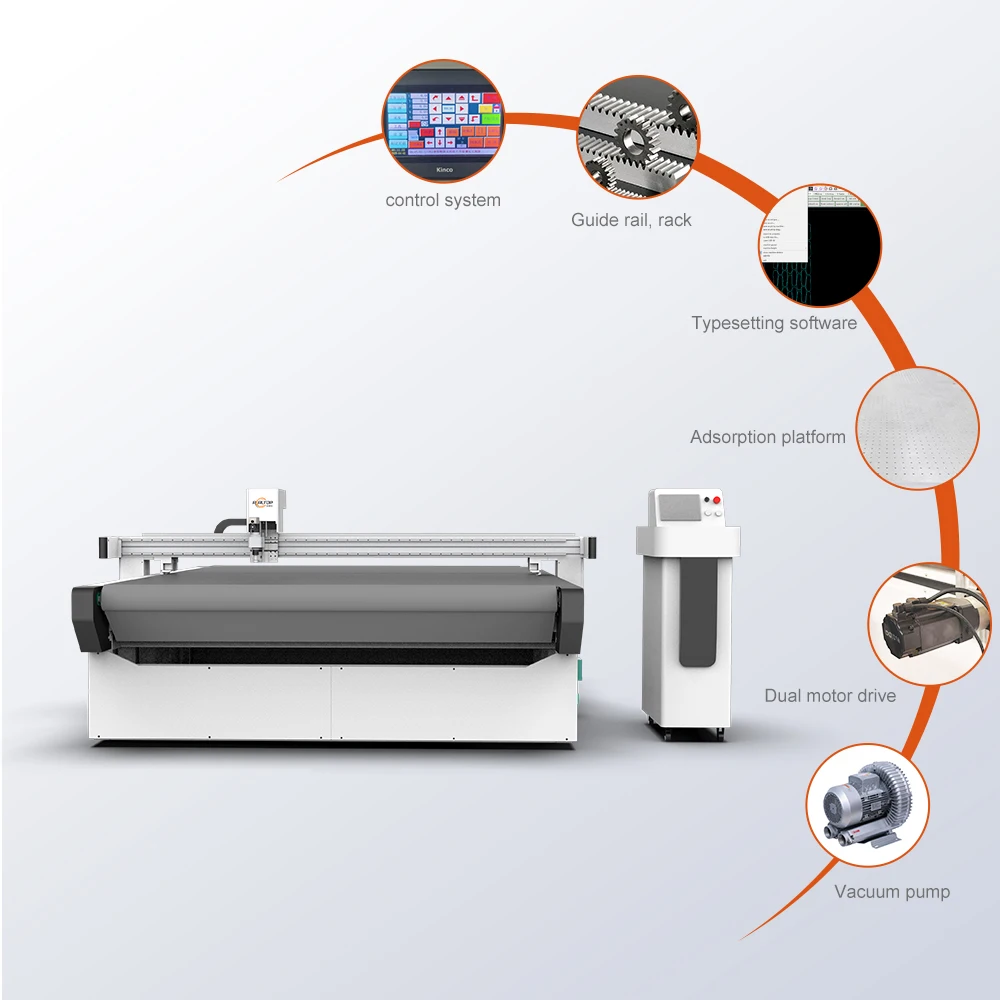
| Vacuum Pump | 9 kW |
| Vacuum Table | Aluminum bellows vacuum table |
| Servo Motor Options | Panasonic, Delta, Dorna (source value — verify against manufacturer catalog) |
| Control System | PLC control panel |
| Voltage Options | 110V, 220V, 380V |
| File Formats Supported | PLT, DXF, AI, PDF |
| Software Language Options | English, Russian, Italian, Chinese; special languages customizable |
| Safety Devices | Infrared sensor device, Emergency stop device |
| Machine Dimensions (L×W×H) | 3300 × 2100 × 1350 mm |
| Multi-layer Cutting | Up to 30–50 mm thickness (basis not stated in source — confirm fabric type and ply count) |
| Cutting Efficiency | 5–6 times manual cutting (basis not stated in source — confirm material, thickness, and pattern complexity) |
| Nesting System | Intelligent nesting with automatic defect avoidance |
| Certification | CE |
Application Suitability
| Application | Material or Output |
|---|---|
| Apparel manufacturing | Suits, knitwear, lace, complex fabrics requiring pattern-matching |
| Automotive interiors | Seat fabrics, carpets, PVC mats cut to burr-free edge standards |
| Home textiles | Sofa fabrics, curtains, rugs processed in multi-layer stacks |
| Composite material processing | Carbon fiber prepreg, aramid, specialty technical materials |
Why Blade Selection Matters More Than Cutting Speed
The right tool head on a CNC oscillating knife cutting machine for fabric determines whether you ship clean parts or scrap entire plies.
I spent a season in a Jinan workshop where a buyer specified a 1625-format cutter purely on table size, then watched the standard oscillating blade crush a 40-ply knit stack instead of shearing through it. The edge fused into a solid lump at the bottom plies. Switching to a driven rotary knife for that specific weave solved the problem in one afternoon, but the buyer had already lost two days of production material. When the tool head is wrong, no amount of servo speed compensates — you simply get ragged output faster [NEED_CITE: oscillating versus rotary knife edge quality on multi-layer textile stacks].
How the Oscillating Head Actually Meets the Fabric
The oscillating knife vibrates at high frequency to slice through woven and non-woven layers without pulling the weave apart, making it the default head for most garment and automotive textile work on this machine. When the material shifts toward open-mesh knits or single-ply technical films, the driven rotary knife takes over with a continuous rolling cut that prevents fraying. For kiss-cut applications on adhesive-backed fabrics or vinyl laminates, the kiss cutting tool scores the top layer without penetrating the backing — a configuration that matters when producing die-cut labels or gasket blanks from the same table.
Vacuum Hold-Down Across a 1600 × 2500 Bed
Holding twenty or thirty plies flat across a bed this size requires more than a single pump pulling from one port. The aluminum bellows vacuum table on the 1625 provides a flat sealing surface that maintains suction even when small pattern pieces are nested in one corner of the bed. Without adequate zoning, small parts like collar stays or gusset panels lift during the return stroke of the blade, producing a skewed cut and often jamming the tool head entirely [NEED_CITE: vacuum table zoning requirements for small textile parts]. The 9 kW pump is sized to keep the bellows sealed under continuous multi-layer cutting conditions, but the buyer should confirm zone configuration against their typical part size range before the machine ships.
What the Spec Sheet Numbers Mean on the Shop Floor
The ±0.1 mm positioning accuracy governs how tightly nested pattern pieces can be placed without overlap waste — at this tolerance, a 2 mm gap between parts is reliable, which directly affects fabric yield on high-cost materials like automotive seat leather or branded apparel textiles. Cutting speed rated to 2000 mm/s is the travel speed of an unloaded head; actual cutting speed drops depending on fabric density, ply count, and blade type, so buyers should request a sample cutting report that documents real cycle times on their own material stack. The PLC control panel runs the nesting software, which imports PLT, DXF, AI and PDF files directly, avoiding a secondary conversion step that can distort curved pattern lines. Voltage options spanning 110V, 220V and 380V mean the servo motors and vacuum pump must be wired to match the buyer’s facility supply — a mismatch discovered after installation can require a transformer retrofit or, worse, burn out the servo drives.
The Cost of Skipping the Sample Cut
A buyer sending a purchase order based on brochure specs and a generic fabric sample is gambling with production material. If the actual stock includes a foam-bonded interlayer or a coated face that the standard oscillating blade cannot penetrate cleanly, the machine will produce frayed edges or incomplete cuts at the bottom plies, and the buyer discovers this only when the first production run fails inspection [NEED_CITE: material thickness and compressibility effects on multi-layer cutting depth]. Tool head swaps after delivery mean downtime, return shipping of the wrong head, and possibly a second factory visit for recalibration — all avoidable if a sample cutting report on the buyer’s own fabric at specified ply count had been required before the order was placed.
Why Production Buyers Source This Configuration Here
In-house design covers both knife and laser cutting paths, so a buyer processing mixed materials — fabric on one line, acrylic templates on another — can match the method to the material rather than forcing everything through one technology. Tool head and table configuration are specified per material type and daily volume, meaning the 1625 leaves the factory with the correct head already mounted and the vacuum zones mapped to the buyer’s nesting layout. CCD camera positioning for printed contour work is available for buyers cutting sublimated sportswear or printed automotive textiles, with mark contrast and capture speed confirmed during the sample cut. Software compatibility is verified against the buyer’s existing PLT, DXF, AI or PDF workflow before the machine enters production, and voltage, plug type and control panel language are documented and confirmed in writing before shipment.
Documentation & Verification
- Machine specification sheet listing all confirmed tool heads and voltage settings
- Electrical schematic with voltage and frequency matched to buyer’s facility
- Sample cutting report on buyer’s own fabric at agreed ply count
- Tool head and table zone configuration list per material type
- Software licence and file format compatibility note before dispatch
- CE declaration covering the configured machine variant
Installation, Commissioning & Support
- 3300 × 2100 mm footprint requires level concrete floor with anchor bolt provisions
- Dedicated 380V or 220V circuit sized for 9 kW vacuum pump plus servo loads
- Table sections and gantry shipped separately, bolted and leveled on site
- First-run parameter tuning on buyer’s fabric at full ply count during commissioning
- PLC control panel language set and nesting software licensed during training
- Spare blade and bellows seal kit provided with maintenance schedule
What to Include in Your Inquiry
Send the fabric type, typical ply count, maximum single-layer thickness, and daily part volume so the correct tool head and vacuum zone layout can be specified from the start. Confirm your facility voltage, frequency, and plug standard, along with the preferred control panel and software language. If your workflow relies on a specific file format or nesting system already in place, include a sample file so compatibility can be verified before quotation.
Frequently Asked Questions
Q: How do I choose between the oscillating knife and the driven rotary knife for my fabric?
A: The oscillating knife handles most woven and non-woven multi-layer stacks with a high-frequency slicing action. The driven rotary knife is better suited to open-weave knits, single-ply technical films, and materials prone to fraying. Your fabric type, weight, and ply count determine the selection, which is confirmed during the sample cutting test before the order is finalized.
Q: Why do small pattern pieces lift off the table during cutting?
A: Small parts lose hold-down force when the vacuum zone beneath them is larger than the part itself, allowing air to leak past the edges. The aluminum bellows table can be configured with zone valves that isolate suction to the active cutting area, keeping even gusset panels and collar stays flat throughout the cycle.
Q: What does the cutting thickness rating actually mean for multi-layer fabric?
A: The listed thickness is measured under uncompressed conditions. Real cutting depth depends on fabric compressibility, weave density, and ply count. A stack of loose-weave cotton compresses differently than bonded automotive carpet. A sample cutting report on your specific material at full production ply count is the only reliable basis for confirming capacity.
Q: Can the nesting software work with my existing pattern files?
A: The control system imports PLT, DXF, AI, and PDF formats directly. If your workflow uses a proprietary nesting platform, a sample file exchange before the order confirms whether the output translates correctly, including curved segments and notch marks, without requiring manual cleanup on the shop floor.


商品评价
Clear filtersThere are no reviews yet.