
Blog
Should Your Brand Co-Exhibit with Distributors at Trade Shows?

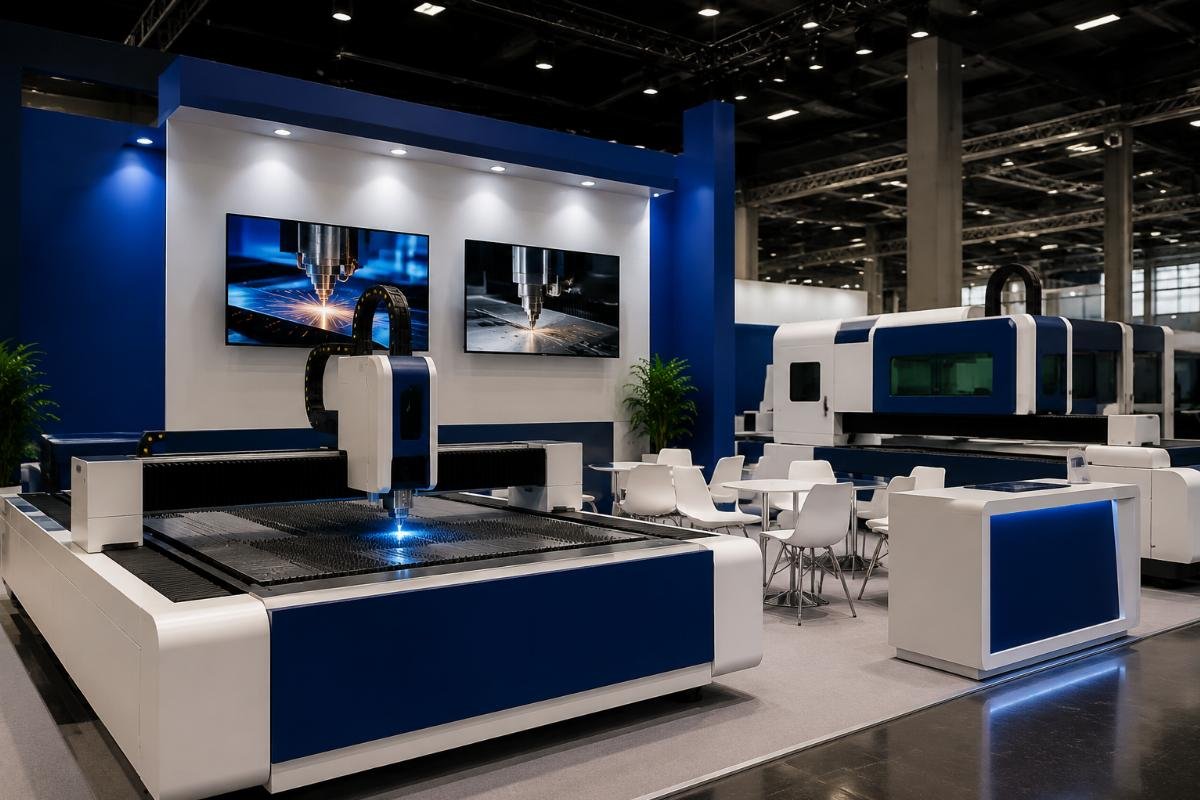
Should Your Brand Co-Exhibit with Distributors at Trade Shows?
You just received an email from your largest distributor. They want to co-exhibit with your brand at next month's industry trade show. The proposal sounds friendly—"Let's share costs and support each other." But you've heard stories from other brands where these arrangements turned into invoice disputes, booth setup arguments, and distributors who stopped answering calls after the show ended.
Co-exhibiting with distributors is not a cost-sharing handshake. It's a multi-party contract that requires written agreements on cost splits, booth control zones, lead ownership rules, and on-floor pricing discipline before you commit a single dollar—or you'll convert goodwill into post-show disputes that damage the channel relationship you intended to strengthen.
I've structured multiple co-exhibits with our CNC knife cutting machine[^1] distributors across different regions. Each time we skipped a contract detail, we paid for it later. Here's how we learned to design these arrangements so both parties walk away with clear value—and how you can avoid the mistakes we made.
What Does Cost-Splitting Actually Mean in Co-Exhibiting?
You assume "sharing costs" means splitting the booth rental 50-50. But trade show expenses include booth design fees, graphic printing, furniture rental, electricity hookups, WiFi packages, carpet upgrades, lead scanning devices, hospitality suite bookings, and shipping costs[^2] for demo machines. Who pays for what?
We use a 40% brand / 60% distributor cost allocation[^3] as our starting model. The brand covers booth construction and signage that displays our logo and machine demos. The distributor covers local logistics, staffing costs, and hospitality items like coffee or literature racks.

This split reflects two realities. First, distributors benefit more directly from regional trade shows than global brands do—they convert leads into immediate sales while we build long-term brand recognition[^4]. Second, distributors control local vendor relationships and can source furniture or printing at lower costs than we can from overseas.
But here's the critical step we learned the hard way: write the cost allocation into a pre-show agreement before booth design begins. When our European distributor and I agreed verbally to "share costs," we both assumed different line items. I thought they'd cover the entire booth rental. They thought I'd pay for all demo machine shipping. The invoice reconciliation took three months and damaged trust[^5] we'd spent years building.
How to Document Cost Allocation Before the Show
Create a simple spreadsheet that lists every anticipated expense category. Assign a responsible party to each line item. Include these categories at minimum:
| Expense Category | Brand Responsibility | Distributor Responsibility | Notes |
|---|---|---|---|
| Booth space rental | 40% | 60% | Based on square meters |
| Booth construction / walls | 100% | 0% | Brand controls structure |
| Graphic design & printing | 100% | 0% | Brand logo must approve |
| Furniture rental | 0% | 100% | Tables, chairs, storage |
| Demo machine shipping | 100% | 0% | Brand owns equipment |
| Electricity & WiFi | 50% | 50% | Shared infrastructure |
| Staffing travel & hotels | 0% | 100% | Distributor brings team |
| Lead scanning devices | 50% | 50% | Both parties use data |
| Hospitality (coffee, snacks) | 0% | 100% | Distributor hosts visitors |
Share this document via email and require written confirmation from the distributor. If they push back on any allocation, negotiate it now—not when the show organizer sends the final invoice. This spreadsheet becomes your reference document when reconciling expenses after the show.
One more thing: specify the payment timeline. We require distributors to pay their portion within 15 days after we send them the reconciled invoice with receipts attached. Delayed payments create cash flow stress and signal future cooperation problems.
You agree to co-exhibit. The distributor books the booth space. You ship your cutting machines for demo. Then you arrive at the venue two days before opening and discover the distributor placed their company banner three times larger than your brand logo. Your machines are positioned in the back corner. Their sales manager tells you, "We paid for most of the space, so we decide the layout."
Physical zoning prevents booth control disputes[^6]. Divide the booth into a brand demonstration zone and a distributor reception zone before installation begins. Put the boundary line in your pre-show agreement and share a floor plan sketch with both teams.
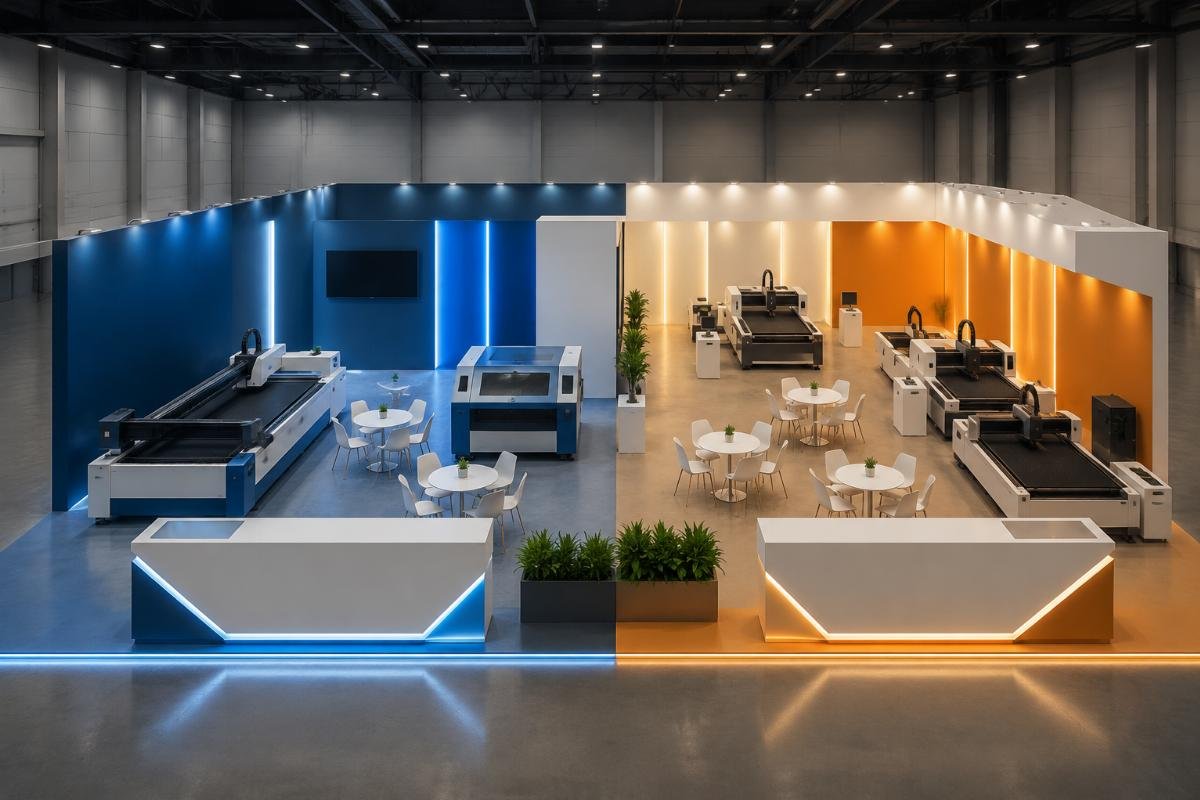
In co-exhibits we've structured, the brand zone occupies 40-50% of the floor space and includes our demo machines, branded backdrop graphics, and a small literature display with specification sheets. The distributor zone contains their reception counter, meeting table, and hospitality area for client discussions. Both zones display both logos, but the proportions shift—brand logo dominates the brand zone, distributor logo dominates their zone.
This zoning approach solves three problems. First, it gives each party control over their designated space without needing approval for every chair placement. Second, it creates natural traffic flow—visitors see the brand demo first, then move to the distributor zone for pricing discussions. Third, it prevents the "whose booth is this?" confusion that happens when logos compete for dominance across the entire space.
What About Logo Size and Signage Approval Rights?
Here's the rule I insist on: the brand must approve all graphics that include our logo, product images, or machine specifications before printing begins[^7]. The distributor can create their own promotional materials for their zone, but anything showing our brand identity requires our design team's sign-off.
Why this matters: We had a South American distributor print a booth backdrop that claimed our leather cutting machine could "cut 100mm thick steel plates." This was physically impossible and violated our product warranty terms. Customers who saw that claim would have returned machines expecting impossible performance. We caught it only because I happened to see their Instagram story the day before the show opened. We had to reprint the entire backdrop overnight at our expense.
Give your distributor a brand asset package that includes approved logos, product photos, and specification language they can use freely. Make it clear that any deviation requires written approval from your marketing team. This isn't about control—it's about protecting the technical accuracy and warranty limits that keep both parties out of legal trouble.
How Do You Decide Who Owns the Leads After the Show?
A visitor walks into your co-exhibit booth. Your brand representative demonstrates the CNC knife cutting machine. The distributor's sales manager discusses pricing and delivery timelines. The visitor scans their badge and says, "Send me a quote next week." Whose lead is this?
Lead attribution rules must be documented before the show, not negotiated when both parties want the same prospect. We use a first-touch attribution model[^8] with regional override clauses.
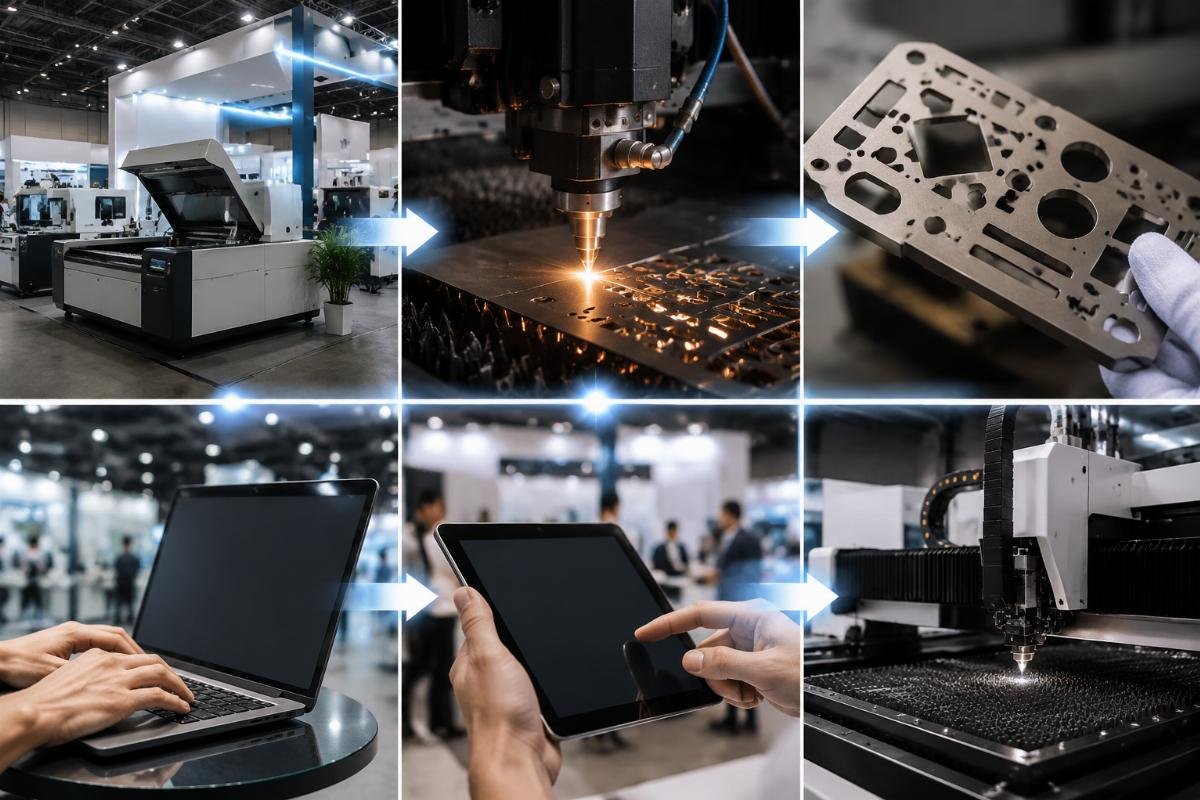
Our standard agreement works like this: If the distributor's staff makes first contact with the visitor, the lead belongs to the distributor. If our brand staff initiates the conversation, we retain the lead but must offer it to the distributor if the visitor's location falls within the distributor's contracted territory. If both parties engage simultaneously, the lead goes to the distributor by default—because they handle local sales execution and we need them to close regional business.
But first-touch attribution only works if you define "first contact" clearly. Does it mean the person who greets the visitor at the booth entrance? The person who answers the first technical question? The person who scans the badge? We learned to specify: the person who scans the visitor's badge owns the lead unless the visitor explicitly requests to speak with the other party.
What If the Visitor Wants to Buy Direct from the Brand?
This happens more often than you'd expect. A visitor walks into the co-exhibit booth, sees your brand name, and says, "Can I order directly from your factory?" If your brand staff says yes and quotes a factory price, you just undercut your distributor's margin and destroyed the channel relationship.
We train our booth staff to respond: "We work with authorized distributors in each region to provide local support, faster delivery, and warranty service. Let me introduce you to [Distributor Name], who handles this territory." Then we immediately hand the conversation to the distributor's team.
If the visitor insists on direct purchasing, we take their contact information and tell them we'll follow up. After the show, we pass the lead to the distributor with full context and let them choose whether to service the account or decline. This approach protects distributor margins while giving us visibility into direct purchase requests that might indicate territory conflicts or pricing gaps.
How to Handle Lead Data Sharing and CRM Access
Both parties want lead data, but who enters it into which CRM system? We use a dual-entry approach: Our brand staff scan badges into our global CRM to track inquiries by product type and geographic source. The distributor scans the same badges into their local CRM to manage follow-up sales activities.
Within 48 hours after the show closes, we export our lead list and send it to the distributor. They do the same for us. This redundancy ensures neither party loses leads due to device failures or data sync errors. The key requirement: both parties must agree that lead data cannot be shared with competing distributors or used for non-sales purposes without written consent.
One distributor asked if they could add leads to their email marketing list for unrelated products. We said no. The leads came to see CNC cutting machines, not industrial pumps or forklift attachments. Respecting lead context preserves customer trust and prevents spam complaints that could damage both our reputations[^9].
What Pricing Rules Prevent On-Floor Channel Conflicts?
You're demonstrating your gasket cutting machine to a potential customer. They ask, "How much does this cost?" Your brand staff wants to help, so they quote the factory wholesale price—$28,000. But your distributor sells the same machine for $35,000 to cover their margin, local support, and warranty service. You just made your distributor look like they're overcharging.
Brand staff should state MSRP only and immediately redirect pricing discussions to the distributor. Factory wholesale prices must never be disclosed on the show floor.

We give our booth staff a reference card that says: "The manufacturer's suggested retail price[^10] for this model starts at $40,000, but our distributor partner offers flexible configurations and payment terms based on your specific application. Let me connect you with [Distributor Name] to discuss your exact requirements."
This approach does three things. First, it sets a price anchor that prevents lowball expectations. Second, it establishes that pricing flexibility exists without revealing our wholesale floor. Third, it positions the distributor as the value-add party who can customize solutions, not just a middleman adding markup.
What If Customers Push Back and Demand Factory Direct Pricing?
Some visitors insist. They say, "I know the factory price is lower. Why should I pay the distributor markup?" Our response: "Our distributors provide local installation support, same-day spare parts access, and warranty service in your language. If you prefer direct factory ordering, we can discuss that after the show, but you'll handle your own installation, training, and parts sourcing."
This isn't a threat. It's a factual statement. Most customers realize that the distributor markup pays for services they'll need when their machine requires setup assistance or a replacement part overnight. The few who still want direct purchasing are usually poor-fit customers who'll demand excessive support anyway.
Here's the critical policy: If a customer insists on direct purchasing at the show, take their contact information but do not quote a price. Tell them, "I'll have our regional sales team contact you next week with options." After the show, we pass that lead to the distributor with a note: "Customer requested direct pricing—please assess whether they're in your target segment and decide whether to service them."
Should You Offer Special Show Discounts at Co-Exhibit Booths?
Distributors often want to run "show specials" to boost on-floor orders. We allow this, but with clear boundaries. The distributor can discount their standard retail price by up to 10% without our approval. Discounts beyond 10% require our written consent 30 days before the show opens, and we'll negotiate a wholesale price adjustment to protect their margin.
Why 30 days? Because distributors have tried to surprise us with "50% off for show orders" promotions the morning of opening day. This trains customers to never pay full price and sets unrealistic expectations for future orders. We learned to require advance notice so we can evaluate whether aggressive discounts will damage long-term brand positioning.
If the distributor offers a show special, they must clearly communicate that it's a limited-time promotion that expires at booth closing time. No "contact us next week and we'll match the show price" extensions. This creates urgency and prevents post-show price disputes.
Conclusion
Brand-distributor co-exhibiting works when you replace verbal goodwill with written agreements on cost splits, booth zoning, lead attribution, and pricing discipline. Skip the contract, and you'll spend more time resolving disputes than serving customers.
[^1]: "Computer numerical control - Wikipedia", https://en.wikipedia.org/wiki/Computer_numerical_control. CNC (Computer Numerical Control) knife cutting machines are automated cutting systems that use computer-controlled blades to precisely cut materials such as textiles, composites, gaskets, and packaging materials, offering an alternative to laser or die cutting for materials sensitive to heat or requiring frequent pattern changes. Evidence role: definition; source type: encyclopedia. Supports: what CNC knife cutting machines are and their industrial purpose. [^2]: "Trade Show Budgeting Guide | Real Costs, ROI & Smart Investment ...", https://blog.exoptions.com/trade-show-budgeting-real-cost-of-exhibiting?hsLang=en. Industry research on trade show exhibitor spending confirms that participation costs extend across multiple categories including booth construction, graphics, utilities, technology, and logistics, though specific line items vary by show size and industry sector. Evidence role: general_support; source type: research. Supports: that trade show participation involves multiple expense categories beyond booth rental. Scope note: Source may not enumerate all categories listed or may use different terminology for expense classifications [^3]: "#1 Best Trade Show Models & Promotional Models", https://www.models4tradeshows.com/. Trade show partnership literature indicates that cost allocation in co-exhibiting arrangements varies based on strategic objectives, territorial benefits, and resource contributions, with no single industry-standard ratio. Evidence role: general_support; source type: other. Supports: that cost-sharing arrangements in co-exhibiting require negotiated allocation models. Scope note: Sources may not validate the specific 40/60 split mentioned, which appears to be a company-specific practice rather than an established benchmark [^4]: "Why Manufacturers Need More Than Distributor Push | Company 119", https://www.company119.com/why-manufacturers-need-more-than-distributor-push/. Marketing research on channel dynamics indicates that manufacturers and distributors often pursue distinct objectives at trade shows, with distributors typically focused on near-term sales opportunities while manufacturers emphasize brand positioning and market intelligence, though both parties can achieve multiple objectives simultaneously. Evidence role: general_support; source type: research. Supports: that different channel partners may have different objectives and ROI metrics for trade show participation. Scope note: Research may not directly compare conversion rates or quantify the relative benefit differential claimed [^5]: "Channel Convergence: Merging Perspectives and Conquering ...", https://cmr.berkeley.edu/2025/03/channel-convergence-merging-perspectives-and-conquering-conflicts/. Research on inter-organizational relationships demonstrates that contract ambiguity and misaligned expectations are significant sources of channel conflict, often resulting in extended dispute resolution periods and erosion of partner trust, though specific resolution timelines vary by context. Evidence role: general_support; source type: research. Supports: that ambiguous agreements can lead to disputes and relationship strain in business partnerships. Scope note: Research addresses general contract ambiguity rather than trade show co-exhibiting specifically [^6]: "Investigating conflict behaviours and characteristics in shared space ...", https://pubmed.ncbi.nlm.nih.gov/34053614/. Research on shared workspace management indicates that clearly defined territorial boundaries and usage rights can reduce conflict by establishing clear expectations and reducing ambiguity about control, though effectiveness depends on mutual agreement and enforcement mechanisms. Evidence role: mechanism; source type: research. Supports: that clearly defined spatial boundaries can reduce territorial disputes in shared spaces. Scope note: Research addresses general shared space dynamics rather than trade show co-exhibiting specifically [^7]: "Brand License Agreement - SEC.gov", https://www.sec.gov/Archives/edgar/data/1388514/000119312507220484/dex23h4.htm. Trademark law and brand management practices support manufacturers' rights to control how authorized distributors use brand assets, logos, and product claims to ensure consistency, accuracy, and protection against misrepresentation that could create liability or dilute brand value. Evidence role: general_support; source type: other. Supports: that brand owners have legitimate interests in controlling how their trademarks and product information are used by partners. [^8]: "Lead Attribution: How to Build a System That Works", https://www.attributionapp.com/blog/lead-attribution/. First-touch attribution is a marketing model that assigns credit for a conversion or lead to the initial touchpoint in the customer journey, though its application to multi-party trade show environments represents an adaptation of the standard digital marketing framework. Evidence role: definition; source type: education. Supports: what first-touch attribution means as a lead assignment methodology. Scope note: Sources primarily address digital marketing attribution rather than physical trade show lead assignment between partners [^9]: "CAN-SPAM - Federal Communications Commission", https://www.fcc.gov/general/can-spam. Email marketing regulations such as the CAN-SPAM Act in the United States and GDPR in Europe require consent for commercial messages and provide recipients with complaint mechanisms, with violations potentially resulting in penalties, deliverability issues, and reputational harm for sending organizations. Evidence role: general_support; source type: government. Supports: that unsolicited commercial email can result in complaints and legal/reputational consequences. Scope note: Regulations vary by jurisdiction and the specific reputational impact depends on complaint volume and context [^10]: "The Antitrust Consequences of Manufacturer-Suggested Retail ...", https://digitalcommons.law.uw.edu/wlr/vol54/iss4/2/. Manufacturer's Suggested Retail Price (MSRP) is a recommended selling price set by manufacturers to provide pricing guidance to retailers and distributors, though actual selling prices may vary based on market conditions, competitive factors, and retailer discretion. Evidence role: definition; source type: encyclopedia. Supports: what MSRP means and its function in manufacturer-distributor relationships.


