

Fast Shipping
Carrier information

20k products
Payment methods

24/7 Support
Unlimited help desk

2-day Delivery
Track or off orders
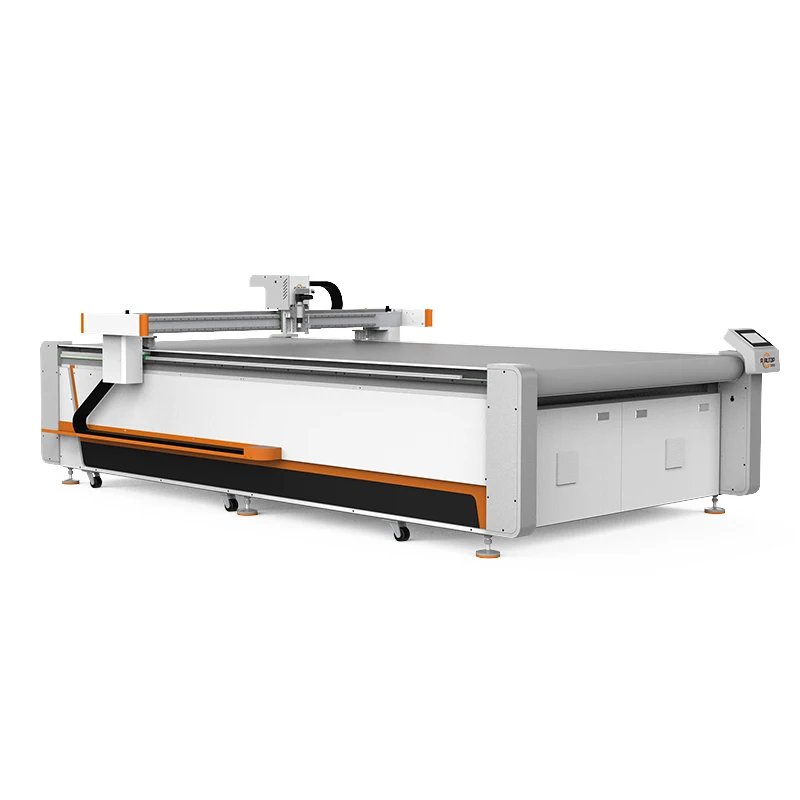
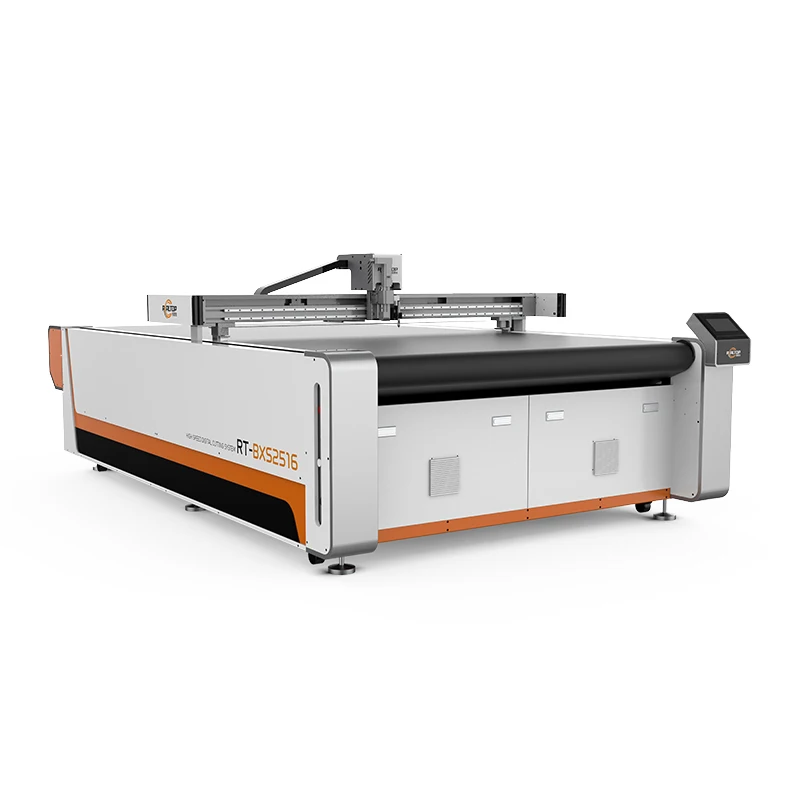
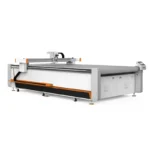
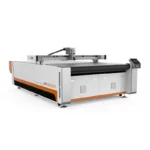
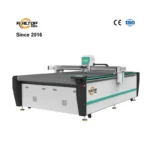
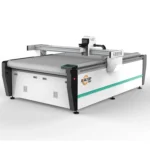
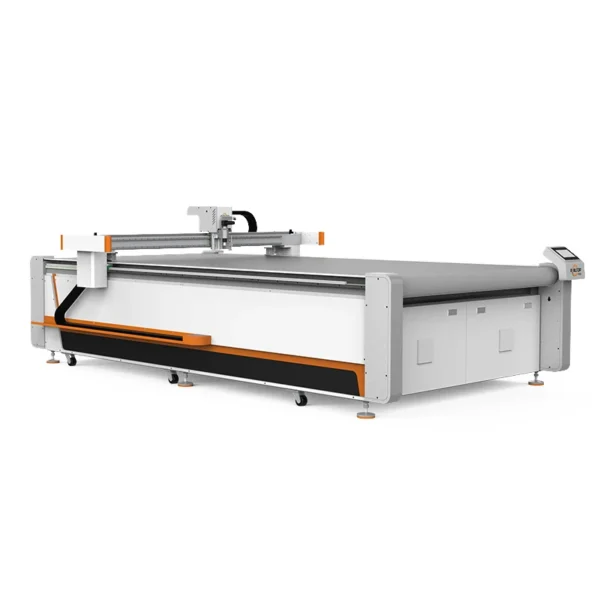
Tool Head Configuration Per Material — The RT-D2516/RT-S2516 flatbed supports oscillating knife, drag knife, pneumatic knife and creasing wheel on a single platform, so fabric, foam and gasket producers match the cutting method to the material stack rather than force one tool across incompatible substrates.
Technical Specifications
| Parameter | Value |
|---|---|
| Model | RT-D2516/RT-S2516 |
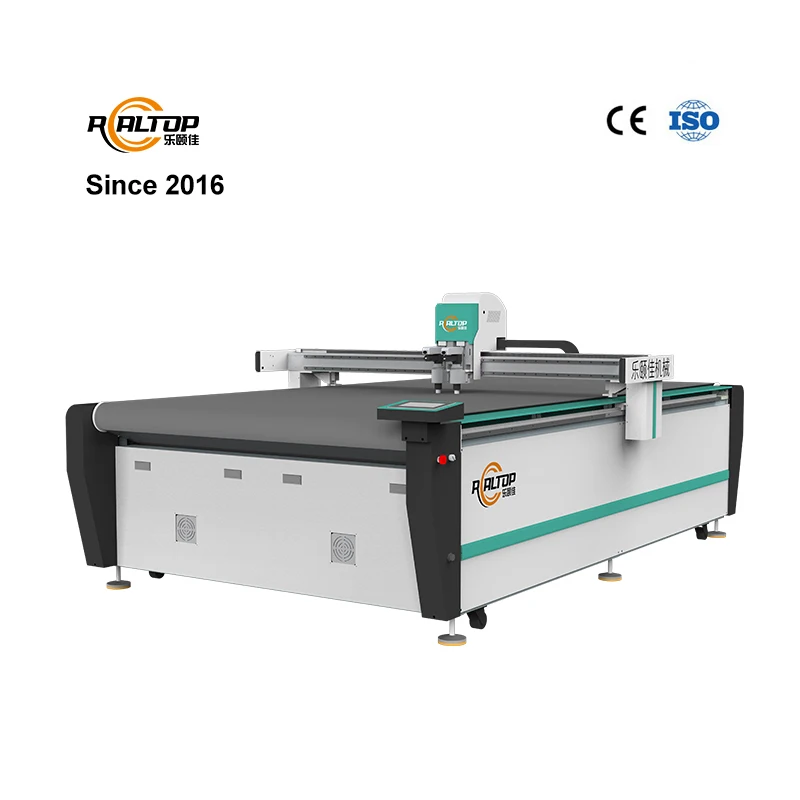
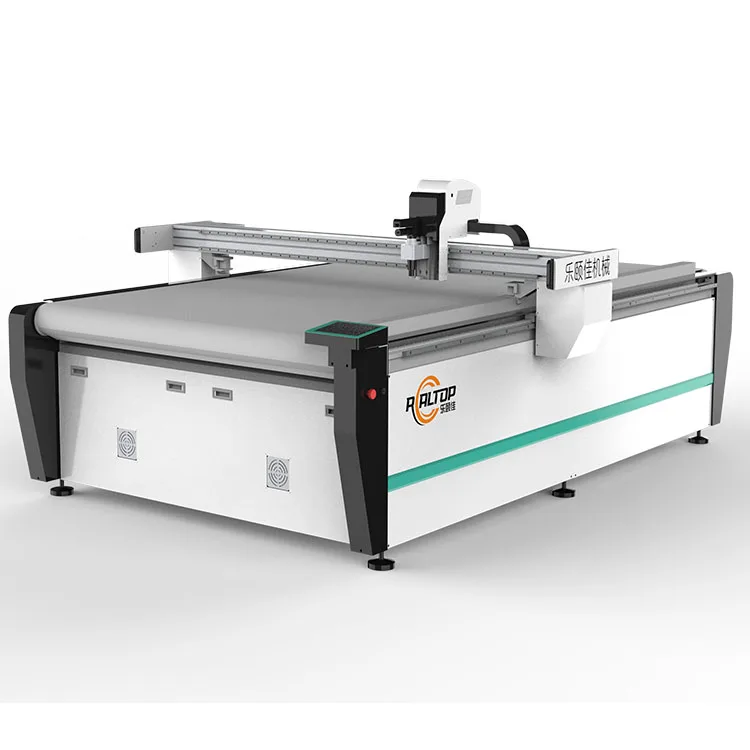
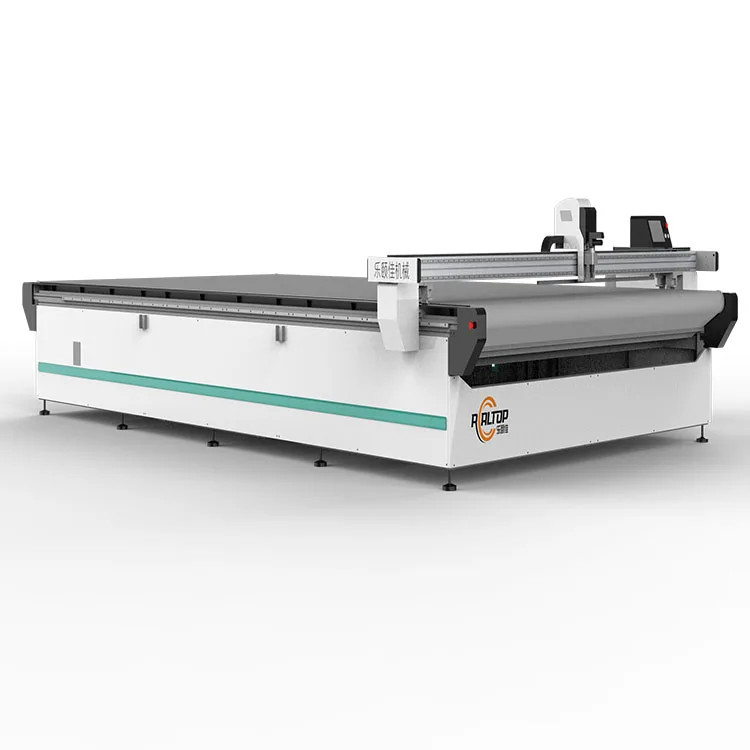
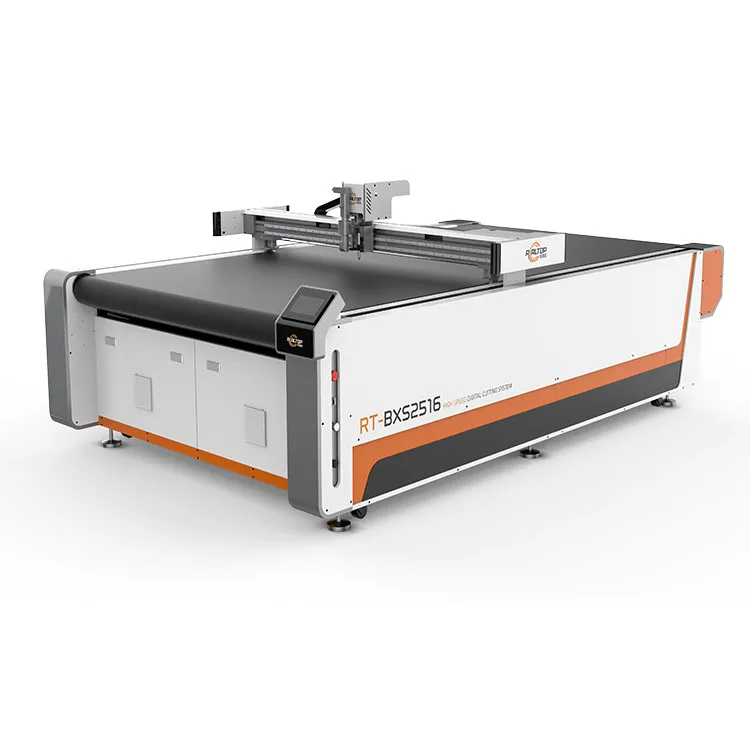
| Product Type | CNC Oscillating Knife Cutting Machine |
| Working Area | 1600×2500 mm |
| Machine Size | 3450×2300×1250 mm |
| Rated Power | 9 kW |
| Voltage | 380V±10% |
| Control System | CNC with touch screen, multi-language support |
| Transmission | Digital servo motor (Delta or Panasonic optional), linear guide, synchronous belt, ball screw |
| Translational Velocity | 800–2000 mm/s |
| Cutting Speed | 200–800 mm/s (varies by material) |
| Cutting Thickness | ≤100 mm (varies with material) |
| Repeated Accuracy | ≤0.1 mm |
| Tool Head Options | Oscillating knife, pneumatic knife, high-power vibrating knife, circular knife, V-cutting knife, drag knife, creasing wheel, dotted line knife, punching, brush |
| Multifunctional Head | Swiss imported knife with vibration full cutting, half cutting and cursor location |
| Visual Positioning | Small CCD mark-point, panoramic camera recognition, projection positioning |
| Work Table | Magnesium-aluminum alloy vacuum adsorption (PVDF coated, anodic oxidation); flat or auto feeding options |
| Vacuum Pump | 7.5 kW, aviation aluminum shell with built-in silencer |
| Conveyor Belt | Germany imported |
| Linear Guide | Taiwan Hiwin rail |
| Safety Devices | Infrared induction blocking, anti-collision sensors, emergency stop |
| Software | Auto typesetting, supports PLT, DXF, AI; HP-GL compatible |
| Language Options | English, Russian, Italian, Chinese; special languages customizable |
| Assembly State | Fully assembled (split box platform for transport) |
| Certification | CE |
Application Suitability
| Application | Material or Output |
|---|---|
| Garment and footwear cutting | Multi-layer fabric, lining, shoe uppers, luggage material with nesting for yield |
| Automotive interior and gasket production | Leather, sponge composite, PU/EVA foam, XPE, sealing pads |
| Packaging and carton sample making | Corrugated cardboard, card stock, sticker, film with creasing and drag knife |
| Soft home furnishings | Carpet, non-woven fabric, textile, PU leather for upholstery and drapery |
| Composite and foam fabrication | Carbon fiber prepreg, fiberglass, silicone, soft glass, rubber sheets |
| Graphic advertising and printing | Vinyl, PVC board, PP, PE with CCD contour recognition |
Why Your CNC Oscillating Knife Cutting Machine Specifications Must Address Tool Head First
A working area figure alone tells you nothing about whether the machine can actually cut your material cleanly.
I once watched a production line stop for two days because the oscillating knife head that ran perfectly on standard polyester fabric started dragging and melting through a batch of coated composite textile. The machine had the right bed size and the right speed on paper. What it lacked was a tool head matched to that specific coating chemistry and the vacuum zoning to hold thin laminate flat under high-frequency vibration. When buyers evaluate CNC oscillating knife cutting machine specifications, the conversation usually starts with bed size and ends there. That leaves the actual cutting quality to chance [NEED_CITE: tool head selection criteria for oscillating knife systems on coated and composite materials].
Matching Oscillating Amplitude and Blade Geometry to Your Material Stack
The RT-D2516/RT-S2516 carries a full tool head menu — oscillating knife, high-power vibrating knife, pneumatic knife, drag knife, circular knife and creasing wheel — because different materials demand different blade mechanics. A high-amplitude oscillating knife slices through dense foam and multi-layer fabric without compression damage, while a drag knife traces tight contours on thin vinyl and sticker film. The Swiss imported multifunctional head adds vibration full cutting, half cutting and cursor location in one unit, which matters when a single job switches between through-cutting and kiss-cutting on gasket material. Choosing the wrong oscillation frequency on a CNC oscillating knife cutting machine produces ragged edges on woven fabric or crushes open-cell foam instead of shearing it.
Vacuum Zoning and Table Surface for Small-Part Stability
The magnesium-aluminum alloy vacuum table on this flatbed uses PVDF fluorocarbon powder spraying with anodic and hard oxidation layers, paired with a 7.5 kW vacuum pump in an aviation aluminum housing. That pump capacity matters less than how the table surface is zoned. When you cut small gasket pieces or shoe upper components, a single large vacuum zone cannot generate enough localized hold-down force to prevent material lift at 800 mm/s translational speed. The table zoning layout must match the typical part footprint on your nesting sheet. I have seen producers lose entire nesting runs because small parts lifted into the knife path mid-cut, ruining surrounding pieces and forcing a full re-sheet [NEED_CITE: vacuum hold-down requirements for small-part CNC knife cutting].
Servo Drive and Guide Rail Precision in Production Conditions
The Delta or Panasonic digital servo motors, Taiwan Hiwin linear guides and ball screw transmission deliver ≤0.1 mm repeated accuracy across the 1600×2500 mm working area. In garment and automotive interior cutting, that tolerance determines whether a set of leather seat cover pieces will stitch together without puckering after hundreds of cuts per shift. The 200–800 mm/s cutting speed range means the servo system must maintain positional accuracy across both slow contour work on thick PU foam and fast straight runs on woven textile. Speed without positional repeatability produces cumulative drift that only shows up when the operator tries to assemble the cut pieces downstream.
What Happens When CCD Contour Recognition Fails at Production Speed
The RT-D2516/RT-S2516 offers three visual positioning options: small CCD mark-point positioning, panoramic camera recognition and projection positioning. For printed textile and advertising vinyl producers, the camera must read registration marks while the gantry moves at full translational velocity, not just during a slow calibration pass. A CCD system that tracks marks accurately at 400 mm/s but loses registration above 1000 mm/s will force the operator to slow the entire nesting job down, which defeats the purpose of buying an automated CNC oscillating knife cutting machine in the first place [NEED_CITE: CCD registration accuracy at varying gantry speeds on digital cutting tables].
Why Fabric, Leather and Foam Producers Source This Configuration Here
The design and production team covers both knife and laser cutting technologies in-house, which means the RT-D2516/RT-S2516 tool head configuration is specified against actual material samples rather than a generic catalogue page. Every machine ships with a factory test record on the buyer’s own material, documenting edge quality, cutting speed and the exact blade type used. The magnesium-aluminum vacuum table with PVDF coating resists the adhesive residue that coated textiles and PU films leave behind, extending table service life in high-volume fabric production. Software compatibility with PLT, DXF and AI files plus HP-GL instruction sets is confirmed before the order is released to the assembly floor, eliminating the post-delivery discovery that the nesting workflow will not import the buyer’s existing job files.
Documentation & Verification
- Factory test record cut on your specific fabric, foam or leather sample before dispatch
- Electrical schematic confirming 380V±10% and frequency for your local grid standard
- Tool head and vacuum zone configuration list matched to your material stack
- Software licence and file format compatibility note for PLT, DXF and AI workflows
- CE declaration and packing photographs for customs and insurance documentation
Installation, Commissioning & Support
- 3450×2300×1250 mm machine footprint requires level concrete floor with anchor provisions for the 9 kW rated system
- Dedicated 380V±10% circuit with correct breaker rating for combined spindle and 7.5 kW vacuum pump draw
- Split box platform option enables container transport with full re-assembly at destination
- First-run calibration of servo motors, CCD positioning and vacuum zoning zones by commissioning engineer
- Operator training on tool head changeover, blade replacement intervals and nesting software setup
- Spare parts list covering blades, vacuum seals and guide rail lubrication schedule
What We Need to Recommend the Right Configuration
Send us a sample of your actual production material — not a data sheet, the physical roll or sheet you run on the shop floor. We also need your typical nesting file format, daily cutting volume, the voltage and frequency standard at your facility, and your preferred control panel language. With those inputs we can configure the tool head, vacuum zoning and CCD positioning setup and run a sample cut before quoting the machine.
Frequently Asked Questions
Q: How do I choose the right tool head for my material type and thickness?
A: Material type determines the cutting mechanism. Oscillating knife handles dense foam, multi-layer fabric and thick composites through high-frequency blade vibration. Drag knife suits thin vinyl, sticker and film with tight contour work. Pneumatic knife works for single-ply textile and leather. We run your actual material sample on multiple head types and document edge quality, cutting speed and blade wear rate before recommending a configuration.
Q: Can the CCD camera track printed registration marks at full production speed?
A: The system offers small CCD mark-point, panoramic camera and projection positioning options. Tracking accuracy at full gantry speed depends on print contrast, mark size and lighting conditions in your workshop. We test your printed material on the machine at production translational velocity, not at a reduced calibration speed, and report the maximum reliable cutting speed before you commit.
Q: How is vacuum table zoning configured for small versus large parts?
A: The magnesium-aluminum table can be zoned into independent suction areas. Small gasket or shoe upper parts require dense zoning so vacuum concentrates under each piece. Large-format fabric or carpet sheets use broader zones for full-sheet hold-down. We configure the zone layout based on your typical nesting pattern and verify hold-down force with your material during the sample cutting test.
Q: What file formats does the nesting software accept?
A: The auto typesetting software supports PLT, DXF and AI file formats with an HP-GL compatible instruction system. Before order confirmation, we run your actual production files through the nesting workflow to verify import, layer recognition and toolpath assignment. If your current CAD output uses a proprietary export format, we test conversion and report any geometry loss before shipment.
Q: What does the sample cutting test look like before I commit?
A: You send your production material to our facility. We mount it on the vacuum table, select candidate tool heads based on your specification, and run your actual nesting file at production cutting speed. You receive a sample cutting report documenting edge quality photographs, tool head used, cutting speed achieved and any material-specific observations. No order is released until you approve the sample result.


商品评价
Clear filtersThere are no reviews yet.