


Fast Shipping
Carrier information

20k products
Payment methods

24/7 Support
Unlimited help desk

2-day Delivery
Track or off orders
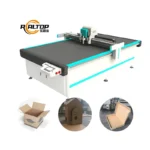
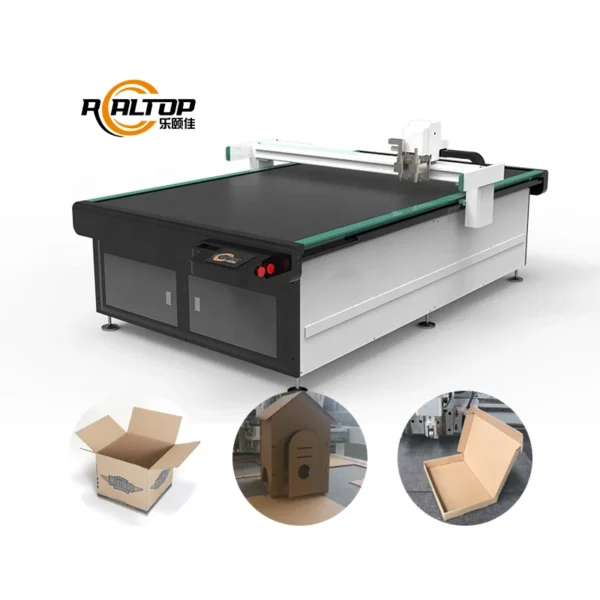
Honeycomb Vacuum Zoning — The aluminum alloy honeycomb table on the RT–R2513 is divided into independent adsorption zones, so small sticker contours stay flat without requiring a full-sheet vacuum draw.
Technical Specifications
| Parameter | Value |
|---|---|
| Product Type | CNC Oscillating Knife Cutting Machine |
| Model | RT–R2513 / RT-D2516 / RT-S2516 |
| Working Area | 2500×1300 mm (RT–R2513) / 1600×2500 mm (RT-D2516 / RT-S2516) |
| Machine Size | 3550×1910×1400 mm (RT–R2513) / 3450×2300×1250 mm (RT-D2516 / RT-S2516) |
| Cutting Tools | Oscillating knife, creasing tool, kiss-cut knife, round punch |
| Cutting Thickness | ≤18 mm |
| Fixing Method | Vacuum system with 7.5 kW pump |
| Vacuum Table | Aluminum alloy honeycomb structure |
| Rated Power | 9 kW |
| Voltage | 380V |
| Servo Motor | Dongling servo (Delta servo motor available) |
| Guide Rail | Imported straight-line square guide |
| Transmission | Rack transmission, Ethernet port |
| Repeated Accuracy | <0.05 mm |
| Profile Format | DXF, OLT, PDF, AI |
| Safety Device | Infrared sensors |
| Frame | Welded thick square seamless steel, high-temperature treated |
| Felt Belt | Wear-resistant anti-pull composite fiber |
| Software | Professional carton nesting software, multi-language |
| Delivery Time | <30 working days |
Application Suitability
| Application | Material or Output |
|---|---|
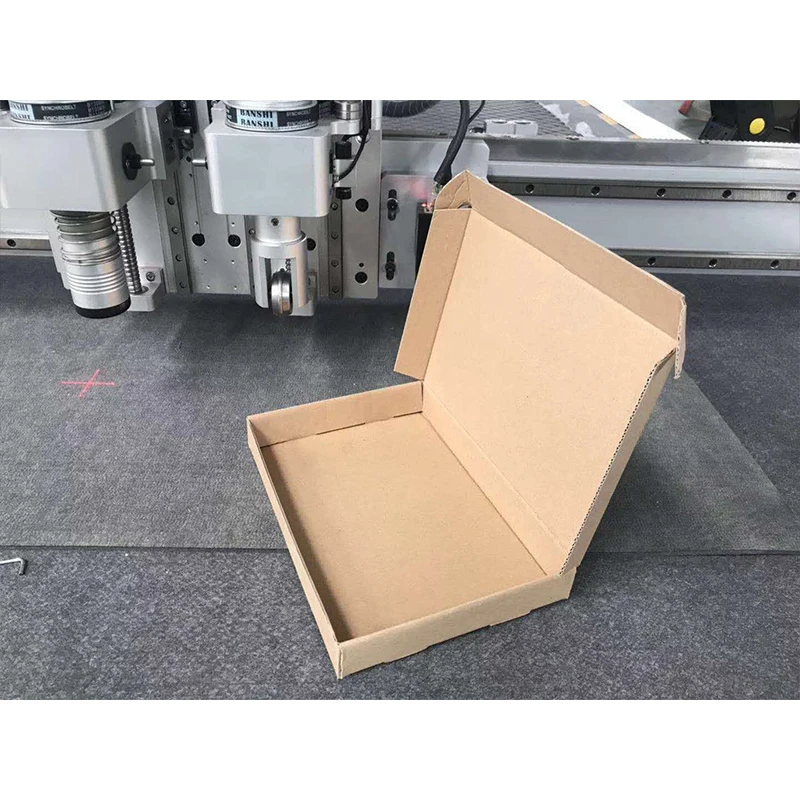
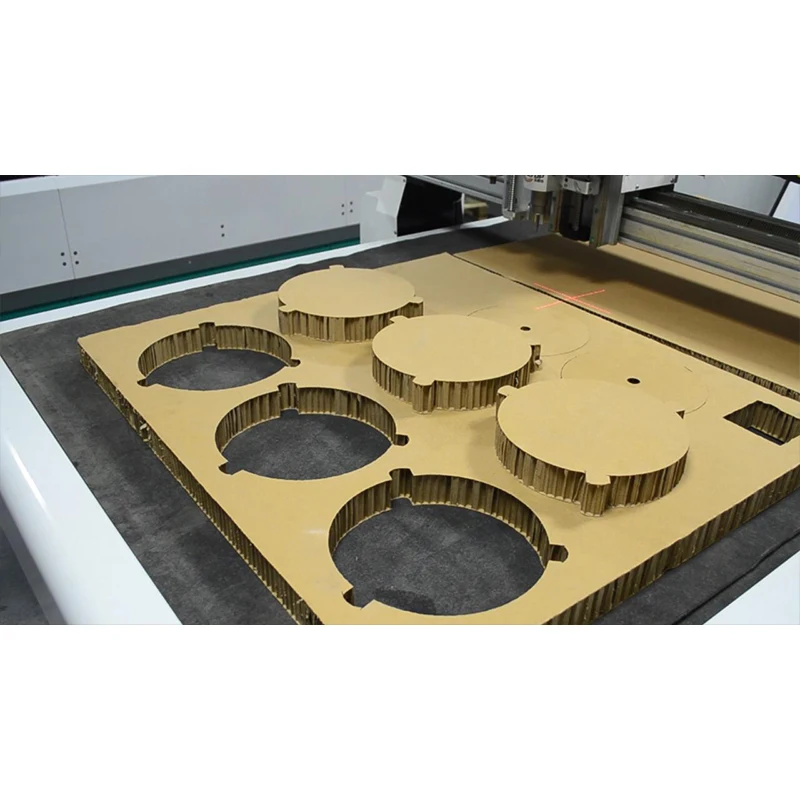
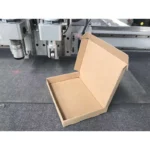
| Packaging carton sample making | Corrugated cardboard, grey board, honeycomb paper up to 18 mm |
| Sticker and label contour cutting | Vinyl, PP paper, reflective film, adhesive-backed stock |
| Corrugated box short-run production | Single, double, and triple-wall corrugated board |
| Advertising signage and billboard | KT board, PVC foam board, chevron board |
| Gasket and non-metal flat cutting | Leather, rubber sheet, composite fiber |
Why the Tool Head Choice Matters More Than the Working Area
A machine sized only by bed dimensions will fail the moment it meets your actual material stack.
I have walked into packaging workshops where a brand-new flatbed cutter sat idle because the buyer specified a 2500×1300 mm work envelope but never discussed the three-layer corrugated board they run daily. The drag knife that came standard crushed the flutes instead of slicing them, leaving ragged edges that failed the client’s own quality check. Choosing the correct CNC oscillating knife cutting machine specifications means starting with the material cross-section, not the table size [NEED_CITE: common misconfiguration causes in digital flatbed cutting].
Oscillating Knife, Creasing Wheel, and Kiss-Cut — Picking the Right Tool
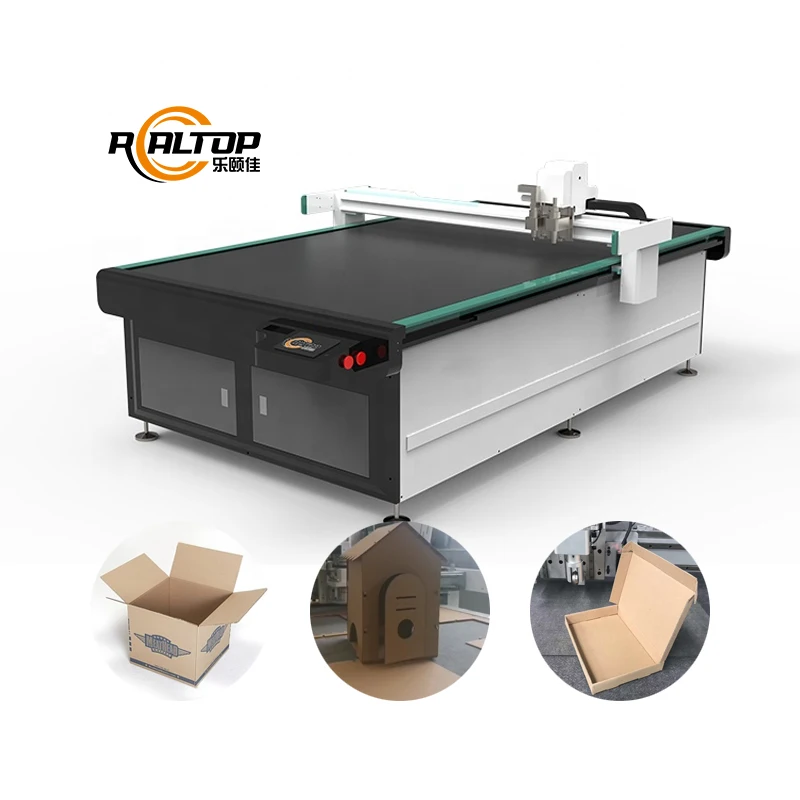
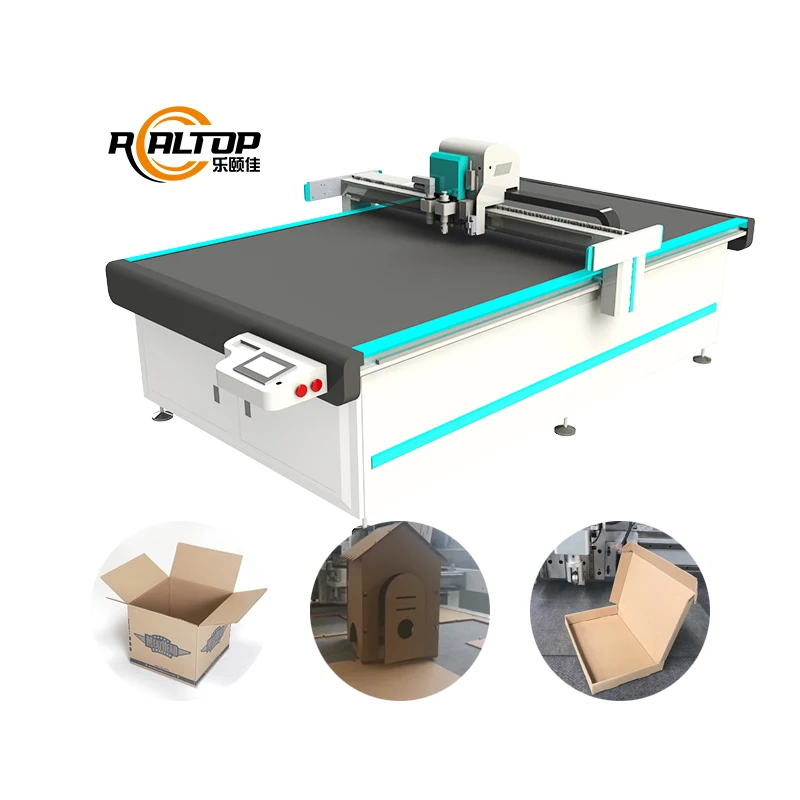
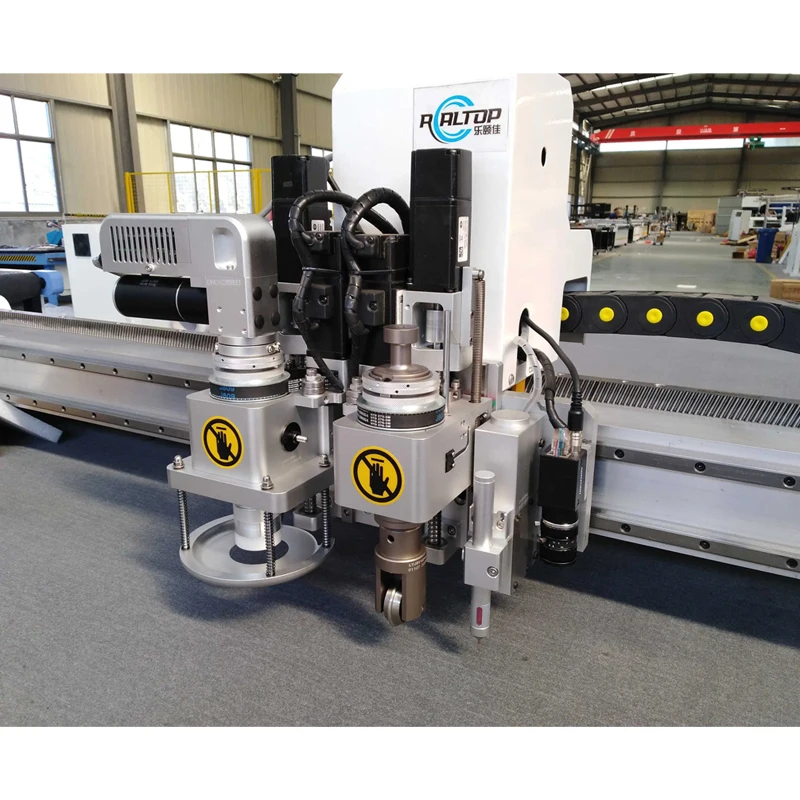
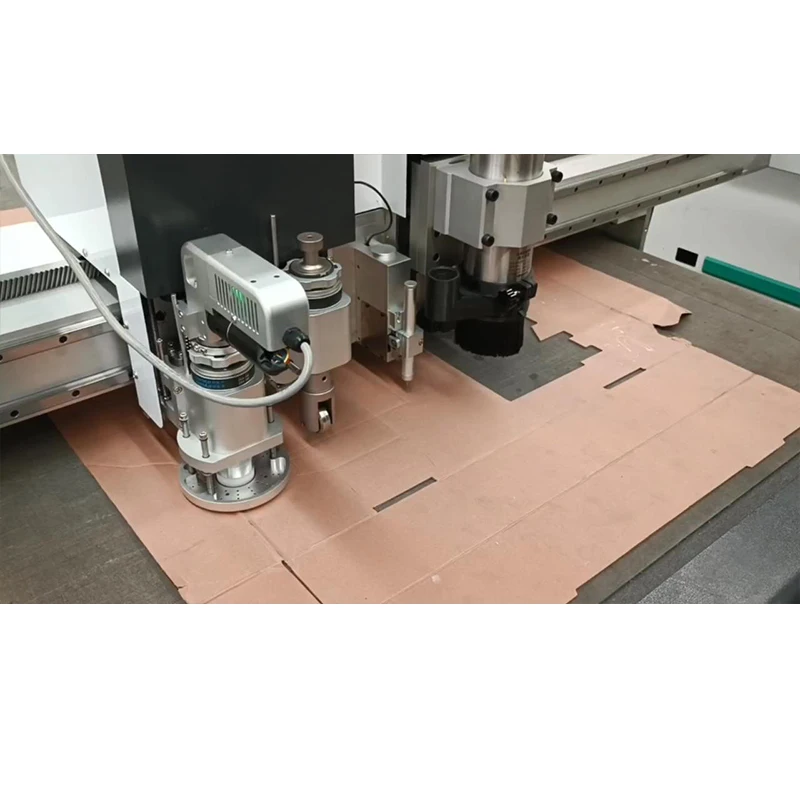
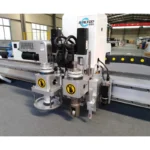
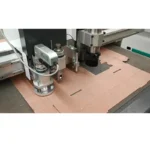
The RT–R2513 ships with four interchangeable tool heads: oscillating knife, creasing tool, kiss-cut knife, and round punch. For corrugated board up to 18 mm, the oscillating knife vibrates at high frequency to shear through flutes cleanly without compressing the core. Switch to the creasing wheel when you need fold lines on carton stock, and the kiss-cut knife when cutting vinyl stickers without penetrating the release liner. Each tool mounts on the same carriage, so a single job can combine cutting and creasing in one pass.
Vacuum Zoning That Actually Holds Small Parts Down
The aluminum honeycomb table pairs with a 7.5 kW vacuum pump and zone-based adsorption. Instead of pulling vacuum across the entire bed, the operator activates only the zones under the material, which increases hold-down force on small sticker contours and narrow gasket strips. This matters when cutting nested label arrays where individual pieces can lift and shift if the vacuum is spread too thin [NEED_CITE: vacuum hold-down principles for flatbed digital cutting].
Reading the Spec Sheet Beyond the Headline Numbers
The repeated positioning accuracy of <0.05 mm is achieved through imported linear square guide rails and rack transmission — a combination that resists the lateral deflection you get with belt-driven systems when the oscillating knife encounters dense triple-wall board. The 9 kW rated power covers the servo drives, vacuum pump, and oscillating motor simultaneously, so you will not trip a breaker when running the 7.5 kW pump at full draw. Ethernet transmission replaces older USB workflows, letting the machine sit on the shop floor while the nesting software runs in the design office. The professional carton nesting software imports DXF, AI, PDF, and OLT files directly, eliminating the file-conversion step that often introduces contour errors.
The Hidden Cost of Skipping the Sample Cut
Buyers who skip material-specific sample testing often discover edge-quality problems only after the machine is bolted to their floor. A drag knife on 5 mm foam produces crushed edges that require secondary trimming. An oscillating knife set to the wrong amplitude on thin vinyl can tear rather than slice, wasting entire sheets. These issues are not machine defects — they are configuration mismatches that a pre-shipment sample cut on the buyer’s own stock would have caught [NEED_CITE: importance of pre-purchase material testing in CNC cutting].
Why Procurement Teams Source This Platform Here
The design team engineers both knife and laser cutting systems under one roof, so the recommendation is based on which method suits the material, not which machine needs to move off the shelf. Every RT–R2513 leaves the factory with a tool head and table configuration list matched to the buyer’s declared material and daily volume. CCD camera positioning is available for printed contour work on stickers and labels, and the camera calibration is verified against the buyer’s actual print file before dispatch. Voltage, plug type, and control language are confirmed in writing before production begins — not assumed from the destination country. The welded steel frame undergoes high-temperature stress relief, reducing the chance of bed distortion after months of vibration-heavy oscillating knife work.
Documentation & Verification
- Machine specification sheet listing confirmed tool heads and vacuum zone map
- Electrical schematic with voltage and frequency matched to buyer’s facility
- Sample cutting report on buyer’s own corrugated or sticker stock before shipment
- Software license note confirming DXF, AI, PDF, and OLT file compatibility
- Factory test record showing repeated accuracy and cutting depth verification
Installation, Commissioning & Support
- 380V three-phase dedicated circuit required; confirm local frequency before wiring the 9 kW system
- Machine footprint 3550×1910 mm (RT–R2513) requires level concrete floor with clearance for material loading
- Oscillating knife amplitude and creasing wheel pressure calibrated on-site during first power-up
- Operator training covers zone vacuum activation, tool changeover, and nesting software workflow
- Ten oscillating blades included; felt belt is wear-resistant composite fiber rated for continuous conveyor use
- Infrared safety sensors tested and certified before operator handover
What to Include in Your Inquiry
Send us your material type, maximum thickness, and the largest sheet size you process daily. If you run printed stickers or labels, attach a sample print file so we can verify CCD contour tracking at your target speed. Confirm your facility voltage and frequency, and let us know which control language your operators prefer — the system supports English, Russian, Italian, and Chinese, with custom languages available on request.
Frequently Asked Questions
Q: How do I choose between the oscillating knife and the creasing wheel for carton work?
A: Use the oscillating knife for cutting through corrugated board and the creasing wheel for scoring fold lines. Most carton sample jobs require both tools in a single run. The RT–R2513 carriage accepts both heads, so the machine switches automatically between cut and crease paths within the same file.
Q: What thickness of corrugated board can the oscillating knife cut cleanly?
A: The system is rated for materials up to 18 mm thick. Actual edge quality depends on flute profile and board density. We run a sample cut on your specific stock before shipment to confirm that the oscillating amplitude and blade type produce an acceptable edge without crushing the flutes.
Q: Can the CCD camera track printed registration marks at full production speed?
A: The CCD module reads printed contours on stickers and labels, but tracking reliability depends on mark contrast, size, and material reflectivity. We test with your actual print file and label stock during factory commissioning to confirm the camera locks on before the machine ships.
Q: Is the vacuum table strong enough to hold small sticker pieces without lifting?
A: The aluminum honeycomb table uses zone-based adsorption. The operator activates only the zones covered by material, concentrating vacuum force where it is needed. This prevents small nested label parts from lifting during the kiss-cut or contour-cut pass.
Q: Which file formats does the nesting software accept?
A: The professional carton nesting software imports DXF, AI, PDF, and OLT files. If your current design workflow uses a different format, share a sample file during the inquiry stage so we can confirm compatibility or recommend a conversion step before you place the order.


商品评价
Clear filtersThere are no reviews yet.