



Fast Shipping
Carrier information

20k products
Payment methods

24/7 Support
Unlimited help desk

2-day Delivery
Track or off orders
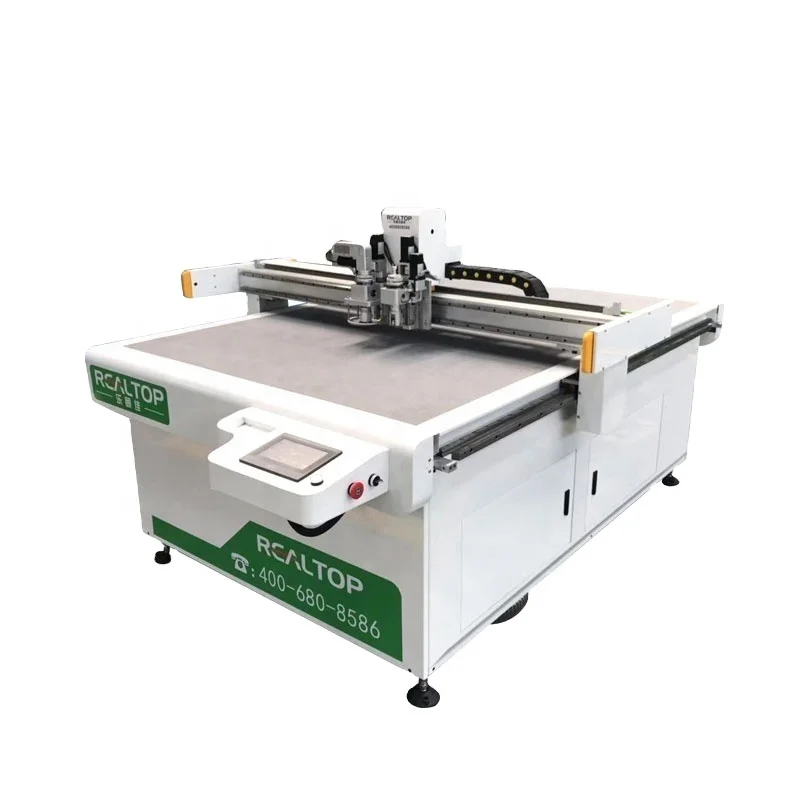
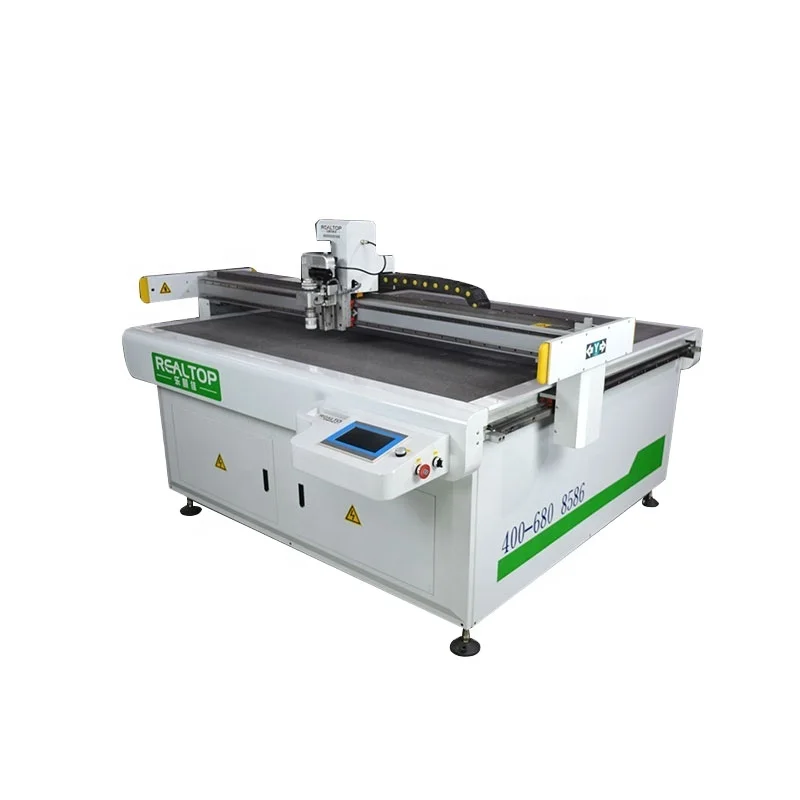
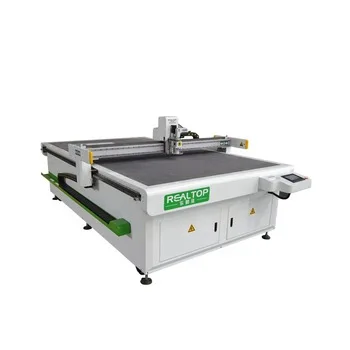
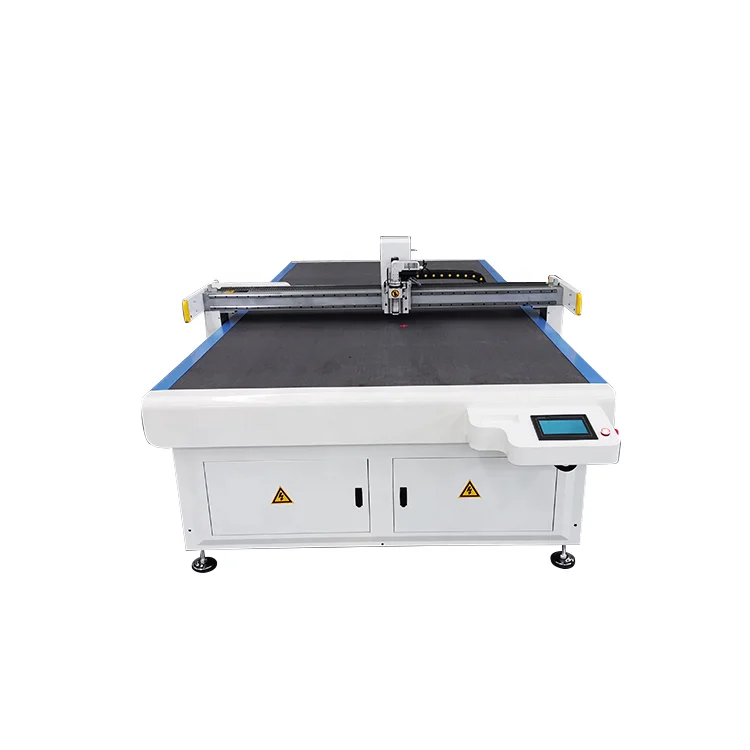
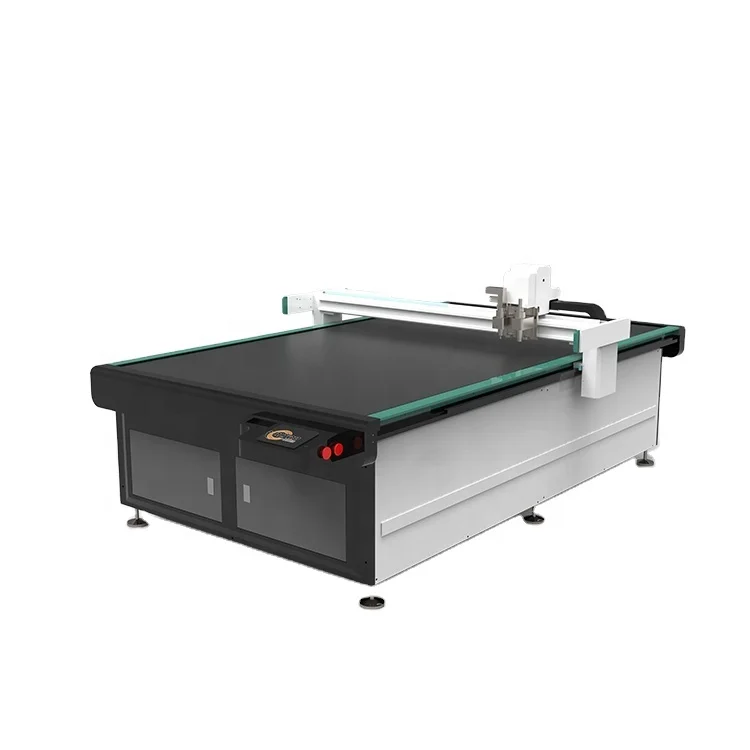
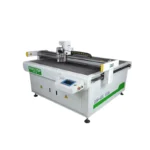
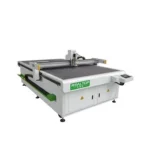
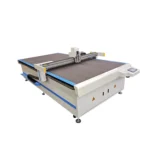
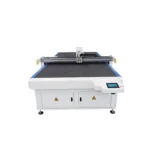
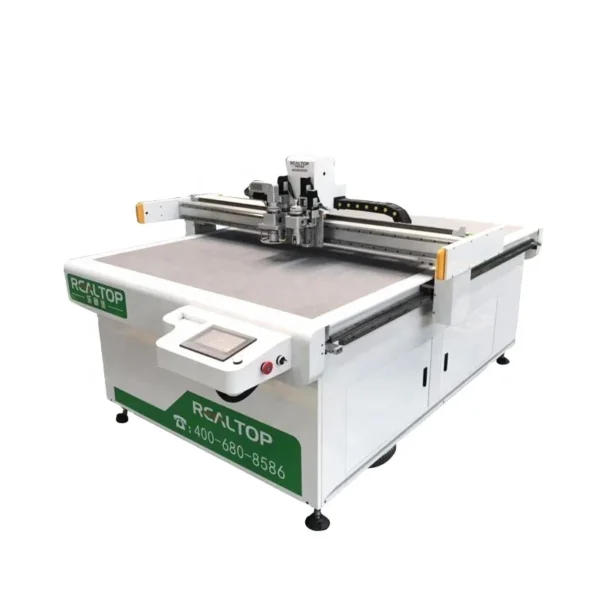
Swiss Oscillating Tooling Matched to Material — the RT-D2516/RT-S2516 pairs its knife head with a vacuum conveyor layout specified per substrate thickness and sheet format before the order is confirmed.
Technical Specifications
| Parameter | Value |
|---|---|
| Model | RT-D2516/RT-S2516 |
| Product Type | CNC Oscillating Knife Cutting Table |
| Working Area | 1600 × 2500 mm |
| Overall Dimensions | 3450 × 2300 × 1250 mm |
| Rated Power | 9 kW |
| Table Configuration | Flatbed vacuum table with conveyor and auto-feeding system |
| Tool Head | Swiss-imported oscillating knife (vibration full-cut, half-cut, cursor positioning) |
| Translational Speed | 800 – 1200 mm/s |
| Cutting Speed | 200 – 800 mm/s (basis not stated in source — confirm material type and thickness) |
| Repeatability | ≤ 0.1 mm |
| Transmission System | Digital servo motor, linear guide, synchronous belt, ball screw |
| Servo Motor | Japanese Yaskawa |
| Linear Guide | Taiwan Hiwin rail |
| Conveyor Belt | Germany-imported |
| Vacuum Pump | 7.5 kW |
| Control System / Instruction Format | HP-GL compatible |
| Voltage | 380 V ± 10 % |
| Safety Device | Infrared sensors |
| Certification | CE |
Application Suitability
| Application | Material or Output |
|---|---|
| Carton and packaging sample making | Corrugated board, chipboard, greyboard, folding carton stock |
| Garment and footwear pattern cutting | Multi-layer woven fabric, knitted textile, natural and synthetic leather |
| Automotive interior and gasket production | Foam, sponge composite leather, rubber sheet, non-metal gasket material |
| Advertising and signage fabrication | PVC foam board, vinyl, soft glass, flexible banner |
| Composite and flexible material processing | Silicon sheet, sponge-backed laminates, multi-layer bonded textiles |
Why "Cutting Speed 800 mm/s" Can Mislead a Packaging Buyer
A cutting speed figure means nothing without the material type, ply count, and tool head it was measured on.
Buyers often receive a CNC oscillating knife cutting table specifications sheet listing a top speed of 800 mm/s, then discover on their shop floor that high-density greyboard forces the head to slow to less than half that rate, while corrugated flute crushes if the oscillation frequency is set for the same stroke. The mismatch shows up as ragged creasing lines, delaminated edges on multi-ply carton, and crushed core on E-flute board — problems that only surface once the machine is running production stock. Specifying the oscillation amplitude and blade geometry against the buyer’s own substrate before the order ships avoids these stoppages [NEED_CITE: material-specific cutting parameter validation].
Oscillation Stroke and Blade Geometry per Substrate
The Swiss-imported oscillating knife head on the RT-D2516/RT-S2516 offers vibration full-cut, vibration half-cut, and cursor positioning modes. For corrugated board and chipboard, a longer stroke with a wider blade angle clears the flute without tearing the liner. For multi-layer fabric and leather, a shorter, higher-frequency stroke keeps the blade from dragging the bottom plies out of registration. Matching stroke and blade profile to the substrate is what keeps edge quality consistent across the 1600 × 2500 mm CNC oscillating knife cutting table working area.
Vacuum Zoning for Small Sample Parts
A 7.5 kW vacuum pump paired with the flatbed vacuum table holds large sheets securely, yet small packaging sample pieces — under roughly 100 × 100 mm — can lift at the trailing edge once the knife exits the cut path. Zoning the vacuum bed into independently valved sections lets the operator open only the zone under the active sheet area, concentrating suction on small cartons and die-line samples. This zoning detail is confirmed during the tool head and table configuration list review before the RT-D2516/RT-S2516 enters assembly [NEED_CITE: vacuum zoning practices for small-format digital cutting].
Servo, Rail, and Drive Train Explained for Daily Output
Japanese Yaskawa digital servo motors driving Taiwan Hiwin linear rails give the RT-D2516/RT-S2516 a published repeatability of ≤ 0.1 mm. In carton sample making, that tolerance keeps crease lines aligned with cut paths across hundreds of prototypes in a single run. The synchronous belt and ball screw transmission converts servo rotation into linear travel without the backlash that older rack-and-pinion drives introduce, so nested patterns on leather or fabric stay within ply registration. The 800 – 1200 mm/s translational speed refers to rapid traverse between cut paths, not cutting speed — a distinction that matters when estimating cycle time for mixed-nest layouts.
The Hidden Cost of Skipping a Material Trial
A packaging house once received a flatbed digital cutting table that ran standard single-wall corrugated perfectly during factory acceptance, yet choked on the 2 mm greyboard they used for premium boxes — the standard drag knife left a fuzzy, torn edge that ruined print registration on the crease. Two weeks of downtime followed while a heavier oscillating blade and adjusted vacuum zone map were sourced and tested. Running a sample cutting report on the buyer’s actual stock, at the thickness and ply count they will use in production, prevents that delay from becoming the buyer’s problem [NEED_CITE: sample cutting validation before equipment dispatch].
Why Source This Oscillating Knife Table from Realtop
In-house design covers both knife and laser cutting platforms, so the RT-D2516/RT-S2516 is specified as a knife system because the buyer’s material demands it, not because the factory only builds one type. The tool head and table configuration list is locked to the substrate before production begins. Software compatibility is confirmed against the buyer’s existing HP-GL or nesting file workflow. Voltage, plug standard, and control panel language are verified on the electrical schematic before the machine leaves Jinan. Every RT-D2516/RT-S2516 ships with a factory test record cut on the buyer’s own material sample.
Documentation & Verification
- Machine specification sheet listing RT-D2516/RT-S2516 working area, tool head, and drive components
- Electrical schematic with 380 V ± 10 % confirmation matched to buyer’s plant supply
- Tool head and table configuration list matched to buyer’s substrate and sheet format
- Sample cutting report on buyer-supplied material confirming edge quality and achievable speed
- Software licence and HP-GL file format compatibility note for buyer’s nesting workflow
- Packing photographs of the RT-D2516/RT-S2516 crate before container loading
Installation, Commissioning & Support
- 3450 × 2300 × 1250 mm footprint requires a level concrete floor with clear access on three sides
- Dedicated 380 V ± 10 % circuit rated for 9 kW total plus 7.5 kW vacuum pump startup surge
- Machine ships partially assembled; table frame, gantry, and conveyor are bolted on site
- First-day commissioning includes vacuum zone mapping and oscillation stroke tuning per substrate
- Operator training covers HP-GL file import, nesting layout, and blade change procedure
- Spare parts list includes oscillating blades, conveyor belt sections, and vacuum seals
What to Include in Your Inquiry
Send the material type, thickness, and maximum sheet size you will run on the RT-D2516/RT-S2516, along with the daily sample or production volume. Confirm your workshop voltage and frequency, preferred control panel language, and whether your current nesting software outputs HP-GL. If you need a sample cutting report, ship a roll or sheet stack of your actual stock so the tool head and vacuum zones are tuned before the CNC oscillating knife cutting table leaves the factory.
Frequently Asked Questions
Q: How is the 200 – 800 mm/s cutting speed verified before the order ships?
A: That range is measured across different substrates and thicknesses, so the exact speed depends on the buyer’s material. A sample cutting report run on the buyer’s own stock — at production thickness and ply count — confirms the achievable cutting speed, edge quality, and oscillation settings before the machine is dispatched.
Q: How do I choose between oscillating knife, drag knife, and creasing wheel for packaging work?
A: Oscillating knife handles corrugated and dense greyboard where a clean cut through the flute is needed. Drag knife suits thin card and vinyl creasing. Creasing wheel scores fold lines without cutting through. The tool head and table configuration list locks the correct combination based on the buyer’s substrate and box style before the order enters production.
Q: Is the vacuum table zoning sufficient for small packaging sample parts?
A: The 7.5 kW vacuum pump covers the full 1600 × 2500 mm bed, but small carton samples benefit from independently valved zones. Zone layout is confirmed during the configuration review so suction concentrates under the active cutting area, preventing trailing-edge lift on parts smaller than roughly 100 × 100 mm.
Q: Can the control system import my existing nesting files without manual re-drawing?
A: The HP-GL compatible instruction format accepts DXF, PLT, and HP-GL files generated by common packaging CAD and nesting software. File format compatibility is verified during the pre-order software licence and compatibility note step, ensuring the buyer’s current workflow transfers without re-draw or third-party conversion.
Q: What voltage, plug, and language settings are confirmed before shipment?
A: The electrical schematic lists 380 V ± 10 % as standard and is reviewed with the buyer before assembly. Plug type, cable length, and control panel language — whether English, Spanish, or another option — are written into the specification confirmation so the RT-D2516/RT-S2516 matches the buyer’s plant supply and operator preference on arrival.


商品评价
Clear filtersThere are no reviews yet.