





Fast Shipping
Carrier information

20k products
Payment methods

24/7 Support
Unlimited help desk

2-day Delivery
Track or off orders
In-house knife technology — our design team specifies tool head and vacuum zoning per fabric type before the order is confirmed, preventing edge quality failures on your production floor.
Technical Specifications
| Parameter | Value |
|---|---|
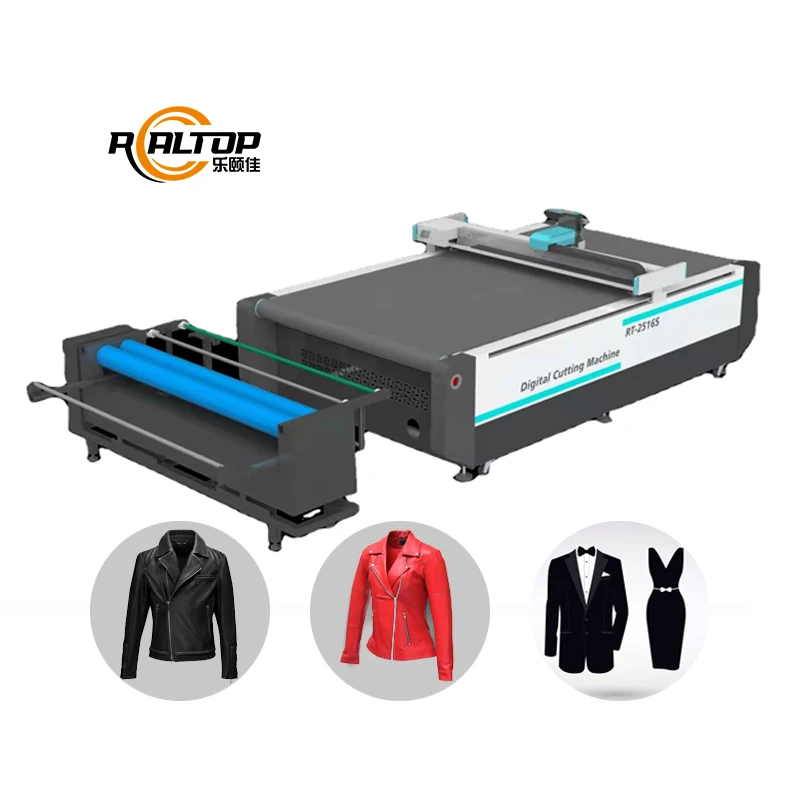
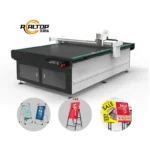
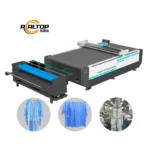
| Product Type | CNC Oscillating Knife Cutting Machine |
| Working Area | 1600 × 2500 mm |
| Machine Size | 3450 × 2300 × 1250 mm |
| Rated Power | 9 kW |
| Working Table | Flat vacuum table with 7.5 kW pump |
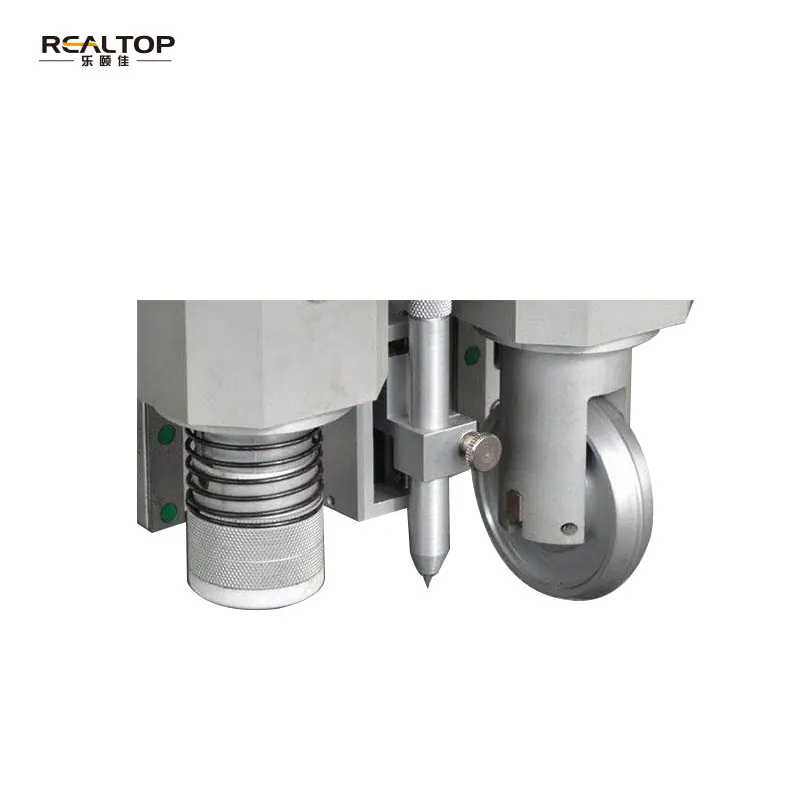
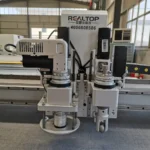
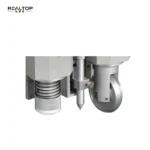
| Tool Head | Swiss imported knife with vibration full cutting, half cutting and cursor location |
| Translational Velocity | 800–1200 mm/s |
| Cutting Speed | 200–800 mm/s (varies with material type and thickness) |
| Cutting Thickness | ≤100 mm (varies with material) |
| Repeated Accuracy | ≤0.1 mm |
| Transmission System | Digital servo motor, linear guide, synchronous belt, ball screw |
| Servo Motor | Delta servo motor |
| Linear Guide | Taiwan Hiwin rail |
| Conveyor Belt | Germany imported conveyor belt |
| Auto Feeding | Equipped |
| Instruction System | HP-GL compatible format |
| Voltage | 380V ±10% |
| Safety Device | Infrared sensors |
| Language Options | English, Russian, Italian, Chinese; special languages customizable |
| Certification | CE |
Application Suitability
| Application | Material or Output |
|---|---|
| Garment and apparel cutting | Woven fabric, knitted textile, non-woven fabric, clothing cloth |
| Footwear and leather goods | Leather, sponge composite leather, PU, shoe material |
| Automotive interior trimming | Carpet, floor mat, fabric laminate, gasket material |
| Soft home furnishings | Textile, curtain fabric, upholstery cloth, sponge |
| Luggage and bag production | Luggage material, PVC, composite fabric |
| Sports and outdoor goods | EVA, XPE, foam, composite materials |
| Advertising and printing | Sticker, film, vinyl, corrugated cardboard |
| Industrial sealing | Rubber, PTFE, ETFE, sealing pad material |
Why the Wrong Tool Head Ruins Your Fabric Edge
A cutting speed of 800 mm/s means nothing when the knife is tearing instead of slicing. Tool head selection must match material composition and thickness, not just working area dimensions.
Many buyers specify a CNC oscillating knife cutting machine based solely on bed size and then discover the standard blade produces ragged edges on coated textiles or crushes multi-layer foam composites. The oscillation frequency that works on single-ply cotton will deform sponge-backed leather. We see this mismatch frequently when the machine is configured before the material is tested. [NEED_CITE: tool head selection criteria for oscillating knife cutting systems]
Knife Configuration for Textile and Leather Processing
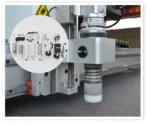
The Swiss imported knife head on this CNC oscillating knife cutting machine provides vibration full cutting, vibration half cutting, and cursor location functions. Full cutting handles standard fabric layers at production speed, while half cutting scores materials for folding without penetrating the full thickness. Cursor location aligns the tool path to printed registration marks, which is essential when cutting patterned garment panels where the print must align across seams.
Vacuum Zoning and Material Hold-Down
The 7.5 kW vacuum pump works through a flat adsorption table to secure flexible materials during cutting. Fabric sheets that shift even fractionally during high-speed passes produce miscut panels that fail quality inspection. The Germany imported conveyor belt feeds material continuously onto the cutting surface, and the auto feeding system advances rolls without manual repositioning between cuts. For small garment pieces like collar or cuff panels, consistent vacuum pressure across the table surface prevents lifting at the cut line. [NEED_CITE: vacuum hold-down requirements for flexible material cutting]
Reading the Specifications That Actually Matter
The Delta servo motor paired with Taiwan Hiwin linear rails delivers the repeated accuracy of ≤0.1 mm. In garment cutting, this tolerance determines whether pattern pieces align during sewing assembly. The translational velocity of 800–1200 mm/s governs how fast the head moves between cut points, while the cutting speed of 200–800 mm/s reflects actual material separation rate, which varies with fabric density and layer count. The 9 kW rated power accounts for the servo drives, vacuum pump load, and conveyor motor running simultaneously. HP-GL compatible instruction format means nesting software from established providers can generate tool paths without proprietary conversion.
The Cost of Skipping Material Verification
Buyers who confirm machine specifications without testing their actual fabric often face weeks of parameter adjustment after installation. A standard test piece cut on plain woven cotton tells you nothing about how the machine handles silicone-coated polyester or high-density sponge composite leather. [NEED_CITE: material testing protocols for industrial cutting equipment procurement] Edge quality, cutting depth consistency, and vacuum hold-down adequacy only become apparent when the specific material runs through the machine at intended production speed.
Why Procurement Should Start with Your Material Sample
Our in-house design team covers both knife and laser cutting technologies, so you match the method to the material rather than forcing one approach. Tool head and table configuration are specified per your fabric type and daily production volume before order confirmation. CCD camera positioning options address printed contour work for patterned textiles. Software compatibility with your existing HP-GL workflow is verified before the machine ships. Voltage, control language, and plug configuration are confirmed against your facility electrical standards. Sample cutting on your own material runs before commitment, producing a documented report on edge quality and dimensional accuracy.
Documentation & Verification
- Machine specification sheet listing confirmed tool head and table configuration for your material
- Electrical schematic with 380V ±10% voltage confirmation matched to your facility
- Sample cutting report on your fabric documenting edge quality and dimensional accuracy
- Factory test record showing repeated accuracy verification before dispatch
- Software licence and HP-GL file format compatibility note for your nesting workflow
- Spare parts list covering Swiss knife consumables and vacuum system components
Installation, Commissioning & Support
- Floor space requirement based on 3450 × 2300 mm machine footprint plus material feed clearance
- Dedicated electrical circuit sized for 9 kW rated power at 380V ±10%
- Assembly and leveling of flat vacuum table with 7.5 kW pump commissioning
- First-run parameter calibration on your fabric type with cutting speed and vacuum adjustment
- Operator training on HP-GL file import, tool head changeover, and auto feeding setup
- Consumable spare parts kit including Swiss knife blades and vacuum table seals
What to Include in Your Inquiry
Provide your primary fabric types with thickness ranges and whether you process single-layer or multi-layer layups. Specify your daily cutting volume and the largest sheet dimensions you handle. Confirm your facility voltage and frequency, preferred control language, and whether your current nesting software outputs HP-GL format.
Frequently Asked Questions
Q: How do I select the right tool head for my fabric thickness and edge quality requirement?
A: The Swiss imported knife supports vibration full cutting and half cutting modes. Selection depends on whether your material is single-ply textile, multi-layer layup, or sponge composite. We run sample cuts on your actual fabric to confirm edge quality before finalizing the tool head specification for your CNC oscillating knife cutting machine order.
Q: Can the vacuum table hold small garment panels without shifting during cutting?
A: The 7.5 kW vacuum pump generates suction across the flat table surface. For very small pieces like collar inserts, we evaluate whether the standard zoning provides sufficient hold-down or whether additional masking is required. This is verified during the sample cutting stage using your actual pattern layout.
Q: Is the control software compatible with my existing nesting workflow?
A: The instruction system accepts HP-GL compatible format, which covers most established nesting software platforms. We confirm file format compatibility and test import with your actual pattern files before shipment. If your workflow uses a proprietary format, we verify conversion capability during the pre-order specification stage.
Q: What does the sample cutting process involve before I commit to an order?
A: You send representative samples of your fabric, including any coated or composite variants. We run cutting tests on the configured machine, document edge quality, dimensional accuracy, and cutting speed achieved. The sample cutting report is shared for your review before the production order is finalized.
Q: How is voltage and language confirmed for my facility before shipment?
A: The standard voltage is 380V ±10%, and we require your facility electrical specification to confirm compatibility. Control interface language options include English, Russian, Italian, and Chinese, with custom languages available. Both voltage and language are documented in the electrical schematic before the machine enters production.


商品评价
Clear filtersThere are no reviews yet.