







Fast Shipping
Carrier information

20k products
Payment methods

24/7 Support
Unlimited help desk

2-day Delivery
Track or off orders
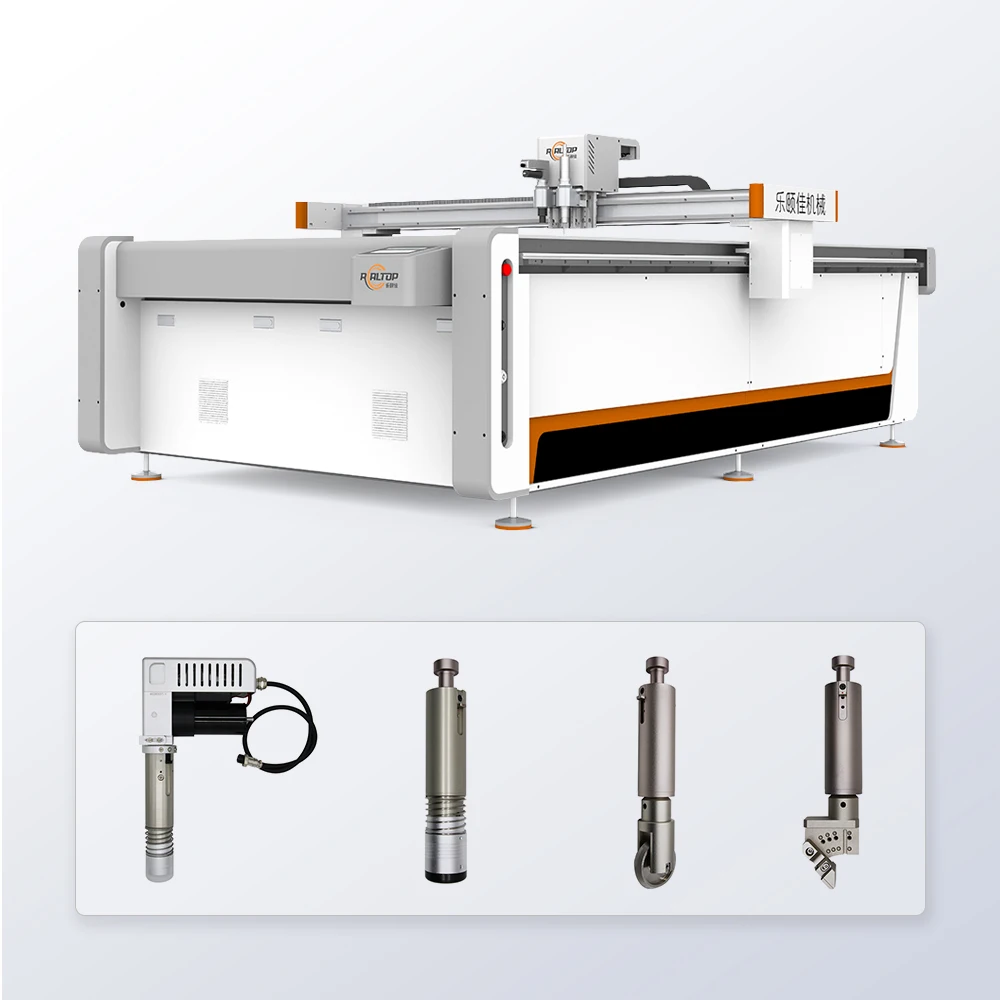
Tool Head Matched to Substrate — Swiss oscillating knife configured per cardboard grade and flexible material thickness, validated on buyer’s own stock before shipment confirmation.
Technical Specifications
| Parameter | Value |
|---|---|
| Model | RT-D2516/RT-S2516 |
| Product Type | CNC Oscillating Knife Cutting Table |
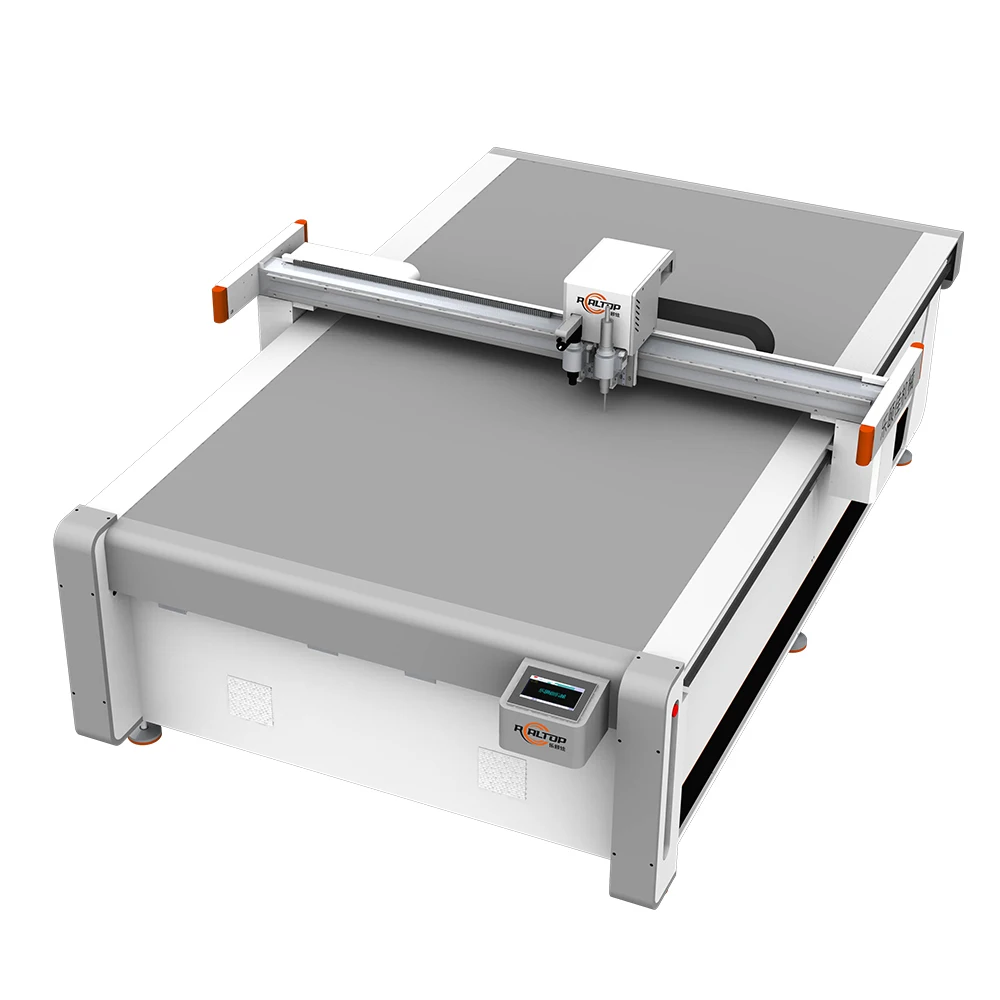
| Working Area | 1600×2500 mm |
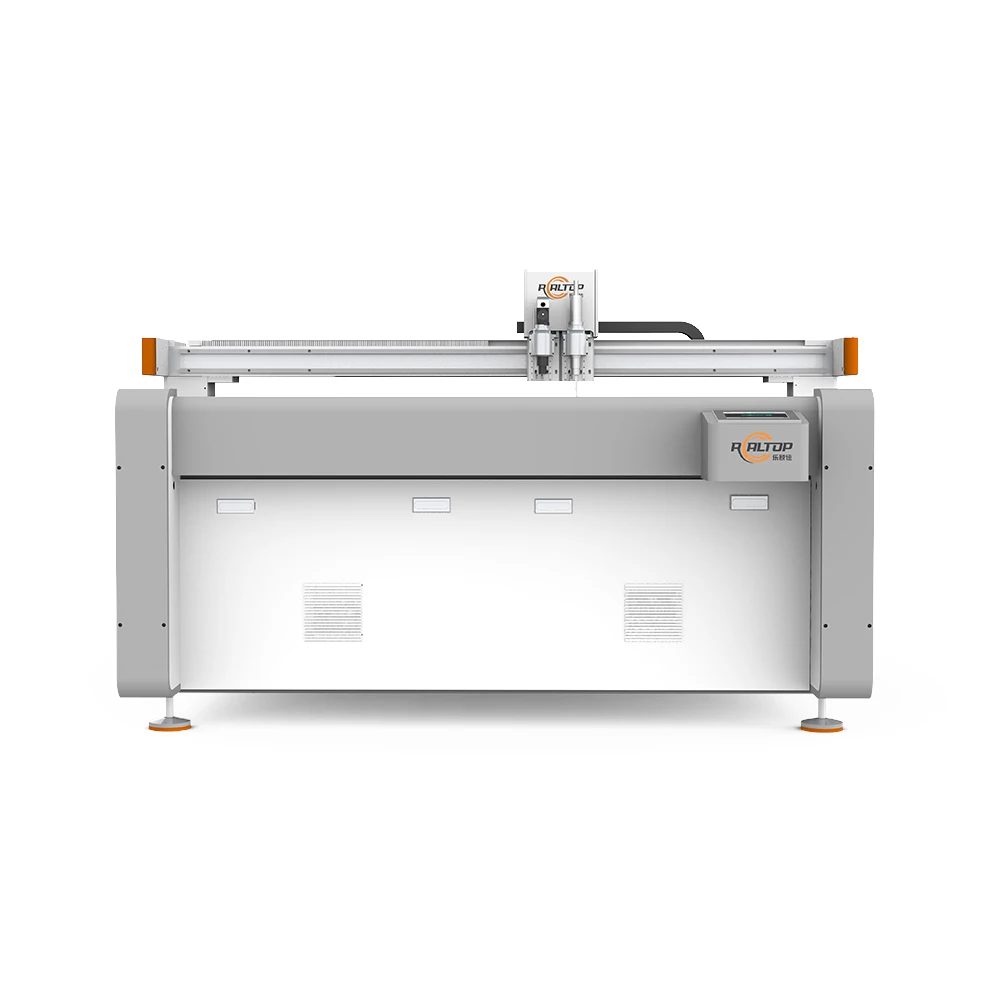
| Overall Dimensions | 3450×2300×1250 mm |
| Rated Power | 9 kW |
| Voltage | 380V±10% (frequency 50/60Hz to be confirmed) |
| Tool Head | Swiss imported oscillating knife with full cutting, half cutting and cursor location |
| Cutting Thickness | Up to 100 mm (varies with material density — basis to be confirmed) |
| Translational Velocity | 800–2000 mm/s |
| Cutting Speed | 200–800 mm/s |
| Repeated Accuracy | ≤0.1 mm |
| Transmission System | Digital servo motor, linear guide, synchronous belt, ball screw |
| Servo Motor | Taiwan Delta servo motors and drivers |
| Linear Guide | Taiwan Hiwin rail |
| Vacuum Table | Aluminum alloy honeycomb structure, 7.5 kW vacuum pump |
| Safety Device | Infrared sensors and emergency stop |
| Control System | HP-GL compatible format |
| Software | Professional carton nesting software, multiple file format imports, custom language |
| Language Options | English, Russian, Italian, Chinese (special languages customizable) |
| Table Surface | Flat working table (Germany imported conveyor belt option available) |
| Certification | CE (documentation to be verified) |
| Warranty | One year (parts free, buyer covers shipping; engineer dispatch available) |
Application Suitability
| Application | Material or Output |
|---|---|
| Carton and packaging sample making | Cardboard, corrugated board, paper box stock |
| Sticker and label production | Printed vinyl, adhesive label sheets with contour cutting |
| Signage and display graphics | Billboard substrate, business card stock, tag material |
| Flexible material fabrication | Leather, garment textiles, sponge composite leather |
| Industrial gasket and seal work | PVC, soft glass, silicon, rubber sheets |
| Consumer packaging runs | Express paper box, snack food packaging, gift box stock |
What the Stated Cutting Depth Actually Means for Your Material
A 100 mm cutting depth on low-density foam is not the same as 100 mm on double-wall corrugated — the tool head must be validated against your actual substrate.
I once shipped a carton sample cutter to a Middle East customer based on the cardboard thickness they quoted. When the machine arrived, they were running double-layer corrugated board that the configured oscillating knife could not penetrate. We had to air-freight a replacement tool head, and their production floor sat idle for ten days. Since then, I require physical material samples before locking any CNC oscillating knife cutting table specifications. The stated thickness range depends entirely on material density and fiber composition [NEED_CITE: material density impact on oscillating knife penetration depth].
Tool Head Selection Across Cardboard Grades and Flexible Substrates
The Swiss imported oscillating knife on this platform supports full cutting, half cutting, and cursor location in a single head. For single-face corrugated and standard cardboard, the standard blade geometry handles creasing and through-cutting without edge crushing. When the work shifts to dense gasket rubber or composite foam, the oscillation frequency and blade angle must be matched to prevent delamination. A cutter specified for packaging sample work that later encounters PVC or leather will produce ragged edges if the wrong tool configuration was locked at order stage.
Vacuum Zoning for Small-Part Stability on Honeycomb Tables
The 7.5 kW pump feeds an aluminum alloy honeycomb vacuum platform across the 1600×2500 mm work envelope. Small carton components and sticker contours tend to lift at cutting speed if the vacuum zone cannot isolate the active area. Honeycomb construction distributes suction more evenly than routed groove tables, which matters when cutting nested sticker layouts or short-run packaging prototypes where part geometry changes daily [NEED_CITE: vacuum adsorption uniformity on honeycomb versus groove table designs]. Zone configuration should be confirmed against the buyer’s typical part size range before the table is built.
Drive Train and Registration Accuracy in Repeat Runs
Taiwan Delta servo motors paired with Hiwin linear guides deliver the ≤0.1 mm repeatability that crease-to-cut registration demands. On packaging prototypes, a misaligned crease line ruins the fold geometry and wastes the entire sample sheet. For sticker contour work using the cursor location function, the servo response directly determines whether the blade follows the printed boundary or drifts into adjacent labels. The synchronous belt and ball screw transmission combination maintains positional accuracy across the full translational velocity range of 800–2000 mm/s.
Software Compatibility and File Format Validation
The HP-GL compatible control system ships with professional carton nesting software capable of importing multiple file formats. Buyers running existing CAD workflows need to confirm that their native file type imports without geometry loss before the machine leaves the factory. Language customization across English, Russian, Italian, Chinese and special languages means the operator interface matches the production floor — but this must be specified at order, not discovered during commissioning [NEED_CITE: HP-GL file compatibility with common packaging CAD platforms].
The Cost of Configuring by Working Area Alone
A buyer who selects a CNC oscillating knife cutting table based solely on the 1600×2500 mm envelope without specifying material type, thickness and daily volume is setting up a commissioning failure. The wrong vacuum zone count causes small parts to lift and jam the blade. An under-specified pump cannot hold corrugated board flat during high-speed contour cuts. These problems appear on day one of production, not in the acceptance test [NEED_CITE: commissioning failures traced to incomplete material specification at order stage].
Why Source This Platform From the Build Floor
In-house design covers both knife and laser cutting technologies, so the cutting method is matched to the material rather than forced into one approach. Tool head and table configuration are specified per substrate and production volume, not pulled from a default catalog page. CCD camera positioning integrates with the cursor location function for printed contour work when the application demands it. Software compatibility is confirmed on the buyer’s actual files before the order is finalized. Voltage, plug type and control language are locked against the destination market requirements. Sample cutting on the buyer’s own material runs before commitment, producing a physical report that documents edge quality, cutting depth and cycle time.
Documentation & Verification
- Machine specification sheet confirming configured tool head and vacuum zone layout
- Electrical schematic with 380V±10% wiring diagram and confirmed frequency
- Sample cutting report produced on buyer’s actual material with edge quality assessment
- Factory test record documenting repeatability measurement before crate sealing
- Software licence and file format compatibility note for buyer’s CAD workflow
- Spare parts list identifying oscillating knife blades and vacuum pump consumables
Installation, Commissioning & Support
- 3450×2300 mm footprint requires level floor with clearance for 1250 mm machine height
- 9 kW rated power demands dedicated circuit with 380V±10% supply confirmed at site
- Flat table ships assembled; conveyor belt option requires additional on-site belt tensioning
- First-run parameter tuning on buyer’s material included during commissioning visit
- Operator training covers nesting software workflow and tool head changeover procedure
- One-year parts warranty with engineer dispatch available at buyer’s travel cost
Before You Request a Quotation
Send the actual material type, measured thickness, maximum sheet dimensions and expected daily volume. Confirm your local voltage and frequency, the plug type required, and the operator language needed on the control interface. If you are running an existing nesting or CAD workflow, provide sample files so we can validate import compatibility before the quotation is finalized.
Frequently Asked Questions
Q: How do I choose the right oscillating knife configuration for my material?
A: Provide your actual material samples including thickness, density and any composite layers. We run sample cuts with different blade geometries and oscillation settings, then document edge quality and cutting depth in a report you review before the tool head is finalized for your order.
Q: What does the cutting thickness claim mean for different materials?
A: The stated maximum varies significantly between low-density foam, corrugated cardboard and solid rubber. We confirm achievable cutting depth on your specific material through physical sample testing, not catalog assumptions, so the configured knife head matches your real production requirements.
Q: How do I confirm voltage and frequency compatibility before shipment?
A: We need your site voltage, frequency and plug type confirmed in writing before production starts. The standard 380V±10% system can be adapted to local grid requirements, but the electrical schematic and transformer configuration must be locked before the control cabinet is wired.
Q: Which file formats does the nesting software accept?
A: The HP-GL compatible system imports multiple common CAD and packaging design formats. Send us sample files from your existing workflow before ordering so we can test import accuracy, nesting behavior and geometry retention on the actual software version that ships with your machine.
Q: What does the first-year warranty cover?
A: Parts are provided free of charge during the warranty period, with the buyer covering shipping costs. Engineer dispatch for on-site troubleshooting is available with the buyer covering travel and accommodation. Consumable blades and vacuum pump wear items are listed separately in the spare parts documentation.


商品评价
Clear filtersThere are no reviews yet.