




Fast Shipping
Carrier information

20k products
Payment methods

24/7 Support
Unlimited help desk

2-day Delivery
Track or off orders
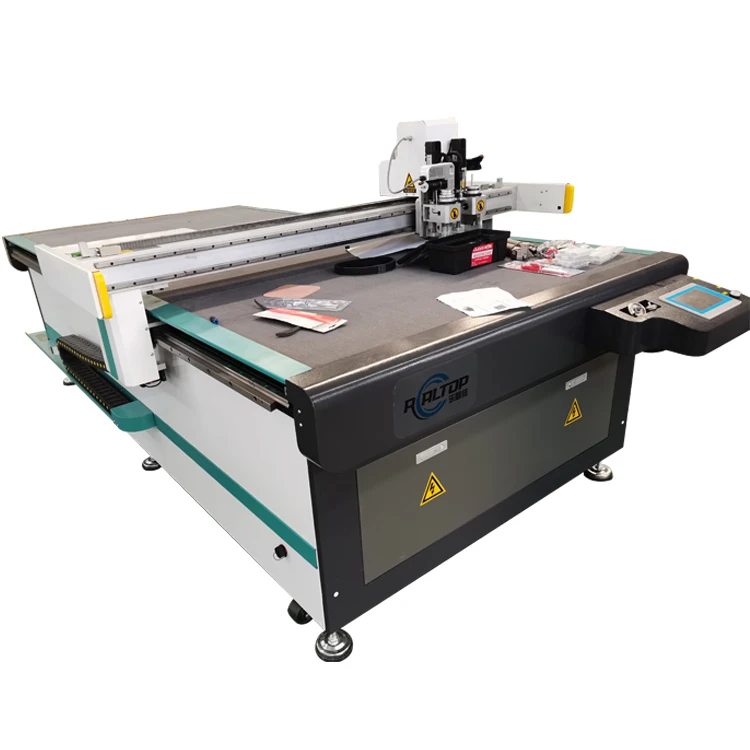
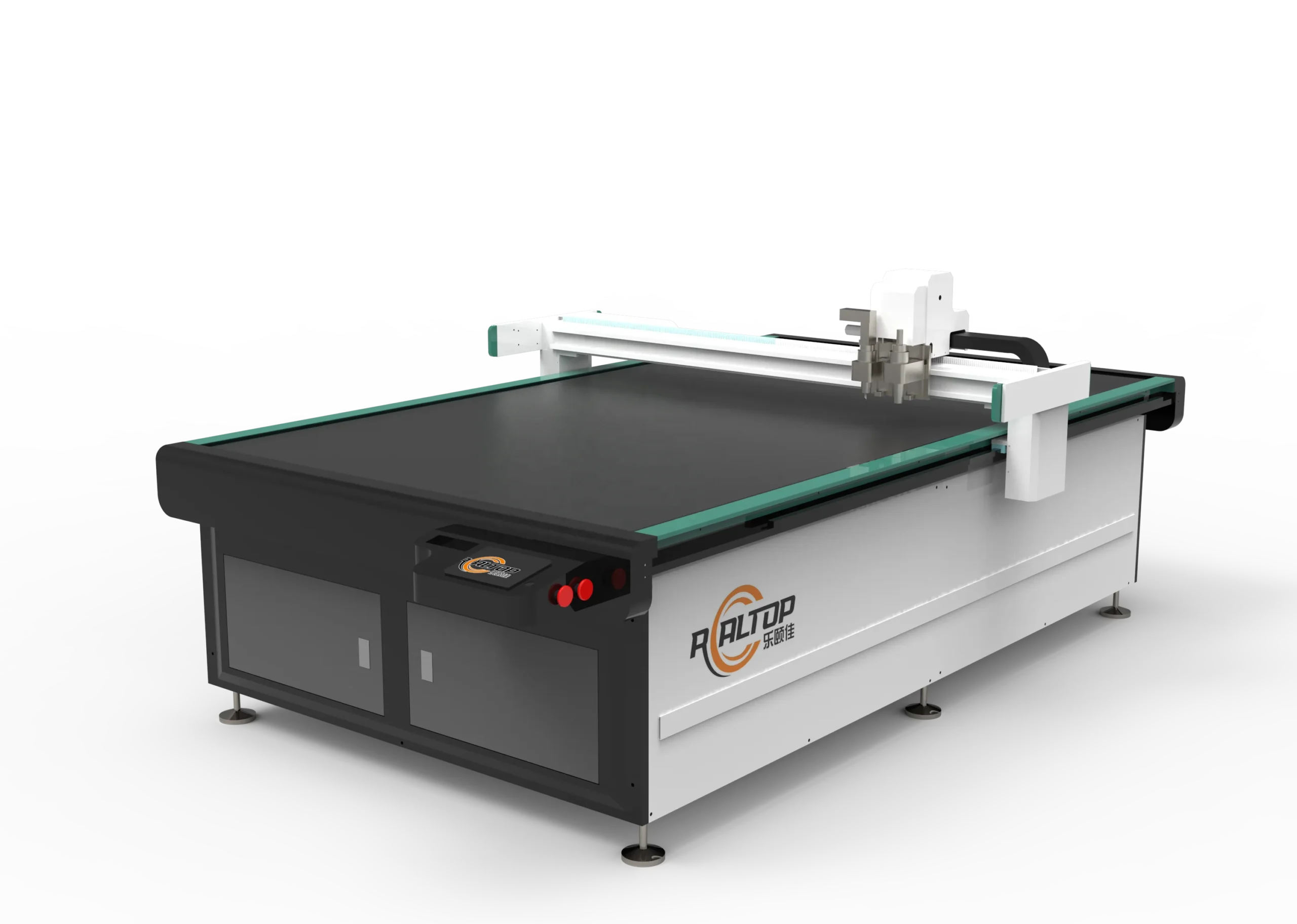
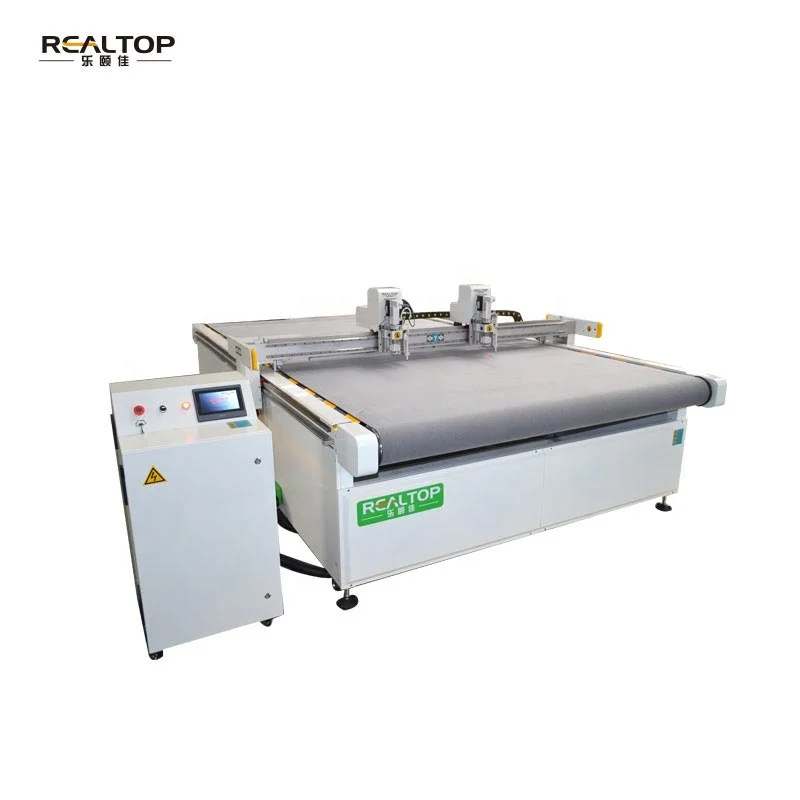
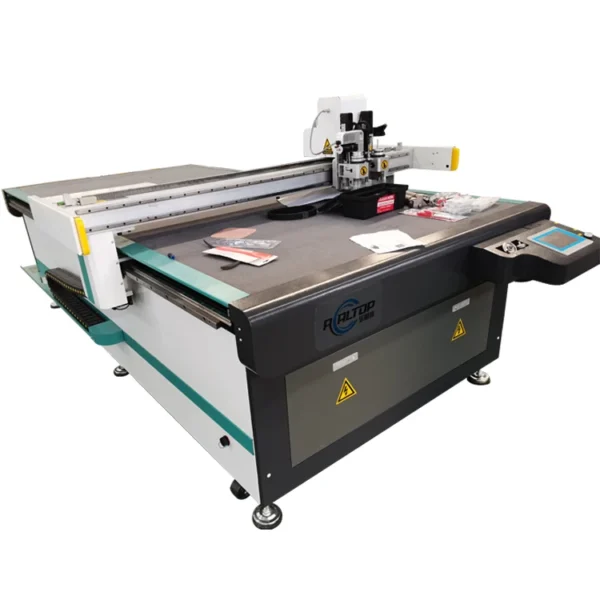
Knife and Table Configured Per Material — The RT-D2516/RT-S2516 pairs its multifunctional oscillating knife head with a zoned vacuum flatbed, so the cutting method is matched to the buyer’s board density and part geometry rather than forcing a single setup.
Technical Specifications
| Parameter | Value |
|---|---|
| Model | RT-D2516/RT-S2516 |
| Product Type | CNC Flatbed Digital Cutting Machine |
| Working Area | 1600 × 2500 mm |
| Machine Size | 3450 × 2300 × 1250 mm |
| Rated Power | 9 kW |
| Vacuum Pump | 7.5 kW |
| Table Type | Flatbed with conveyor belt and vacuum holding |
| Tool Head | Multifunctional head with Swiss imported oscillating knife (full cut, half cut, cursor location) |
| Translational Velocity | 800 – 1200 mm/s |
| Cutting Speed | 200 – 800 mm/s (basis not stated in source — confirm material type / thickness) |
| Cutting Thickness | Up to 70 mm with pneumatic cutting tool (basis not stated in source — confirm material type / density) |
| Repeated Accuracy | ≤ 0.1 mm |
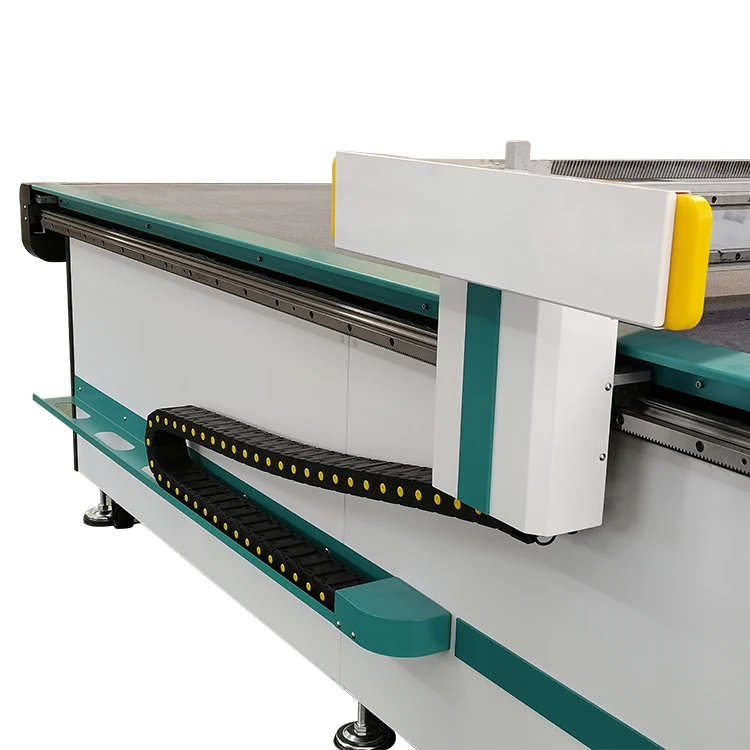
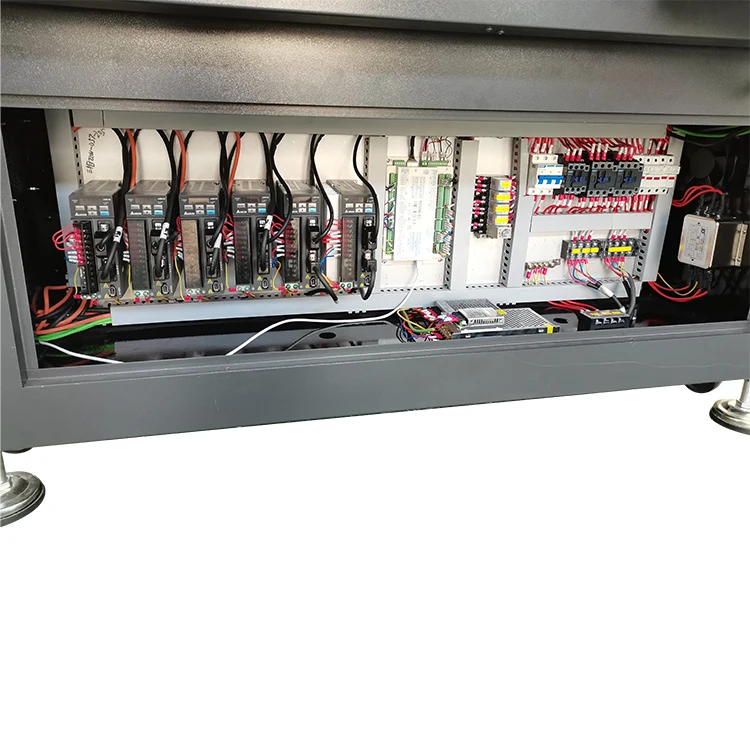
| Transmission System | Digital servo motor, linear guide, synchronous belt, ball screw |
| Servo Motor | Japanese Yaskawa |
| Linear Rail | Taiwan Hiwin |
| Instruction System | HP-GL compatible format |
| Voltage | 380V ± 10% |
| Feeding | Auto feeding with Germany imported conveyor belt |
| Operations Supported | Cutting, creasing, marking |
| Safety Device | Infrared sensors |
| Standards | CE declaration (verify specific certificate coverage for this model) |
Application Suitability
| Application | Material or Output |
|---|---|
| Honeycomb carton and board production | Honeycomb core, corrugated board, grey board |
| Carton sample making and short runs | Cardboard, folding carton stock, corrugated |
| Sticker and label contour cutting | Vinyl, adhesive film, printed label stock |
| Gift box prototyping | Rigid board, specialty paper, foam insert |
| Gasket and seal cutting | Rubber, silicone, soft glass, composite sheet |
| Leather and flexible material cutting | Natural leather, synthetic PU, sponge composite |
| Carpet and automotive mat cutting | Tufted carpet, non-woven, EVA foam |
What "70mm Cutting Depth" Leaves Out About Honeycomb Board
Real cutting depth depends on your material’s density, moisture and core structure, not just a number on a spec sheet.
I once saw a workshop buy a flatbed cutter rated for thick board, only to find the oscillating knife crushed the honeycomb core and left ragged edges because the incoming board had higher moisture content than expected. The rated thickness means little when the actual stock is soft or uneven. Before any CNC oscillating knife cutting machine specifications are taken as final, a sample cut on your exact material batch is the only way to confirm clean edges and true throughput [NEED_CITE: material moisture and density variability in honeycomb board production].
Tool Head Selection for Packaging Substrates
The multifunctional head on the RT-D2516/RT-S2516 combines a Swiss imported oscillating knife with cursor location capability, supporting full cut, half cut and contour tracking on printed stock. For honeycomb carton and thick corrugated, the oscillating action prevents the core from being dragged or crushed. For thinner vinyl labels and sticker sheets, the half-cut function scores the face film without cutting through the liner, which is essential for kiss-cut production runs.
Vacuum Zoning and Small-Part Stability
A 7.5 kW vacuum pump paired with the flatbed conveyor table holds nested parts down during high-speed travel. When cutting dozens of small gasket or label shapes from a single sheet, inadequate zoning allows lift at the edges, causing misalignment and scrap. The zoned vacuum design on this CNC flatbed cutting table addresses that by maintaining suction across active cutting zones, keeping even lightweight honeycomb offcuts registered to the belt throughout the run [NEED_CITE: vacuum table zoning requirements for nested small-part cutting].
How Drive Components Shape Edge and Crease Quality
Repeated accuracy of ≤ 0.1 mm is achieved through the Yaskawa digital servo motors and Hiwin linear rails working in concert with synchronous belts and ball screws. In practice, this means crease lines on a gift box blank land in the same position across hundreds of cycles, and the oscillating knife tracks the programmed path without drift. When cutting dense grey board for rigid boxes, any backlash in the drive train shows up as stepped edges on curves — a tolerance stack that the specified component set is designed to eliminate.
Reading the Specs Against Your Actual Workflow
The 200 – 800 mm/s cutting speed and 800 – 1200 mm/s translational velocity are measured under conditions that may not match your material [NEED_CITE: cutting speed variation across material density and thickness]. A dense 3 mm grey board will demand slower knife travel than a single-layer corrugated sheet to maintain edge quality. The HP-GL compatible instruction system allows the machine to accept files from standard packaging CAD and nesting software, so your existing workflow does not need to be rebuilt around a proprietary format. Confirming file format compatibility and nesting logic before order prevents the common failure of machines that arrive and cannot open the buyer’s production files.
When the Wrong Configuration Reaches the Factory Floor
A buyer who specifies only by working area may receive a machine with insufficient vacuum zoning for their part mix, leading to material lift and scrap on small nested pieces. Choosing the wrong tool head — a drag knife instead of an oscillating knife on honeycomb board — produces crushed cores and delaminated edges. Skipping voltage confirmation before shipment means a 380V machine arriving at a facility wired for a different standard sits idle while transformers are sourced [NEED_CITE: industrial voltage mismatch consequences in exported machinery]. These configuration mismatches are not warranty issues; they are specification failures that delay production by weeks.
Why Source This Configuration Here
The design and production of both knife and laser cutting systems under one roof means the cutting method is selected to match your material, not forced into whichever technology the supplier happens to offer. Tool head and table configurations are specified per your material type, thickness and daily volume. CCD camera cursor location is available for printed contour work, and software compatibility is confirmed before the order is finalized. Sample cutting on your own material is conducted before commitment, and voltage, control language and plug type are locked in before shipment.
Documentation & Verification
- Factory test record cut on your honeycomb board grade before dispatch
- Electrical schematic with voltage and frequency confirmed for your facility
- Tool head and table configuration list matched to your stated material
- Software licence and HP-GL file format compatibility note included
- Sample cutting report documenting edge quality and dimensional accuracy
- Spare parts list covering knife blades, vacuum cups and wear items
Installation, Commissioning & Support
- 380V ± 10% dedicated circuit required, rated above 9 kW total draw
- Floor space of approximately 3450 × 2300 mm with access for material loading
- 7.5 kW vacuum pump may require separate ducting or exhaust routing
- First-run parameter tuning on your material included during commissioning
- Operator training covers tool head changes, vacuum zoning and file import
- Wear parts inventory includes oscillating knife blades and conveyor belt segments
Before You Request a Quote
Provide the specific material types, thicknesses and sheet sizes you run, along with your daily cutting volume and whether your workflow involves printed contour work. Include your facility’s voltage and frequency standard so the electrical configuration is confirmed up front. If you use a specific nesting software, share a sample file so format compatibility can be verified before the quotation stage.
Frequently Asked Questions
Q: How do I confirm the machine actually cuts my honeycomb board cleanly before ordering?
A: A sample cutting test is run on your own material before any order is finalized. The test documents edge quality, cutting depth, dimensional accuracy and cycle time on your specific board grade and moisture content. You receive a sample cutting report showing the results, so the CNC oscillating knife cutting machine specifications are validated against your real production stock rather than generic lab samples.
Q: Which tool head should I use for carton creasing versus sticker kiss-cutting?
A: For carton and honeycomb board, the oscillating knife handles full-depth cutting while a creasing wheel scores fold lines. For stickers and labels, the half-cut function scores through the face film without penetrating the liner. The multifunctional head supports both operations, and the specific tool combination is configured based on your material mix and confirmed before production.
Q: Can the vacuum table hold small nested gasket parts without lifting at cutting speed?
A: The 7.5 kW vacuum system uses zoned suction across the flatbed conveyor, so active cutting areas maintain hold-down pressure even on small parts. The zoning configuration is matched to your typical nesting layout and part size during specification, preventing the edge lift and misregistration that occur when a single-zone vacuum cannot cover distributed small shapes.
Q: Will the machine accept my existing packaging CAD files and nesting workflow?
A: The HP-GL compatible instruction system accepts output from most standard packaging CAD and nesting platforms. Before the order is confirmed, a file format compatibility check is performed using your actual production files, including any nesting logic and contour data. This prevents the situation where the machine arrives and cannot process the buyer’s existing workflow.


商品评价
Clear filtersThere are no reviews yet.