






Fast Shipping
Carrier information

20k products
Payment methods

24/7 Support
Unlimited help desk

2-day Delivery
Track or off orders
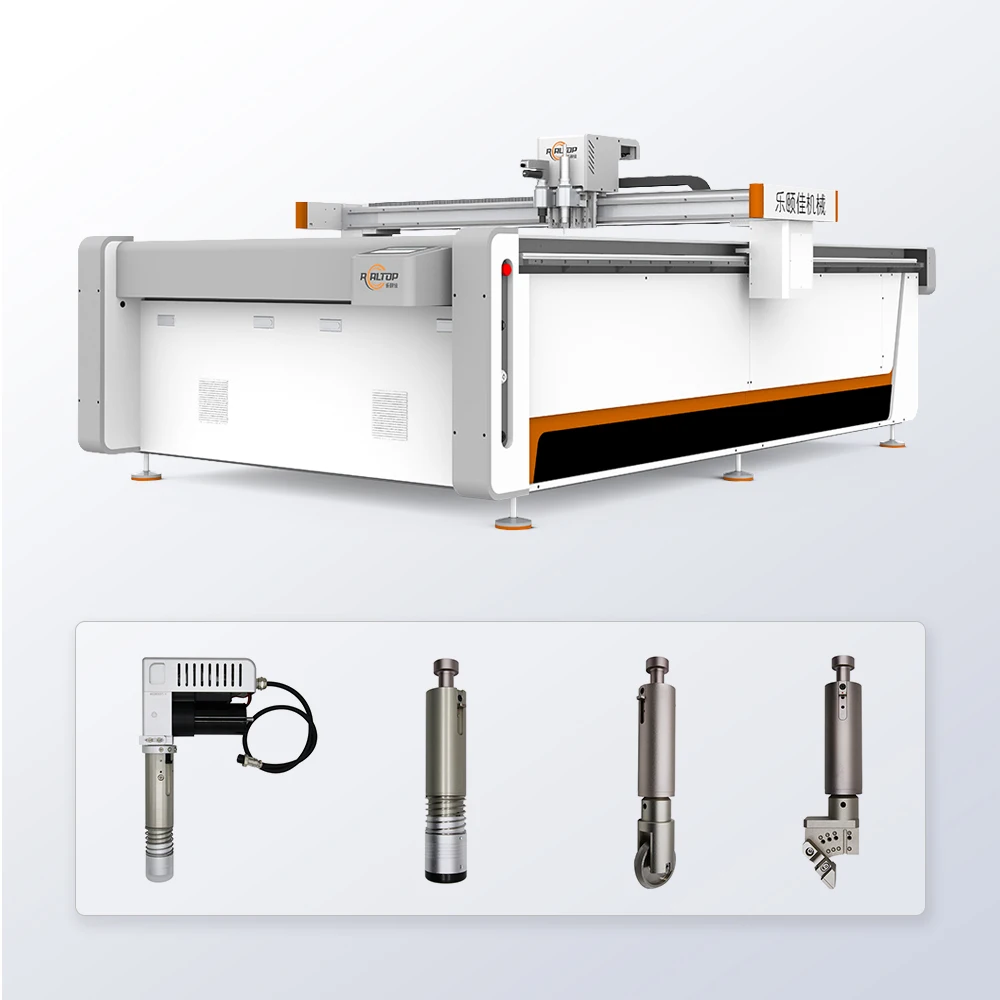
Tool Head Mapping — each flute weight and packaging substrate is matched to its correct oscillating knife, creasing wheel or kiss-cut tool before the first production run.
Technical Specifications
| Parameter | Value |
|---|---|
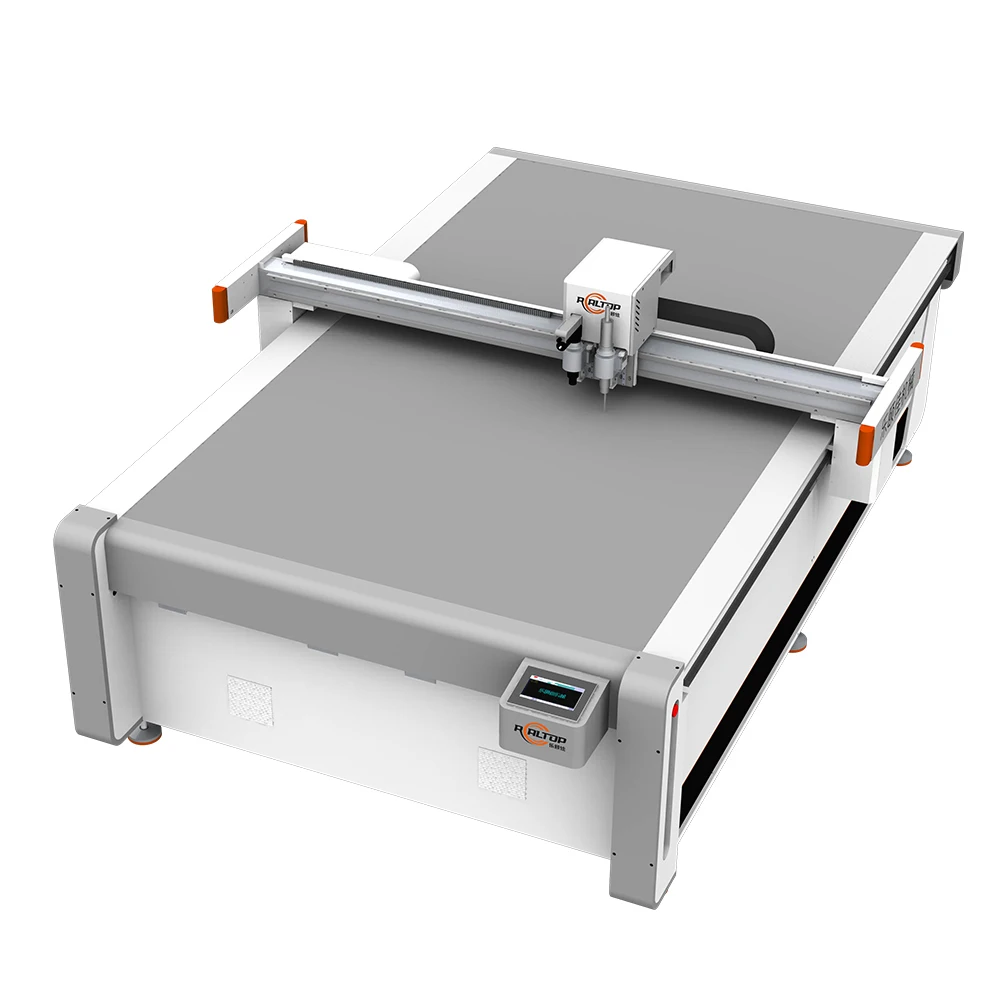
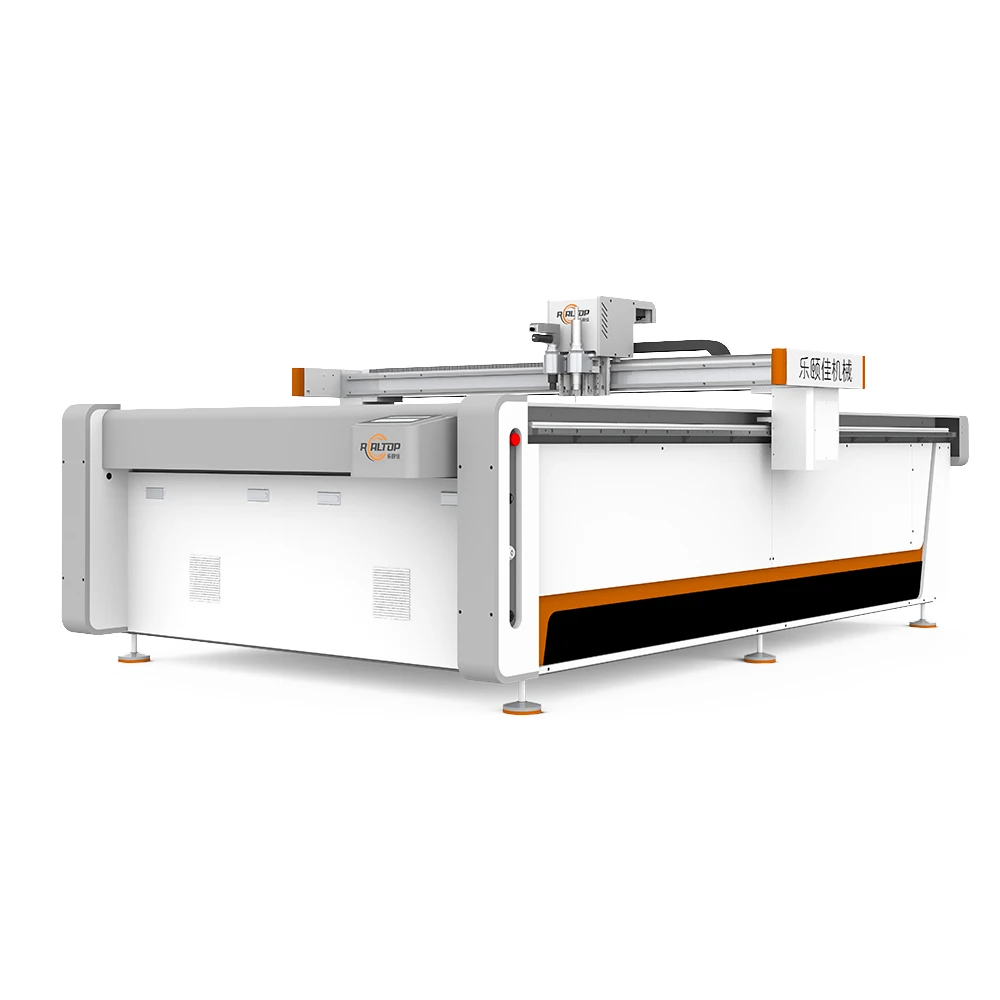
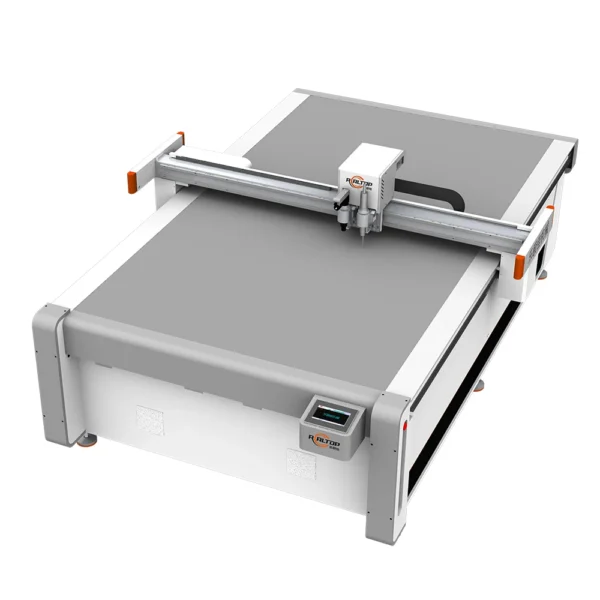
| Product Type | CNC Oscillating Knife Cutting Machine |
| Model | 1625 |
| Working Area | 1600×2500 mm |
| Tools Available | Oscillating knife, Driven rotary knife, Creasing wheel, Kiss cutting tool, Pneumatic knife, Milling tool, V groove knife |
| Cutting Speed | 0-1500 mm/s |
| Cutting Thickness | ≤ 40 mm |
| Cutting Accuracy | ±0.1 mm |
| Vacuum Pump | 9 kW |
| Vacuum Table | Aluminum bellows vacuum table |
| Control System | PLC control panel with dedicated packaging box structure design software |
| Servo Motors | Multiple options available (Panasonic, Delta, Dorna) |
| File Formats Supported | PLT, DXF, AI, PDF |
| Voltage Options | 110V, 220V, 380V |
| Language Options | English, Russian, Italian, Chinese, customizable |
| Safety Device | Infrared sensor device and emergency stop device |
| Machine Size | 3300×2100×1350 mm |
| Standards | CE |
Application Suitability
| Application | Material or Output |
|---|---|
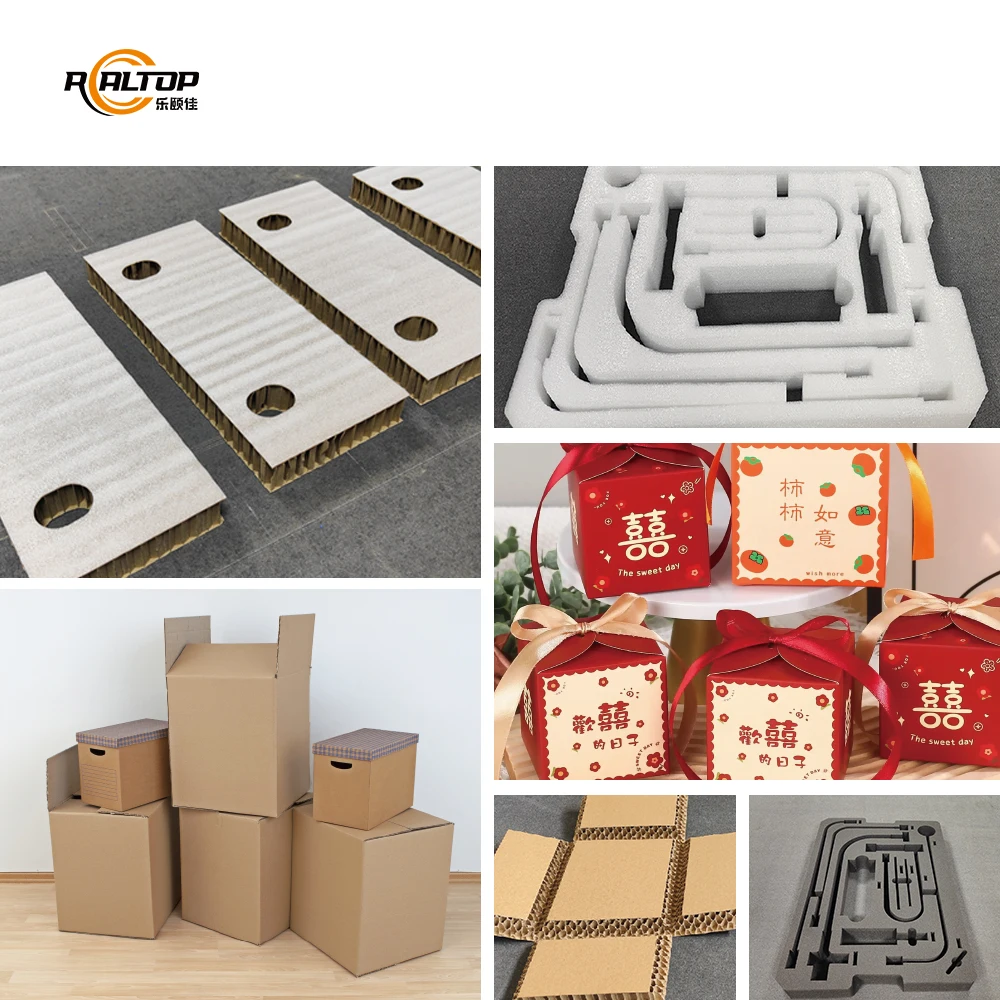
| Carton and packaging sample making | Corrugated board (E-flute through BC-flute), greyboard, cardstock |
| Corrugated display and insert components | Single and double wall corrugated for short-run structures |
| Foam insert fabrication | EVA, EPE, PU cushioning profiles cut to cavity dimensions |
| Rubber mat and gasket cutting | Industrial rubber sheets and neoprene up to 40 mm |
| Fabric and leather prototyping | Velvet, fleece, non-woven fabric, synthetic leather |
| Thin plastic sheet processing | PVC, PET sheets for blister and clamshell samples |
What "Maximum 40 mm Cutting Depth" Leaves Out When Selecting a CNC Oscillating Knife Cutting Machine
Thickness capacity only matters when paired with the correct tool head and vacuum hold-down for the actual substrate being processed.
A buyer sees a 40 mm cutting capacity on the spec sheet and assumes any board up to that thickness will cut cleanly. In practice, BC-flute corrugated at 7 mm behaves completely differently from PU foam at 35 mm, even though both fall within the stated range. The oscillating frequency, blade angle and stroke length must align with the material density and fiber structure. When they do not, the result is crushed fluting on corrugated or melted edges on foam. [NEED_CITE: material density and knife oscillation frequency matching for flatbed digital cutters]
Tool Head Selection Across Packaging Substrates
A packaging sample room typically handles corrugated board, greyboard, foam inserts and sometimes rubber gaskets in the same week. The 1625 accommodates this with interchangeable heads including an oscillating knife for cold cutting through E-flute to BC-flute, a creasing wheel for fold-line scoring and a V groove knife for mitre-fold preparation. Switching between these tools happens within the same job file, so a carton blank can be scored and cut in one cycle without manual repositioning.
Vacuum Table Zoning for Small Blanks and Nested Layouts
Hold-down becomes the limiting factor once cutting starts. The aluminum bellows vacuum table on this CNC oscillating knife cutting machine specifications sheet provides a flat sealing surface designed to keep lightweight carton stock from lifting during high-speed passes. Zoning allows operators to activate only the sections under active work, which matters when cutting nested small blanks where full-table vacuum would pull air through unused areas and reduce effective suction at the cut point. [NEED_CITE: vacuum table zoning principles for flatbed digital cutting systems]
Reading the Parameters That Actually Determine Cut Quality
Cutting speed listed at 0-1500 mm/s represents the travel range of the gantry, not the speed at which every material can be processed. Corrugated board with exposed fluting at cut edges requires slower passes to avoid fiber tear, while PU foam can often be cut at higher travel speeds without edge degradation. The ±0.1 mm accuracy figure applies across the full 1600×2500 mm working area, which is relevant when cutting interlocking carton joints that must assemble without adhesive gaps. The 9 kW vacuum pump rating determines how quickly the table recovers suction after a through-cut breaches the material surface. Servo motor selection across Panasonic, Delta and Dorna options affects acceleration behavior on direction changes, which directly influences corner quality on tight carton flap geometries.
The Cost of Skipping Material-Specific Configuration
Wrong tool selection shows up days after installation. A creasing wheel set at incorrect pressure on B-flute produces cracked score lines that fail during folding. A pneumatic knife used on thin cardstock instead of the oscillating knife tears the sheet rather than cutting it. When vacuum zoning is left on full-table mode for small nested blanks, edge lift causes the knife to catch and produce ragged contours that require manual trimming. [NEED_CITE: common tool selection errors on oscillating knife cutting tables]
Why Source This Configuration Here
In-house design and production covering knife cutting technology means tool head and table configuration are specified per substrate rather than sold as a fixed package. Every material the buyer intends to process is sample cut before order confirmation, with edge quality and crease integrity documented in a report. Software compatibility is verified against the buyer’s existing PLT, DXF, AI or PDF files and the dedicated packaging structure design software is included. Voltage and control language are confirmed against the buyer’s facility supply and operator preference before production begins. The factory test record includes runs on the buyer’s specified flute type and board weight, not generic material.
Documentation & Verification
- Factory test record on buyer’s corrugated flute type and board weight before dispatch
- Tool head and table configuration list matched to specified packaging substrates
- Electrical schematic confirming voltage and phase for the destination facility
- Sample cutting report documenting edge quality and crease integrity on buyer material
- Software licence covering PLT, DXF, AI, PDF and packaging structure design module
- Spare parts list with consumable blade and creasing wheel replacement intervals
Installation, Commissioning & Support
- 9 kW vacuum pump requires a dedicated circuit separate from the main 380V or 220V supply
- Machine footprint of 3300×2100 mm needs clearance on all sides for material loading
- PLC control panel commissioning includes language setup and file format import testing
- First-run parameter tuning on buyer’s actual corrugated board and foam stock
- Operator training covers tool head changeover and vacuum zoning adjustment procedures
- Consumable blade and creasing wheel stock recommended for initial production months
Preparing Your Inquiry
Send the specific flute types and board weights your sample room processes most often, along with typical sheet sizes and daily blank volumes. Include your facility voltage and phase supply, preferred control language, and whether your current design workflow uses PLT, DXF, AI or PDF files. If you need sample cutting on your own material before committing, ship a representative sheet and specify which carton structures you want tested.
Frequently Asked Questions
Q: Which tool head is correct for my flute type and board thickness?
A: E-flute and B-flute corrugated up to approximately 5 mm typically cut cleanly with the oscillating knife at high frequency. BC-flute and thicker double-wall board require adjusted stroke parameters on the same oscillating knife. For fold lines, the creasing wheel is specified by flute profile, and the V groove knife handles mitre-fold preparation on greyboard and rigid carton stock.
Q: How does vacuum table zoning affect small carton blank hold-down?
A: The aluminum bellows vacuum table allows operators to activate only the zones under the current cutting path. When small blanks are nested across the 1600×2500 mm bed, zoning prevents air from being pulled through unused areas, maintaining suction strength at the cut point and preventing lightweight stock from lifting during high-speed passes.
Q: Can the software import my existing packaging structure files and nesting workflow?
A: The PLC control system accepts PLT, DXF, AI and PDF file formats alongside the dedicated packaging box structure design software. File compatibility is verified against your existing design files before order confirmation, and nesting workflows are tested during the factory sample cutting stage to confirm the import chain works end to end.
Q: What voltage and control language options are confirmed before shipment?
A: The system is configurable for 110V, 220V or 380V supply depending on your facility. Control language options include English, Russian, Italian and Chinese with additional customization available. Both voltage and language are confirmed in writing against your site specifications before the machine enters production.
Q: How do I arrange sample cutting on my own material before committing?
A: Ship a representative sample of the corrugated board, foam or packaging substrate you intend to process. The factory runs cutting tests using the tool head configuration recommended for your material, then provides a sample cutting report documenting edge quality, crease integrity and achievable parameters before you finalize the order.


商品评价
Clear filtersThere are no reviews yet.