







Fast Shipping
Carrier information

20k products
Payment methods

24/7 Support
Unlimited help desk

2-day Delivery
Track or off orders
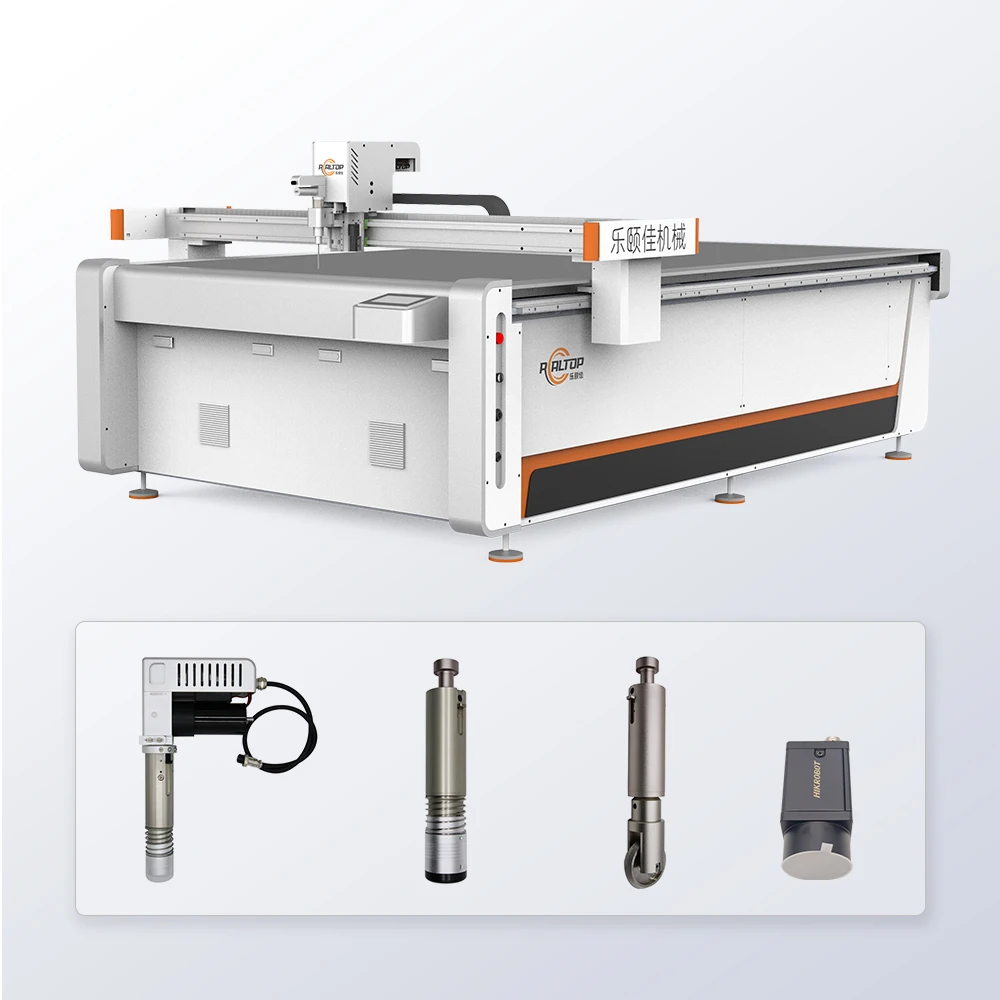
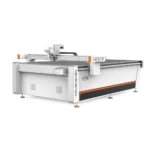
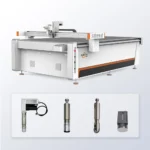
Interchangeable Tool Head System — Match oscillating knife, creasing wheel, or driven rotary knife to the exact flute profile and board density on your cutting table.
Technical Specifications
| Parameter | Value |
|---|---|
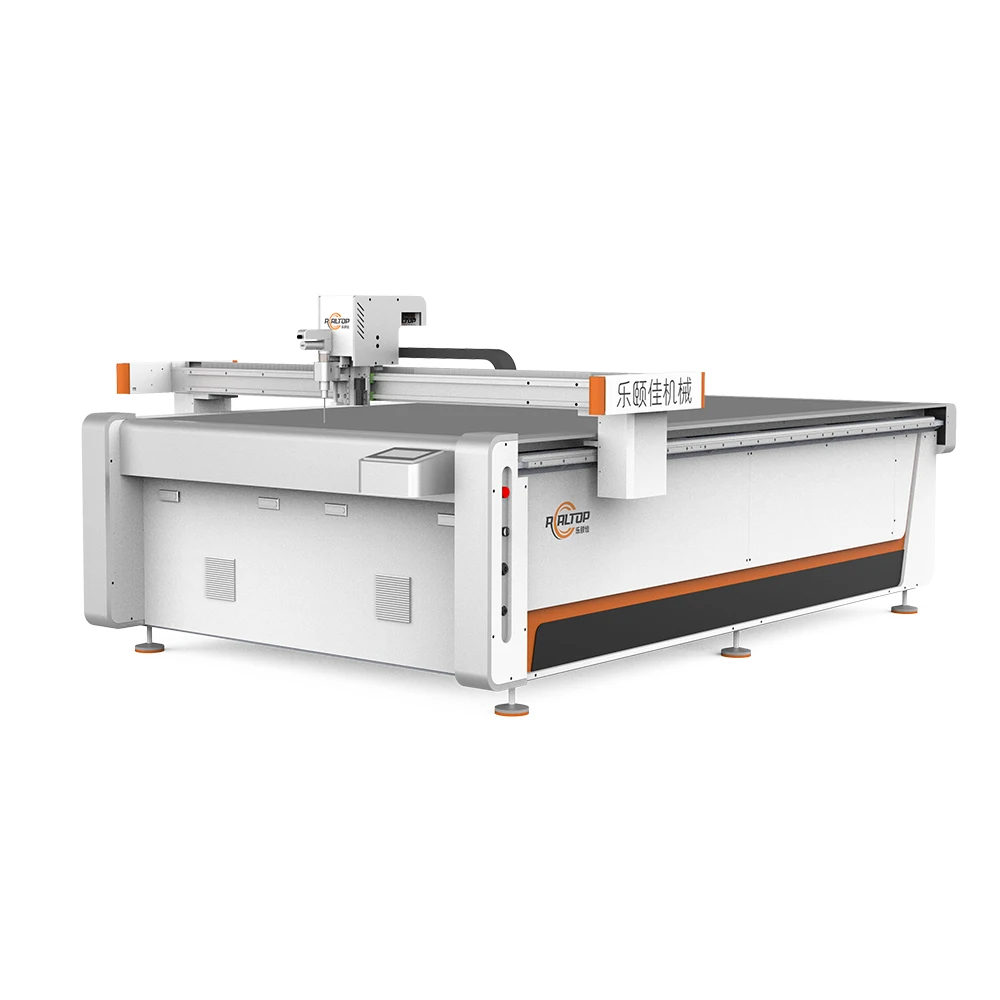
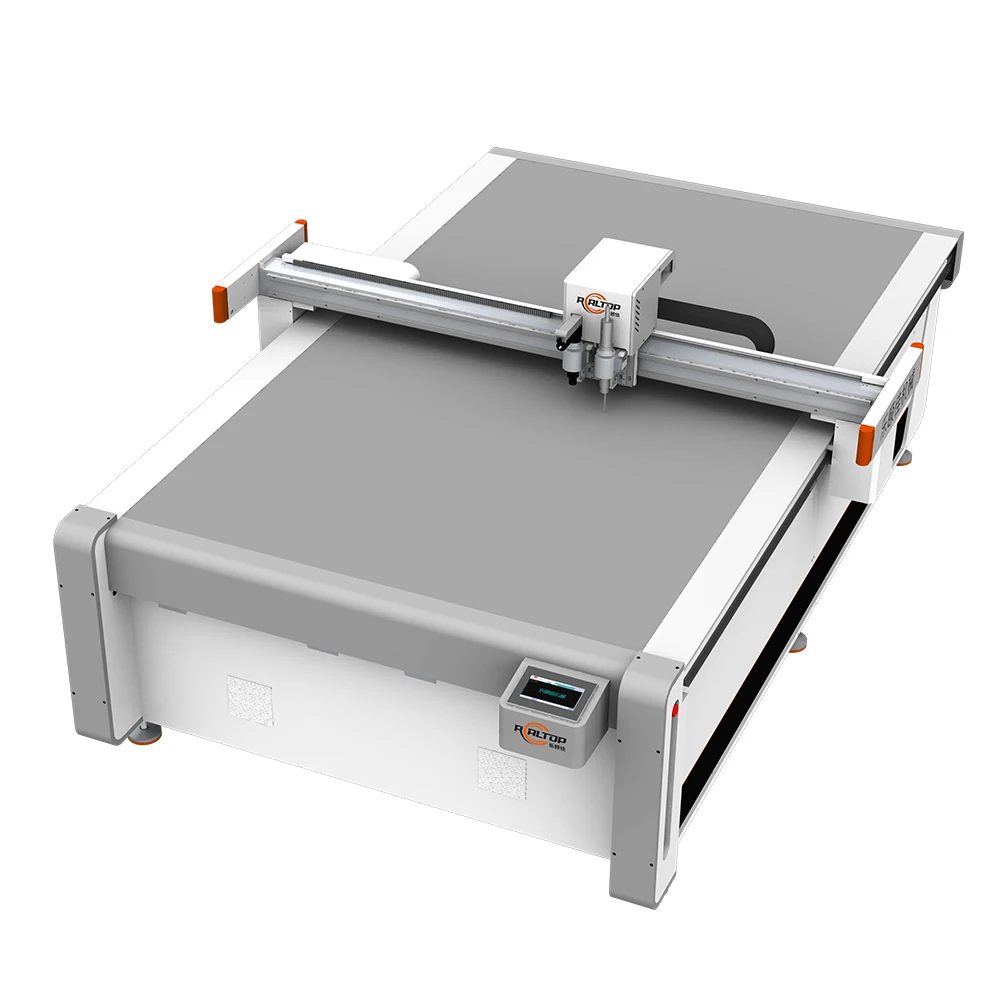
| Product Type | CNC Oscillating Knife Cutting Table |
| Model | 1625 |
| Working Area | 1600 × 2500 mm |
| Cutting Thickness | Up to 40 mm |
| Cutting Accuracy | ±0.1 mm |
| Cutting Speed Range | 0–1500 mm/s |
| Tool Head Options | Oscillating knife, Driven rotary knife, Creasing wheel, Kiss cutting tool, Pneumatic knife, Milling tool, V groove knife |
| Positioning System | CCD camera contour recognition |
| Vacuum Table | Aluminum bellows vacuum table |
| Vacuum Pump Power | 9 kW |
| Machine Frame | Heavy-duty frame with precision-ground surface |
| Servo Motor Options | Panasonic, Delta, Dorna |
| Control System | PLC control panel with dedicated packaging box structure design software |
| Voltage Options | 110V, 220V, 380V |
| Compatible File Formats | PLT, DXF, AI, PDF |
| Safety Devices | Infrared sensor device, emergency stop device |
| Machine Dimensions | 3300 × 2100 × 1350 mm |
| Control Language Options | English, Russian, Italian, Chinese, customizable special languages |
| Compliance | CE |
Application Suitability
| Application | Material or Output |
|---|---|
| Packaging sample making | E-flute, B-flute, BC-flute corrugated cardboard without die-cut molds |
| Corrugated box prototyping | Greyboard, cardstock, art paper, specialty paper |
| Display and POS packaging | Composite boards, EVA foam, EPE foam, Coroplast inserts |
| Short-run carton production | PU foam, rubber mats, adhesive-backed materials |
| Non-metal gasket and insert cutting | PVC, PET, thin plastic sheets, synthetic leather |
Why Tool Head Selection Matters More Than Working Area on a CNC Oscillating Knife Cutting Table
A 1600 × 2500 mm bed only defines the sheet size you can load; the tool head determines whether the edge is clean or the flute core is crushed.
I once specified a standard oscillating knife for a customer running high-density BC-flute, assuming the 40 mm cutting depth was sufficient. The knife penetrated, but the corrugated medium collapsed under lateral pressure, leaving ragged edges and incomplete creases. The buyer lost an entire sample batch before we swapped to a driven rotary knife and adjusted the creasing wheel pressure. That two-week delay could have been avoided if we had matched the tool to the flute profile before the machine left the factory [NEED_CITE: tool head selection criteria for corrugated flute types]. When buyers focus on CNC oscillating knife cutting table specifications like bed size and speed range without confirming which heads ship with the unit, they end up with a machine that cuts the outline but cannot produce a foldable carton.
Matching the Knife to the Flute Profile
E-flute and B-flute boards respond well to a high-frequency oscillating knife because the thin flute walls require minimal lateral force, and the blade vibration shears cleanly through the liner and medium. BC-flute and double-wall constructions demand a driven rotary knife or pneumatic knife that slices with downward pressure rather than oscillation, preventing core compression. The 1625 platform supports interchangeable heads on a single gantry, so a packaging sample maker can run E-flute prototypes in the morning and switch to a creasing wheel for greyboard fold lines in the afternoon. This flexibility is where the real value of a CNC oscillating knife cutting table lies for carton sample rooms handling mixed board stocks.
Vacuum Table Zoning and Small Part Stability
Corrugated sample cutting often involves nested small parts — locking tabs, ventilation slots, handle cutouts — that lose vacuum hold once the knife penetrates. The aluminum bellows vacuum table on this unit provides full-surface adsorption across the 1600 × 2500 mm area, with the 9 kW pump generating sufficient negative pressure to keep lightweight cardstock and single-face flute flat during high-speed passes [NEED_CITE: vacuum hold-down requirements for thin corrugated board]. When the vacuum zoning is inadequate, small tabs lift into the knife path, producing nicks and forcing the operator to reduce cutting speed. The flatness of the precision-ground frame and aluminum table surface ensures consistent vacuum distribution even on warped corrugated sheets that arrive from the board supplier with residual curl.
Reading the Specs That Affect Daily Output
Cutting accuracy of ±0.1 mm is meaningful for packaging work because registration between the cut line and printed artwork determines whether a folding carton closes properly or gaps at the glue flap. The CCD camera reads printed contour marks on pre-printed corrugated sheets, adjusting the cut path in real time to compensate for stretch or skew introduced during the printing process. File format compatibility across PLT, DXF, AI, and PDF means the sample maker can import artwork directly from structural packaging CAD software without redrawing profiles. The dedicated packaging box structure design software included with the PLC control panel provides parametric templates for common carton styles, reducing the time from design to first cut. Servo motor options from Panasonic, Delta, or Dorna allow the buyer to match the motion system to local service availability and spare parts supply, which matters when a drive fault halts sample production [NEED_CITE: servo motor service network coverage by region].
The Cost of Shipping Before Confirming the Configuration
When a buyer approves a quotation based on working area and price without reviewing the tool head list, the machine arrives with a generic oscillating knife and no creasing wheel. The buyer then discovers that fold lines on 2 mm greyboard require a dedicated creasing tool, which is listed as an optional add-on with a separate lead time. Voltage confirmation is another common gap: the machine is wired for 380V three-phase, but the buyer’s workshop in a region with 220V single-phase supply requires a transformer that was never discussed. Language settings on the PLC panel default to Chinese, and the operator cannot navigate the nesting software until a technician re-flashes the firmware. These are not catastrophic failures, but each one adds days or weeks of downtime before the machine produces its first sellable sample [NEED_CITE: common CNC machine commissioning delays from configuration mismatches].
Why Buyers Source This Platform from Jinan
The design team and production floor operate under one roof in Jinan, covering both knife cutting and laser cutting technologies, so a packaging buyer can evaluate whether an oscillating knife or a CO2 laser better suits their board stock before committing. Every unit ships with a sample cutting report produced on the buyer’s own corrugated material, documenting edge quality and crease integrity per flute type rather than relying on generic demo sheets. The tool head and table configuration list is itemized before order confirmation, specifying which tools are included in the base price and which are optional, eliminating post-shipment surprises. Voltage, plug type, and control panel language are signed off in writing before the machine enters assembly, not discovered during installation. The in-house software team confirms file format and nesting workflow compatibility with the buyer’s existing CAD environment during the pre-order technical review.
Documentation & Verification
- Machine specification sheet listing all tool heads, vacuum pump rating, and servo motor brand shipped
- Electrical schematic with confirmed voltage, phase, and plug type for the destination workshop
- Sample cutting report on buyer’s corrugated stock with edge quality photos per flute type
- Software license and file format compatibility note for PLT, DXF, AI, PDF import workflows
- Factory test record documenting cutting accuracy and CCD tracking on printed board before crating
- Spare parts list with part numbers for knives, blades, creasing wheels, and vacuum table seals
Installation, Commissioning & Support
- Floor must support 3300 × 2100 mm footprint with level tolerance for the precision-ground aluminum table
- Dedicated circuit required matching confirmed voltage (110V/220V/380V) and vacuum pump inrush current
- Machine ships partially assembled; gantry and tool head carriage require on-site alignment and calibration
- First-run commissioning includes CCD camera registration test on buyer’s printed corrugated sheets
- Operator training covers tool head changeover, creasing wheel pressure adjustment, and nesting software workflow
- Wear parts inventory includes oscillating knife blades, rotary knife discs, and vacuum table bellows seals
What to Include in Your Inquiry
Send a cross-section photo of the thickest corrugated board you plan to cut, identifying the flute type (E, B, C, BC) and ply count. Specify whether your workflow relies on pre-printed sheets requiring CCD contour tracking or blank board where edge quality is the priority. Confirm the voltage and frequency at your facility and the control panel language your operators require.
Frequently Asked Questions
Q: How do I choose between an oscillating knife and a creasing wheel for corrugated sample making?
A: The oscillating knife cuts through the board to separate the part, while the creasing wheel compresses the flute without cutting to create a fold line. Most carton sample workflows require both tools on the same gantry. Provide your board flute type and thickness, and the configuration list will specify which combination produces clean cuts and intact creases.
Q: Can the vacuum table hold small packaging tabs flat during high-speed cutting?
A: The aluminum bellows vacuum table paired with the 9 kW pump provides full-surface adsorption across the 1600 × 2500 mm bed. For very small nested parts on lightweight cardstock, confirm the zoning configuration during the pre-order review so the vacuum zones align with your typical nesting layout and prevent lift at the cutting edge.
Q: Will the CCD camera track printed marks at full cutting speed on corrugated board?
A: The CCD camera reads registration marks on pre-printed sheets and adjusts the cut path dynamically. Tracking performance depends on mark contrast, size, and placement relative to the sheet edge. Send a sample printed sheet before order so the camera calibration can be verified against your specific print quality and ink density.
Q: Is the packaging design software compatible with my existing CAD files?
A: The PLC control system accepts PLT, DXF, AI, and PDF formats and includes dedicated packaging box structure design software with parametric carton templates. Confirm your current CAD output format and nesting workflow during the technical review, and the software team will verify import compatibility before the machine ships.
Q: How are voltage and control language confirmed before shipment?
A: Voltage (110V, 220V, or 380V) and control panel language are documented on the specification confirmation sheet signed by both parties before production begins. The electrical schematic and a photo of the PLC panel in the selected language are included in the pre-shipment documentation package so there are no surprises at commissioning.


商品评价
Clear filtersThere are no reviews yet.