




Fast Shipping
Carrier information

20k products
Payment methods

24/7 Support
Unlimited help desk

2-day Delivery
Track or off orders
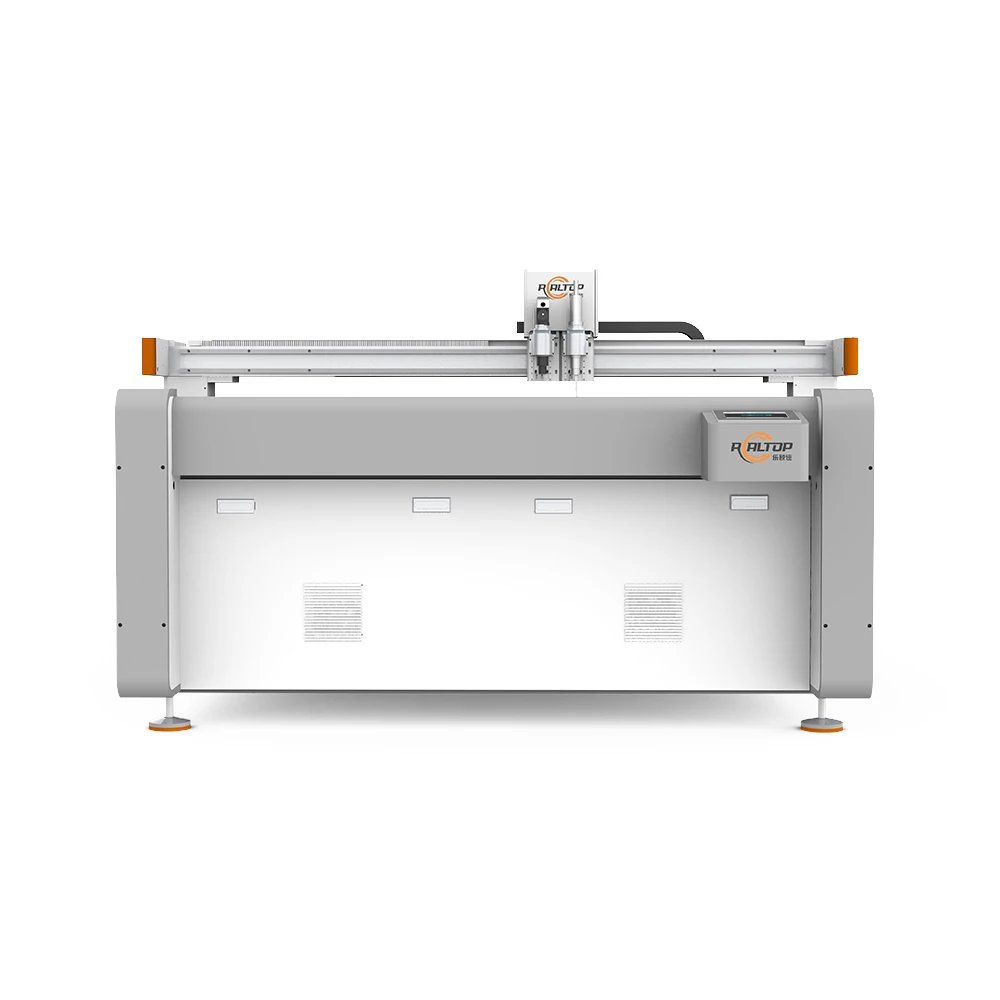
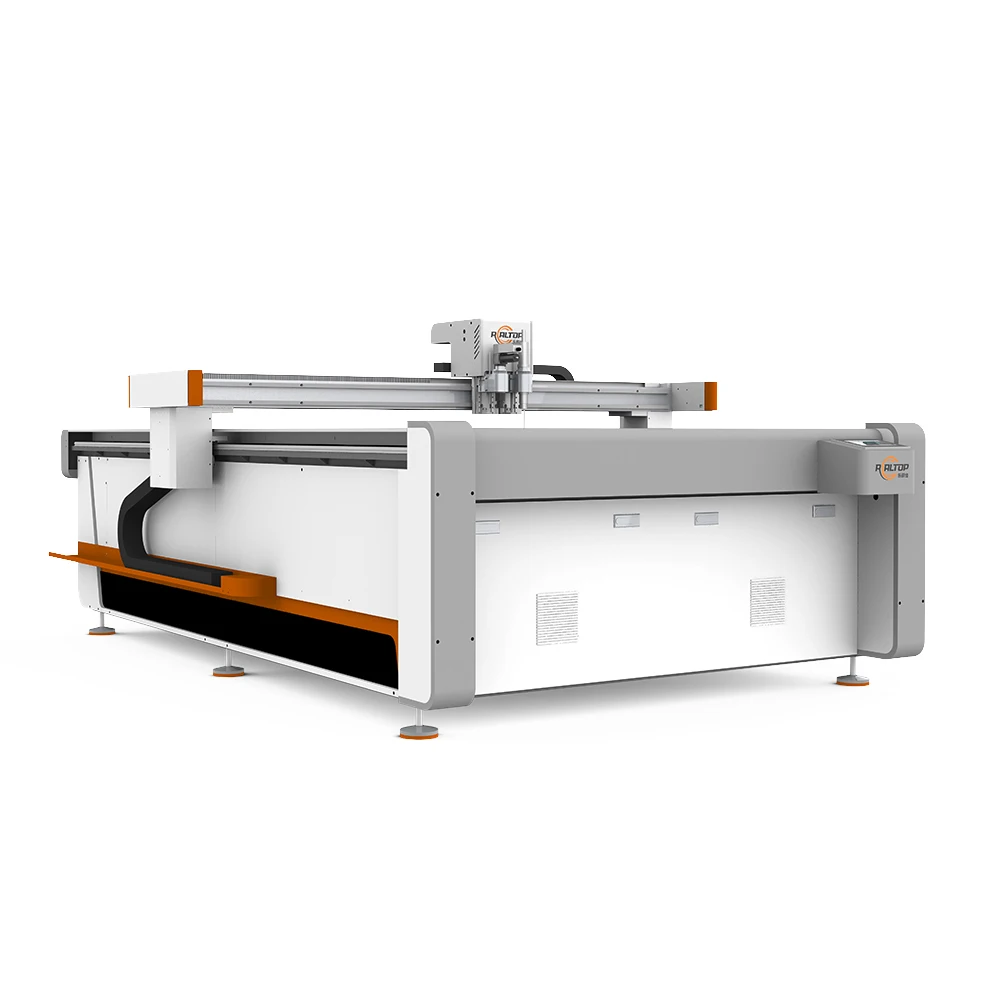
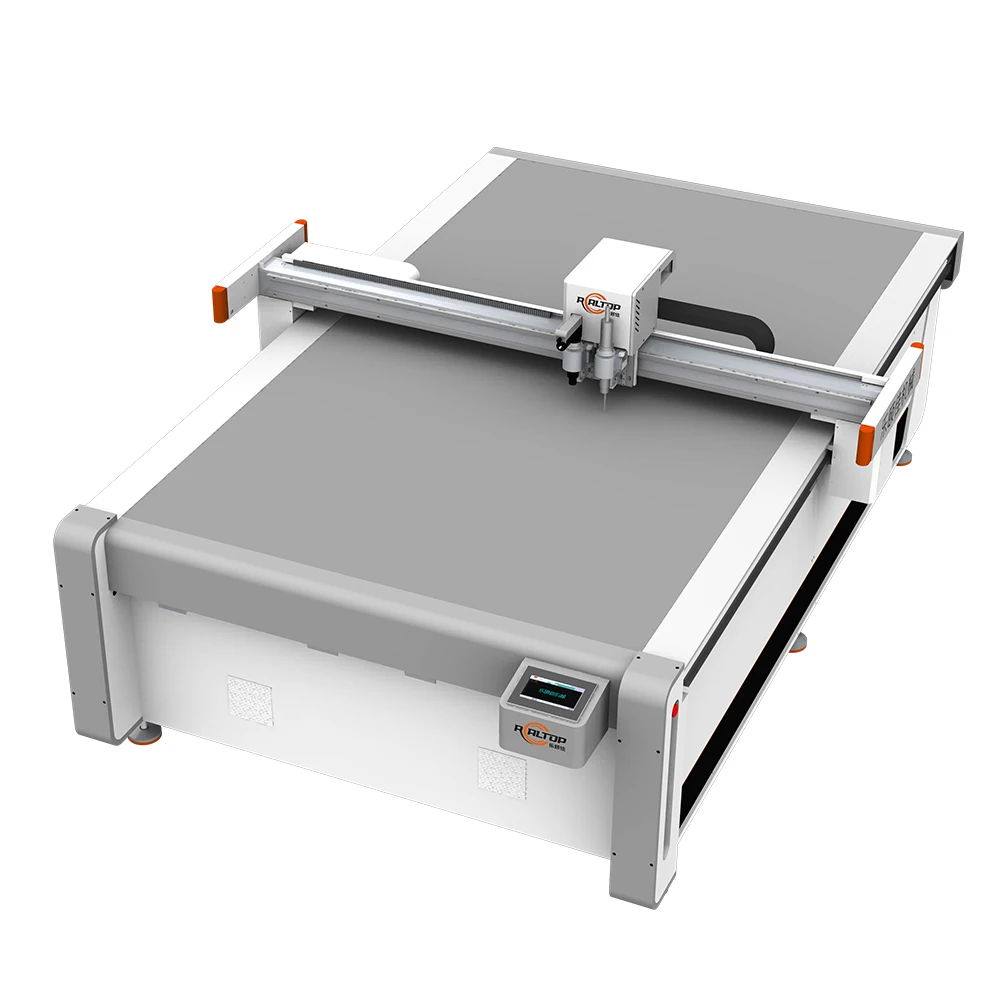
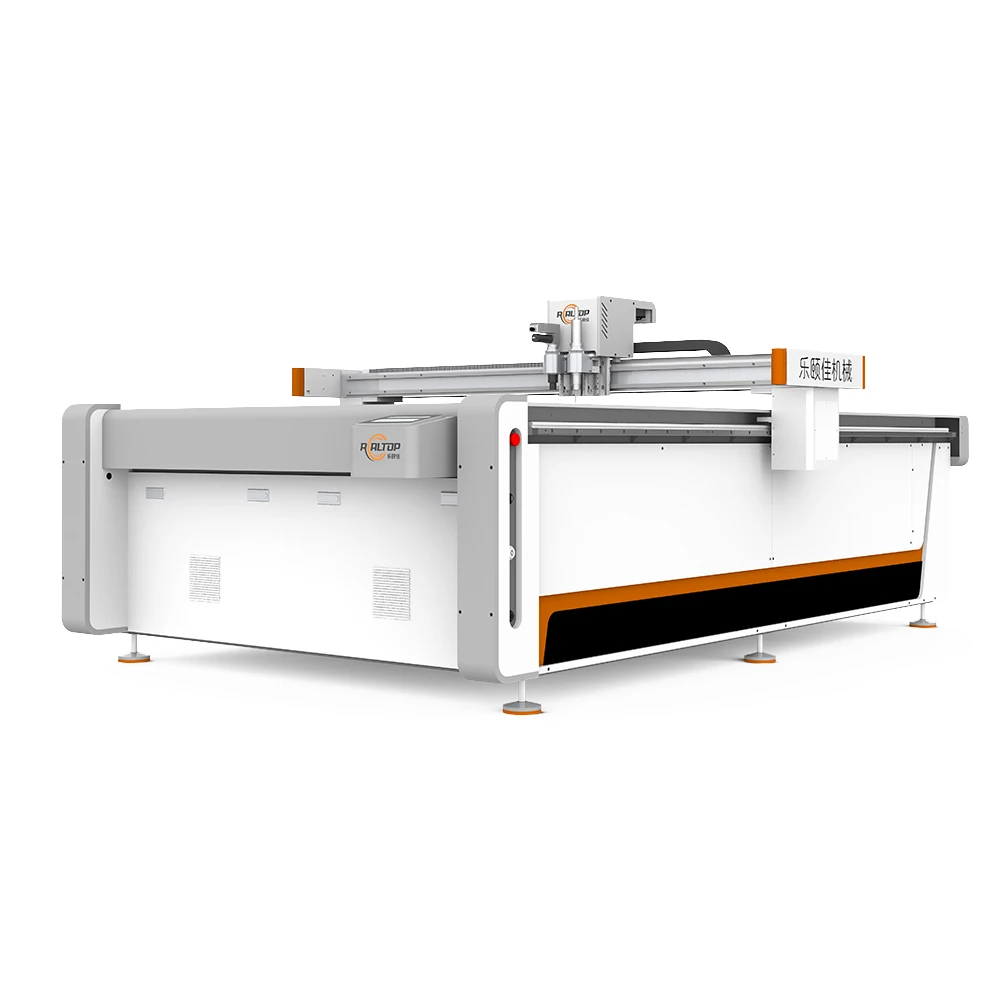
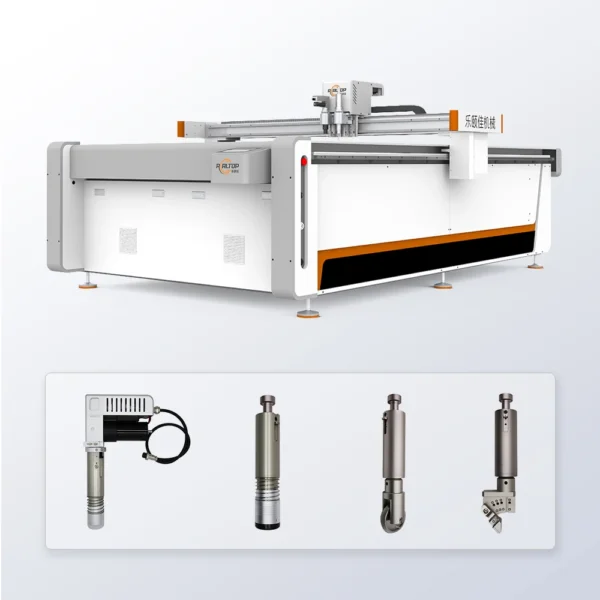
Tool Head Matched to Material — Every CNC oscillating knife cutting table we ship includes a tool head and table configuration specified per the buyer’s flute type, ply count and daily volume rather than a generic setup.
Technical Specifications
| Parameter | Value |
|---|---|
| Product Type | CNC Oscillating Knife Cutting Machine |
| Working Area | 1600×2500mm |
| Tools Available | Oscillating knife, Driven rotary knife, Creasing wheel, Kiss cutting tool, Pneumatic knife, Milling tool, V groove knife |
| Applicable Materials | Fabric, Cardboard, Carton, Mats, PVC, EVA, Leather, Acrylic, Foam, PTFE, Rubber |
| Cutting Speed | 0-1500 mm/s |
| Cutting Thickness | ≤ 40mm |
| Cutting Accuracy | ±0.1 mm |
| Vacuum Pump | 9kW |
| Voltage Options | 110V, 220V, 380V |
| Profile Format | PLT, DXF, AI, PDF |
| Safety Device | Infrared sensor device and emergency stop device |
| Machine Size | 3300×2100×1350 mm |
| Machine Frame | Heavy-duty frame with precision-ground surface |
| Vacuum Table | Aluminum bellows vacuum table with full-surface adsorption |
| Control System | PLC control panel with intuitive interface |
| Servo Motors | Panasonic, Delta, Dorna options available |
| Language Options | English, Russian, Italian, Chinese, with custom language support |
| Dedicated Software | Packaging box structure design software |
| Assembly State | Fully assembled |
| Cutting Method | Oscillating knife (cold cutting via ultra-high-frequency micro-amplitude oscillation) |
| Certification | CE (source value — verify against manufacturer catalog) |
Application Suitability
| Application | Material or Output |
|---|---|
| Packaging sample making and short-run production | Corrugated cardboard (E-flute, B-flute, BC-flute), greyboard, cardstock, art paper, specialty paper |
| Protective insert and cushioning fabrication | EVA, EPE, PU foam, rubber mats |
| Textile and soft packaging cutting | Velvet, fleece, non-woven fabric, leather, synthetic leather |
| Specialty packaging and display items | Thin plastic sheets (PVC, PET), composite and adhesive-backed materials |
| Carton and box prototyping | Replacing die-cut molds with digital files for customized production |
Why the Tool Head Question Should Come Before the Cutting Speed
A 1500 mm/s travel speed means nothing if the knife crushes the flute structure on contact.
When packaging buyers look at CNC oscillating knife cutting table specifications, they often start with working area and speed. Yet the most common failure on the production floor is ragged edges on corrugated board or crushed foam cores — problems that trace directly to a tool head that was not selected for the actual material stack. [NEED_CITE:] In our Jinan factory, we have watched orders stall because a driven rotary knife was swapped in for E-flute work without adjusting the oscillation frequency, leaving torn fibers along every fold line. The how to choose process should begin with what you are cutting, not how fast you want to cut it.
Matching the Knife to the Flute
The oscillating knife works by vibrating at high frequency with a micro-amplitude stroke, slicing through corrugated board without compressing the flute. For E-flute stock around 1.5mm thick, the standard oscillating blade handles the cut cleanly while a creasing wheel scores the fold line in the same pass. Move up to BC-flute at closer to 7mm and the pneumatic knife option takes over, using air pressure to maintain downward force through the thicker core. Each of these CNC oscillating knife cutting table specifications exists because no single blade geometry cuts all packaging substrates without compromise.
Holding the Sheet Flat Before the Blade Arrives
Corrugated board warps. It arrives at the machine with curl from humidity changes in the warehouse, and a small section of lifted edge is enough to throw off cutting accuracy by millimeters. The aluminum bellows vacuum table on this unit provides full-surface adsorption across the 1600×2500mm bed, pulling the board flat before the knife makes contact. [NEED_CITE:] We specify the 9kW vacuum pump because lighter pumps lose suction on porous corrugated surfaces, especially when cutting small carton blanks where the vacuum zone is larger than the part itself.
Reading the Specs That Affect Your Daily Output
The ±0.1 mm cutting accuracy figure depends on more than servo resolution — it requires the heavy-duty frame with a precision-ground surface to remain flat under the cutting head as it traverses the full bed. Panasonic, Delta and Dorna servo options are offered because different production environments prioritize different response characteristics; a high-mix sample shop may value rapid deceleration, while a short-run carton producer running nested layouts wants sustained velocity through long straight cuts. The PLC control panel ties these variables together and accepts PLT, DXF, AI and PDF files directly, so the packaging box structure design software on the buyer’s side feeds into the machine without intermediate conversion steps. The available tool head range — oscillating knife, driven rotary knife, creasing wheel, kiss cutting tool, pneumatic knife, milling tool and V groove knife — covers the full span from scoring art paper to V-grooving thick greyboard for rigid box construction.
The Cost of Skipping the Material Test
Every month we see inquiries that specify only working area and assume the rest is standard. A machine set up with a drag knife for leather arrives at a foam gasket shop and tears the material instead of cutting it. A vacuum table configured for large-format sheets cannot hold small packaging blanks, and parts lift mid-cut, ruining the tolerance. [NEED_CITE:] These are not warranty issues — they are specification mismatches that could have been caught with a sample cutting report on the buyer’s actual material before the order is confirmed.
Why Buyers Source This Equipment From Our Floor
We build both knife and laser cutting systems in-house, which means a packaging producer gets the cutting method matched to their material rather than being steered toward whichever machine line has open capacity. Tool head and table configuration are specified per material type and ply count, not offered as a standard package. The CCD camera positioning option is discussed only when the buyer’s work involves printed contour cutting — and its tracking capability is verified at production speed before shipment. Software compatibility is confirmed against the buyer’s existing nesting workflow and file formats before the quotation is finalized. Voltage, control language and plug type are documented in the electrical schematic and rechecked against the destination country’s supply standard before the crate leaves Jinan. [NEED_CITE:]
Documentation & Verification
- Machine specification sheet with tool head and table configuration matched to your packaging material
- Electrical schematic confirming voltage, frequency and plug type for your facility
- Sample cutting report on your corrugated board or cardstock before order confirmation
- Software licence and file format compatibility note for your nesting workflow
- Factory test record documenting cutting accuracy and edge quality on your specified materials
- Operation and maintenance manual in your chosen control language
Installation, Commissioning & Support
- Fully assembled delivery on the 3300×2100×1350 mm frame, requiring only utility connections at your site
- Dedicated electrical circuit matching the confirmed 110V, 220V or 380V supply and 9kW vacuum pump load
- First-run parameter setup on your actual corrugated or cardstock stock with cutting speed and knife depth adjustment
- Operator training on the PLC control panel, packaging box structure design software and tool head changeover procedure
- Spare parts list covering blades, creasing wheels and vacuum table seals with recommended replacement intervals
What to Include in Your Inquiry
Send us your primary material types with flute designation or thickness, typical sheet dimensions and daily volume so we can configure the tool head array and vacuum zoning accordingly. Confirm your local voltage and frequency standard along with your preferred control language so the electrical schematic and PLC interface are set before production begins. If your workflow already uses specific nesting or box structure design software, share the file format so we verify compatibility on this side.
Frequently Asked Questions
Q: How do I choose the correct tool head for my corrugated flute type?
A: E-flute and B-flute boards typically run on the oscillating knife with a creasing wheel for fold lines. BC-flute and heavier double-wall stock require the pneumatic knife to maintain cutting force through the thicker core. We run a sample cut on your actual board to confirm edge quality and flute integrity before finalizing the tool head configuration.
Q: Will the vacuum table hold small packaging blanks without lifting?
A: The aluminum bellows table provides full-surface adsorption across the 1600×2500mm bed. For very small carton parts, vacuum zoning must be configured to concentrate suction on the cutting area. We specify the zone layout based on your smallest blank dimension during the configuration stage.
Q: Can the machine track printed marks for contour cutting on packaging?
A: CCD camera positioning is available for printed contour work. We verify that the system tracks your specific registration marks at your target production speed during the sample cutting phase, not after delivery. Tracking reliability depends on mark contrast and print quality, which we assess beforehand.
Q: What software and file formats does the system accept?
A: The PLC control system accepts PLT, DXF, AI and PDF profile formats. The dedicated packaging box structure design software is included. We confirm compatibility with your existing nesting and design workflow before the order is placed to avoid file conversion issues on your production floor.
Q: What should I verify about cutting thickness before ordering?
A: The stated ≤40mm cutting capacity varies by material density and tool head selection. Corrugated board, foam and rubber all behave differently at the same thickness. A sample cutting report on your specific material at your target thickness is the only reliable way to confirm edge quality and achievable speed.


商品评价
Clear filtersThere are no reviews yet.