


Fast Shipping
Carrier information

20k products
Payment methods

24/7 Support
Unlimited help desk

2-day Delivery
Track or off orders
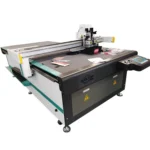
Tool Head Matching Over Guesswork — RT-D2516/RT-S2516 pairs Swiss imported oscillating knife modules with your specific substrate thickness before any configuration is finalized, eliminating the edge-quality surprises that plague generic flatbed cutters.
Technical Specifications
| Parameter | Value |
|---|---|
| Model | RT-D2516 / RT-S2516 |
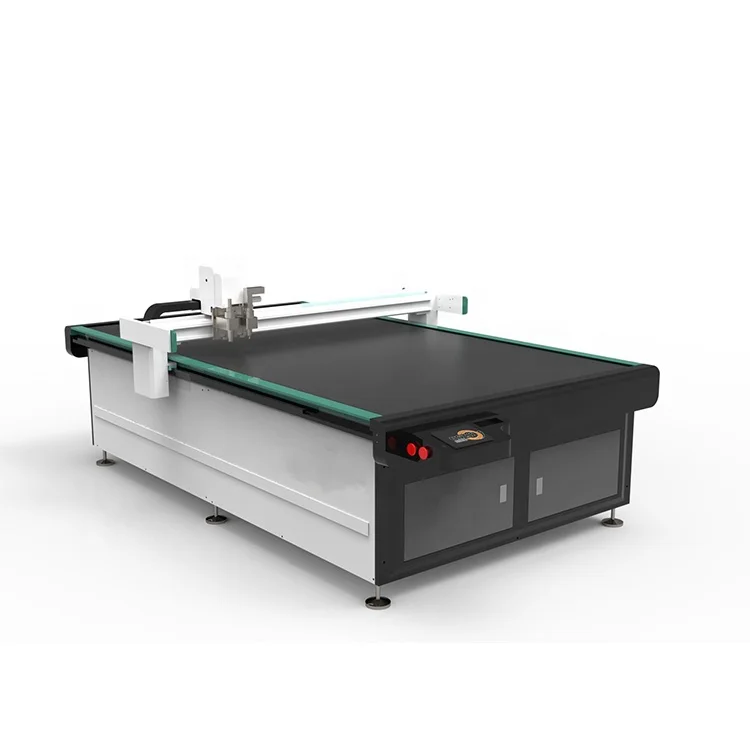
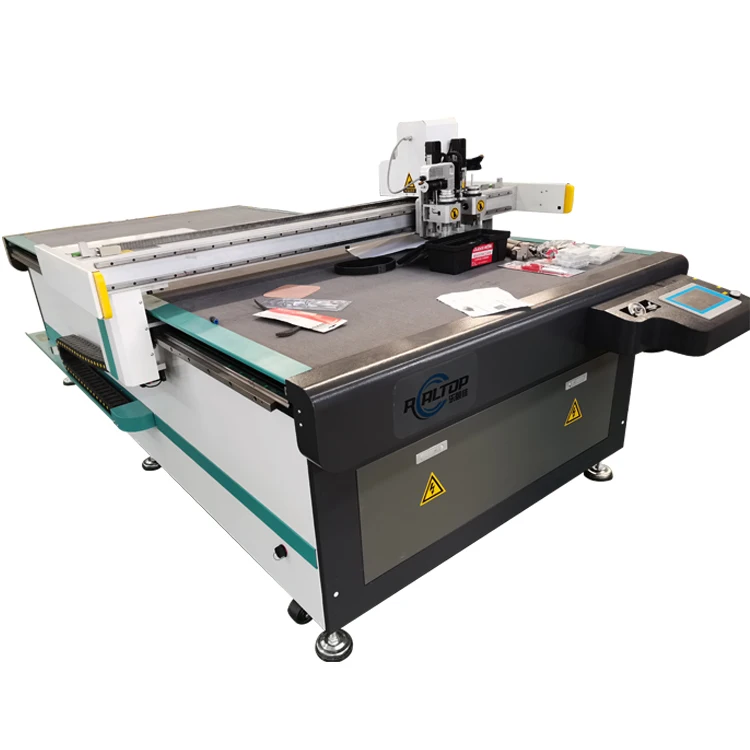
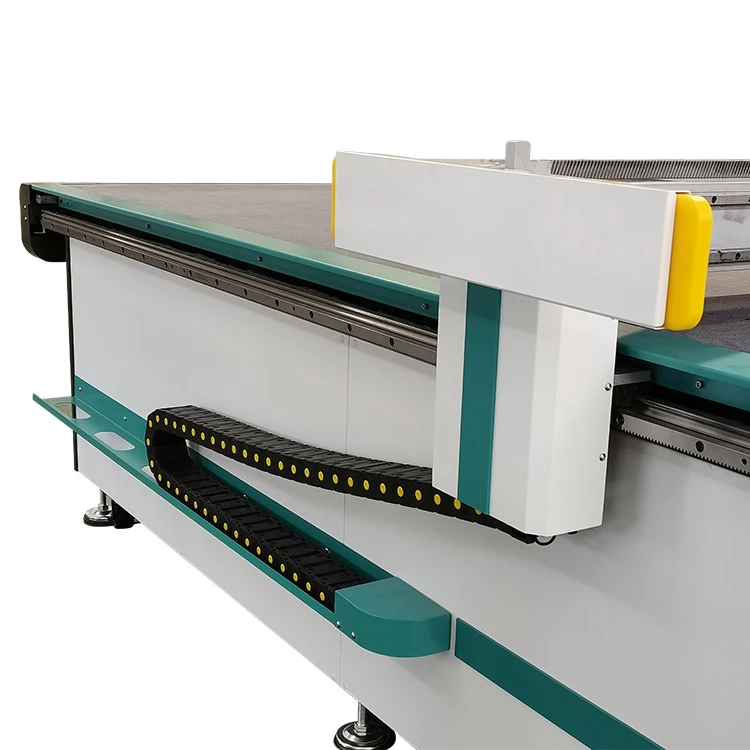
| Product Type | CNC Oscillating Knife Cutting Machine |
| Working Area | 1600 × 2500 mm |
| Overall Dimensions | 3450 × 2300 × 1250 mm |
| Rated Power | 9 kW |
| Voltage | 380V ± 10% |
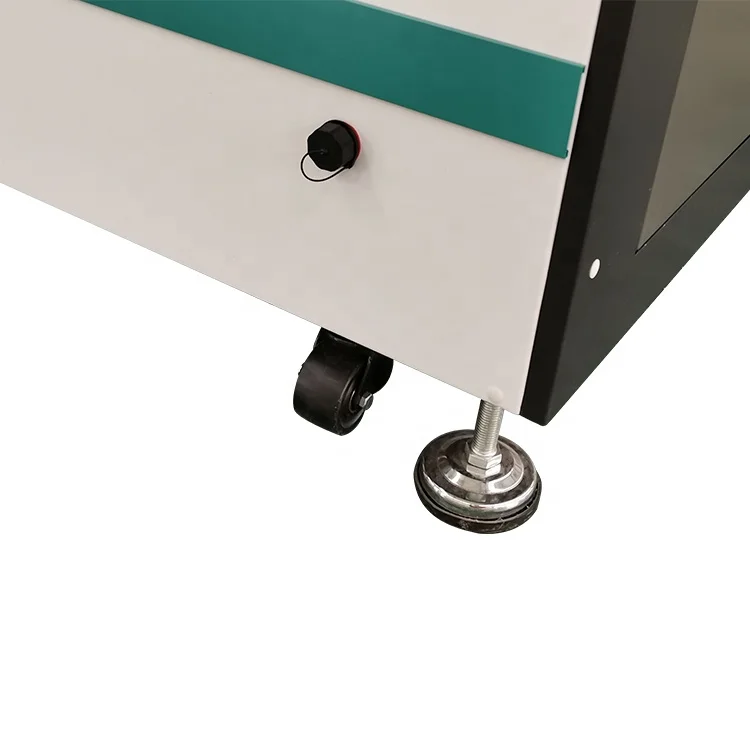
| Table Type | Flat working table with vacuum holding |
| Tool Head | Swiss imported knife — vibration full cutting, vibration half cutting, cursor location |
| Translational Velocity | 800 – 1200 mm/s |
| Cutting Speed | 200 – 800 mm/s (varies by material type and thickness) |
| Repeated Accuracy | ≤ 0.1 mm |
| Transmission System | Digital servo motor, linear guide, synchronous belt, imported ball screw |
| Servo Motor | Japanese Yaskawa |
| Linear Guide | Taiwan Hiwin rail |
| Conveyor Belt | Germany imported |
| Vacuum Pump | 7.5 kW |
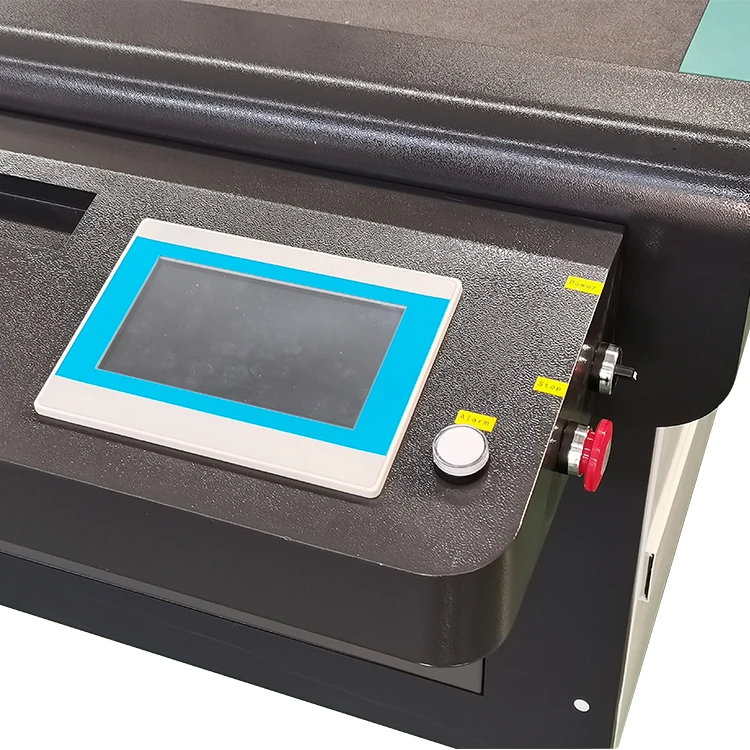
| Safety Device | Infrared sensors |
| Instruction System | HP-GL compatible format |
| Warranty | 12 months for whole machine |
| Standards | CE (declaration where applicable) |
Application Suitability
| Application | Material or Output |
|---|---|
| Packaging sample making | Corrugated board, cardboard, carton prototypes |
| Leather goods and footwear | Natural leather, composite leather, synthetic uppers |
| Gasket and seal fabrication | Rubber, sponge composite leather, silicon sheet |
| Soft material converting | PVC, soft glass, flexible clothing textiles |
| Foam and composite cutting | Sponge, foam laminates, multi-layer fabric |
Why "200 to 800 mm/s" Means Almost Nothing Without Your Material in Hand
Cutting speed is a function of substrate density, not a fixed number on a nameplate.
I have watched packaging shops take a quoted 800 mm/s at face value, load five-wall corrugated board, and wonder why the knife drags, the slot edges fuzz, and the crease lines wander. That speed range printed in every CNC oscillating knife cutting machine specifications sheet assumes a best-case substrate. Switch to dense gasket rubber or a wet-cold corrugated sheet in January and the practical feed rate drops. The only honest way to lock in a number is to run your actual material on the table and measure edge quality at incremental speeds. [NEED_CITE: material hardness and cutting speed relationship in oscillating knife systems]
Tool Head Selection Determines Edge Quality Before Anything Else
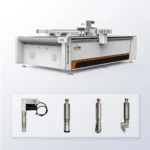
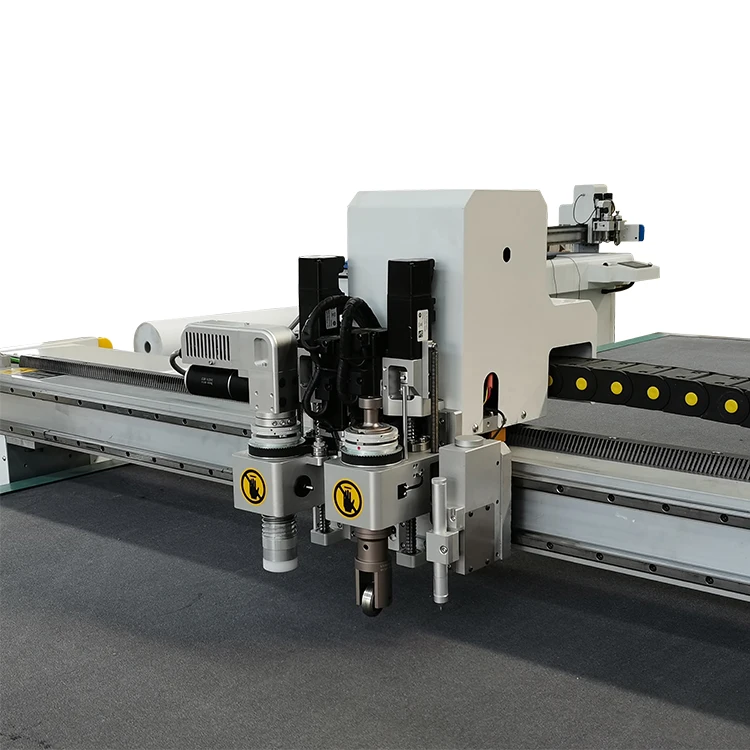
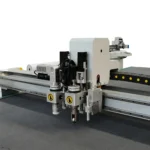
The RT-D2516/RT-S2516 carries a Swiss imported knife module that handles vibration full cutting, vibration half cutting, and cursor location within a single head assembly. Full cutting drives the blade through the entire material stack — appropriate for corrugated board prototypes and single-layer leather blanks. Half cutting scores the surface to a controlled depth, which is what you need for folding carton crease lines or kiss-cut adhesive gaskets. Cursor location handles pick-and-place reference marks when the job requires positional registration rather than a through-cut. Choosing the wrong mode on a given substrate is the fastest route to ragged edges or crushed foam cores.
Vacuum Holding and Small-Part Stability on the Flat Table
A 7.5 kW vacuum pump paired with the flat working table provides the holding force needed across the 1600 × 2500 mm cutting area. The Germany imported conveyor belt feeds material onto the table surface for continuous loading. When cutting small gasket profiles or narrow carton flap samples, vacuum zoning becomes the deciding factor between a part that stays flat and one that lifts into the knife path. Confirming zone layout against your typical nesting pattern is something I now insist on before signing off any CNC oscillating knife cutting machine specifications package. [NEED_CITE: vacuum table zoning best practices for small-part oscillating knife cutting]
What the Spec Sheet Numbers Actually Mean on the Shop Floor
The Yaskawa servo motor and Taiwan Hiwin linear guide work together to hold ≤ 0.1 mm repeatability, which matters when you are cutting interlocking carton tab geometries that must register after folding. A transmission chain combining imported ball screws, synchronous belts, and linear guides ke*ulative error would otherwise scrap the last panel on the sheet. The 9 kW rated power covers the combined draw of the oscillating head, vacuum pump, and conveyor drive under continuous operation — verify your workshop circuit can supply 380V ± 10% on a dedicated breaker before the machine arrives. Translational velocity reaches 800 – 1200 mm/s during non-cutting moves, reducing dead travel time between cut paths, while actual cutting speed stays within 200 – 800 mm/s depending on substrate resistance.
The Cost of Skipping the Material Test Run
When a buyer specifies working area alone and ignores material thickness, the machine arrives with a blade configuration matched to a guess. Knife angle, oscillation frequency, and downforce all need tuning for the actual substrate — run hardened five-wall board on a setup calibrated for E-flute and the edge crushes, the blade dulls prematurely, and the vacuum table cannot compensate for material that was never properly pinned in the first place. Rework costs quietly consume the margin you thought you saved. [NEED_CITE: consequences of incorrect knife configuration for corrugated board cutting]
Why This Machine Gets Specified the Way It Does
REALTOP builds both knife and laser platforms in-house, so the cutting method is selected based on your material rather than forcing one technology onto every substrate. The RT-D2516/RT-S2516 tool head and table configuration is specified per material thickness and daily volume after reviewing your sample stock. Software compatibility is confirmed before the order is placed — HP-GL file import is verified against your existing nesting workflow so there are no surprises on day one. Voltage, plug type, and control language are locked in before shipment, not left as assumptions. And before you commit, a sample cutting report on your own material shows edge quality and dimensional accuracy under real conditions.
Documentation & Verification
- Machine specification sheet covering RT-D2516/RT-S2516 working area, power, and table layout
- Electrical schematic and 380V ± 10% voltage confirmation matched to your workshop supply
- Tool head and vacuum table configuration list tied to your tested material thickness
- Sample cutting report on your corrugated board or leather stock before dispatch
- HP-GL software licence and file format compatibility note for your nesting system
- Factory test record documenting repeatability and edge quality on your material batch
Installation, Commissioning & Support
- 3450 × 2300 × 1250 mm footprint requires level concrete floor with clearance for conveyor feed and operator access
- Dedicated 380V ± 10% circuit rated above 9 kW with correct breaker sizing before machine arrival
- 7.5 kW vacuum pump requires separate extraction ducting routed to workshop dust collection or external vent
- First-run parameter tuning on your specific material — knife depth, oscillation rate, vacuum zone mapping
- Operator training covering HP-GL file loading, tool change, and conveyor belt tensioning
- Spare blade stock and Hiwin rail lubrication schedule documented in the operation manual
Before You Send the Inquiry
To move past generic quotations, share your material type, sheet thickness range, maximum blank dimensions, and daily sample or production volume. Confirm your workshop voltage and frequency, and let us know which nesting or CAD system you currently run so file compatibility is checked early. If edge quality on a specific corrugated flute profile or leather grade is a known pain point, send a material sample — we cut it on the RT-D2516/RT-S2516 and return a sample report with photographs and measured tolerances.
Frequently Asked Questions
Q: How do I choose between vibration full cutting and half cutting for my material?
A: Full cutting drives the Swiss imported knife completely through the substrate, suited for corrugated board blanks and single-layer leather. Half cutting scores to a controlled depth for crease lines on carton samples or kiss-cut gaskets. We run both modes on your material sample and document which produces the required edge quality before locking the configuration.
Q: Can the RT-D2516/RT-S2516 track printed registration marks at production speed?
A: CCD camera availability is a configuration option that must be confirmed during specification. When fitted, the camera reads printed contour marks for positional correction. We verify tracking reliability at your target cutting speed on your printed stock before the order is finalized, not after delivery.
Q: Will my existing HP-GL nesting files import without conversion?
A: The instruction system accepts HP-GL compatible format natively. Before the order, we test import of your actual file output, confirm nesting layout renders correctly, and document the workflow in a software compatibility note so your operators face no learning gap on commissioning day.
Q: What does the 200 – 800 mm/s cutting speed range mean for corrugated board?
A: That range spans from dense multi-wall board at the lower end to lighter single-face stock at the upper end. Actual speed for your flute profile and thickness is determined during the material sample test. We report measured speed alongside edge quality so the number you plan around reflects your real substrate.
Q: Can the voltage and control interface language be customized for my market?
A: The base specification is 380V ± 10%, but voltage and plug type are configurable before shipment. Control language is confirmed during the order process so the interface arrives in your operator’s working language. All electrical details are documented in the schematic provided before dispatch.


商品评价
Clear filtersThere are no reviews yet.