






Fast Shipping
Carrier information

20k products
Payment methods

24/7 Support
Unlimited help desk

2-day Delivery
Track or off orders
Matched Tool Head Configuration — A cutting, creasing and kiss-cutting head specified against your actual board grade and flute profile before order, confirmed by sample report rather than catalog promise.
Technical Specifications
| Parameter | Value |
|---|---|
| Model | RT–R2513 |
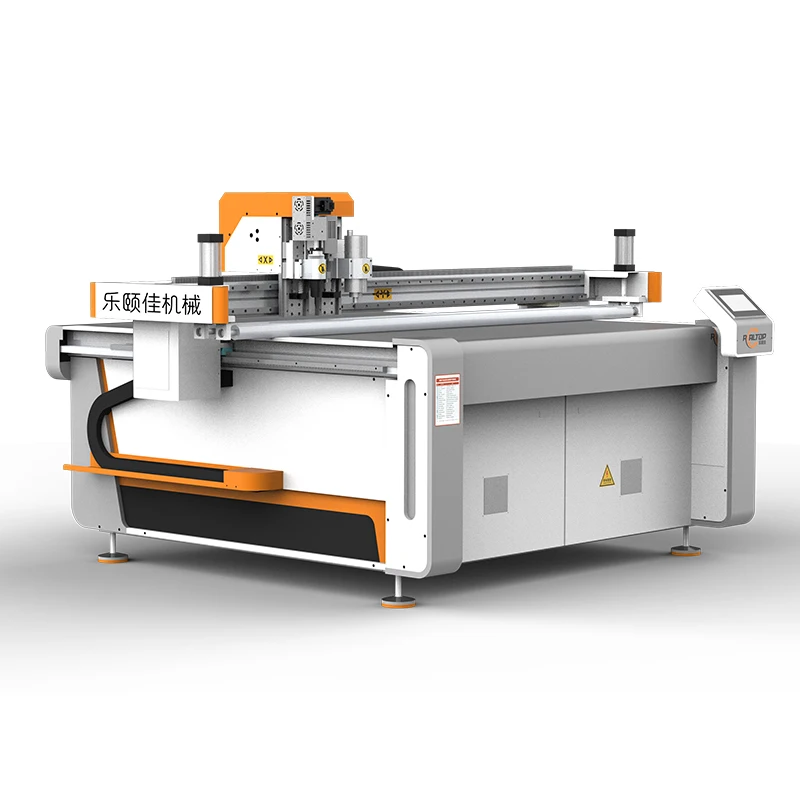
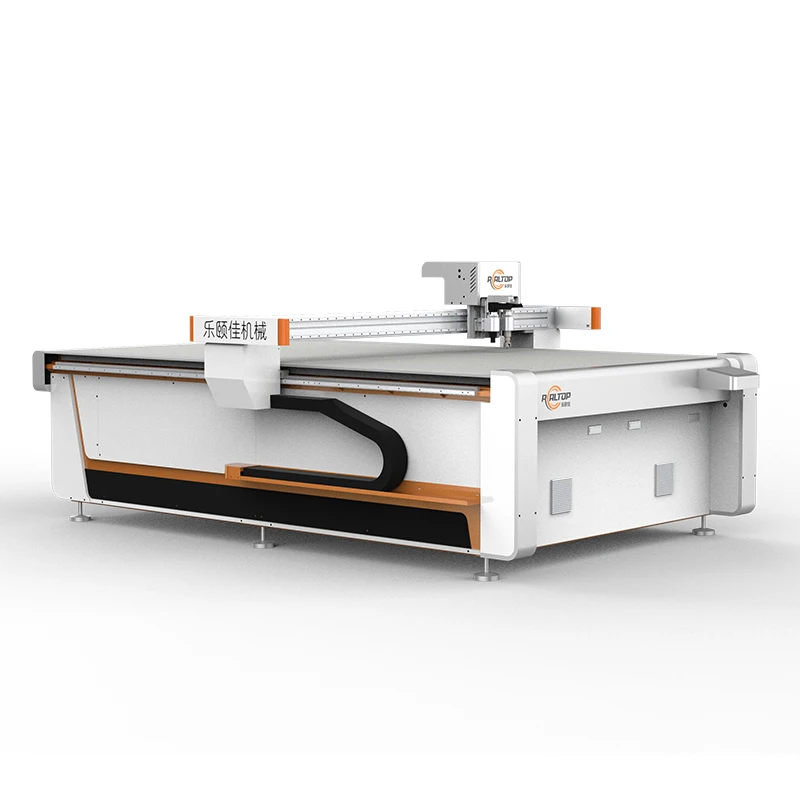
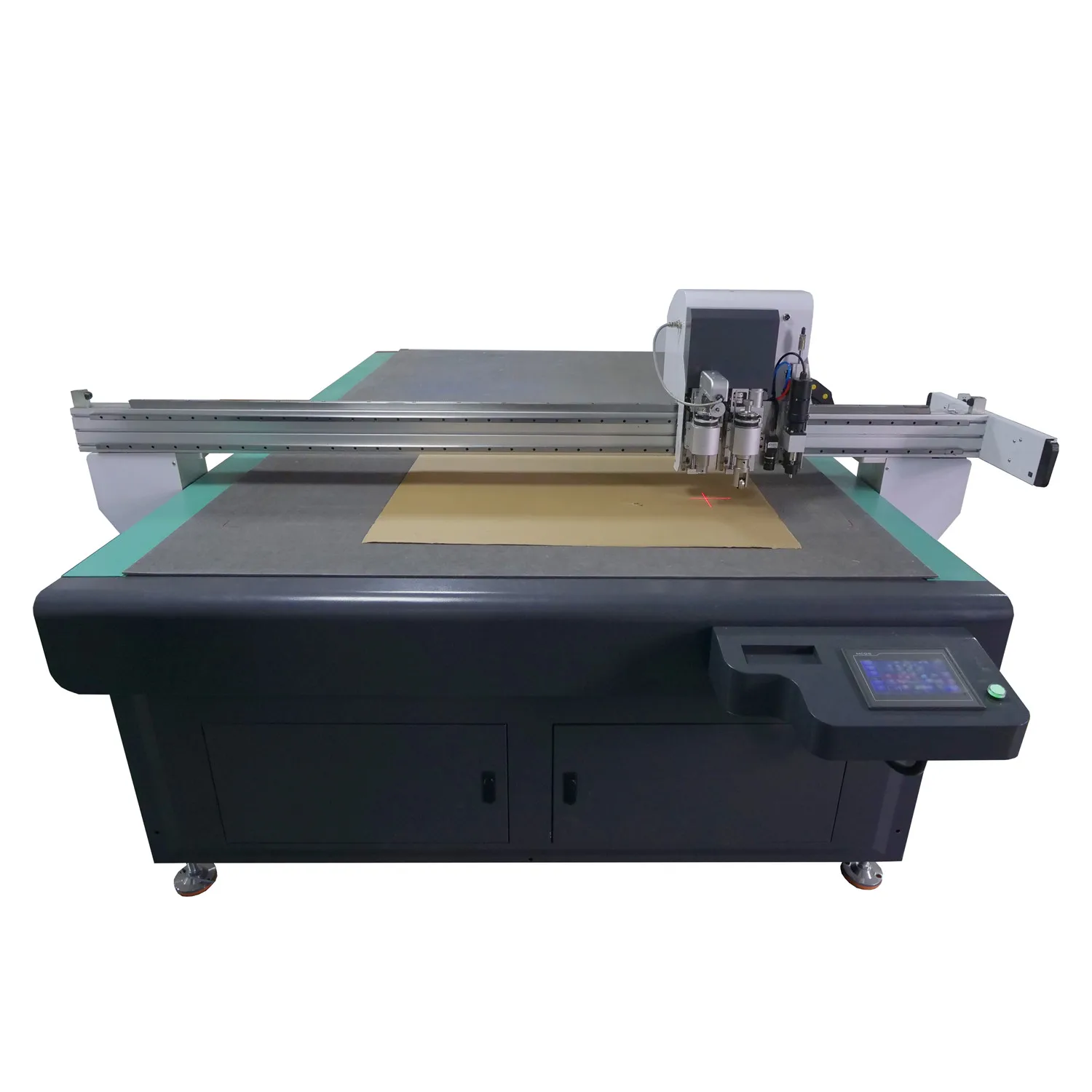
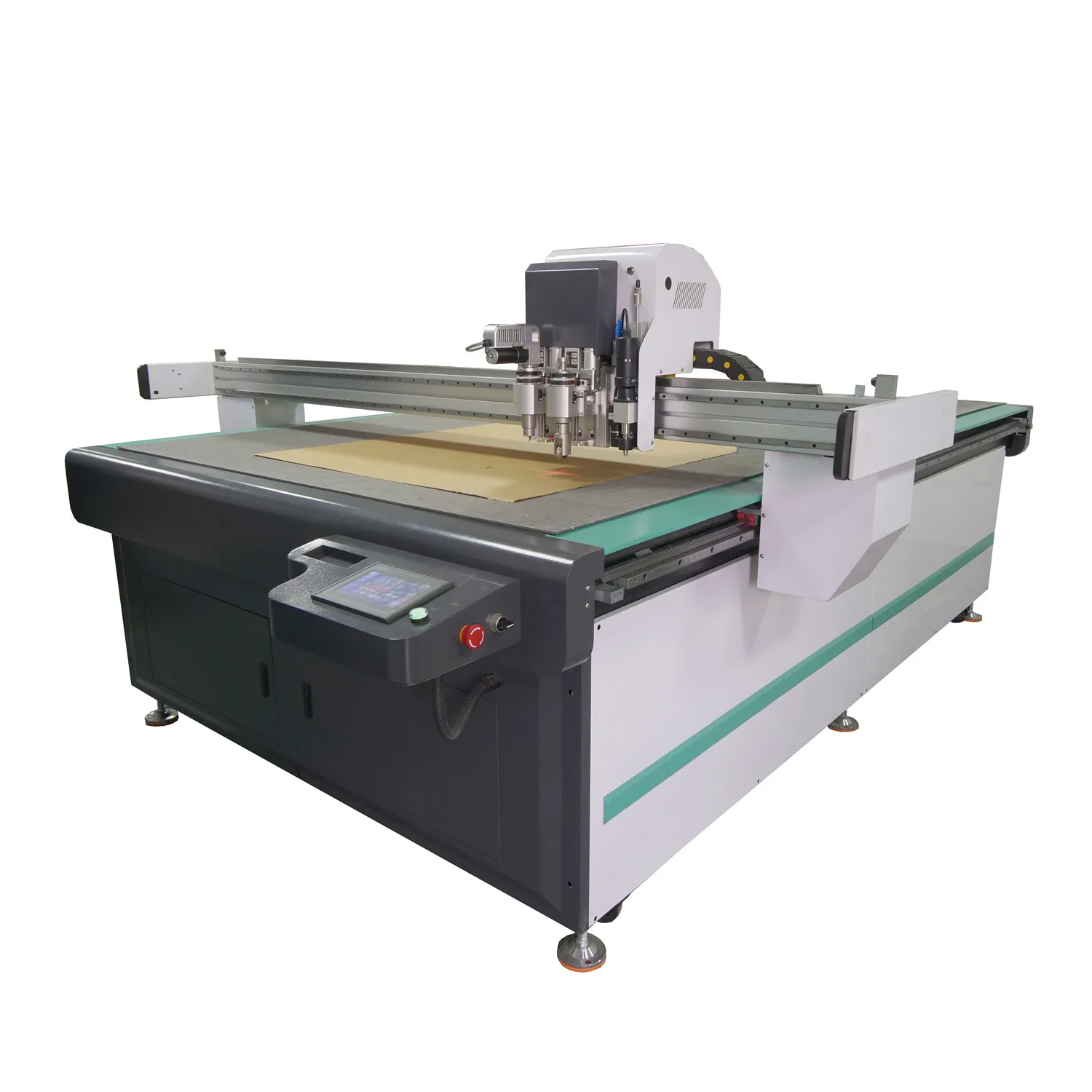
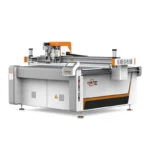
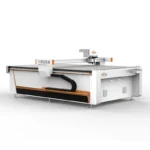
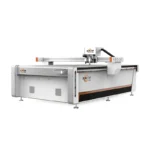
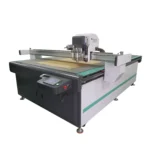
| Product Type | CNC Oscillating Knife Cutting Machine |
| Working Area | 2500 × 1300 mm |
| Machine Size | 3550 × 1910 × 1400 mm |
| Cutting Tools | Oscillating knife, creasing tool, kiss-cut knife, round punch |
| Maximum Cutting Thickness | ≤ 18 mm |
| Repeated Accuracy | < 0.05 mm |
| Fixing Method | Vacuum system with zoned adsorption |
| Vacuum Platform | Aluminum alloy honeycomb structure |
| Rated Power | 9 kW |
| Voltage | 380 V (frequency to confirm per target market) |
| Servo Motor | Dongling servo (Delta servo available as option) |
| Guide Rail | Imported straight-line square guide |
| Transmission | Rack transmission via Ethernet port |
| Frame | Welded thick square seamless steel, high-temperature stress relief |
| Conveyor Belt Felt | Wear-resistant anti-pull composite fiber |
| Safety Device | Infrared sensors, emergency stop |
| Profile Format | DXF, OLT, PDF, AI |
| Control Language | English, Russian, Italian, Chinese (custom languages available) |
| Blade Supply | 10 pieces of oscillating blades included |
| Warranty | 1 year (excluding felt and knife blades) |
Application Suitability
| Application | Material or Output |
|---|---|
| Carton and box sample making | Corrugated board, gray board, folding carton stock up to 18 mm |
| Die-less packaging prototyping | Short-run corrugated and solid board without tooling cost |
| Sticker and label contour cutting | Self-adhesive vinyl, PP paper, printed label stock |
| Advertising board processing | Foam PVC, KT board, light cardboard signage substrates |
| Leather and gasket cutting | Natural and synthetic leather sheets, non-metallic gasket stock |
Why the Board Grade Matters More Than the Working Area
Buyers often specify a CNC oscillating knife cutting machine by table size alone, only to discover the quoted configuration cannot produce a clean crease on their particular flute profile or hold small nested parts flat during high-speed cuts. Configuration must be matched to the actual board grade, flute type and sheet layout before the order is placed.
I have watched packaging shops receive a machine rated for generic cardboard, then spend weeks re-tuning knife pressure and oscillation frequency because their daily stock is double-wall corrugated rather than standard single-face. The vacuum zoning that works for full-sheet carton blanks may leave small die-cut labels lifting off the table mid-run. [NEED_CITE: vacuum hold-down requirements for small-part digital cutting]
Multifunction Tool Head for One-Pass Packaging Workflows
The RT–R2513 carries an oscillating knife, creasing tool, kiss-cut knife and round punch on a single head carriage. For a typical folding carton job this means the sheet is cut to outline, creased along fold lines and perforated for tear strips without stopping to change tooling. The creasing wheel pressure is set independently from the cutting blade depth, so a B-flute corrugated sheet gets a defined score without crushing the flute structure.
Vacuum Zoning That Follows the Cut Path
The aluminum honeycomb platform divides into independently controlled vacuum zones. As the CNC oscillating knife cutting machine head moves across the sheet, only the zones directly under the active cutting area draw full suction. This keeps small parts — think nested label shapes or short-run carton inserts — held flat without requiring a full-sheet sacrificial cover. The zoned approach also reduces pump load compared to running the entire table at maximum draw. [NEED_CITE: vacuum zoning principles in flatbed digital cutting]
Reading the Specs Against Real Packaging Output
The stated cutting thickness of 18 mm applies to softer substrates like foam board or layered corrugated. On dense gray board used for rigid box prototyping, effective single-pass depth is lower and must be confirmed by sample test. The repeated accuracy of less than 0.05 mm is maintained by the imported square guide rails and rack transmission, which resist the lateral deflection that belt-driven systems show after months of oscillating knife vibration. The 9 kW rated power covers the oscillating motor, vacuum pump and servo drives together; a dedicated 380 V circuit with appropriate breaker sizing is needed rather than sharing a line with other shop equipment. The welded steel frame undergoes high-temperature stress relief to prevent the geometric drift that untreated frames develop under continuous vibration loads.
The Hidden Cost of Skipping Material Trials
A crease that looks acceptable on the sample piece may crack when the board is folded at production speed, because the wheel diameter was chosen for a different flute height. Kiss-cut depth set too deep scores the release liner and jams the label stripper; set too shallow and the matrix leaves ragged edges. These issues surface only when the machine runs the buyer’s actual stock, which is why a sample cutting report on the specific board grade should accompany every quotation. [NEED_CITE: material-specific testing protocols for digital cutting equipment]
Why Source This Configuration Here
In-house design covers both knife cutting and vacuum table engineering, so the tool head selection and zone layout are specified together rather than sourced from separate suppliers. The carton nesting software is confirmed against your existing DXF and AI file library before the order is finalized, not discovered incompatible after delivery. Voltage, plug type and control panel language are locked in writing to match the destination plant. Every machine leaves the Jinan facility with a factory test record run on the buyer’s own material sample. The conveyor felt specification — composite fiber with increased tensile rating — addresses the premature stretching that standard felt shows under continuous vacuum pull. [NEED_CITE: OEM machine configuration verification practices]
Documentation & Verification
- Machine specification sheet listing confirmed tool heads, vacuum zone map and working area dimensions
- Electrical schematic with voltage, frequency and plug type matched to destination plant supply
- Sample cutting report on buyer-supplied board grade showing cut depth, crease definition and edge quality
- Software license note confirming DXF, AI and PDF file import compatibility with buyer nesting workflow
- Spare parts list identifying blade types, felt sections and vacuum seals specific to the quoted configuration
Installation, Commissioning & Support
- Dedicated 380 V circuit with breaker sizing calculated from the 9 kW total rated power draw
- Floor leveling check across the 3550 × 1910 mm footprint to prevent frame twist on the honeycomb platform
- First-run parameter tuning on actual board stock to set oscillation frequency, knife depth and crease pressure
- Control panel language set to operator preference from available options before commissioning begins
- Blade replacement schedule documented for the supplied oscillating knife types against typical corrugated abrasion rates
- Vacuum pump filter maintenance interval specified for the zoned adsorption system under daily production dust loads
What We Need to Quote Accurately
Send us the board grades you run most often — flute type, thickness range and whether you work with corrugated, solid fiber or gray board. Confirm your daily sheet format and whether your existing design files are in DXF, AI or another format so we can verify software import before building. Let us know your plant voltage and frequency standard, along with the control language your operators require.
Frequently Asked Questions
Q: How is cutting thickness verified for different corrugated flute profiles?
A: The 18 mm maximum is measured on softer substrates. For each board grade — single-face, double-wall, dense gray board — we run a sample test on your actual material and document the effective single-pass depth, edge condition and required knife oscillation frequency in the cutting report before the order is confirmed.
Q: How are creasing and kiss-cutting configured on the same packaging job?
A: The multifunction head carries the oscillating knife, creasing wheel and kiss-cut tool simultaneously. Crease wheel diameter and pressure are set to match the specific flute height so the score line folds cleanly without crushing. Kiss-cut depth is calibrated against the liner thickness to cut the face stock without scoring the backing.
Q: Which voltage and language options are confirmed before shipment?
A: Voltage, frequency and plug type are written into the specification sheet to match your plant supply — typically 380 V with market-specific frequency. Control panel language is selected from available options including English, Russian, Italian and Chinese, or customized if your operators require another language.
Q: What file formats does the carton nesting software support?
A: The supplied software imports DXF, OLT, PDF and AI files. Before the order is placed, we verify that your existing design files and nesting routines open correctly in the software environment, and document the result in a compatibility note included with the shipment.
Q: What does the factory test record include before dispatch?
A: The record shows a production run on your supplied material sample, documenting cutting speed, knife depth, crease pressure, vacuum zone performance and repeated accuracy measurements. The sample cut pieces are photographed and shipped with the machine so you have a physical reference for your own first-run comparison.


商品评价
Clear filtersThere are no reviews yet.