








Fast Shipping
Carrier information

20k products
Payment methods

24/7 Support
Unlimited help desk

2-day Delivery
Track or off orders
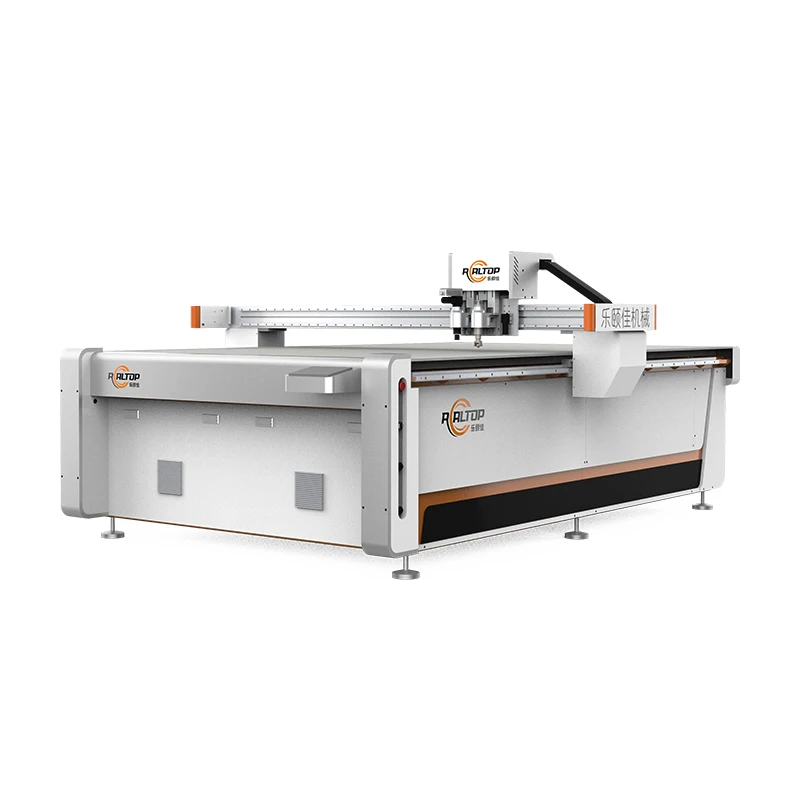
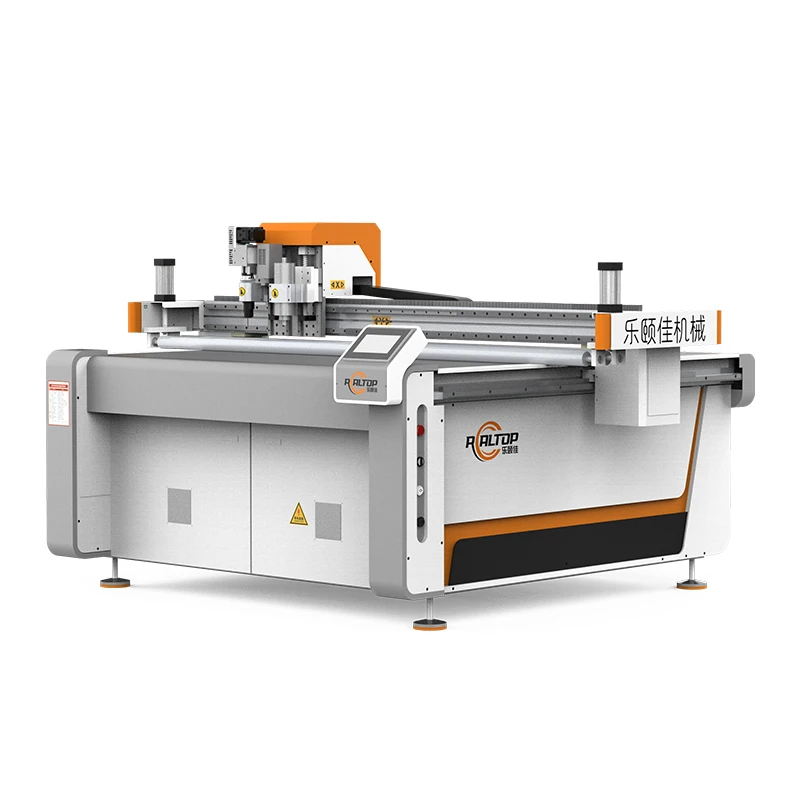
Tool Head Configuration Matched to Material — oscillating knife, creasing and half-cut functions selected per corrugated flute profile and sticker substrate before the RT-D2516/RT-S2516 leaves the factory.
Technical Specifications
| Parameter | Value |
|---|---|
| Model | RT-D2516/RT-S2516 |
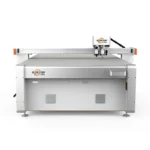
| Product Type | CNC Oscillating Knife Cutting Machine |
| Working Area | 1600 × 2500 mm |
| Machine Size | 3450 × 2300 × 1250 mm |
| Rated Power | 9 kW |
| Table Type | Flat working table with aluminum alloy honeycomb vacuum adsorption |
| Vacuum Pump | 7.5 kW |
| Tool Head | Swiss imported knife — full cutting, half cutting, cursor location |
| Servo Motor | Delta servo motor |
| Transmission | Linear guide, synchronous belt, ball screw |
| Guide Rail | Taiwan Hiwin |
| Translational Velocity | 800–2000 mm/s |
| Cutting Speed | 200–800 mm/s (basis not stated in source — confirm material, thickness and flute profile) |
| Repeated Accuracy | ≤ 0.1 mm |
| Instruction System | HP-GL compatible format |
| Conveyor Belt | Germany imported |
| Voltage | 380V ±10% |
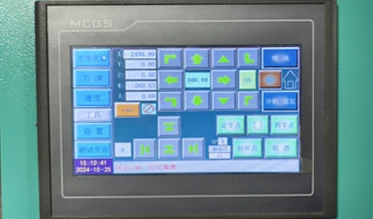
| Software | Professional carton nesting software, customized language support |
| Safety Device | Infrared sensors and emergency stop |
| Assembly State | Fully assembled |
| Standards | CE declaration where applicable |
Application Suitability
| Application | Material or Output |
|---|---|
| Packaging carton sample making | Single, double and triple-wall corrugated board |
| Folding carton and box prototyping | Cardboard and coated carton stock |
| Sticker and label contour cutting | Self-adhesive vinyl and printed sticker sheets |
| Gasket and seal production | Rubber, silicon and soft composite sheets |
| Flexible material cutting | Leather, PVC, soft glass, sponge composite leather |
Why "200–800 mm/s" Means Little Without the Flute Profile
A cutting speed figure detached from material thickness and flute type is a workshop gamble, not a specification.
I walked into a Yangtze Delta packaging shop once where the line was sitting idle — not because the machine broke down, but because the cutting speed quoted at order could not hold a clean crease on double-wall corrugated at production pace. The operator had to slow the head to a crawl just to avoid crushing the B-flute. That kind of mismatch turns a CNC oscillating knife cutting machine from a throughput asset into a bottleneck. Speed claims only matter when tied to the exact board grade and cut geometry you run daily [NEED_CITE: corrugated flute profiles and crush resistance standards].
Servo Positioning and Crease Accuracy on Corrugated Board
The Delta servo motor paired with Taiwan Hiwin linear guide rails delivers positioning repeatability within 0.1 mm across the full 1600 × 2500 mm working area. For packaging sample makers, this tolerance means crease lines land consistently on multi-wall board even when the nest layout places small carton blanks near the table edge. Drift beyond this margin causes fold misalignment downstream — a problem that only shows up once the box reaches the gluing or erecting stage.
Swiss Knife Head and the Three-Function Work Cycle
The Swiss imported oscillating knife head handles full cutting, half cutting and cursor location within a single cycle. For corrugated sample work, that means the same head can kiss-cut a sticker outline, score a fold line on carton stock, and through-cut the outer profile without a tool change. Reducing head swaps cuts non-cutting travel time and keeps registration tight between cut and crease features on the same sheet [NEED_CITE: oscillating knife cutting principles for multi-function tool heads].
Reading the Spec Sheet Against Real Production Needs
The 7.5 kW vacuum pump behind the aluminum honeycomb table is sized to hold corrugated sheets flat without edge lift, but zoning adequacy depends on your smallest nested part. If your layout includes narrow gasket strips or small sticker runs, confirm the zone grid matches before the table is built. The HP-GL compatible instruction system and professional carton nesting software accept standard packaging file formats, yet your existing CAD workflow should be validated against the software version shipping with the machine. The Germany imported conveyor belt supports continuous sheet feeding for higher-volume runs, while the 9 kW rated power envelope covers the vacuum pump, servo drives and oscillating head together.
The Cost of Skipping the Material Test
Specifying a CNC oscillating knife cutting machine on working area alone, without a sample cut on your actual board stock, is the most common route to a machine that underperforms on day one. Ragged edges on PVC, crushed flutes on corrugated, or delaminated sticker cuts all trace back to a tool head and feed rate that were never matched to the buyer’s material before shipment. I have seen packaging sample lines sit idle while the factory ships a replacement blade holder that should have been specified at the quotation stage [NEED_CITE: tooling selection and material compatibility in digital flatbed cutting].
Why Source This Platform Here
In-house design covers both knife and laser cutting technologies, so the cutting method is matched to the material rather than forced into one approach. Tool head and table configuration are specified per material thickness and daily production volume before the order is finalized. CCD camera positioning is available for printed contour work where sticker or label outlines must track registration marks at production speed. Software compatibility is confirmed against the buyer’s file format and nesting workflow before the machine enters build. Voltage, plug type and control panel language are locked in before shipment, avoiding rewiring costs or operator confusion at commissioning. Sample cutting on the buyer’s own corrugated, sticker or gasket material is completed before commitment.
Documentation & Verification
- Machine specification sheet listing confirmed tool head and table zone configuration
- Electrical schematic with voltage, frequency and plug type locked to your site supply
- Sample cutting report produced on your corrugated or sticker stock at quoted thickness
- Factory test record verifying repeatability and vacuum hold-down before dispatch
- Software licence and file format compatibility note for your existing CAD workflow
- Spare parts list covering blades, conveyor belt sections and vacuum seals
Installation, Commissioning & Support
- Fully assembled delivery — no on-site frame welding or rail alignment required for the 3450 × 2300 × 1250 mm frame
- Dedicated 380V ±10% circuit with breaker sizing matched to the 9 kW rated power draw
- Vacuum pump commissioning includes zone-by-zone hold-down test on your sheet format
- Servo parameter tuning calibrated to your material thickness and cutting geometry on first run
- Operator training covers nesting software, HP-GL file import and tool head change procedure
- Spare blade and conveyor belt segment kit shipped with the machine to prevent line-stop delays
Sending the Right Inquiry
Before requesting a quotation, have your material type, flute profile or sticker substrate, maximum sheet size and daily volume ready. Confirm your site voltage, frequency and the control panel language your operators need. If you run an existing nesting software or CAD format, send a sample file so compatibility can be validated against the carton nesting software before the build starts.
Frequently Asked Questions
Q: How is the 200–800 mm/s cutting speed verified against actual corrugated flute profiles?
A: The published range is based on source data that does not specify material, thickness or flute type. Before commitment, request a sample cut on your exact board stock — single-wall B-flute, double-wall BC, or sticker laminate — so the achievable speed and edge quality are documented in a cutting report tied to your production material.
Q: Can the tool head run both oscillating knife cutting and creasing in one job?
A: Yes. The Swiss imported head supports full cutting, half cutting and cursor location in a single cycle. Creasing wheel configuration is available as an option and should be confirmed at quotation stage so the correct tool holder is included for your carton fold-line requirements.
Q: Is vacuum table zoning adjustable for small-format packaging samples?
A: The aluminum honeycomb table uses a 7.5 kW vacuum pump, but zone layout is fixed at manufacture. Provide your smallest nested part dimensions so the zone grid can be evaluated for adequate hold-down without material lift during cutting of narrow gasket strips or short-run sticker layouts.
Q: What voltage and control language options are confirmed before shipment?
A: Standard supply is 380V ±10%, with plug type and frequency confirmed to match your site. Control panel language is customized per order. All three — voltage, plug and language — are locked in the specification confirmation before the machine enters production, preventing rewiring or operator confusion at installation.
Q: How is software compatibility validated for existing CAD or nesting workflows?
A: The professional carton nesting software accepts HP-GL compatible formats. Before the order is finalized, send a sample file from your current CAD or nesting system so format import, layer recognition and toolpath assignment are verified against the software version shipping with the machine.


商品评价
Clear filtersThere are no reviews yet.