


Fast Shipping
Carrier information

20k products
Payment methods

24/7 Support
Unlimited help desk

2-day Delivery
Track or off orders
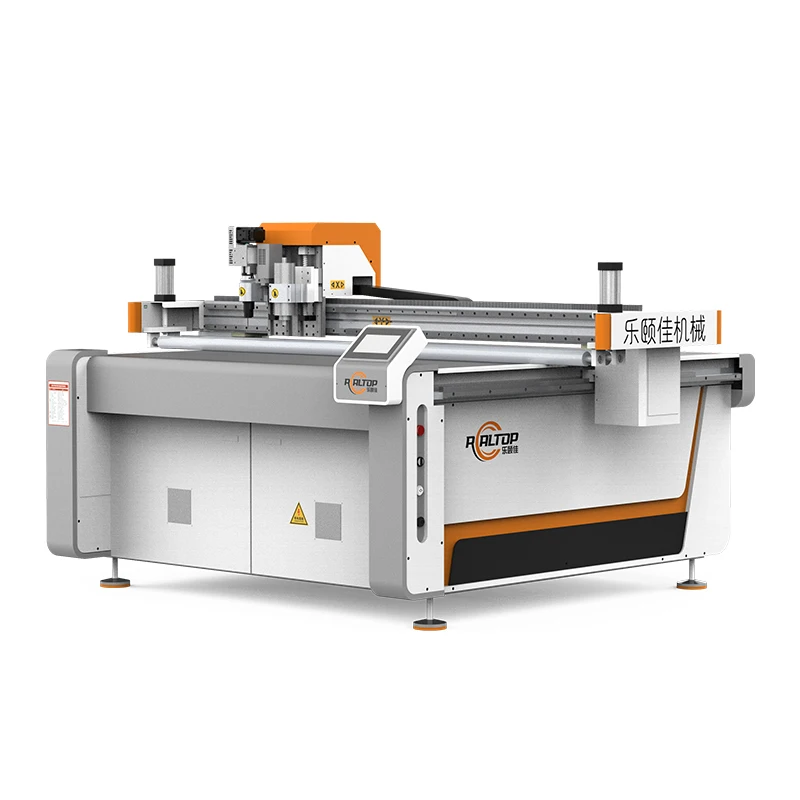
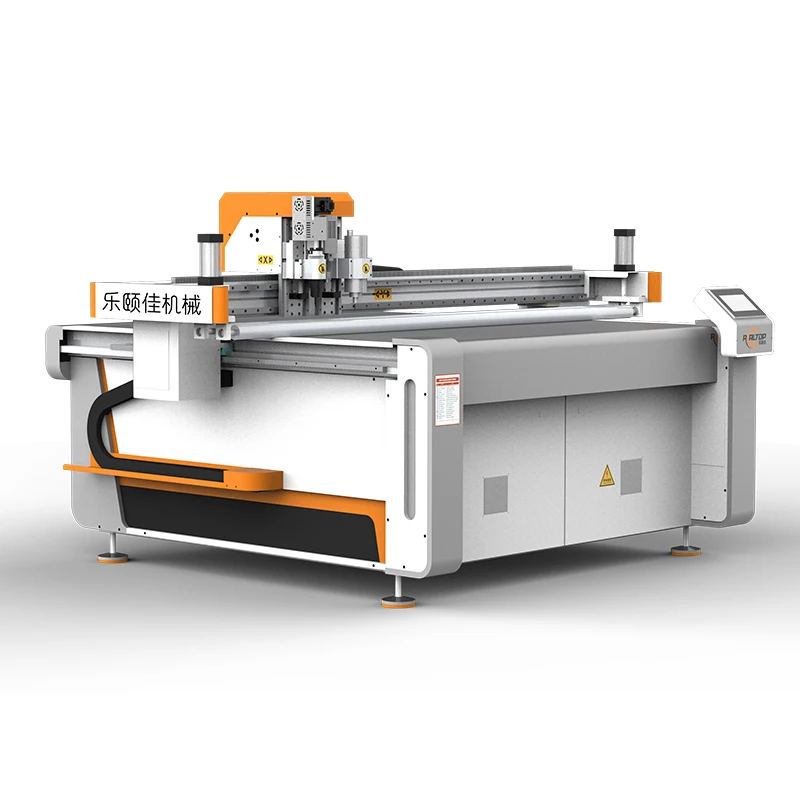
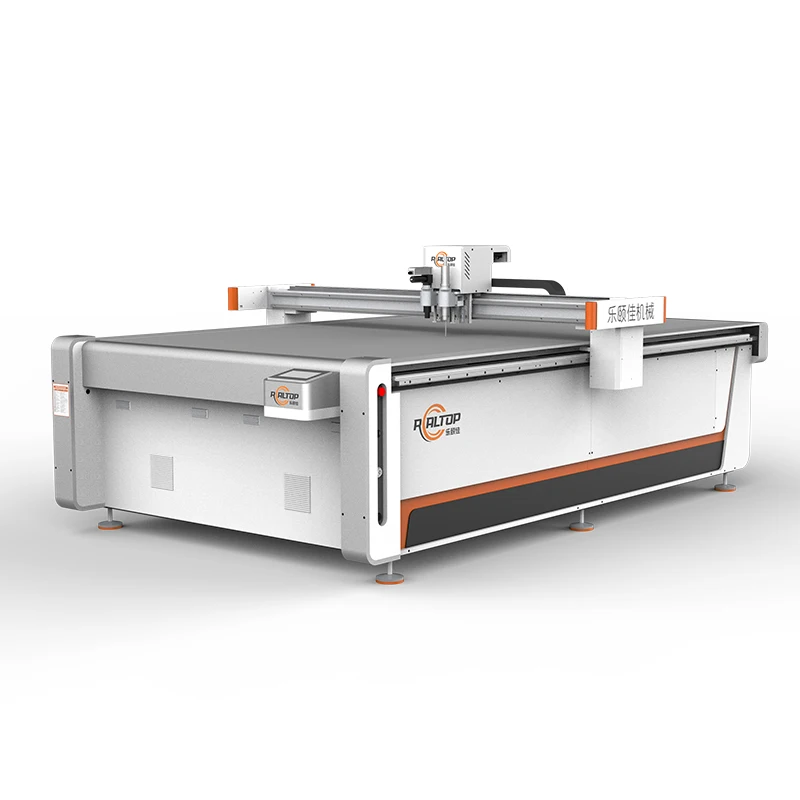
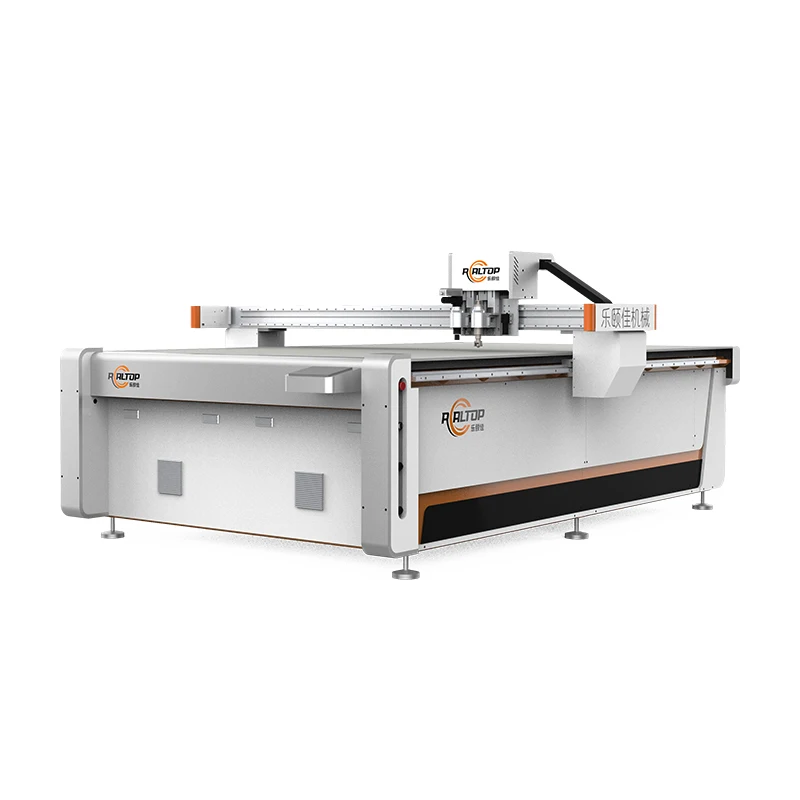
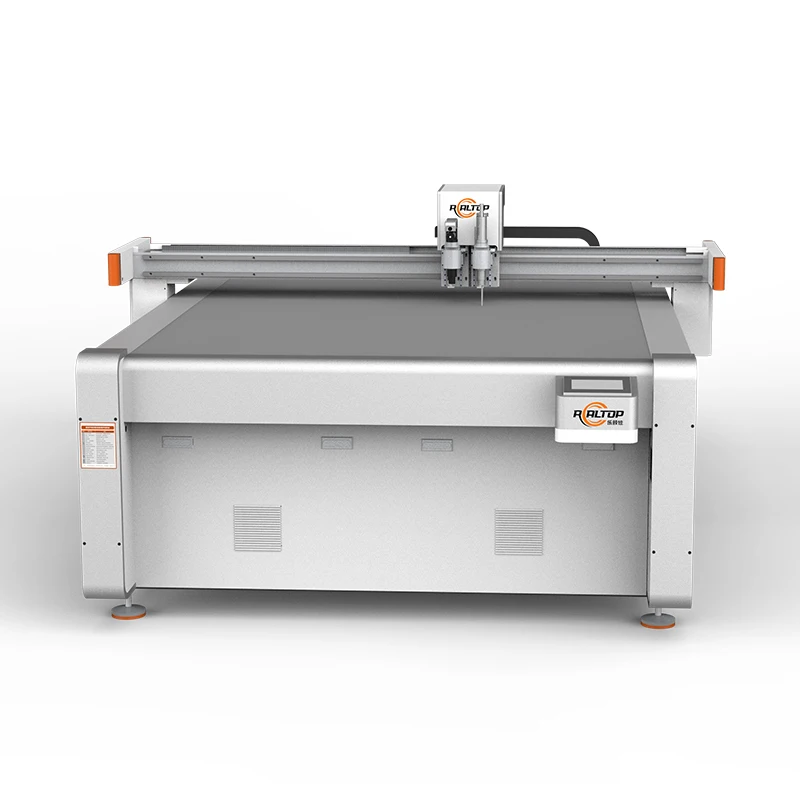
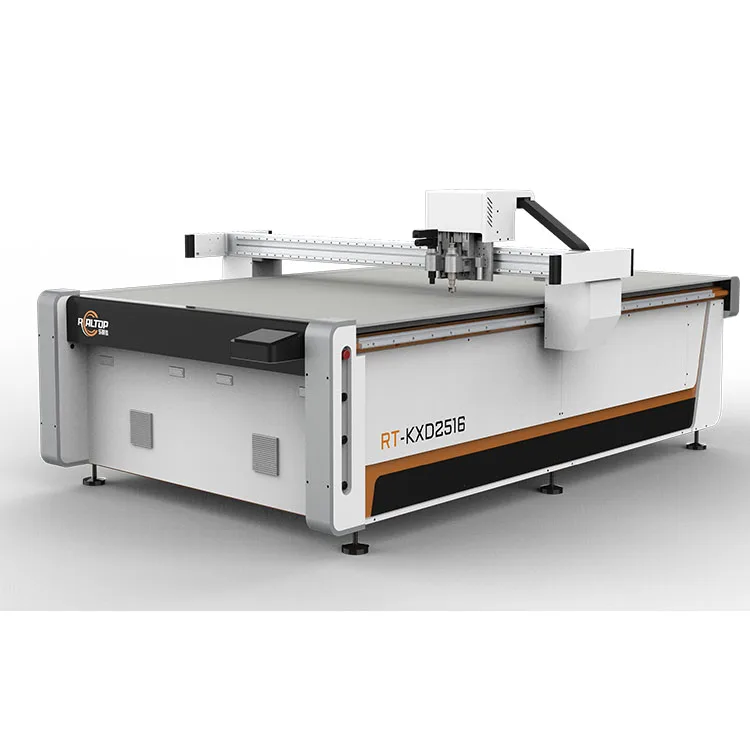
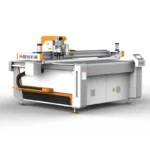
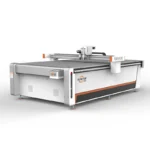
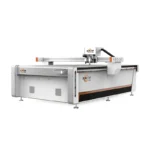
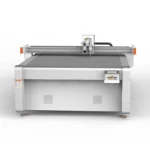
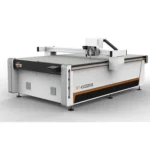
Swiss Knife and Zoned Vacuum — A 1600×2500 mm flatbed configured so the oscillating tool head and adsorption zones match the buyer’s cardboard flute, sticker laminate or composite stock before the order is placed.
Technical Specifications
| Parameter | Value |
|---|---|
| Model | RT-D2516 / RT-S2516 |
| Product Type | CNC Oscillating Knife Cutting Table |
| Working Area | 1600 × 2500 mm |
| Machine Dimensions (L × W × H) | 3450 × 2300 × 1250 mm |
| Rated Power | 9 kW |
| Voltage | 380V ±10% (frequency 50/60 Hz — confirm per destination) |
| Vacuum Pump | 7.5 kW |
| Table Surface | Aluminum alloy honeycomb vacuum adsorption platform |
| Tool Head | Swiss imported oscillating knife with vibration full-cut, half-cut and cursor location |
| Multifunctional Head | Oscillating knife plus creasing / indentation wheel |
| Translational Velocity | 800 – 2000 mm/s |
| Cutting Speed | 200 – 800 mm/s (basis not stated in source — confirm material type and thickness) |
| Maximum Cutting Thickness | ≤100 mm (varies with material) |
| Repeated Positioning Accuracy | ≤0.1 mm |
| Transmission System | Digital servo motor, linear guide, synchronous belt, ball screw |
| Guide Rail | Imported Hiwin straight-line square rail |
| Servo Motor and Driver | Delta servo system |
| Safety Devices | Infrared sensors, emergency stop |
| Control Instruction Format | HP-GL compatible |
| Software | Professional carton nesting and cutting design software (free license, multi-language) |
| Language Options | English, Russian, Italian, Chinese (special languages customizable) |
| Optional Configuration | Germany imported conveyor belt, auto feeding system |
| Warranty | First-year parts supplied free (buyer pays shipping); engineer dispatch available |
Application Suitability
| Application | Material or Output |
|---|---|
| Packaging carton and corrugated board sample making | Single, double and triple-wall corrugated, kraft linerboard, folding carton stock |
| Cardboard box prototyping | Electrical appliance, express logistics, snack food and high-end gift box formats |
| Sticker, label and decal contour cutting | Vinyl, adhesive-backed film, printed label stock on release liner |
| Flexible material processing | Leather, garment textiles, sponge composite leather, PVC, soft glass, silicone, rubber |
| Signage and tag production | Foam board, corrugated plastic, business card stock, magnetic sheet |
Why "Working Area 2516" Is Not a Complete CNC Oscillating Knife Cutting Table Specification
A cutting table is only as reliable as the match between its knife stroke, vacuum zoning and the actual flute profile on your shop floor.
Many buyers compare flatbed cutters on bed size alone, then discover the machine cannot hold small die-cut carton flaps flat when the knife exits a tight corner. The honeycomb platform on this unit is divided into independent adsorption zones fed by a 7.5 kW pump, so the operator can activate only the section under the workpiece instead of bleeding suction across the entire 1600 × 2500 mm surface [NEED_CITE: vacuum zoning principles for flatbed cutting tables]. When the zones are sized correctly for the buyer’s typical blank dimensions, even lightweight E-flute corrugated stays pinned through the last cut. Skip this step and the material lifts, the knife drags, and the sample batch is scrapped.
Matching the Oscillating Head to Board Grade and Laminate
The Swiss imported knife block delivers a high-frequency vibrating stroke that shears through corrugated flutes, sticker laminates and sponge composites without crushing the core. For double-wall board the full-cut mode drives the blade through the entire thickness in a single pass, while half-cut mode scores the top liner and leaves the bottom intact for folding. Cursor location lets the operator register an offset origin point when the sheet is placed off-square, reducing setup waste on short runs.
Creasing Without a Separate Die Station
The multifunctional head carries a creasing wheel alongside the oscillating blade, so fold lines and cut paths are laid down in one traverse. This matters for carton prototyping where a die is not justified and the crease depth must track the board caliper exactly. Switching between cut and crease is handled inside the nesting software, keeping the workflow digital from CAD import to finished blank [NEED_CITE: digital die-less carton sample making workflow].
Reading the Specs That Actually Govern Cut Quality
The Delta servo drives and Hiwin square rails hold repeated positioning accuracy to 0.1 mm across the full travel, which keeps interlocking tabs and finger joints on prototype cartons aligned when the blank is folded. Translational velocity reaches 2000 mm/s on straight runs, but the useful cutting speed sits between 200 and 800 mm/s depending on whether the stock is a dense greyboard or a soft silicone sheet — a value that must be confirmed on the buyer’s own material before quoting throughput. The HP-GL compatible instruction set and bundled carton nesting software accept standard DXF, PLT and AI exports, so a designer’s existing library of box templates imports without redraw.
What a Misconfigured Vacuum Zone Costs in Real Production
When adsorption zones are too large for the blank, vacuum leaks around the edges and suction drops at the workpiece center. The result is material creep on the final pass, ragged edges on sticker stock, and creasing wheels that skip instead of pressing a clean fold line. Operators compensate by taping sheets to the bed, adding minutes per job and leaving adhesive residue that contaminates the next material [NEED_CITE: flatbed vacuum hold-down failure modes in packaging shops].
Why Buyers Source This Table From the Jinan Factory
In-house design covers both the knife tooling and the vacuum circuit, so the zoning map is drawn around the buyer’s blank dimensions rather than a standard template. The 7.5 kW pump and honeycomb panel are specified together, preventing the mismatch that occurs when a table is quoted on working area alone. Sample cutting on the buyer’s actual cardboard grade, sticker laminate or flexible stock is run before the order is confirmed, producing a written report that records edge quality, crease definition and achievable speed at the target thickness. Voltage, plug type and control language are locked in during the specification review, so the machine arrives wired for the destination plant’s 50 or 60 Hz supply with the HMI already set to the operator’s language.
Documentation & Verification
- Machine specification sheet listing confirmed tool head, vacuum zone map and voltage
- Electrical schematic with 380V ±10% supply requirements and breaker sizing
- Sample cutting report on the buyer’s own board grade or laminate stock
- Software license note with HP-GL file format compatibility confirmation
- Spare parts list covering oscillating blades, creasing wheels and vacuum seals
- Packing photographs showing bed leveling and rail protection before crating
Installation, Commissioning & Support
- Level the 3450 × 2300 mm footprint on a flat concrete slab free of vibration sources
- Provide a dedicated 380V three-phase circuit rated for the combined 9 kW machine and 7.5 kW pump load
- Confirm 50 or 60 Hz frequency match at the main breaker before energizing the Delta servos
- Calibrate the vacuum zones to the buyer’s typical blank size during first-day commissioning
- Train operators on creasing wheel depth adjustment for the specific board caliper in use
- Stock oscillating knife blades, creasing wheels and vacuum seals as first-order consumables
What to Include With Your Inquiry
Send the specific cardboard flute profile, sticker laminate construction or flexible material data sheet along with typical blank dimensions and daily sample volume. Confirm the plant voltage, frequency and preferred HMI language. If your nesting workflow uses a proprietary CAD format, provide a sample file so compatibility is verified before the specification is finalized.
Frequently Asked Questions
Q: How do I select the correct oscillating blade for my corrugated board and sticker stock?
A: Blade geometry and stroke length are matched to material density and thickness. For double-wall corrugated a longer-stroke blade in full-cut mode shears both flutes cleanly, while sticker laminates need a short-stroke blade at high frequency to avoid tearing the vinyl face. The tool head configuration list records the blade type chosen after sample cutting on your stock.
Q: How are vacuum zones arranged to stop small carton blanks from lifting?
A: The honeycomb platform is divided into independently valved sections fed by the 7.5 kW pump. Zones are mapped to the buyer’s most common blank sizes so suction concentrates under the workpiece instead of bleeding across empty table. The zone map is documented in the specification sheet before shipment.
Q: Can the table track printed contour marks on sticker and label stock?
A: CCD camera positioning is available as an option and is specified during the configuration review. The camera reads registration marks at production speed and feeds offset corrections to the HP-GL controller, keeping contour cuts aligned with pre-printed graphics on vinyl and adhesive label stock.
Q: How are voltage and control language confirmed before the machine ships?
A: The electrical schematic and voltage confirmation form are signed off during the specification stage, locking in 380V ±10% at 50 or 60 Hz to match the destination plant. The HMI language — English, Russian, Italian, Chinese or a custom option — is set before the software license is finalized, so the operator interface is ready on day one.
Q: What does the sample cutting report cover before I commit to the order?
A: The report documents edge quality, crease definition and achievable cutting speed on your own material at the target thickness. It records the blade type, oscillation frequency, vacuum zone settings and software file format used, giving a production baseline to compare against once the machine is installed on your floor.


商品评价
Clear filtersThere are no reviews yet.