


Fast Shipping
Carrier information

20k products
Payment methods

24/7 Support
Unlimited help desk

2-day Delivery
Track or off orders
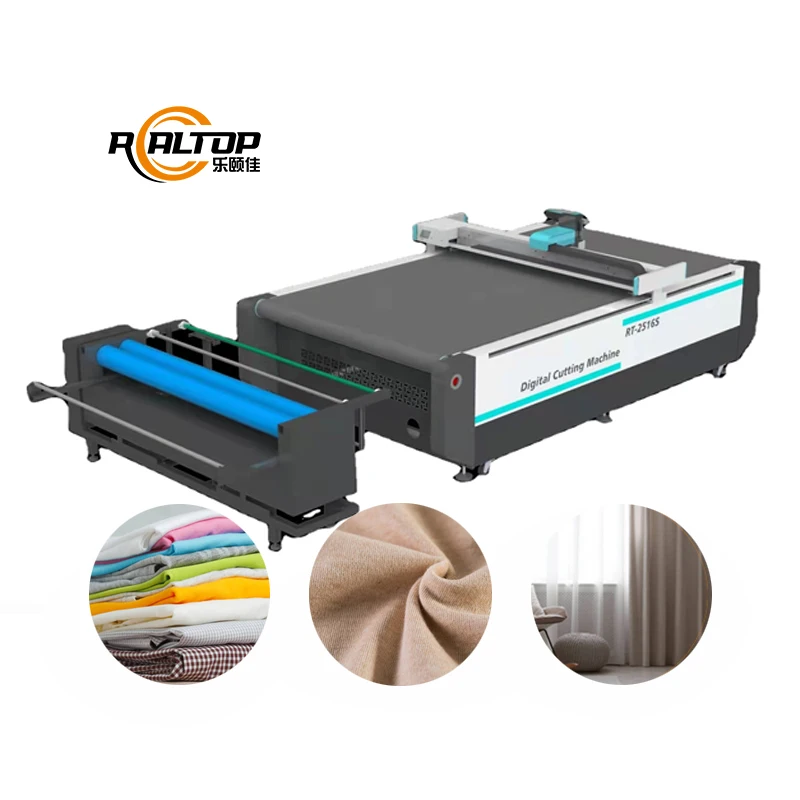
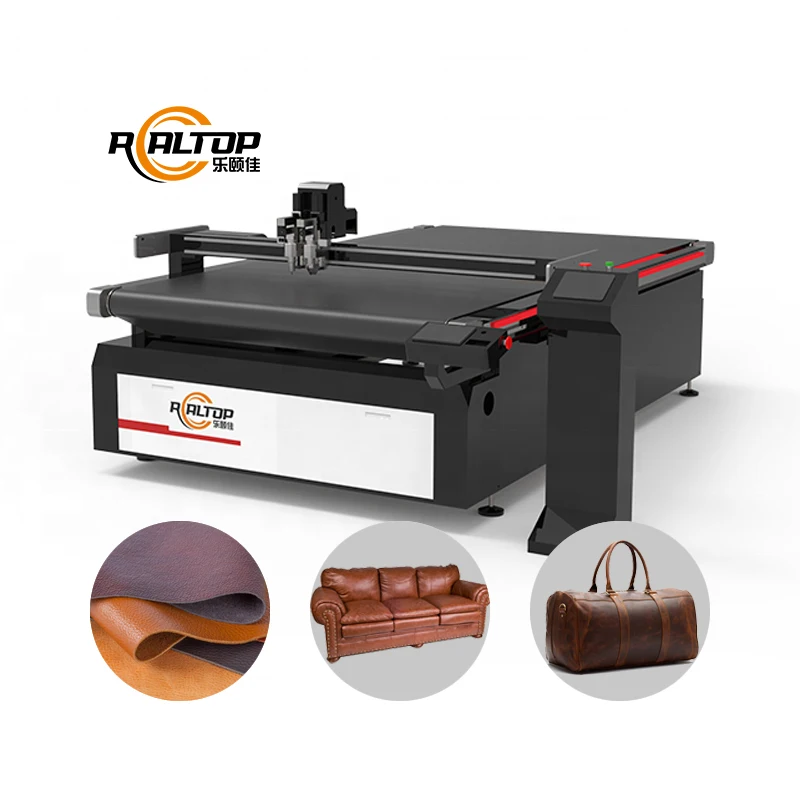
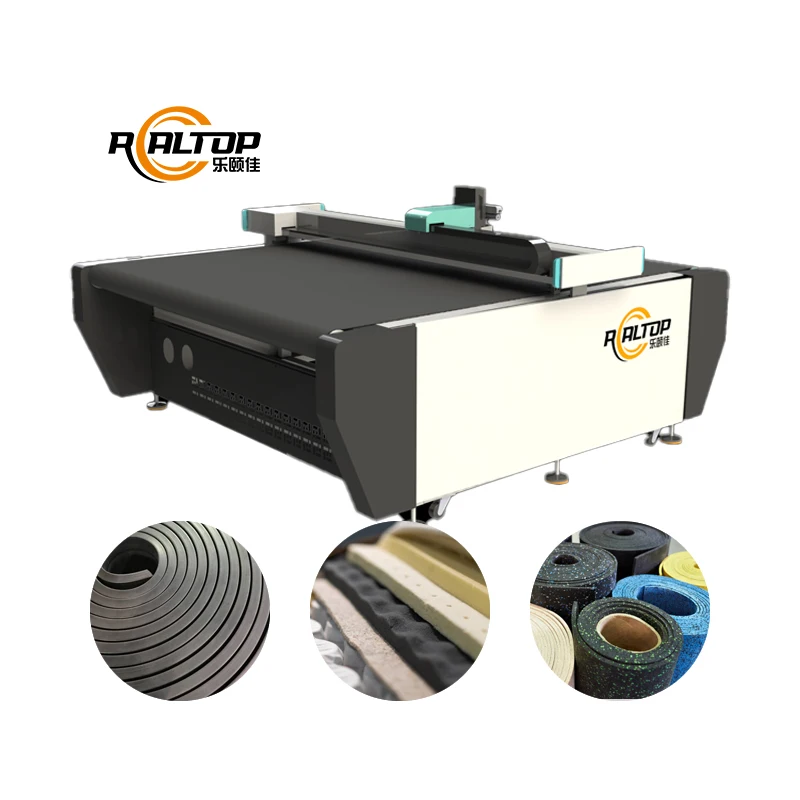
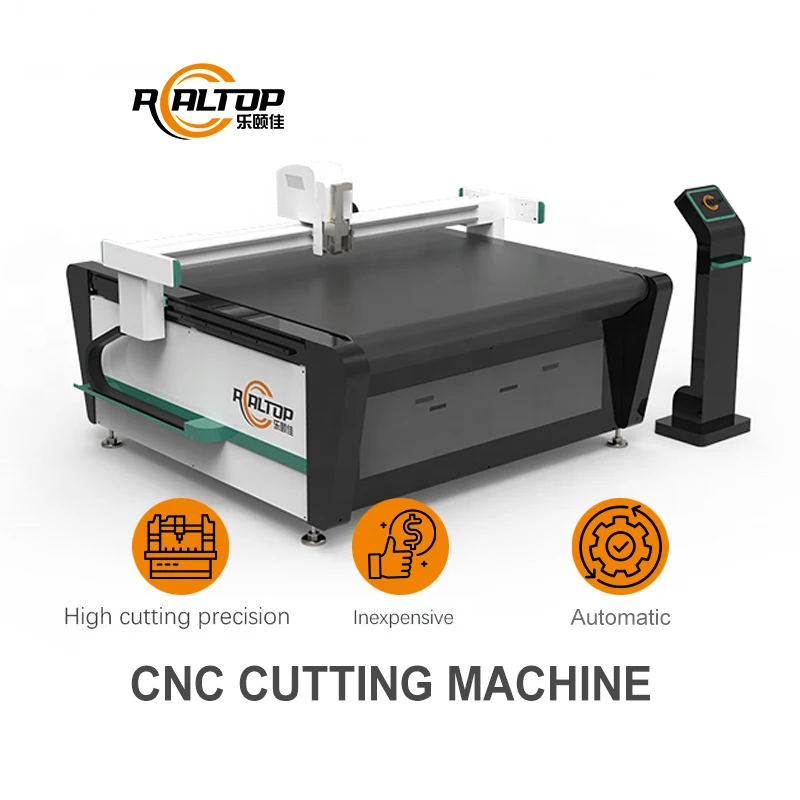
Configurable Tool Head Platform — oscillating, drag, pneumatic and circular knife options are matched to your fabric, foam or gasket stock before the RT-D2516/RT-S2516 leaves the factory, so the edge quality is verified on your actual material rather than assumed from a generic brochure.
Technical Specifications
| Parameter | Value |
|---|---|
| Model | RT-D2516 / RT-S2516 |
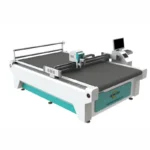
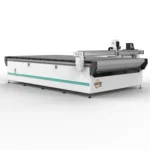
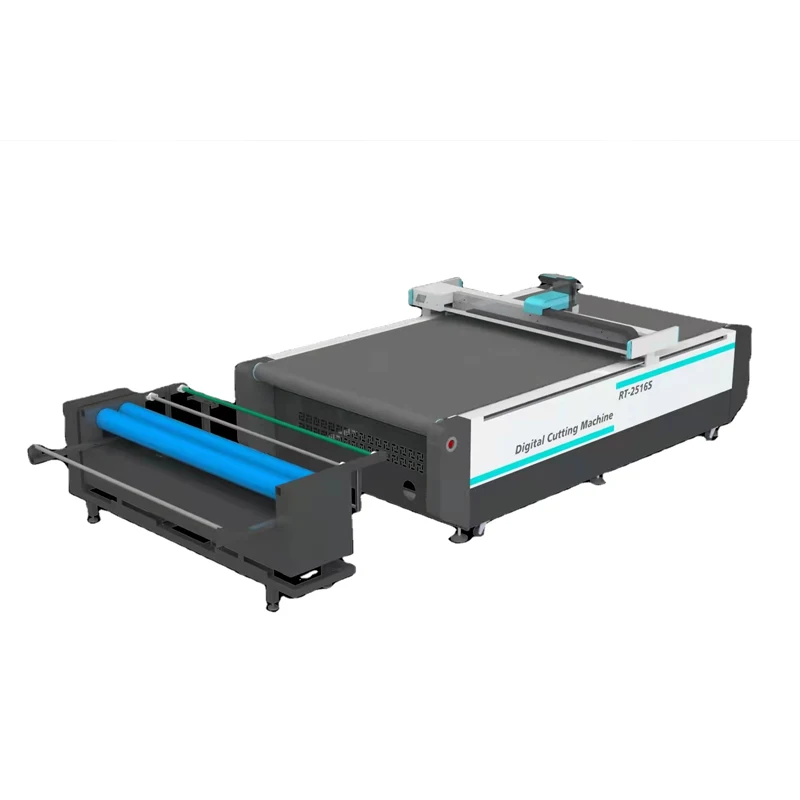
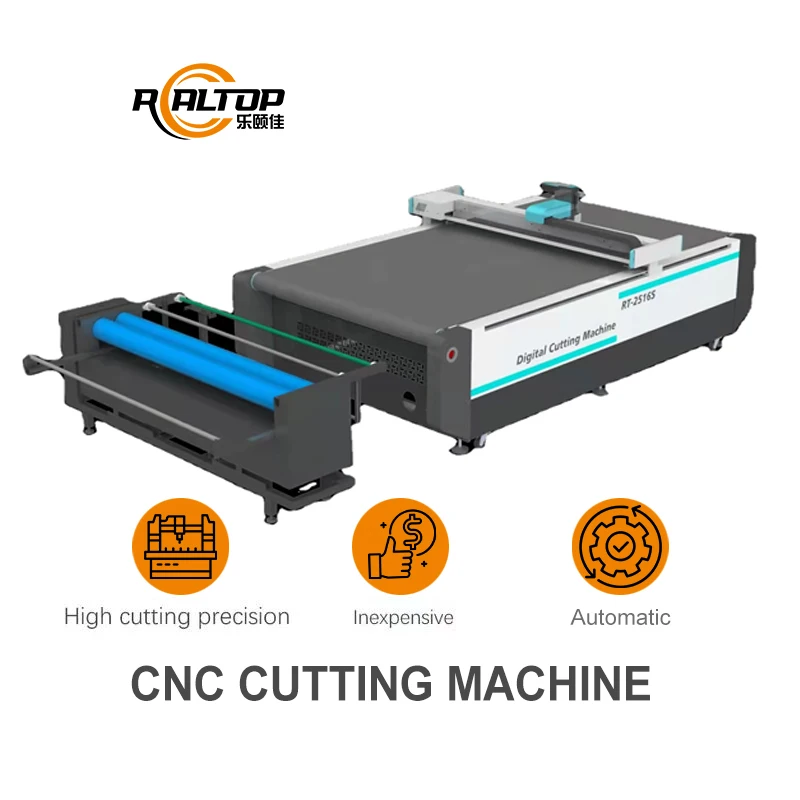
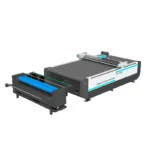
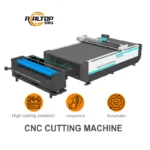
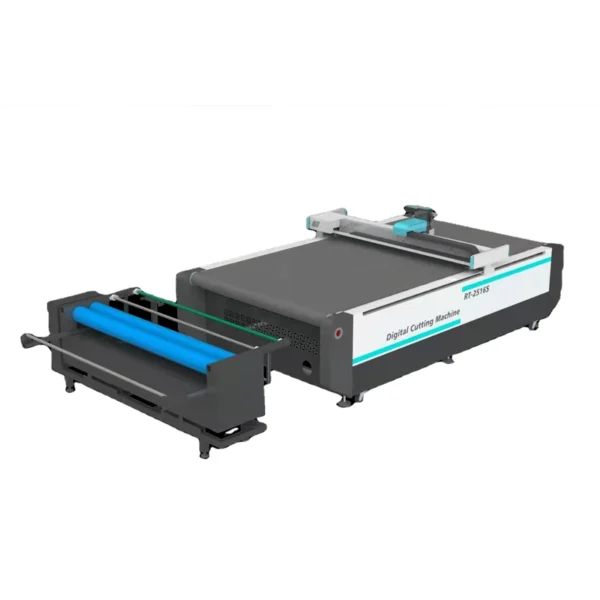
| Product Type | CNC Auto Feeding Oscillating Knife Cutting Machine |
| Working Area | 1600 × 2500 mm |
| Machine Dimensions | 3450 × 2300 × 1250 mm |
| Rated Power | 9 kW |
| Voltage | 380V ±10% (50/60 Hz to be confirmed) |
| Table Construction | Magnesium-aluminum alloy, PVDF powder spraying, anodic oxidation |
| Feeding System | Auto feeding with Germany-imported conveyor belt |
| Tool Head Compatibility | Oscillating knife, pneumatic knife, high-power vibrating knife, circular knife, V-cutting knife, drag knife, creasing wheel, dotted line knife, punching, brush |
| Visual Positioning Options | Small CCD camera mark-point positioning, panoramic camera recognition, projection positioning (configuration to be confirmed) |
| Translational Velocity | 800–1200 mm/s |
| Cutting Speed | 200–800 mm/s (varies by material type and thickness) |
| Maximum Cutting Thickness | Up to 100 mm (dependent on material density) |
| Repeated Positioning Accuracy | ≤0.1 mm |
| Drive System | Digital servo motor (Delta or Panasonic optional, IP67), Taiwan Hiwin linear guide, synchronous belt, ball screw |
| Vacuum Pump | 7.5 kW, integrated aviation aluminum shell with built-in silencer sponge |
| Instruction System | HP-GL compatible format |
| Safety Devices | Infrared induction blocking, beam anti-collision sensors, emergency stop with in-situ resume |
| Software Language Options | English, Russian, Italian, Chinese (special languages customizable) |
| Certification | CE (verify per unit) |
Application Suitability
| Application | Material or Output |
|---|---|
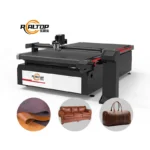
| Garment and footwear production | Woven cloth, knit fabric, shoe uppers, luggage textiles, multi-layer fabric lays |
| Automotive interior trimming | Leather hides, PU, EVA, composite panels, headliner fabric |
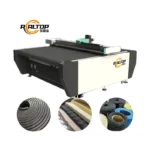
| Soft home furnishings | Carpet rolls, non-woven fabric, sponge, upholstery foam |
| Packaging and carton sample making | Cardboard, corrugated board, plastic box stock, folding carton |
| Gasket and sealing pad production | Rubber sheet, PTFE, ETFE, fiber-reinforced gasket material |
| Graphic advertising and printing | Vinyl sticker, window film, PVC banner, reflective sheet |
| Sports and outdoor goods | Foam board, EVA foam, XPE, PU padding |
When "Up to 100 mm" Doesn’t Tell the Whole Story
Cutting depth capability is only meaningful once the correct tool head, oscillation frequency and vacuum hold-down are matched to your specific material density and sheet size.
I have watched production lines stall because the CNC oscillating knife cutting machine specifications on paper looked sufficient, yet the tool head specified could not maintain a clean edge through coated tent fabric at full depth. A circular knife glides through standard polyester but tears when it meets a coated or laminated layer. A pneumatic knife handles thick foam but may compress multi-layer fabric lays before the blade penetrates. The gap between a quoted cutting thickness and what actually happens on your shop floor is where material waste and missed deadlines accumulate [NEED_CITE: material-specific cutting tool selection for industrial textiles]. Before any machine is configured, your actual material — with its real coating, lamination or fiber density — needs to be on the cutting table.
Tool Head Selection Across Fabric, Leather and Foam
The RT-D2516/RT-S2516 multifunctional head accepts a Swiss-imported knife for vibration full cutting and half cutting, with cursor location for mark-point registration. Beyond the standard oscillating knife, the platform accommodates a pneumatic knife for thick and resilient materials like sponge or EVA, a high-power vibrating knife for dense composites, and a circular knife for continuous straight-line fabric cutting. Each tool head option changes the cutting mechanics fundamentally — oscillation clears chips from foam, a drag knife scores creasing lines on corrugated board, and a punch tool creates registration holes for downstream sewing.
CCD Contour Recognition at Production Speed
Printed fabric and signage require the cutting path to follow registration marks that shift with every feed cycle. The RT-D2516/RT-S2516 offers small CCD mark-point positioning, panoramic camera recognition and projection positioning as configuration options. The distinction matters: a small CCD camera locks onto individual marks quickly but requires the print layout to place marks within the camera’s field of view, while a panoramic camera captures the full sheet and calculates offsets across the entire working area [NEED_CITE: CCD camera positioning accuracy for printed textile cutting]. If your production runs pre-printed garment panels or contour-cut stickers, the camera type and the nesting software’s ability to import your print file format must be confirmed before the order is finalized.
Vacuum Zoning and Table Surface for Small-Part Stability
The magnesium-aluminum alloy table with PVDF fluorocarbon coating and anodic oxidation resists abrasion from repeated material loading and provides a flat reference surface. The 7.5 kW vacuum pump in its aviation aluminum shell with built-in silencer sponge delivers suction across the table area. For small parts — gaskets, shoe components, or die-cut labels — the vacuum zoning configuration determines whether those parts stay fixed or lift during the final cuts that separate them from the surrounding material. A table with insufficient zones will leave lightweight fabric or thin film floating above the surface, causing the blade to drag and the edge to fray. Zoning layout should be specified according to the smallest part dimension in your production mix.
What the Specs Mean for Your Cutting Quality
The 800–1200 mm/s translational velocity describes how fast the head moves between cuts; the 200–800 mm/s cutting speed range reflects what the material allows. Dense leather requires slower blade traversal to maintain edge perpendicularity, while single-layer woven fabric can be cut at the upper end of the range. The Taiwan Hiwin linear guides and IP67-rated digital servo motors maintain the ≤0.1 mm repeated positioning accuracy across the full 1600 × 2500 mm working area — critical when multi-panel garment nests must align within sewing tolerances. The auto-feeding conveyor with Germany-imported belt integrates with the vacuum table so that roll stock advances without manual repositioning, and the flat vacuum surface holds the material through the entire cutting cycle without clamps that interrupt the tool path.
The Cost of Skipping Material-Specific Configuration
When a machine is ordered on working area and price alone, the tool head arrives mismatched to the material. A standard oscillating knife on thick XPE foam produces crushed edges that require secondary trimming. A circular knife on coated textile shreds the coating layer. CCD contour recognition specified for printed signage may fail to track marks on dark or low-contrast substrates if the camera type is not matched to the print palette [NEED_CITE: camera sensor sensitivity for low-contrast print registration]. Voltage confirmed too late means a 380V machine arrives at a 220V facility. These are not warranty issues — they are configuration oversights that surface only after installation, when production time is already being lost.
Why This Platform Is Specified Per Material
Realtop designs and produces both knife and laser cutting systems in-house, so the cutting method is matched to the material rather than forced into one technology. The tool head and table configuration for the RT-D2516/RT-S2516 is specified per your material type, thickness and daily volume before production begins. CCD camera positioning is selected based on your print layout and mark contrast. Software compatibility with your existing nesting workflow and file formats is verified at the order stage. Voltage, plug type and control panel language are confirmed in writing before the machine enters assembly. And your actual material is sample-cut at the factory so you see the edge quality before commitment.
Documentation & Verification
- Machine specification sheet listing confirmed tool heads, vacuum zone layout and CCD camera type for your configuration
- Electrical schematic with voltage and frequency matching your facility supply documented before dispatch
- Sample cutting report produced on your specific material with edge quality photographs and achieved cutting speed
- Tool head and table configuration list signed off before production, detailing every included knife, wheel and punch
- HP-GL instruction system software licence with confirmed file format compatibility for your nesting workflow
- Factory test record capturing positioning accuracy and cutting results on your material prior to crating
Installation, Commissioning & Support
- Machine dimensions of 3450 × 2300 × 1250 mm require floor space planning including conveyor infeed and outfeed clearance
- 380V ±10% supply with dedicated circuit for the combined 9 kW machine load and 7.5 kW vacuum pump startup current
- Delivered fully assembled; verify doorway and internal transport access for the 2300 mm width before arrival
- First-run commissioning includes vacuum zone mapping, tool head calibration and CCD mark recognition tuning on your material
- Operator training covers tool head changeover procedures, nesting file import and emergency stop in-situ resume workflow
- Spare parts list provided with recommended consumable knife blades, conveyor belt tensioning procedure and vacuum filter replacement intervals
Before You Request a Quote
To configure the RT-D2516/RT-S2516 accurately, send your material type, thickness and maximum sheet or roll width, along with the smallest and largest part dimensions in your typical nest. Confirm your facility voltage and frequency, and specify the control panel language your operators need. If your production involves printed contour cutting, provide a sample print file so camera type and mark recognition can be tested against your actual layout.
Frequently Asked Questions
Q: How do I select the correct tool head for my material and thickness?
A: Oscillating knives suit most woven fabrics and thin foams; pneumatic or high-power vibrating knives handle thicker sponge, EVA and dense composites; drag knives and creasing wheels score fold lines on corrugated board. Selection depends on your material density and the edge finish required. Request a sample cutting report on your stock to verify the choice before ordering.
Q: Can the CCD camera reliably track printed marks at full production speed?
A: Tracking accuracy depends on mark size, contrast and the camera configuration chosen. A small CCD camera suits fixed mark positions, while a panoramic camera covers the full sheet for complex layouts. Testing on your printed material at the factory confirms whether the system can register marks within your tolerance at your target cutting speed.
Q: How is vacuum table zoning arranged for small parts?
A: The magnesium-aluminum table can be configured with multiple vacuum zones so that suction concentrates where small parts are being cut. Without adequate zoning, lightweight fabric or thin gasket material lifts off the surface during the final separating cuts, producing frayed edges. Specify your smallest part dimension so the zone layout is designed accordingly.
Q: What file formats and nesting software does the system accept?
A: The instruction system is HP-GL compatible. Before ordering, verify that your existing nesting software output format imports correctly and that the control software supports the language your operators require. File format compatibility is confirmed at the quotation stage to avoid workflow disruption after installation.
Q: Can the voltage, plug and control language be customized before shipment?
A: The standard voltage is 380V ±10%, with 50/60 Hz to be confirmed for your facility. Plug type and control panel language — available in English, Russian, Italian, Chinese or custom — must be specified in writing before the machine enters production to avoid on-site electrical rework.


商品评价
Clear filtersThere are no reviews yet.